
Custom Chocolate & Candy Boxes, Arrives as chocolate, not soup.
Chocolate is unforgiving — a box that lets pieces slide arrives as a broken, scuffed mess, not a product. Presentation matters just as much when it's a gift or a treat. Our custom chocolate and candy boxes keep confections food-safe, held in place, and looking sharp from shelf to hand, printed with your branding and made to the size and shape your sweets need.
Materials & Options for Chocolate & Candy Boxes
E-Flute Corrugated
Thin profile, strong crush resistance — the standard for most mailer boxes.
B-Flute Corrugated
A thicker flute for heavier contents or extra stacking strength.
Kraft Paper
Unbleached, natural-brown stock with an earthy, eco-forward texture.
SBS Board
Solid bleached sulfate board for a smooth, print-ready white surface.
Offset Printing
Exact color matching for large runs — the standard for big projects.
Digital Printing
Fast turnaround on shorter runs, with no minimum plate setup cost.
Flexographic Printing
Distortion-free output built for large-run corrugated jobs.
UV Printing
Instantly cured ink that resists scratches and solvents.
Matte Lamination
Soft, non-reflective finish that reads premium under any light.
Gloss Lamination
High-shine coating that makes bold colors and photography pop.
Soft-Touch Coating
A velvety exterior resistant to moisture and fingerprints.
Spot UV & Foil
Raised gloss detail or metallic foil for logos and accents.
Discover Our Most-Requested Chocolate & Candy Box Styles
Every style below runs through the same structural engineering and quality process — pick a starting point and we'll adjust the details to your product.
Chocolate Is Unforgiving
Chocolate is unforgiving. Pack it loose or send it in the wrong box on a warm day and it arrives cracked, bloomed with a dull grey film, or fused into a shapeless block — and presentation matters just as much when the same sweets are bought as a treat, a gift, or a shelf impulse buy. The job is threefold: protect fragile confection from crushing, keep it safe for direct contact, and show it off well enough to justify a price that's mostly about the experience. The buyers are chocolatiers, candy makers, and confectioners selling in boutiques, online, and through gifting, where the product is delicate and the margins depend on it looking like a small luxury. The failure it prevents is the product that arrives looking nothing like it did in the display case — the moment the customer's anticipation curdles into disappointment. Loose pieces sliding into each other, or a box with no window to tempt a browser, both cost sales. It sits alongside other baked and boxed treats like cookies.
Food-Grade Board, Trays and Dividers
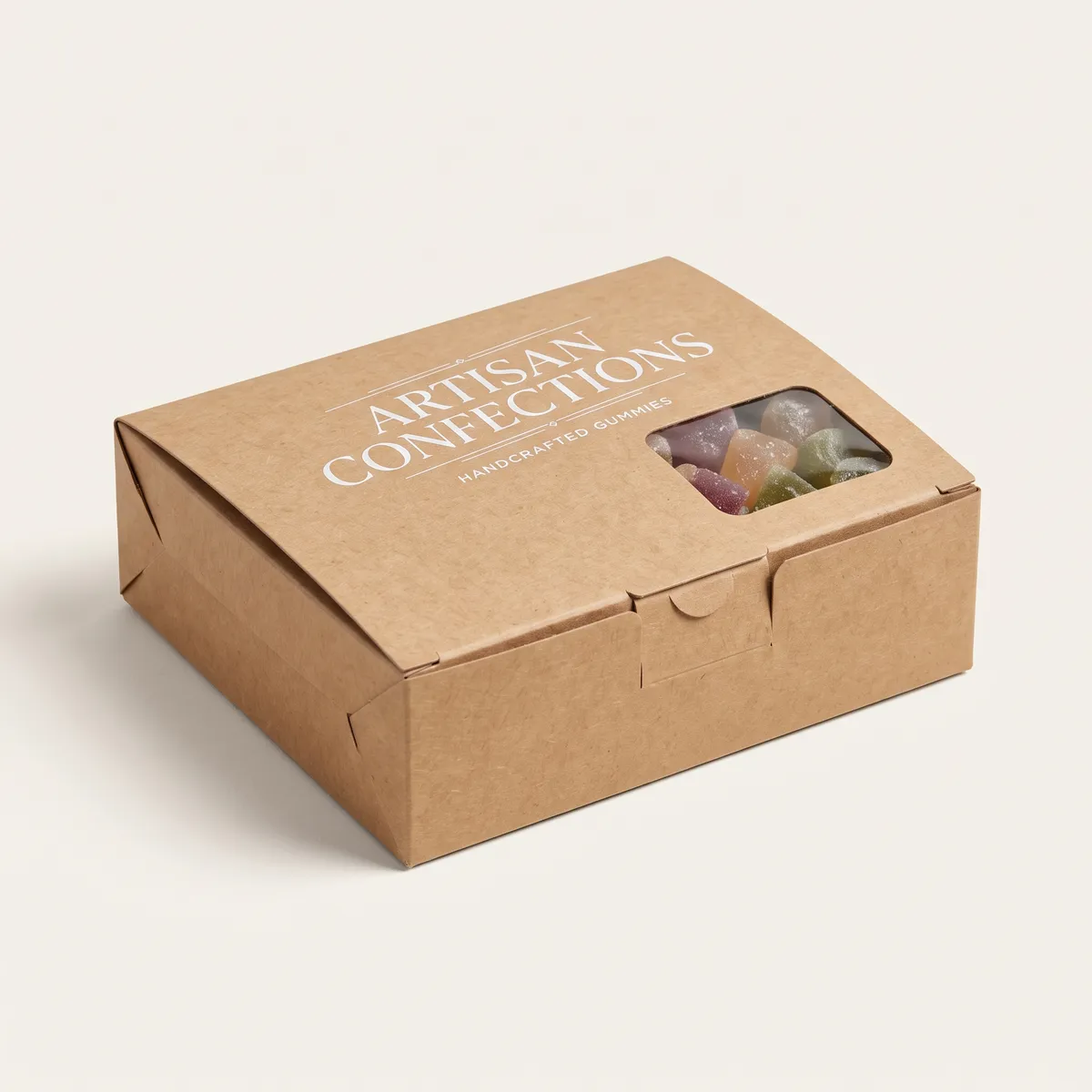
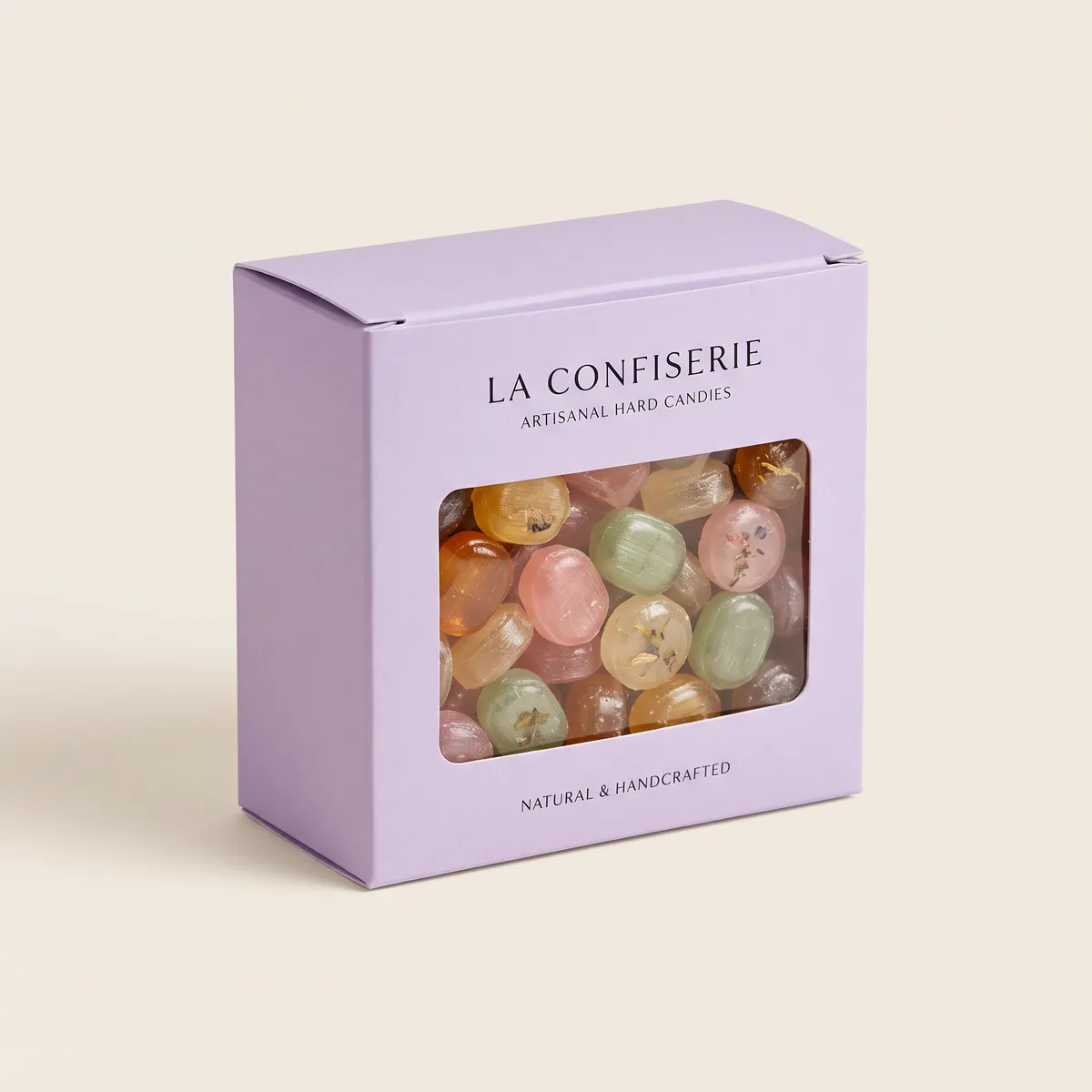
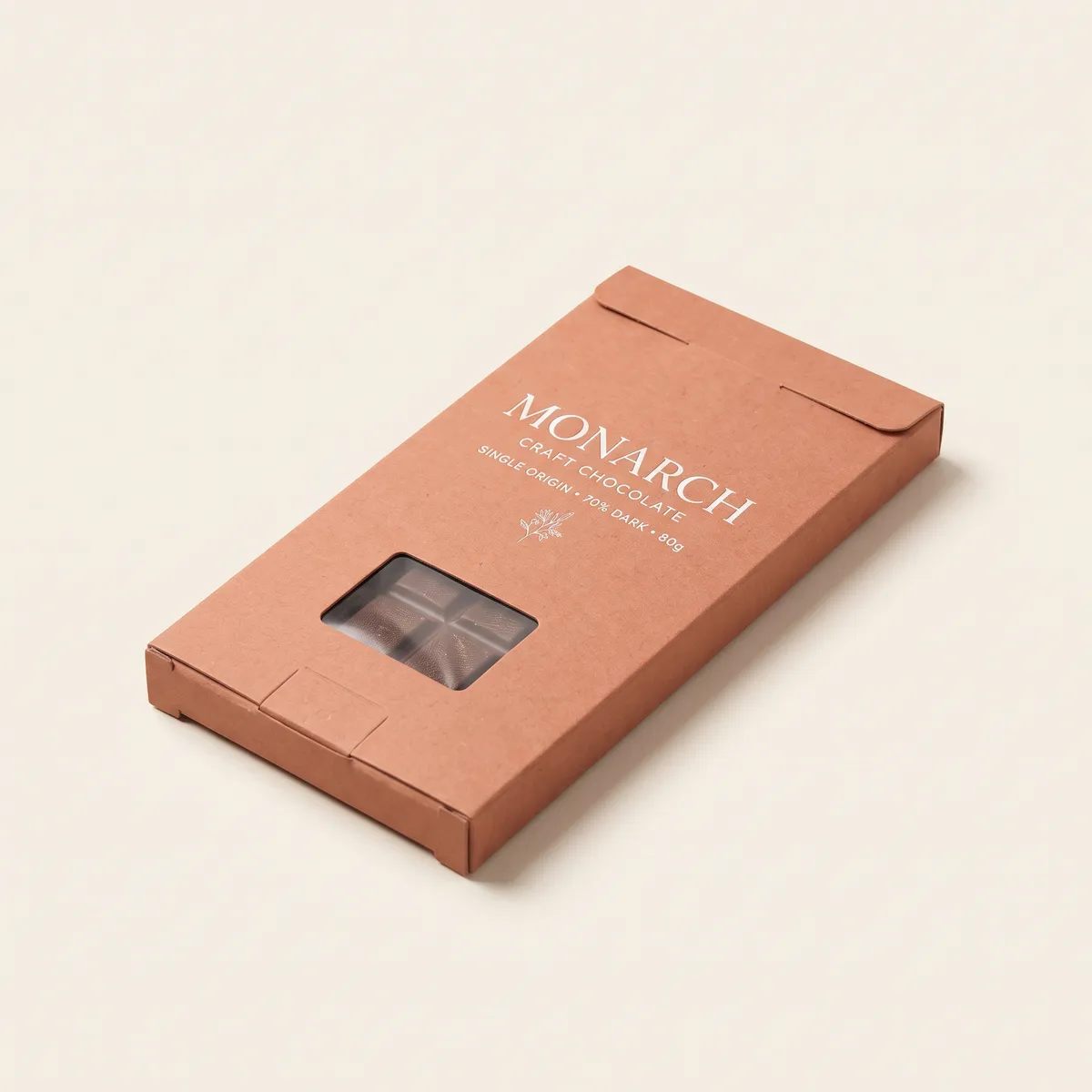
Confectionery boxes balance food safety with presentation, so the board is a food-grade cardboard stock — SBS around 16–24pt — with food-safe inks and often a fitted tray or divider to keep pieces apart. For premium and gift-focused lines, a rigid build in 2mm greyboard gives the weight and clean edges that justify a boxed-chocolate price, usually with a die-cut insert cradling each piece. A window is often cut into a face and backed with film so a browser can see the product. Sizes are small and precise, built around piece count and tray layout, so the tolerance runs tight — around ±0.5–1mm — or the tray won't seat and the lid won't close level. Construction spans straight-tuck cartons for volume up to two-piece rigid and drawer styles for gifting. Because chocolate is fragile and the margin is in the experience, the box is engineered to protect each piece and show it off at once.
Protecting Both Ends of the Margin
Confectionery packaging pays off by protecting a fragile, high-margin product and showing it off. The protection number is real: chocolate cracks, blooms, or fuses in the wrong box, and each failure is a refund on a product whose margin lives in the experience, not the ingredients. A fitted tray or a pillow pack that keeps pieces apart turns "arrived a mess" into deliveries that hold. The revenue side is the window and the finish — a box that lets a browser see the product, or reads as a small luxury, lifts pickup and supports a price that's mostly about how special it feels. In gifting especially, the presentation is the purchase, so the box directly justifies the premium. Both effects compound: fewer returns on delicate stock, and higher conversion and price on the shelf and in the gift aisle. The carton costs a little more than a plain one and defends both ends of the margin — the losses you avoid and the price you get to charge.
Windows, Foil and Confectionery Finish
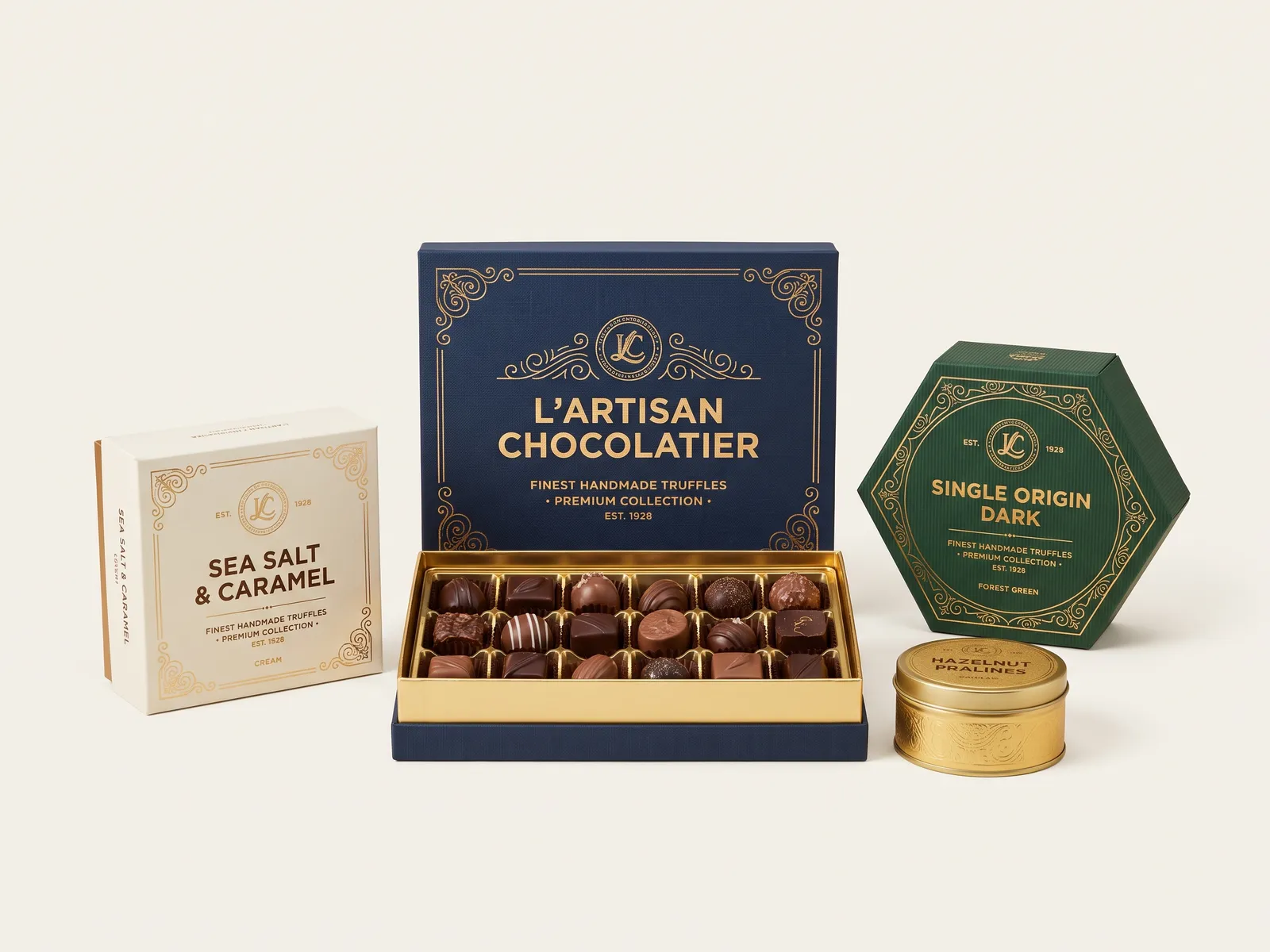
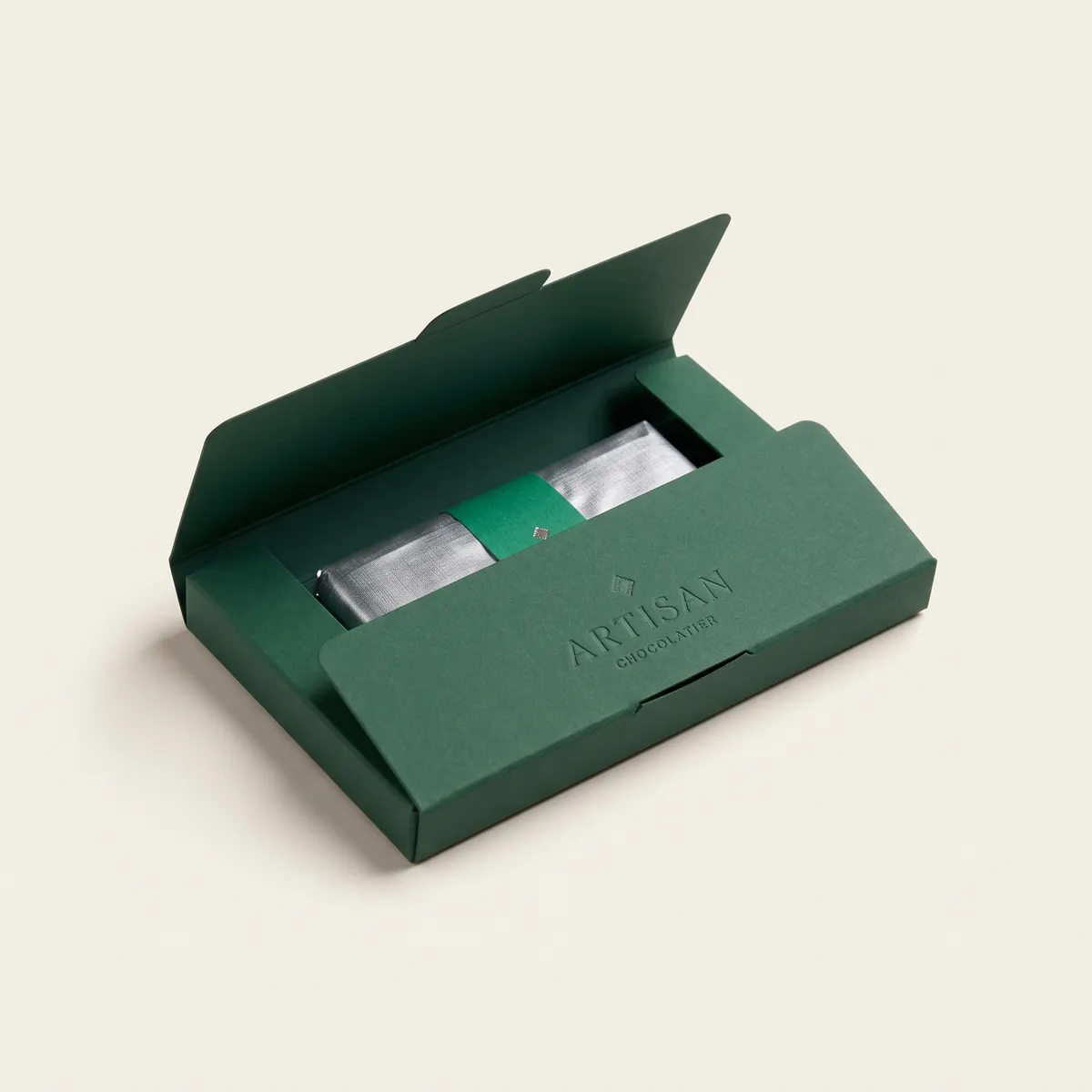
Confectionery is a genuine finish category, because so much of it is bought as a gift and the box is most of the perceived value. Foil on a matte base is the workhorse — the flat field makes the metallic read rich, and it suits the gold-and-brown palette the category leans on. A window is often the higher-return choice though, because letting a browser see the pieces converts better than any surface treatment. If you combine both, keep the foil small and away from the window edge. Two constraints to plan for: food-safe ink on anything near product, and the reality that a heavily finished box adds meaningful time to the line, which matters when your whole year rides on hitting a holiday window. For seasonal SKUs that change annually, digital avoids repeat plate costs; for a core line you'll run for years, offset earns back. A drawer box in a linen wrap makes an inexpensive assortment feel like a considered gift.
Confectionery Box Styles by Occasion
Confectionery leans on presentation styles, because so much of it is bought as a gift.
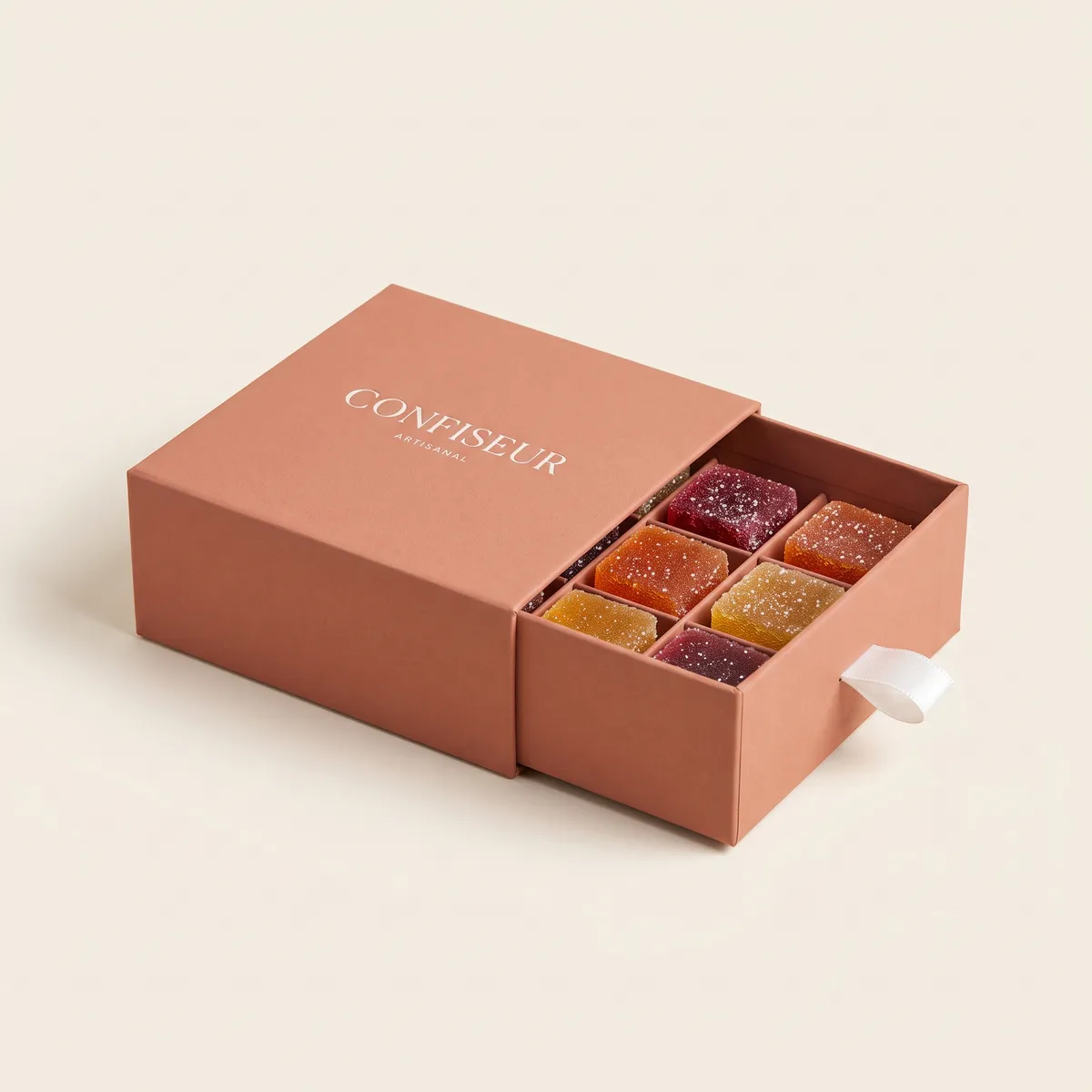
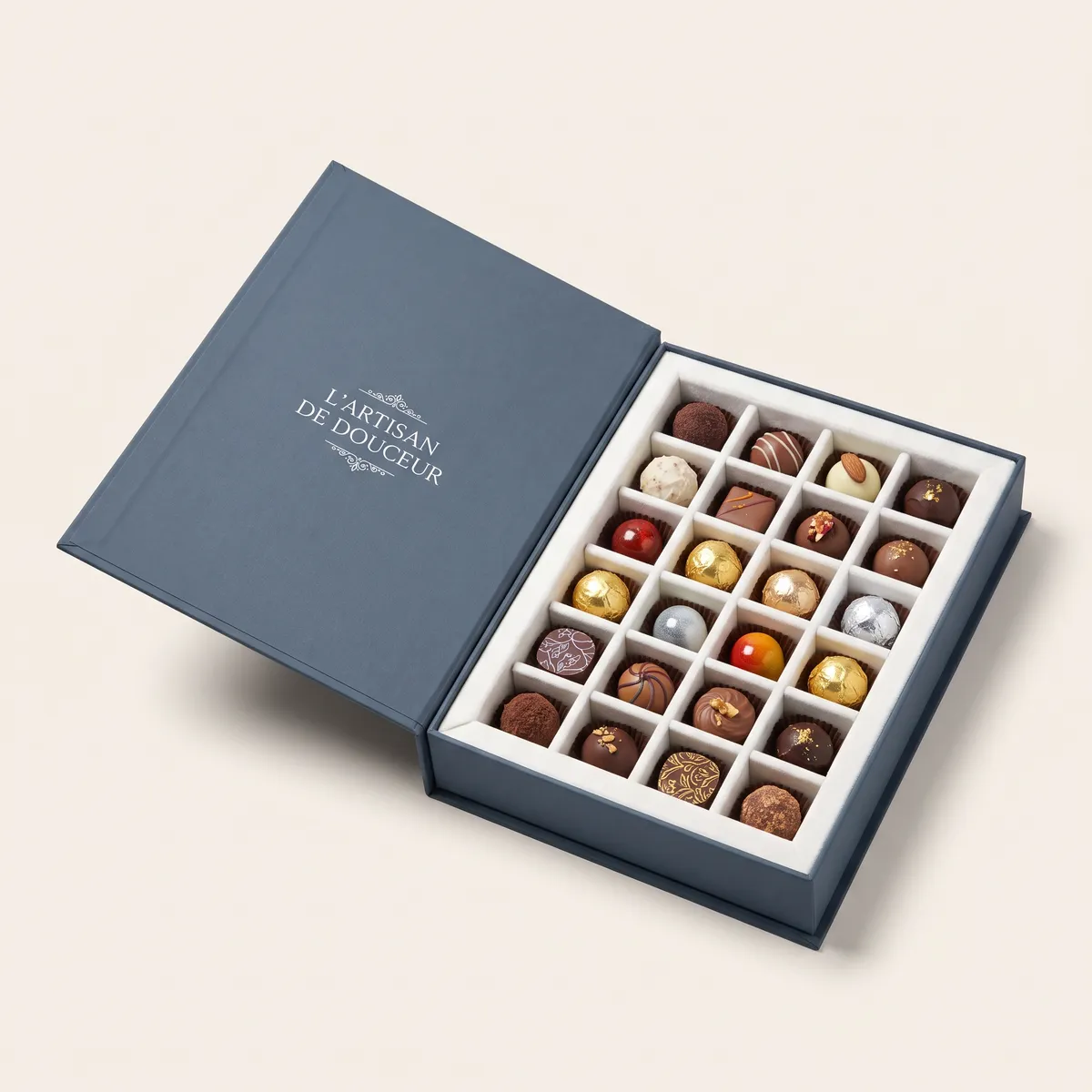
- Lid-and-tray rigid with a fitted tray — the classic assortment build. Each piece sits in its own cavity, and the lid lifts to reveal the layout at once.
- Round boxes and tins — truffle assortments and holiday runs. Distinctive shelf presence in a category full of rectangles.
- Pillow boxes and small cartons — single bars, bagged sweets and party favors, at much lower cost.
- Sleeves and wraps over foil — bar-format chocolate, keeping material minimal.
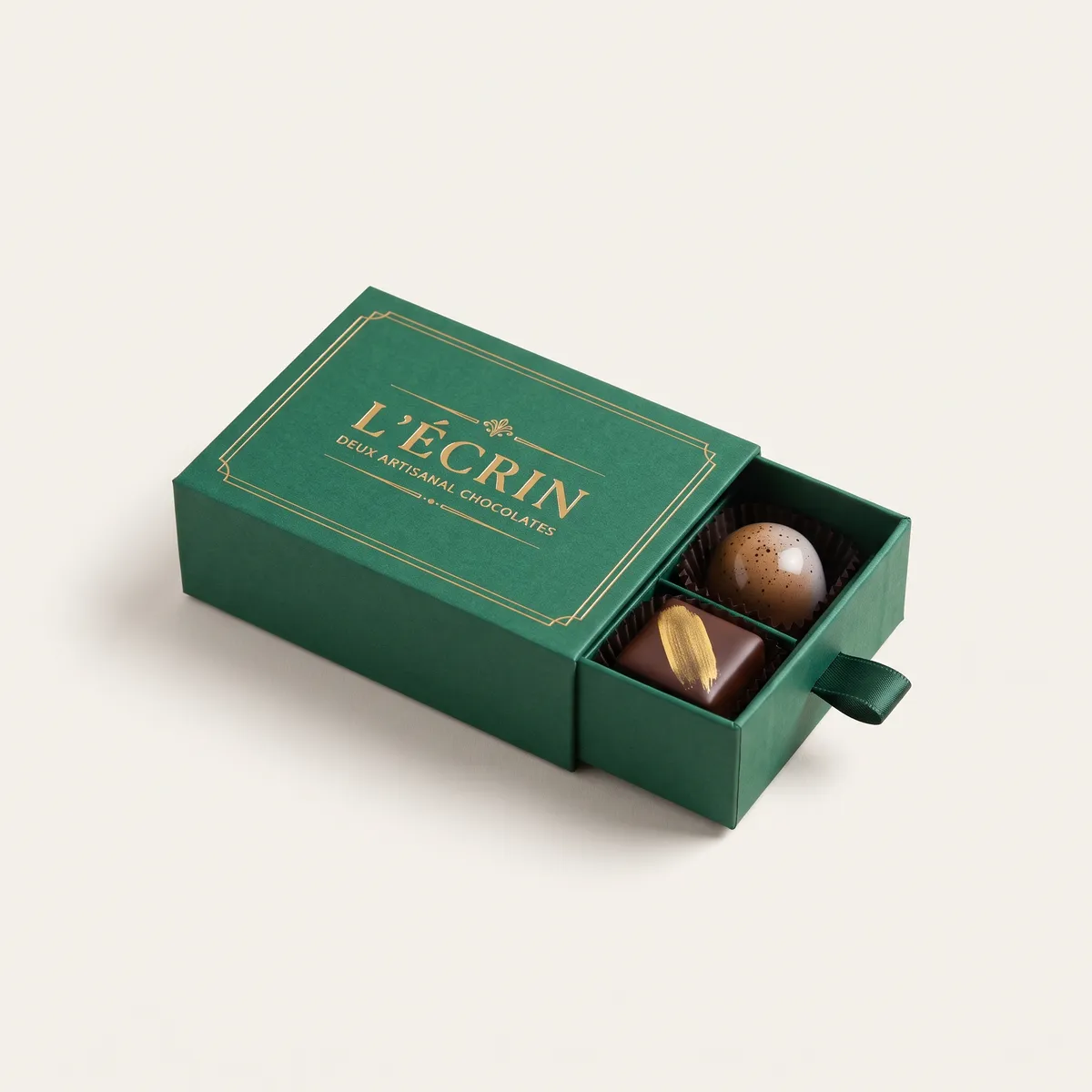
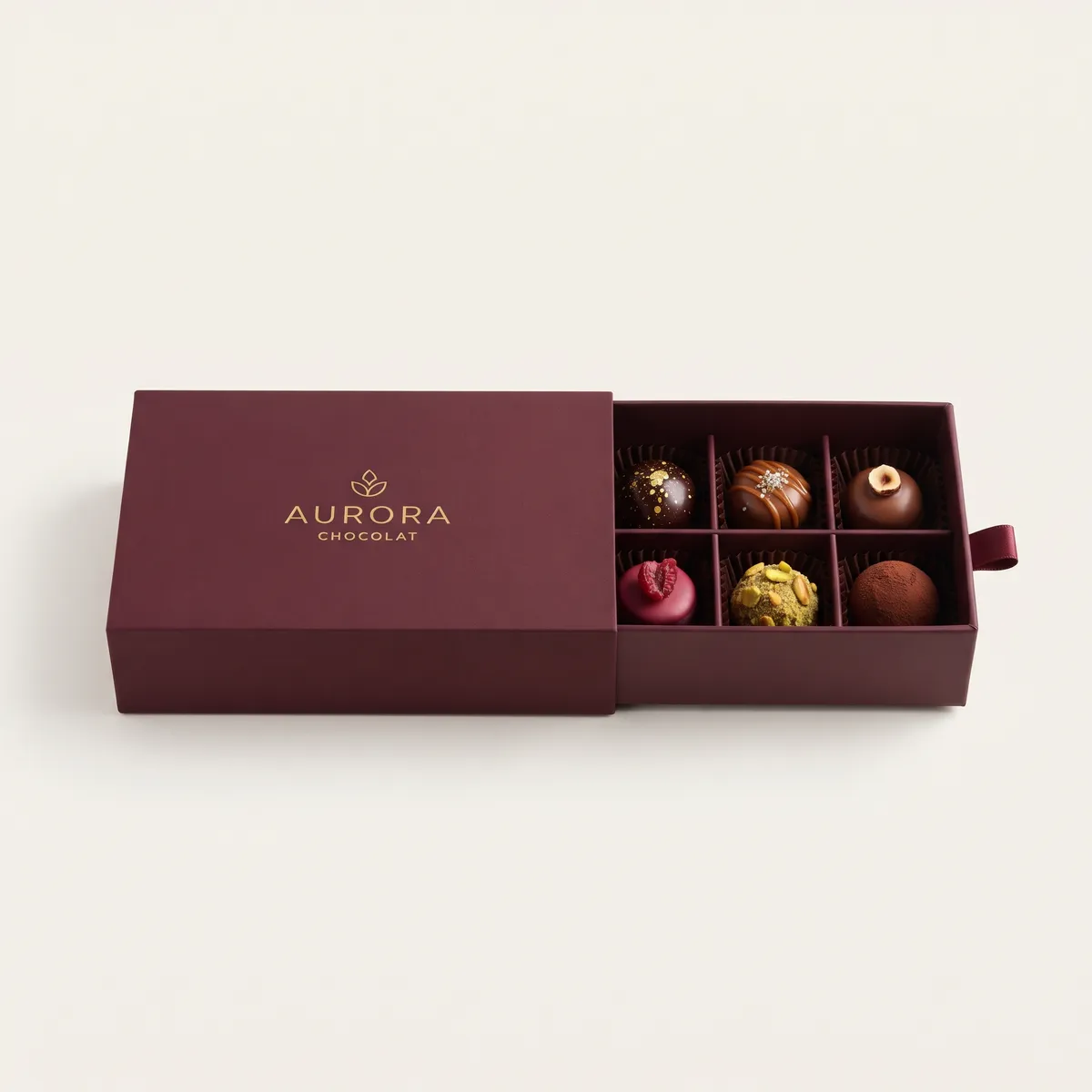
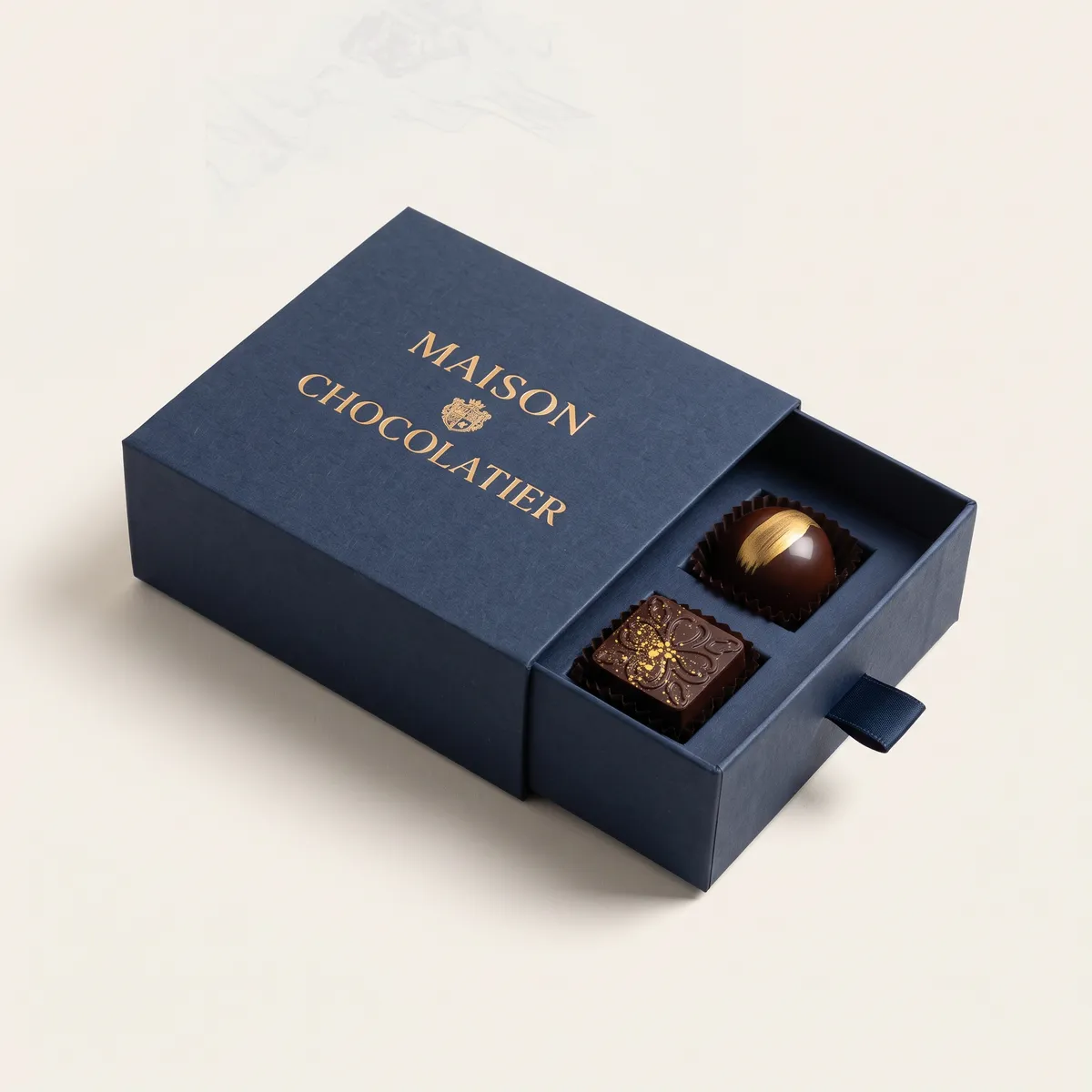
- Drawer builds — premium and corporate gifting, where the slow open adds ceremony.
Whatever the outer style, the tray or divider does the real work. Chocolate that can move arrives knocked together, so cavity fit matters more than the box around it.
Getting the Tray Right First
The tray matters more than the box. Whatever outer style you choose, pieces that can slide will arrive knocked together, so get the cavity layout right first and let the box follow. On the outer, folding cartons handle bars, bagged sweets, and volume lines; rigid earns its cost on assortments and gifting where the presentation is most of the price. A window is often a better investment than any surface finish, because seeing the product sells it. Don't over-specify board for lightweight items — 16–24pt is plenty for most confectionery. A packaging sleeve over a standard base is the cheapest way to run seasonal variants, and gift packaging covers larger corporate sets.
What's different here: revisions before print are unlimited and free, which is useful when seasonal artwork gets reworked several times before a holiday deadline. Every box passes a three-stage check, so problems are ours to catch, not yours to discover when a Christmas run lands. If bulk doesn't match the approved proof, we reprint at our cost. No hidden fees on top of the quote — guaranteed. From 100 units, free samples above 10,000, 8–12 business days, shipping included.
Unrivaled Support From Packaging Experts
From first sketch to full production, the same team carries your order through every stage.
Structural Engineering
We determine the right size, shape, and material for a snug fit and real protection.
Free Artwork Guidance
Our design team helps translate your brand into a box, at no added charge.
2D & 3D Mockups
See your box come to life before a single sheet of board is cut.
Quality Assurance
Every run is checked in-line against the digital proof or physical sample you approved, not just at the end.
Fast Turnaround
8–12 business days standard, with rush options when timing is tight.
Tracked Shipping
Palletized freight or drop-ship, tracked from our dock to yours.
What brands say about their chocolate & candy boxes
They live there rather than here, where we can't edit them, delete them, or pick which ones you get to see. That is exactly what makes them worth reading.
Read all reviews on Trustpilot(opens in a new tab)Answers before you have to ask.
Will chocolate survive without melting or getting crushed?
The box protects against crushing and, with a snug insert, keeps pieces from sliding into a mess. For heat, we'll suggest a sturdier build or liner, though temperature control in transit is still down to your shipping method.
Are the boxes food-safe?
Yes. Custom chocolate and candy boxes use food-grade board and food-safe inks rated for direct contact, so confections stay safe from box to hand.
Can you add a window or dividers?
Both. A window shows off the sweets before anyone opens the box, and dividers keep individual pieces separated and in place. We'll cut them to your product.
What's the turnaround on chocolate and candy boxes?
Most orders are ready in about 8–12 business days from proof approval, with a rush option near holidays. Shipping's included.
Do you design the box or do I send artwork?
Both. Send a print-ready file, or hand us your logo and our team builds the layout and shares a proof before printing — design help is unlimited and free.