
Buxboard Boxes
Buxboard is the dense recycled core inside premium rigid boxes, doing the structural work while the printed or textured wrap does the visual work. It's rarely printed directly; where it shows, it's usually left raw by design. Its density is what lets an emboss press deep without cracking through the wrap. Learn where buxboard is specified, how it's wrapped, and how it recycles once separated.
Ours are on Trustpilot, where we can't edit them or choose which ones you see.
Read them on Trustpilot →(opens in a new tab)Four stages, twelve days
Quote confirmed
A specialist checks your spec against the board and comes back with a firm price inside 4 business hours.
Proof approved
You get a flat dieline and a 3D render. Nothing goes to press until you approve it in writing.
On press
Print, die-cut, glue, and fold. You get a press-side photo the day your job runs.
QC and delivery
Every pallet is sampled against the digital proof or physical sample you approved, then shipped with tracking to your dock or 3PL.
If a box doesn't match the digital proof or physical sample you approved, we reprint the run at no charge.
Read the reprint terms →Know exactly what you're ordering.
The Board You Never See on a Finished Box
Nobody opening a premium box notices buxboard, and that is the point of it. It shows up as a line on a rigid quote, beneath the wrap and the finishes, and most buyers skim past it. Yet it shapes how the box behaves in the hand: whether corners stay square, whether the lid holds its shape and whether a pressed logo keeps its edge or sinks. Brands usually start researching it after seeing the name on a spec sheet and wanting to know whether it matters. It does, in a narrow way. On a plain printed rigid box, the core is rarely the deciding factor. On a box carrying a deep emboss or a heavy textured wrap, it is the part doing the quiet work.
Buxboard Core Details
Buxboard is specified as part of a rigid build, so its details read alongside the wrap and style.
| Property | Buxboard |
|---|---|
| Composition | Dense board made from recycled fiber |
| Position | The core of a rigid box, beneath the wrap |
| Surface | Normally covered; shown raw only as a design choice |
| Emboss support | Density gives the die firm backing to press into |
| Recycling | Recycles readily once the wrap is removed |
It is chosen for density, which is why it appears where finishes need firm backing. Appearance comes from the wrap, never from the core, so a buxboard specification says nothing about color or print. Those decisions belong to the wrap and are made separately.
A Dense Core Behind Demanding Finishes
Specify a dense core when the finish on the outside depends on what sits underneath. A deep emboss needs board firm enough to take the impression without cracking through the wrap, and a textured wrap needs a firm, even base to sit on. Buxboard provides that backing. Builds with extra structure inside, such as neck-and-shoulder rigid boxes with a raised collar beneath the lid, depend on a core that holds its shape at every edge. The honest point is that a simple rigid box with flat print gains little from the choice of core, and attention spent there is better spent on the wrap or the insert. Ask about the core when the finish is ambitious; otherwise leave it to the standard build.
Embossing and Wrapping Over Buxboard
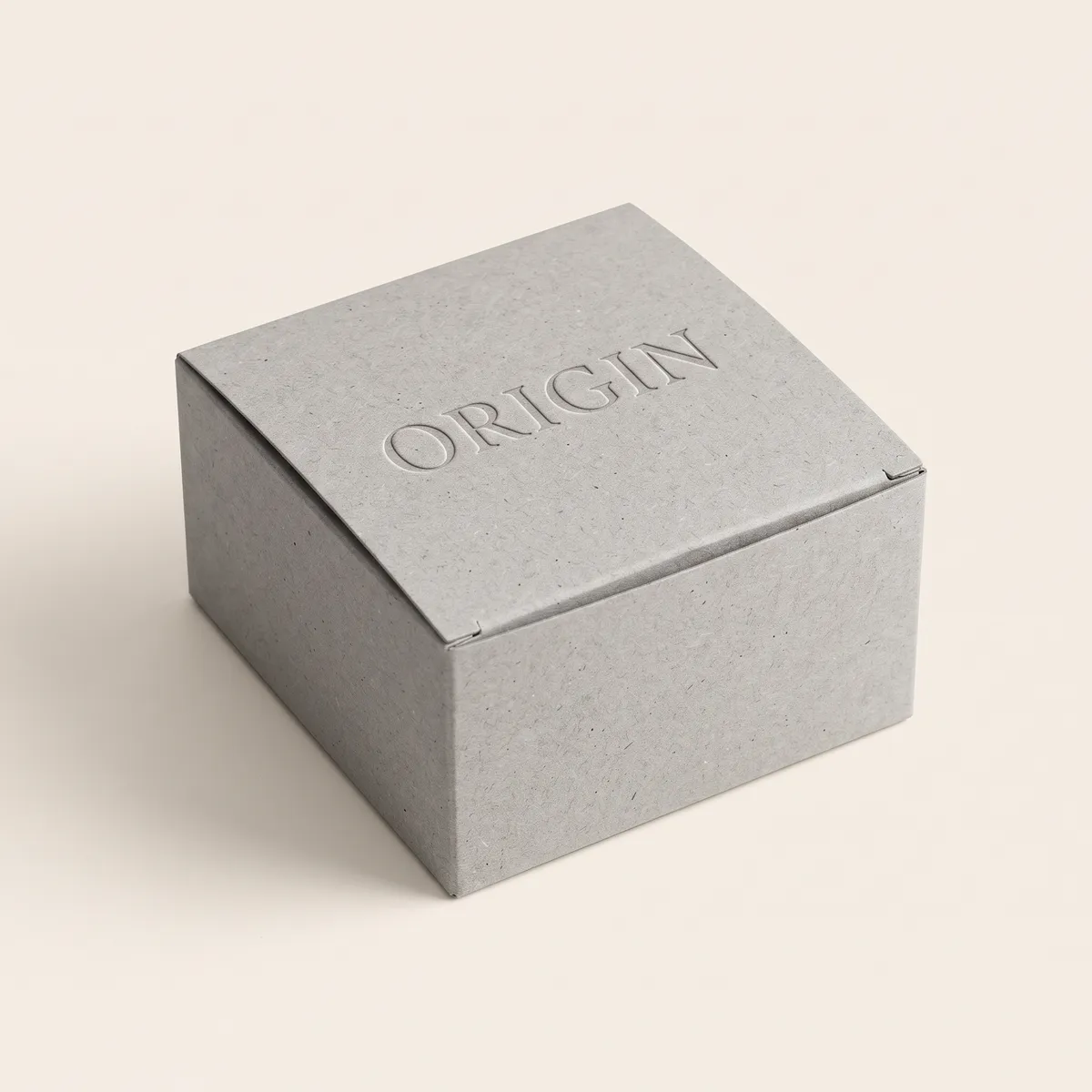
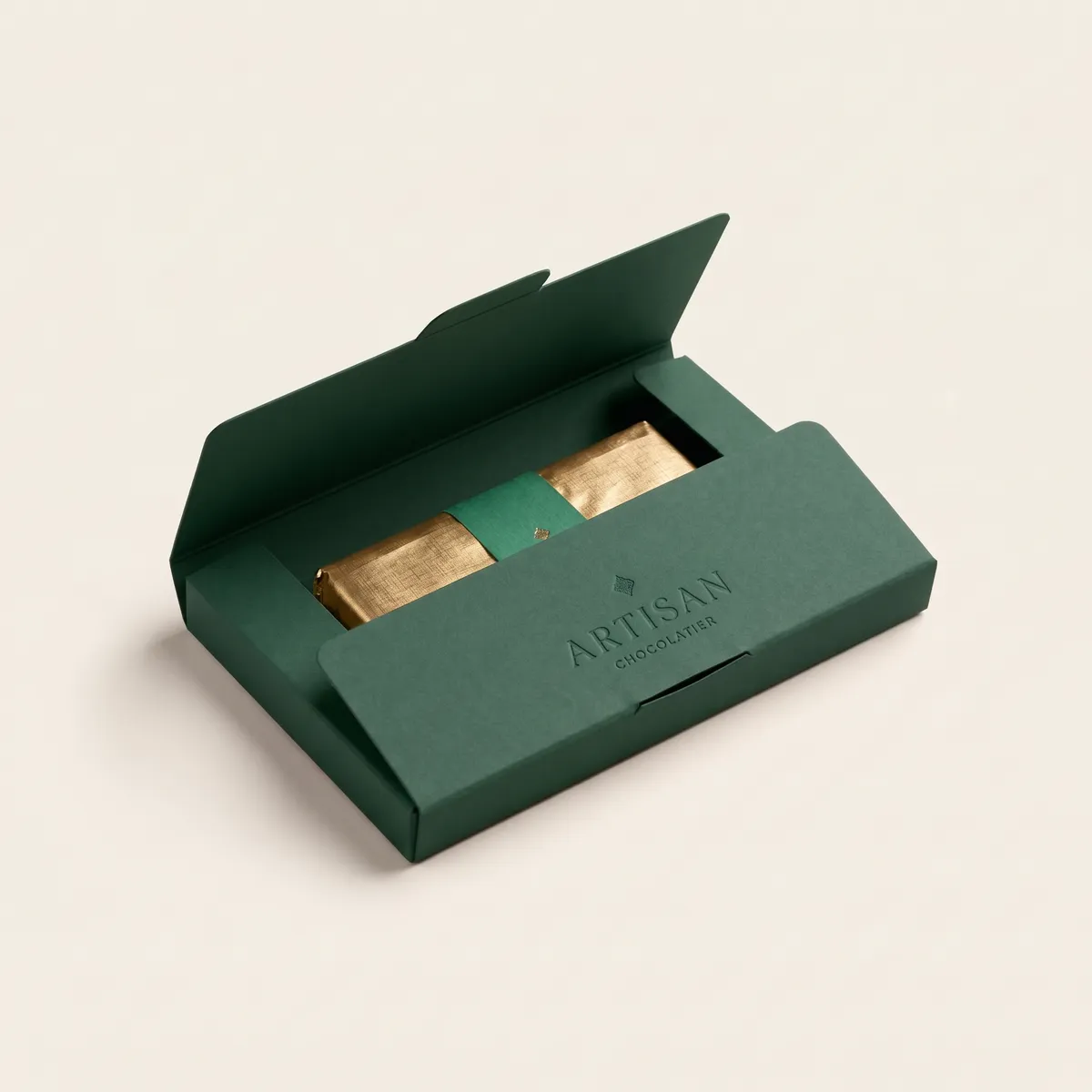
Print almost never goes on buxboard itself. The core is covered in a printed paper or textured wrap, and finishing happens on that wrap before it is applied. Where buxboard earns its place is under embossing: the dense board gives the die something to press against, so a raised mark holds a clean edge through the wrap instead of cracking or flattening. Debossing benefits in the same way, pressing into a surface that resists rather than crumples. Foil depends more on the smoothness of the wrap than on the core. When the board is deliberately left exposed as part of the design, it reads as plain recycled fiber with no print, and that rawness is intended rather than a gap in the specification.
Fragrance, Jewelry and Gift Builds Using Buxboard
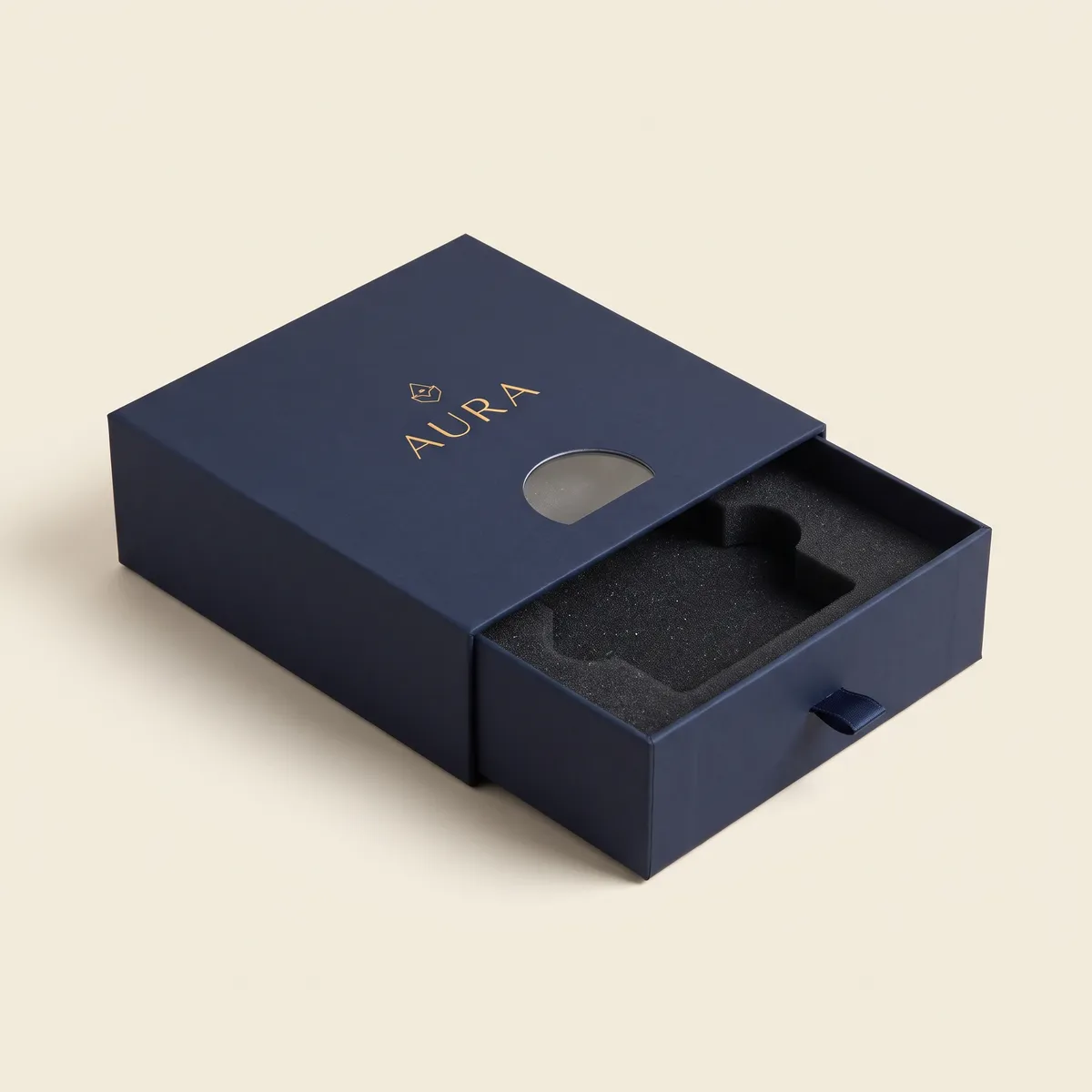
Fragrance houses use buxboard cores beneath wrapped boxes that carry deep, crisp marks, and embossed fragrance cases are a natural fit because a bottle's presentation rests on a box that feels solid in the hand. Watch and fine jewelry boxes use it where a small case is expected to last for years. Book-style magnetic boxes use it as the backbone of a flap that gets opened again and again. Gift boxes adopt it under a magnetic closure when one raised or foiled mark is the main decoration. In each case buxboard is invisible to the customer. Its value lies entirely in how much better the wrap above it performs, which is why it belongs in conversations about finishing rather than about looks.
Asking About the Core, Not Just the Wrap
Because the core sits out of sight, it is easy to approve a rigid quote without asking what is inside. Ask anyway when the design leans on embossing, debossing or a heavy wrap. Confirm which board is specified for the core, and that it suits the depth of mark you want. Check that the insert, the core and the wrap are all sized from the same product measurements, with internal or external dimensions confirmed in writing, so the layers fit as one structure. Ask to see the emboss proofed on the real build rather than on a flat sample, since the core changes how the impression looks. Learn where the core matters most by comparing a deep emboss on dense board with the same mark on a lighter one.
One connected process, start to finish.
Structural Design
Dieline drafted to your exact fit and freight tolerances.
Proof & Sample
Sign off on a digital proof, or request a physical sample.
Tooling
Dies and plates are cut for your job and archived on file.
Production
Print, die-cut, and assembly run under in-line quality checks.
Ship & Reorder
Freight goes out, and the cycle resets for your next run.
Steady process. Powerful results.
Like everything we build, our process is engineered to hold up — no shortcuts, no surprises. Five dependable stages that run the same way every single time, so reorders are just as fast as the first order.
- One dedicated teamFrom first sketch to final freight, the same people carry your order start to finish.
- Dies archived on fileReorders skip tooling and re-setup entirely — we already have your exact spec.
- Checked against your sign-offEvery run is inspected against the digital proof or physical sample you approved.
Set up your file once, correctly
Nine in ten delayed jobs are delayed by artwork, not production. Match these four rules and your proof lands the next morning.
- Bleed1/8 in (3 mm) past every cut line
- Safe ZoneKeep text 1/4 in clear of every crease
- ColourCMYK or named Pantone. No RGB.
- Resolution300 dpi at final size, fonts outlined
No print-ready file?
Send a logo and a rough idea. Our studio builds the production file free with any order over 500 units — you keep the source file either way.
Ask the StudioBackground art must run all the way to the outer bleed edge. Anything inside the white dashed line survives fold tolerance.
What brands say about this box
They live there rather than here, where we can't edit them, delete them, or pick which ones you get to see. That is exactly what makes them worth reading.
Read all reviews on Trustpilot(opens in a new tab)Answers before you have to ask.
What is buxboard and where is it used?
Buxboard is a dense recycled board used as a structural core, most often beneath a printed or textured wrap on rigid boxes. It does the structural work while the wrap does the visual work.
Is buxboard printed directly?
Rarely. It's a structural core rather than a display surface, so it's almost always wrapped in printed paper. Where it is exposed, it's usually left raw as a deliberate design choice.
Can buxboard be foiled or embossed?
Yes, though usually through the wrap rather than directly. Because buxboard is dense, it supports embossing well — the depth of the core is what stops an emboss cracking or tearing through.
Is buxboard recyclable?
Yes, since it's made from recycled fiber to begin with. As with rigid generally, the complication is the wrap rather than the core — the board itself recycles readily once separated.
When is buxboard specified?
Inside premium rigid boxes, as the core beneath the wrap. It's specified when you need structural density behind a finish — particularly where embossing needs depth to press into.