
Custom Display Boxes
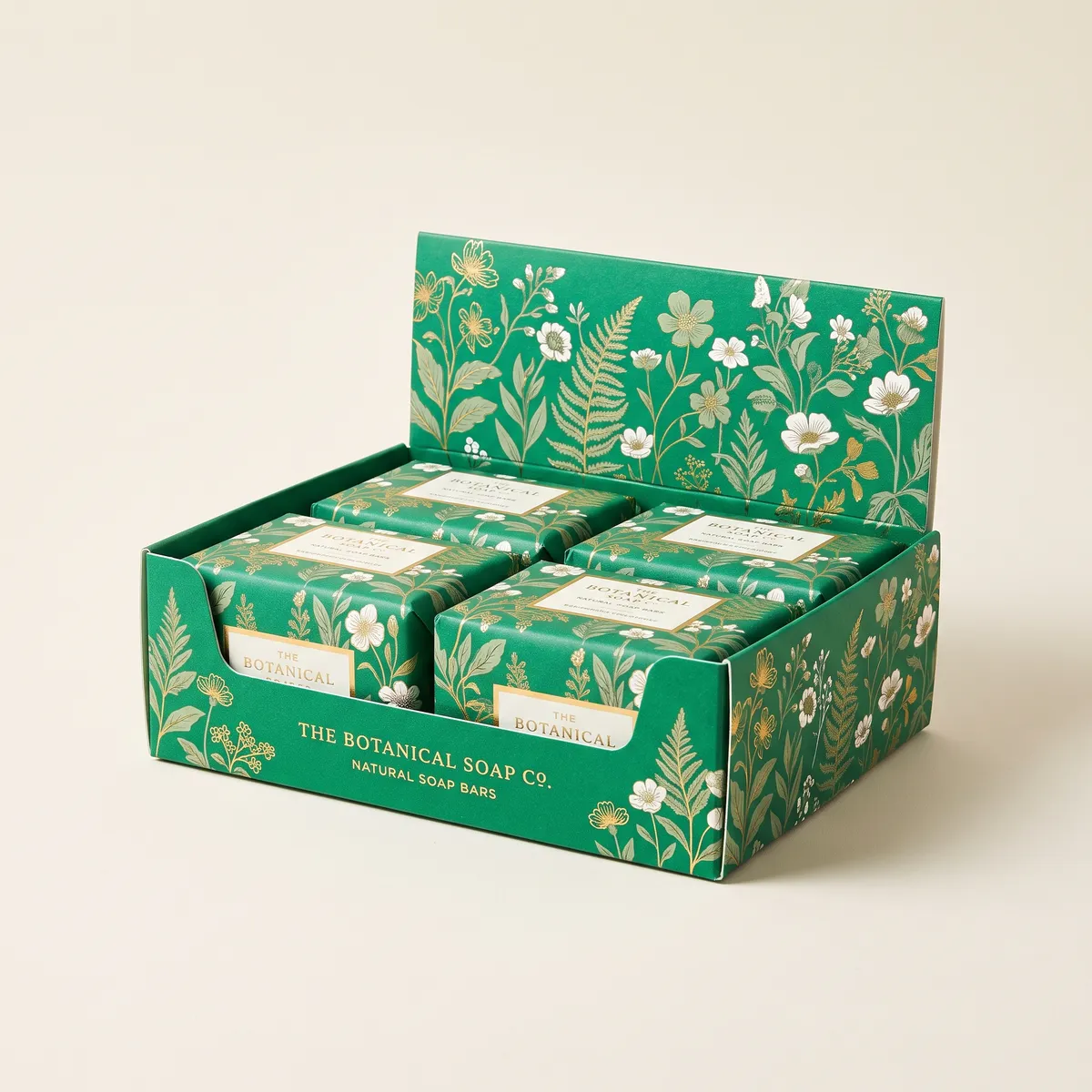
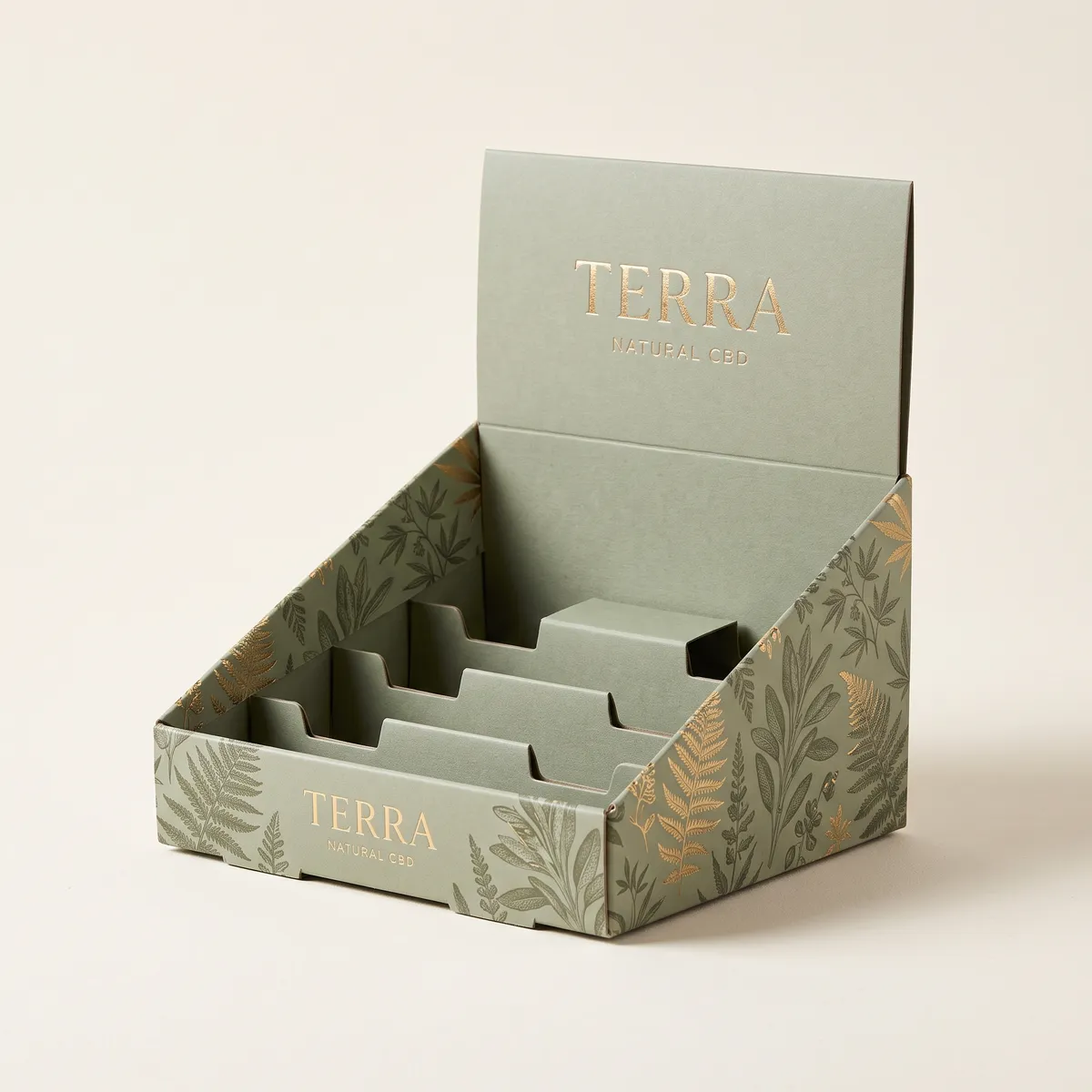
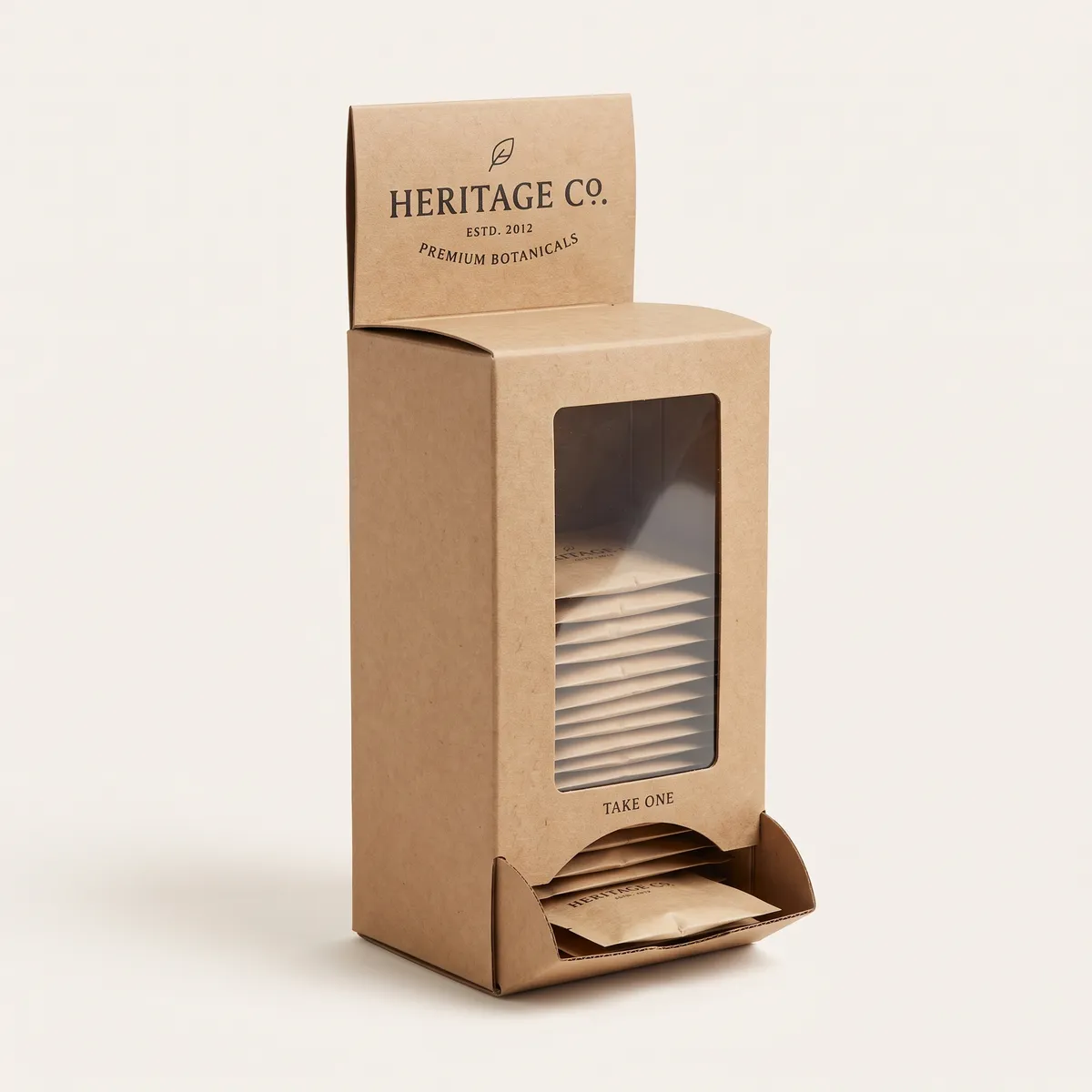
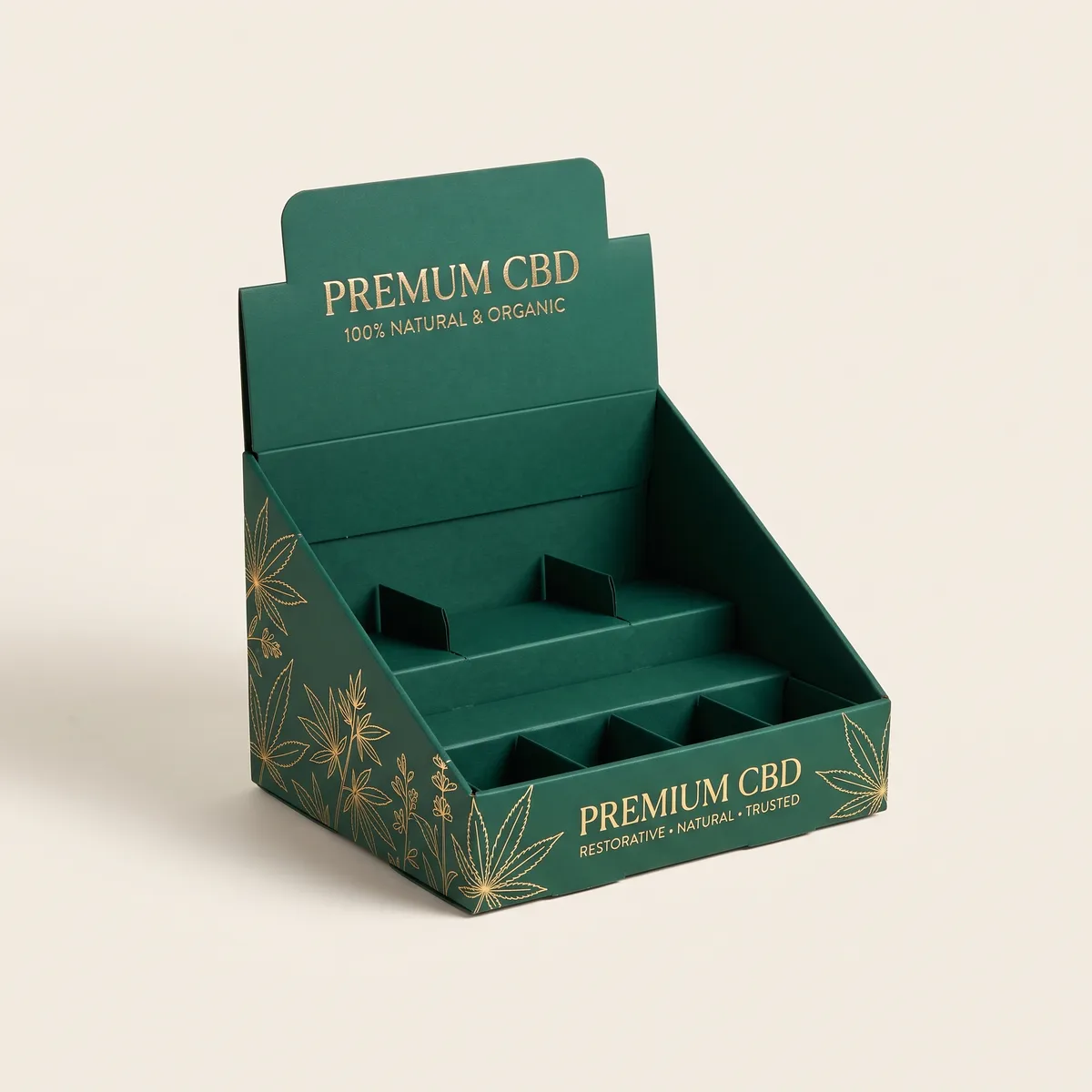
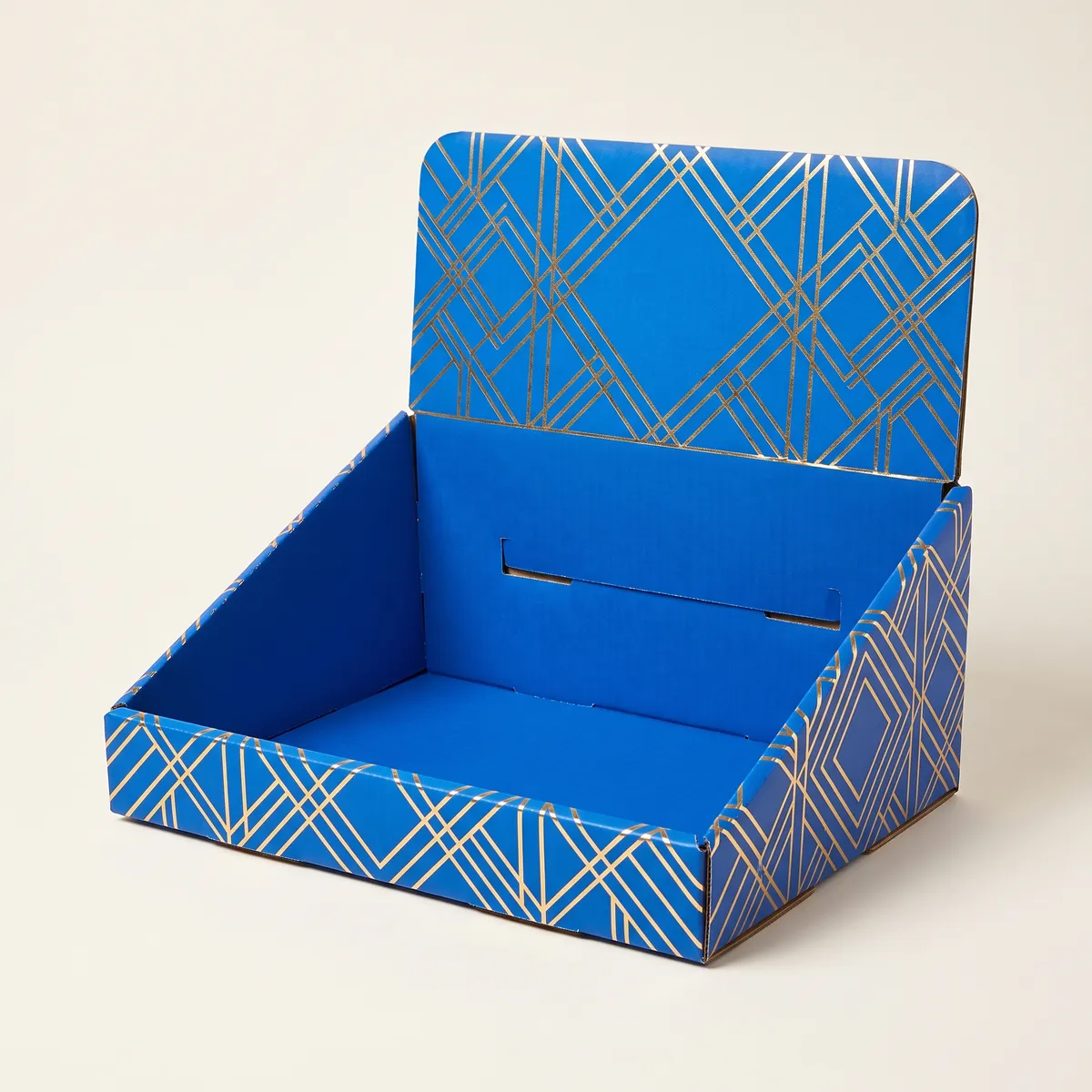
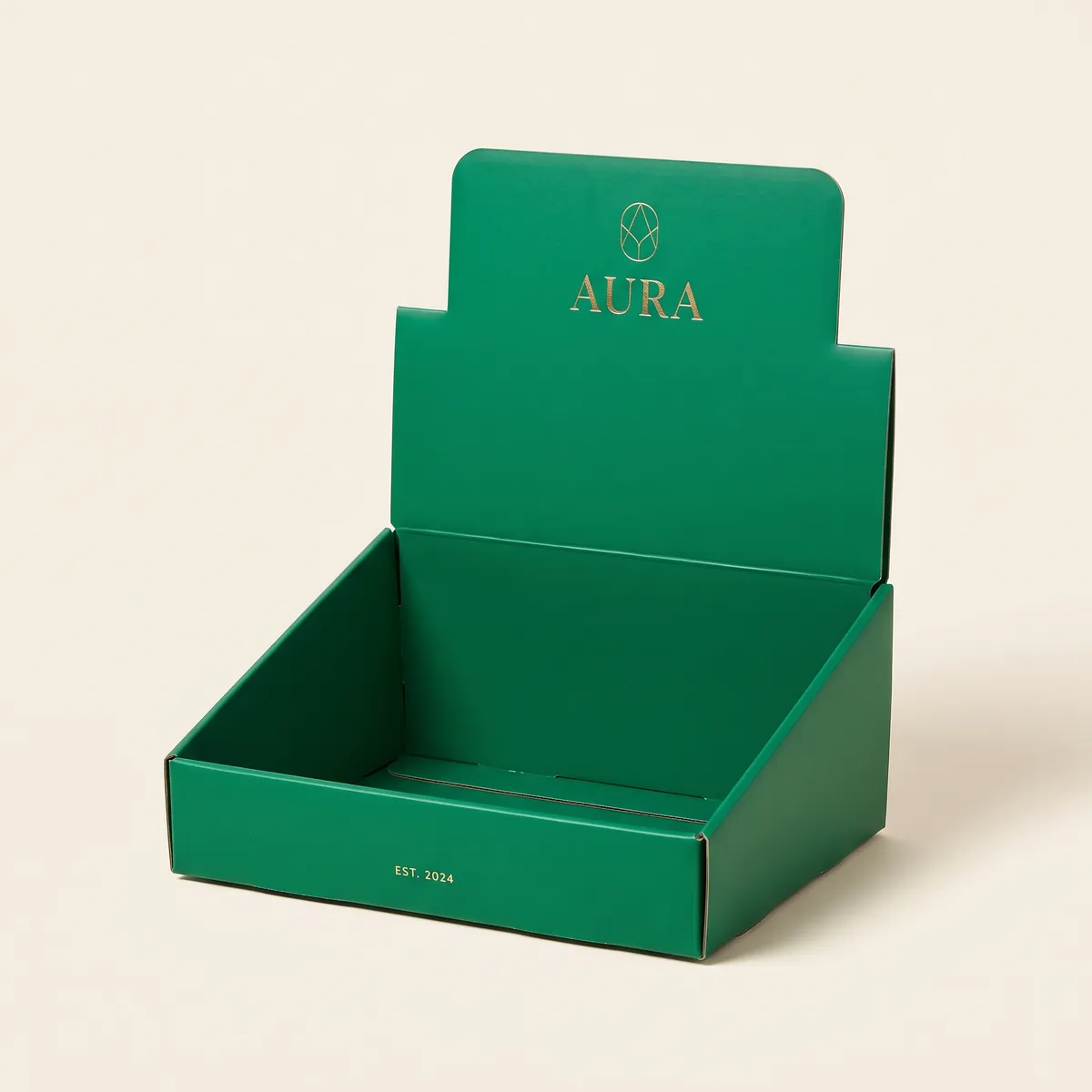
Custom display boxes sit beside the till with a cavity grid laid out around your actual product, so every unit faces forward. The inside faces that show when the lid folds back are printable too, and most brands completely overlook them. Folding board suits light product on short campaigns; corrugated earns its cost when the unit holds weight or gets restocked repeatedly.

Ours are on Trustpilot, where we can't edit them or choose which ones you see.
Read them on Trustpilot →(opens in a new tab)Four stages, twelve days
Quote confirmed
A specialist checks your spec against the board and comes back with a firm price inside 4 business hours.
Proof approved
You get a flat dieline and a 3D render. Nothing goes to press until you approve it in writing.
On press
Print, die-cut, glue, and fold. You get a press-side photo the day your job runs.
QC and delivery
Every pallet is sampled against the digital proof or physical sample you approved, then shipped with tracking to your dock or 3PL.
If a box doesn't match the digital proof or physical sample you approved, we reprint the run at no charge.
Read the reprint terms →Know exactly what you're ordering.
Custom Display Boxes Planned From the Product Outward
Most counter displays start from the wrong end. Someone picks a unit they saw in another shop, then tries to fit their product into it, and the result is either loose cavities or a footprint the store won't accept. This page is for the brand that hasn't settled the details yet: a first counter unit, a new line heading into retail, or a move away from loose stock in a basket. The order that works is product first, then the space a retailer gives you, then the board, then the print. Each narrower display variant on this site answers one of those questions, whether size, stock, color or a specific product. This one is where you start when none of them is decided.
Display Box Build Options: Stock, Cavity Grid and Footprint
A display is three decisions sharing one dieline: the board, the cavity layout and the footprint. These are the options before you narrow to a variant.
| Attribute | Options |
|---|---|
| Folding board | Coated paperboard for light product and short campaigns |
| Corrugated | C-flute, B-flute or BC double-wall where the unit carries weight |
| Kraft | Unbleached board, best in one or two colors |
| Cavity grid | Set by unit size and facing count |
| Footprint | Cut to the counter or floor space you have |
| Header card | Optional, above the product line |
Every dimension is internal unless stated, and we confirm which in writing. Moving to fluted board for weight-bearing units is the choice that changes the rest, because it shifts the price, the print limits and how tall the unit can go.
Narrowing a Display Down: Size, Then Stock, Then Color
Starting here rather than on a narrower page makes sense when you can't yet answer the questions those pages assume. The sequence that saves the most rework is size, then stock, then color. Size comes from the product and the space a store will give you, and it decides whether folding board can carry the load at all. Stock follows: coated board when print does the selling, fluted board when it carries weight or is refilled week after week, kraft when the material is part of the message. Color comes last because it only matters once the board is fixed. Mixed ranges often need two answers, and beauty lines launching at the counter show why: a light lipstick unit and a heavier skincare set rarely belong on the same board.
Header Cards, Laminate and Full-Panel Print on a Display
Every display build takes full-color print, but what goes on top depends on the board underneath. On coated board, lamination is the sensible step for a unit handled through a whole campaign, and gloss, matte and soft-touch films all apply cleanly. A header card earns its cost on any unit that sits lower than the products around it, since it puts the brand where a customer standing back can see it. On fluted board, keep logos bold and type large, because the flute shows through the liner and softens anything thin. On kraft, plan for one or two colors and accept that the brown shifts every hue. What most displays don't need is a window: the product is already in plain view.
Counter Displays for Checkout Sweets, Beauty Minis and Impulse Lines
The unit earns its place wherever a small, cheap product benefits from being seen at the moment of payment. Impulse sweets at the register are the classic case: single bars, lollipops and mints that nobody plans to buy until they're standing in line. Beauty minis work the same way, as do travel sizes, sample sets, single-serve snacks and small accessories that would vanish on a shelf. Brands also use a counter unit to bring a new line into a store that already stocks their main range, because it gets the new product noticed without asking for more shelf space. Seasonal ranges are the other big use, such as a holiday flavor or a gift-sized pack that only needs the counter for a few weeks.
What We Need to Quote a Display Unit
Send us three things and we can quote: the product's dimensions, how many units you want facing forward, and roughly where the display will sit. From those we build the dieline, confirm in writing whether each measurement is internal or external, and send a proof. Design help is unlimited and free at that stage, so the layout can go back and forth until the cavities and artwork are right. Turnaround is 8–12 business days once you sign off the proof, and a rush slot is available at extra cost we quote before you commit. Each unit passes a three-stage check, shipping sits inside the price, and a bulk run that strays from the approved proof gets reprinted at our expense.
One connected process, start to finish.
Structural Design
Dieline drafted to your exact fit and freight tolerances.
Proof & Sample
Sign off on a digital proof, or request a physical sample.
Tooling
Dies and plates are cut for your job and archived on file.
Production
Print, die-cut, and assembly run under in-line quality checks.
Ship & Reorder
Freight goes out, and the cycle resets for your next run.
Steady process. Powerful results.
Like everything we build, our process is engineered to hold up — no shortcuts, no surprises. Five dependable stages that run the same way every single time, so reorders are just as fast as the first order.
- One dedicated teamFrom first sketch to final freight, the same people carry your order start to finish.
- Dies archived on fileReorders skip tooling and re-setup entirely — we already have your exact spec.
- Checked against your sign-offEvery run is inspected against the digital proof or physical sample you approved.
Set up your file once, correctly
Nine in ten delayed jobs are delayed by artwork, not production. Match these four rules and your proof lands the next morning.
- Bleed1/8 in (3 mm) past every cut line
- Safe ZoneKeep text 1/4 in clear of every crease
- ColourCMYK or named Pantone. No RGB.
- Resolution300 dpi at final size, fonts outlined
No print-ready file?
Send a logo and a rough idea. Our studio builds the production file free with any order over 500 units — you keep the source file either way.
Ask the StudioBackground art must run all the way to the outer bleed edge. Anything inside the white dashed line survives fold tolerance.

What brands say about this box
They live there rather than here, where we can't edit them, delete them, or pick which ones you get to see. That is exactly what makes them worth reading.
Read all reviews on Trustpilot(opens in a new tab)Answers before you have to ask.
How many cavities can a display box hold?
Whatever your product and counter space allow. We lay the cavity grid out around your actual unit dimensions rather than a standard layout. Tell us the product size and how many you want facing forward.
Can display boxes be printed on every panel?
Yes, including the inside faces that show once the lid folds back. That's a surface most brands overlook, and it's visible to every customer standing at the counter.
Do display boxes need to be corrugated?
Not always. Light product on a short campaign works fine in folding board. Corrugated earns its cost where the unit holds weight, gets restocked repeatedly, or ships assembled.
What's the turnaround on custom display boxes?
Around 8–12 business days from proof approval, cavity layout included. Rush is available at an added cost stated before you order, with shipping included.
What's the minimum on display boxes?
100 units. Displays are often trialled in a few stores before a wider rollout, so the low minimum makes testing a design practical rather than prohibitive.