
Custom Shipping Boxes, Built to take the hit.
A shipment only counts if it arrives in one piece, and plenty goes wrong between your warehouse and the door — drops, stacking, the rough ride in the truck. Custom shipping boxes from us are cut from heavy-duty corrugated stock that takes the knocks so your product never does. Send us your exact dimensions and we'll match them to the millimeter, printed with your brand.
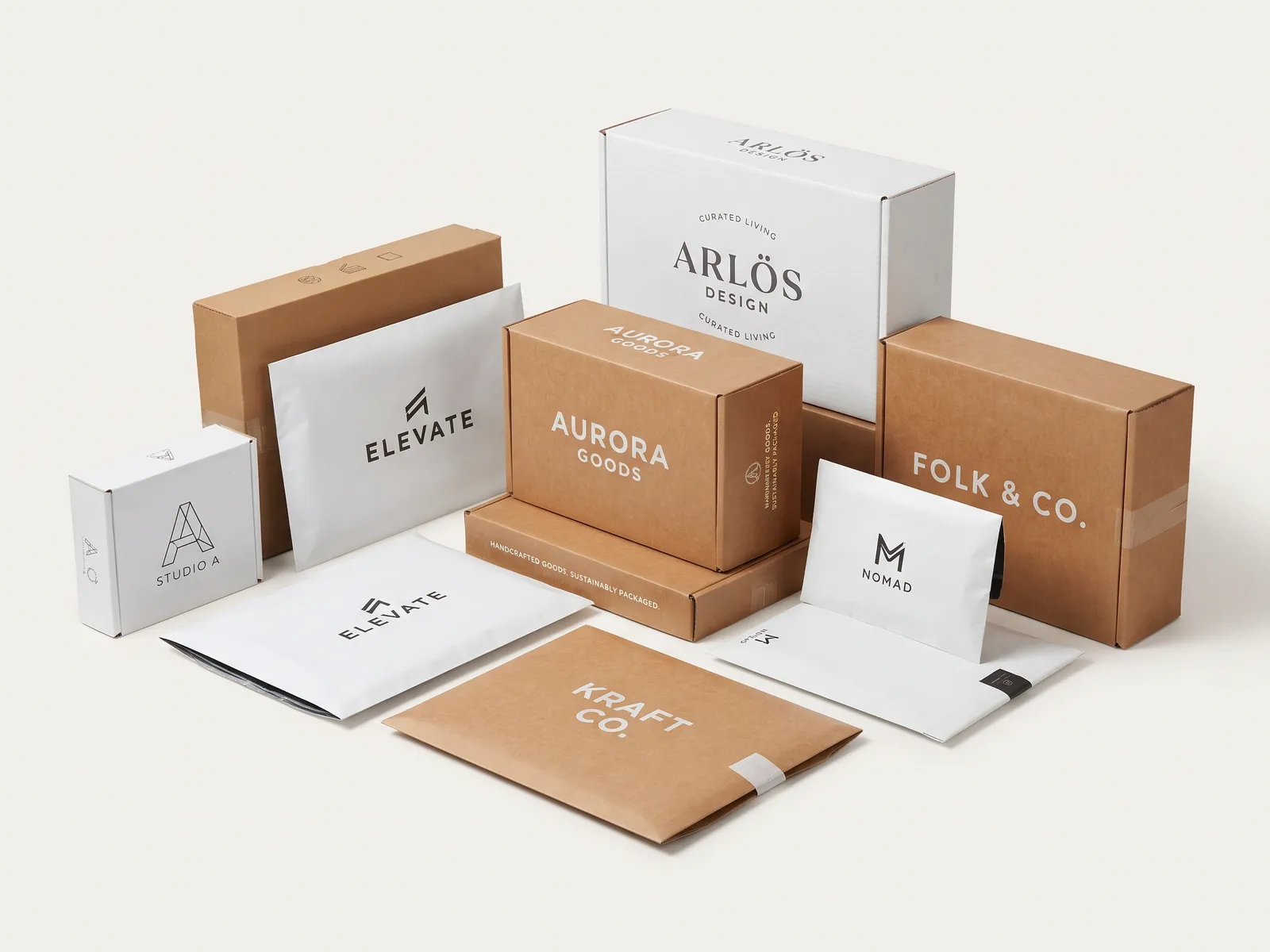
Materials & Options for Shipping Boxes
E-Flute Corrugated
Thin profile, strong crush resistance — the standard for most mailer boxes.
B-Flute Corrugated
A thicker flute for heavier contents or extra stacking strength.
Kraft Paper
Unbleached, natural-brown stock with an earthy, eco-forward texture.
SBS Board
Solid bleached sulfate board for a smooth, print-ready white surface.
Offset Printing
Exact color matching for large runs — the standard for big projects.
Digital Printing
Fast turnaround on shorter runs, with no minimum plate setup cost.
Flexographic Printing
Distortion-free output built for large-run corrugated jobs.
UV Printing
Instantly cured ink that resists scratches and solvents.
Matte Lamination
Soft, non-reflective finish that reads premium under any light.
Gloss Lamination
High-shine coating that makes bold colors and photography pop.
Soft-Touch Coating
A velvety exterior resistant to moisture and fingerprints.
Spot UV & Foil
Raised gloss detail or metallic foil for logos and accents.
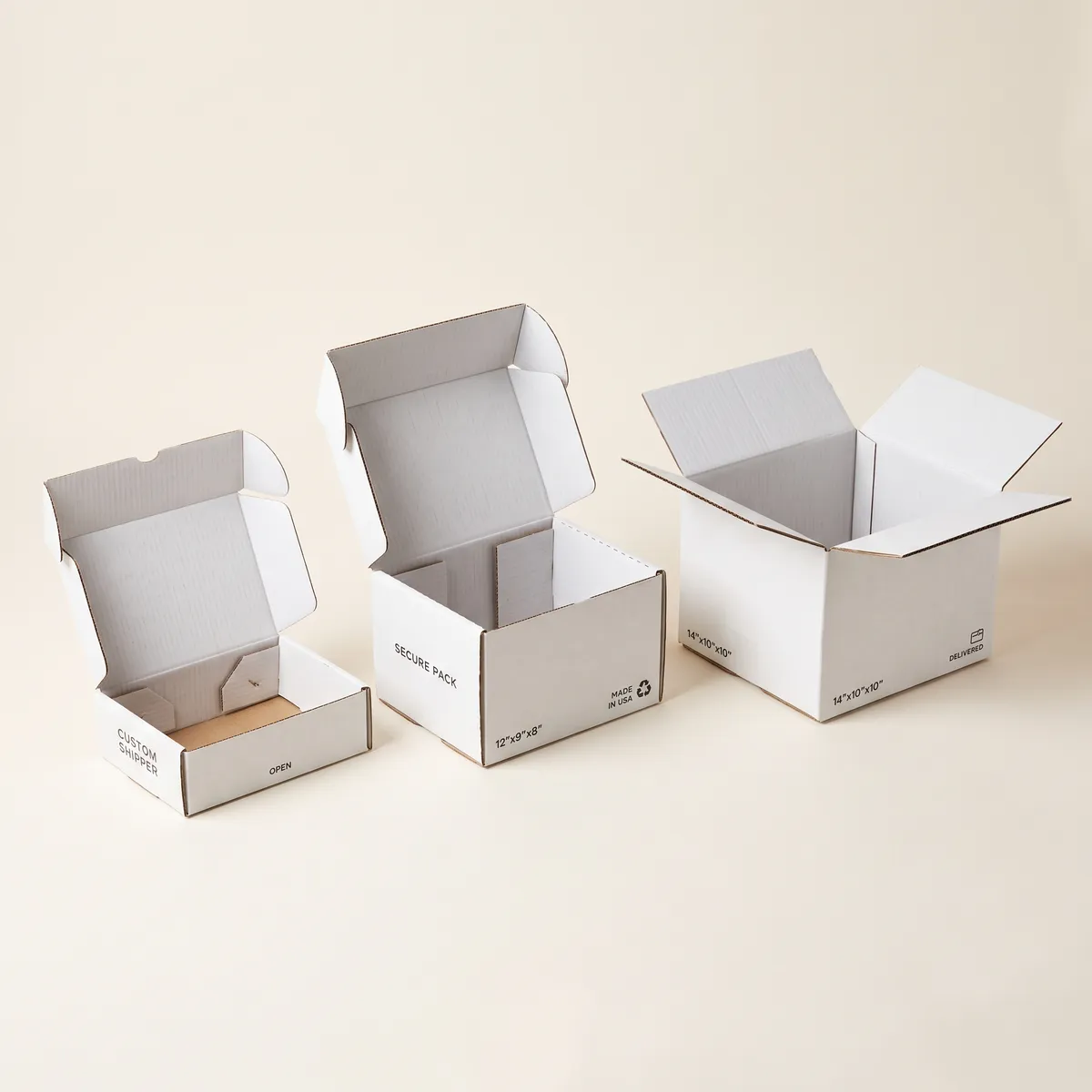
Discover Our Most-Requested Shipping Box Styles
Every style below runs through the same structural engineering and quality process — pick a starting point and we'll adjust the details to your product.

What a Shipping Box Has to Survive
A shipping box has one job that outranks the rest: get the product to the door in one piece. Between your dispatch bench and the customer's porch it gets stacked under heavier parcels, dropped onto conveyor belts, wedged into a full van, and left on a step in the rain. Every one of those moments is a chance for something inside to break. The people ordering these are e-commerce sellers, subscription brands, and warehouses moving enough volume that a 2% damage rate stops being a rounding error and starts being a line on the P&L. And the cost of a failed box is never just the product — it's the return freight both ways, the replacement unit, the support ticket, and the one-star review that mentions "arrived smashed." An oversized box costs you too, in dimensional-weight charges on every parcel and in items rattling around loose. The right box fits the product, survives the handling, and quietly keeps your margins intact. If you're sending something breakable like electronics and tech, the box carries even more weight.
Board Grades, Flutes and Shipping Box Specs
Shipping boxes are built on corrugated board, and the flute profile does the heavy lifting. C-flute (about 4mm) is the all-round shipping standard, B-flute (about 3.2mm) gives a flatter print surface and better crush resistance for lighter loads, and a BC double-wall stacks the two for heavy or fragile freight. Strength is rated by Edge Crush Test — roughly 32 ECT for single-wall up to 44 ECT and beyond for double-wall — or by Mullen burst at 200# to 275#. The outer and inner liners are usually kraft, which takes flexo printing cleanly and adds tear resistance. Sizes run from small parcel cartons up to large 24-inch-plus shippers, cut to your product's dimensions to kill void fill. Construction is typically a regular slotted container (RSC) with glued or taped seams, scored for a clean fold. Work to a dimension tolerance of about ±1/16" (1.5mm); tighter than that on corrugated adds cost without adding value.
Where Shipping Boxes Save Real Money
The case for a proper shipping box shows up in three numbers. First, your damage rate: a box matched to the product and rated for the load cuts the breakages that trigger a refund, a replacement, and return freight you pay twice. Second, your dimensional-weight bill — carriers charge on the box's size, not just its weight, so an oversized carton quietly overcharges you on every parcel, while a right-sized mailer drops that cost across your whole volume. Third, your reviews: "arrived smashed" is the kind of one-star that suppresses conversion long after the refund clears. Get the box right and all three move the right way at once — fewer claims, lower freight per parcel, and unboxings that don't generate tickets. On a few thousand shipments a month, trimming a couple of points off damage and an inch off the box turns into a line you can actually see on the P&L, not a rounding error.
Printing on Corrugated Shippers
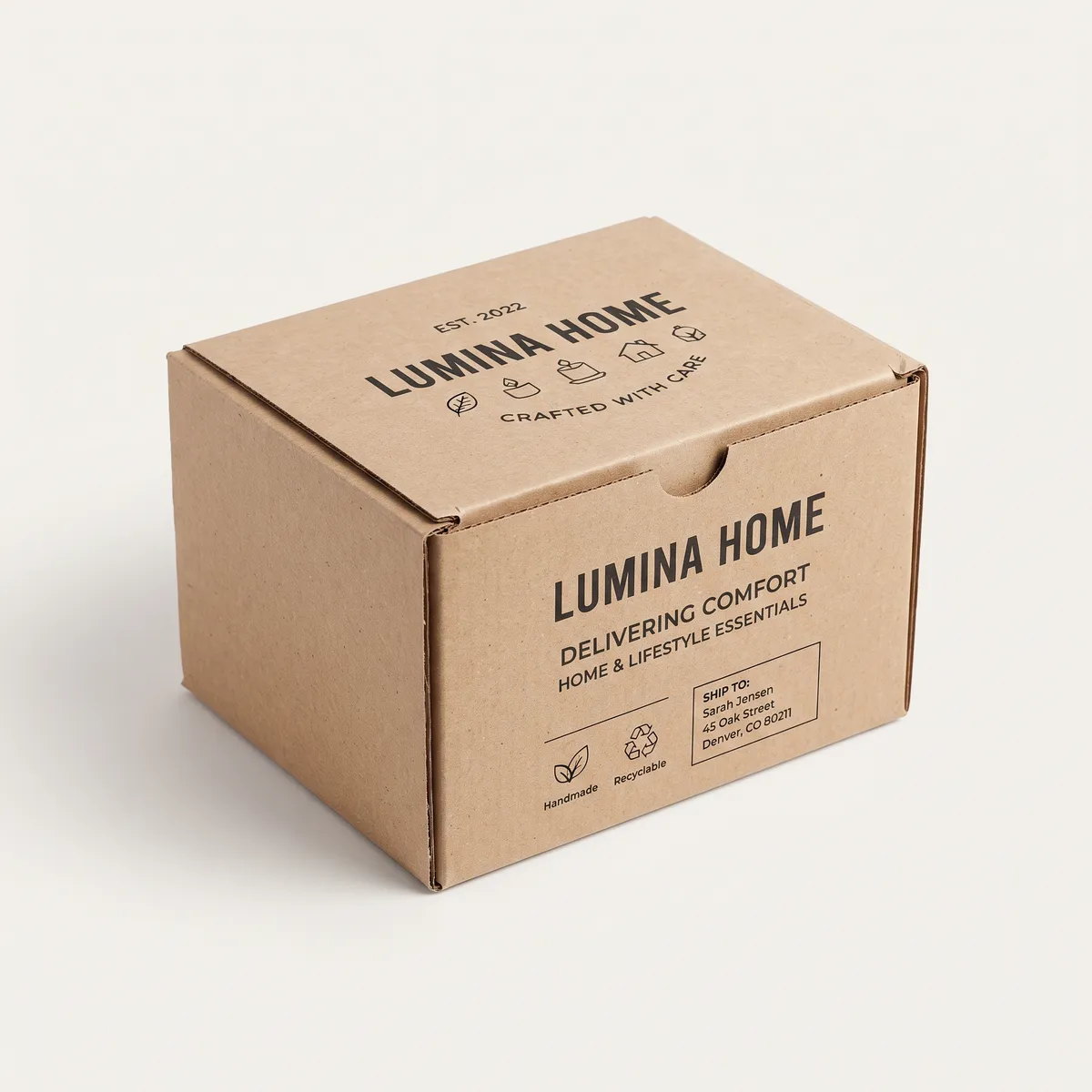
Shipping is the one category where premium finish is usually wasted money. The box gets scuffed in a van and binned on arrival, so foil and soft-touch are spend that nobody sees. Flexo printing in one or two colors directly on the corrugated liner is the right call at volume — cheap per unit, fast, and durable enough for the job. Digital makes sense below a few thousand units or when artwork changes often, since there are no plates to pay for. Where brands do get value is inside: a printed cardboard inner carton or a branded sleeve puts the finish where the customer actually looks, at a fraction of decorating the whole shipper. One thing to know — fine detail and small type don't hold well on fluted board, because the flute telegraphs through and softens the edges. Keep logos bold, keep type above 8pt, and put the money into structure and fit rather than surface. On a shipping box, print is identification; protection is the product.
Shipping Box Styles Worth Stocking
Most shipping volume runs on the regular slotted container, but the style choice is really an operations decision — match it to how your team packs.
- Regular slotted container (RSC) — the default taped or glued carton. Cheapest per unit, right for most parcel work.
- Auto-bottom — pops open and locks its base in one motion. Removes the taping step entirely, which pays for itself past a few hundred orders a day.
- Snap-lock — interlocking base for lighter goods. Folds flat for storage, locks square when needed.
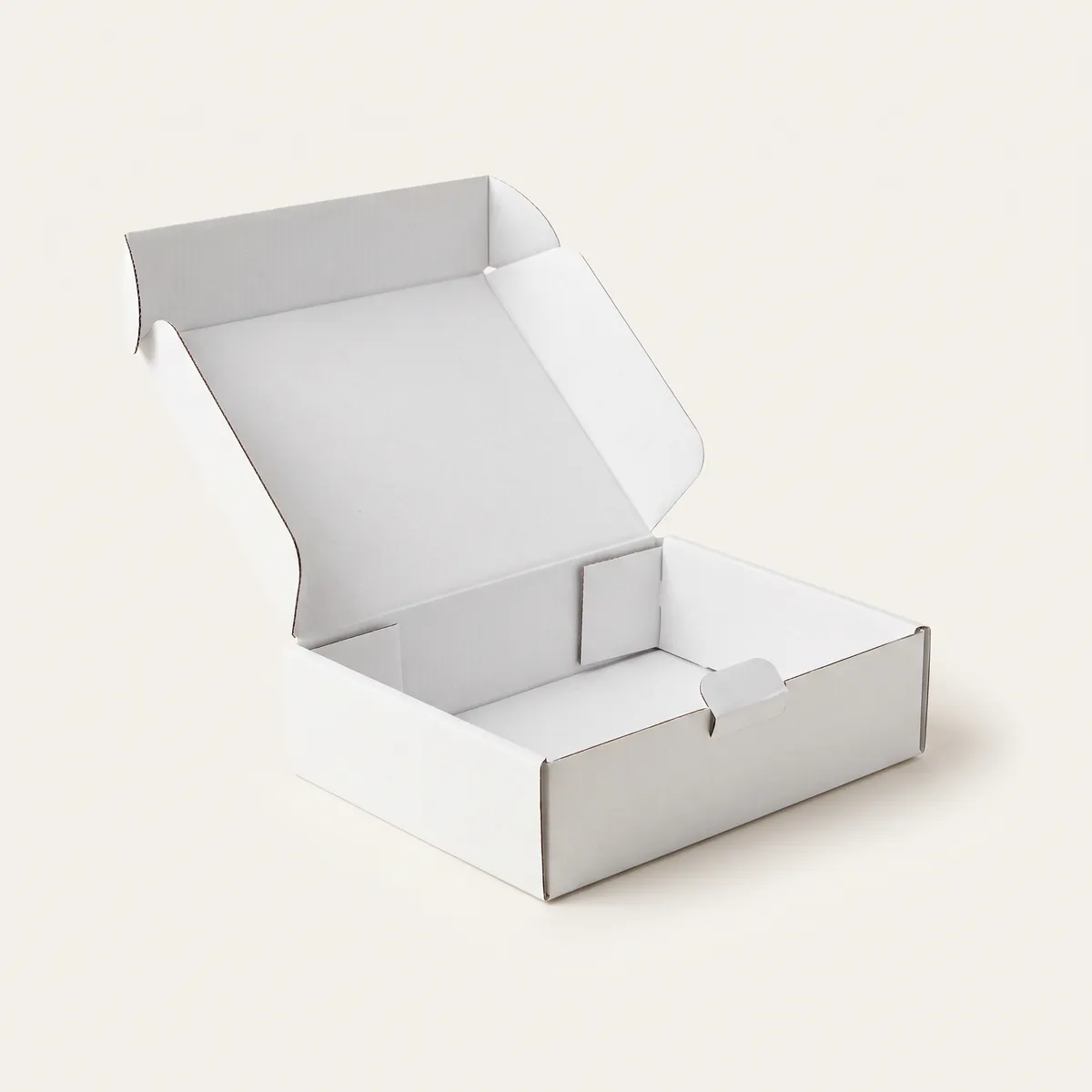
- Die-cut mailers — self-locking tuck flaps, no tape at all. Best for flat or lightweight items.
Subscription and DTC brands usually run two or three sizes rather than a dozen — fewer SKUs means better pricing and simpler stock. Whatever you choose, size it to the product so you're not paying dimensional weight on air.
Choosing a Shipping Box, and Why Us
The main decision is single-wall versus double-wall, and most people over-buy. Single-wall C-flute handles the majority of parcel shipping — apparel, homewares, anything under a few kilos that isn't fragile. Step up to double-wall only when you're shipping real weight, stacking pallets, or sending something breakable like glass, where the cost of a failure dwarfs the cost of better board. Size up when your product has protrusions or you need cushioning around it; size down aggressively otherwise, because every extra inch costs you on dimensional weight across every parcel you send. If you're sending fragile glass, look at how wine shippers are built — the insert matters more than the board. If the box is part of a premium presentation rather than pure transit, a rigid build is a different conversation entirely.
Working with us, the practical differences are these. Every box goes through a three-stage check before it ships, so problems are caught by us rather than discovered by you when a pallet lands. If a run doesn't match the proof you approved, we reprint it at our cost. There are no hidden charges — no surprise die, plate, or setup fees appearing after the quote, and that's a guarantee, not a caveat. Revisions before print are unlimited and free. Minimum order is 100, turnaround is 8–12 business days, and shipping is included.
Unrivaled Support From Packaging Experts
From first sketch to full production, the same team carries your order through every stage.
Structural Engineering
We determine the right size, shape, and material for a snug fit and real protection.
Free Artwork Guidance
Our design team helps translate your brand into a box, at no added charge.
2D & 3D Mockups
See your box come to life before a single sheet of board is cut.
Quality Assurance
Every run is checked in-line against the digital proof or physical sample you approved, not just at the end.
Fast Turnaround
8–12 business days standard, with rush options when timing is tight.
Tracked Shipping
Palletized freight or drop-ship, tracked from our dock to yours.
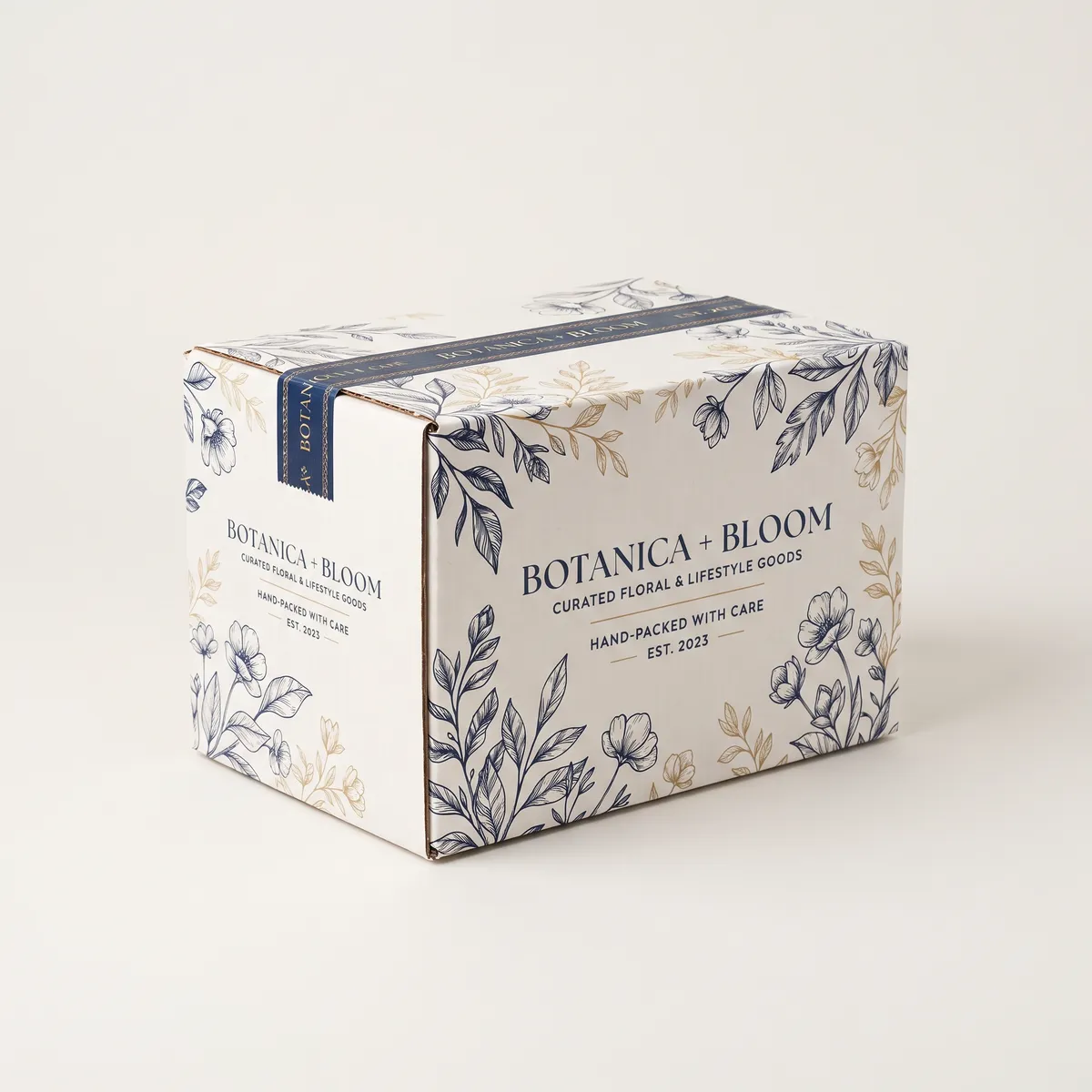
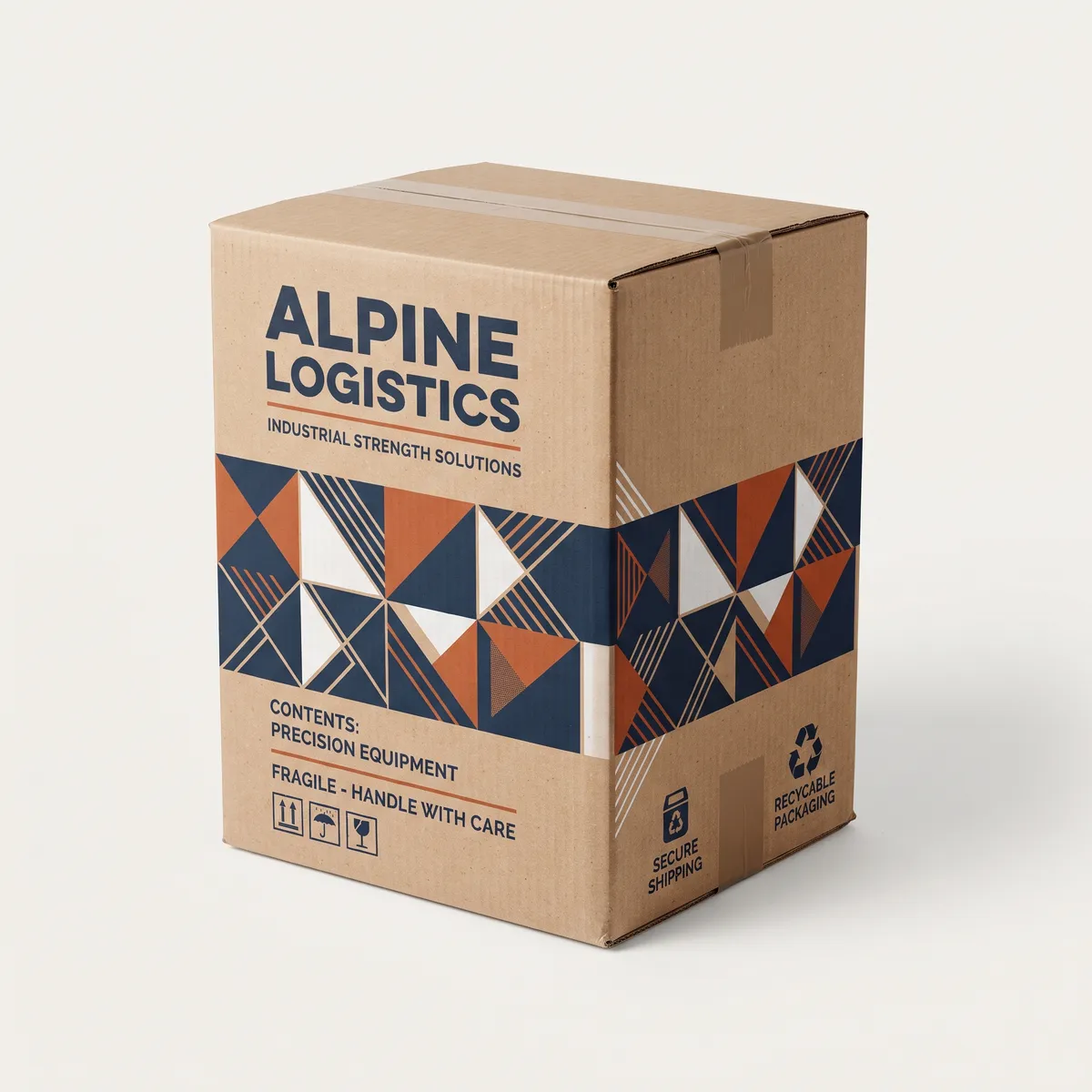
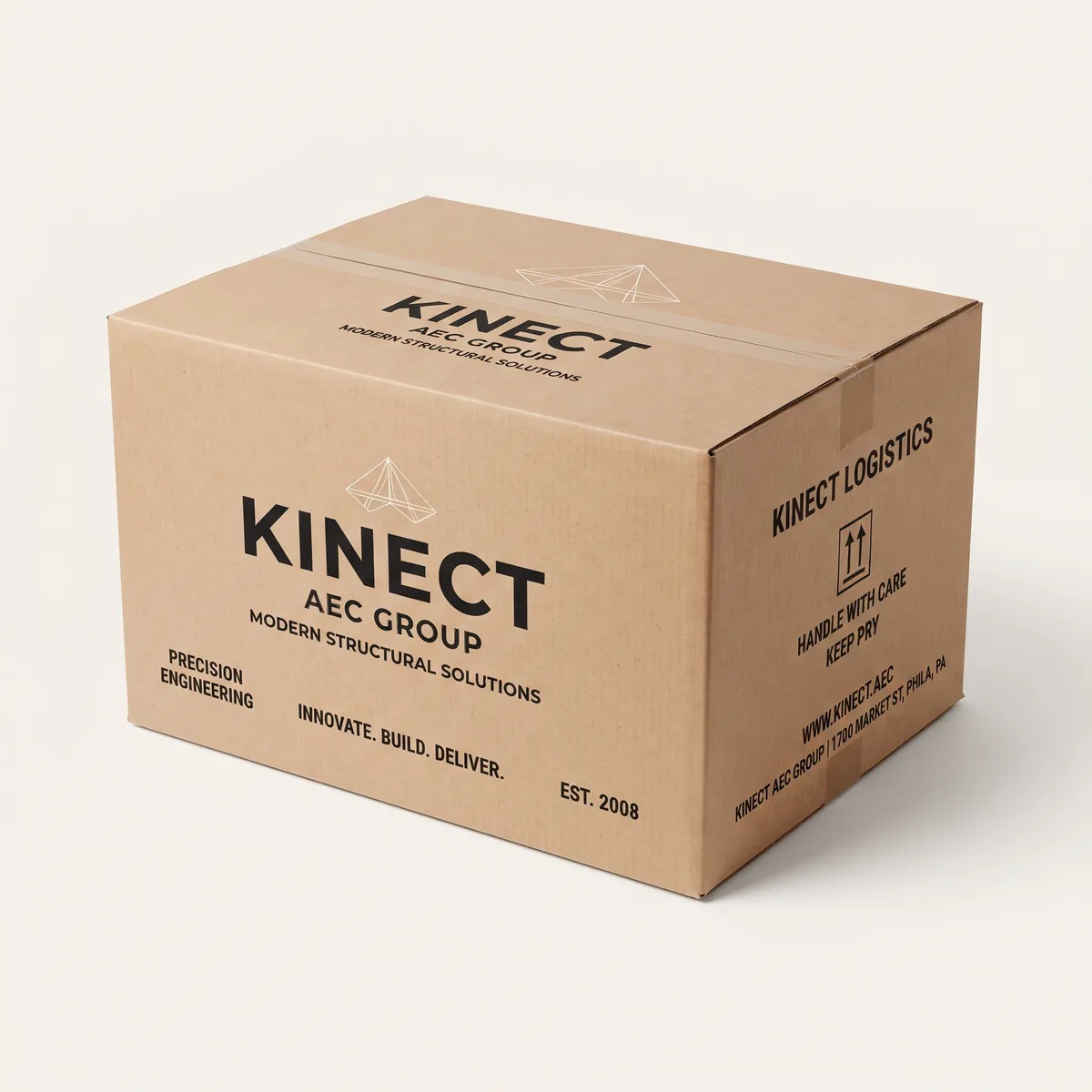
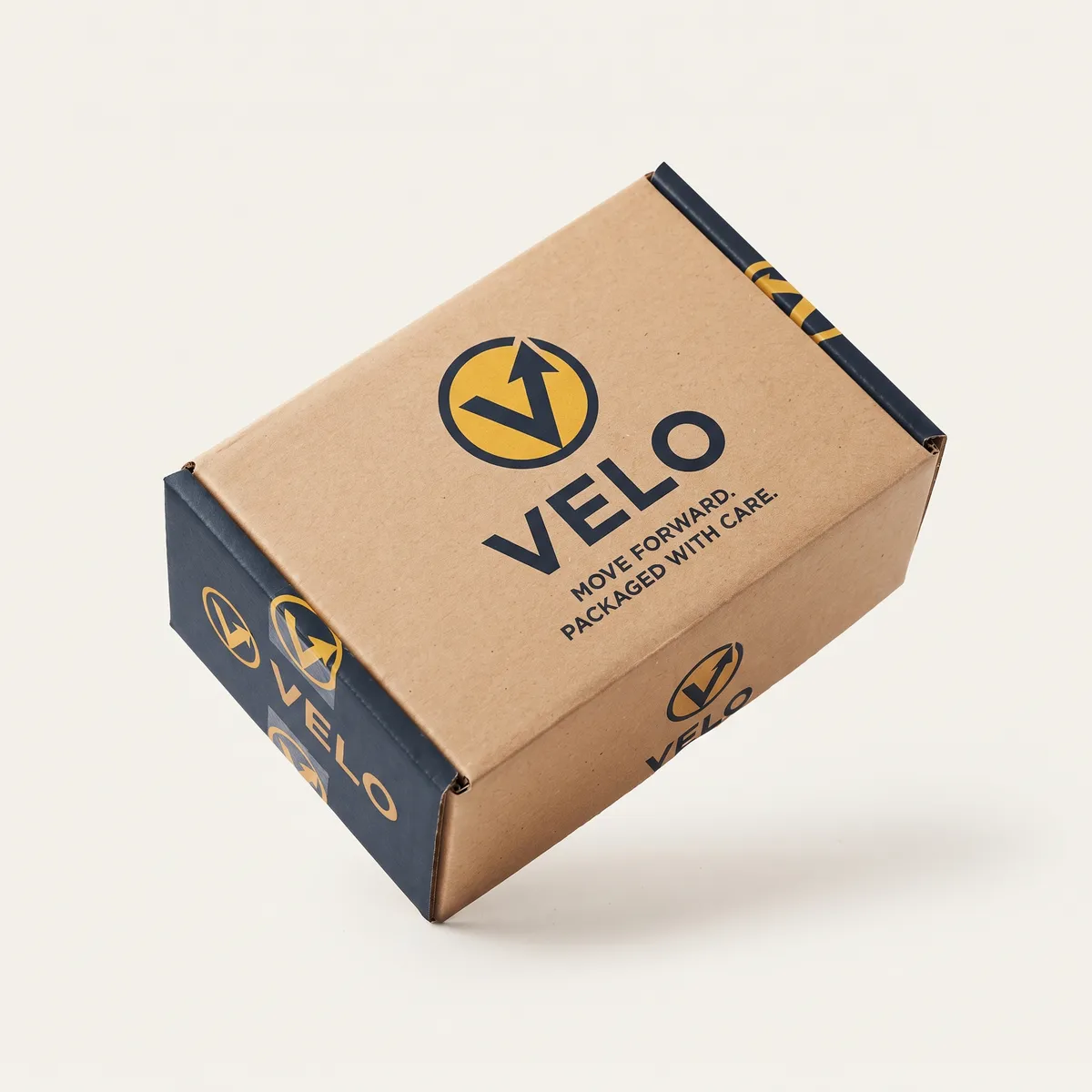
Explore Other Box Styles
What brands say about their shipping boxes
They live there rather than here, where we can't edit them, delete them, or pick which ones you get to see. That is exactly what makes them worth reading.
Read all reviews on Trustpilot(opens in a new tab)Answers before you have to ask.
Will these hold up if the carrier throws them around?
That's exactly what they're built for. Custom shipping boxes are made from heavy-duty corrugated stock rated for stacking, drops, and the rough ride in a delivery truck, so the box takes the punishment instead of your product.
Can you match the exact size of my product?
Yes. Send us the dimensions of what you're shipping and we cut the box to fit snugly, which cuts down on void fill and stops items shifting around in transit. A snug box also ships cheaper than an oversized one.
Single-wall or double-wall — which do I need?
It depends on weight and what's inside. Lighter goods do fine in single-wall; heavier or fragile items ship safer in double-wall. Tell us the product and we'll point you to the right board strength.
How soon can I get my shipping boxes?
Most custom shipping boxes are ready in about 8–12 business days after you approve the proof, and we run a rush lane when you're up against a deadline. Shipping's included either way.
Do I need a finished design, or can you help?
Either works. Send print-ready artwork (AI, PDF, or EPS at 300 dpi) and we'll run with it, or send your logo and our design team sets it up for you — design help is unlimited and free. Our minimum order is 100 boxes, so you can start with a manageable run rather than committing to thousands upfront.