
Custom Packaging Trays
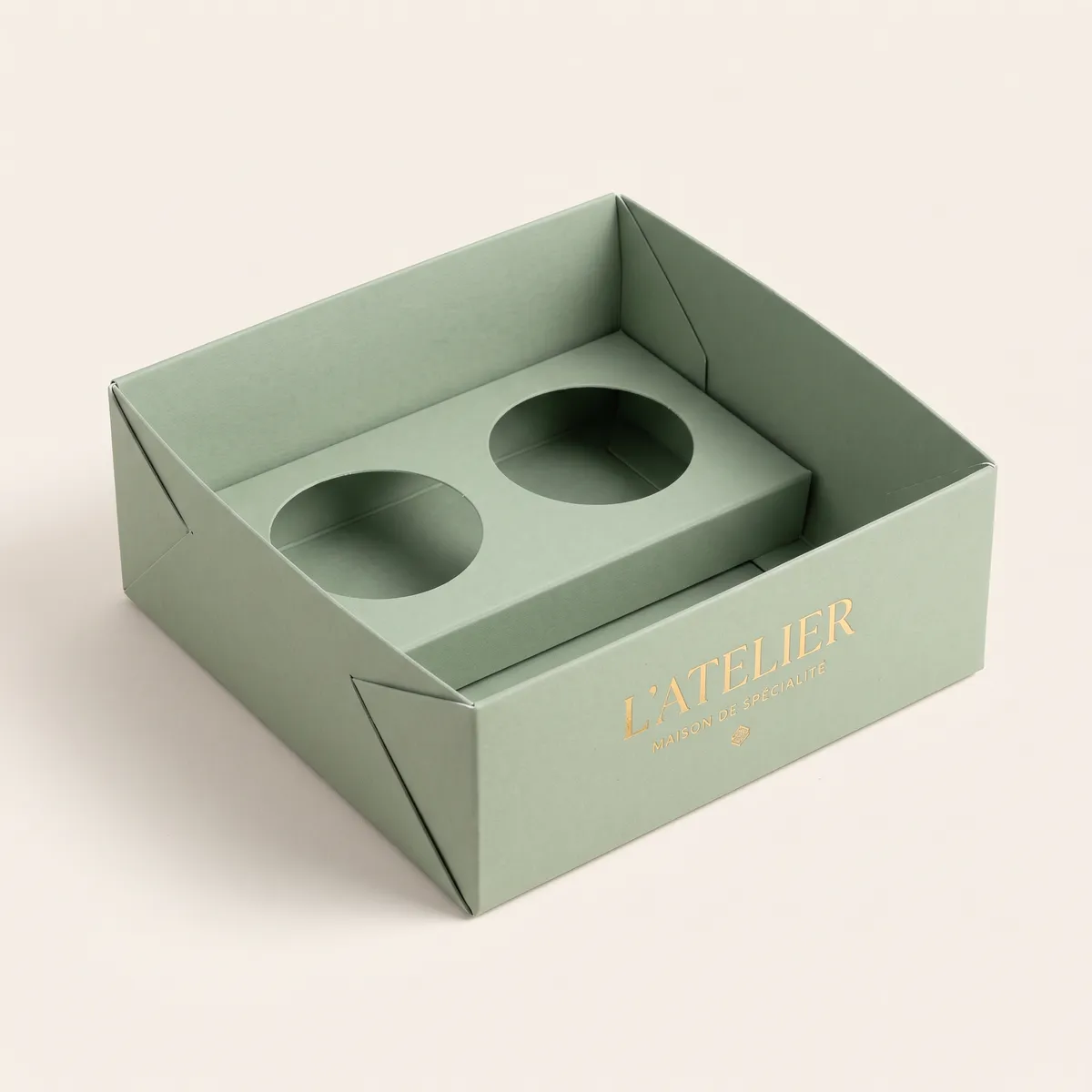
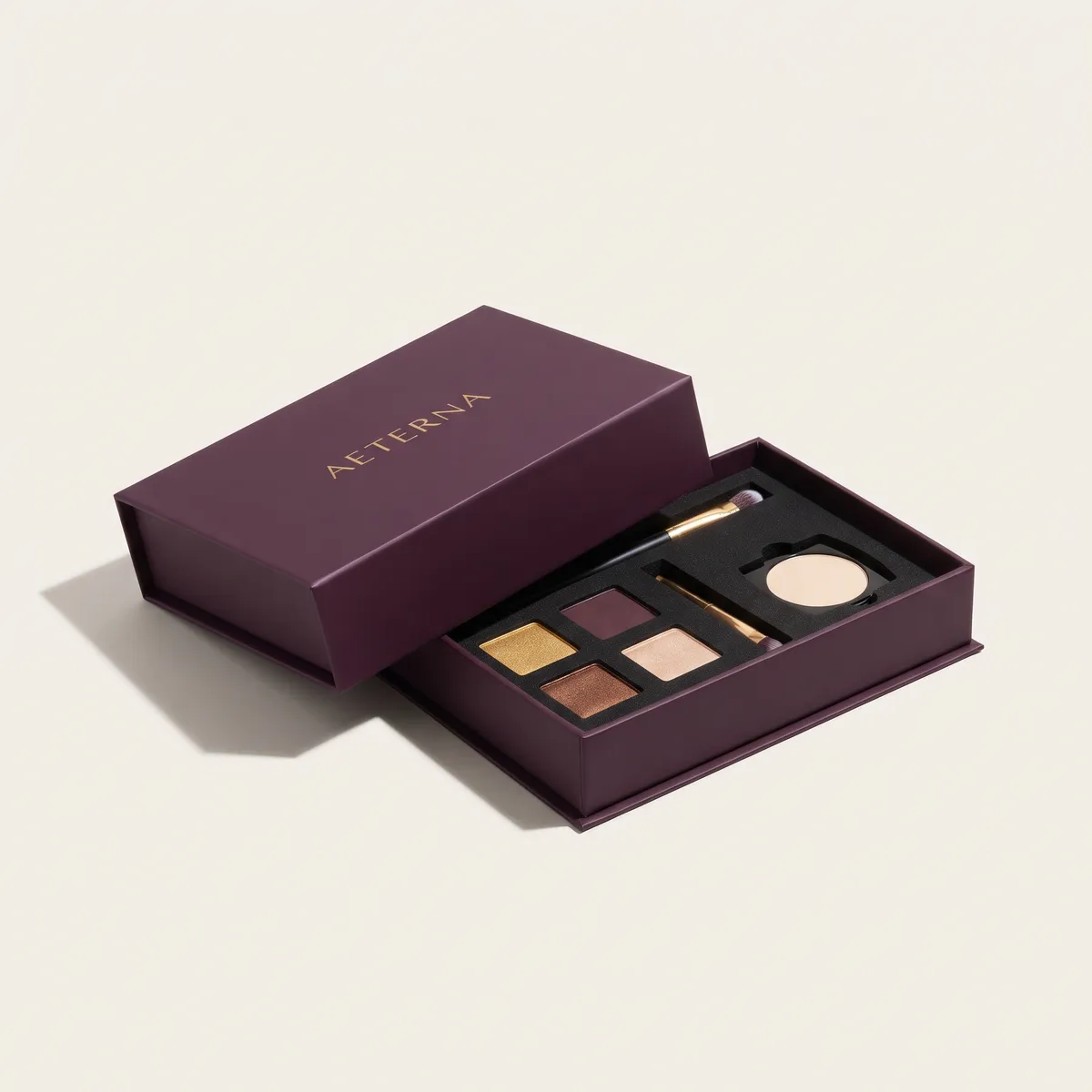
Custom packaging trays cut each cavity within a millimeter or two of your product: too wide and it shifts, too tight and it won't seat without forcing. Contoured and irregular cavity shapes are entirely possible, which is the point of a custom tray. A die-cut tray costs little at volume and almost always less than the damage and returns loose products inevitably cause.

Ours are on Trustpilot, where we can't edit them or choose which ones you see.
Read them on Trustpilot →(opens in a new tab)Four stages, twelve days
Quote confirmed
A specialist checks your spec against the board and comes back with a firm price inside 4 business hours.
Proof approved
You get a flat dieline and a 3D render. Nothing goes to press until you approve it in writing.
On press
Print, die-cut, glue, and fold. You get a press-side photo the day your job runs.
QC and delivery
Every pallet is sampled against the digital proof or physical sample you approved, then shipped with tracking to your dock or 3PL.
If a box doesn't match the digital proof or physical sample you approved, we reprint the run at no charge.
Read the reprint terms →Know exactly what you're ordering.
Four Tray Builds, One Question: Who Sees It
Every tray in this range does the same mechanical job, so the real choice is about who looks at it. A tray buried under a closed lid only has to hold its cavities in place, and the cheapest stock that manages that is the right one. A tray lifted out on camera, or sitting under a window, becomes part of the presentation and gets judged like the outer box. Food resting directly on the board is a third case, because the contact surface becomes the specification. Start here when the product needs a fixed position inside the box but you haven't yet decided which of those three situations applies. Most buyers are packing several pieces and want each to stay put.
Tray Spec Sheet: Stock, Cavity and Depth
A tray is specified from the product outward, so most of this sheet is filled in by your measurements rather than picked from a list. The default is dense chipboard insert stock, which holds a cut edge cleanly and stays flat under a lid.
| Attribute | Specification |
|---|---|
| Stock | Chipboard as standard; kraft, coated or food-grade board on request |
| Cavity fit | Within a millimeter or two of each item |
| Cavity count | As many as the layout needs |
| Depth | Set to the tallest item in the layout |
| Footprint | Matched to the inside of your outer box |
| Dimensions | Internal vs external confirmed in writing |
Send the outer box size along with the product, so the tray drops in without play at the edges.
Why a Cut Cavity Beats Loose Fill
Crinkle paper, foam peanuts and tissue all work by filling space, which means they settle. After a few hours in a van the product sits wherever gravity left it, and the customer opens a box that looks rearranged. A cut cavity doesn't settle, because the board fixes the product's position rather than packing density. It also keeps pieces apart, so two items can't knock or scratch each other on the way. There's a presentation gain too: a tray shows the whole set in one look. That's why chocolate assortments that need one cavity per piece moved to trays long ago, and the same reasoning holds for anything sold as a set. Loose fill still suits one sturdy item that fills its box.
Printing a Tray That Mostly Sits Under a Lid
Most custom trays are never printed, and that's usually the right call. A tray under a closed lid is seen for a second once the box is open, and that second rarely justifies plates. When printing makes sense, it tends to be small: a logo on the floor, a one-color message beside the cavities, or numbered positions for a set. For visible trays we can run full color on coated board, add lamination to protect it from fingers lifting product in and out, or print the tray to match the outer box. What we'd steer you away from is heavy ink coverage on cavity walls, because those edges get bent and scraped as items go in. Spend on the outer box first.
Trays for Chargers, Earbuds and Multi-Part Kits
Electronics brands are among the heaviest users of this format, because a typical retail box holds a device, a cable, a plug and sometimes a case, each needing its own place. A tray keeps the device face-up and the cable coiled in a separate well, which is what customers now expect from consumer electronics and accessory kits. Beyond that, the format turns up wherever several items ship as one: grooming sets with a razor and spare blades, tool kits, board game components, sample collections of oils or serums, and press kits sent ahead of a launch. Cosmetics brands use trays to keep bottles standing upright. If your product is a single item, ask first whether it needs a tray at all.
Sending Product Measurements for a First Cavity Proof
Start by sending each item's dimensions and the inside size of the box the tray goes into. If a part varies slightly from unit to unit, give us the largest one. We build the dieline from those numbers and confirm in writing which figures are internal and which are external, because a tray cut to outside dimensions won't fit the box it was meant for. Design help is free and unlimited, and you approve a proof before anything is cut. Production takes 8–12 business days from that approval. If you need trays sooner, rush is available at an extra cost we quote before you commit. Every tray passes a three-stage check, shipping is included in the price, and orders start at 100.
One connected process, start to finish.
Structural Design
Dieline drafted to your exact fit and freight tolerances.
Proof & Sample
Sign off on a digital proof, or request a physical sample.
Tooling
Dies and plates are cut for your job and archived on file.
Production
Print, die-cut, and assembly run under in-line quality checks.
Ship & Reorder
Freight goes out, and the cycle resets for your next run.
Steady process. Powerful results.
Like everything we build, our process is engineered to hold up — no shortcuts, no surprises. Five dependable stages that run the same way every single time, so reorders are just as fast as the first order.
- One dedicated teamFrom first sketch to final freight, the same people carry your order start to finish.
- Dies archived on fileReorders skip tooling and re-setup entirely — we already have your exact spec.
- Checked against your sign-offEvery run is inspected against the digital proof or physical sample you approved.
Set up your file once, correctly
Nine in ten delayed jobs are delayed by artwork, not production. Match these four rules and your proof lands the next morning.
- Bleed1/8 in (3 mm) past every cut line
- Safe ZoneKeep text 1/4 in clear of every crease
- ColourCMYK or named Pantone. No RGB.
- Resolution300 dpi at final size, fonts outlined
No print-ready file?
Send a logo and a rough idea. Our studio builds the production file free with any order over 500 units — you keep the source file either way.
Ask the StudioBackground art must run all the way to the outer bleed edge. Anything inside the white dashed line survives fold tolerance.

What brands say about this box
They live there rather than here, where we can't edit them, delete them, or pick which ones you get to see. That is exactly what makes them worth reading.
Read all reviews on Trustpilot(opens in a new tab)Answers before you have to ask.
How exact do tray cavities need to be?
Within a millimeter or two. A cavity cut too wide lets the product shift and defeats the purpose. Too tight and it won't seat without forcing. Send us the product dimensions and we'll cut to them.
Can trays be made in unusual shapes?
Yes. We cut cavities to whatever your product needs, including contoured and irregular shapes. That's the point of a custom tray rather than a stock one.
Do trays add much to the cost?
Modestly, and they're usually worth it. A die-cut tray is inexpensive at volume, and it's almost always cheaper than the damage and returns that come from product moving inside a box.
How long do packaging trays take?
Most orders are ready in about 8–12 business days from proof approval, cavities included. Rush is available at a quoted premium, with shipping included.
What's the minimum order for packaging trays?
100 trays. That's low enough to trial a cavity layout with your actual product before committing, which we'd recommend given how exact the fit needs to be.