
Kraft Boxes
Kraft board takes its name from the kraft pulping process, which keeps wood fibers long and strong and leaves the pulp its natural brown, with no dye involved. The same unbleached fiber absorbs ink into the sheet, so colors print muted and warmer than on coated board. Learn how kraft performs, why it recycles so readily, and which products its brown tone actually suits.
Ours are on Trustpilot, where we can't edit them or choose which ones you see.
Read them on Trustpilot →(opens in a new tab)Four stages, twelve days
Quote confirmed
A specialist checks your spec against the board and comes back with a firm price inside 4 business hours.
Proof approved
You get a flat dieline and a 3D render. Nothing goes to press until you approve it in writing.
On press
Print, die-cut, glue, and fold. You get a press-side photo the day your job runs.
QC and delivery
Every pallet is sampled against the digital proof or physical sample you approved, then shipped with tracking to your dock or 3PL.
If a box doesn't match the digital proof or physical sample you approved, we reprint the run at no charge.
Read the reprint terms →Know exactly what you're ordering.
Kraft Is a Brand Decision Made at the Stock Stage
Most packaging choices can be changed between runs. Kraft is different, because choosing it changes what every future piece of artwork can do. A brand that picks unbleached board is committing to a brown base under its logo, its palette and any imagery it prints, and that commitment usually happens before a designer has opened a file. It suits brands whose customers read the material as part of the product: handmade, low-waste and ingredient-led ranges. It frustrates brands that arrive at kraft for its environmental reputation and then find their signature color has turned muddy. This page is for buyers weighing that trade before it gets locked into a dieline, approved artwork and a reorder cycle, rather than after the first delivery looks nothing like the screen.
Kraft Board Properties
Here is how kraft behaves as a stock, set out property by property.
| Property | Kraft board |
|---|---|
| Fiber | Long and unbleached, giving good tear resistance |
| Tone | The pulp's own brown, varying slightly batch to batch |
| Ink | Soaks into the sheet and dries duller, warmer and darker |
| Color correction | A white underprint, which adds a print pass |
| Finishes | Foil and blind embossing both contrast well |
| Recycling | Widely accepted; some grease coatings affect it |
Strength depends on thickness and construction, not on the brown itself. A kraft carton and a coated carton of the same build carry similar loads. What changes is the surface: how it looks, how it prints and how it is received by customers who check what packaging is made from.
When Unbleached Board Beats a White Sheet
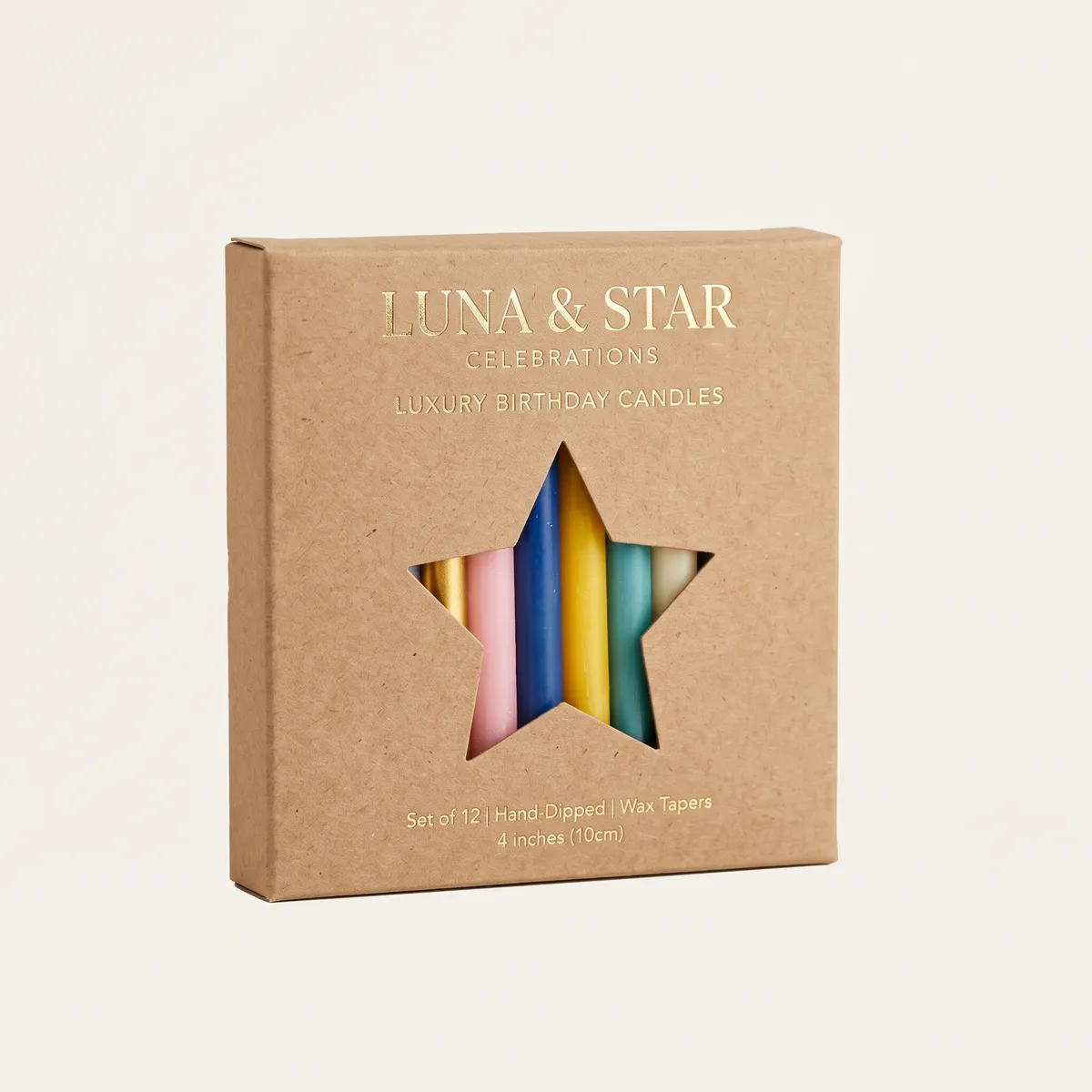
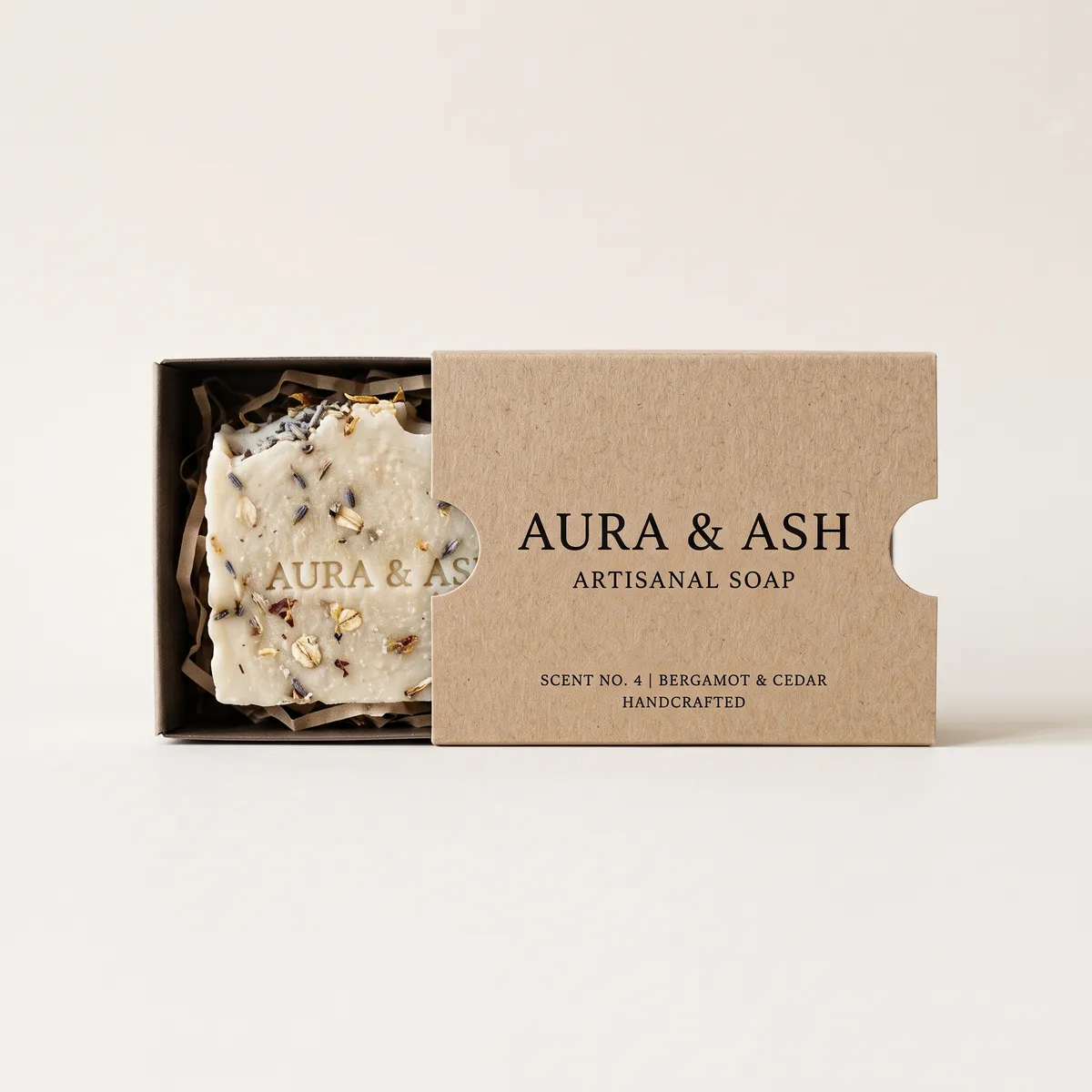
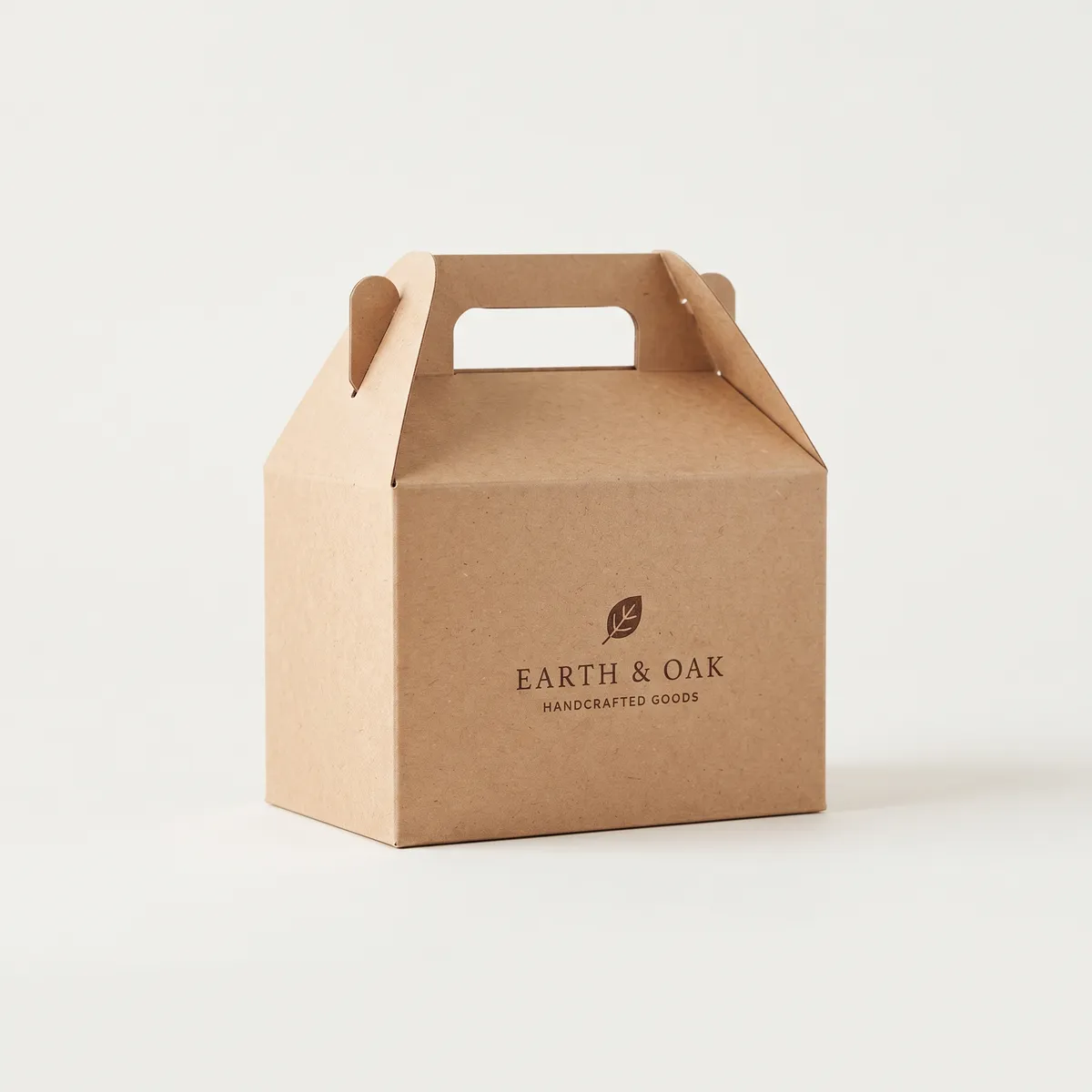
Choose kraft over coated white when the natural look is the message, not a compromise. On a soap bar, a soy candle or a bag of single-origin coffee, brown board tells the customer something about the product before they read a word, and a glossy white carton would undercut it. The effect carries across box styles: tuck-front boxes in natural brown present very differently from the same build in printed white, even with identical artwork. The honest limit is color. If your brand depends on a bright, exact palette, kraft will dull it every time, and a white underprint only partly rescues the result while adding cost. In that case coated board is the better answer, and a brown printed onto white stock gives the tone without the fiber.
Designing Artwork for a Brown Surface
Artwork for kraft works best when it's designed for the brown rather than against it. One or two colors print most cleanly, and white ink on the natural board gives a high-contrast craft look that four-color process can't reach on that base. Where an exact brand color is non-negotiable, plan a white underprint beneath it and budget for the extra pass. Expect small shifts in board tone from one batch to the next; that is normal for unbleached stock and worth accepting rather than chasing. Metallic foil stands out sharply against brown, and a blind emboss adds relief with the die alone. Heavy gloss lamination is the finish to skip. It undercuts the natural look and puts plastic film on a box chosen partly for how easily it recycles.
Brands Whose Story Kraft Already Tells
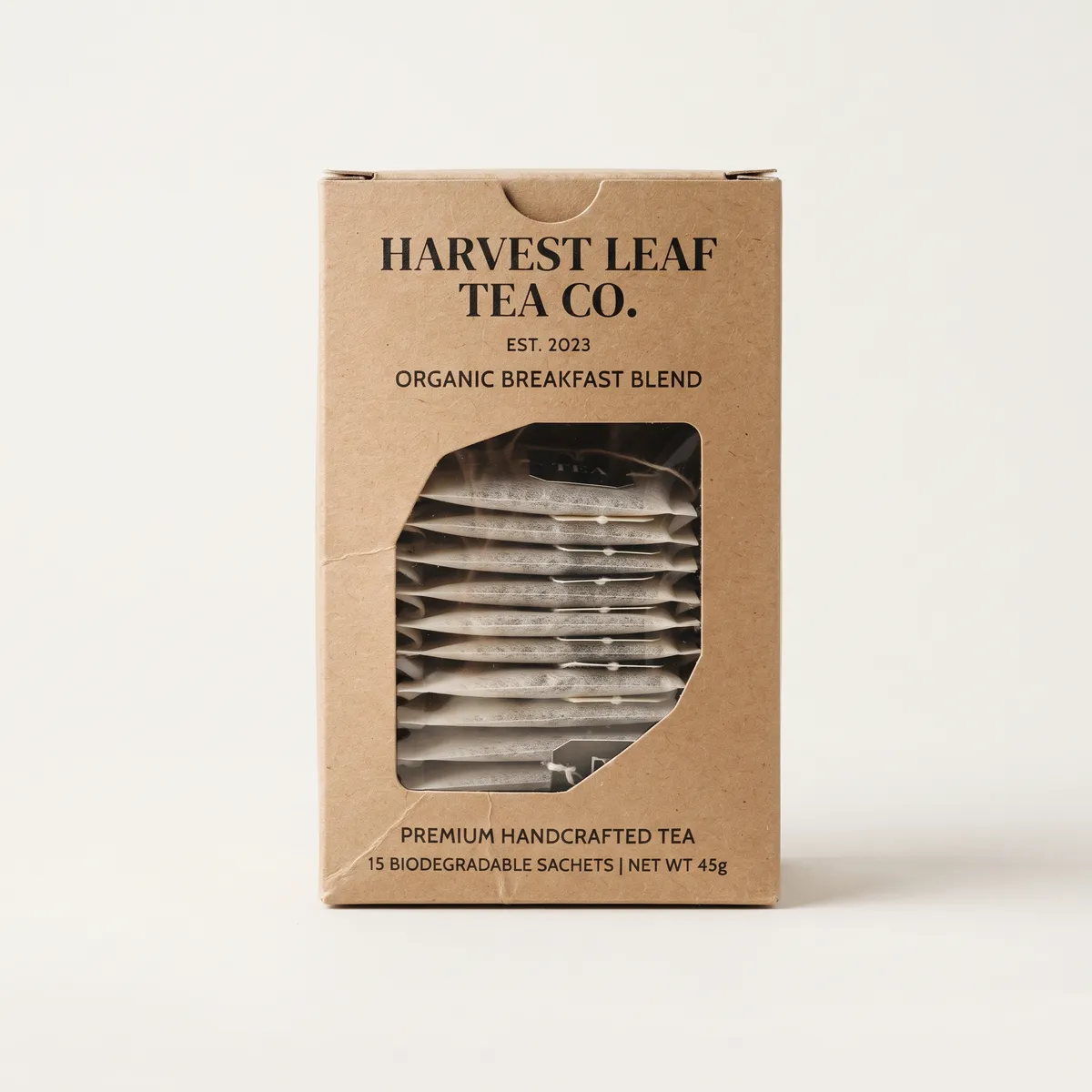
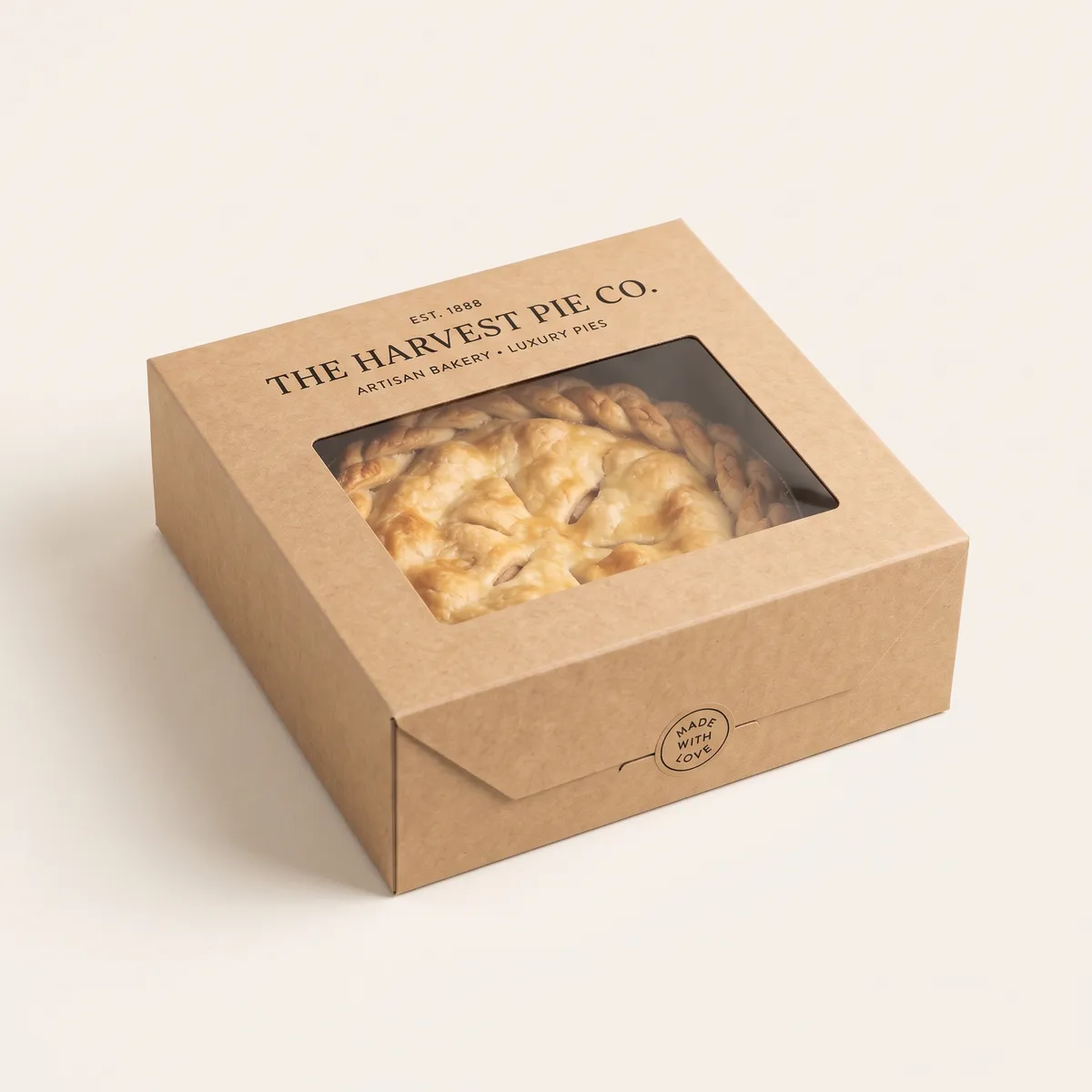
Soap is the clearest fit, because kraft-boxed bar soap sits naturally beside the plain ingredient lists most bar brands sell on. Candle makers with soy and clean-fragrance lines use it for the same signal, keeping rigid builds for prestige jars. Coffee roasters and tea brands put it around an inner bag, where the carton gives shelf structure and freshness comes from the bag itself. Bakeries and takeout kitchens use food-grade kraft for pastry boxes, burger boxes and fry cartons. Hemp products, dog soaps and market-stall goods round out the list. What these buyers share is a customer who reads brown board as honest. Where shoppers expect polish, as with fine jewelry or a bright toy aisle, kraft tends to undersell the product.
Proofing on Kraft Before You Commit
Before signing off a kraft order, see your artwork on the actual board. A screen proof, or one printed on white stock, shows colors kraft will never reproduce, and the gap only appears when the boxes arrive. Ask for the proof on the same kraft you'll run, with any white underprint included, and judge it in daylight rather than under office lighting. Check fine lettering and hairlines as well, since ink spreading into the fiber softens their edges. If the result looks dull, the choice is between adding the underprint, cutting colors or moving to coated board, and making that call at proof stage costs a revision instead of a reprint. Learn how your own palette behaves on unbleached fiber by proofing it before committing to brown.
One connected process, start to finish.
Structural Design
Dieline drafted to your exact fit and freight tolerances.
Proof & Sample
Sign off on a digital proof, or request a physical sample.
Tooling
Dies and plates are cut for your job and archived on file.
Production
Print, die-cut, and assembly run under in-line quality checks.
Ship & Reorder
Freight goes out, and the cycle resets for your next run.
Steady process. Powerful results.
Like everything we build, our process is engineered to hold up — no shortcuts, no surprises. Five dependable stages that run the same way every single time, so reorders are just as fast as the first order.
- One dedicated teamFrom first sketch to final freight, the same people carry your order start to finish.
- Dies archived on fileReorders skip tooling and re-setup entirely — we already have your exact spec.
- Checked against your sign-offEvery run is inspected against the digital proof or physical sample you approved.
Set up your file once, correctly
Nine in ten delayed jobs are delayed by artwork, not production. Match these four rules and your proof lands the next morning.
- Bleed1/8 in (3 mm) past every cut line
- Safe ZoneKeep text 1/4 in clear of every crease
- ColourCMYK or named Pantone. No RGB.
- Resolution300 dpi at final size, fonts outlined
No print-ready file?
Send a logo and a rough idea. Our studio builds the production file free with any order over 500 units — you keep the source file either way.
Ask the StudioBackground art must run all the way to the outer bleed edge. Anything inside the white dashed line survives fold tolerance.
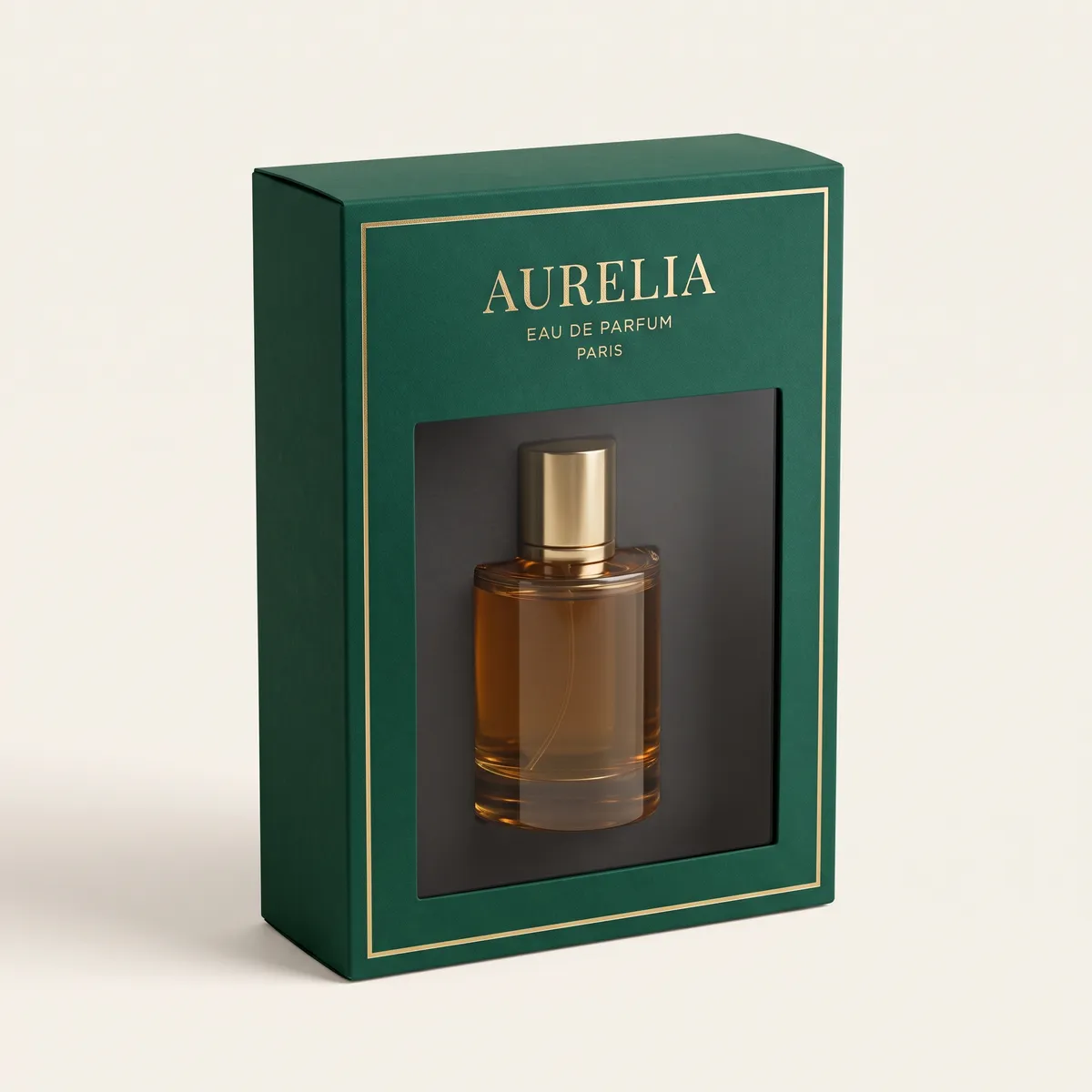
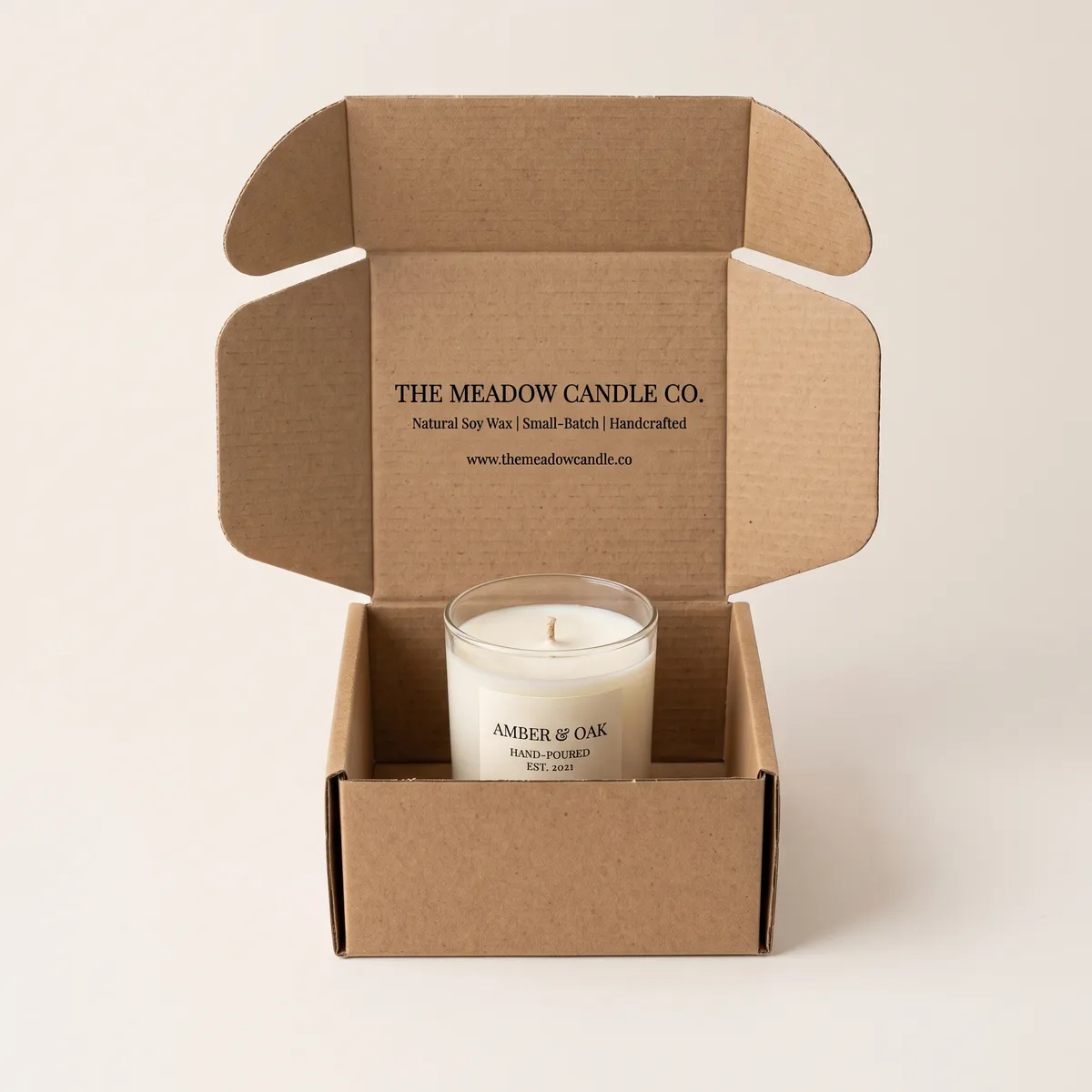
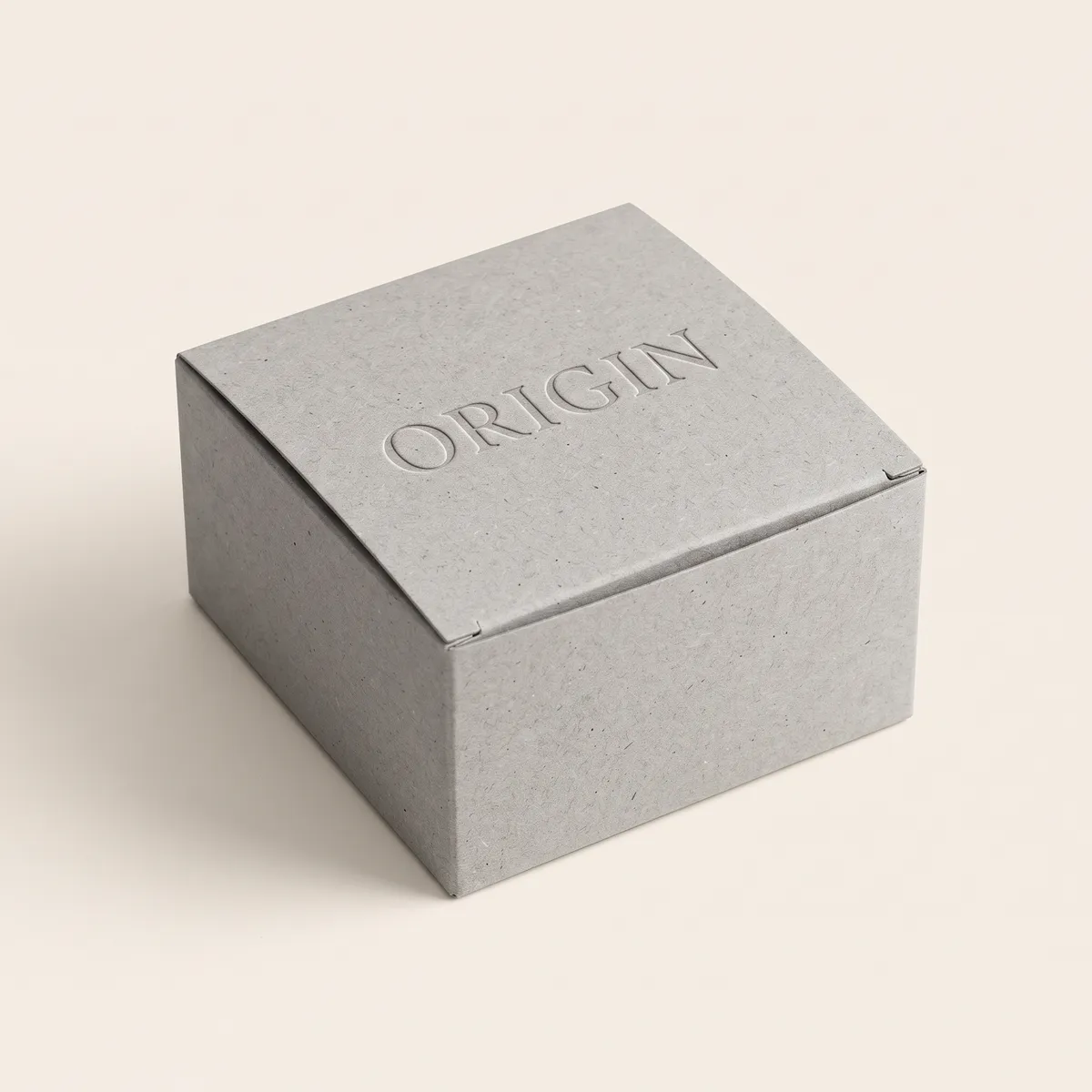
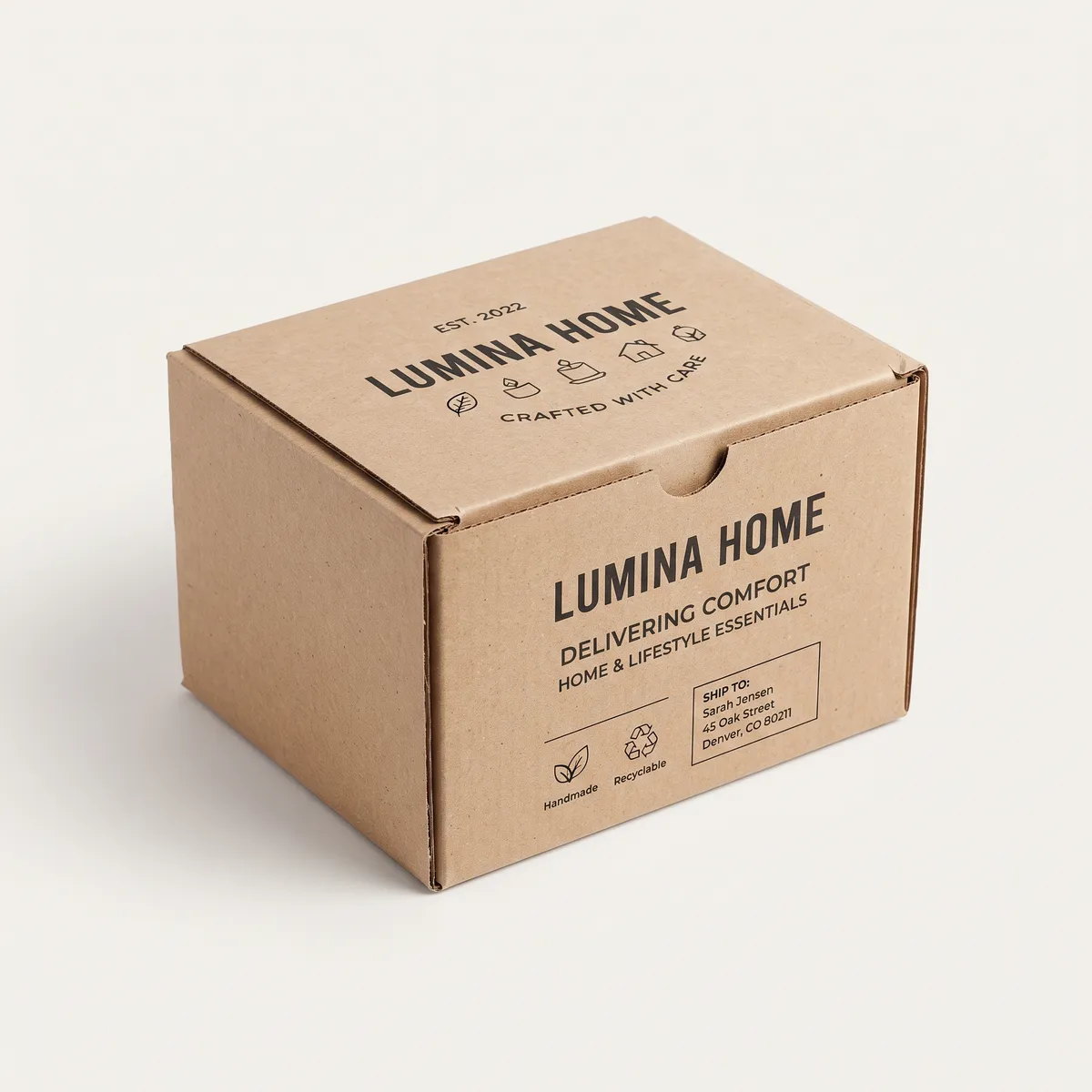
What brands say about this box
They live there rather than here, where we can't edit them, delete them, or pick which ones you get to see. That is exactly what makes them worth reading.
Read all reviews on Trustpilot(opens in a new tab)Answers before you have to ask.
What makes kraft different from other paperboard?
Kraft is unbleached, made by the kraft pulping process which keeps the fibers long and strong. That's where its strength comes from, and why it stays brown — the color is the natural pulp rather than a dye.
Why do colors print muted on kraft?
Because unbleached fiber absorbs ink into the sheet rather than holding it on the surface, and the brown base shifts every hue printed over it. A white underprint restores accuracy at the cost of an extra pass.
Does kraft take foil and embossing?
Foil works particularly well on kraft — metallic against unbleached brown reads deliberately craft. Blind embossing also suits it, adding texture with no ink at all, which appeals to brands avoiding coatings.
Is kraft recyclable?
Yes, and it's one of the more readily recycled packaging materials. Because it's unbleached, it needs less processing than white board. Grease-resistant coatings can affect acceptance depending on type.
What is kraft best used for?
Natural, artisan and eco-positioned products where the material itself signals something. Soap, candles, coffee and handmade food all use it because the brown tone supports the brand story.