
Custom Wine Boxes, Bottled Confidence
Shipping wine means trusting one bottle to a box, and a weak one turns a case into broken glass and refunds. Custom wine boxes ship bottles safely in heavy-duty corrugated builds made to cushion and hold. Choose single-bottle mailers or full-case dividers, all made from recyclable stock that suits a brand serious about where its packaging ends up.
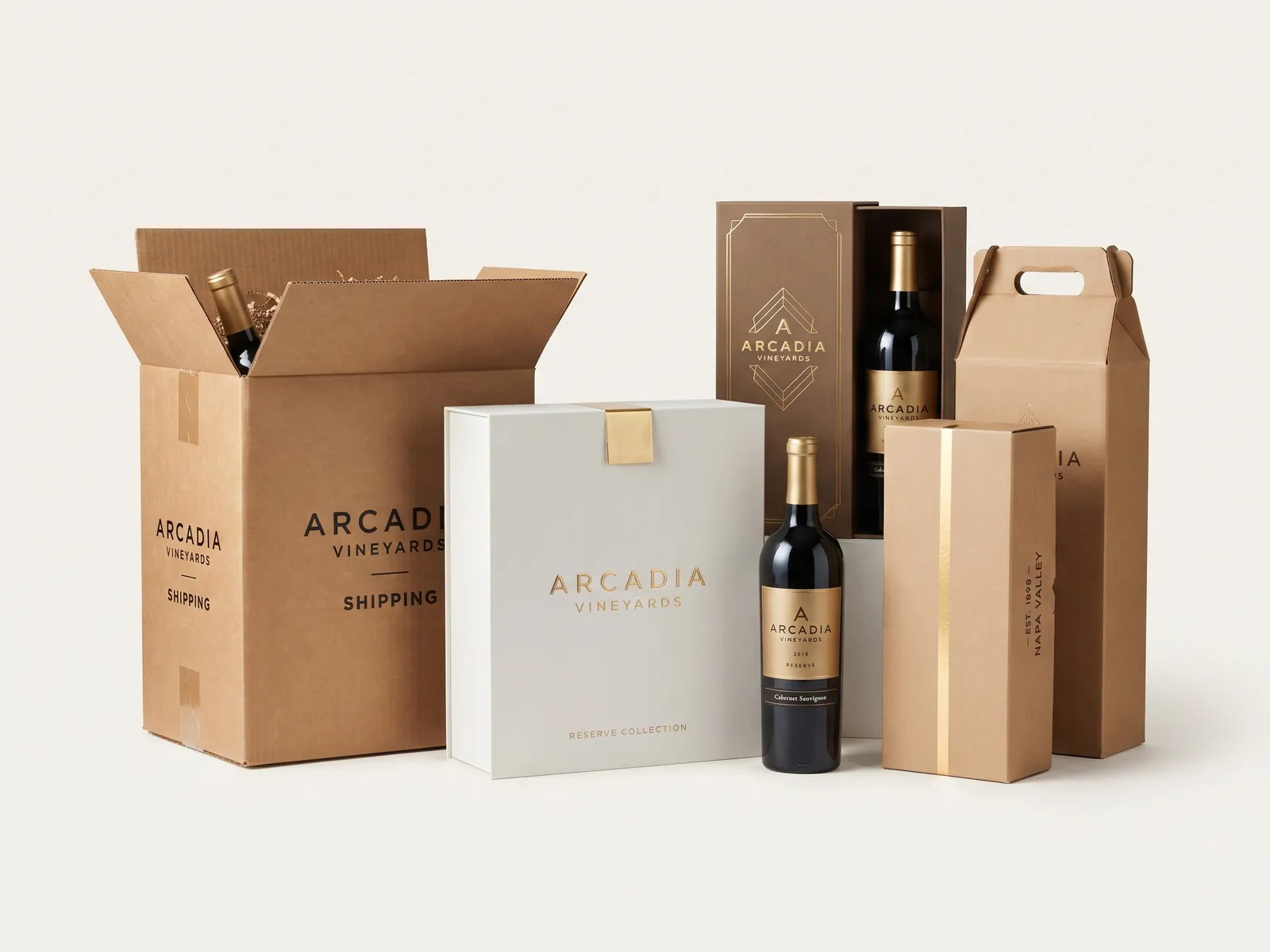
Materials & Options for Wine Boxes
E-Flute Corrugated
Thin profile, strong crush resistance — the standard for most mailer boxes.
B-Flute Corrugated
A thicker flute for heavier contents or extra stacking strength.
Kraft Paper
Unbleached, natural-brown stock with an earthy, eco-forward texture.
SBS Board
Solid bleached sulfate board for a smooth, print-ready white surface.
Offset Printing
Exact color matching for large runs — the standard for big projects.
Digital Printing
Fast turnaround on shorter runs, with no minimum plate setup cost.
Flexographic Printing
Distortion-free output built for large-run corrugated jobs.
UV Printing
Instantly cured ink that resists scratches and solvents.
Matte Lamination
Soft, non-reflective finish that reads premium under any light.
Gloss Lamination
High-shine coating that makes bold colors and photography pop.
Soft-Touch Coating
A velvety exterior resistant to moisture and fingerprints.
Spot UV & Foil
Raised gloss detail or metallic foil for logos and accents.
Discover Our Most-Requested Wine Box Styles
Every style below runs through the same structural engineering and quality process — pick a starting point and we'll adjust the details to your product.
One Bottle, One Journey Built to Jostle
Ship wine and you're trusting a single glass bottle to survive a journey built to jostle it. The main cause of breakage isn't a dramatic drop — it's the bottle moving inside a box that doesn't hold it still, tapping the walls and its neighbors mile after mile until the glass gives, or arriving intact but soaked because a neck cracked on the way. So the job is to lock each bottle in place with an insert that cradles it away from the walls, back it with board heavy enough to handle the weight, and then present the whole thing well enough for gifting and direct-to-consumer sales. The buyers are wineries, DTC wine brands, and gift sellers, all of whom know a broken bottle means a stain on someone's doorstep, a shipping claim, a replacement, and a customer who won't order again. One failed case can cost more than a whole run of proper shippers. Its fragile-glass challenge mirrors perfume and fragrance packaging.
Double-Wall Ratings and Bottle Cradles
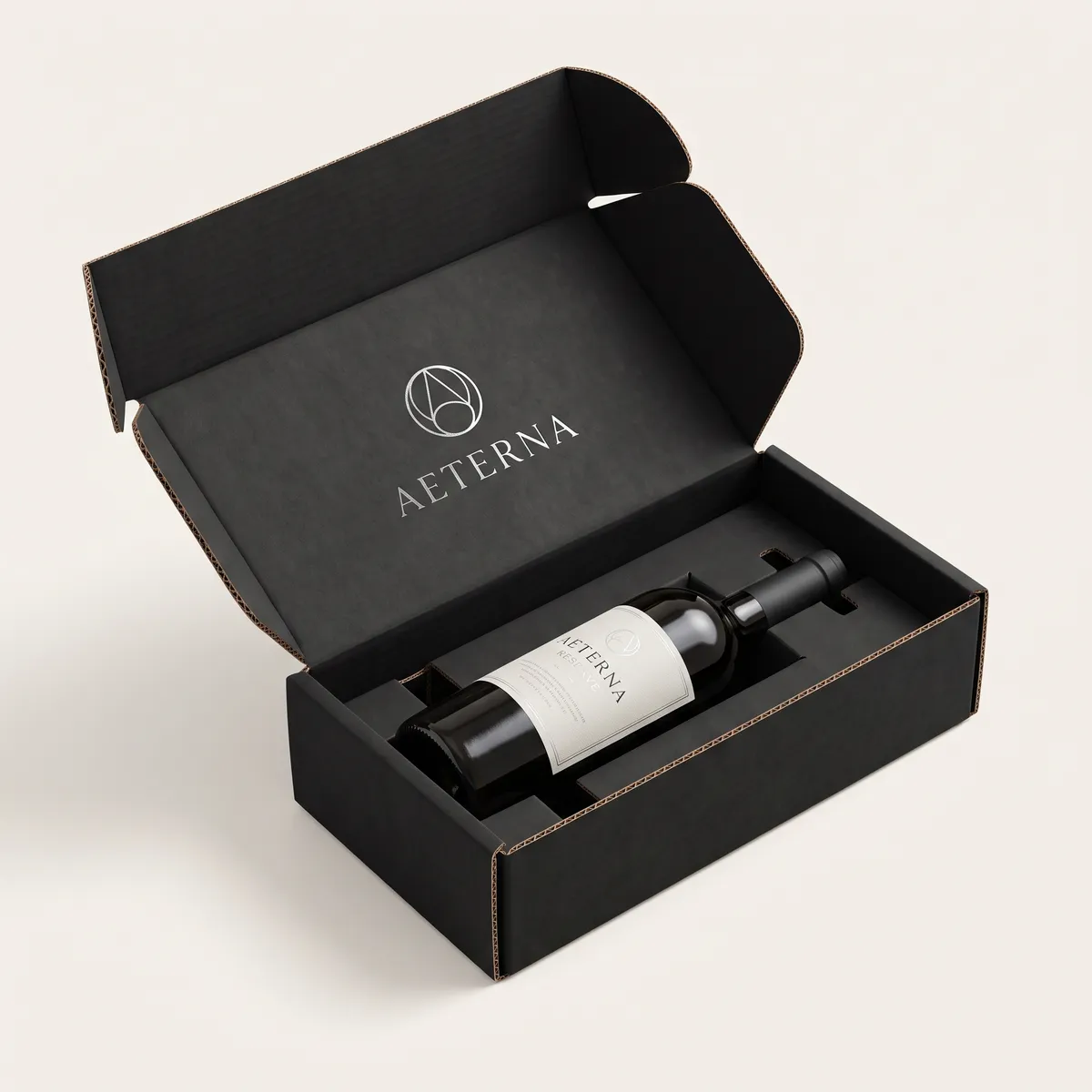
Wine shippers are a structural problem before they're anything else, so the outer is heavy-duty corrugated — minimum double-wall (BC flute) rated for the combined weight of glass plus insert. The insert does the real work: molded pulp, die-cut corrugated, or foam cut to hold each bottle at the neck and base with no room to move, since bottle movement, not drops, is what breaks glass in transit. For gift and direct-to-consumer presentation, a rigid single- or multi-bottle box in 2–3mm greyboard adds the compression resistance and finish that a bare shipper can't. Sizes are standardized around bottle configurations — 1, 2, 3, 6, or 12 bottles. Hold a tolerance around ±1mm so the insert cradles the bottle tightly; slack here is exactly what causes breakage. Construction pairs a rated outer carton with a purpose-cut insert, because on wine the two only work as a matched pair.
The Shipper Costs Less Than the Bottle
Wine packaging pays off in one stark number: breakage. Glass is the highest-damaged category in parcel shipping, and one broken bottle means lost product, return freight, a customer-service case, and a stain on someone's doorstep that ends the relationship — often costing more than a whole run of proper shippers. So a rated outer with a molded insert that immobilizes each bottle, backed by tray-style dividers for multi-bottle sets, isn't an upgrade, it's the difference between a delivery and a claim. Every prevented break is a saved sale and a kept customer in a business where each order carries real value. On the revenue side, presentation-grade packaging for gift and direct-to-consumer bottles lifts perceived value and earns the unboxing that markets the winery for free. So the box slashes the most expensive failure mode in the category and lifts the price and reach on the premium end. For wine, the packaging math is simple — the shipper always costs less than the bottle it saves.
Two Boxes, Two Finish Problems
Wine splits into two completely different finish problems. The shipper is purely functional — one or two-color print on corrugated, no decoration, because it's a transit box that gets recycled on arrival, and the budget belongs in board rating and insert fit. The gift and DTC presentation box is the opposite: foil, emboss, and a textured or linen wrap all earn back, because a boxed bottle is usually a present and the packaging sets its perceived value. The classic pairing is a matte or uncoated field with a single foil crest, which suits the traditional visual language of the category better than heavy gloss. Watch the caliper if you're embossing — thin stock cracks under the die, so this belongs on rigid builds. Wineries typically print seasonally in modest quantities, so digital or short-run offset with offline foiling usually beats full plate costs. A printed paper bag for cellar-door and retail handover extends the same look at a fraction of the cost per impression.
Wine Packaging by Purpose
Wine packaging splits by purpose, and the two halves look nothing alike.
- Corrugated mailers and case shippers — the transit standard. A molded pulp or die-cut insert holds each bottle at neck and base with no room to move, and the outer is rated for the weight of glass plus packaging.
- Fixed case configurations — one, two, three, six or twelve bottles.
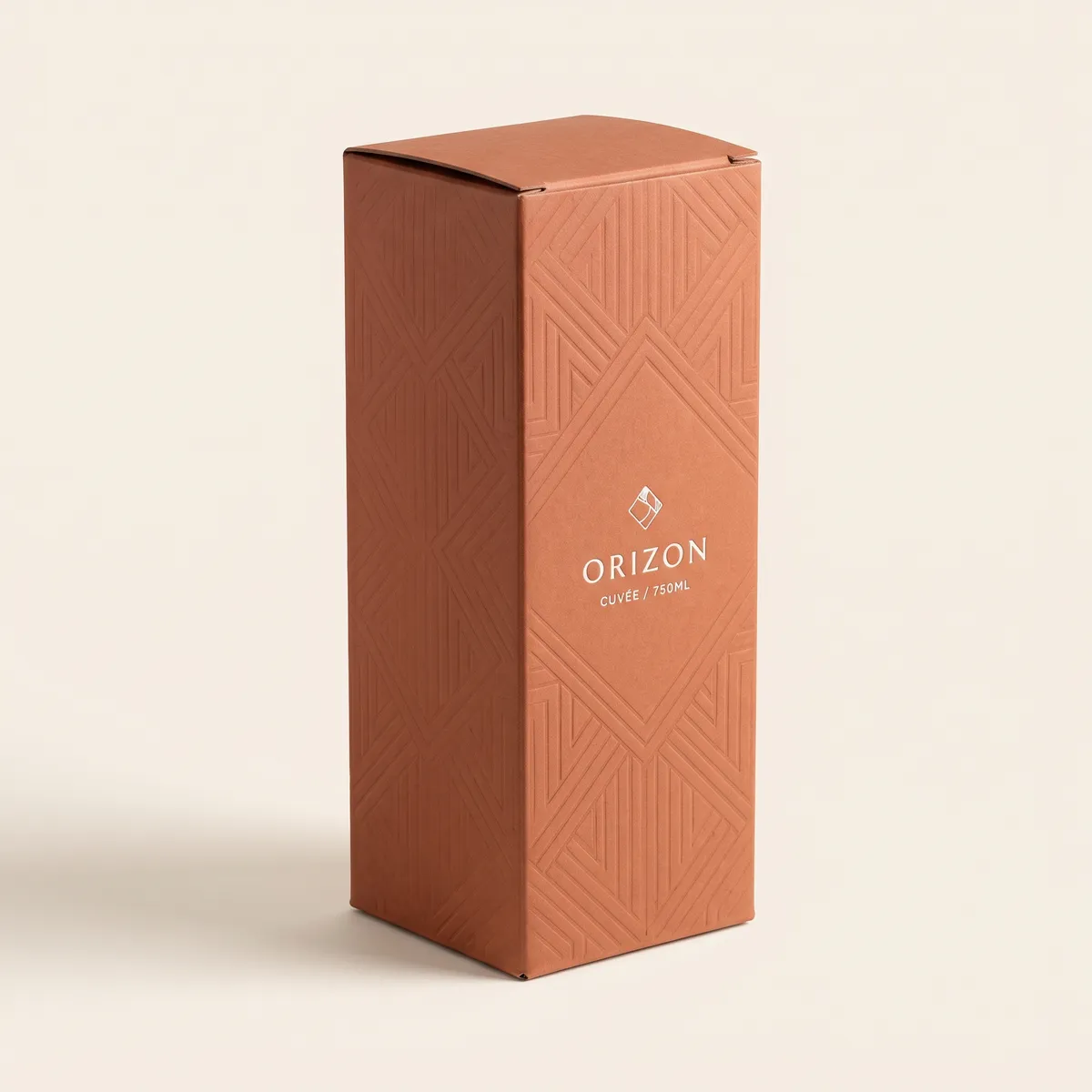
- Round tubes — single premium bottles for gifting, with distinctive shelf presence.
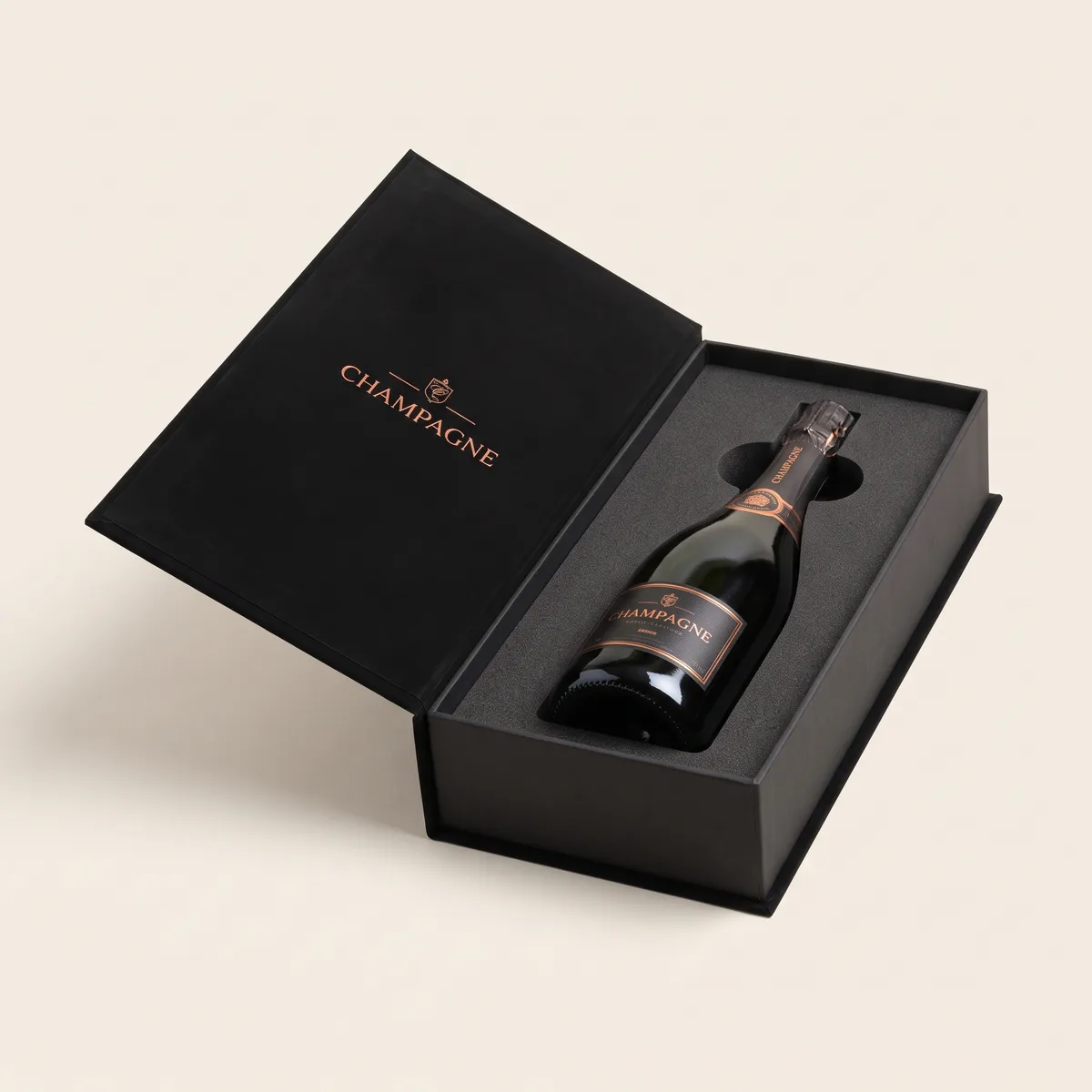
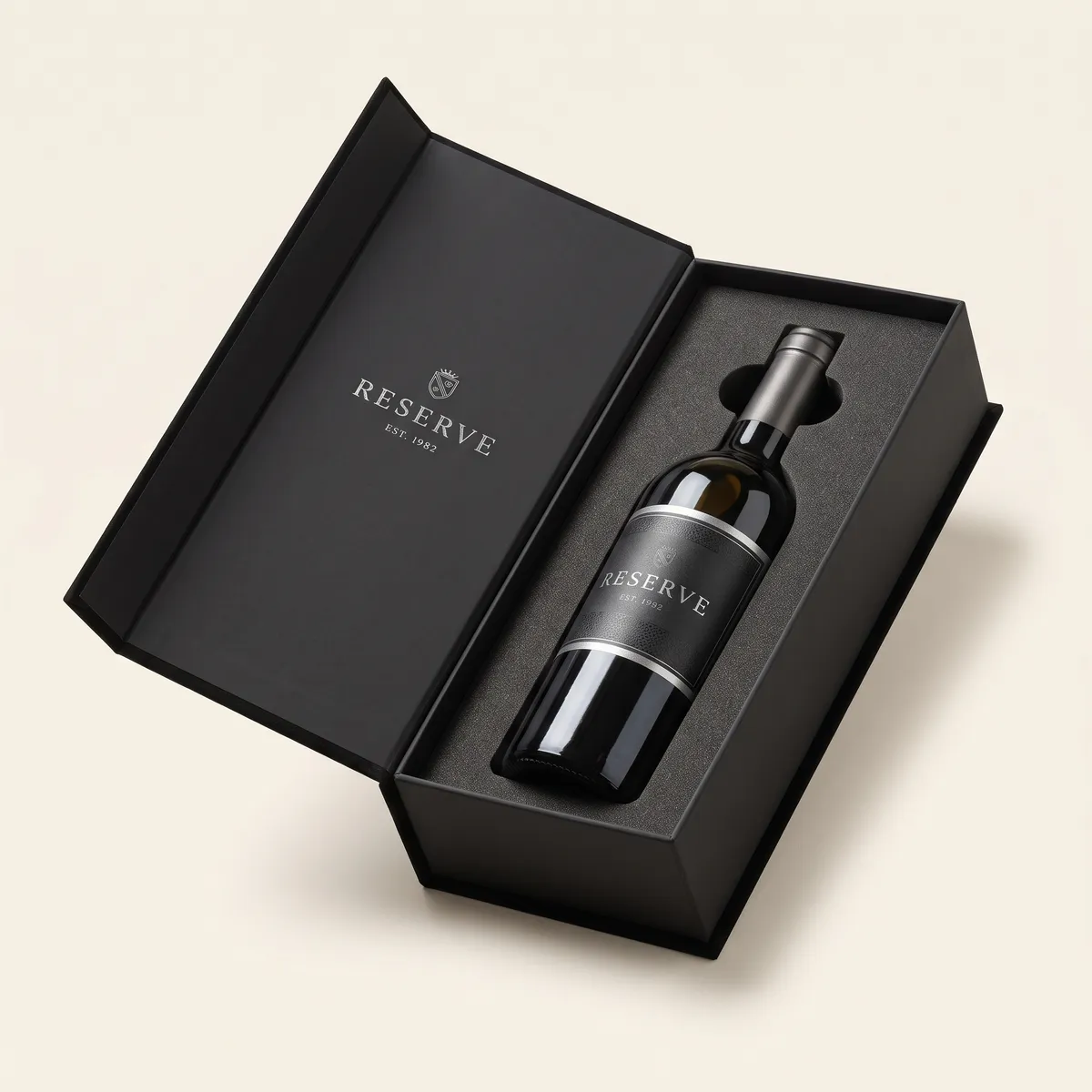
- Two-piece rigid boxes with a foam or pulp cradle — presenting a bottle as a proper present.
- Twin-bottle gift boxes with a divider — a holiday staple.
Whichever you choose, the insert is non-negotiable. Bottle movement is what breaks glass in transit, so the cradle and board rating are the specification and the outer style is the presentation layer on top.
Treating Shipper and Gift Box Separately
Treat the shipper and the presentation box as two separate purchases, because trying to make one do both usually compromises both. For transit, spend on the insert and the board rating — double-wall minimum, with a molded pulp or die-cut cradle holding each bottle away from the walls, since movement is what breaks glass rather than drops. For gifting, the rules change entirely and the finish carries the value. Don't under-rate the outer to save money on a case; one broken bottle costs more than the upgrade across a whole run. A buxboard rigid build suits single premium bottles, and gift packaging covers twin-bottle and corporate sets.
What's different with us: give us the bottle dimensions and configuration and we'll build the dieline and insert around them, confirming measurements in writing so the cradle actually grips. Every order passes a three-stage check before dispatch — on a product where a failure means a stain on someone's doorstep, that's where it needs catching. If bulk doesn't match your approved proof, we reprint at our cost. Revisions before print are unlimited and free. No hidden charges on the quote, guaranteed. From 100 units, 8–12 business days, shipping included.
Unrivaled Support From Packaging Experts
From first sketch to full production, the same team carries your order through every stage.
Structural Engineering
We determine the right size, shape, and material for a snug fit and real protection.
Free Artwork Guidance
Our design team helps translate your brand into a box, at no added charge.
2D & 3D Mockups
See your box come to life before a single sheet of board is cut.
Quality Assurance
Every run is checked in-line against the digital proof or physical sample you approved, not just at the end.
Fast Turnaround
8–12 business days standard, with rush options when timing is tight.
Tracked Shipping
Palletized freight or drop-ship, tracked from our dock to yours.
Explore Other Box Styles
What brands say about their wine boxes
They live there rather than here, where we can't edit them, delete them, or pick which ones you get to see. That is exactly what makes them worth reading.
Read all reviews on Trustpilot(opens in a new tab)Answers before you have to ask.
Will the bottle actually survive shipping?
Yes — the insert is the key. Custom wine boxes use molded pulp or die-cut inserts that hold each bottle away from the walls and each other, since bottle movement, not drops, is the main cause of breakage in transit.
Can I get single-bottle and full-case options?
You can. We make single-bottle mailers through to full-case shippers with dividers, all in heavy-duty corrugated rated for the weight of glass plus insert.
Do these meet carrier requirements for shipping wine?
Our shippers are built to carrier transit standards, but licensing and state rules for shipping alcohol are on you — most carriers require adult-signature delivery and won't accept wine from unlicensed senders. We handle the box; you handle the permits.
How long do wine boxes take?
Most orders are ready in about 8–12 business days from proof approval, with a rush option available. We'll confirm the date, and shipping's included.
Do I need a print-ready design?
No. Send finished artwork, or give us your logo and bottle count and our designers build the box and inserts and send a proof first — design help is unlimited and free. Our minimum order is 100 boxes, so you can start with a manageable run rather than committing to thousands upfront.