
Corrugated Wine Boxes
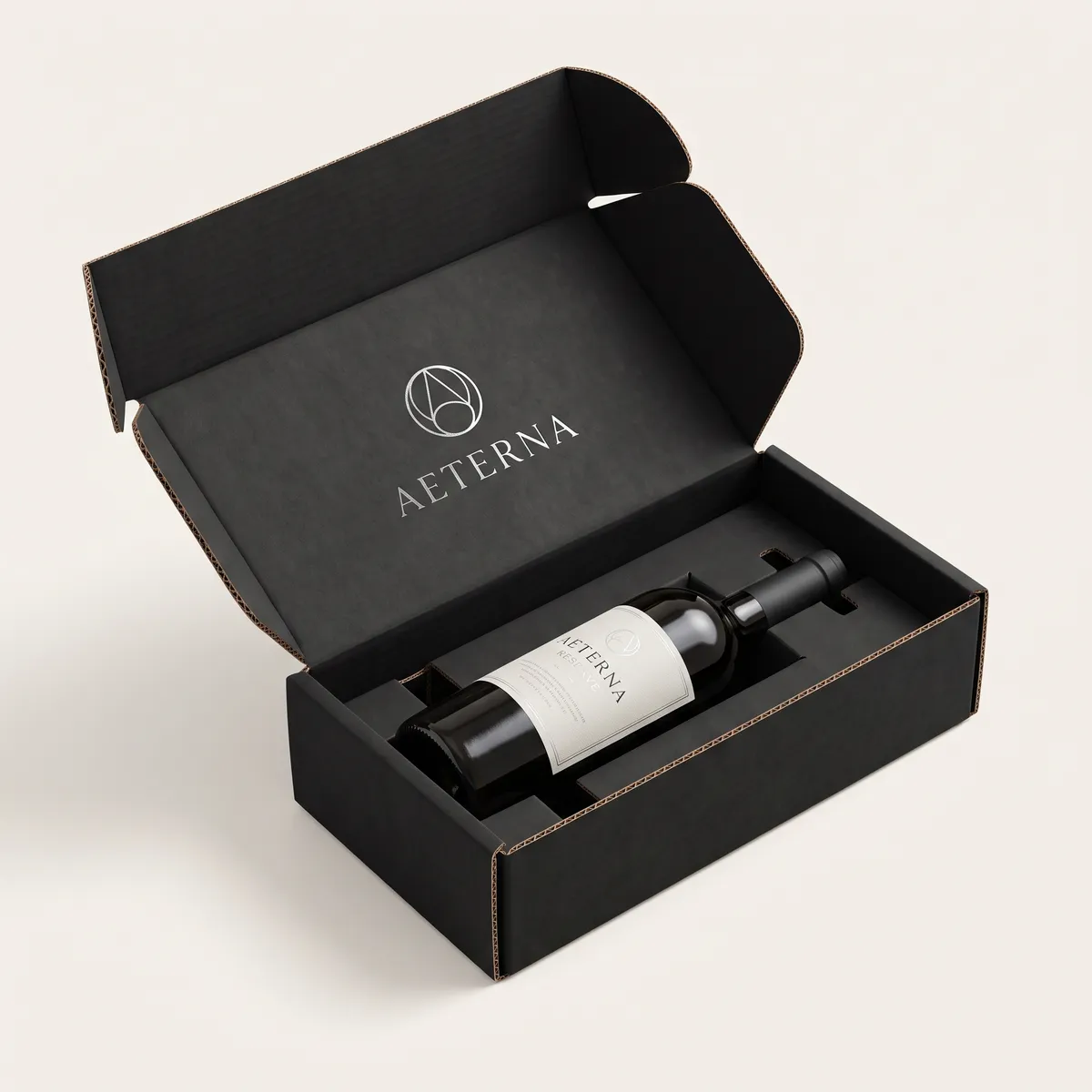
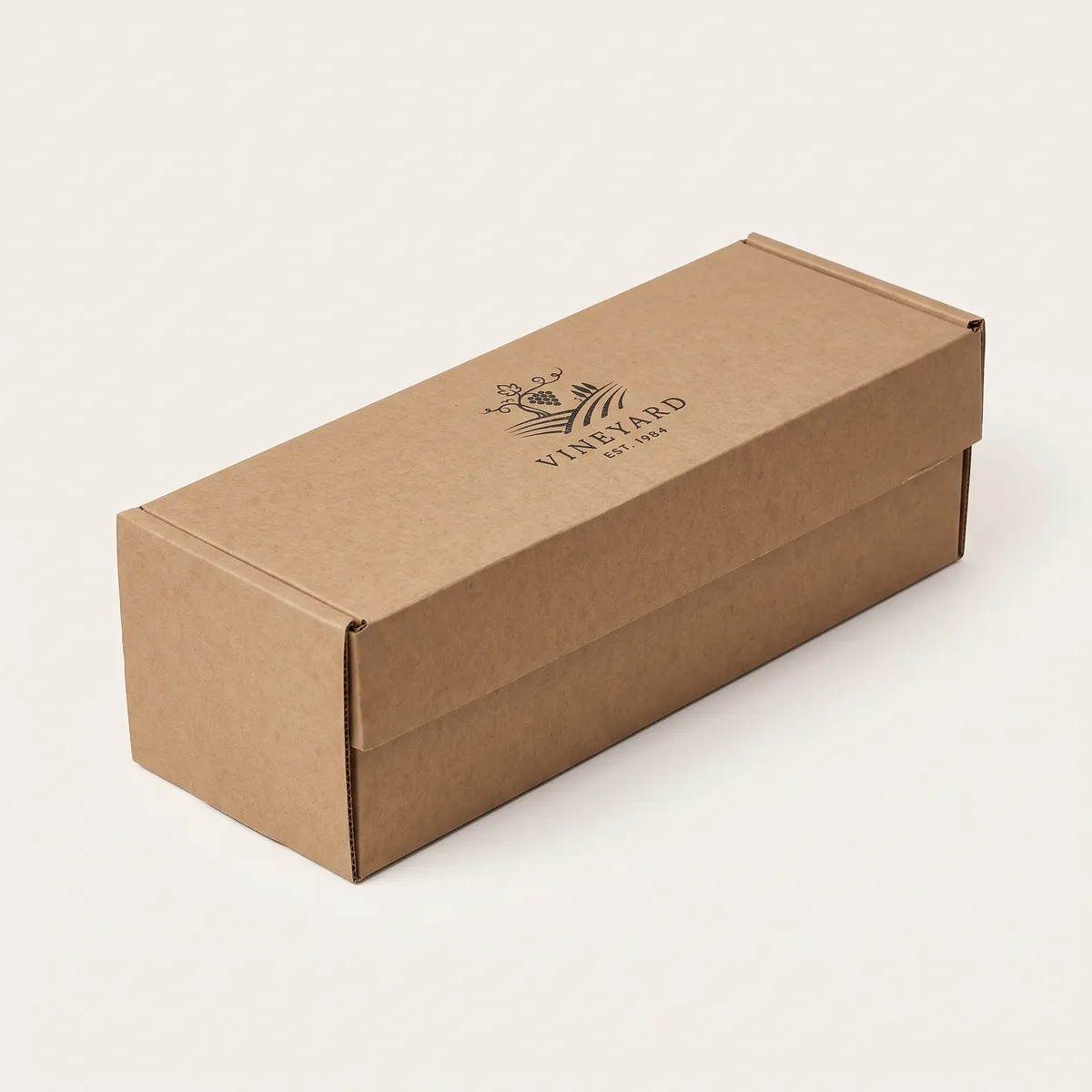
Corrugated wine boxes are transit shippers, double-wall as a minimum, rated for the combined weight of glass and insert. The insert matters more than the rating, because bottles break from movement inside the box, not from the board failing. One, two, six and twelve-bottle configurations can run together on one order. Bold one- or two-color print on kraft liner reproduces best.
Ours are on Trustpilot, where we can't edit them or choose which ones you see.
Read them on Trustpilot →(opens in a new tab)Four stages, twelve days
Quote confirmed
A specialist checks your spec against the board and comes back with a firm price inside 4 business hours.
Proof approved
You get a flat dieline and a 3D render. Nothing goes to press until you approve it in writing.
On press
Print, die-cut, glue, and fold. You get a press-side photo the day your job runs.
QC and delivery
Every pallet is sampled against the digital proof or physical sample you approved, then shipped with tracking to your dock or 3PL.
If a box doesn't match the digital proof or physical sample you approved, we reprint the run at no charge.
Read the reprint terms →Know exactly what you're ordering.
A Wine Box That Travels With a Courier
Once a bottle leaves the winery in a parcel, it passes through sorting belts, delivery vans and doorstep drops that nobody at the winery will see. A corrugated wine box is built for that stretch: a fluted outer and a fitted insert specified as one unit, sized to the number of bottles in the order. The buyers are wineries shipping direct to customers, wine clubs sending regular allocations, online retailers and distributors restocking shops. Most of them care less about how the box looks than about the claims rate, since one cracked neck can soak every other parcel in the same van. The box is printed, but plainly. The budget belongs to the board and the cradle.
Double-Wall Board, Insert and Bottle-Count Specs
The outer is BC double-wall fluted board, rated to the weight of the bottles plus their insert.
| Attribute | Specification |
|---|---|
| Board | Double-wall corrugated, BC flute |
| Insert | Molded pulp or die-cut corrugated |
| Bottle counts | 1, 2, 3, 6 or 12 |
| Fit tolerance | Around ±1mm at neck and base |
| Liner | Kraft, printable |
| Sizes | Cut to your bottle and count |
The insert grips each bottle at the neck and the base and keeps it clear of the outer walls and of the bottle beside it. Tell us the bottle shape as well as its size, since a tapered Burgundy bottle and a straight-sided Bordeaux need different cradles.
A Self-Locking Mailer Built Around the Insert
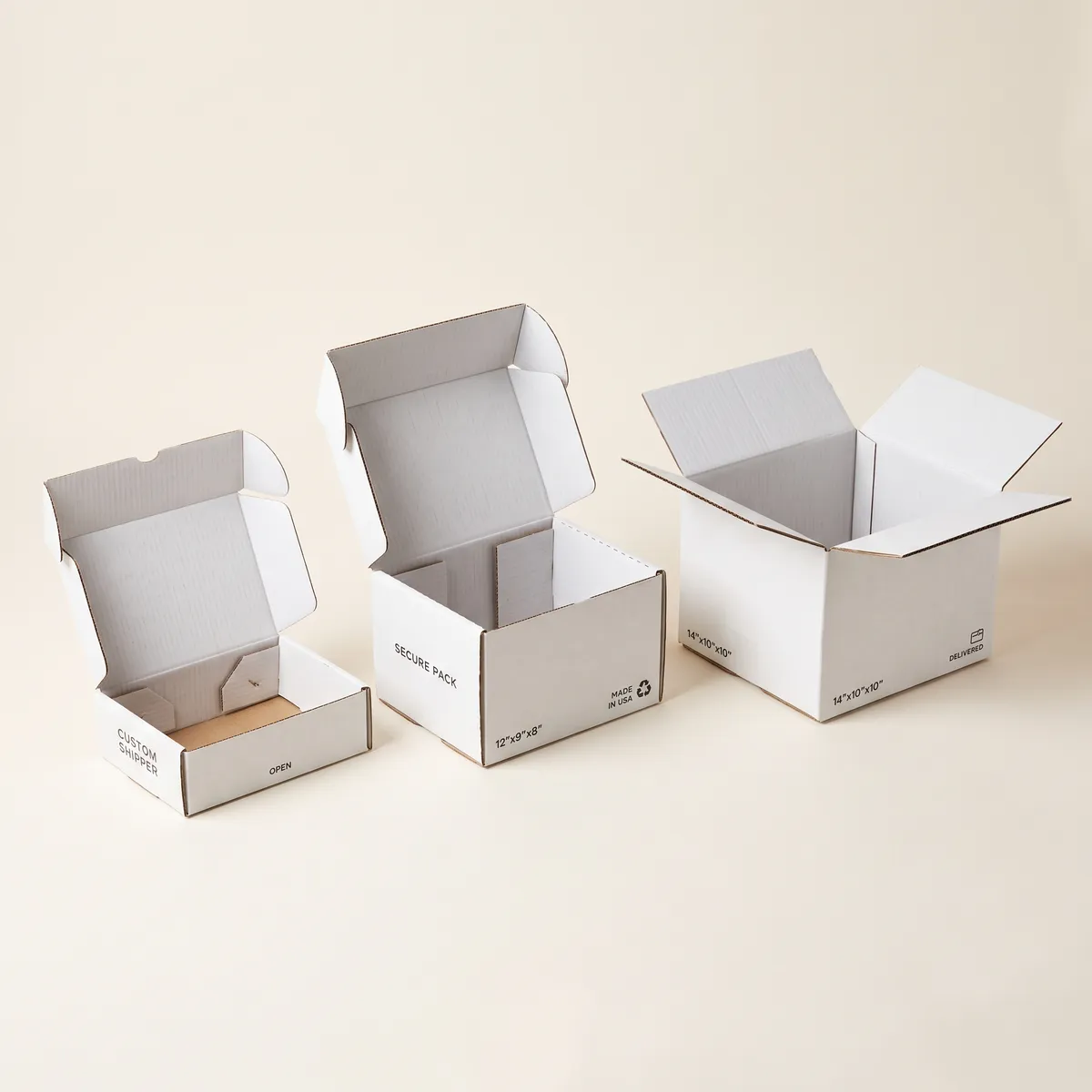
Most corrugated wine boxes are built as a tuck-front shipper that locks shut, with the insert dropped into the base before the lid folds over. A few other styles are available. The mailer suits wine because the lid covers the whole top of the box, so the necks are protected from above, and it packs quickly at a bench without a tape gun doing all the work. Its weakness is size. A mailer built for twelve bottles gets large and heavy, and dimensional weight starts to cost more than the board does. For full cases, another shipper style can work out cheaper per bottle, and we would say so at quote stage rather than sell you the bigger mailer.
What Prints Well on a Fluted Wine Shipper
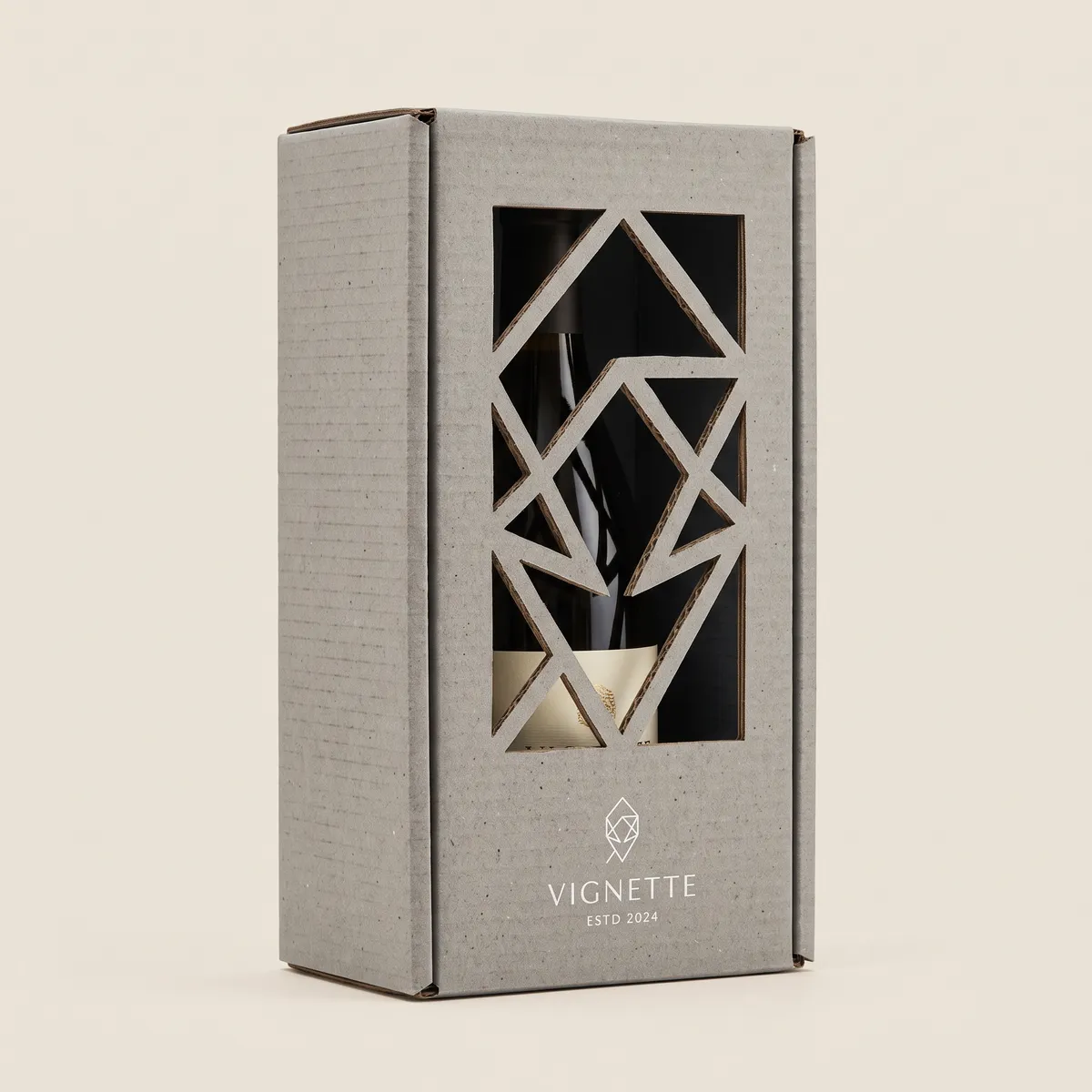
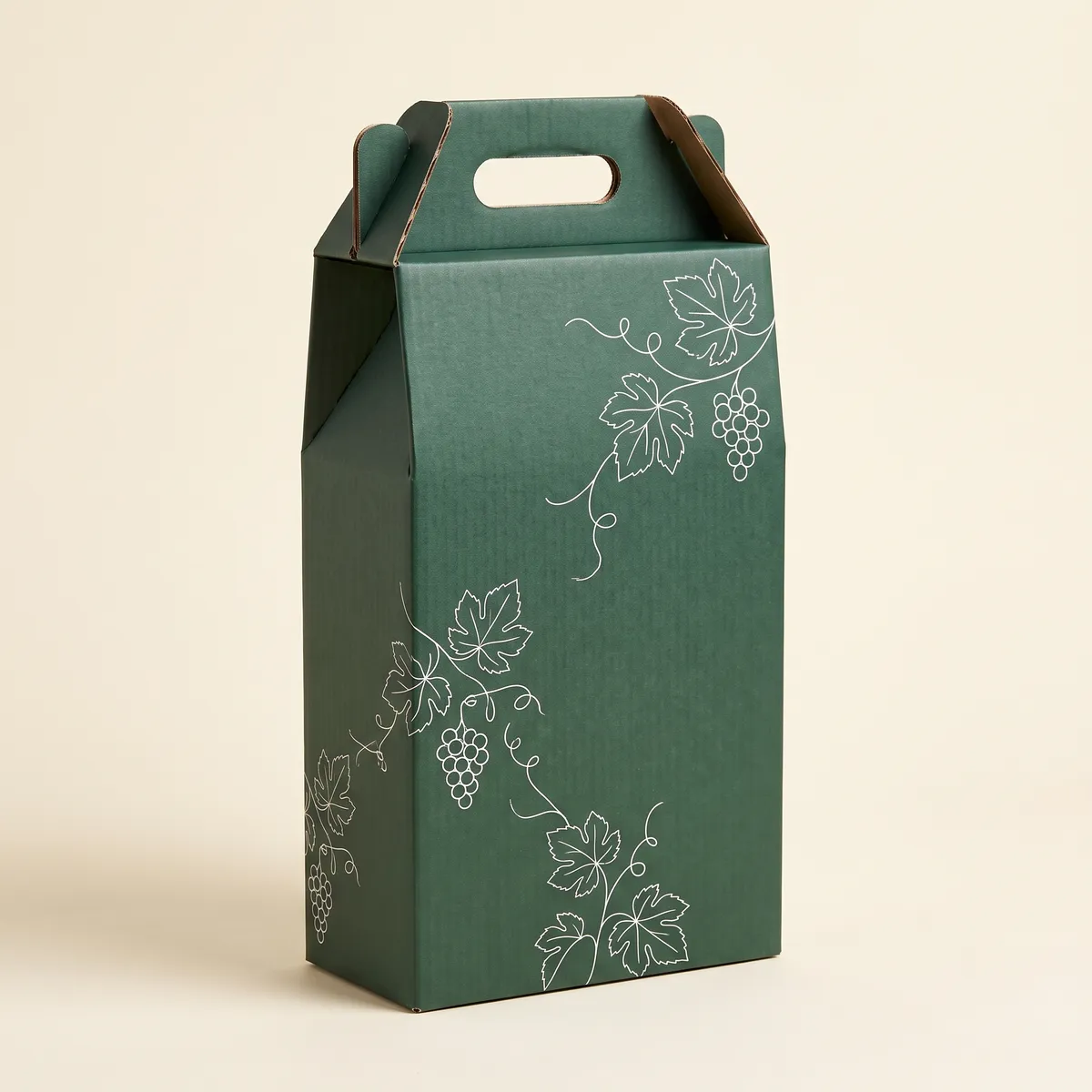
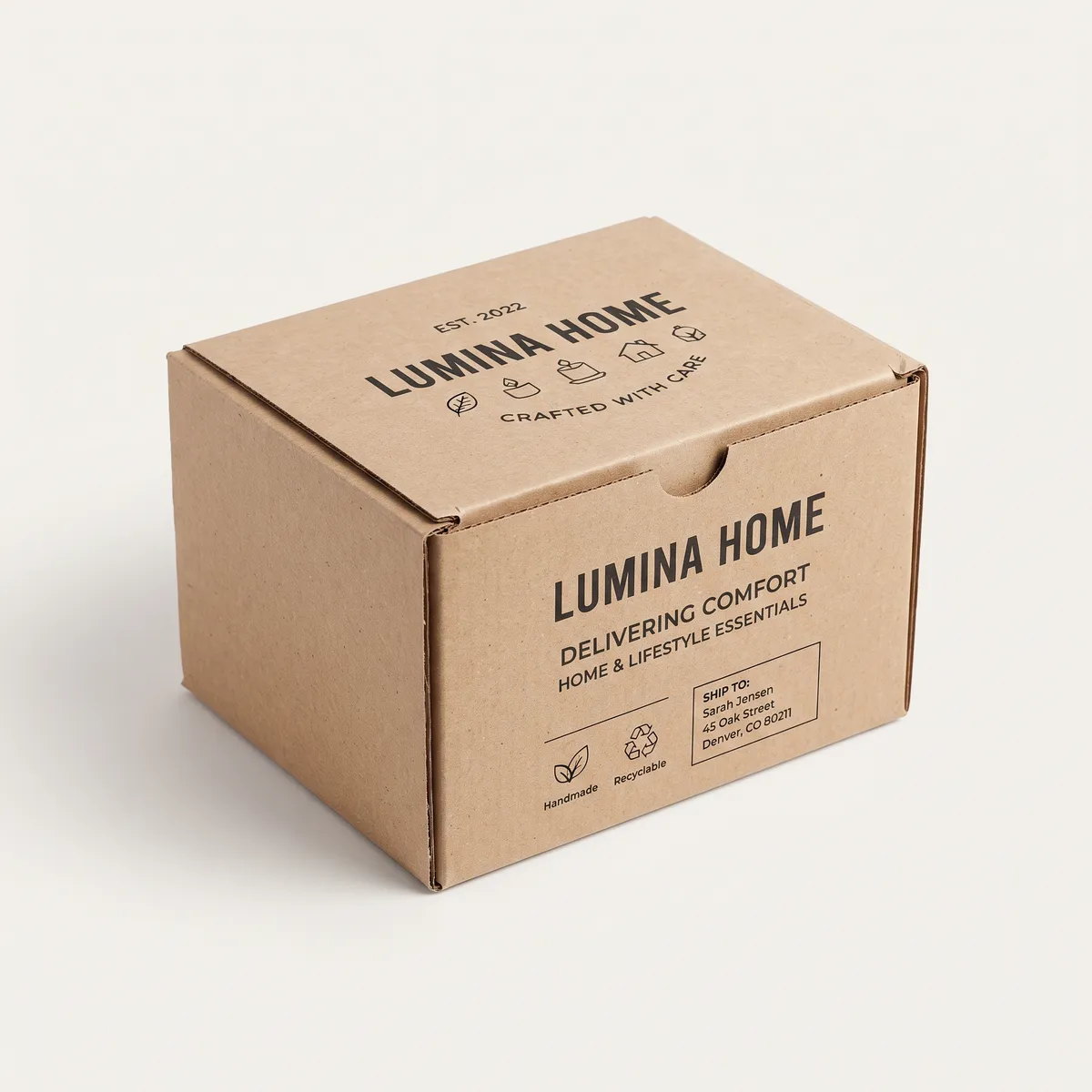
A shipper is read twice: by the courier handling it and by the customer opening it. For the courier, a large logo, orientation arrows and a clear fragile mark do more than any decoration. For the customer, the top panel is seen first, so that is where the brand belongs. Kraft liner keeps the cost down and hides the scuffs a parcel picks up, but heavy ink coverage on it looks muddy, so solid shapes print better than photographs. Leave a clear area for the shipping label and any alcohol notice your carrier asks for. Which notices apply, and whether an adult signature is required, depends on the carrier and the destination, and that sits with you. Foil has no place on a box recycled on arrival.
Who Ships Bottles in a Corrugated Wine Box
Wine clubs are the steadiest users, since the same two, three or six-bottle allocation goes to every member at once and the boxes have to pack fast at volume. Direct-to-consumer wineries use single and twin shippers for web orders. Online wine retailers keep several counts on hand for mixed baskets, and distributors use twelve-bottle cases to restock shops. Olive oil, spirits and craft soda producers use the same build, because a glass bottle behaves the same whatever is inside it. If your range goes beyond bottles, our wider category of parcel shippers for heavy, breakable goods covers the rest. Licensing for shipping alcohol, and finding carriers that will accept it, stays with the sender.
Setting Up Several Bottle Counts on One Order
Each bottle count is its own dieline and its own insert, so we build each one from your bottle's measurements and confirm in writing that the figures are internal. You get a proof for every count, and design help is free and unlimited across all of them. Production takes 8–12 business days after approval, and rush is available at an extra cost we quote before you commit. The minimum order is 100 boxes, and orders above 10,000 include free samples. Every shipper goes through a three-stage check before dispatch, which on a glass product is exactly where a fault needs catching. If the bulk run doesn't match your approved proof, we reprint it at our cost.
One connected process, start to finish.
Structural Design
Dieline drafted to your exact fit and freight tolerances.
Proof & Sample
Sign off on a digital proof, or request a physical sample.
Tooling
Dies and plates are cut for your job and archived on file.
Production
Print, die-cut, and assembly run under in-line quality checks.
Ship & Reorder
Freight goes out, and the cycle resets for your next run.
Steady process. Powerful results.
Like everything we build, our process is engineered to hold up — no shortcuts, no surprises. Five dependable stages that run the same way every single time, so reorders are just as fast as the first order.
- One dedicated teamFrom first sketch to final freight, the same people carry your order start to finish.
- Dies archived on fileReorders skip tooling and re-setup entirely — we already have your exact spec.
- Checked against your sign-offEvery run is inspected against the digital proof or physical sample you approved.
Set up your file once, correctly
Nine in ten delayed jobs are delayed by artwork, not production. Match these four rules and your proof lands the next morning.
- Bleed1/8 in (3 mm) past every cut line
- Safe ZoneKeep text 1/4 in clear of every crease
- ColourCMYK or named Pantone. No RGB.
- Resolution300 dpi at final size, fonts outlined
No print-ready file?
Send a logo and a rough idea. Our studio builds the production file free with any order over 500 units — you keep the source file either way.
Ask the StudioBackground art must run all the way to the outer bleed edge. Anything inside the white dashed line survives fold tolerance.
What brands say about this box
They live there rather than here, where we can't edit them, delete them, or pick which ones you get to see. That is exactly what makes them worth reading.
Read all reviews on Trustpilot(opens in a new tab)Answers before you have to ask.
What board rating do wine shippers need?
Double-wall as a minimum, rated for the combined weight of glass plus insert. The rating matters less than the insert though — bottles break from movement inside the box rather than from the board failing.
Can corrugated wine boxes be printed?
Yes, though the flute limits fine detail. Bold shapes and type above 8pt reproduce well. One or two colors on kraft liner is the usual approach for shippers.
Do corrugated wine boxes need double-wall?
As a minimum, yes. Glass is heavy and unforgiving, and single-wall board doesn't reliably survive a parcel network with a full bottle inside. The insert matters even more than the wall count.
What's the turnaround on corrugated wine boxes?
Usually 8–12 business days once you approve the proof, insert included. Rush production is available at an extra cost quoted first, shipping included.
Can I order corrugated shippers in several counts?
Yes, and most wineries need several. One, two, six and twelve-bottle configurations are common, and running them together shares setup across the range.