
Cardboard Shipping Boxes
A brand color that looks right on screen can arrive dull on uncoated board, and cardboard shipping boxes are how brands avoid that. A coated white liner sits over the flute, so full-color printing stays sharp and accepts gloss, matte or soft-touch lamination. We proof your Pantone on the actual stock before production starts. Built to your dimensions, with shipping included.
Ours are on Trustpilot, where we can't edit them or choose which ones you see.
Read them on Trustpilot →(opens in a new tab)Four stages, twelve days
Quote confirmed
A specialist checks your spec against the board and comes back with a firm price inside 4 business hours.
Proof approved
You get a flat dieline and a 3D render. Nothing goes to press until you approve it in writing.
On press
Print, die-cut, glue, and fold. You get a press-side photo the day your job runs.
QC and delivery
Every pallet is sampled against the digital proof or physical sample you approved, then shipped with tracking to your dock or 3PL.
If a box doesn't match the digital proof or physical sample you approved, we reprint the run at no charge.
Read the reprint terms →Know exactly what you're ordering.
Cardboard Shipping Boxes With a Coated White Face
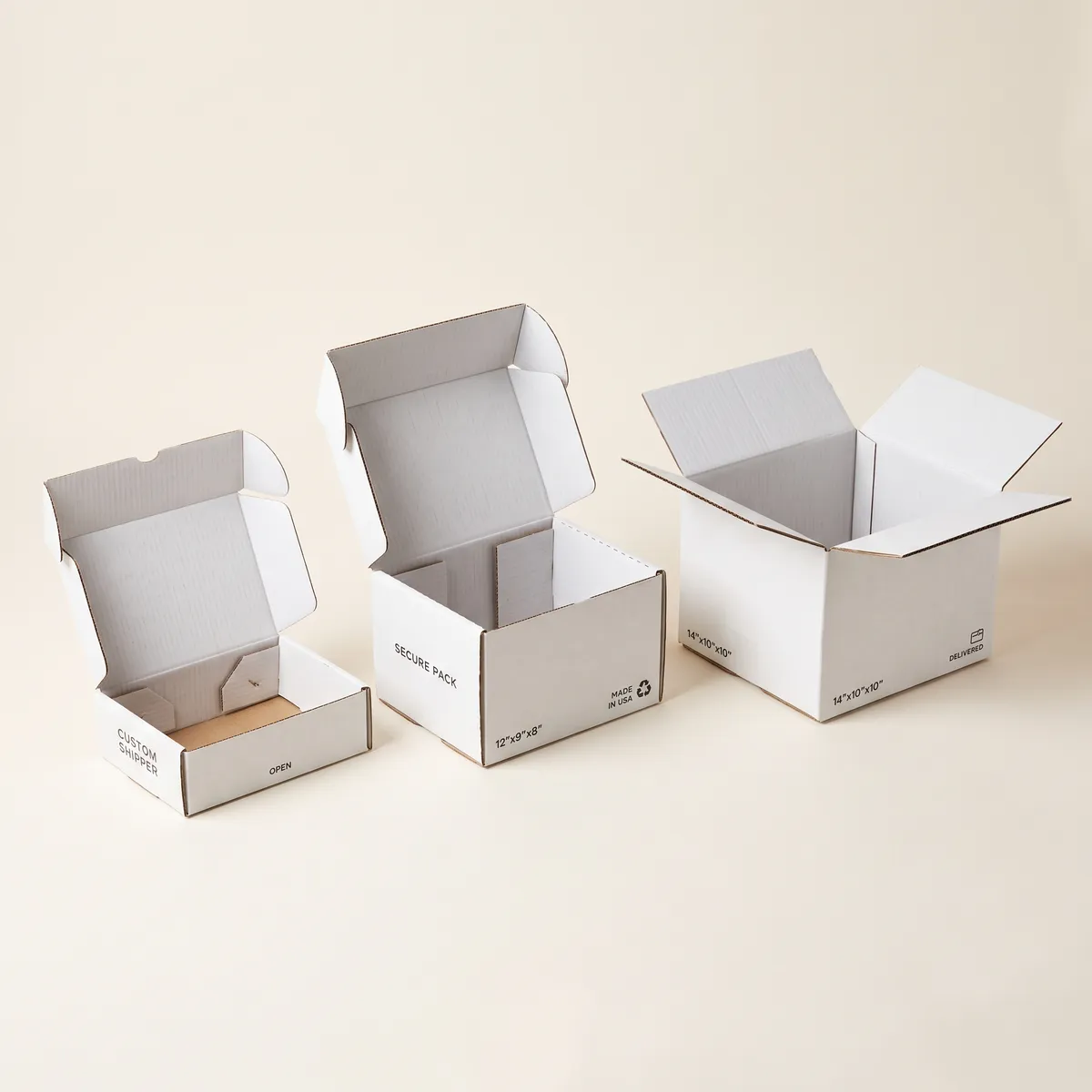
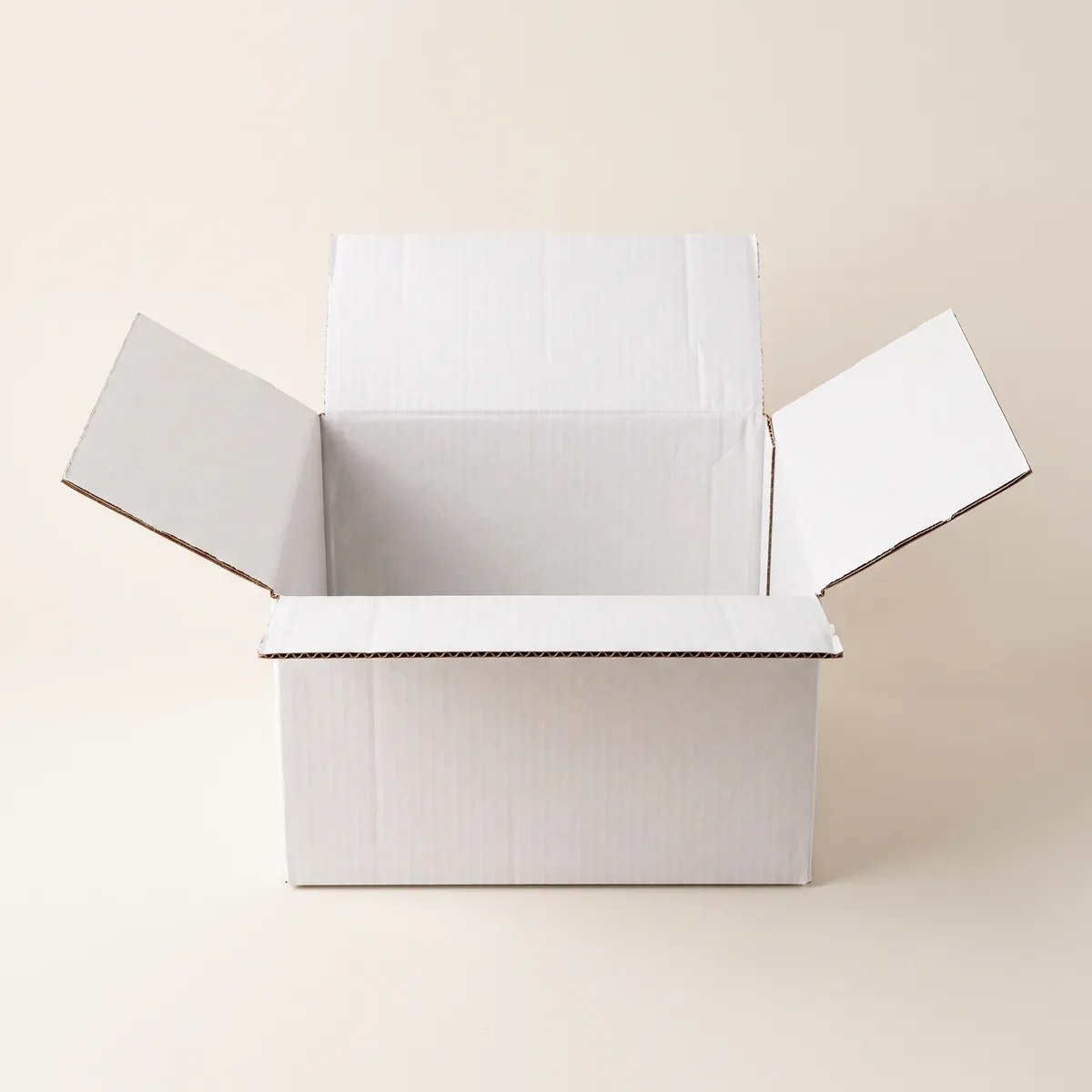
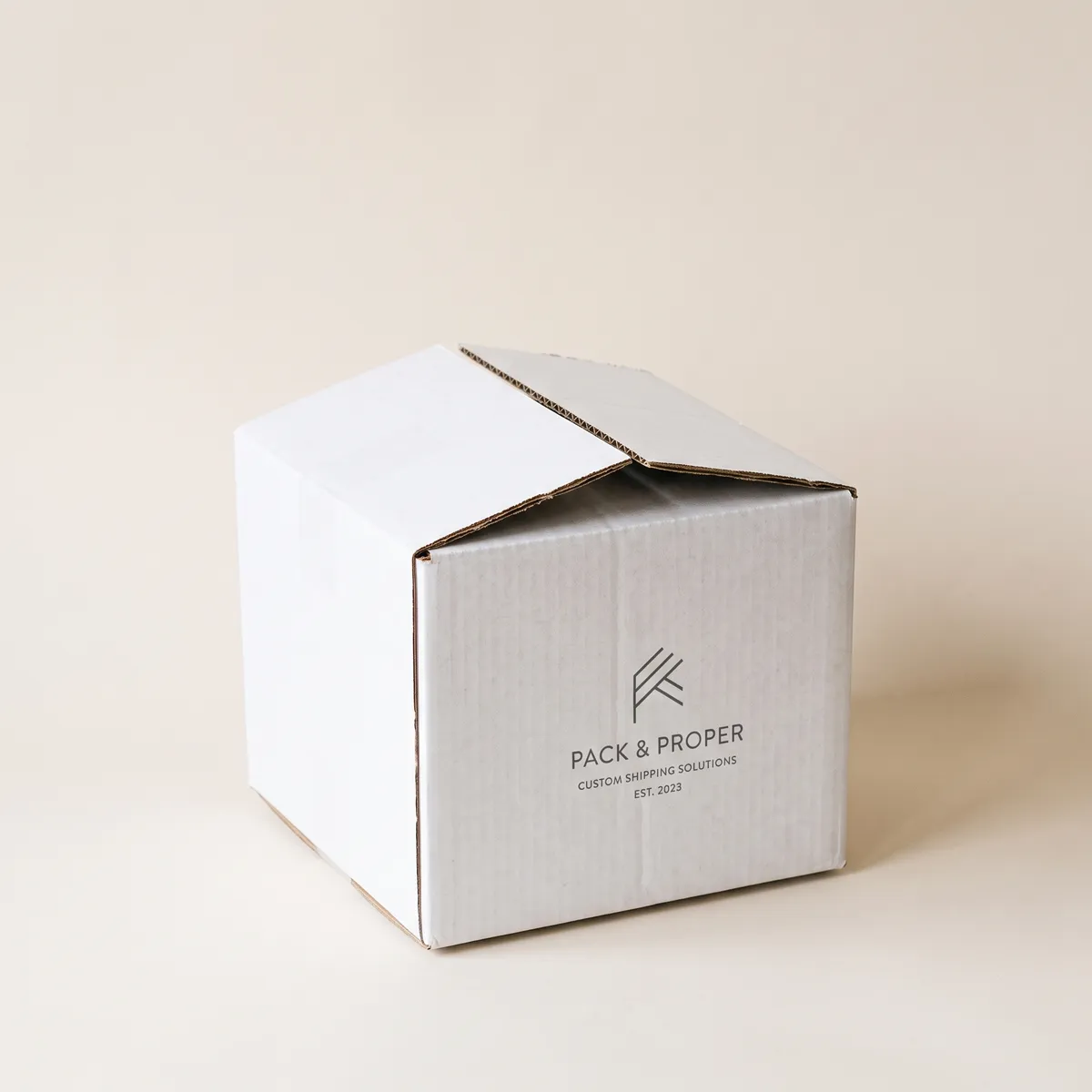
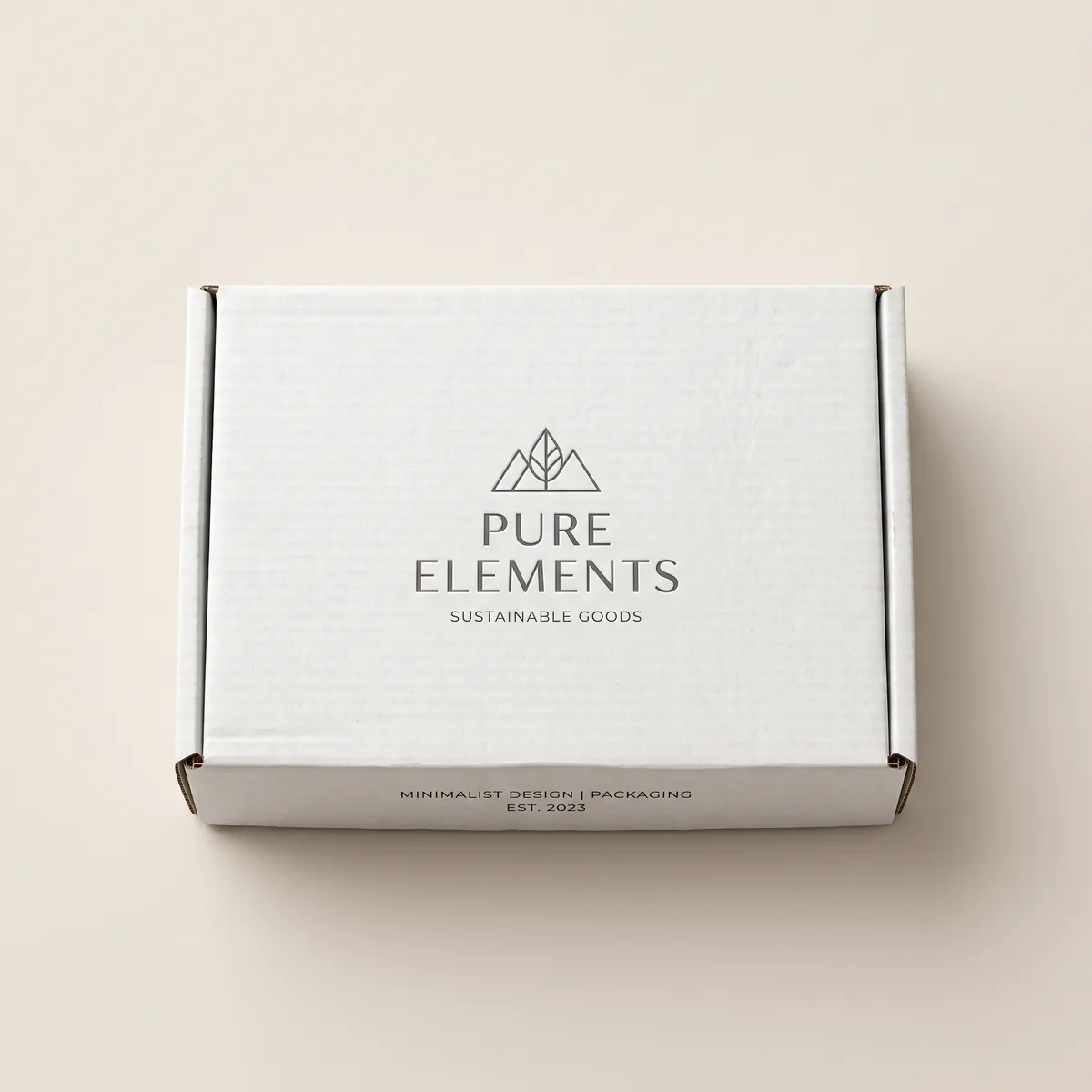
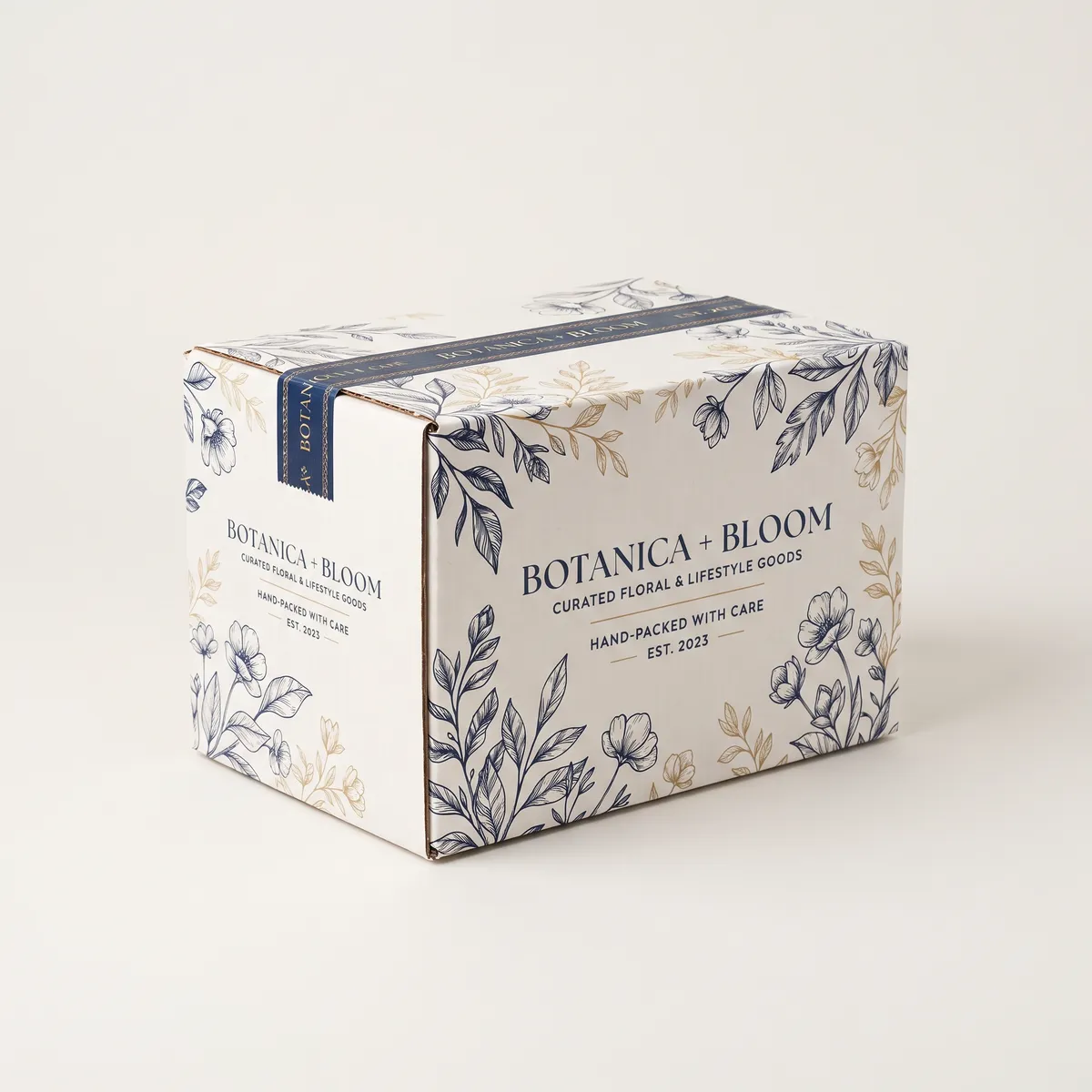
Some brands are recognized by a color before anyone reads the logo: a particular coral, a deep bottle green, a black that has to be black and not charcoal. When the box lands on a doorstep, that color either matches the website and the product inside or it doesn't, and customers notice the mismatch. Cardboard shipping boxes are built for that buyer. Underneath, the box is sized, fluted and rated like any other shipper. On the outside sits a coated white liner, and that surface is what lets a photograph, a gradient or an exact brand shade come through printing on a box that still has to survive a parcel network.
What Goes Into a Cardboard Shipping Box: Liner, Flute and Film
From the outside in, each layer is a separate choice. For background on what coated board is and how it behaves under ink and film, see the materials page.
| Layer | Options on this product |
|---|---|
| Film | Gloss, matte or soft-touch lamination, or none |
| Outer liner | Coated white, printed in full CMYK or spot colors |
| Flute | B-flute (about 3.2mm), C-flute (about 4mm) or BC double-wall |
| Inner liner | Coated white or brown kraft |
| Size | Cut to your product, within about ±1/16" (1.5mm) |
B-flute is the usual pick on this product, because its flatter face shows less ridging under solid color than the taller C-flute does.
When a Coated Liner Earns Its Place Over Brown
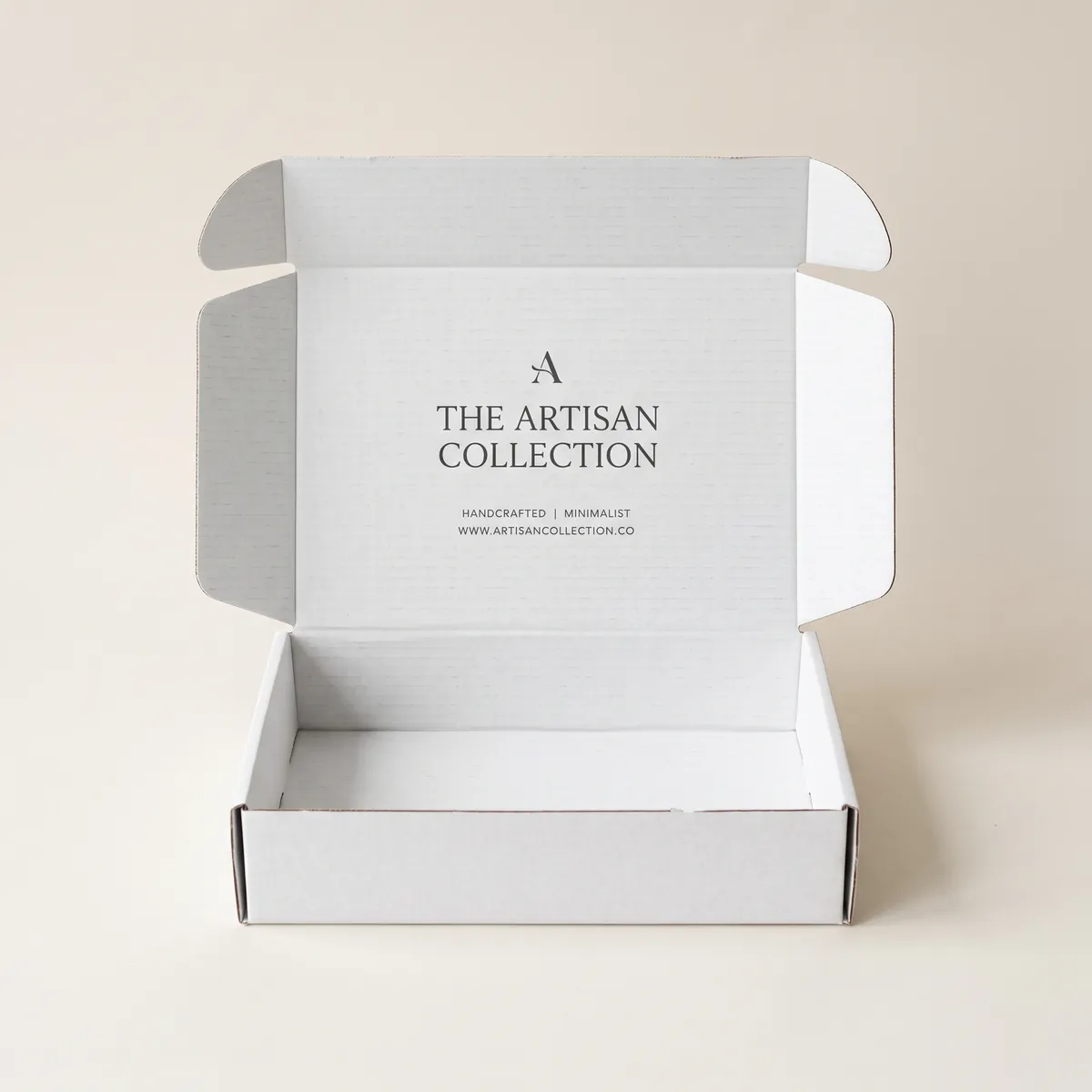
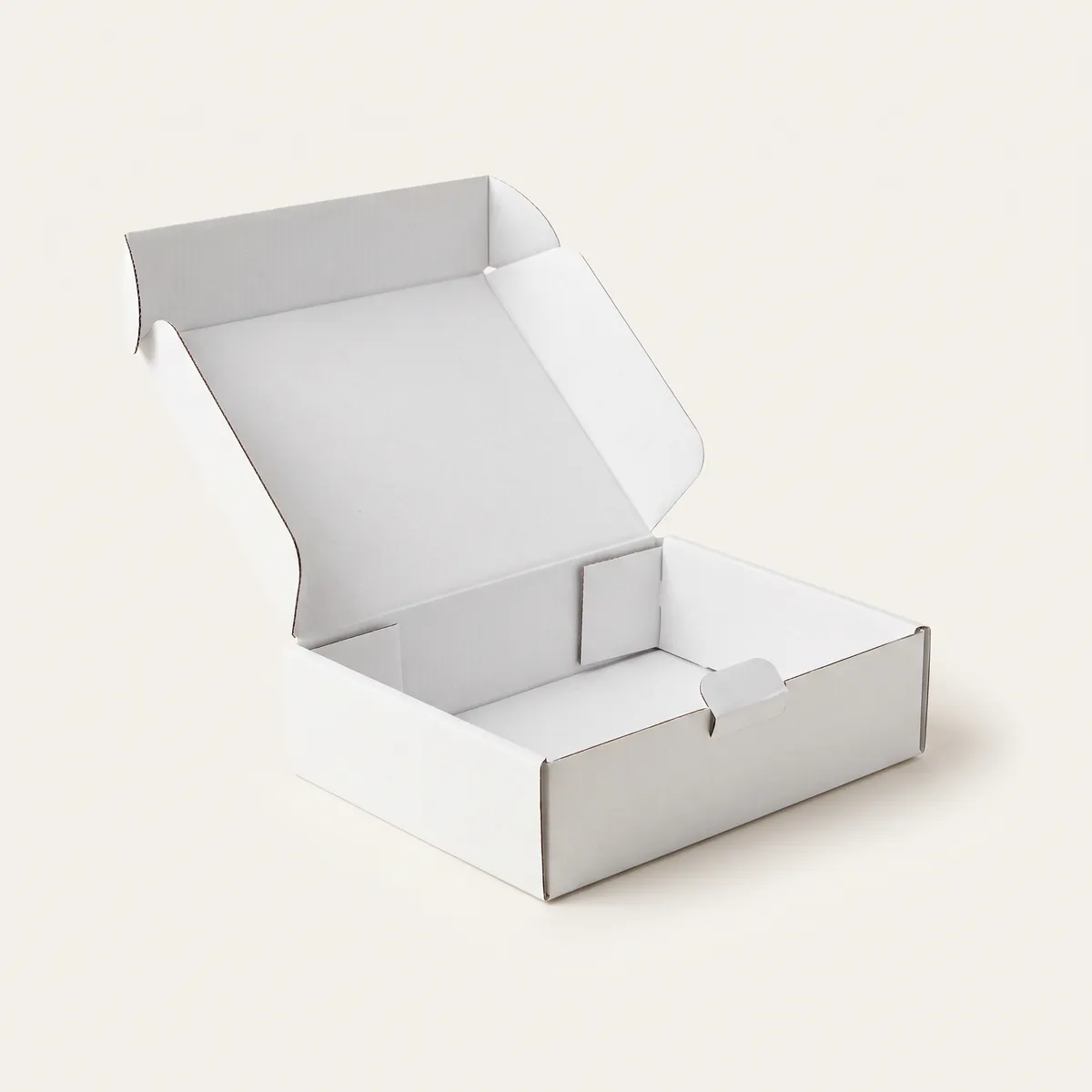
Cardboard shippers are usually built in the self-locking mailer style, where the printed lid lifts toward the customer, so the coated face is the first thing they handle. Pay for that face when color carries the brand. Pantone matches, photography, skin tones on a beauty product and gradients all print darker and duller on brown kraft, and no amount of design work fully rescues them. If your artwork is a one-color logo, though, the coated liner is buying a surface your design doesn't use, and kraft or plain white will do the same job for less. The same test applies to film. Lamination protects print on a box that gets handled and kept, but a box opened once and recycled may not need it at all.
Full-Color Print and Lamination on Cardboard Shippers
Available on this product: full CMYK across every outside panel, spot colors for exact brand shades, interior print on the inner liner, and a choice of gloss, matte or soft-touch film. Gloss makes photographs look saturated. Matte reads calmer and suits text-heavy or minimal designs. Soft-touch adds a velvety feel that only pays off if the customer keeps the box, as they often do with gift and subscription packaging. What we'd advise against is foil on a box that travels unprotected, because metallic details take the first scuff. Fine detail still softens slightly over the flute, so keep small type above 8pt even on coated stock. If the box ships inside an outer carton, finish choices open up, since nothing rubs against the print.
Cardboard Shipping Boxes for Beauty, Gifting and Color-Led Brands
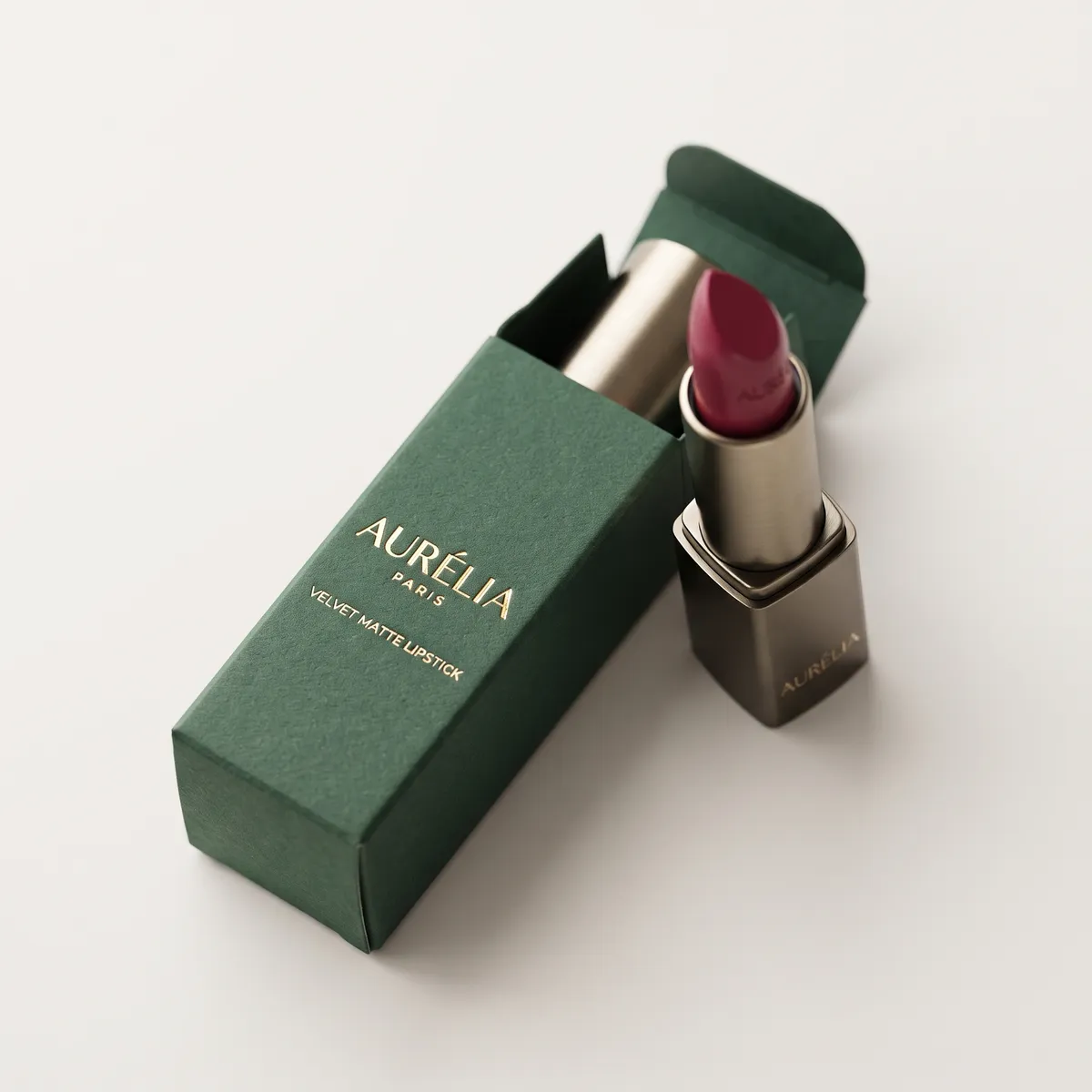
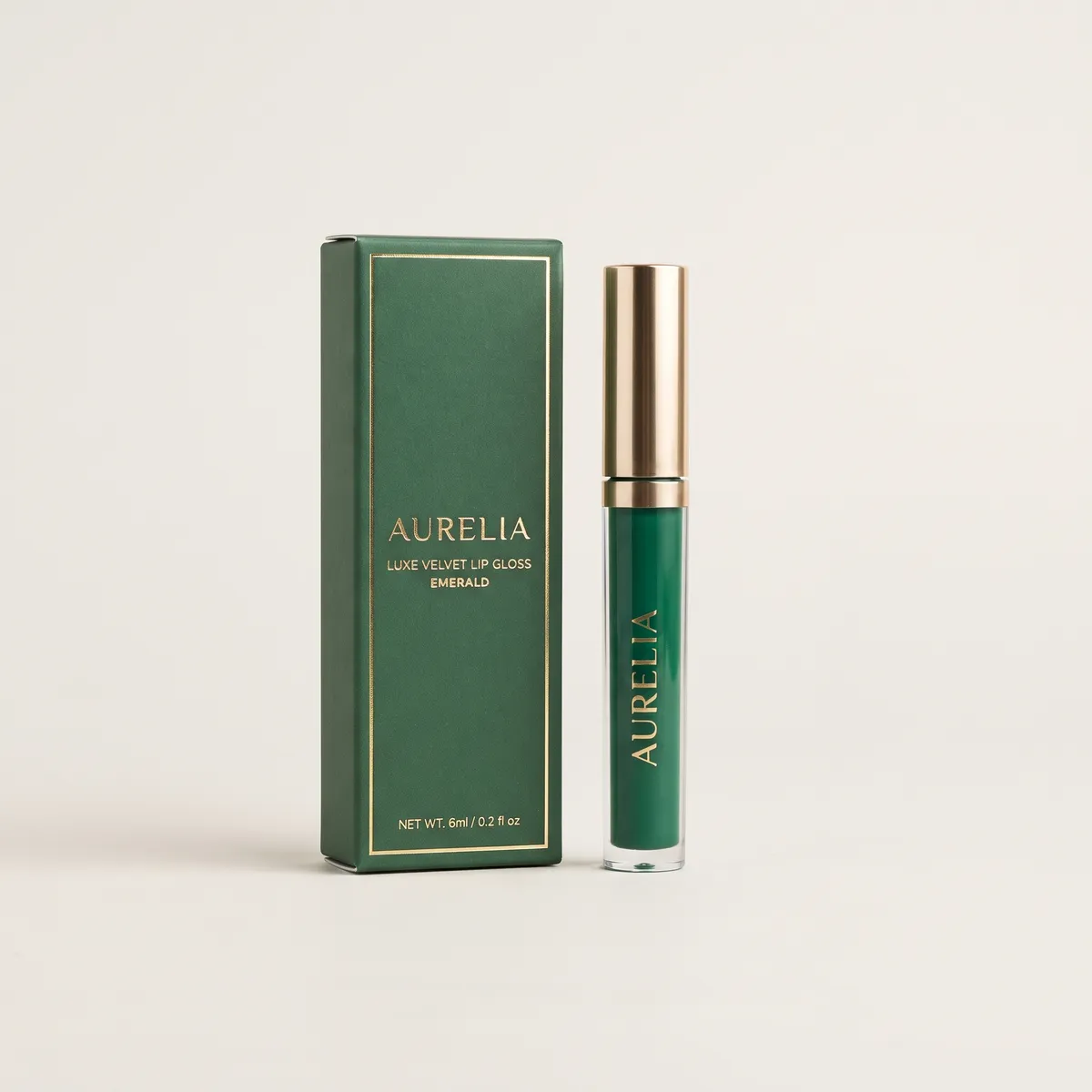
The buyers who reorder these sell something where the box is part of the first impression. Skincare and makeup lines ship direct to customers and want the outer box to match the carton inside it, and beauty brands whose shade has to match across both usually start here. Gift and hamper sellers use the printed lid as wrapping that needs no wrapping. Subscription boxes with a monthly theme print new full-color artwork for each edition. Fashion labels carry campaign photography from their website onto the box. Brands selling plain commodities, or shipping to trade buyers who discard the carton on receipt, are usually better served by kraft or a plain white box elsewhere in the range.
Getting Cardboard Shipping Boxes Proofed and Delivered
Color is where cardboard orders go wrong, so the proof stage gets the most attention. Design help is free and unlimited, and we keep revising the artwork until you're happy to sign the proof. On orders above 10,000 boxes, physical samples are free, which is the cheapest insurance a large color-critical run can buy before the full quantity is printed. Once the proof is approved, production takes 8–12 business days. Rush is available at extra cost, quoted upfront rather than discovered on the invoice. Shipping is included, and the quote already carries dies, plates and setup, so the number you approve is the number you pay. The minimum is 100 boxes.
One connected process, start to finish.
Structural Design
Dieline drafted to your exact fit and freight tolerances.
Proof & Sample
Sign off on a digital proof, or request a physical sample.
Tooling
Dies and plates are cut for your job and archived on file.
Production
Print, die-cut, and assembly run under in-line quality checks.
Ship & Reorder
Freight goes out, and the cycle resets for your next run.
Steady process. Powerful results.
Like everything we build, our process is engineered to hold up — no shortcuts, no surprises. Five dependable stages that run the same way every single time, so reorders are just as fast as the first order.
- One dedicated teamFrom first sketch to final freight, the same people carry your order start to finish.
- Dies archived on fileReorders skip tooling and re-setup entirely — we already have your exact spec.
- Checked against your sign-offEvery run is inspected against the digital proof or physical sample you approved.
Set up your file once, correctly
Nine in ten delayed jobs are delayed by artwork, not production. Match these four rules and your proof lands the next morning.
- Bleed1/8 in (3 mm) past every cut line
- Safe ZoneKeep text 1/4 in clear of every crease
- ColourCMYK or named Pantone. No RGB.
- Resolution300 dpi at final size, fonts outlined
No print-ready file?
Send a logo and a rough idea. Our studio builds the production file free with any order over 500 units — you keep the source file either way.
Ask the StudioBackground art must run all the way to the outer bleed edge. Anything inside the white dashed line survives fold tolerance.
What brands say about this box
They live there rather than here, where we can't edit them, delete them, or pick which ones you get to see. That is exactly what makes them worth reading.
Read all reviews on Trustpilot(opens in a new tab)Answers before you have to ask.
What's the difference between cardboard and corrugated shipping boxes?
They're the same construction — both are fluted. The difference is the liner pasted over the flute. Cardboard shipping boxes use a coated white liner that takes full-color print and lamination. Corrugated is the umbrella term covering every flute profile and either liner.
Can cardboard shipping boxes take lamination?
It can. A coated white liner accepts gloss, matte and soft-touch films, which is something kraft doesn't do nearly as well. Bear in mind lamination shifts printed color slightly, so we proof after the film rather than before it goes on.
Is cardboard stock more expensive than kraft?
Usually slightly, because the liner is bleached and coated. The gap narrows at volume, and the right question is what you need rather than which is cheaper — if your brand lives on accurate color, kraft will cost you more in disappointment than cardboard costs in board.
What's the turnaround on cardboard shipping boxes?
Around 8–12 business days from proof approval, including lamination if you've specified it. Rush is available at an added cost we'll share before you commit, and shipping is included in the price.
Can you match a specific Pantone on cardboard?
We get very close. Send us a Pantone reference and we'll proof it on your actual stock before the run, since color shifts between coated and uncoated surfaces and again under lamination. What you approve on that proof is what prints.