
Custom Drawer Boxes
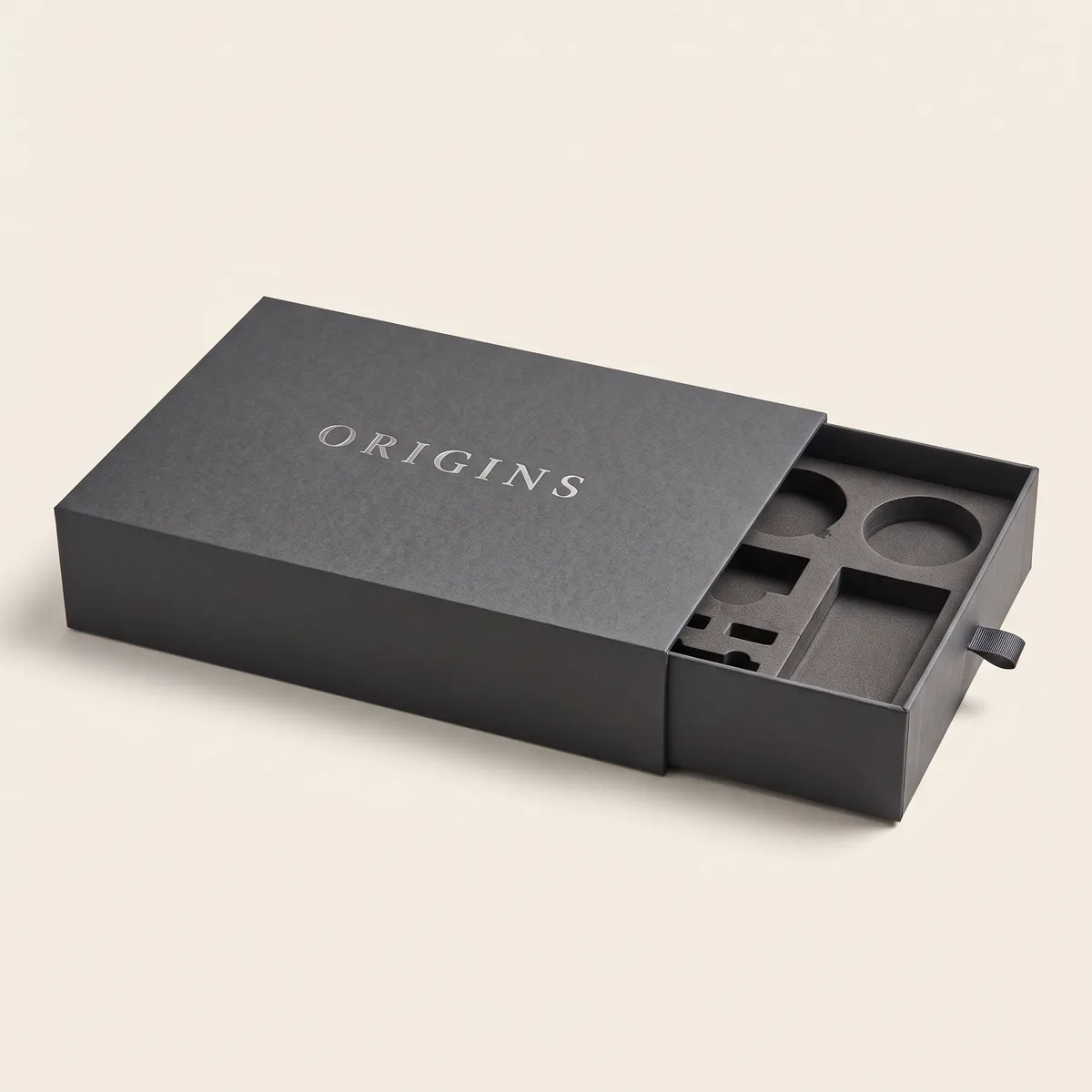
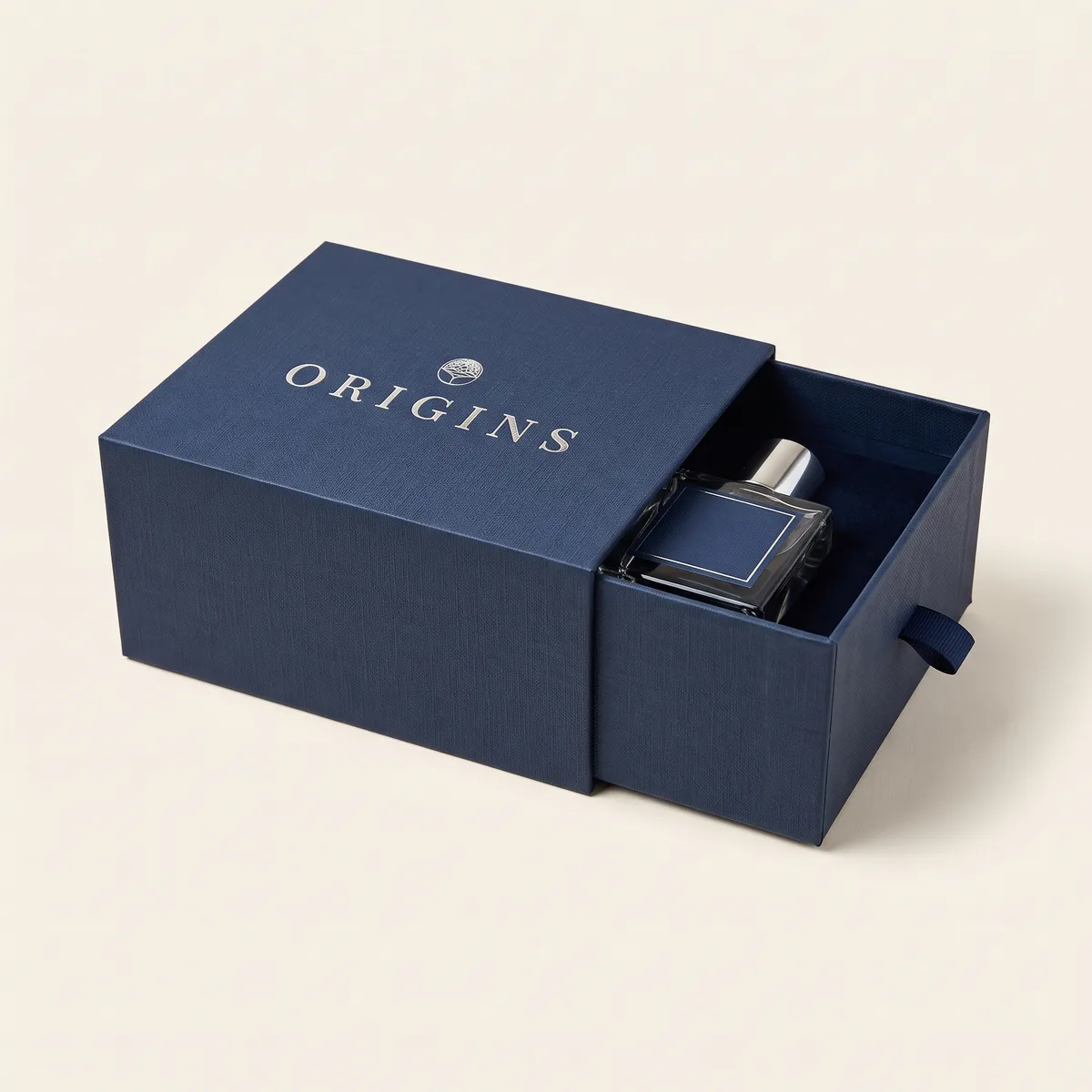
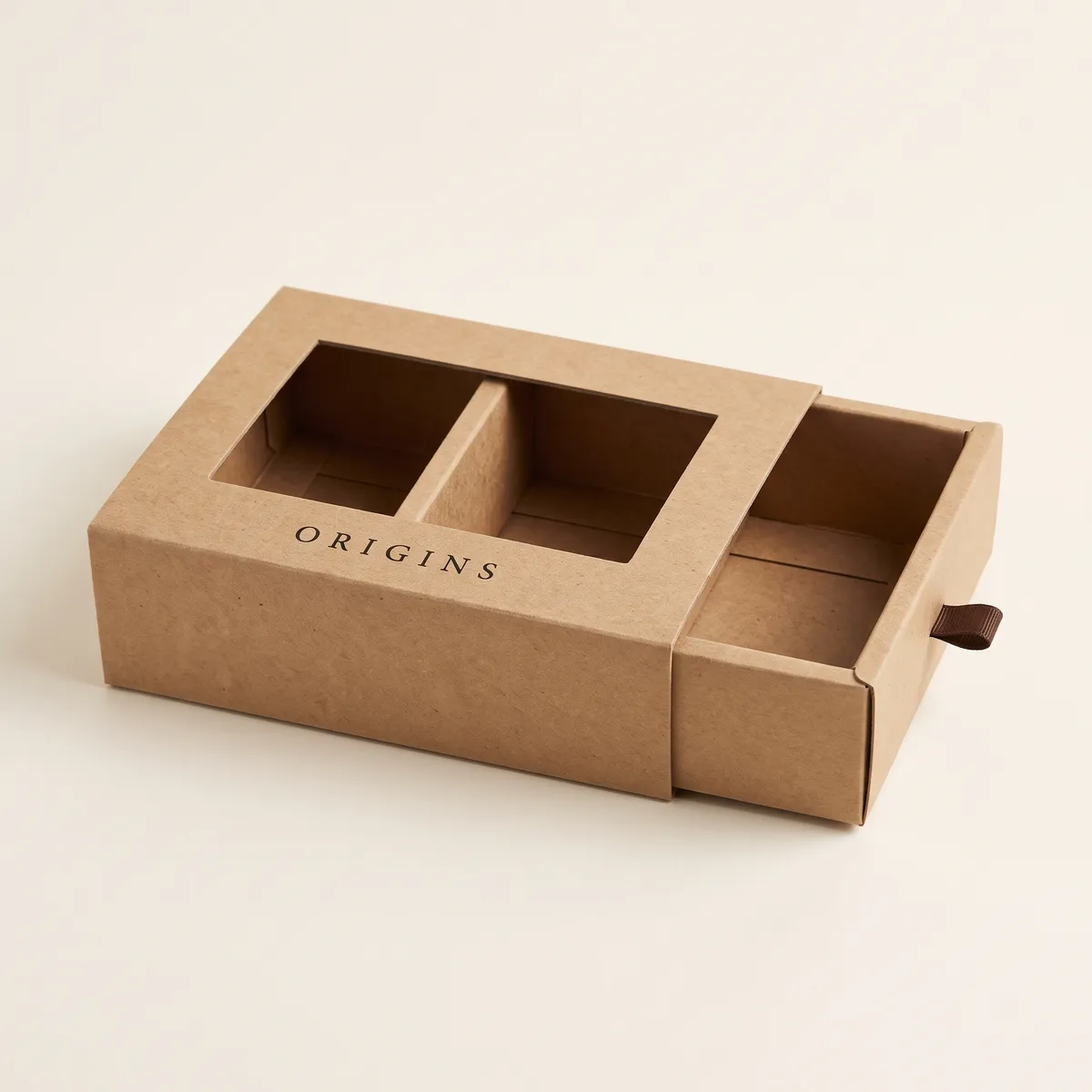
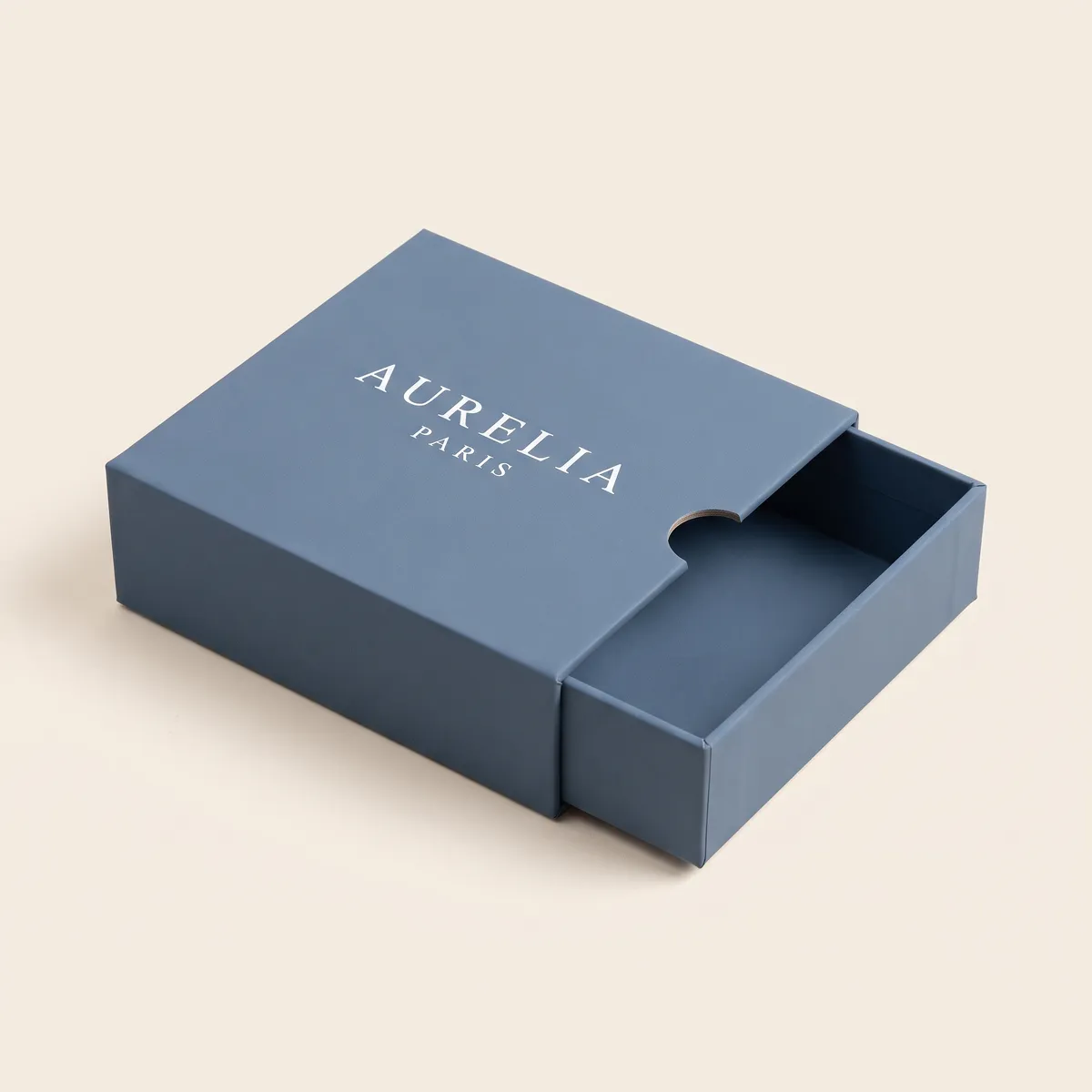
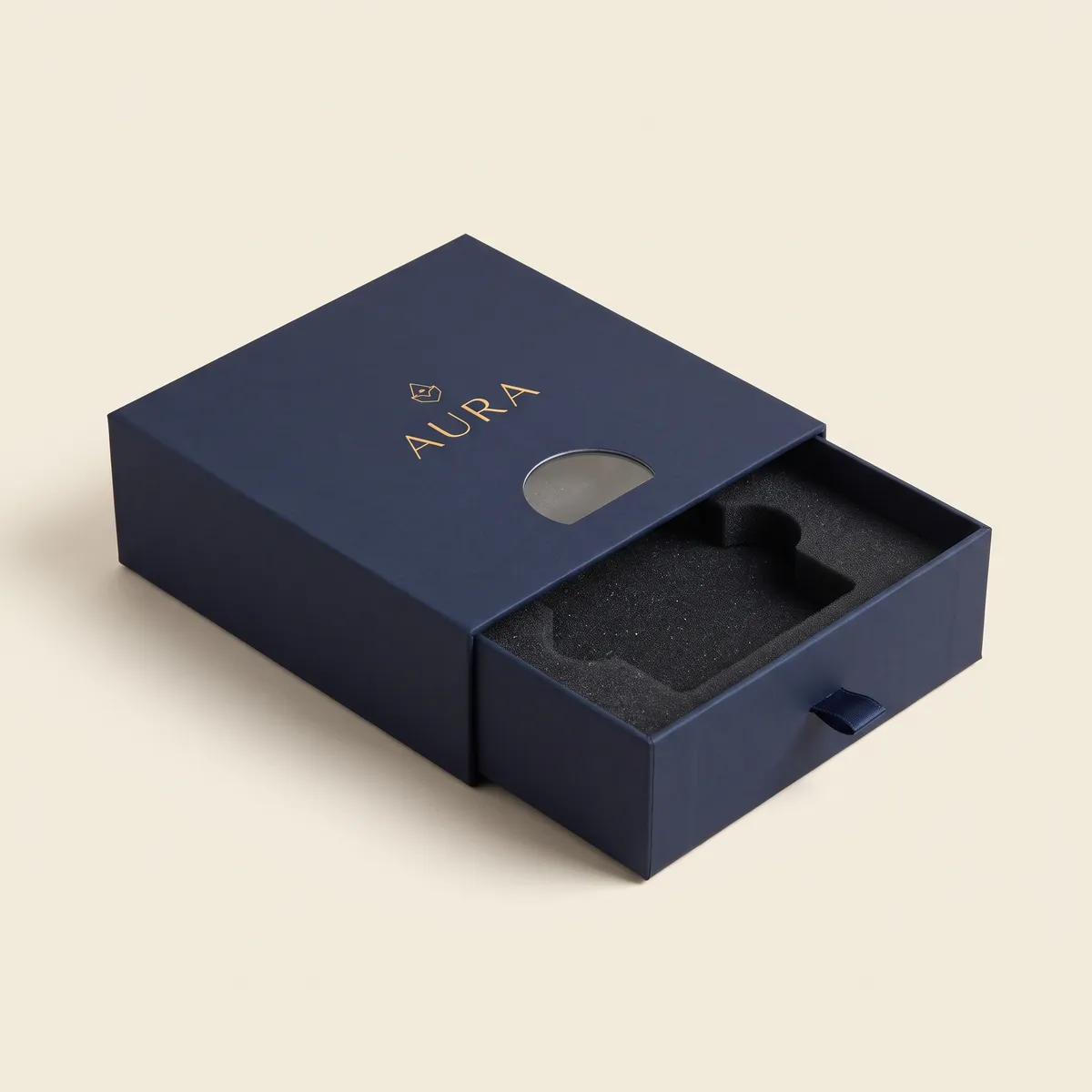
Custom drawer boxes slide an inner tray out of an outer shell, usually by a pull tab or ribbon, so the product appears gradually rather than all at once. The tray interior is fully exposed as it slides out, so printing it matters more than on most other packaging constructions. Drawers can slide open in transit, so specify a retaining feature or outer shipping carton.
Ours are on Trustpilot, where we can't edit them or choose which ones you see.
Read them on Trustpilot →(opens in a new tab)Four stages, twelve days
Quote confirmed
A specialist checks your spec against the board and comes back with a firm price inside 4 business hours.
Proof approved
You get a flat dieline and a 3D render. Nothing goes to press until you approve it in writing.
On press
Print, die-cut, glue, and fold. You get a press-side photo the day your job runs.
QC and delivery
Every pallet is sampled against the digital proof or physical sample you approved, then shipped with tracking to your dock or 3PL.
If a box doesn't match the digital proof or physical sample you approved, we reprint the run at no charge.
Read the reprint terms →Know exactly what you're ordering.
Drawer Boxes Built Around How Slowly the Product Appears
A drawer box is bought for the pace of the open. The person holding it sees the edge of the tray first, then the insert, then the product, and that sequence is the reason to choose this style over a carton. This page covers the drawer as a format, before you commit to a stock. It comes in two builds: coated board that ships flat and is folded at your end, or rigid board that arrives assembled and stays square. Brands land here when they know they want the slide but haven't decided how much weight it should carry. The answer usually turns on one question: does the customer keep the box, or open it once and recycle it?
Shell, Tray and Pull Options in a Drawer Build
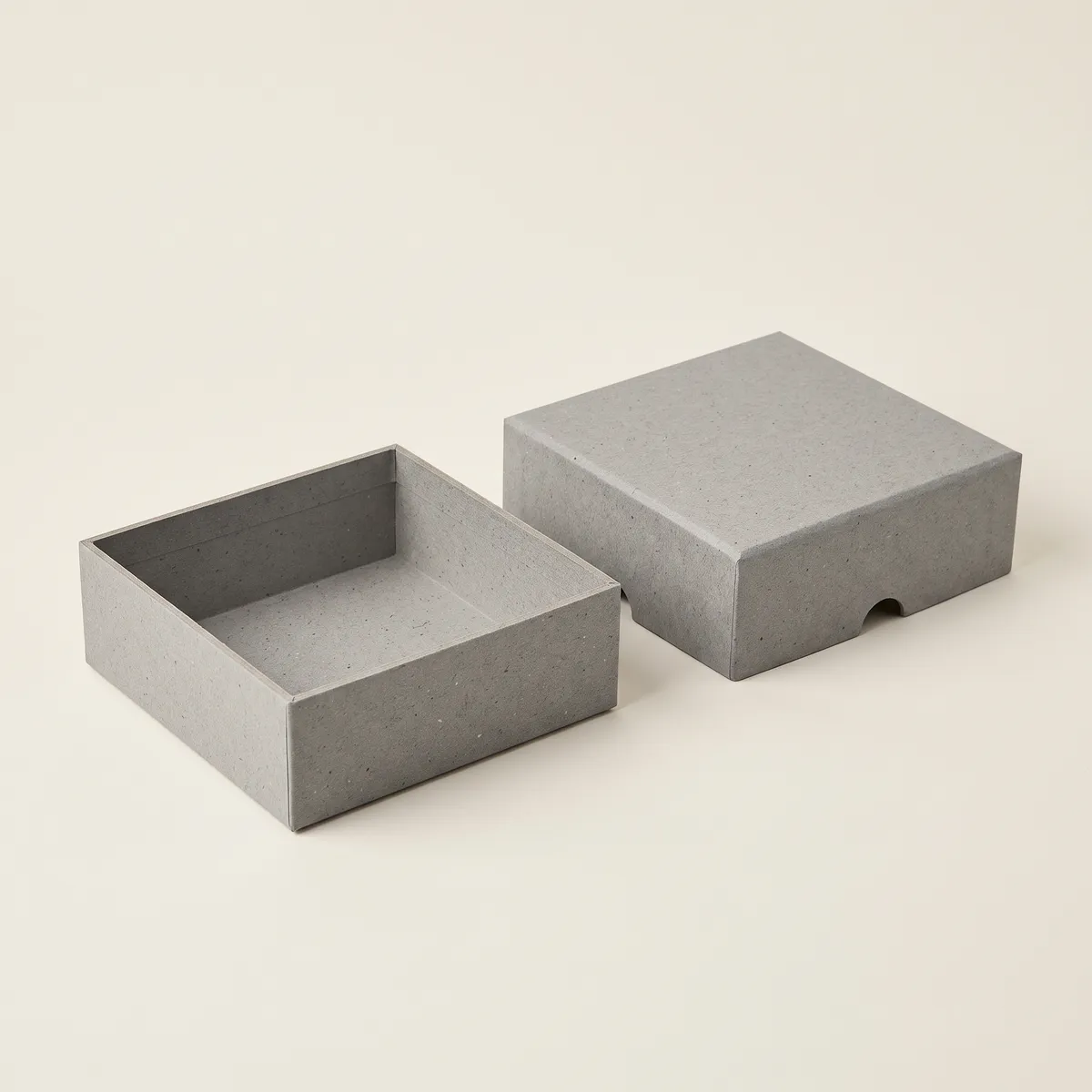
Every drawer has two parts made separately: an outer shell and an inner tray that slides inside it. Both are cut to your product, and we confirm in writing whether each figure is internal or external, since board thickness sits between the two and decides whether the tray runs freely or sticks.
| Part | Options |
|---|---|
| Outer shell | Coated paperboard, or grayboard shells wrapped in printed paper |
| Inner tray | Same stock as the shell, with an optional fitted insert |
| Pull | Printed tab or ribbon |
| Assembly | Board builds ship flat; rigid builds arrive assembled |
| Sizing | Cut to your product's dimensions |
Why a Sliding Tray Beats a Lid for a Handed-Over Present
A lid comes off in one move and then has to be put down somewhere. A drawer keeps the whole box in one piece: the tray travels out, the product stays seated in it, and the shell never leaves the recipient's hand. For presents given face to face, that matters more than it sounds, because the open happens in front of the person who gave it, and a slower reveal gives the moment some length. The tray also slides back in, so the box closes the way it opened, which a lid left on a table doesn't always manage. Where the drawer loses is speed. If the product is grabbed and used straight away, nobody notices the slide, and a tuck carton costs less for the same job.
Ribbons, Tabs and Print That Survive the Pull
The pull is the first thing a hand finds, so decide it early. A printed tab on the tray end keeps the look flat and simple. A ribbon adds color and a softer feel, and suits boxes that will be reopened often. Both are placed on the dieline, so the choice is made before artwork starts.
Exterior print follows the stock. Coated board takes full color with gloss, matte or soft-touch film. Rigid shells are printed on a paper wrap before it goes on, so foil, emboss and spot UV are all open there. On either build, keep foil and heavy solid color away from the scored edges of the shell, because a score is a crease in the board and metallic laid across one cracks.
Where Drawer Boxes Earn Their Place in a Range
Jewelers use the drawer for bracelets, which lie flat along the tray instead of coiling under a lid. Belt makers do the same with a coiled belt. Hair brands put wigs in drawers built around a form that supports the crown, and premium chocolatiers slide out truffle and praline assortments in a divided tray so the arrangement is the first thing seen. Gift brands and cosmetics sets use the format the same way, wherever the item sits still in a tray and gains something from being revealed in stages. The common thread is a product that looks better arranged than loose. If yours shifts around inside any box, the insert deserves attention before the drawer does.
Choosing Cardboard or Rigid Before the Dieline Is Drawn
Decide the build first, because it changes everything after it. Cardboard drawers run on the standard folding schedule. Rigid drawers need 20 business days once the proof is approved, simple or complex, and rush on either costs extra, quoted upfront. The minimum is 100 boxes whichever stock you choose.
Send the product's dimensions and weight, and we'll build the dieline around them and proof it with your artwork. Artwork can go through as many revisions as it needs at no charge. If the drawers will travel by courier, say so at this stage so an outer carton is planned in. Every order passes a three-stage check, and if bulk doesn't match the approved proof, we reprint at our cost. Shipping is included in the quote.
One connected process, start to finish.
Structural Design
Dieline drafted to your exact fit and freight tolerances.
Proof & Sample
Sign off on a digital proof, or request a physical sample.
Tooling
Dies and plates are cut for your job and archived on file.
Production
Print, die-cut, and assembly run under in-line quality checks.
Ship & Reorder
Freight goes out, and the cycle resets for your next run.
Steady process. Powerful results.
Like everything we build, our process is engineered to hold up — no shortcuts, no surprises. Five dependable stages that run the same way every single time, so reorders are just as fast as the first order.
- One dedicated teamFrom first sketch to final freight, the same people carry your order start to finish.
- Dies archived on fileReorders skip tooling and re-setup entirely — we already have your exact spec.
- Checked against your sign-offEvery run is inspected against the digital proof or physical sample you approved.
Set up your file once, correctly
Nine in ten delayed jobs are delayed by artwork, not production. Match these four rules and your proof lands the next morning.
- Bleed1/8 in (3 mm) past every cut line
- Safe ZoneKeep text 1/4 in clear of every crease
- ColourCMYK or named Pantone. No RGB.
- Resolution300 dpi at final size, fonts outlined
No print-ready file?
Send a logo and a rough idea. Our studio builds the production file free with any order over 500 units — you keep the source file either way.
Ask the StudioBackground art must run all the way to the outer bleed edge. Anything inside the white dashed line survives fold tolerance.

What brands say about this box
They live there rather than here, where we can't edit them, delete them, or pick which ones you get to see. That is exactly what makes them worth reading.
Read all reviews on Trustpilot(opens in a new tab)Answers before you have to ask.
How does a drawer box open?
An inner tray slides out of an outer shell, usually with a pull tab or ribbon. The product appears gradually as the tray emerges, which is a slower reveal than a lid lifting off.
Can drawer boxes have a ribbon pull?
Yes, and it's a common addition. A ribbon or fabric tab gives something to grip and slows the pull, which suits gifting. Without one, tight drawers can be awkward to open.
Are drawer boxes practical for shipping?
Less than a lidded build, since a drawer can slide open in transit. We'd add a retaining feature or ship inside an outer carton. For handover and retail they're ideal.
How long do drawer boxes take to produce?
Folding builds run about 8–12 business days from proof approval; rigid takes 20. Rush production is available on both at a quoted premium, shipping included.
What's the minimum order for drawer boxes?
100 boxes across both builds. That's low enough to trial the drawer format against your current packaging before switching a range over.