
Corrugated Display Boxes
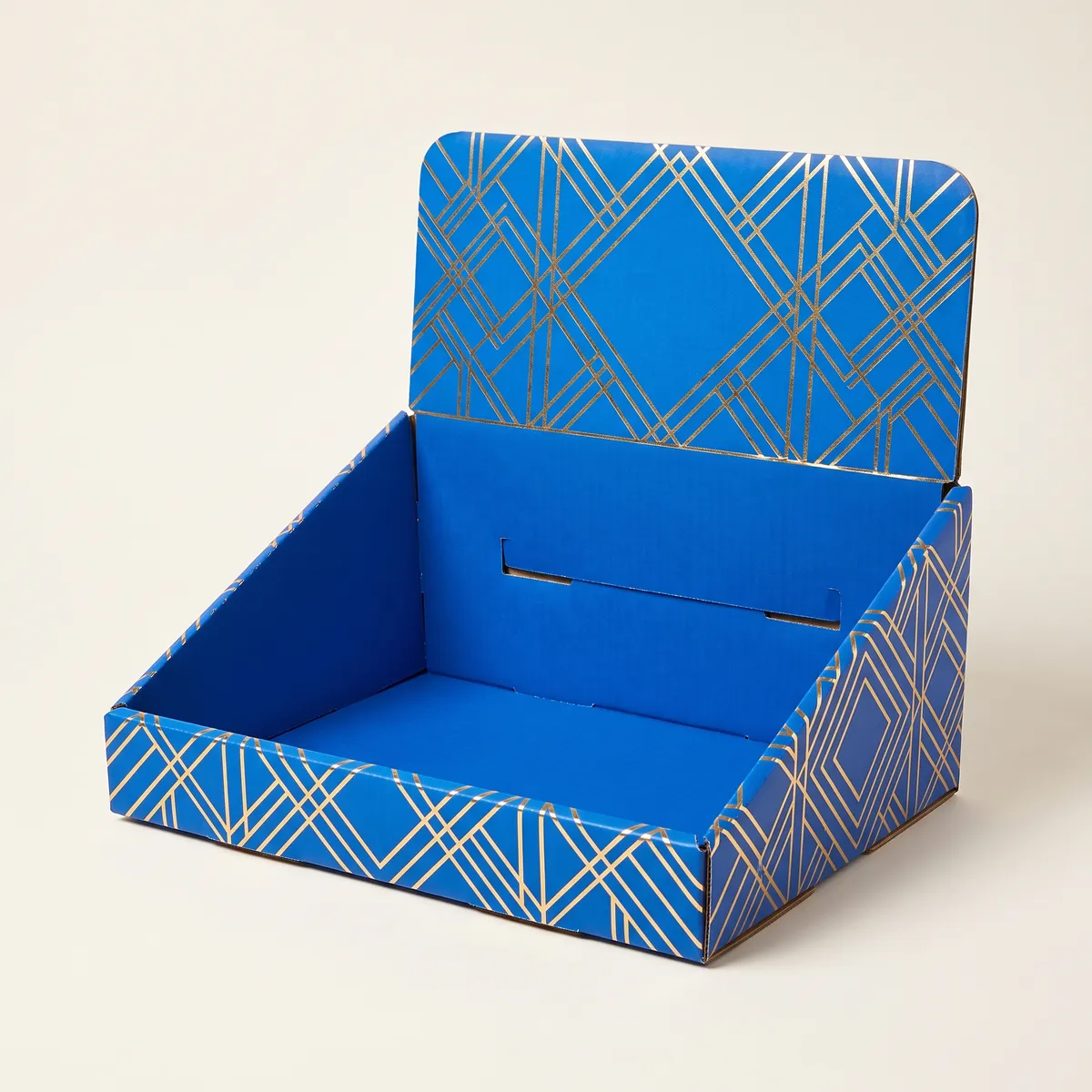
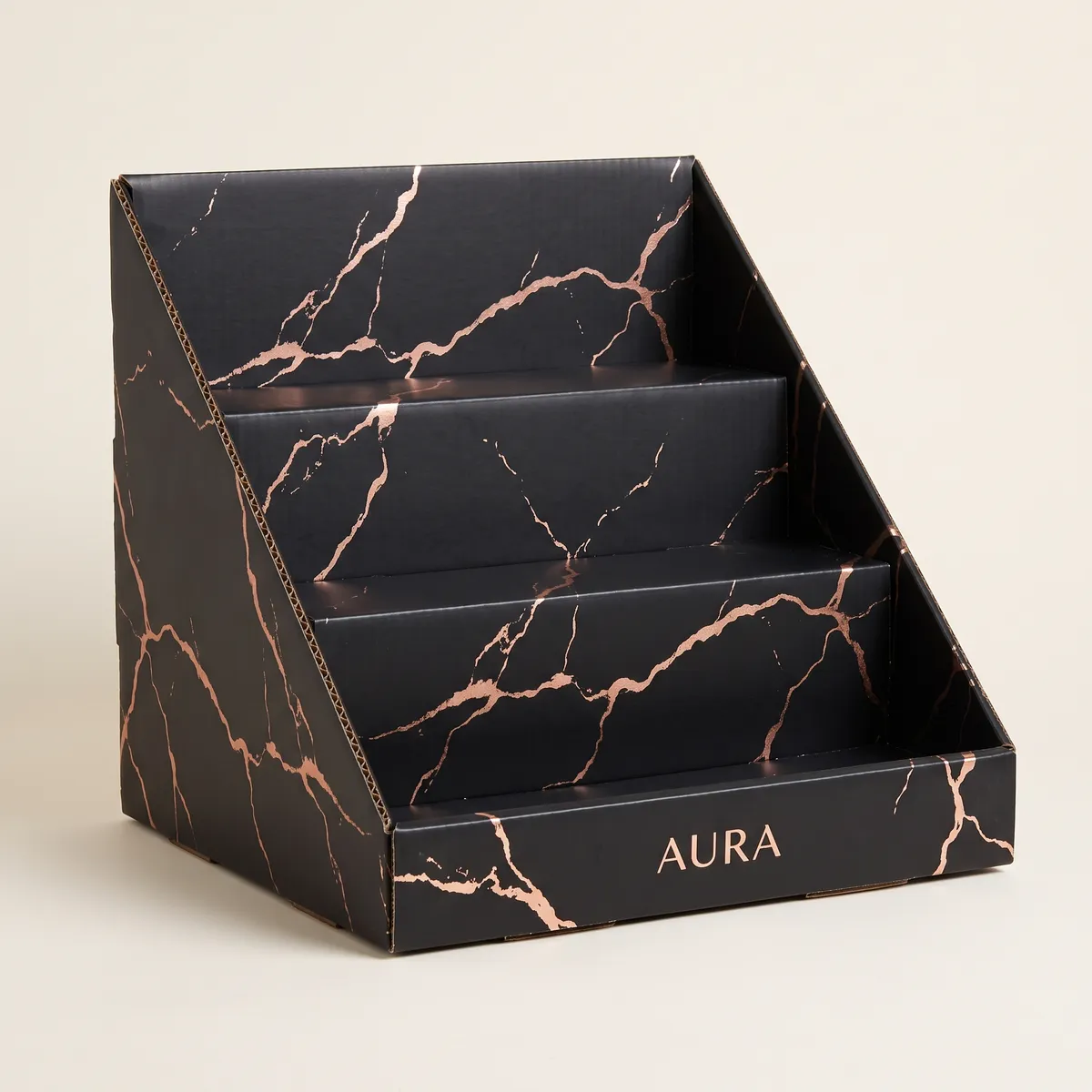
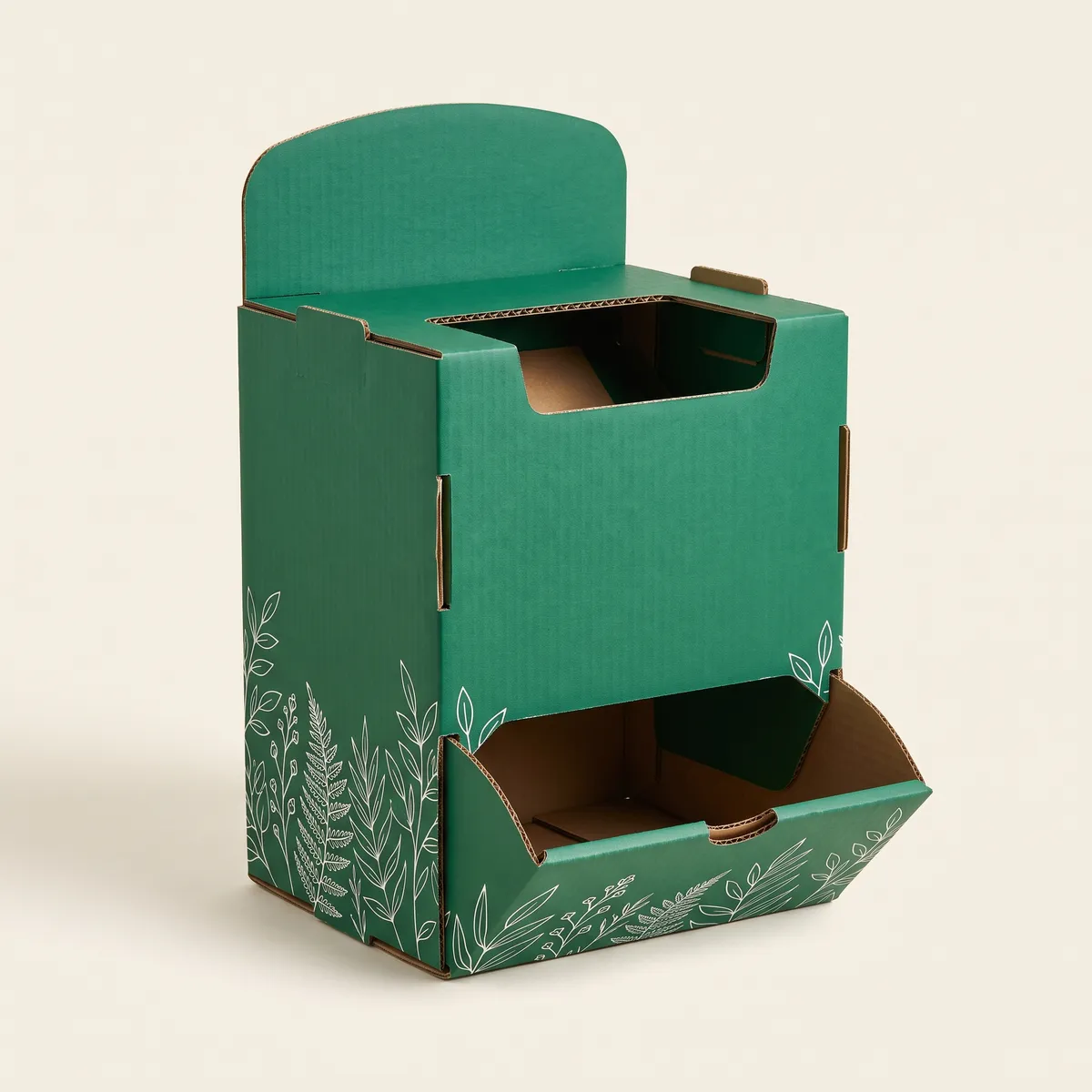
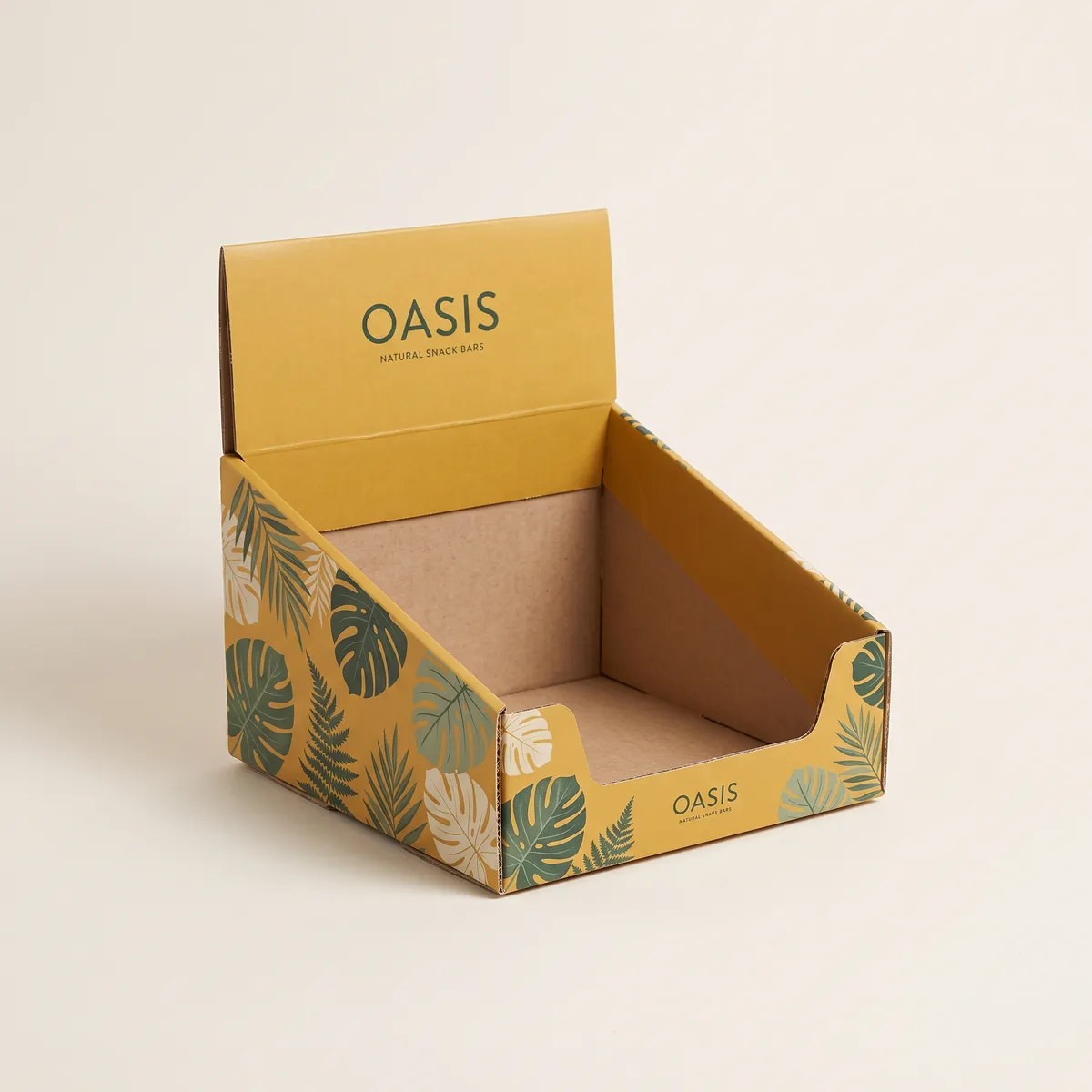
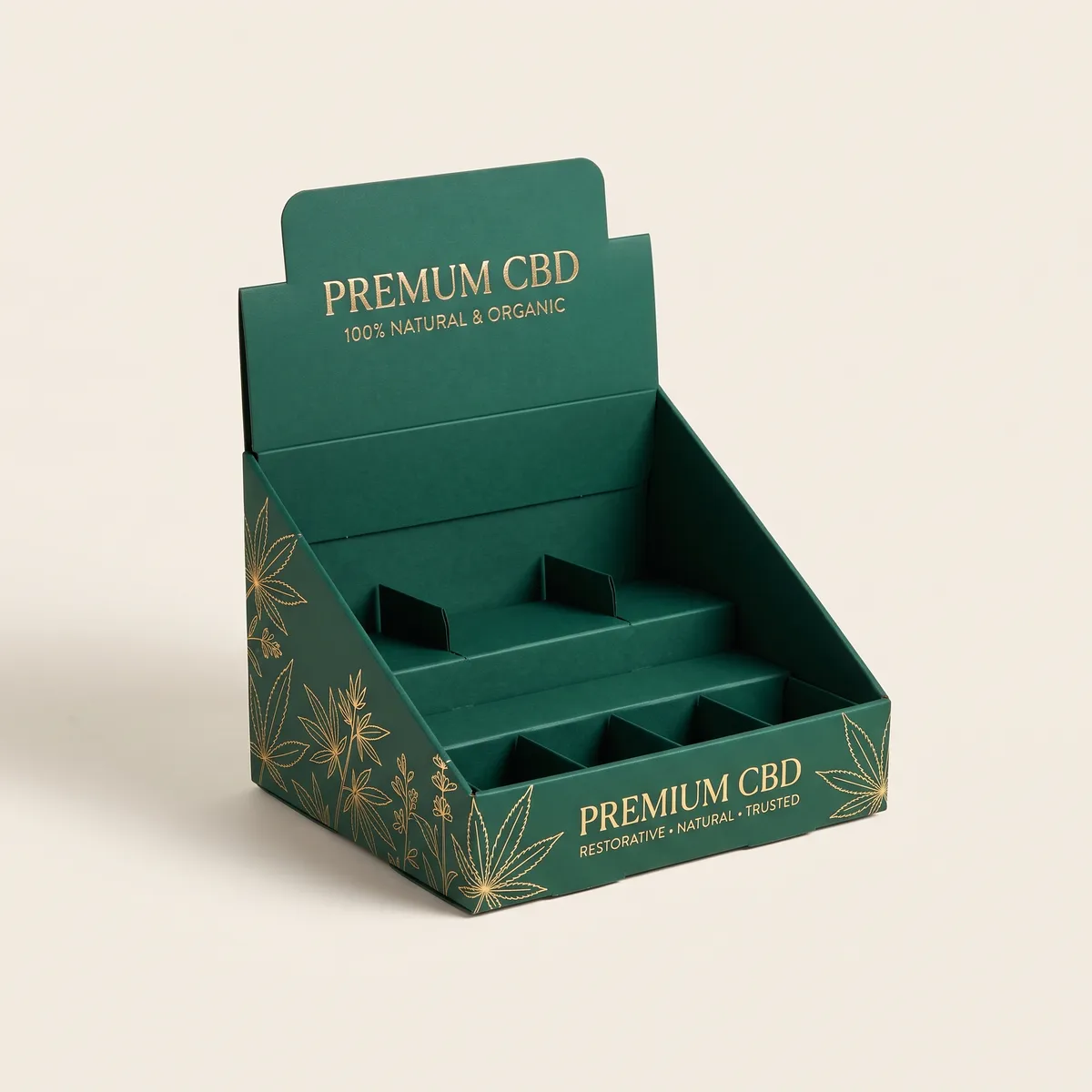
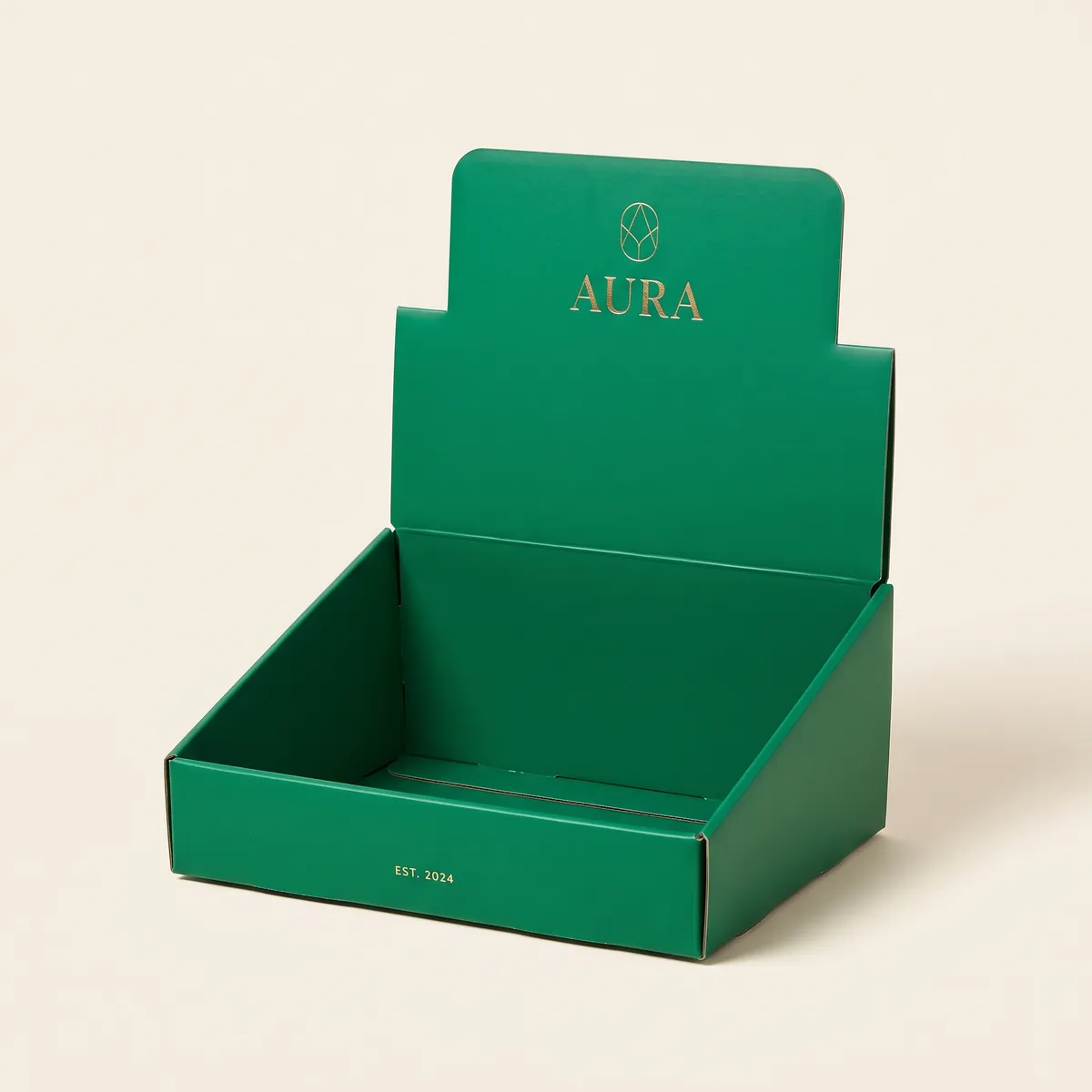
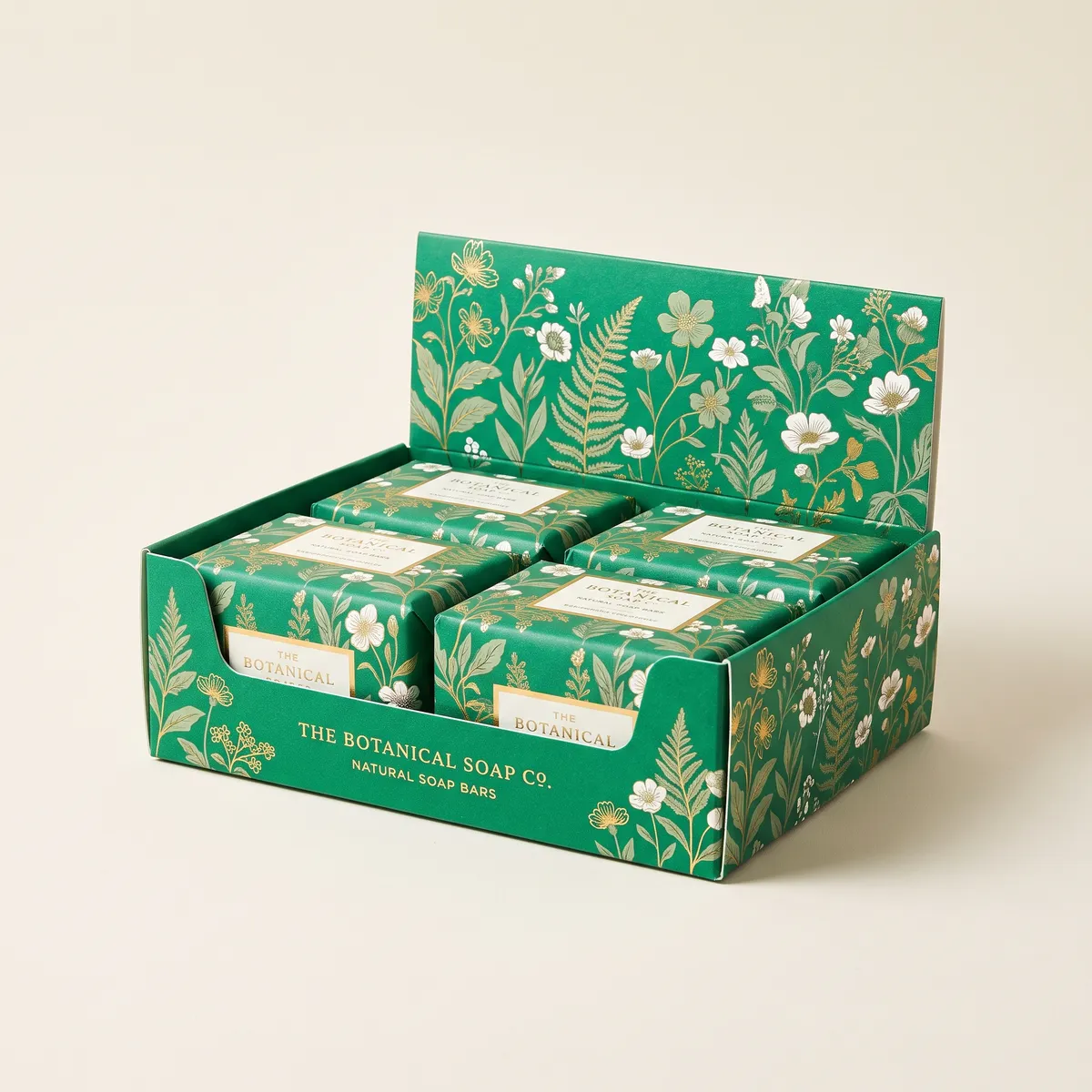
Corrugated display boxes hold their shape when full and survive restocking, shipping and repeated handling, where folding board flexes under weight. They cost somewhat more, a gap that narrows at volume. Full-color print works, though the flute softens small type and thin lines, so bold artwork reproduces best. Most brands run two or three sizes for different retail spaces.
Ours are on Trustpilot, where we can't edit them or choose which ones you see.
Read them on Trustpilot →(opens in a new tab)Four stages, twelve days
Quote confirmed
A specialist checks your spec against the board and comes back with a firm price inside 4 business hours.
Proof approved
You get a flat dieline and a 3D render. Nothing goes to press until you approve it in writing.
On press
Print, die-cut, glue, and fold. You get a press-side photo the day your job runs.
QC and delivery
Every pallet is sampled against the digital proof or physical sample you approved, then shipped with tracking to your dock or 3PL.
If a box doesn't match the digital proof or physical sample you approved, we reprint the run at no charge.
Read the reprint terms →Know exactly what you're ordering.
Corrugated Display Boxes for Heavy Product and Long Restock Cycles
Corrugated displays are for products with weight: jars, cans, bottles, multipacks and boxed goods. They're also the right build when a unit will be refilled from a stock box many times over a long campaign, or sent to stores already assembled. The board has a fluted layer between two flat liners, and that layer is what keeps shelves level and walls upright when the unit is full. Buyers are food and drink brands, toy and game companies, household goods makers and distributors supplying several stores. For light product on a short campaign, this is probably more board than you need, and a coated folding unit will cost less and print more sharply.
Flute, Liner and Support Specs for a Fluted Display
The flute grade and the liner are the two choices that set how a corrugated unit performs and how it looks.
| Component | Specification |
|---|---|
| Flute | C-flute, B-flute or BC double-wall |
| Liner | White or kraft, chosen for the look |
| Internal supports | Added under shelves as the load requires |
| Shelves or cavities | Set by product size and weight |
| Delivery | Flat or assembled |
| Dimensions | Taken from your product, internal unless noted |
B-flute is thinner and prints better, C-flute is the general standard, and BC double-wall is kept for the heaviest units. All three are fluted board with a printable liner, so the liner color is chosen separately from the strength.
Why Weight Decides the Stock Before Print Does
Print quality is usually the first thing brands ask about, but on a display that carries weight it's the second question. A unit that sags or leans after a few days loses more sales than slightly softer artwork ever would. Folding board bends under that kind of load, while fluted board spreads it across the structure and holds its shape. Weight also includes how the unit gets handled: every refill means a staff member reaching in, shifting stock and leaning on edges. For jarred sauces and pantry goods, the weight is obvious, and a unit holding glass needs board that stays straight. Once the load is covered, the liner choice and artwork can make the unit look as good as possible.
Liner Choice and Artwork Rules for a Fluted Unit
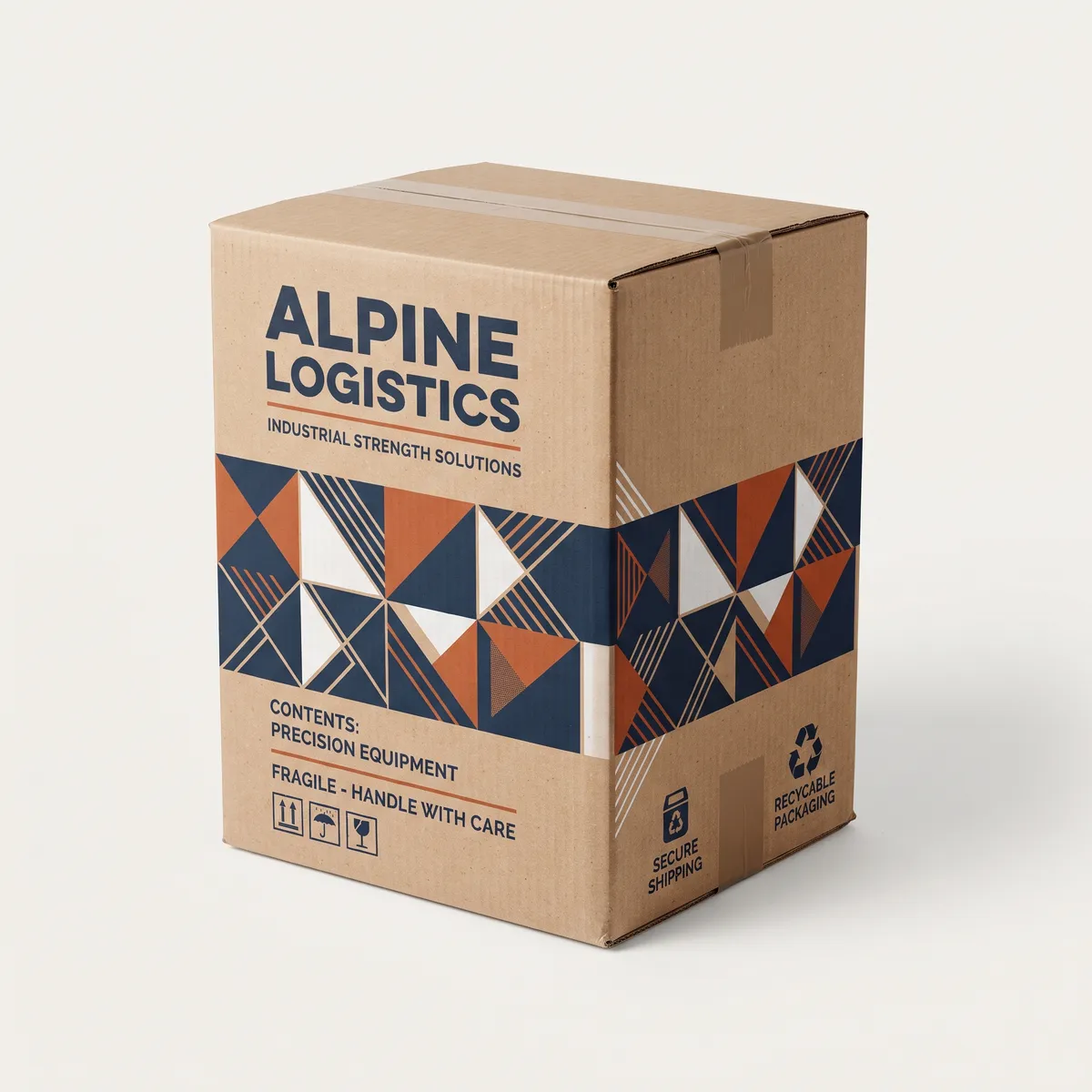
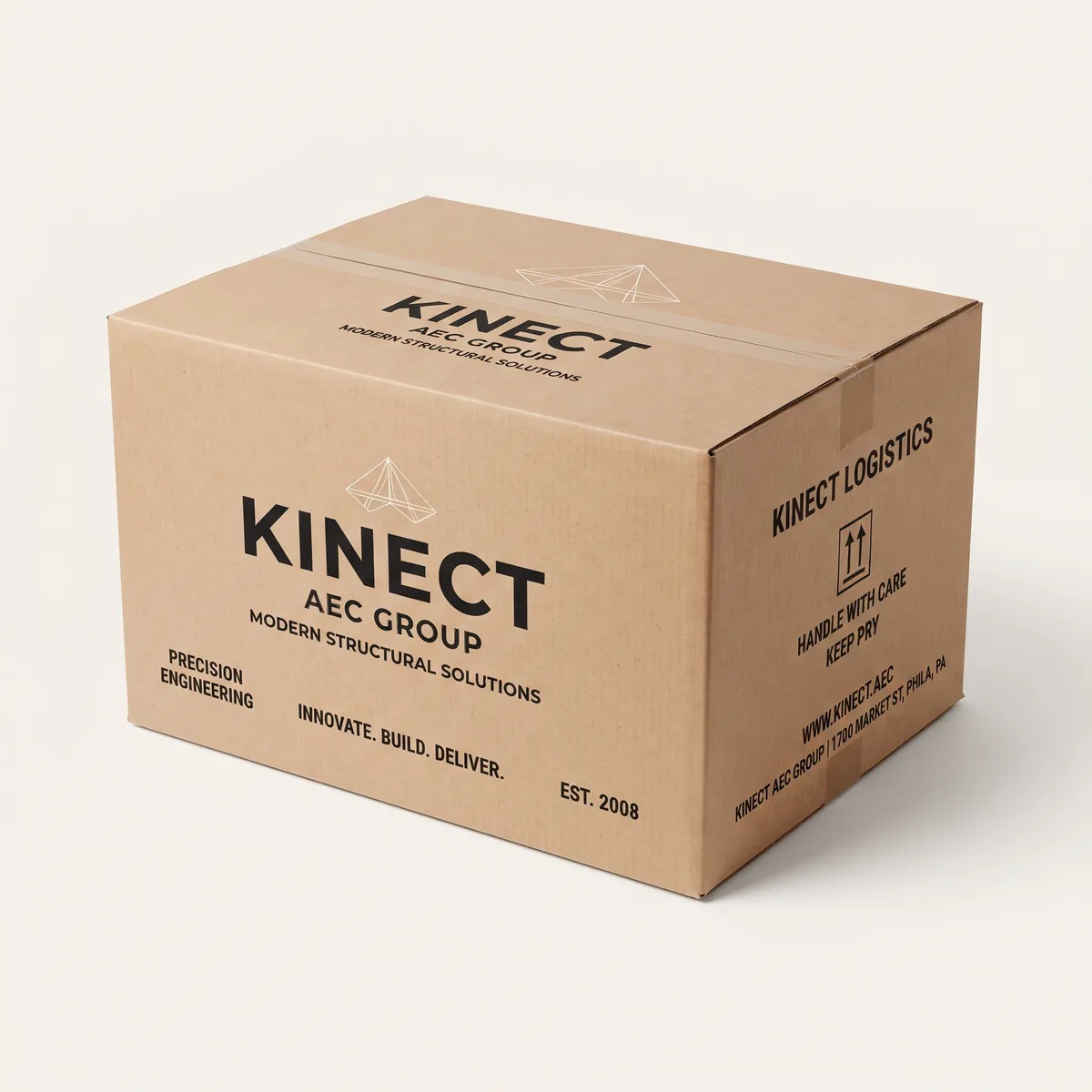
Print on a corrugated unit goes onto the liner, and the liner decides how bright it looks. A white liner gives cleaner, more accurate color and suits brands with bright packaging. A kraft liner gives a natural brown base, where colors print darker and warmer. The board is equally strong either way. Because the flute sits under the liner, keep the artwork bold: large logos, simple shapes and clear text hold up, while fine lines and small type soften. Put detailed content on a header card or on the product itself. Lamination is possible and adds moisture resistance, but it costs more and makes the unit harder to recycle, which matters if the display is broken down after the campaign.
Fluted Displays for Boxed Toys, Multipacks and Holiday Stock
Toy launches stocked in boxed units are one of the most common uses, especially in the run-up to the holidays, when heavy games and sets need a unit that holds a full load for weeks. Food and drink brands use corrugated displays for multipacks, canned drinks and jarred goods at endcaps and in convenience stores. Household brands use them for cleaning products and anything sold in bottles. Garden centers and hardware stores use them for seed packets, small tools and fixings, where the unit gets handled hard. Distributors order them in batches for rollouts across a chain, since the same unit can be sent to each store and set up identically everywhere.
Load Details We Need Before Quoting a Fluted Unit
The most useful thing you can send us is weight. Tell us what a full unit will hold, how heavy each item is, and whether the display goes out flat or assembled, and we'll choose the flute and supports to match. Add the product dimensions and the floor or counter area, and a proof follows; artwork revisions are free and uncapped. The run itself takes 8–12 business days after sign-off, with a rush option at extra cost that's quoted before you place the order. Shipping is included. Each unit goes through a three-stage check, and any bulk run that doesn't match what you approved is redone at our cost.
One connected process, start to finish.
Structural Design
Dieline drafted to your exact fit and freight tolerances.
Proof & Sample
Sign off on a digital proof, or request a physical sample.
Tooling
Dies and plates are cut for your job and archived on file.
Production
Print, die-cut, and assembly run under in-line quality checks.
Ship & Reorder
Freight goes out, and the cycle resets for your next run.
Steady process. Powerful results.
Like everything we build, our process is engineered to hold up — no shortcuts, no surprises. Five dependable stages that run the same way every single time, so reorders are just as fast as the first order.
- One dedicated teamFrom first sketch to final freight, the same people carry your order start to finish.
- Dies archived on fileReorders skip tooling and re-setup entirely — we already have your exact spec.
- Checked against your sign-offEvery run is inspected against the digital proof or physical sample you approved.
Set up your file once, correctly
Nine in ten delayed jobs are delayed by artwork, not production. Match these four rules and your proof lands the next morning.
- Bleed1/8 in (3 mm) past every cut line
- Safe ZoneKeep text 1/4 in clear of every crease
- ColourCMYK or named Pantone. No RGB.
- Resolution300 dpi at final size, fonts outlined
No print-ready file?
Send a logo and a rough idea. Our studio builds the production file free with any order over 500 units — you keep the source file either way.
Ask the StudioBackground art must run all the way to the outer bleed edge. Anything inside the white dashed line survives fold tolerance.
What brands say about this box
They live there rather than here, where we can't edit them, delete them, or pick which ones you get to see. That is exactly what makes them worth reading.
Read all reviews on Trustpilot(opens in a new tab)Answers before you have to ask.
Why choose corrugated over folding board for a display?
Strength and stacking. Corrugated holds its shape when full and survives restocking, shipping and repeated handling. Folding board is fine for light product and short campaigns but flexes under weight.
Can corrugated displays be printed in full color?
Yes, though the flute limits fine detail. The wave beneath the liner telegraphs through and softens small type, so bold artwork reproduces far better than delicate wordmarks.
Is corrugated more expensive than folding board?
Usually somewhat, since it's a heavier board with more material. The gap narrows at volume. For a unit that has to hold weight and survive restocking, it's generally the right spend.
What's the turnaround on corrugated displays?
Usually 8–12 business days once the proof is approved. Rush production is available at a quoted premium, with shipping included rather than added later.
Can I order corrugated displays in several sizes?
Yes, and most brands need two or three across different retail environments. Running them together shares setup while letting each fit the space it's going into.