
Cardboard Display Boxes
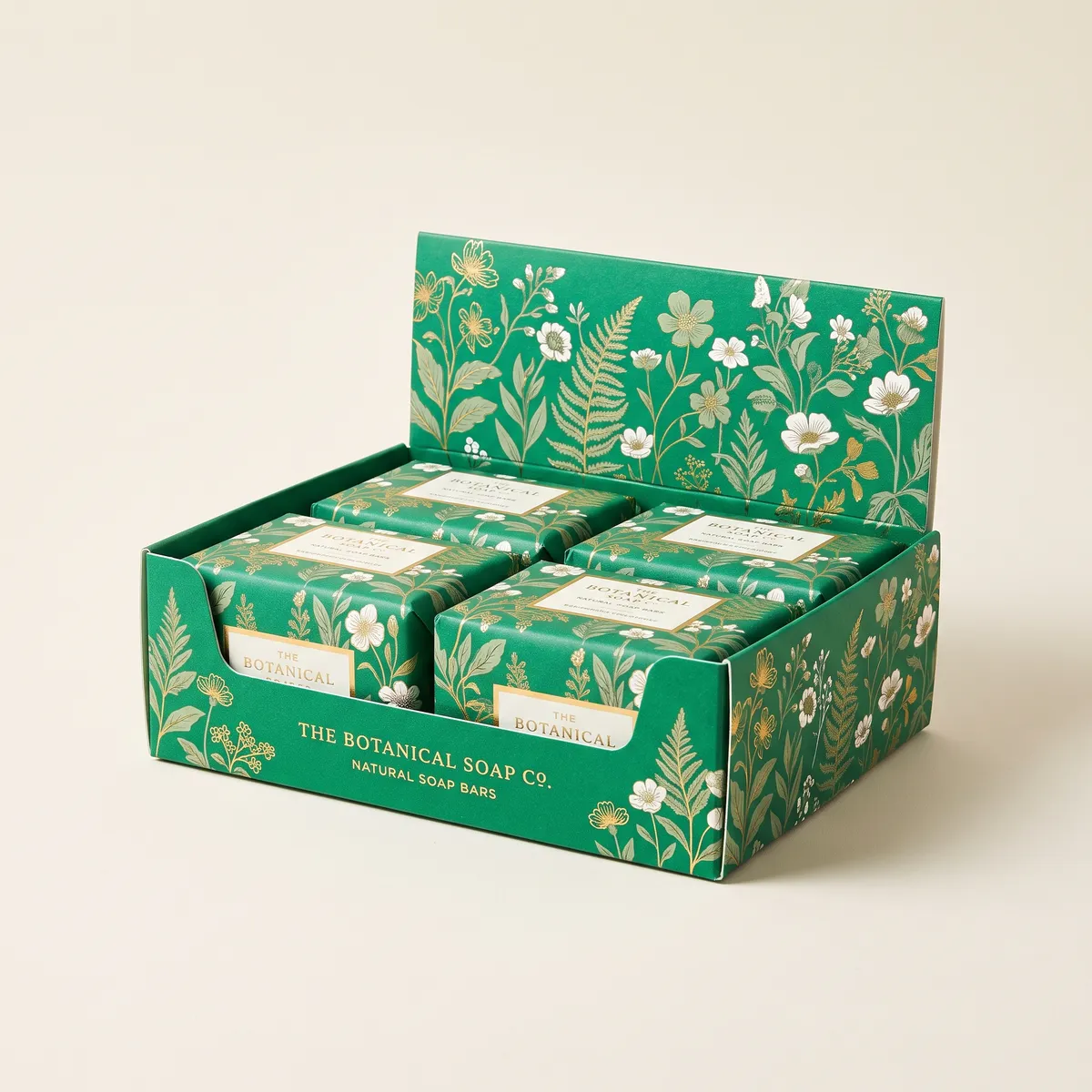
Cardboard display boxes use coated white board because a display has seconds to catch attention, and coated stock holds saturation that kraft and recycled boards mute. For lighter products it's strong enough; for heavier product or longer campaigns, corrugated lasts better. Lamination protects print from restocking scuffs, proofed after the film since it shifts color slightly.
Ours are on Trustpilot, where we can't edit them or choose which ones you see.
Read them on Trustpilot →(opens in a new tab)Four stages, twelve days
Quote confirmed
A specialist checks your spec against the board and comes back with a firm price inside 4 business hours.
Proof approved
You get a flat dieline and a 3D render. Nothing goes to press until you approve it in writing.
On press
Print, die-cut, glue, and fold. You get a press-side photo the day your job runs.
QC and delivery
Every pallet is sampled against the digital proof or physical sample you approved, then shipped with tracking to your dock or 3PL.
If a box doesn't match the digital proof or physical sample you approved, we reprint the run at no charge.
Read the reprint terms →Know exactly what you're ordering.
Cardboard Display Boxes for Light Product and Short Campaigns
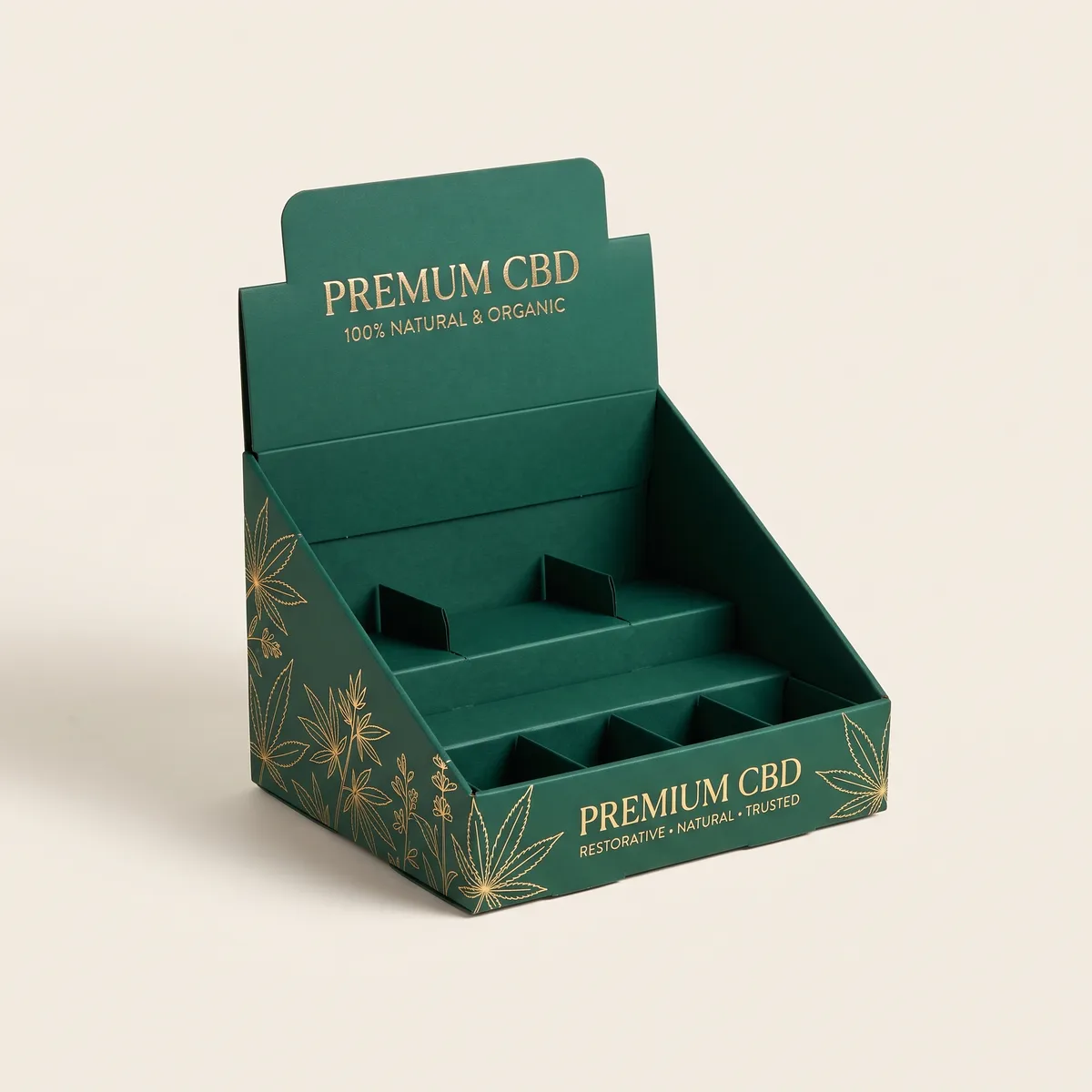
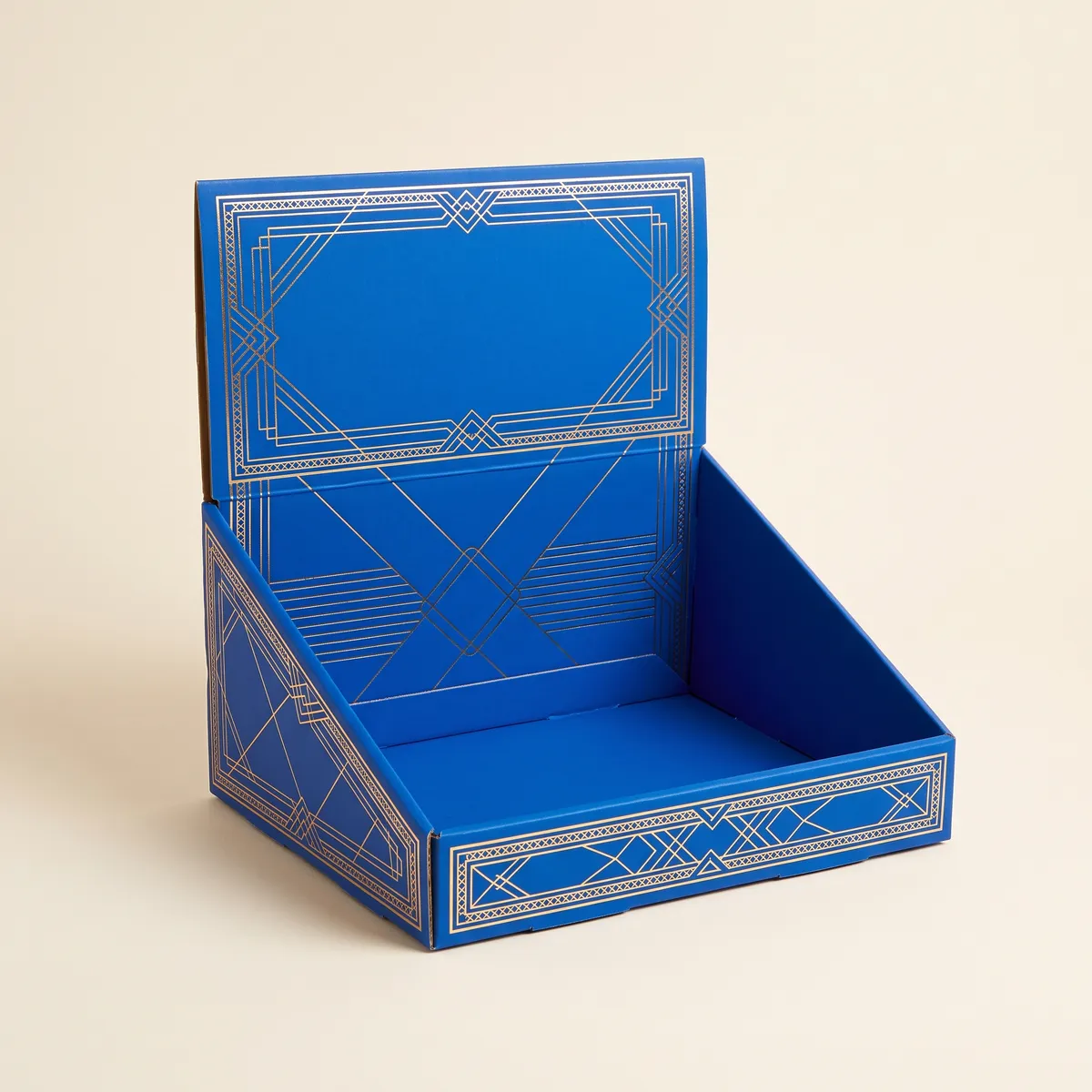
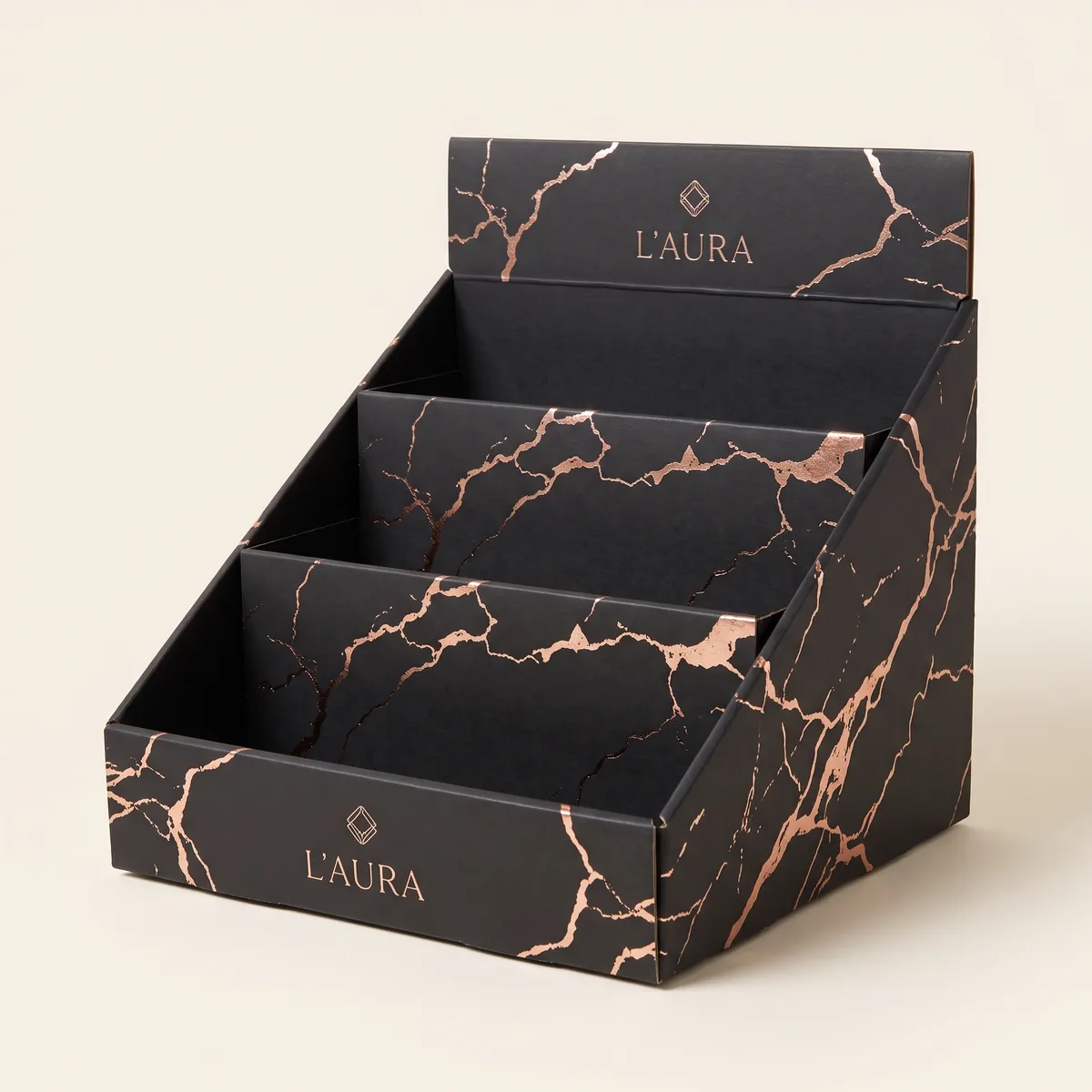
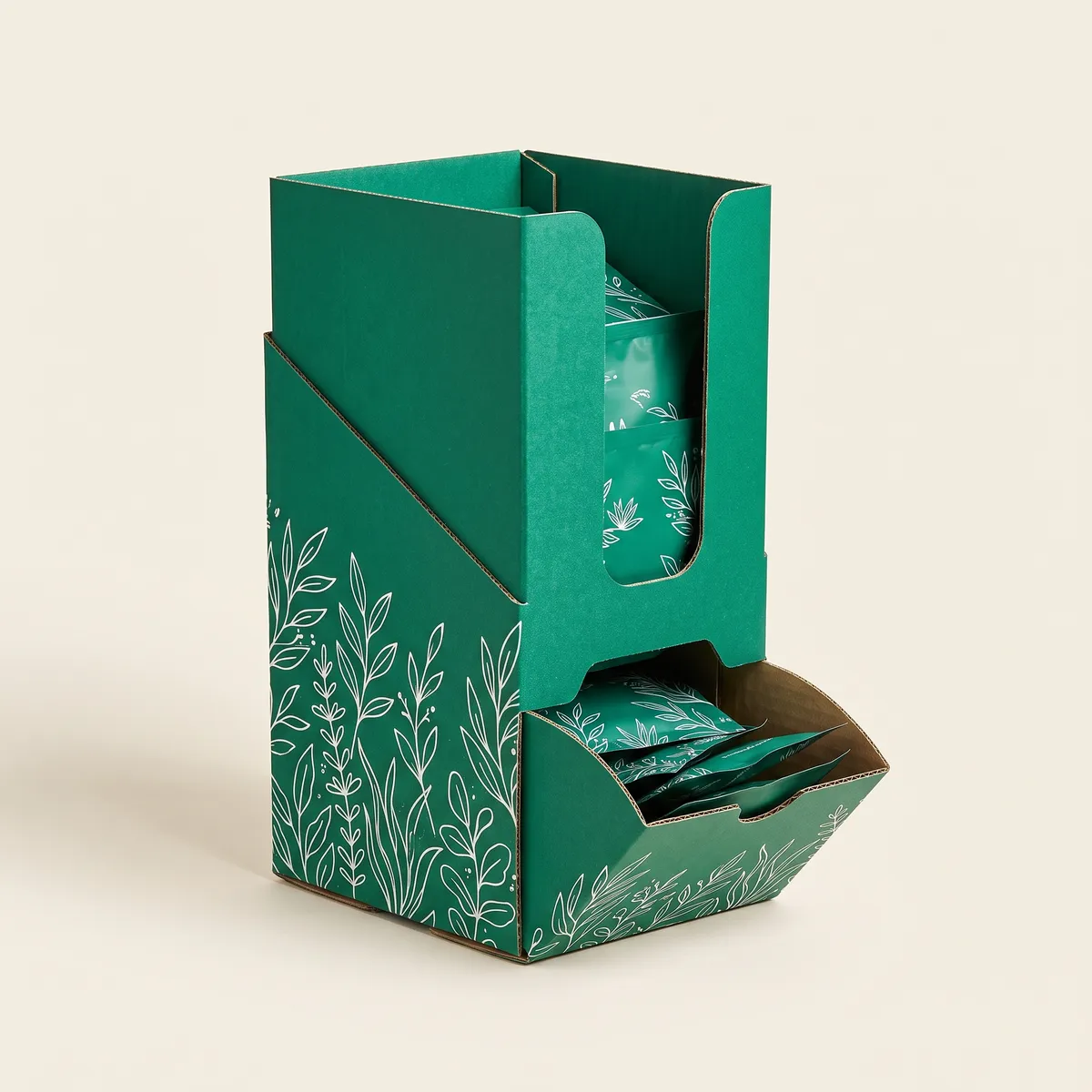
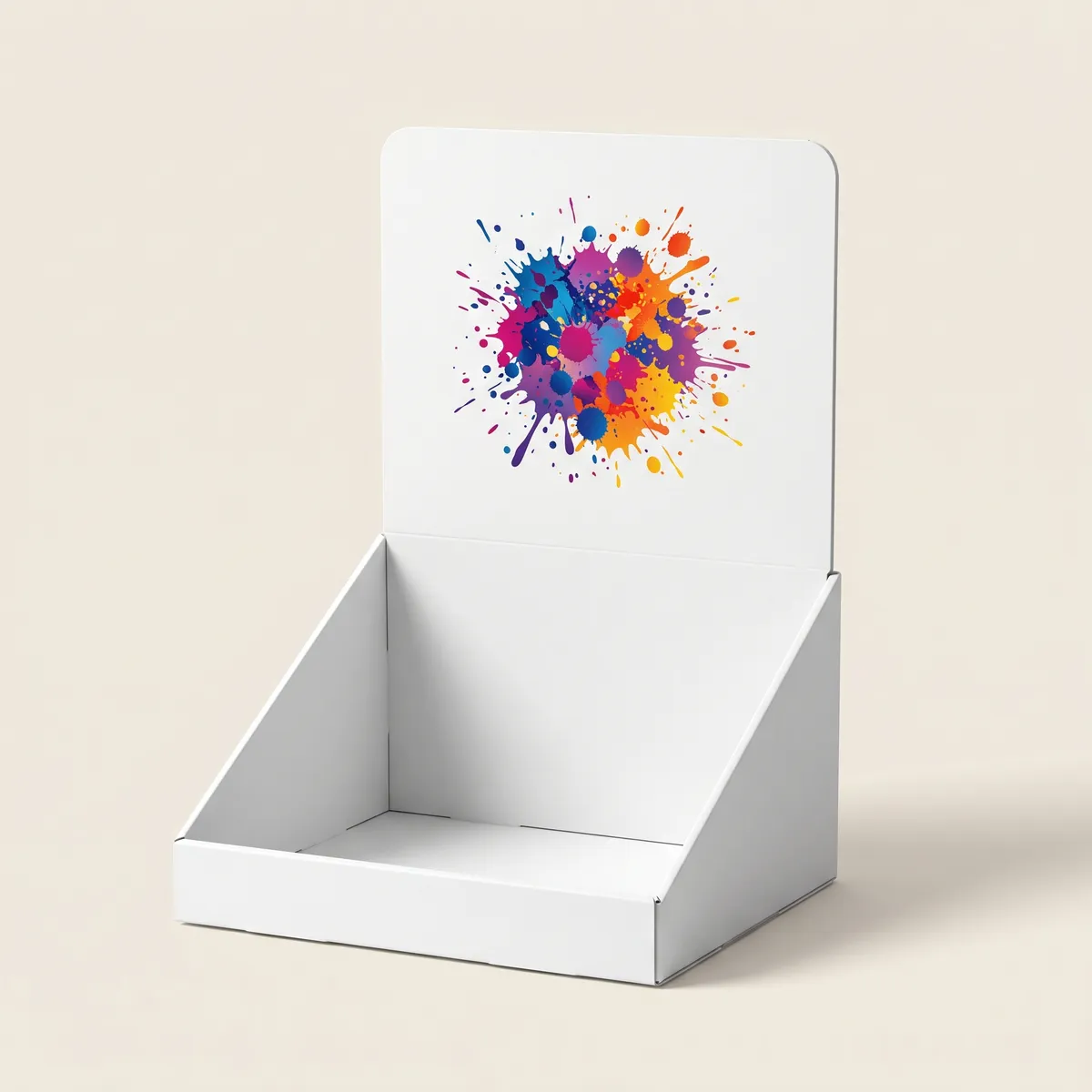
A cardboard display is the default counter unit for products that weigh very little: lipsticks, sachets, chocolate bars, small accessories. It's a single sheet of coated paperboard, cut and folded, with no fluted layer inside, which makes it the cheapest display build and the one that prints most accurately. Brands buy it when the campaign runs a few weeks, the product is light, and the artwork has to match the rest of their packaging exactly. Retailers tend to accept it easily because it's compact and tidy. The honest limit is weight and time. A cardboard unit isn't meant to carry jars or survive months of daily refilling, and asking it to is how a display ends up bowed halfway through a promotion.
Coated Paperboard Display Specs and Film Choices
Cardboard here means paperboard: one layer of pressed pulp, bleached and coated on the printing face.
| Attribute | Specification |
|---|---|
| Board | Coated paperboard, single layer, no flute |
| Full color, edge to edge | |
| Films | Gloss, matte or soft-touch |
| Foil | Applied to the coated face |
| Cavities | Laid out to your product's size |
| Delivery | Flat, folded on site |
| Dimensions | Measured inside, agreed in writing |
The single-layer line is there for a reason. Single-ply coated card is often confused with corrugated because both get called cardboard, and specifying the wrong one changes the price, the print quality and the weight the unit can hold.
When Folding Board Is Enough and Fluted Board Is Overkill
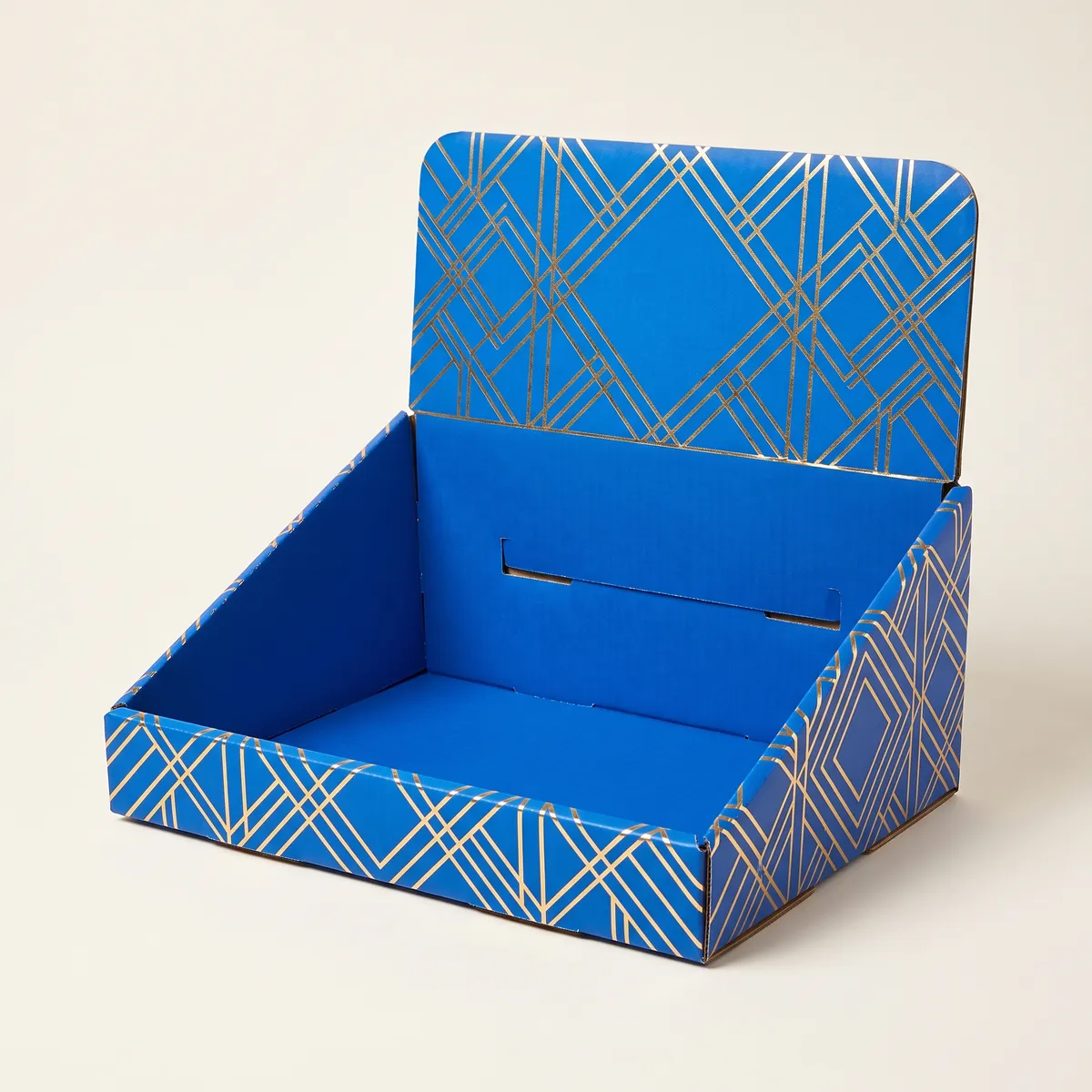
Choosing folding board over fluted board comes down to what the unit holds and for how long. If the product is light and the display only has to last a promotion, fluted board is money spent on strength nobody uses. Folding board costs less, takes print more cleanly and keeps fine type and small product shots sharp, which corrugated can't match because its flute shows through. It also packs flatter for delivery. The point to switch is when the unit starts holding glass, metal or anything that piles up weight across a shelf. For compact and lipstick counter ranges, that point rarely arrives: the products are light, the units are small, and accurate color is most of what they need.
Gloss, Matte, Soft-Touch and Foil on a Coated Counter Unit
Coated board takes the widest range of finishes of any display stock. Gloss film gives the most saturated color and suits bold, bright artwork. Matte film cuts glare under shop lighting, which helps on units placed near windows or under spotlights. Soft-touch adds a velvety feel that customers notice when they lift a product off the unit. Foil works on logos and small accents, as long as it stays clear of the folds, where it cracks. Heavy ink across a crease has the same problem, so solid color fields should stop short of the scores. What we'd skip on a short campaign is stacking several effects on one unit; a single film and well-placed artwork usually do more than three finishes competing for attention.
Who Sells From a Printed Cardboard Counter Unit
Cardboard units suit anything sold in small, light packs near a till. Cosmetics brands use them for lipsticks, balms and minis. Confectioners use them for chocolate bars and boxed sweets. Wrapped-cookie sellers at the register set individually packed cookies in them so coffee customers add one to the order. Small accessories such as hair ties, phone grips and keyrings go in them too. Gift shops use them for seasonal stock that is only on the counter for a holiday, since the unit is cheap enough to treat as part of the promotion rather than a permanent fixture. The common thread is light product, a short campaign and artwork that has to match the packaging sitting inside the unit.
Costing a Cardboard Display With Dies and Plates Included
The quote you get for a cardboard display is the price you pay. Cutting dies, printing plates and setup are all included, so nothing appears after you approve. With the product size and a target count, we draw the dieline and proof it, revising as often as you like at no charge. Once the proof is approved, the run takes 8–12 business days. A rush slot costs extra, and we state the figure before you commit. Shipping is included. A bulk run that misses the signed-off proof is reprinted at no cost to you, which is the protection that counts on a unit where accurate color is the whole reason you chose it.
One connected process, start to finish.
Structural Design
Dieline drafted to your exact fit and freight tolerances.
Proof & Sample
Sign off on a digital proof, or request a physical sample.
Tooling
Dies and plates are cut for your job and archived on file.
Production
Print, die-cut, and assembly run under in-line quality checks.
Ship & Reorder
Freight goes out, and the cycle resets for your next run.
Steady process. Powerful results.
Like everything we build, our process is engineered to hold up — no shortcuts, no surprises. Five dependable stages that run the same way every single time, so reorders are just as fast as the first order.
- One dedicated teamFrom first sketch to final freight, the same people carry your order start to finish.
- Dies archived on fileReorders skip tooling and re-setup entirely — we already have your exact spec.
- Checked against your sign-offEvery run is inspected against the digital proof or physical sample you approved.
Set up your file once, correctly
Nine in ten delayed jobs are delayed by artwork, not production. Match these four rules and your proof lands the next morning.
- Bleed1/8 in (3 mm) past every cut line
- Safe ZoneKeep text 1/4 in clear of every crease
- ColourCMYK or named Pantone. No RGB.
- Resolution300 dpi at final size, fonts outlined
No print-ready file?
Send a logo and a rough idea. Our studio builds the production file free with any order over 500 units — you keep the source file either way.
Ask the StudioBackground art must run all the way to the outer bleed edge. Anything inside the white dashed line survives fold tolerance.
What brands say about this box
They live there rather than here, where we can't edit them, delete them, or pick which ones you get to see. That is exactly what makes them worth reading.
Read all reviews on Trustpilot(opens in a new tab)Answers before you have to ask.
When is coated board the right choice for a display?
When bright, accurate color matters — which for most retail displays it does. A display has seconds to catch attention, and coated board holds saturation that kraft and recycled stocks mute.
Can cardboard displays be laminated?
They can, and lamination protects print from the scuffing that comes with restocking. Bear in mind film shifts printed color slightly, so we proof after lamination rather than before.
Is cardboard strong enough for a display?
For lighter product, yes. Cardboard gives better print quality than corrugated, which matters on a display. For heavier product or longer campaigns, corrugated holds up better.
What's the lead time on cardboard displays?
Usually 8–12 business days from proof approval, including lamination if specified. Rush is available at an extra cost we'll state upfront, shipping included.
Can cardboard displays be reordered quickly?
Yes. With your dimensions and artwork on file, reorders need no new proof unless something changes, and most run in about 8–12 business days with rush available.