
Chocolate Bar Boxes
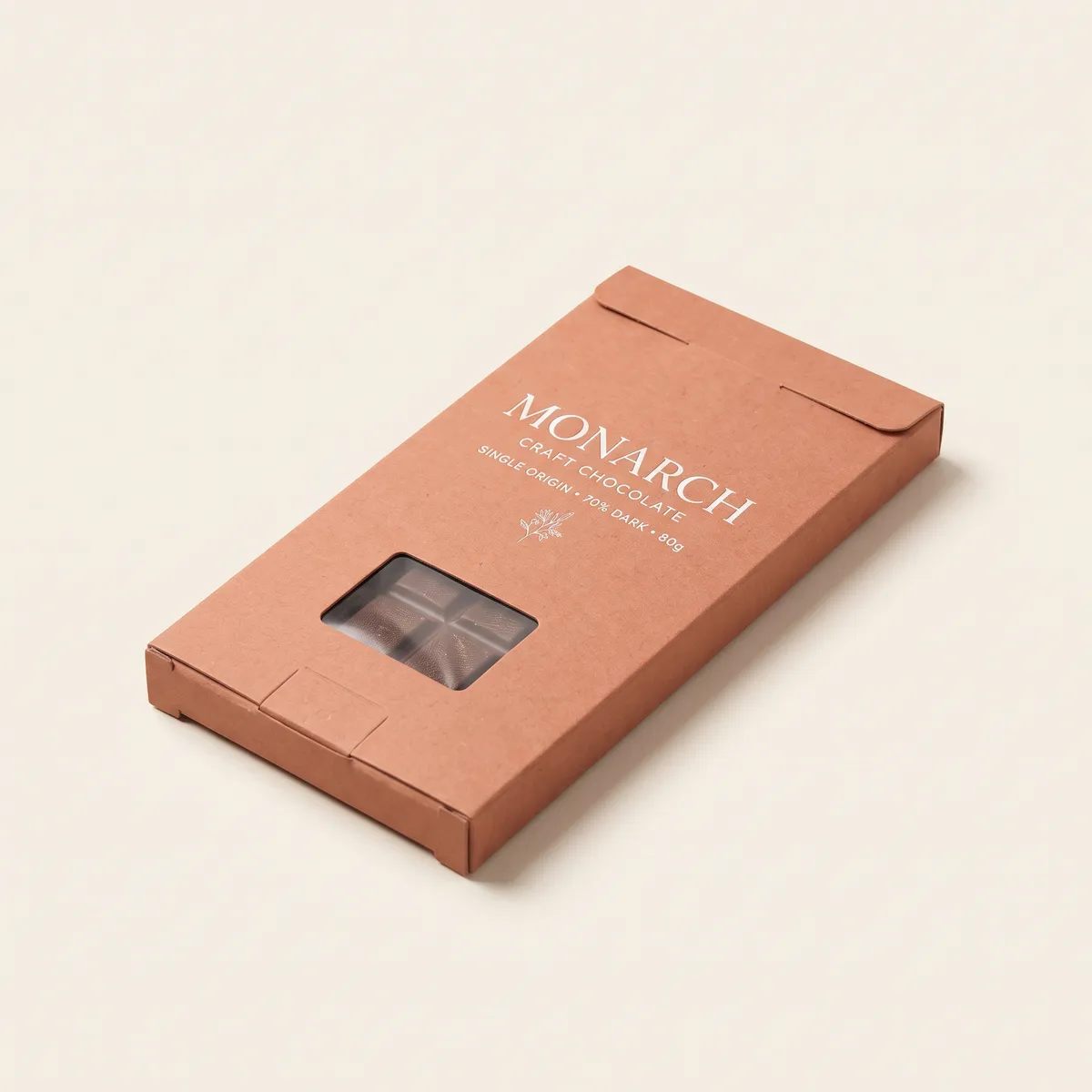
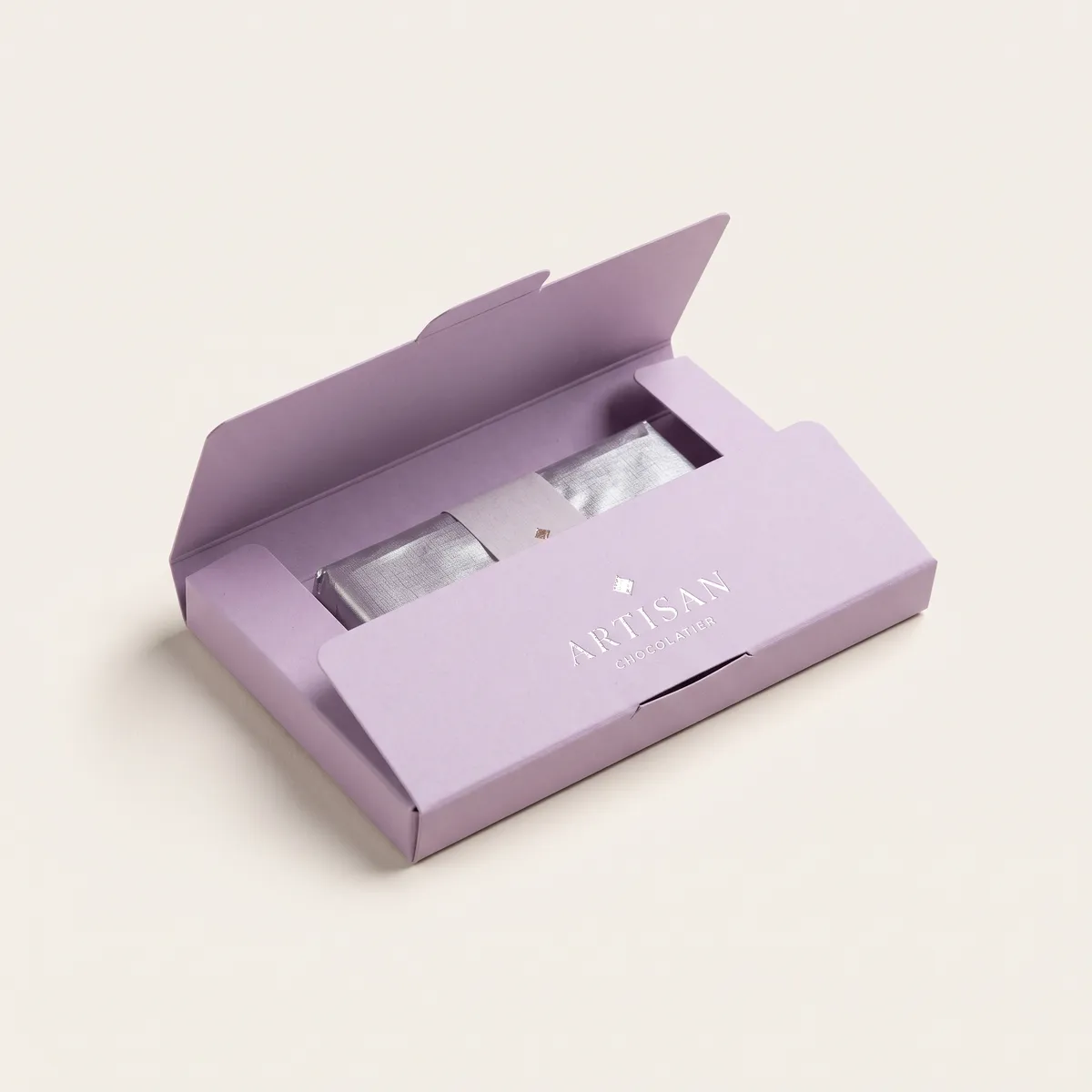
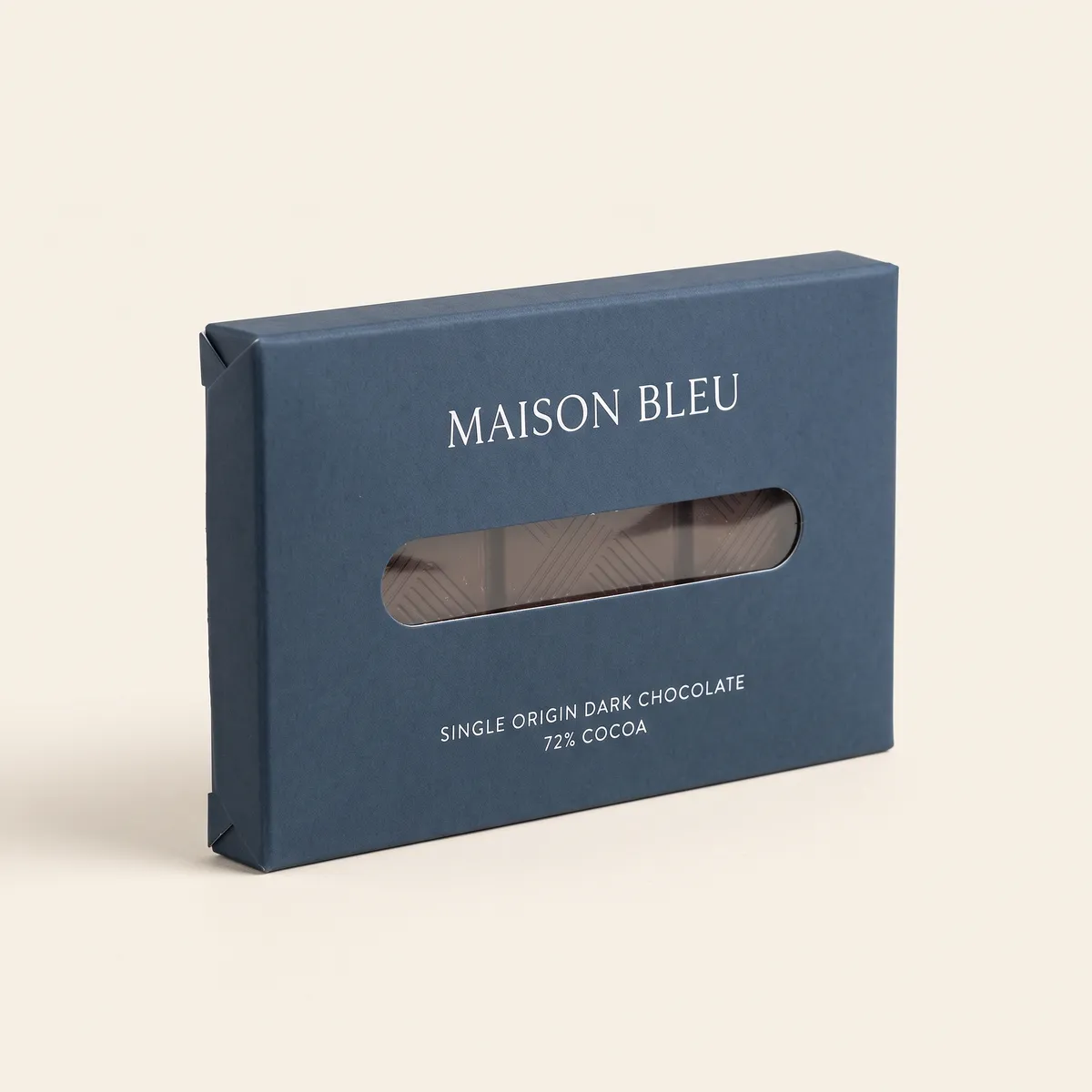
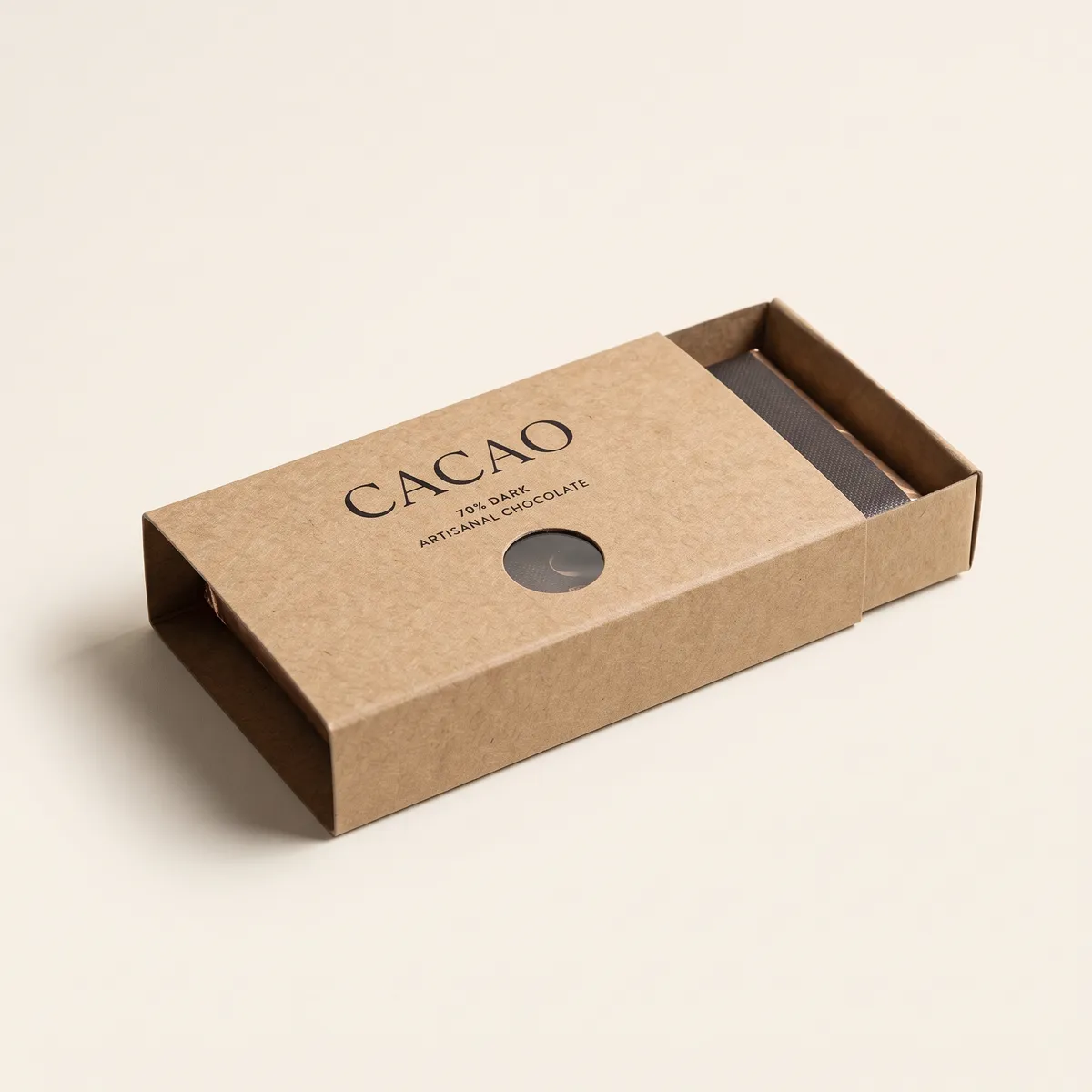
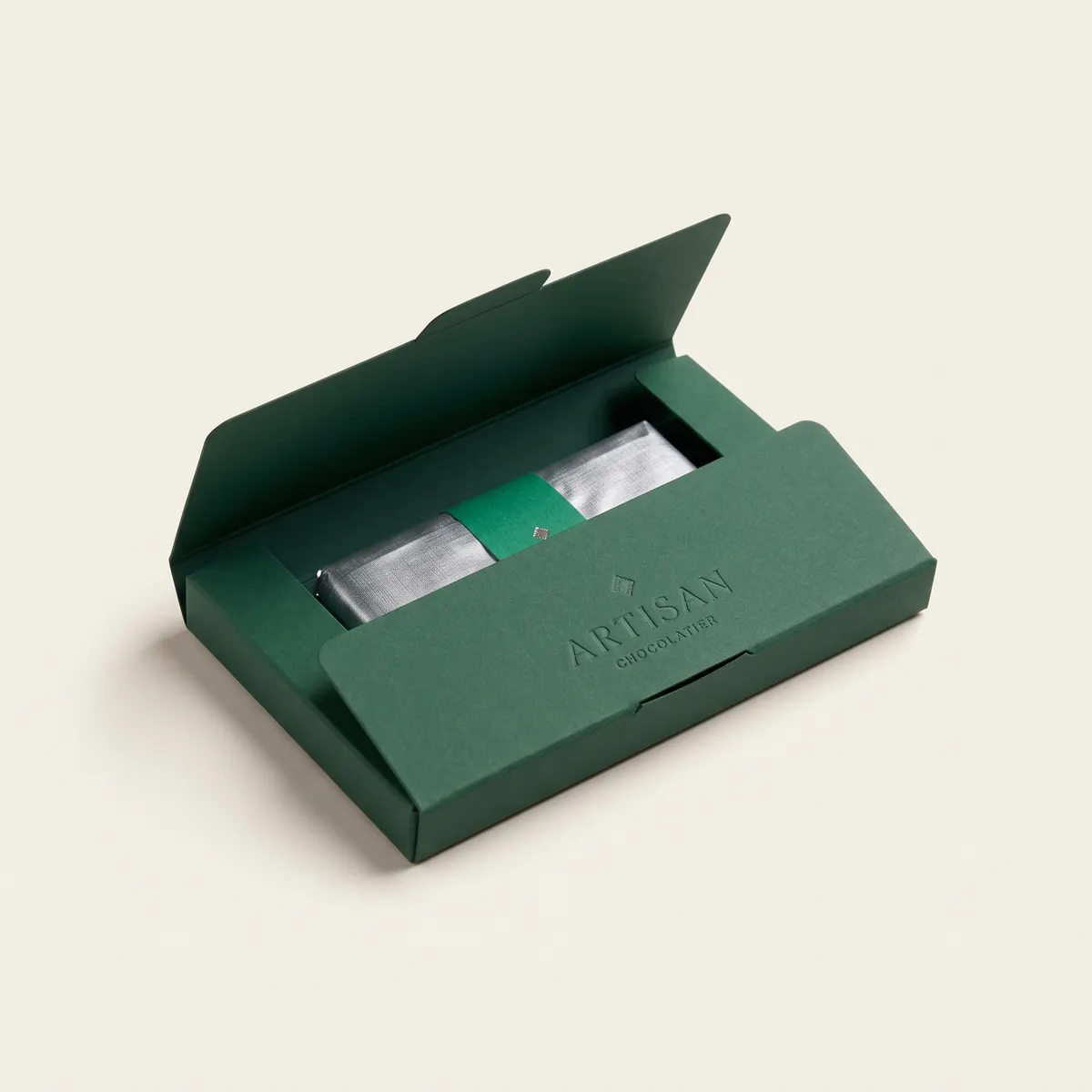
Chocolate bar boxes follow the bar closely as a slim tuck box or a sleeve over foil; the sleeve uses less material and costs less while still providing a printable surface. The tradeoff is less protection at the ends. Very thin board creases unevenly at the fold, so send your bar dimensions for specific guidance. One structure can carry a different printed panel per flavor.
Ours are on Trustpilot, where we can't edit them or choose which ones you see.
Read them on Trustpilot →(opens in a new tab)Four stages, twelve days
Quote confirmed
A specialist checks your spec against the board and comes back with a firm price inside 4 business hours.
Proof approved
You get a flat dieline and a 3D render. Nothing goes to press until you approve it in writing.
On press
Print, die-cut, glue, and fold. You get a press-side photo the day your job runs.
QC and delivery
Every pallet is sampled against the digital proof or physical sample you approved, then shipped with tracking to your dock or 3PL.
If a box doesn't match the digital proof or physical sample you approved, we reprint the run at no charge.
Read the reprint terms →Know exactly what you're ordering.
Chocolate Bar Boxes for a Row of Flavors on One Shelf
Chocolate bars are sold in rows. A bean-to-bar maker might have eight origins side by side; a confectioner might have milk, dark, sea salt and orange. The shopper is comparing front panels, often from a foot or two away, and the box has to tell them which bar is which before anything else. That makes the bar box a narrow job. It has to follow the bar's shape tightly, keep its corners sharp on a shelf, and give each flavor a face that is clearly part of the same range. Buyers are craft chocolate makers, cafés selling their own bars, and brands moving from a plain foil wrap to a printed retail box.
Bar Box Board, Fold and Dimensions
Bar boxes use thin coated card for bar wraps, chosen to fold cleanly at a tight radius around a flat bar.
| Attribute | Chocolate bar box |
|---|---|
| Board | SBS, toward the lighter end of 16–24pt |
| Format | Slim tuck box, or sleeve over foil |
| Fit | Cut close to the bar's length, width and depth |
| Tolerance | Around ±0.5–1mm |
| Inks | Food-safe |
Measure the bar in its foil, not bare, since the wrap adds thickness. Measure depth at the thickest point too. A bar with inclusions or a molded pattern is often deeper than its edge suggests, and a box cut to the edge will pinch it.
When a Slide-On Sleeve Does the Job of a Bar Box
A closed tuck box covers the bar on every side. A printed sleeve slid over the foil covers the front, back and long edges, and leaves the two ends open. For a foil-wrapped bar that is often enough, because the foil is already doing the protecting. The case for the box is what happens in transit and storage. Bars stacked in a tote or shipped in an online order take knocks at the corners, and an open end lets the foil crumple there. A box also adds two end flaps for flavor names, useful when bars are stacked spine-out. The case for the sleeve is simplicity: one band, slid on by hand, nothing to tuck. Bars sold over a counter suit a sleeve; bars that travel suit a box.
Printing a Flavor System Across a Bar Range
A bar range works best as a system rather than a set of separate designs. Fixed layout: logo, bar name and weight sit in the same place on every flavor, so the row lines up on the shelf. Color coding: each flavor gets one dominant color, picked so neighboring bars don't blur together. Cocoa percentage or origin: set large on dark and single-origin bars, where it's the first thing a buyer checks. Back panel: ingredients and tasting notes. Full color on coated board is the usual choice. Foil is worth keeping to one small mark, since a whole row of foiled bars turns into glare under shop lights. When a flavor is added later, the system makes its box quick to design.
Chocolate Bar Boxes for Bean-to-Bar Makers, Cafés and Fundraisers
Single-origin and blended bars from bean-to-bar makers, sold in shops and online, are the core use. Cafés selling their own chocolate stock them at the till beside the coffee, and the format sits naturally with roasters selling chocolate beside the beans, where a bar is an easy add-on to a bag of coffee. Schools and charities order printed bars for fundraising. Hotels and businesses put a branded bar in welcome packs and event bags. Gift shops carry them in mixed flavors near the register. Most of these buyers keep a few bars in constant rotation plus a seasonal flavor or two, so the box design has to stretch across both without looking like two different brands.
Ordering Bar Boxes With a Dieline Built From the Bar
Send us the bar, or its measurements in foil, and we build the dieline from it. We confirm in writing whether those figures are internal or external, so the box isn't cut a millimeter too small for the bar to slide in. Once you approve the proof, most orders are ready in about 8–12 business days, and rush is available at an extra cost we quote upfront. Free samples come with orders above 10,000 boxes, which is roughly where bar brands move from a short test run to a full retail order. A reprint at our cost covers any bulk run that doesn't match the approved proof, and every box passes a three-stage check before that question even comes up.
One connected process, start to finish.
Structural Design
Dieline drafted to your exact fit and freight tolerances.
Proof & Sample
Sign off on a digital proof, or request a physical sample.
Tooling
Dies and plates are cut for your job and archived on file.
Production
Print, die-cut, and assembly run under in-line quality checks.
Ship & Reorder
Freight goes out, and the cycle resets for your next run.
Steady process. Powerful results.
Like everything we build, our process is engineered to hold up — no shortcuts, no surprises. Five dependable stages that run the same way every single time, so reorders are just as fast as the first order.
- One dedicated teamFrom first sketch to final freight, the same people carry your order start to finish.
- Dies archived on fileReorders skip tooling and re-setup entirely — we already have your exact spec.
- Checked against your sign-offEvery run is inspected against the digital proof or physical sample you approved.
Set up your file once, correctly
Nine in ten delayed jobs are delayed by artwork, not production. Match these four rules and your proof lands the next morning.
- Bleed1/8 in (3 mm) past every cut line
- Safe ZoneKeep text 1/4 in clear of every crease
- ColourCMYK or named Pantone. No RGB.
- Resolution300 dpi at final size, fonts outlined
No print-ready file?
Send a logo and a rough idea. Our studio builds the production file free with any order over 500 units — you keep the source file either way.
Ask the StudioBackground art must run all the way to the outer bleed edge. Anything inside the white dashed line survives fold tolerance.
What brands say about this box
They live there rather than here, where we can't edit them, delete them, or pick which ones you get to see. That is exactly what makes them worth reading.
Read all reviews on Trustpilot(opens in a new tab)Answers before you have to ask.
How slim can a chocolate bar box go?
Slim enough to follow the bar closely, since the whole point is a tight wrap. The limit is usually the fold rather than the die — very thin board creases unevenly. Send us bar dimensions and we'll advise.
Can chocolate bar boxes be a sleeve instead?
Yes, and many brands prefer it. A sleeve over foil-wrapped bars uses less material and costs less, while still giving you a printable surface. The trade is less protection at the ends.
Are bar boxes cheaper than sleeves?
Generally boxes cost more than sleeves, since they use more board and a more complex die. A sleeve is the economical choice if the bar is already foil-wrapped and doesn't need full enclosure.
What's the turnaround on chocolate bar boxes?
Around 8–12 business days once you approve the proof, whether box or sleeve. Rush is available at an extra cost quoted before you commit, with shipping included.
Can I order bar boxes per flavor?
Yes, and it's the standard approach. One box structure with a different printed panel per flavor keeps setup costs down as your range grows.