
2 Piece Chocolate Boxes
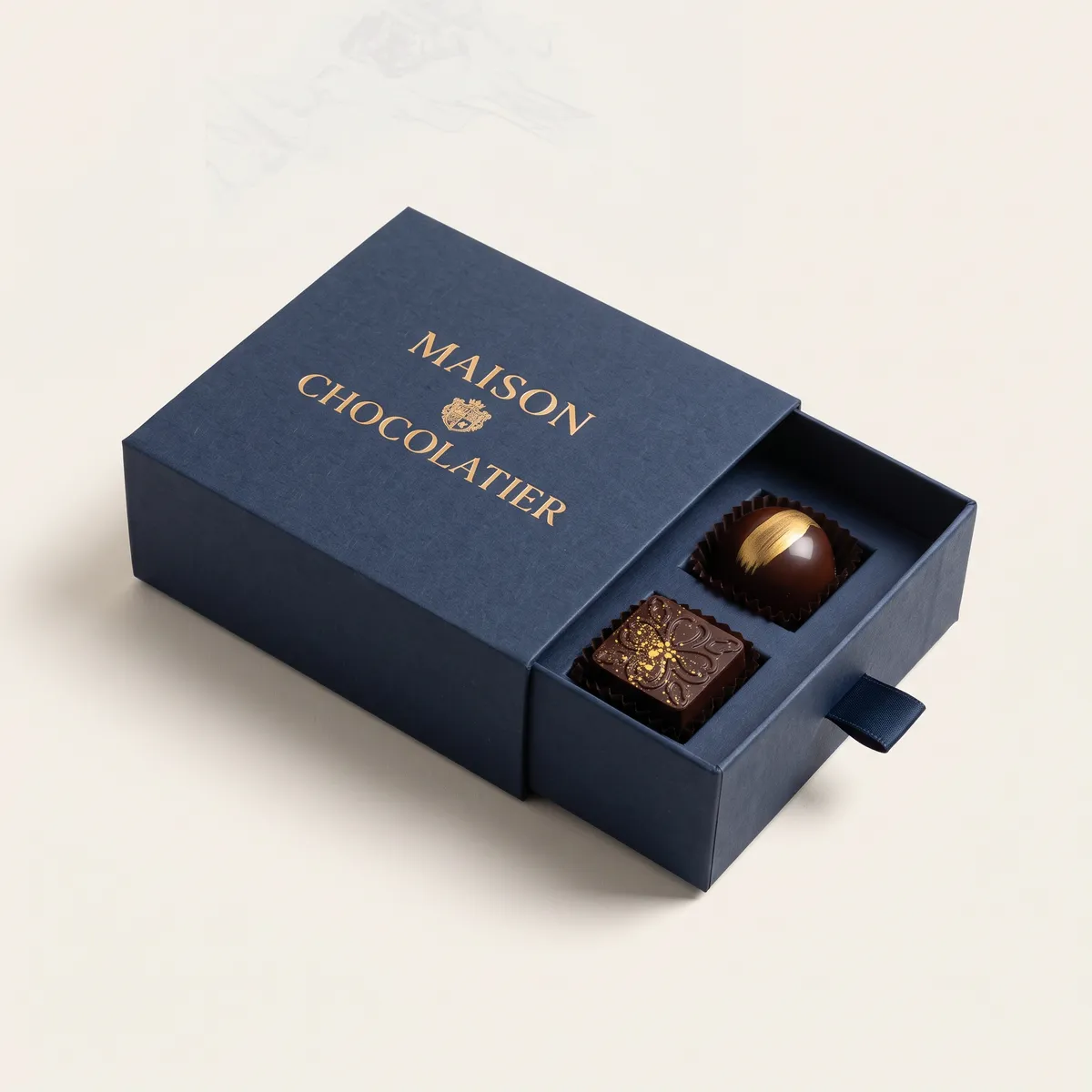
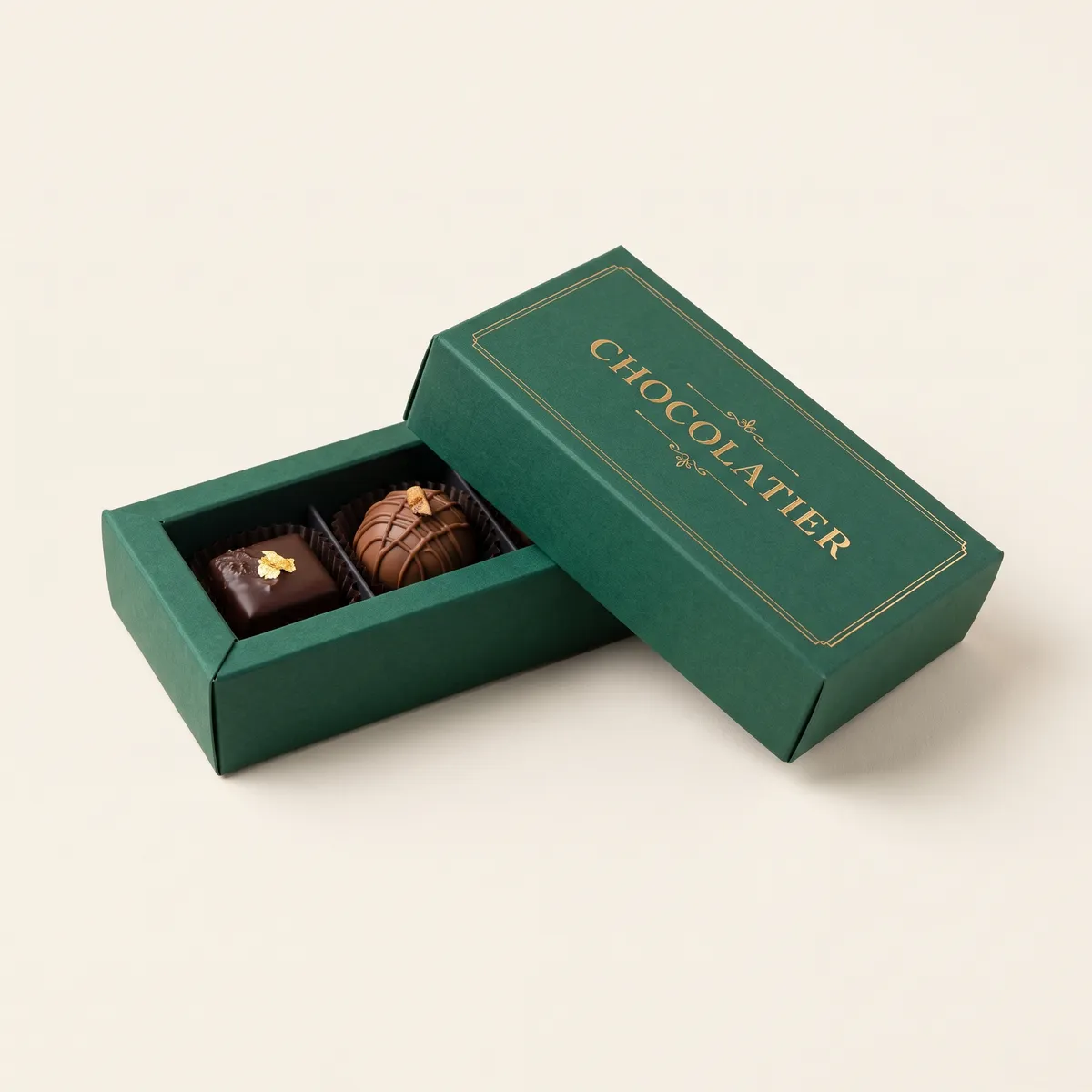
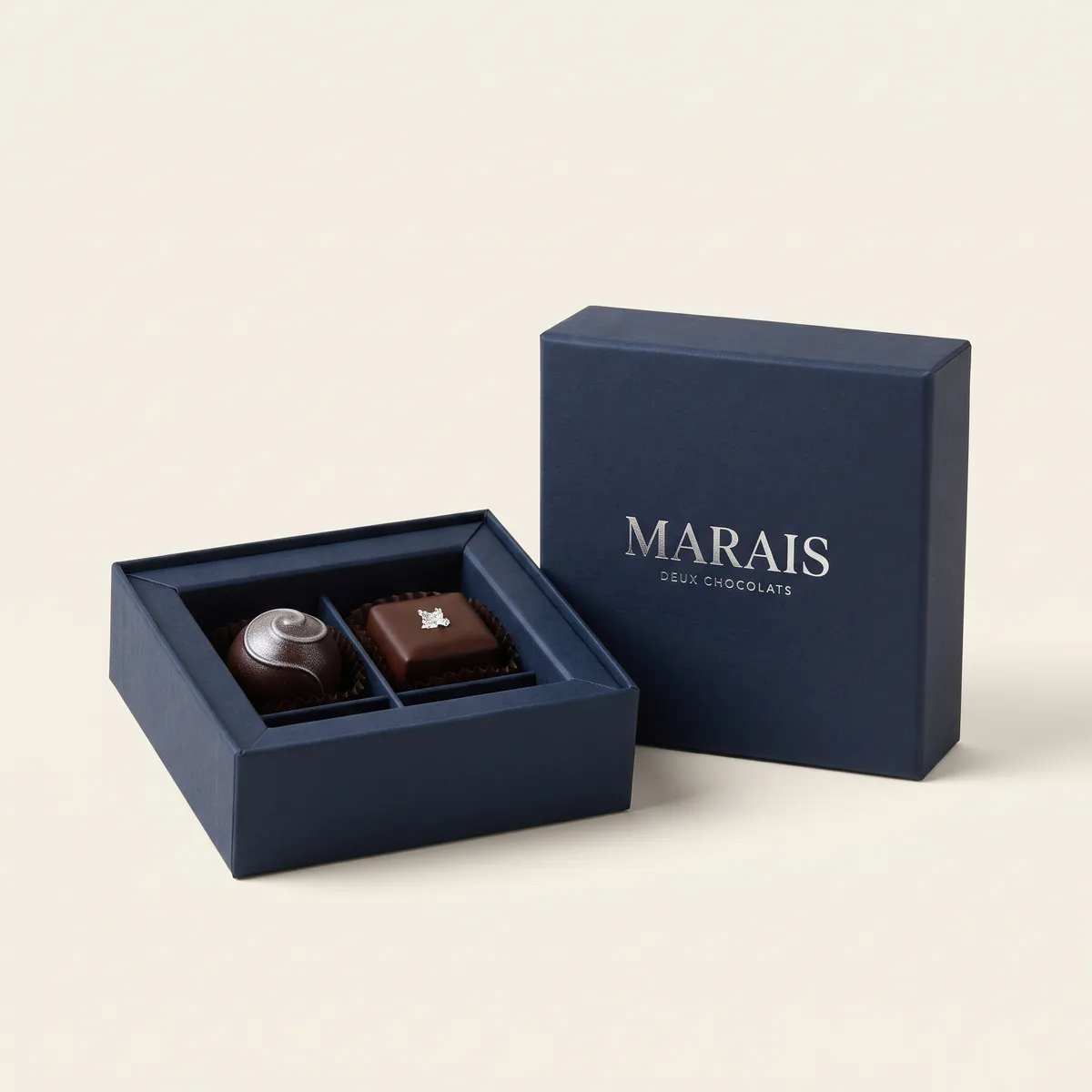
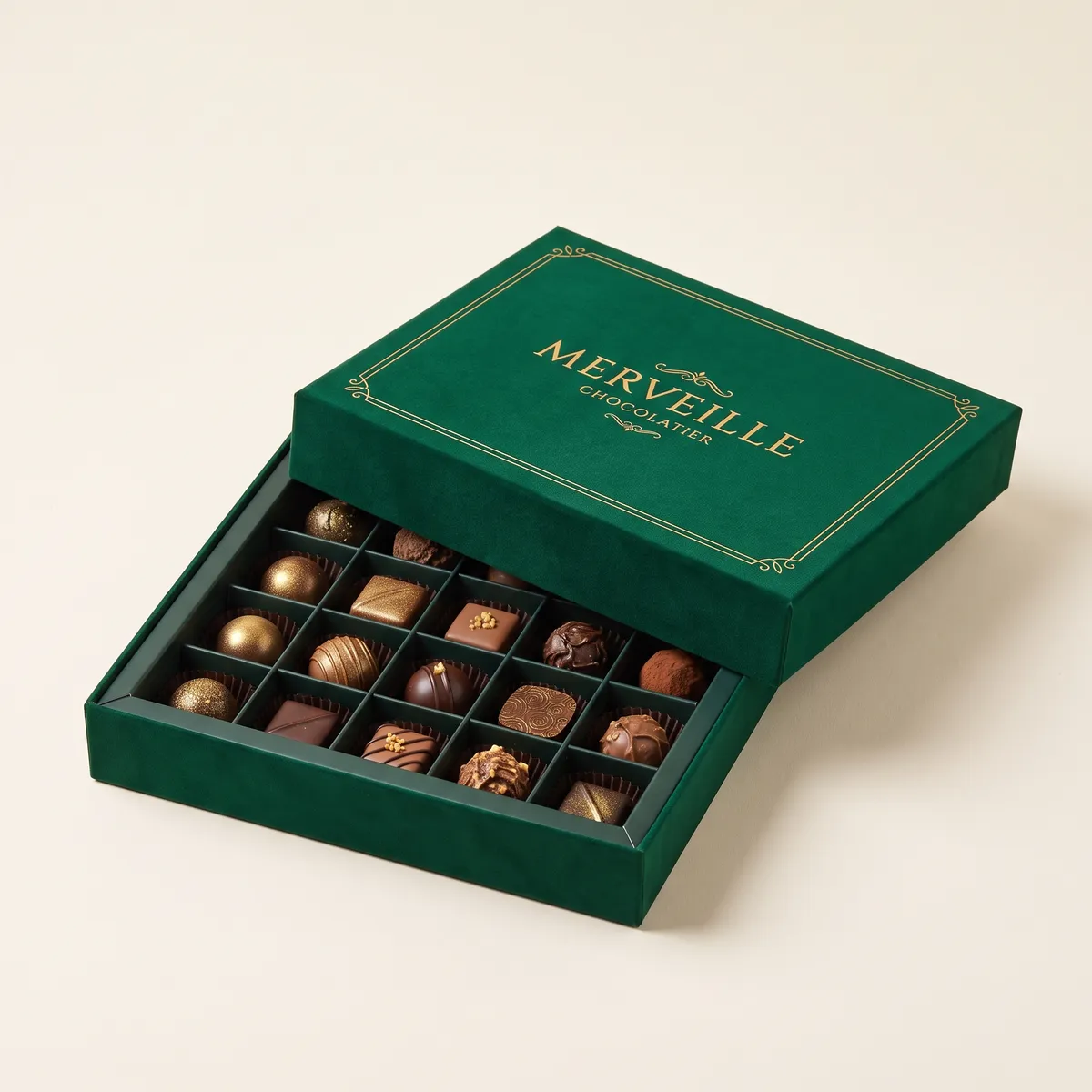
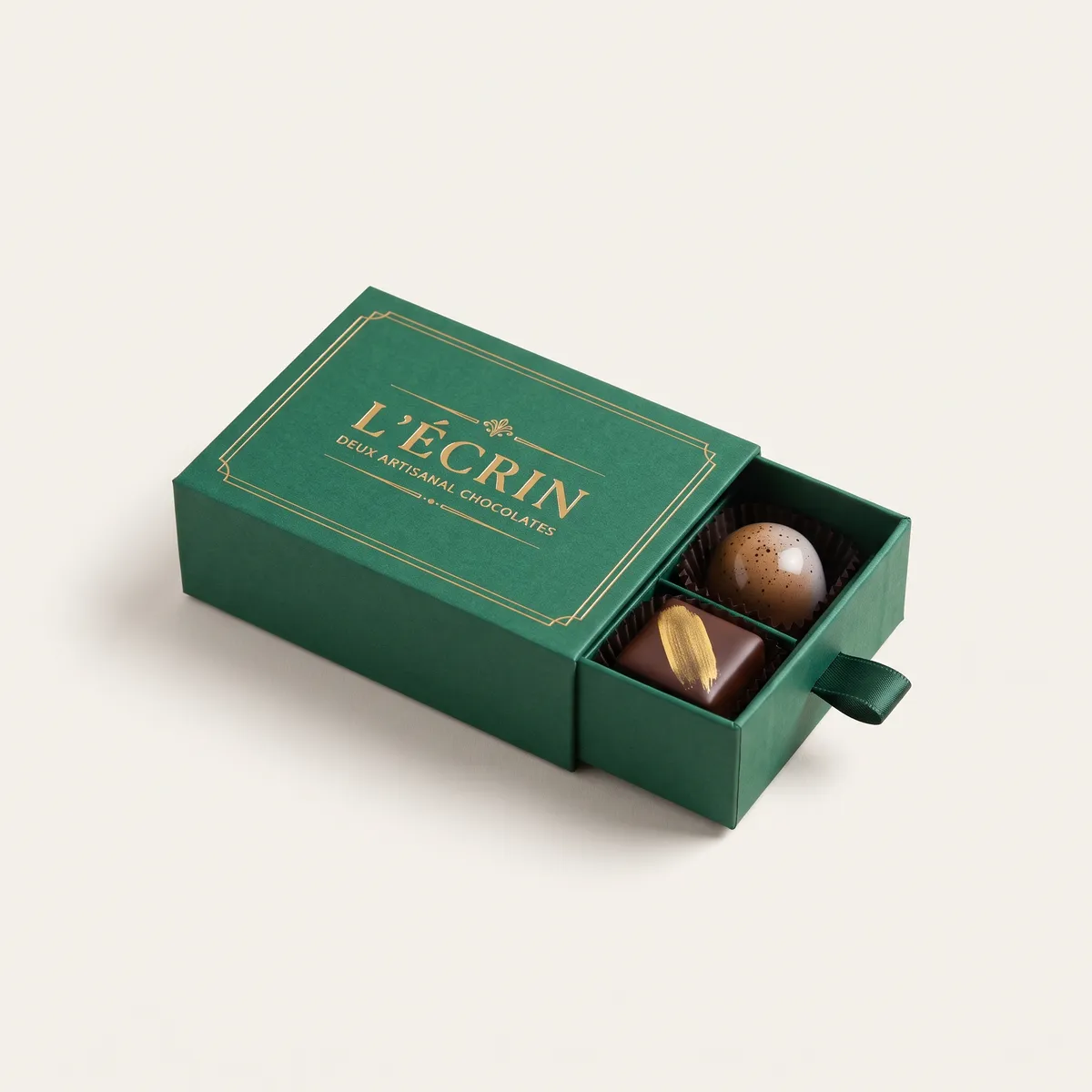
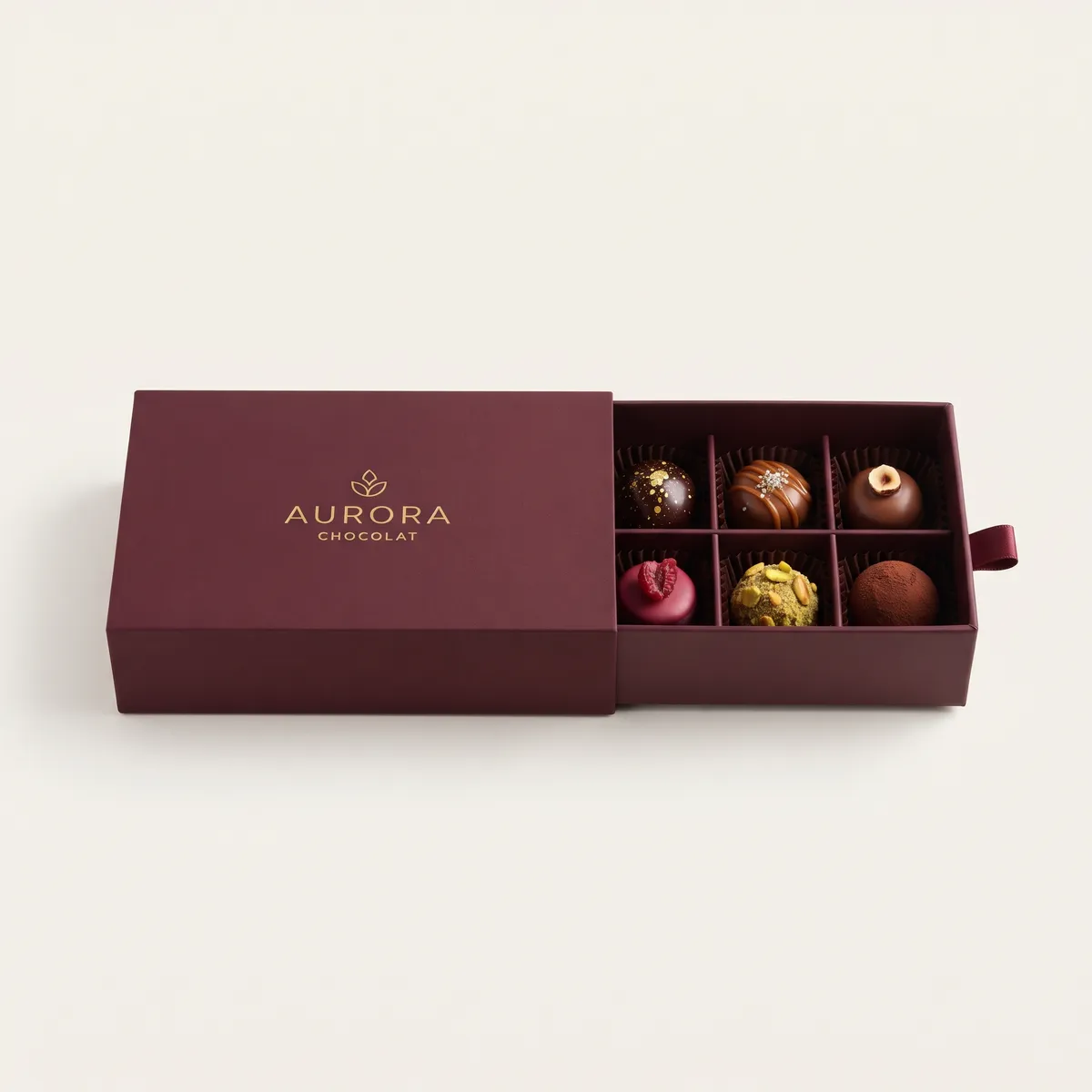
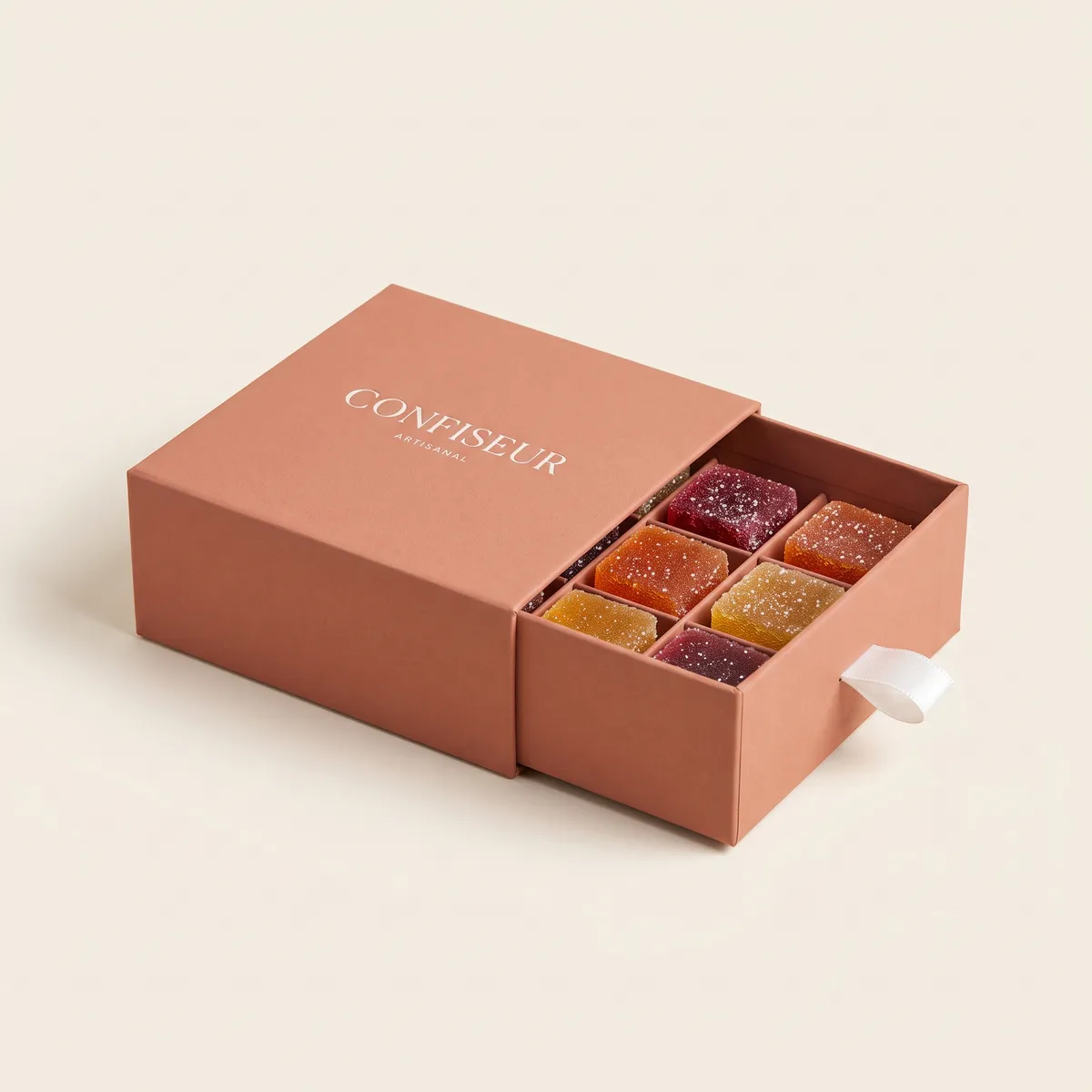
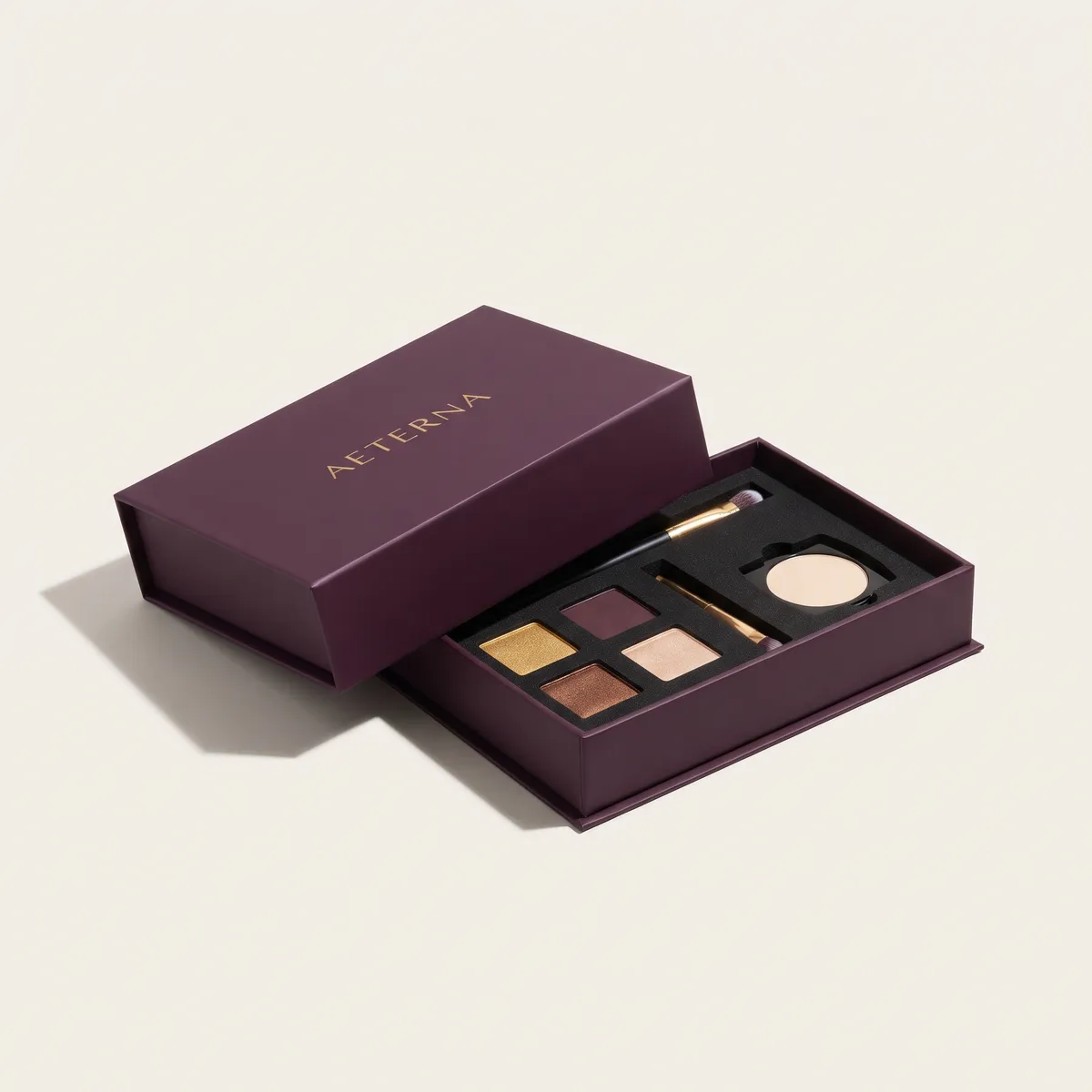
2 piece chocolate boxes are defined by their build, a separate lid and base lifting cleanly over a fitted tray, and can be made in cardboard for full color or rigid for substantial, premium weight. Lifting the lid creates a reveal a tuck carton can't, though tucks ship flat and assemble faster. A lid window can display the arrangement while the box stays fully closed.
Ours are on Trustpilot, where we can't edit them or choose which ones you see.
Read them on Trustpilot →(opens in a new tab)Four stages, twelve days
Quote confirmed
A specialist checks your spec against the board and comes back with a firm price inside 4 business hours.
Proof approved
You get a flat dieline and a 3D render. Nothing goes to press until you approve it in writing.
On press
Print, die-cut, glue, and fold. You get a press-side photo the day your job runs.
QC and delivery
Every pallet is sampled against the digital proof or physical sample you approved, then shipped with tracking to your dock or 3PL.
If a box doesn't match the digital proof or physical sample you approved, we reprint the run at no charge.
Read the reprint terms →Know exactly what you're ordering.
2 Piece Chocolate Boxes Filled From the Top
A 2 piece chocolate box is packed from above. The tray sits in the base, pieces go in one by one with gloves or tongs, and the lid drops on last. Nothing gets pushed in through an end flap, which matters for chocolate that marks the moment it is touched or squeezed. That is why small chocolatiers packing by hand at a bench tend to prefer it. Because the format is defined by its separate lid and base, the same packing routine works whether the box is printed cardboard, natural kraft or a rigid case. A maker can start in board for a retail line and move to rigid for a gift range without changing how anyone at the bench works.
Lid and Base Specs in Cardboard, Kraft or Rigid
The lid and base can be cut from printable coated lid and base board, from kraft, or from wrapped grayboard for a rigid version.
| Stock | Board | Best for |
|---|---|---|
| Cardboard | SBS, around 16–24pt | Full-color print, retail assortments |
| Kraft | Unbleached, 16–24pt | Natural look, one or two inks |
| Rigid | 2mm grayboard, wrapped | Gift ranges kept afterward |
In every stock, the lid is cut slightly larger than the base so it slides over without catching, and the fit is held to around ±0.5–1mm. Too loose and the lid falls off when the box is tipped; too tight and it drags across the tray. A fitted tray sits in the base, and inks are food-safe.
Why a Separate Lid Suits a Small Chocolate Assortment
A tuck carton opens at one end, and the first thing the customer sees is the edge of a tray. A lid set down over a filled base opens across the whole top, so the assortment is visible all at once, laid out as it was packed. For six, nine or twelve pieces, that full view is most of the appeal. The separate lid also lets the box be closed and reopened without wear, which suits an assortment eaten over several evenings rather than in one sitting. Where it gives ground is handling: a two-piece box has two parts to set up and store, while a tuck carton is one flat blank. If your packing table runs hundreds of boxes an hour, that extra part counts.
Printing a Lid That Is Seen Before the Base
On a two-piece box, the lid carries almost all of the print value, since the base wall is mostly hidden once the lid is on. Lid top: brand, product name and the main design. Lid walls: a repeat of the name, because boxes are often stacked and seen side-on. Base: often plain or a single color, which keeps cost down without anyone noticing. Lid window: optional, for showing the tray without opening the box. On cardboard the lid takes full color, foil on a matte base and printing inside. On kraft, one or two dark inks work best. On a rigid lid, the print goes on the wrap paper rather than the board itself.
2 Piece Chocolate Boxes for Valentine's Assortments, Favors and Tastings
Chocolatiers rely on them for Valentine's assortments, where a box of a few pieces sells on the moment the lid comes off. They're a regular choice for Valentine's and anniversary gifting more widely, with a printed message on the lid or underneath it. Wedding planners order very small two-piece boxes holding two pieces as favors. Tasting events and chocolate classes use them to hand out a flight of pieces in a set order. Cafés and patisseries keep a stack at the counter for impulse gifts. Some restaurants send a small box home with the bill. In each case the assortment is small enough to take in at a single glance when the lid lifts.
Ordering a Two-Piece Build in Folding or Rigid
Cardboard and kraft two-piece boxes take about 8–12 business days from proof approval. Rigid takes 20 business days, since the case is wrapped and assembled. Rush is available on both at an extra cost, quoted upfront. The quote covers the dies for both lid and base, plus plates and setup, with no charges added afterward. Design help is unlimited and free, which is useful when lid art and base art need to line up where the two meet. Should the bulk run differ from the approved proof, we reprint at our cost. Shipping is in the price, and each box clears a three-stage check before dispatch.
One connected process, start to finish.
Structural Design
Dieline drafted to your exact fit and freight tolerances.
Proof & Sample
Sign off on a digital proof, or request a physical sample.
Tooling
Dies and plates are cut for your job and archived on file.
Production
Print, die-cut, and assembly run under in-line quality checks.
Ship & Reorder
Freight goes out, and the cycle resets for your next run.
Steady process. Powerful results.
Like everything we build, our process is engineered to hold up — no shortcuts, no surprises. Five dependable stages that run the same way every single time, so reorders are just as fast as the first order.
- One dedicated teamFrom first sketch to final freight, the same people carry your order start to finish.
- Dies archived on fileReorders skip tooling and re-setup entirely — we already have your exact spec.
- Checked against your sign-offEvery run is inspected against the digital proof or physical sample you approved.
Set up your file once, correctly
Nine in ten delayed jobs are delayed by artwork, not production. Match these four rules and your proof lands the next morning.
- Bleed1/8 in (3 mm) past every cut line
- Safe ZoneKeep text 1/4 in clear of every crease
- ColourCMYK or named Pantone. No RGB.
- Resolution300 dpi at final size, fonts outlined
No print-ready file?
Send a logo and a rough idea. Our studio builds the production file free with any order over 500 units — you keep the source file either way.
Ask the StudioBackground art must run all the way to the outer bleed edge. Anything inside the white dashed line survives fold tolerance.

What brands say about this box
They live there rather than here, where we can't edit them, delete them, or pick which ones you get to see. That is exactly what makes them worth reading.
Read all reviews on Trustpilot(opens in a new tab)Answers before you have to ask.
What stocks can a 2 piece chocolate box be made in?
Any of them. Two piece describes the build — a separate lid and base — not the material. You can have it in cardboard for full-color print, kraft for a natural look, or rigid for weight and premium feel.
Can 2 piece chocolate boxes have a window?
Yes. A window in the lid works well on assortments, letting the arrangement show without breaking the seal. We position it so the tray layout sits centered rather than partially cropped.
Is a 2 piece build better than a tuck carton?
For presentation, usually — a lid lifting off creates a moment a tuck carton doesn't. For cost and speed, the tuck carton wins since it ships flat and assembles faster. It depends which matters more.
How long do 2 piece chocolate boxes take?
Folding two piece builds run 8–12 business days from proof approval; in rigid, allow 20. Rush production is available at an added cost stated upfront.
What's the minimum on 2 piece chocolate boxes?
100 boxes across every stock. If you're deciding between cardboard and rigid, we'd suggest a small run in folding first to test the format before committing to rigid pricing.