
Rigid Candy Boxes
Rigid candy boxes are defined by their stock, a thick board core wrapped in printed paper that doesn't flex when picked up, which suits gift assortments sold on indulgence. A fitted tray inside is part of the build, since a rigid box with loose pieces undoes the impression. For everyday sweets, folding cartons cost far less. Allow 20 business days from proof approval.
Ours are on Trustpilot, where we can't edit them or choose which ones you see.
Read them on Trustpilot →(opens in a new tab)Four stages, twelve days
Quote confirmed
A specialist checks your spec against the board and comes back with a firm price inside 4 business hours.
Proof approved
You get a flat dieline and a 3D render. Nothing goes to press until you approve it in writing.
On press
Print, die-cut, glue, and fold. You get a press-side photo the day your job runs.
QC and delivery
Every pallet is sampled against the digital proof or physical sample you approved, then shipped with tracking to your dock or 3PL.
If a box doesn't match the digital proof or physical sample you approved, we reprint the run at no charge.
Read the reprint terms →Know exactly what you're ordering.
Rigid Candy Boxes Meant to Outlast the Candy
Most candy packaging is thrown away within an hour. A rigid candy box usually isn't. Once the sweets are gone it ends up holding cufflinks, hair ties, letters or sewing thread on someone's shelf, and your name stays with it. That second life is what the buyer is paying for. The people ordering are confectioners with a gift range, chocolatiers putting together a holiday assortment, hotels and corporate gift teams, and wedding planners who want favors guests will keep. In every case the candy is part of the gift and the box is the part that stays. If yours is a box people empty and recycle the same afternoon, rigid board is money spent on something nobody keeps.
Grayboard Core, Wrap Paper and Tray Fit
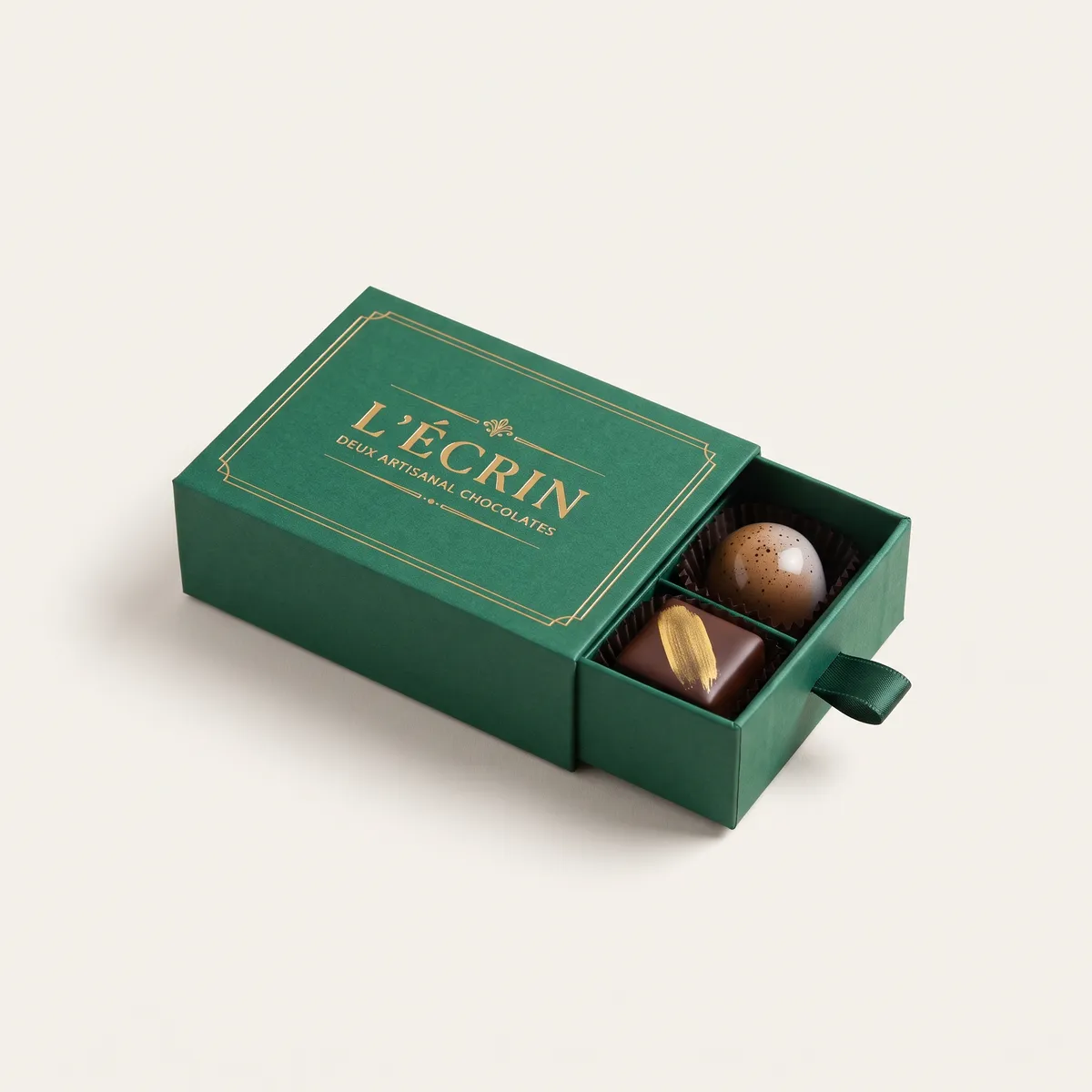
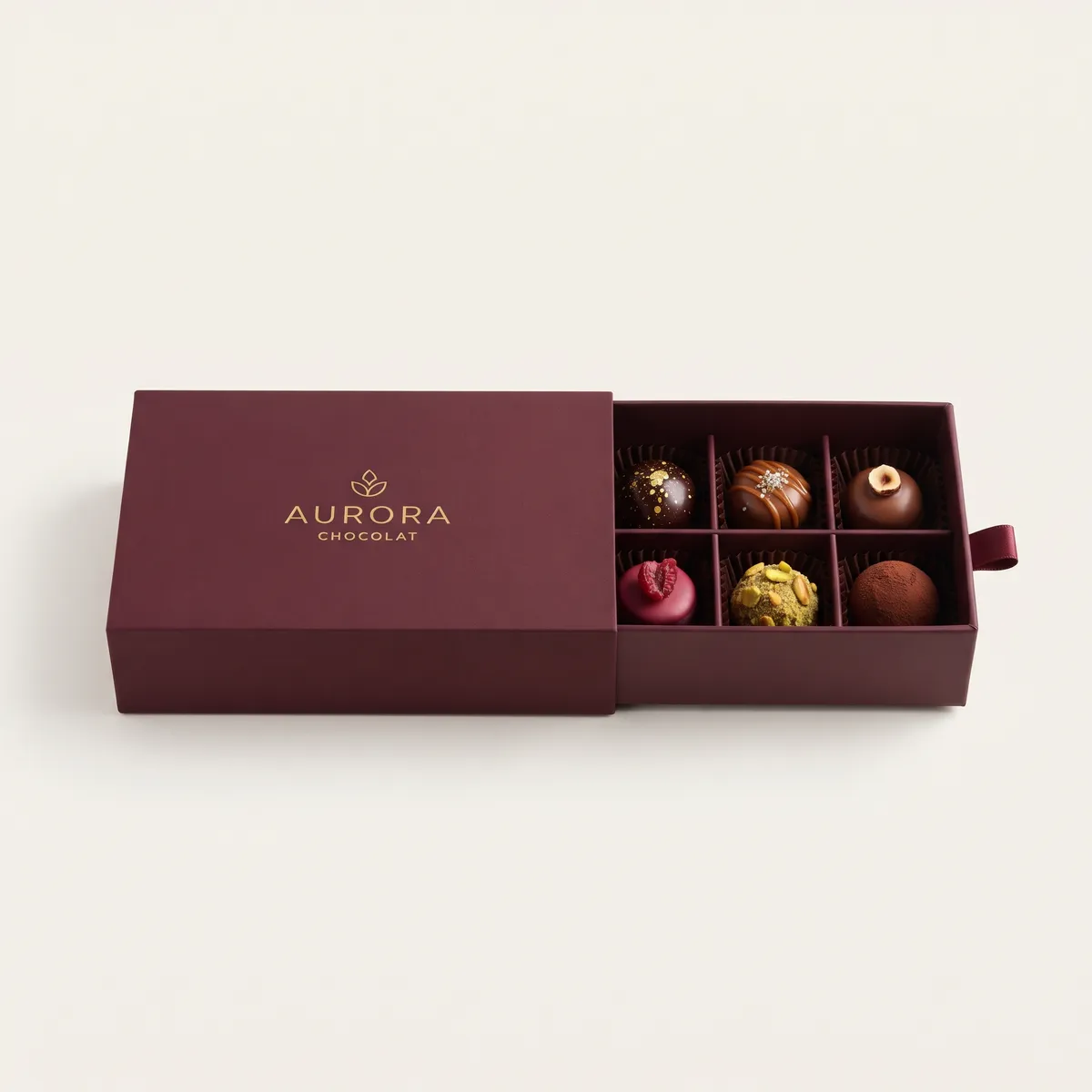
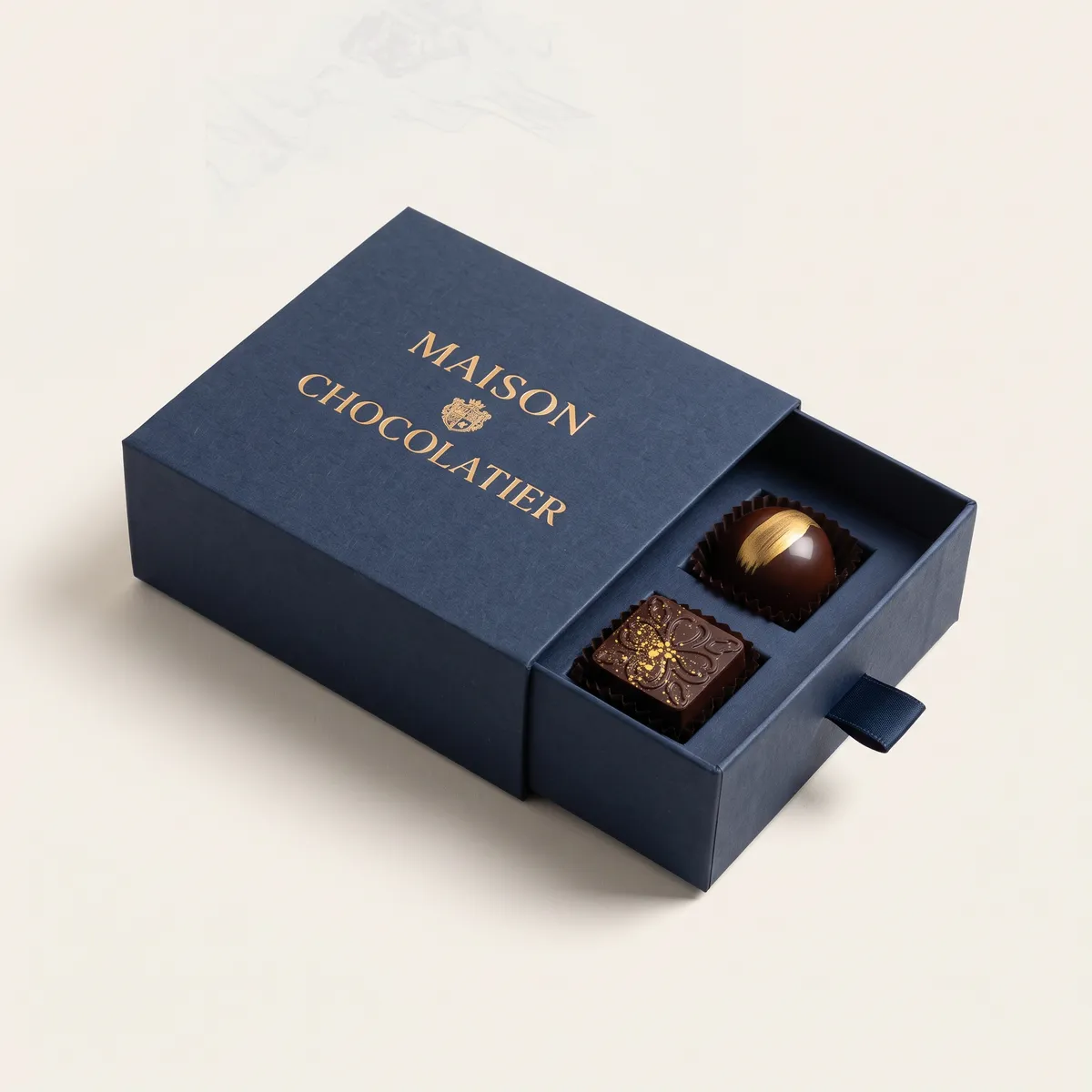
A rigid candy box is built from paper-wrapped grayboard for confectionery: a thick core that is cut, wrapped in printed paper and assembled before it ships, so it arrives set up rather than flat.
| Attribute | Rigid candy box |
|---|---|
| Core | 2mm grayboard |
| Wrap | Printed paper, folded over every edge |
| Insert | Fitted tray or die-cut insert, cut to the pieces |
| Tolerance | Around ±0.5–1mm, so the lid closes level |
| Inks | Food-safe wherever the tray meets product |
| Size | Set by the assortment, not a stock size |
Because it arrives assembled, a rigid box takes far more room in storage than a stack of flat cartons. Plan the shelf space for the delivery before it lands.
Why a Lift-Off Lid Suits a Rigid Sweets Assortment
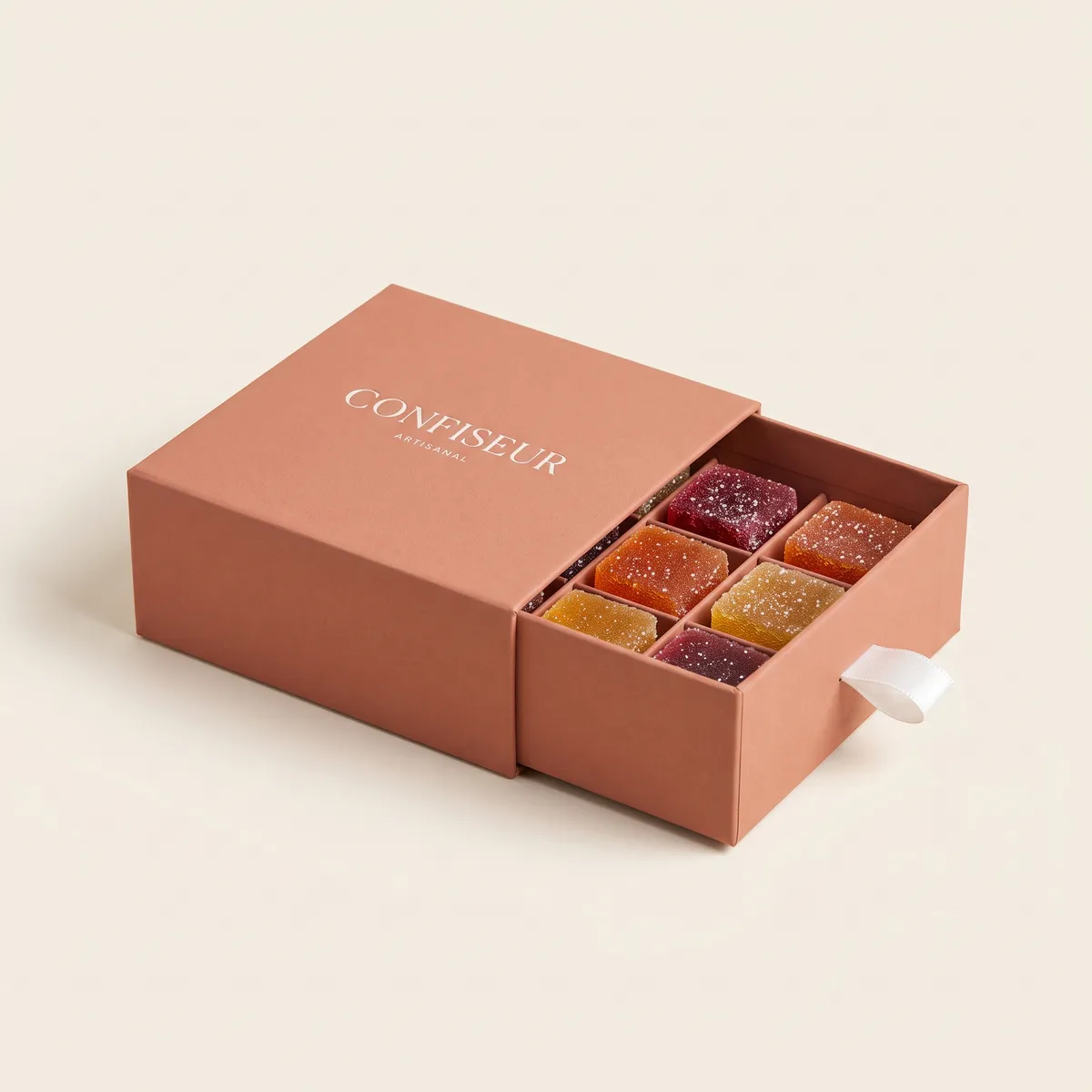
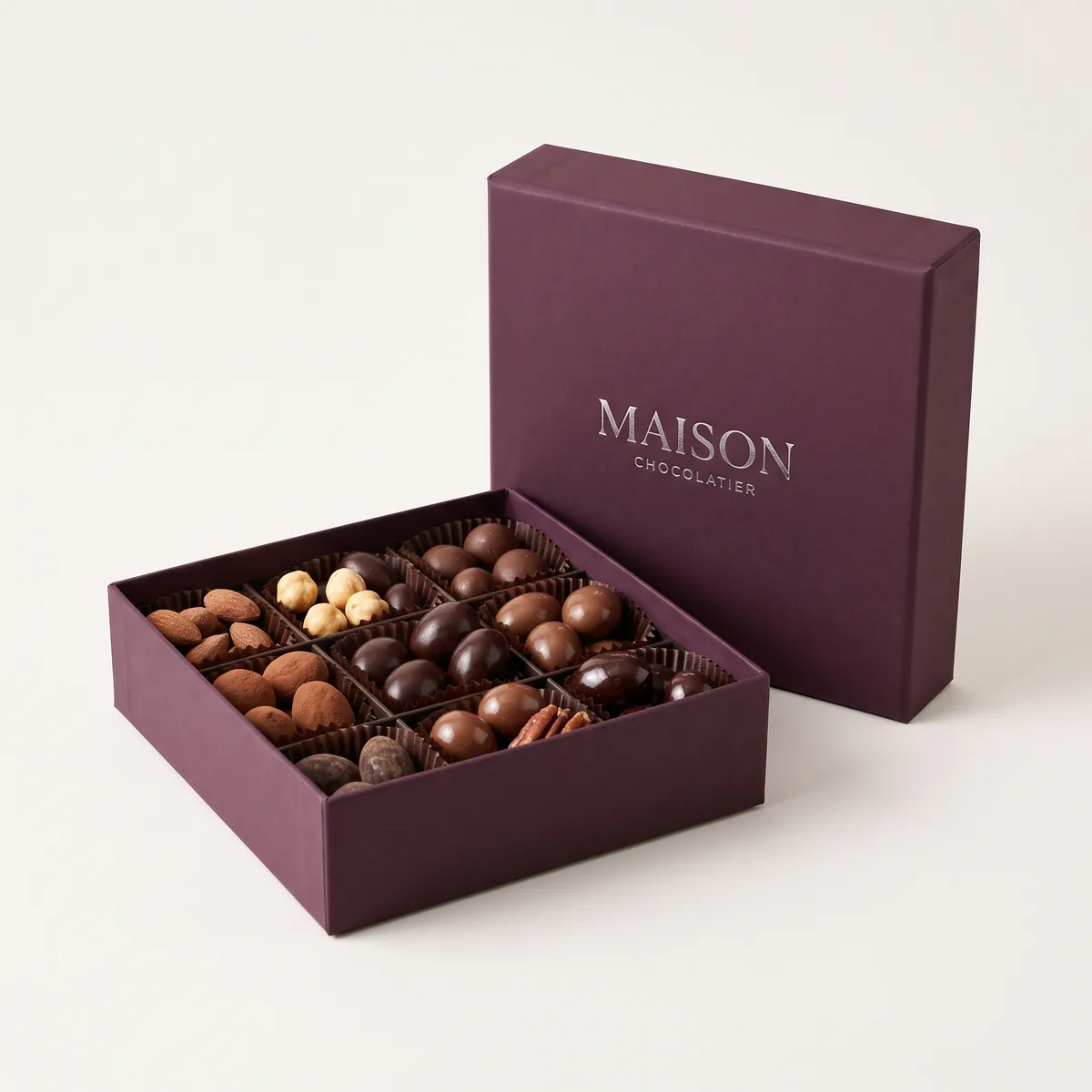
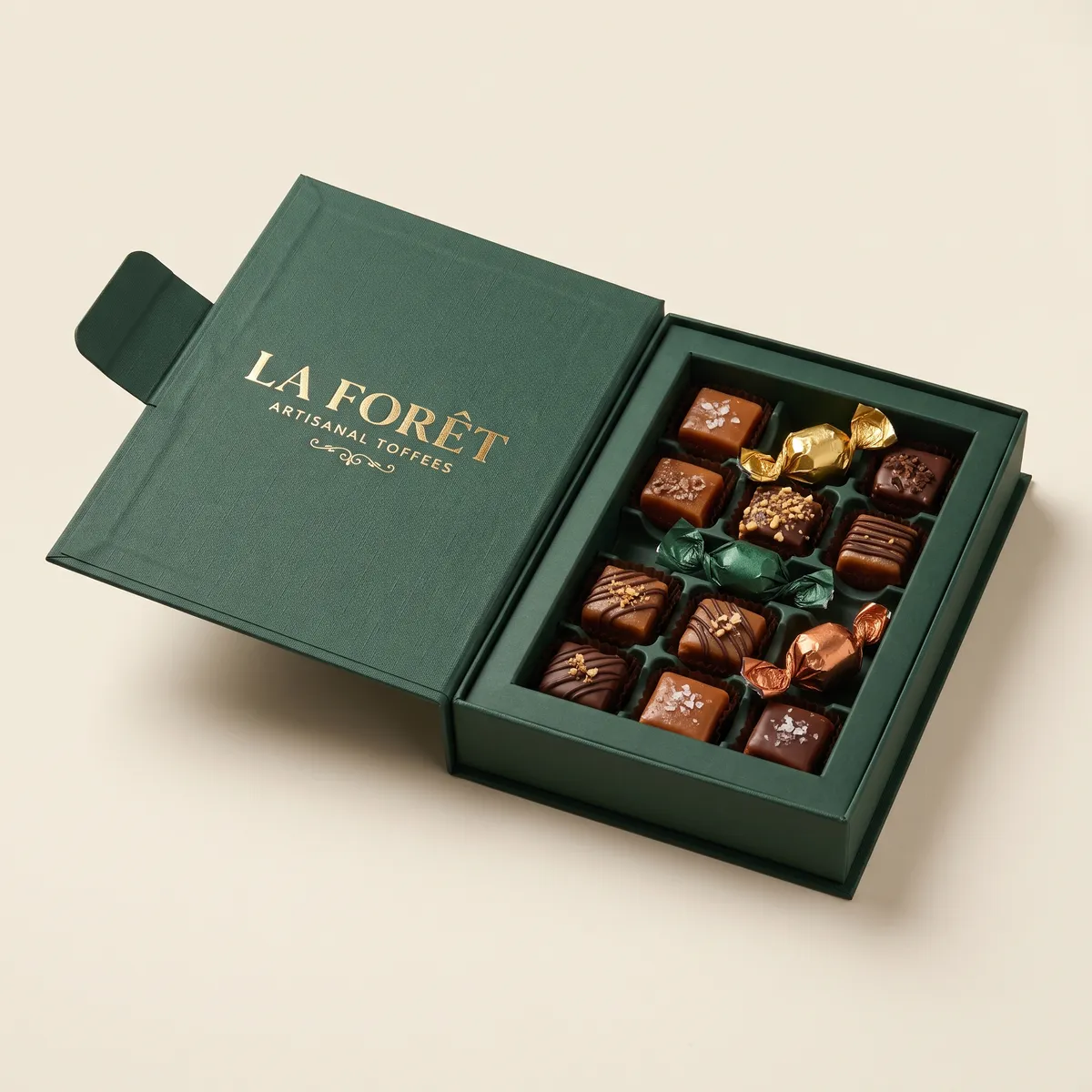
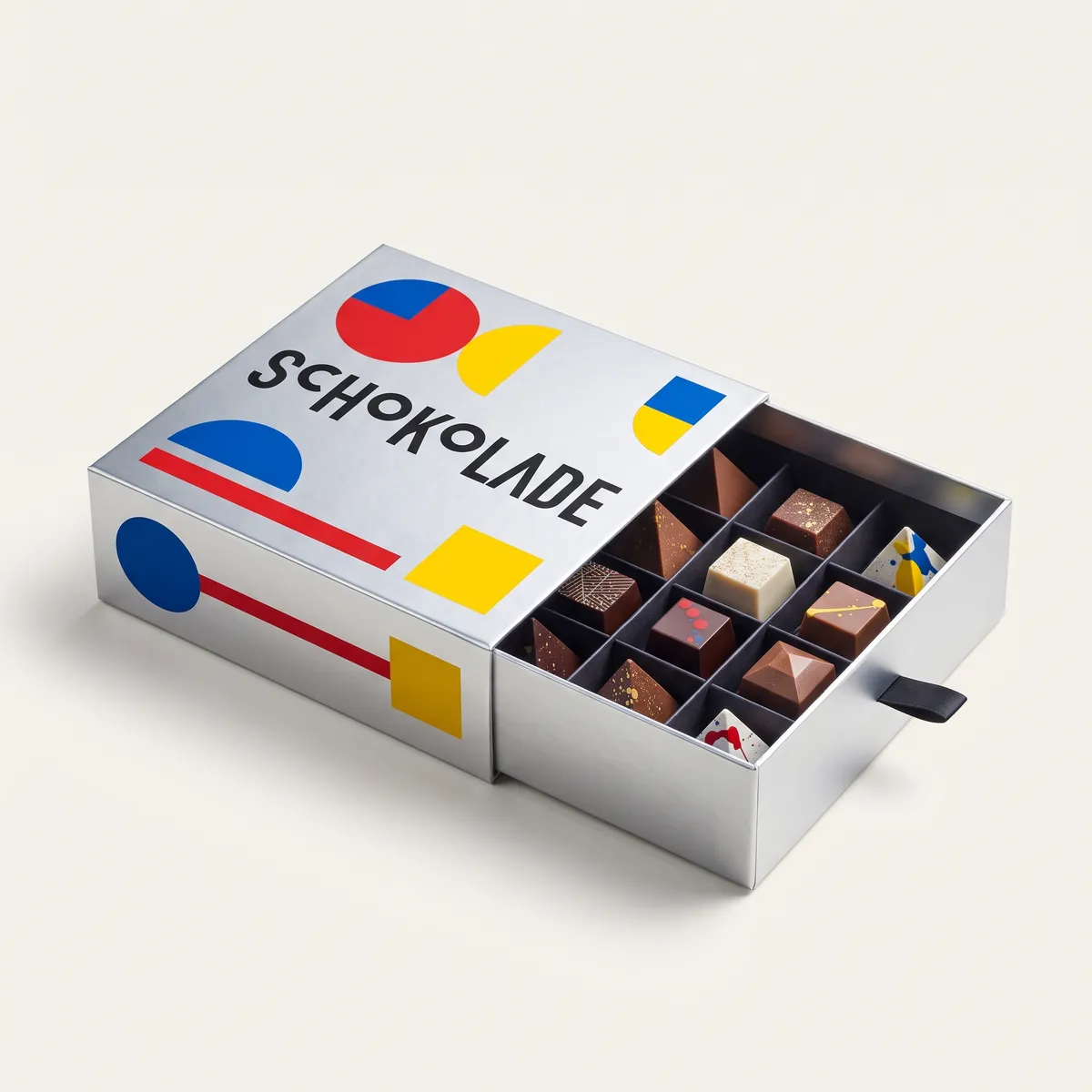
Rigid candy boxes are most often built as a rigid lid over a fitted base tray. The lid lifts straight up, and the whole assortment is visible at once, laid out the way it was packed. A hinged or tucked lid opens from one side and shows the pieces at an angle; the lift-off shows them flat, which is how an assortment is meant to be seen. The stiff walls are what make it work. A lid on thin board catches and drags as it comes off, while a grayboard lid slides away cleanly from a base that doesn't bow. Other rigid builds are available, including drawers and magnetic flaps, but for a box of mixed sweets the lid-and-tray is the usual choice.
Foil and Wrap Paper Choices for a Rigid Sweets Box
On a rigid box the wrap paper carries the print. Matte wrap is the common base for candy, because it keeps the surface quiet and lets a metallic detail stand out. Foil works best as one element, such as a logo, a border or the brand name, rather than a flood across the lid; on a matte field a small foil mark looks richer than a large one. Interior print inside the lid is seen the moment it lifts, which makes it a cheap place for a message or a flavor guide. Wrap color sets the tone before any print does, so choose it first. A heavily finished lid adds time to the line, which matters when the order has to land before a holiday.
Rigid Candy Boxes for Corporate Gifts, Weddings and Holiday Counters
Corporate gift teams order them for year-end client boxes, often with a logo on the lid and candy chosen from a local maker. Wedding planners use small rigid boxes as favors at each seat, two or four sweets inside, where the box is what guests take home. Confectioners stock a rigid line for the holiday counter alongside their everyday cartons, so the same candy sells at two price points. Hotels leave them in rooms as a welcome gift. All of these buyers sit closer to boxed confectionery sold as a luxury than to grocery candy, and that is the point: the box sets the price as much as the contents do.
Planning Around a 20-Day Rigid Build
Rigid candy boxes take 20 business days from proof approval, whatever the size or finish. The board is cut, wrapped and assembled rather than printed and shipped flat, and that work doesn't compress. Count back from your selling date and leave room for proofing too. If a date moves forward, rush is possible at an extra cost that we state before you commit. The quote includes the die, the setup and shipping, with no charges added later. Every box passes a three-stage check before dispatch, so a misaligned wrap or a tray that won't seat is caught by us, not by your customer. Orders start at 100 boxes, and design help is unlimited and free, with a proof to approve before anything is cut.
One connected process, start to finish.
Structural Design
Dieline drafted to your exact fit and freight tolerances.
Proof & Sample
Sign off on a digital proof, or request a physical sample.
Tooling
Dies and plates are cut for your job and archived on file.
Production
Print, die-cut, and assembly run under in-line quality checks.
Ship & Reorder
Freight goes out, and the cycle resets for your next run.
Steady process. Powerful results.
Like everything we build, our process is engineered to hold up — no shortcuts, no surprises. Five dependable stages that run the same way every single time, so reorders are just as fast as the first order.
- One dedicated teamFrom first sketch to final freight, the same people carry your order start to finish.
- Dies archived on fileReorders skip tooling and re-setup entirely — we already have your exact spec.
- Checked against your sign-offEvery run is inspected against the digital proof or physical sample you approved.
Set up your file once, correctly
Nine in ten delayed jobs are delayed by artwork, not production. Match these four rules and your proof lands the next morning.
- Bleed1/8 in (3 mm) past every cut line
- Safe ZoneKeep text 1/4 in clear of every crease
- ColourCMYK or named Pantone. No RGB.
- Resolution300 dpi at final size, fonts outlined
No print-ready file?
Send a logo and a rough idea. Our studio builds the production file free with any order over 500 units — you keep the source file either way.
Ask the StudioBackground art must run all the way to the outer bleed edge. Anything inside the white dashed line survives fold tolerance.


What brands say about this box
They live there rather than here, where we can't edit them, delete them, or pick which ones you get to see. That is exactly what makes them worth reading.
Read all reviews on Trustpilot(opens in a new tab)Answers before you have to ask.
What makes a candy box rigid rather than folding?
The stock itself. Rigid uses a thick grayboard core wrapped in printed paper, so it doesn't flex when picked up. Folding cartons ship flat and assemble at your end. Rigid takes 20 business days rather than 8–12.
Can rigid candy boxes hold a fitted tray?
Yes, and it usually should. A rigid box without a fitted tray feels empty and the pieces slide, which undoes the premium impression the rigid build was bought for in the first place.
Are rigid candy boxes worth the cost?
For gift assortments and premium lines, yes. A flexing box undercuts a product sold on indulgence. For everyday sweets and volume retail, folding cartons do the job at a fraction of the cost.
What's the turnaround on rigid candy boxes?
20 business days from proof approval, since rigid board is cut, wrapped and assembled rather than shipped flat. Rush is available at a stated premium, with shipping included.
What's the minimum on rigid candy boxes?
100 boxes. Rigid costs more per unit than folding, so the low minimum matters — you can test whether the premium build supports a higher price before committing to a run.