
Puzzle Boxes
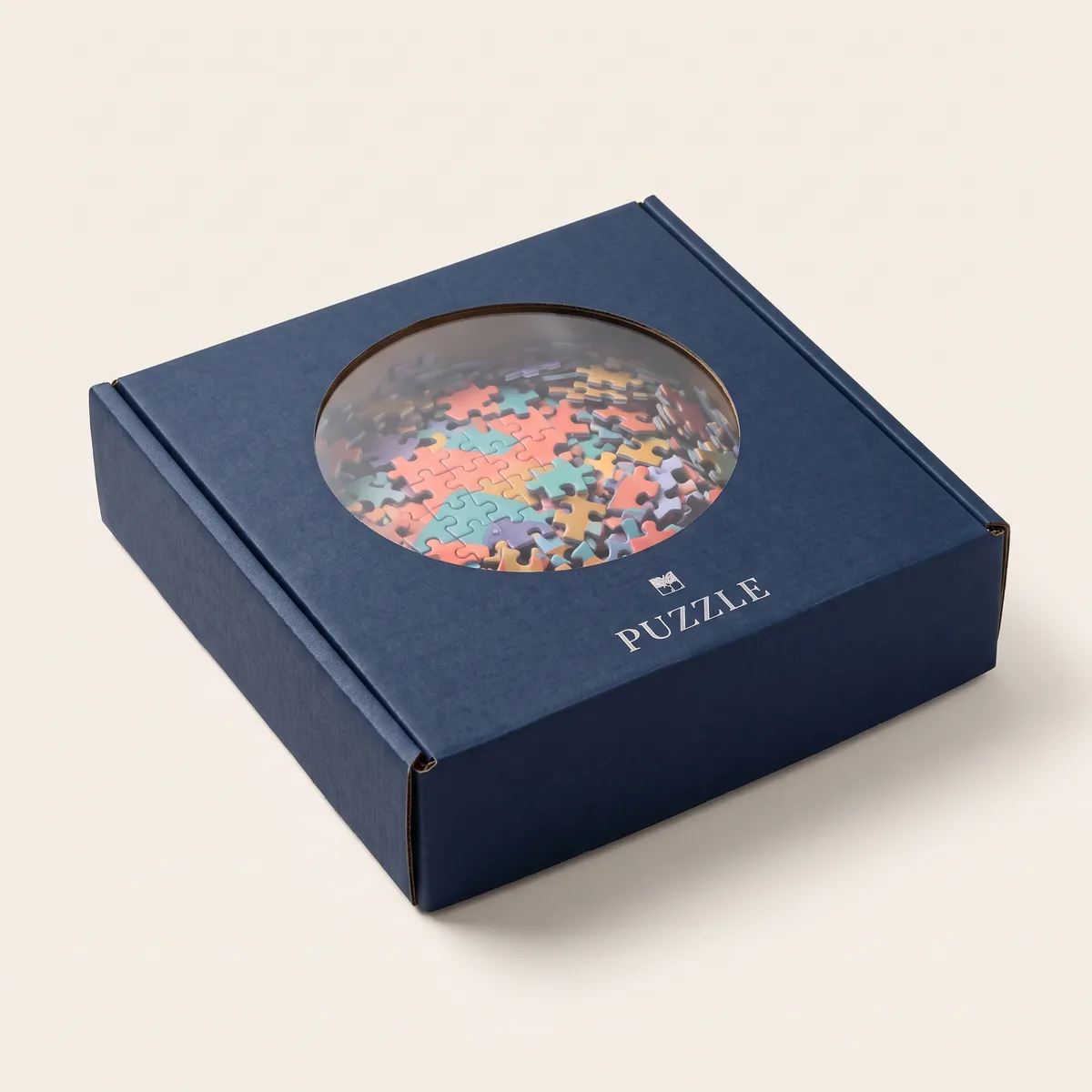
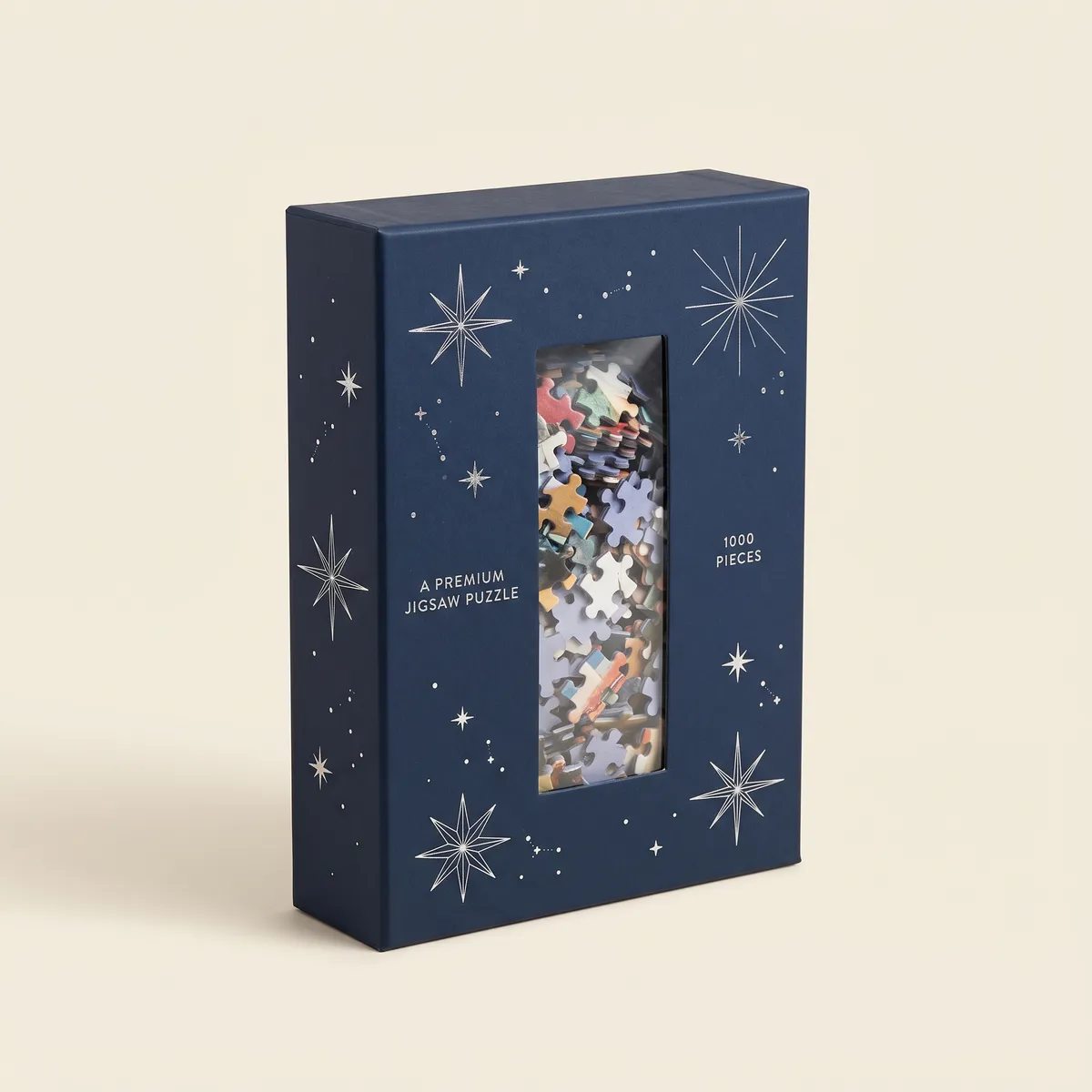
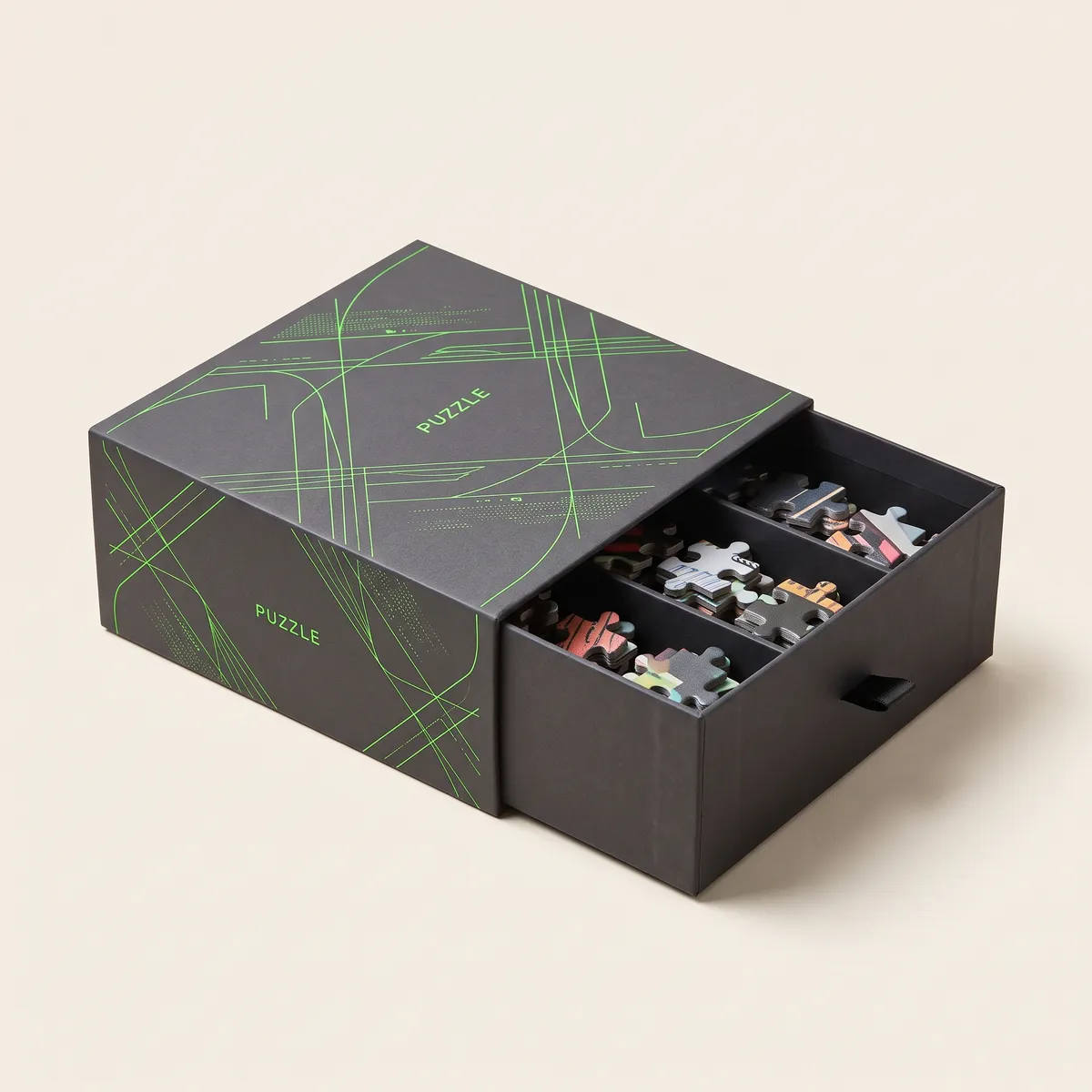
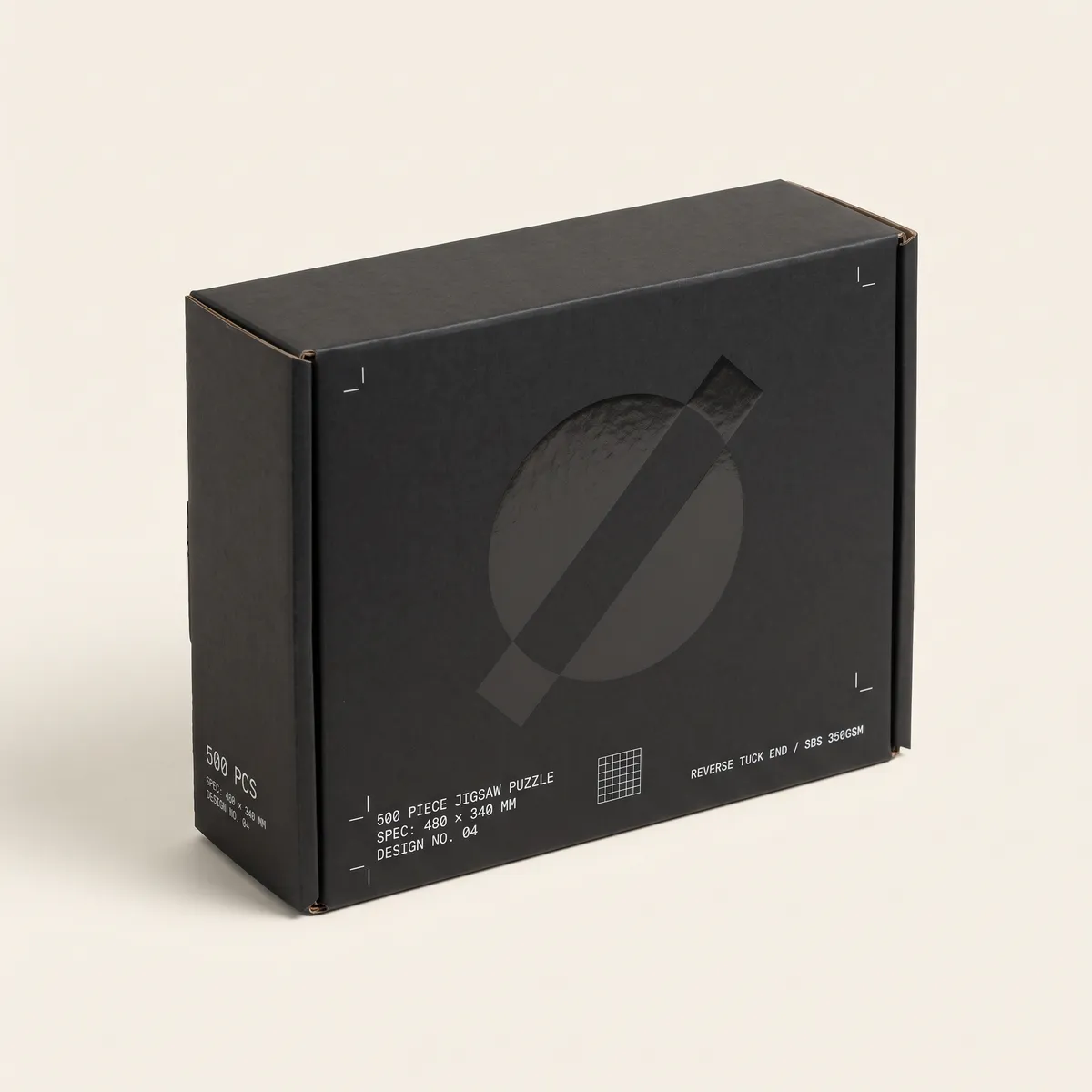
Puzzle boxes are heavy for their footprint because of the piece count, so a weak base bows and eventually splits; larger counts get a locking base or corrugated. A tight footprint and enough depth that the box isn't overfilled limit movement, with an inner bag protecting the printed artwork. A window adds less here, since the image is usually printed on the lid regardless.
Ours are on Trustpilot, where we can't edit them or choose which ones you see.
Read them on Trustpilot →(opens in a new tab)Four stages, twelve days
Quote confirmed
A specialist checks your spec against the board and comes back with a firm price inside 4 business hours.
Proof approved
You get a flat dieline and a 3D render. Nothing goes to press until you approve it in writing.
On press
Print, die-cut, glue, and fold. You get a press-side photo the day your job runs.
QC and delivery
Every pallet is sampled against the digital proof or physical sample you approved, then shipped with tracking to your dock or 3PL.
If a box doesn't match the digital proof or physical sample you approved, we reprint the run at no charge.
Read the reprint terms →Know exactly what you're ordering.
Puzzle Boxes Where the Lid Is the Reference Image
A jigsaw buyer spends hours working from the picture on the lid. That makes the puzzle box an unusual piece of packaging: it is the instructions, the storage and the product photograph at once, and it stays on the table for the whole time the puzzle is being built. Puzzle boxes serve jigsaw brands, museum and gallery shops, publishers of licensed art puzzles and companies printing custom photo puzzles. Piece counts run from small children's puzzles to large adult ones. The box has to carry an accurate image, a clear piece count and finished size, and keep every piece together between sessions, because one missing piece ruins the product.
Base Strength, Footprint and Board for Puzzle Boxes
| Attribute | Puzzle box |
|---|---|
| Board | SBS 18–24pt |
| Larger counts | Locking base or corrugated |
| Inner | Inner bag or tray for loose pieces |
| Tolerance | ±1/16" (1.5mm) |
| Footprint | Flat and wide, cut to the piece count |
Most puzzle boxes use stiff paperboard for a flat, heavy base toward the upper end of the caliper range, because a wide, shallow box carries more load across its base than its size suggests. As counts rise, the base moves to a locking construction or to fluted board. The ±1/16" tolerance keeps the lid sliding evenly over the base along its long sides. The inner bag keeps pieces together inside the box, so nothing escapes when the lid comes off.
Why Puzzles Suit a Shallow Two-Piece Box
Puzzles are commonly made as a shallow lid lifting off a wide base, and the reason is how they get used. The lid comes off and stands beside the puzzle as the reference image while the pieces are poured out of the base. A tuck carton has to be pried open at one end, wears quickly with repeated use and offers no tray to sort pieces into. The two-piece build also keeps the image on the lid unbroken by flaps. The cost is a little more board than a carton. For a children's floor puzzle or a promotional giveaway done once, a simple carton is cheaper and perfectly adequate.
Printing the Puzzle Image So It Holds Up
The lid image is the one thing a puzzle box cannot get wrong. Color has to match the puzzle itself closely, or people end up hunting for shades that don't exist on the pieces. Print it at full size on the lid, with the piece count, finished size and age range on a side panel. Matte lamination stops glare from overhead lighting while the box lies on the table; gloss makes art and photography look richer on a shelf. Spot UV on the title is a modest extra. Spend on lamination before anything else, because the lid is handled every session and needs to last as long as the puzzle does.
Puzzle Boxes for Jigsaw Brands, Museum Shops and Photo Puzzles
Jigsaw brands with large catalogs need boxes that line up as a set on a shelf, with consistent side panels across every title. Museum, gallery and souvenir shops sell art and landmark puzzles where the box has to reproduce the artwork faithfully. Custom photo-puzzle companies keep a fixed set of box sizes and change the printed image from batch to batch. Educational suppliers sell floor and map puzzles to schools. The wide, weighted base problem isn't unique to puzzles: tablets and flat tech kits are boxed in a similar way, with a flat footprint and a base that must not sag when the box is lifted from one end.
Approving Puzzle Box Artwork and Getting to Print
Artwork is the slow part of a puzzle order, so plan for it. Send the puzzle image at full resolution with the piece count and finished dimensions, and we lay it onto a dieline sized to the count, with free and unlimited design help for the side panels and branding. The proof shows the lid, sides and base flat, so you can check every edge of the image before approving. Production then takes 8–12 business days. Each box passes a three-stage check before it ships, and shipping is included in the price. Orders start at 100 boxes, and rush can be arranged when a date demands it, at a cost we quote upfront.
One connected process, start to finish.
Structural Design
Dieline drafted to your exact fit and freight tolerances.
Proof & Sample
Sign off on a digital proof, or request a physical sample.
Tooling
Dies and plates are cut for your job and archived on file.
Production
Print, die-cut, and assembly run under in-line quality checks.
Ship & Reorder
Freight goes out, and the cycle resets for your next run.
Steady process. Powerful results.
Like everything we build, our process is engineered to hold up — no shortcuts, no surprises. Five dependable stages that run the same way every single time, so reorders are just as fast as the first order.
- One dedicated teamFrom first sketch to final freight, the same people carry your order start to finish.
- Dies archived on fileReorders skip tooling and re-setup entirely — we already have your exact spec.
- Checked against your sign-offEvery run is inspected against the digital proof or physical sample you approved.
Set up your file once, correctly
Nine in ten delayed jobs are delayed by artwork, not production. Match these four rules and your proof lands the next morning.
- Bleed1/8 in (3 mm) past every cut line
- Safe ZoneKeep text 1/4 in clear of every crease
- ColourCMYK or named Pantone. No RGB.
- Resolution300 dpi at final size, fonts outlined
No print-ready file?
Send a logo and a rough idea. Our studio builds the production file free with any order over 500 units — you keep the source file either way.
Ask the StudioBackground art must run all the way to the outer bleed edge. Anything inside the white dashed line survives fold tolerance.
What brands say about this box
They live there rather than here, where we can't edit them, delete them, or pick which ones you get to see. That is exactly what makes them worth reading.
Read all reviews on Trustpilot(opens in a new tab)Answers before you have to ask.
How do puzzle boxes stop pieces shifting?
With a tight footprint and enough depth that the box doesn't need over-filling. Pieces shift in any box, but a well-sized box with an inner bag or tray keeps the movement from damaging the artwork.
Can puzzle boxes have a window?
Yes, and many brands use one to show the puzzle image. Bear in mind the image is usually printed on the lid anyway, so the window adds less here than in other categories.
Do puzzle boxes need a strong base?
Yes. Puzzle boxes are heavy for their footprint because of the piece count, and a weak base bows and splits. We'd specify a locking base or corrugated for larger counts.
How soon can puzzle boxes be made?
Around 8–12 business days once the proof is approved, including a locking base. Rush is available at an added cost quoted first, with shipping included.
What's the minimum on puzzle boxes?
100 boxes per piece count. If you publish several counts, running them together shares setup while letting each box be sized properly to its contents.