
Cardboard Toy Boxes
Cardboard toy boxes use coated white board because toys sell on bright artwork and coated stock reproduces it accurately; kraft costs less but undercuts the category's visual impact. Lamination is worth considering as protection rather than decoration, since scuffed boxes get marked down on retail shelves. Reorders need no new proof once dimensions and artwork are on file.
Ours are on Trustpilot, where we can't edit them or choose which ones you see.
Read them on Trustpilot →(opens in a new tab)Four stages, twelve days
Quote confirmed
A specialist checks your spec against the board and comes back with a firm price inside 4 business hours.
Proof approved
You get a flat dieline and a 3D render. Nothing goes to press until you approve it in writing.
On press
Print, die-cut, glue, and fold. You get a press-side photo the day your job runs.
QC and delivery
Every pallet is sampled against the digital proof or physical sample you approved, then shipped with tracking to your dock or 3PL.
If a box doesn't match the digital proof or physical sample you approved, we reprint the run at no charge.
Read the reprint terms →Know exactly what you're ordering.
Cardboard Toy Boxes: Paperboard, Not Corrugated
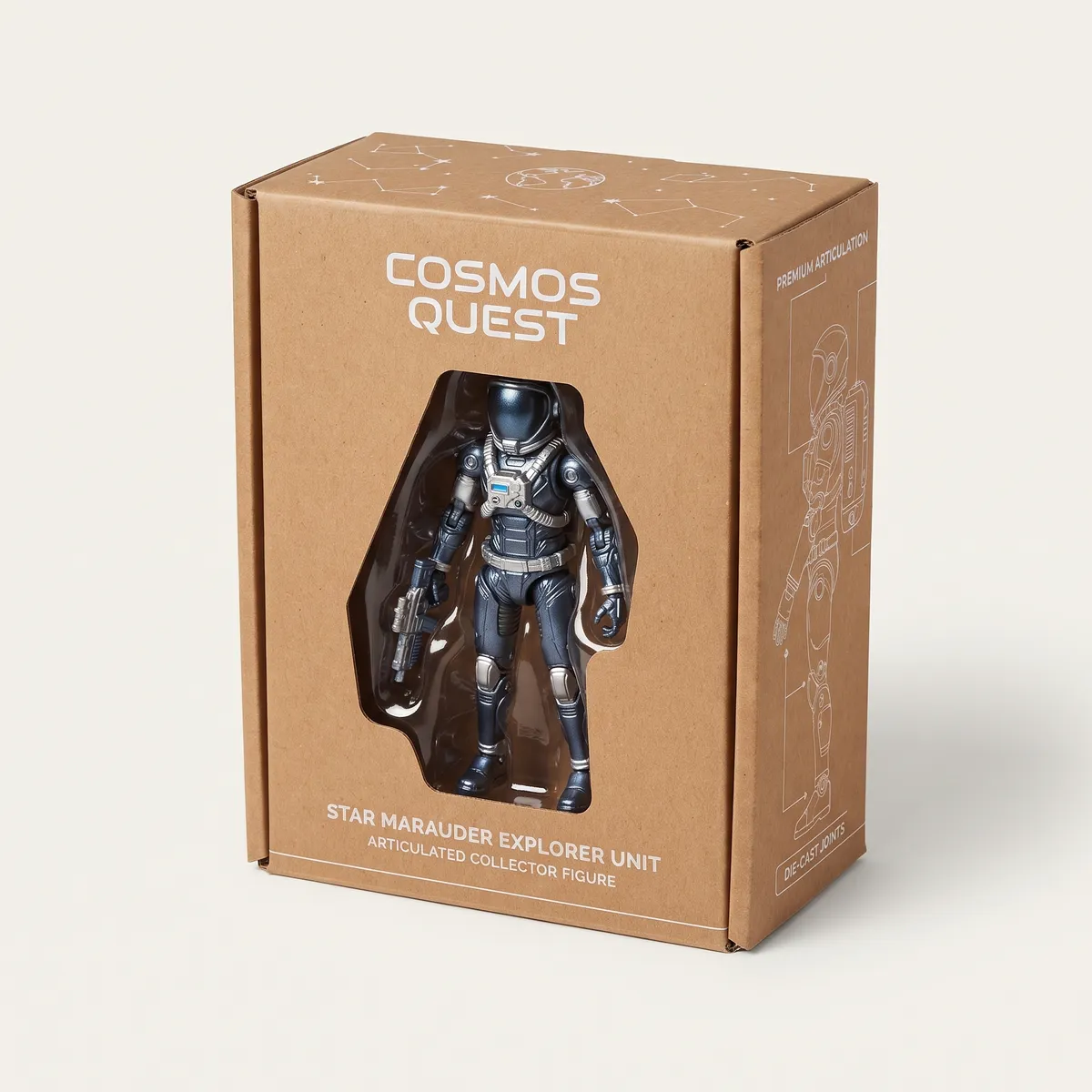
In packaging, cardboard usually means paperboard: one pressed sheet, bleached and coated on the printing side, with no fluted layer inside. That is what a cardboard toy box is made from. It is the stock behind most toy cartons on a store shelf, from boxed dolls and vehicles to games, craft kits and science sets, because it folds sharply, ships flat and takes full-color print better than anything thicker. The buyers range from small brands ordering a first run to established toy makers restocking a dozen sizes. If you're unsure whether your toy needs something heavier, this is usually the place to start, since most retail toys don't.
SBS Caliper, Coating and Tolerance for Toy Cartons
| Attribute | Cardboard toy box |
|---|---|
| Board | SBS, 18–24pt |
| Coating | Coated print face |
| Tolerance | ±1/16" (1.5mm) |
| Window | Die-cut, film-backed |
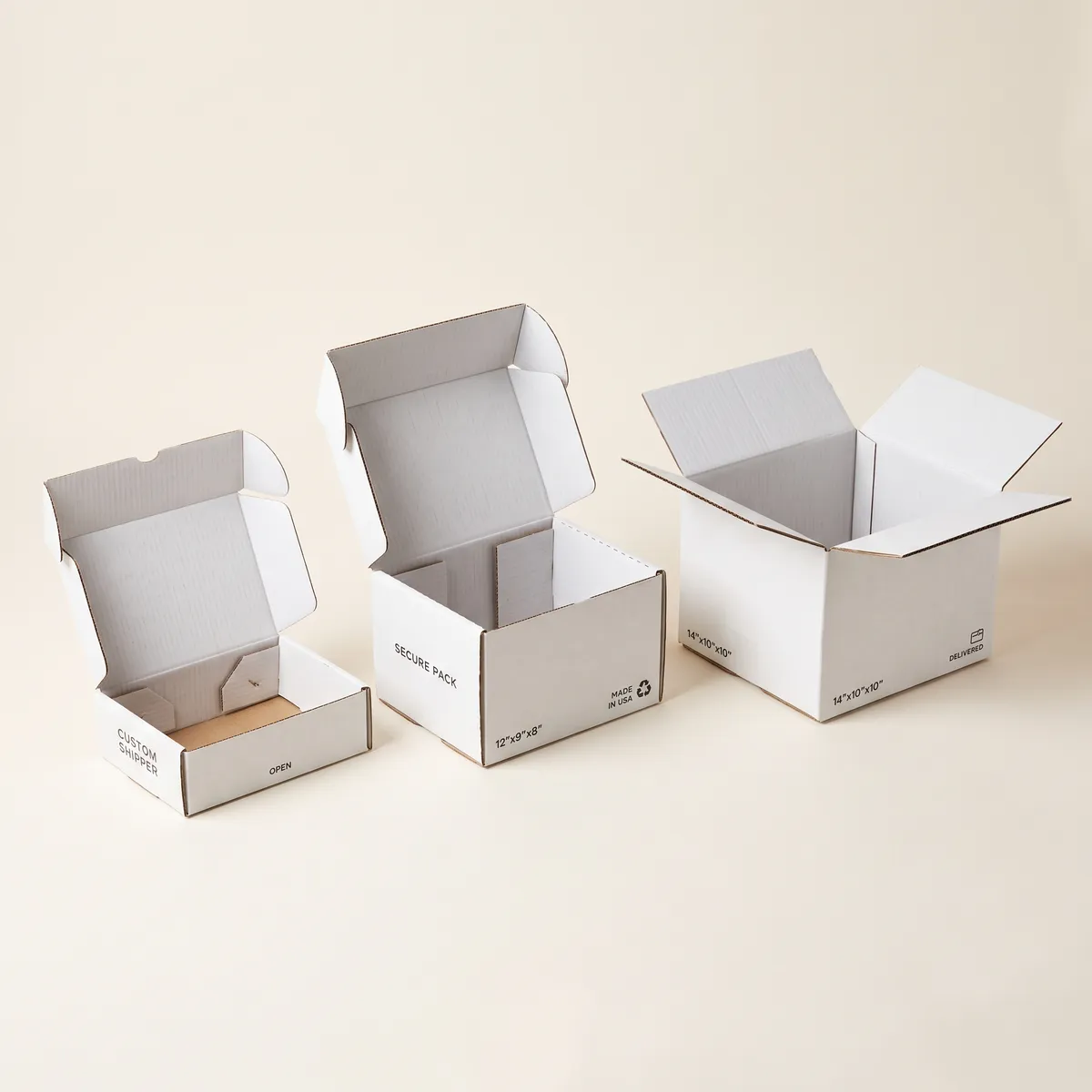
| Construction | Folding carton, glued and shipped flat |
The stock is single-layer pressed paperboard with a coated face, specified by caliper. Lighter, flatter toys sit near 18pt; heavier boxed sets and taller cartons move toward 24pt so the panels stay stiff when lifted from one end. Holding ±1/16" keeps the tuck flaps closing flush and the window landing over the toy. Each carton is glued and shipped flat, so the boxes take little storage space before packing day.
Coated Paperboard Against Kraft and Fluted Board
There are three realistic stocks for a toy box. Kraft is the cheapest and suits an earthy look, but its brown fibers dull bright toy artwork. Corrugated adds strength through the flute, which a large or heavy toy may need, but it costs more, takes more space and softens fine print. Coated paperboard sits between them: bright enough for full-color art, stiff enough for most retail toys and light enough to keep freight weight down. Most cardboard toy boxes are a tuck-end toy carton for that reason. The case for moving up is size and weight, not appearance, so if the toy is heavy enough to bow a panel, step up to fluted board.
Lamination as Shelf Protection on Toy Cartons
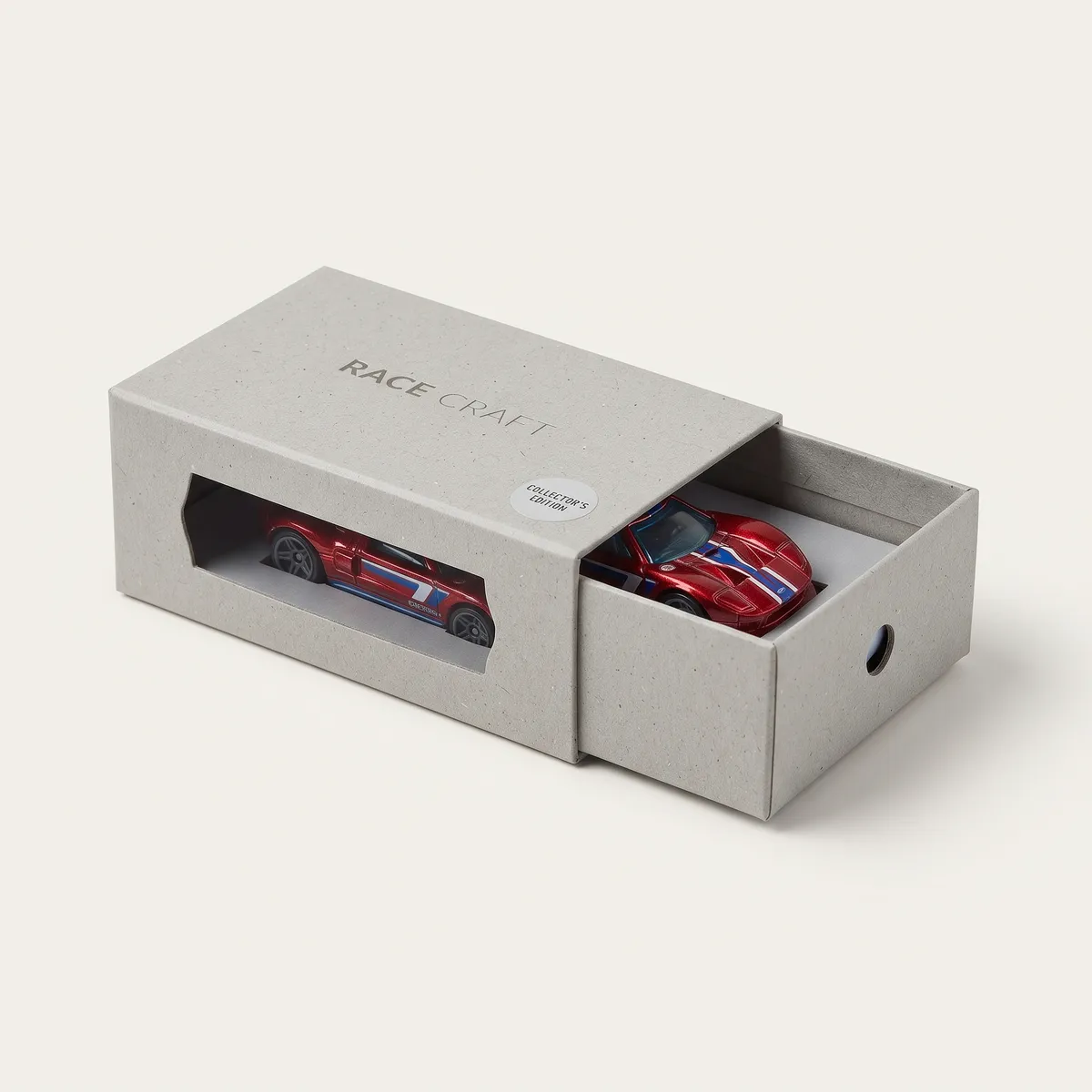
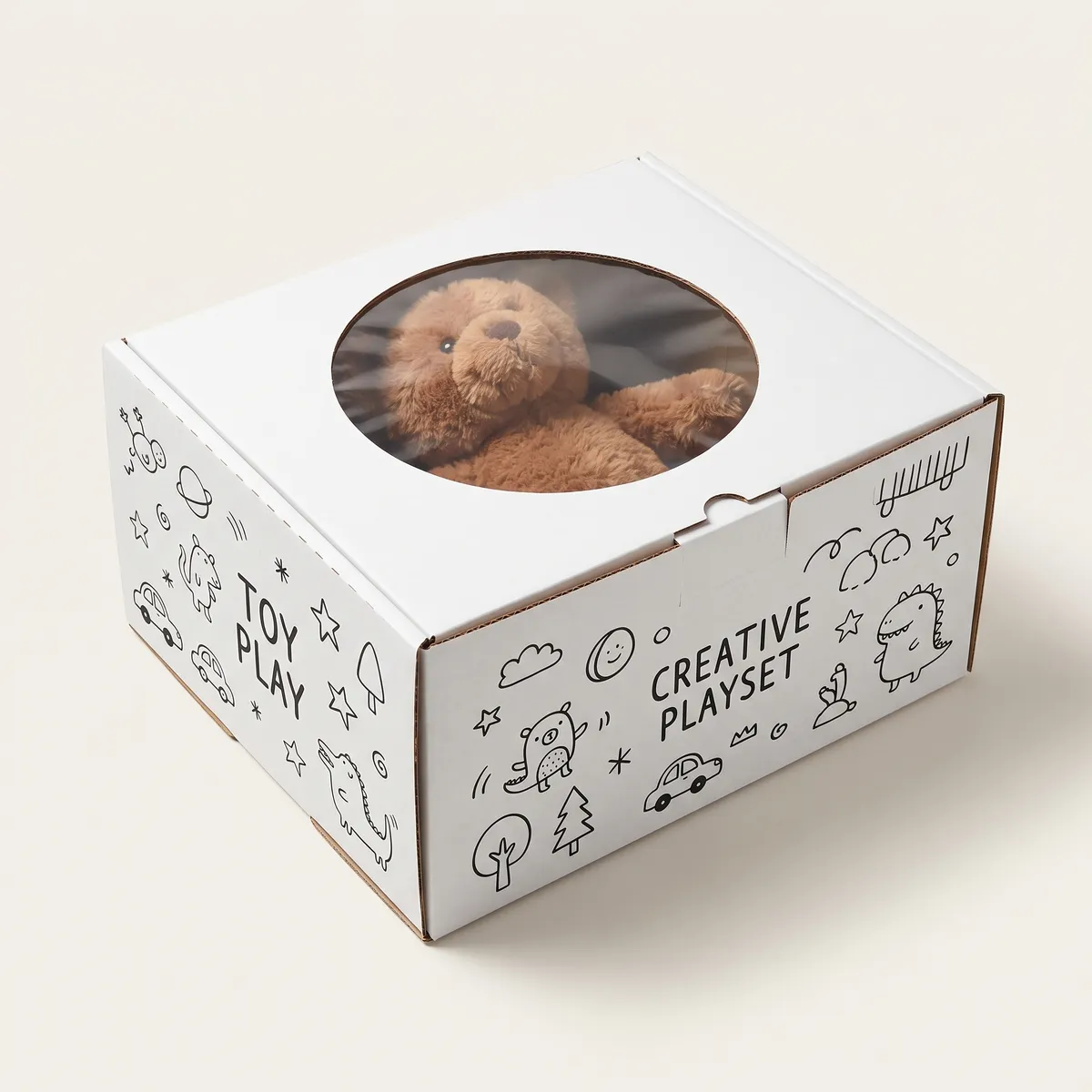
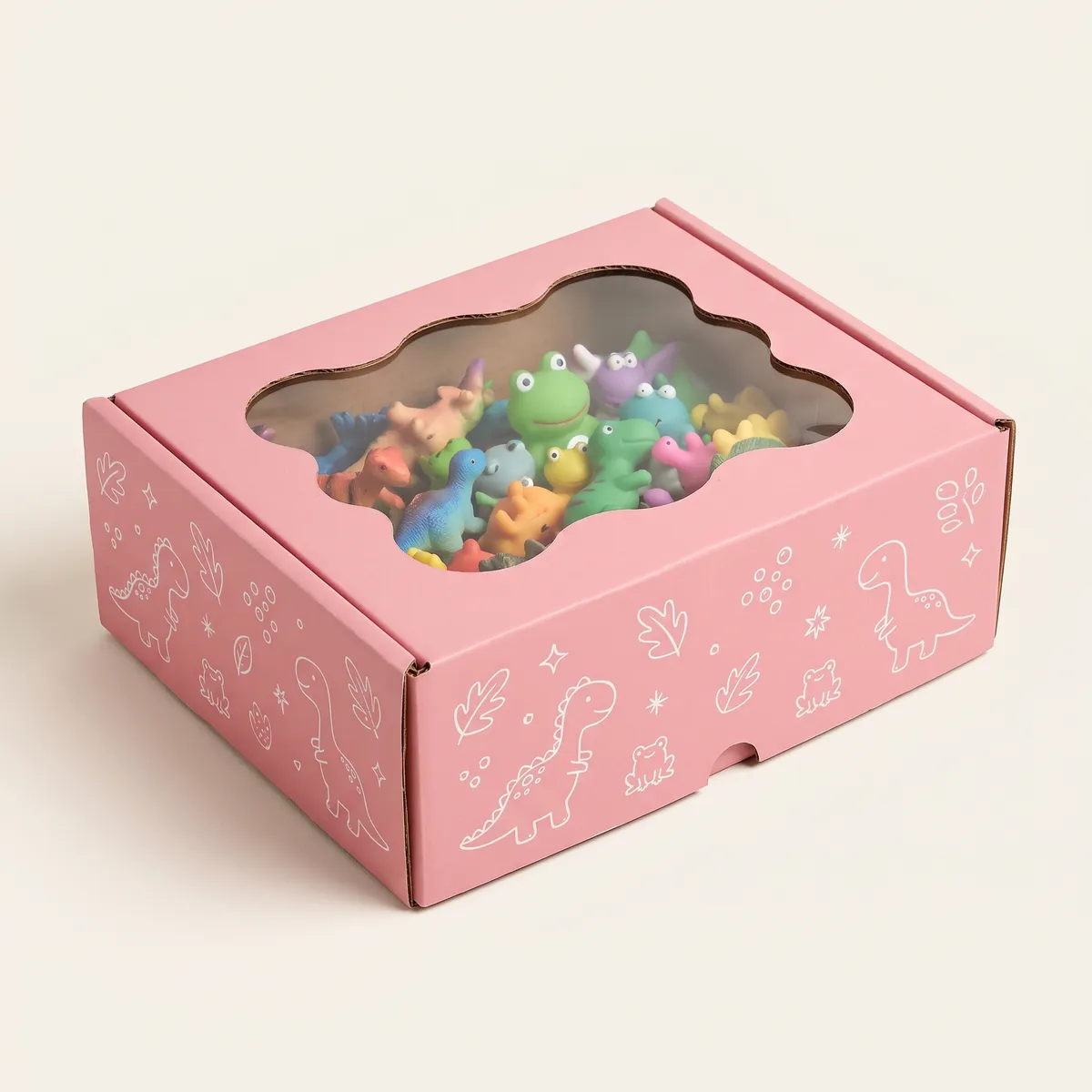
Lamination is the one finish on a cardboard toy carton we'd rarely cut. Gloss film deepens color and wipes clean; matte film cuts glare under store lighting; an anti-scuff version resists boxes rubbing against each other in a shipping case or on a shelf. Print is offset or digital depending on quantity, and coated paperboard takes both cleanly. A die-cut window that shows the real toy earns more than a second decorative effect. The exceptions run the other way: a promotional box handed out and opened once can skip lamination altogether, and soft-touch film or layered foil on a mass-market carton is spend that nobody in the toy aisle notices.
Cardboard Toy Boxes for Mass Retail, Promotions and Seasonal Ranges
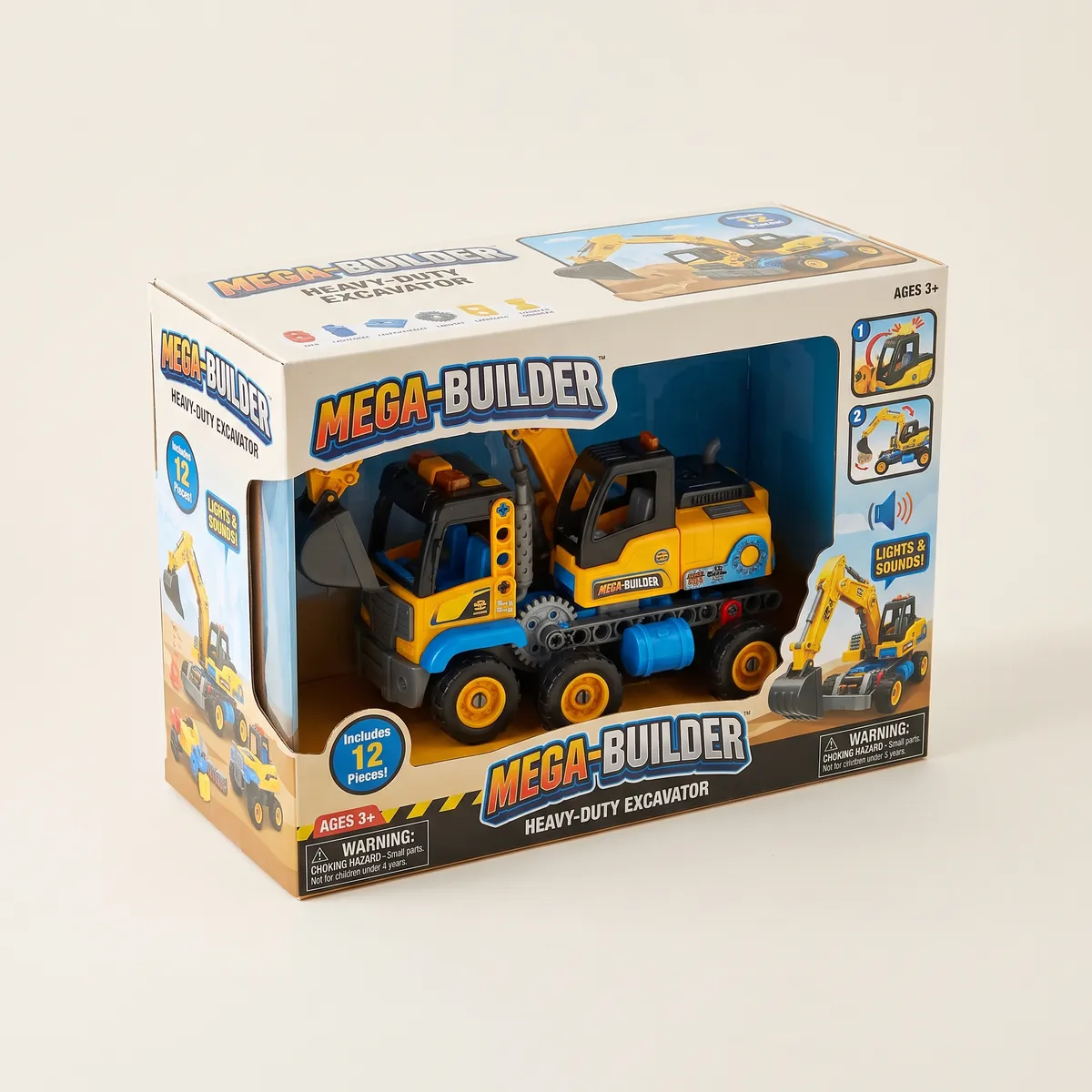
Mass-market toy lines are the core use: dolls, vehicles, craft sets, science kits and boxed games sold through supermarkets, toy chains and online stores. Promotional toys bundled with food, magazines or events use the same carton with a simpler print spec. Seasonal ranges, such as holiday and back-to-school, change the artwork on a standard carton size and reuse the same dieline across short runs. Toy companies selling educational electronics, like coding robots or kids' tablets, often pack them much as small gadgets sold in printed cartons are packed, with an insert holding the device inside a paperboard outer rather than a heavier build.
Pricing a Cardboard Toy Run With Dies and Plates Included
The quote is the full price. Cutting dies, printing plates and setup are built into it, with shipping included, so the figure you approve is the figure you pay, with no tooling charges added after the proof. Minimum order is 100 boxes. Send dimensions and artwork, or a rough idea, and we build the dieline and the proof with free, unlimited design help. Production runs 8–12 business days from approval. If a launch date is tight, a rush slot is available at an extra cost stated before you commit. Every box passes a three-stage check, and a run that doesn't match its approved proof is reprinted at our cost.
One connected process, start to finish.
Structural Design
Dieline drafted to your exact fit and freight tolerances.
Proof & Sample
Sign off on a digital proof, or request a physical sample.
Tooling
Dies and plates are cut for your job and archived on file.
Production
Print, die-cut, and assembly run under in-line quality checks.
Ship & Reorder
Freight goes out, and the cycle resets for your next run.
Steady process. Powerful results.
Like everything we build, our process is engineered to hold up — no shortcuts, no surprises. Five dependable stages that run the same way every single time, so reorders are just as fast as the first order.
- One dedicated teamFrom first sketch to final freight, the same people carry your order start to finish.
- Dies archived on fileReorders skip tooling and re-setup entirely — we already have your exact spec.
- Checked against your sign-offEvery run is inspected against the digital proof or physical sample you approved.
Set up your file once, correctly
Nine in ten delayed jobs are delayed by artwork, not production. Match these four rules and your proof lands the next morning.
- Bleed1/8 in (3 mm) past every cut line
- Safe ZoneKeep text 1/4 in clear of every crease
- ColourCMYK or named Pantone. No RGB.
- Resolution300 dpi at final size, fonts outlined
No print-ready file?
Send a logo and a rough idea. Our studio builds the production file free with any order over 500 units — you keep the source file either way.
Ask the StudioBackground art must run all the way to the outer bleed edge. Anything inside the white dashed line survives fold tolerance.
What brands say about this box
They live there rather than here, where we can't edit them, delete them, or pick which ones you get to see. That is exactly what makes them worth reading.
Read all reviews on Trustpilot(opens in a new tab)Answers before you have to ask.
When is coated board worth it for toys?
Almost always, in this category. Toys sell on bright artwork, and coated board is what delivers it accurately. Kraft costs less but undercuts the visual impact the category depends on.
Can cardboard toy boxes be laminated?
Yes, and it's worth considering. Lamination protects print from scuffing through repeated handling on a shelf, which keeps boxes selling at full price rather than being marked down.
Is lamination worth it on toy boxes?
Often, yes. It's protection rather than decoration in this category — a scuffed box on a shelf gets marked down, so lamination protects full-price sell-through rather than just looking nice.
What's the lead time on cardboard toy boxes?
About 8–12 business days from proof approval. Rush is available at an extra cost we'll state upfront, with shipping included rather than added later.
Can cardboard toy boxes be reordered quickly?
Yes. With your dimensions and artwork on file, reorders need no new proof unless something changes, and most run in about 8–12 business days.