
Board Game Boxes
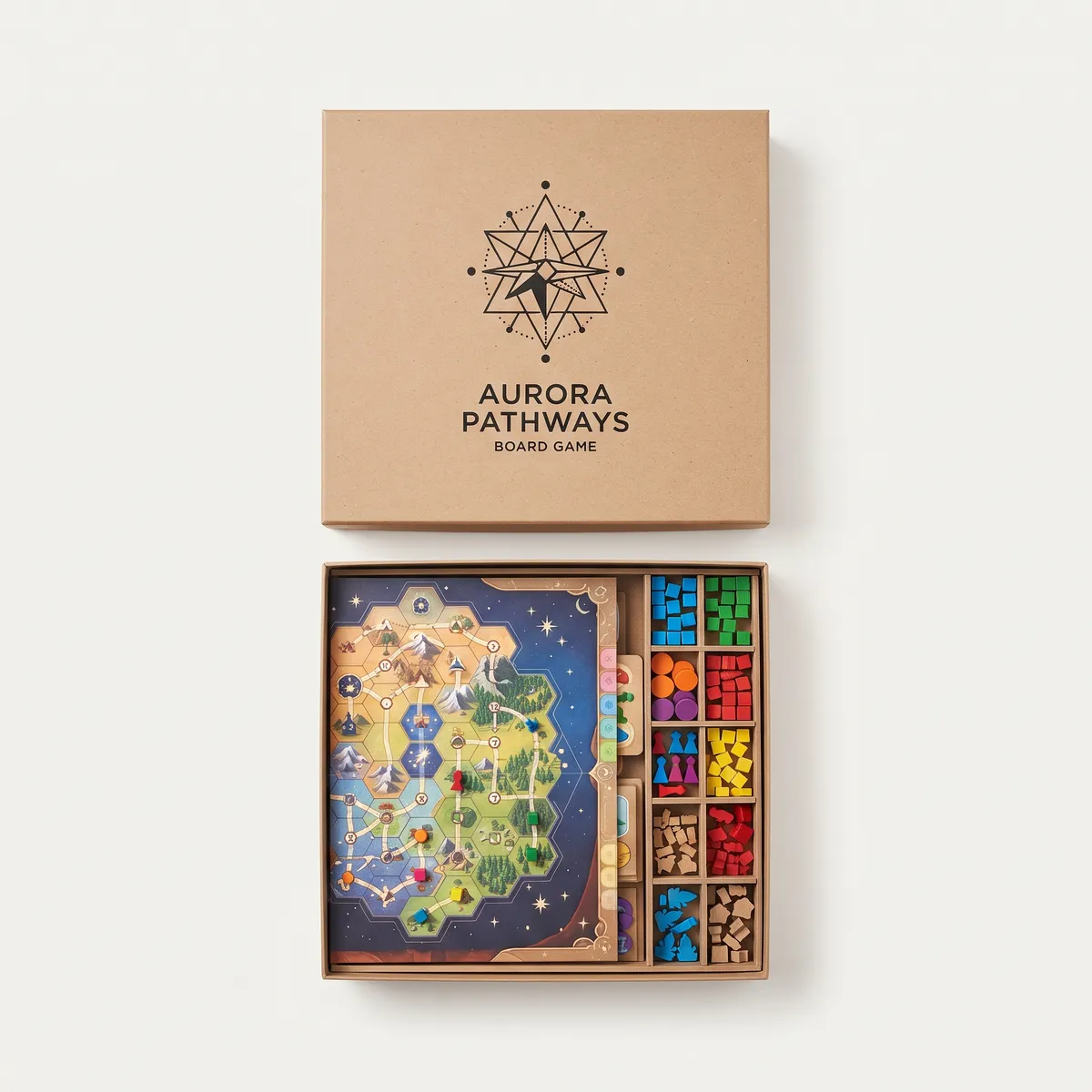
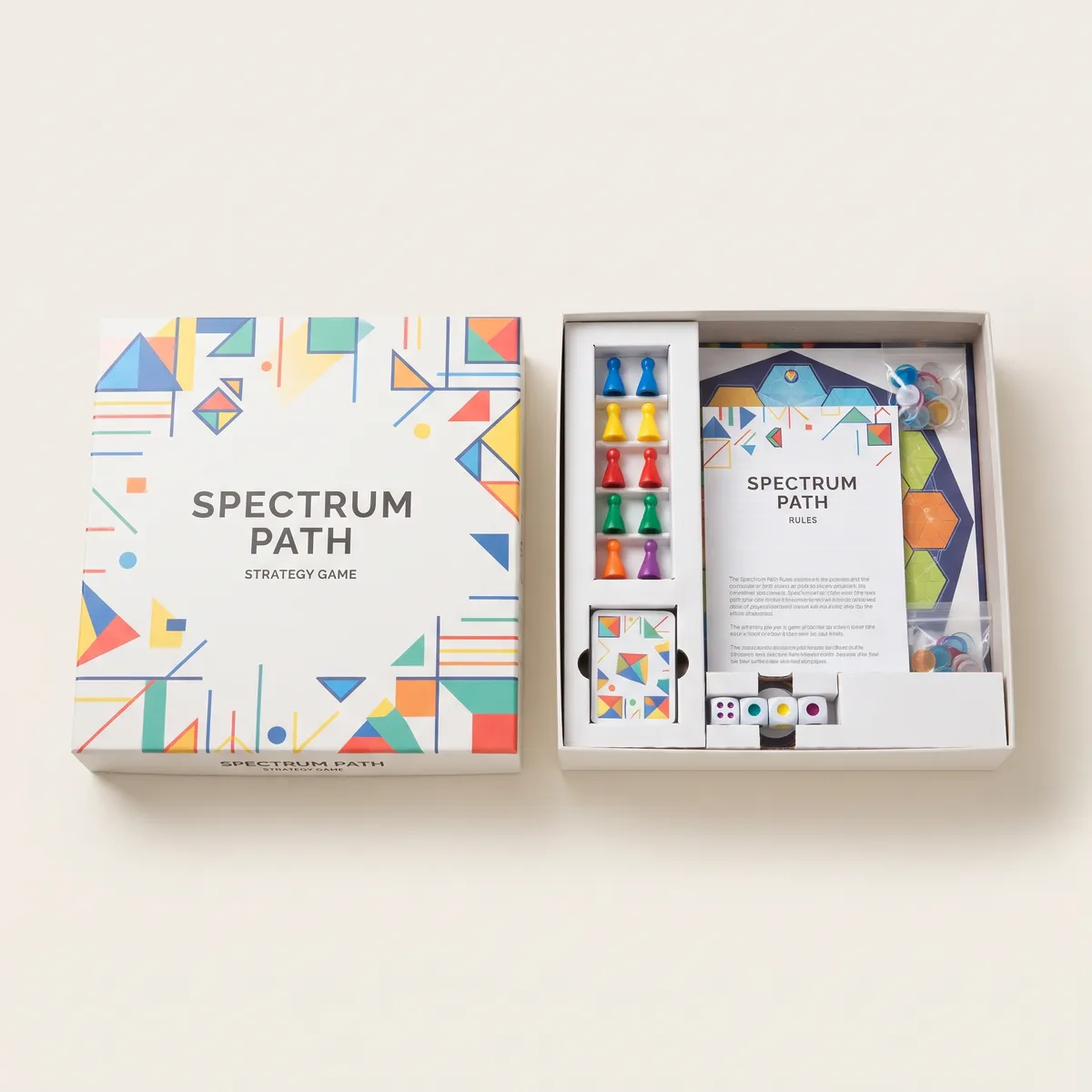
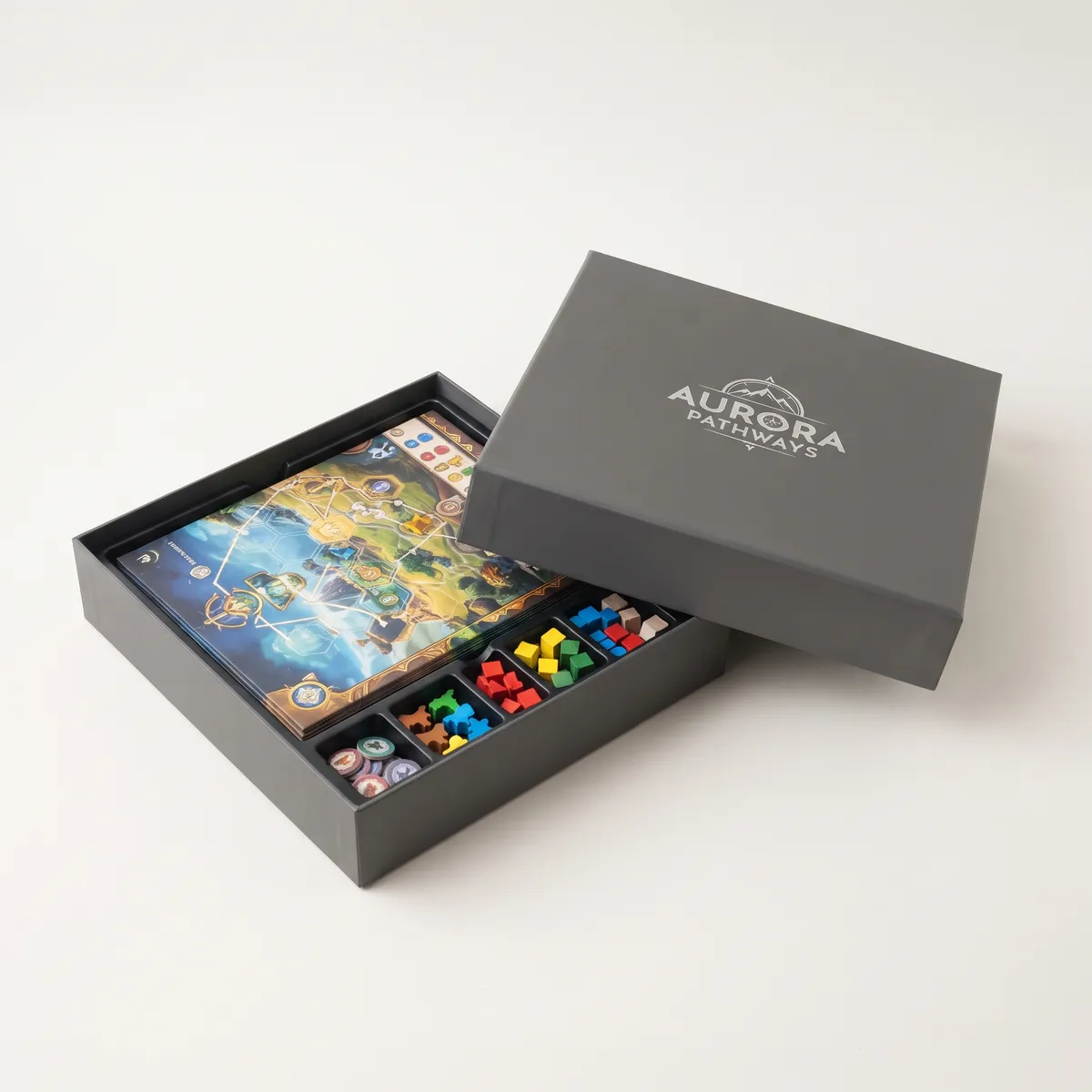
Board game boxes fail most frequently because depth was set to the board alone, leaving bulky components forcing the lid to sit proud. We therefore size the base for board and components with the lid flush, and a component tray stops pieces collapsing into a loose heap. Games are opened and closed for years, so rigid usually earns its 20 business days; folding takes 8–12.
Ours are on Trustpilot, where we can't edit them or choose which ones you see.
Read them on Trustpilot →(opens in a new tab)Four stages, twelve days
Quote confirmed
A specialist checks your spec against the board and comes back with a firm price inside 4 business hours.
Proof approved
You get a flat dieline and a 3D render. Nothing goes to press until you approve it in writing.
On press
Print, die-cut, glue, and fold. You get a press-side photo the day your job runs.
QC and delivery
Every pallet is sampled against the digital proof or physical sample you approved, then shipped with tracking to your dock or 3PL.
If a box doesn't match the digital proof or physical sample you approved, we reprint the run at no charge.
Read the reprint terms →Know exactly what you're ordering.
Board Game Boxes Built to Be Opened for Years
Most packaging is thrown away within minutes. A board game box goes on a shelf for years, gets opened before every game night and holds a board, cards, tokens and rules between plays. That makes it closer to furniture than to packaging, and it is judged on how well it still closes after the hundredth opening. Board game boxes are bought by independent publishers, family game companies, educational game makers and designers funding a first print run. They want a box that stores everything cleanly, survives being stacked under other games and keeps its lid art presentable, because a worn box is what people see when a game is lent, gifted or resold.
Base Depth, Grayboard and Tray Specs for Game Boxes
| Attribute | Board game box |
|---|---|
| Rigid build | 2–3mm grayboard, wrapped in printed paper |
| Folding build | SBS 18–24pt |
| Base depth | Set by the full component load |
| Insert | Component tray cut to the pieces |
| Footprint | Cut to the folded board |
Rigid is the usual build: grayboard that survives years of play, cut, assembled and wrapped in printed paper rather than printed directly. The wrap carries the artwork, so how precisely that printed sheet lands decides how clean the corners and edges look. Folding builds on SBS suit lighter card games and promotional editions. The component tray is designed alongside the base, with wells for each type of piece, and the lid is fitted to lift off with slight resistance rather than slide loose.
Why Games Sit in a Lid and Deep Base
A game is opened from the top, laid out on a table and packed away again in reverse, and one build suits that routine better than any other. A deep base under a full-face lid lets players lift the lid off, use the base as a tray during setup and put everything back in the order it came out. The lid also gives the artwork one large, unbroken face, which is what sells a game on a shelf. Tuck cartons and sleeves do work for small card games at a lower price, but they wear at the flaps after repeated use. For a full board game, the two-piece build is worth its extra cost.
Lid Art, Box Edges and Wear on a Game Box
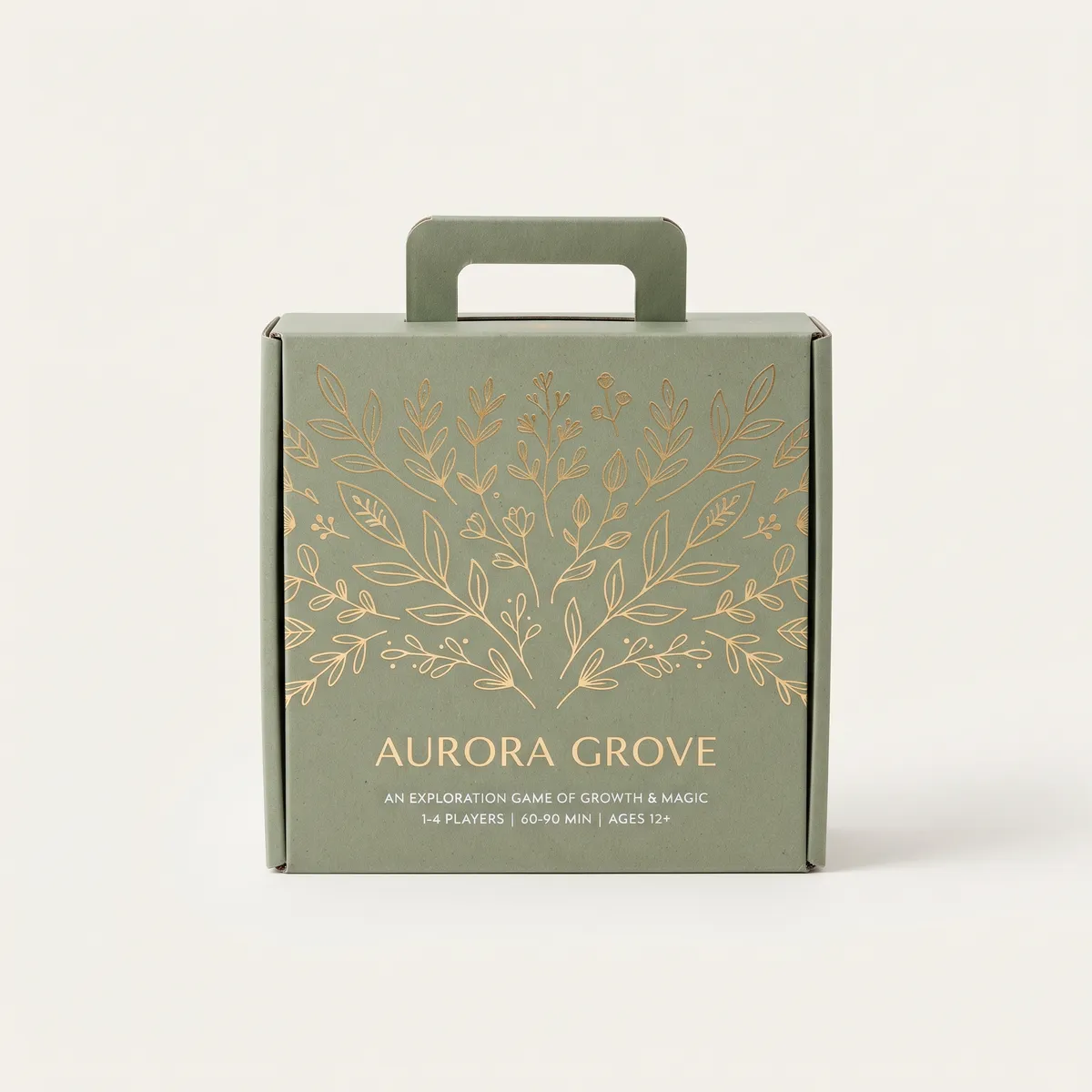
The lid is the game's cover, and on a rigid box it is printed on the wrap before the wrap is applied. That makes wrap registration important: the art should run cleanly over each edge without drifting. Matte lamination suits illustrated lids and shows scuffs less after years of sliding on and off a shelf; gloss suits bright family games. A spot UV or embossed title gives a premium edition a tactile finish that lasts, since embossing needs the caliper a rigid board has. Print the box sides too: games are stored side-out, so that narrow panel is what an owner reads on the shelf. Interior print is optional and rarely worth it.
Board Game Boxes for Indie Publishers, Family Games and Crowdfunded Editions
Independent publishers are the biggest group, often ordering a first run of a few hundred to test a game before scaling up. Family and party game companies need durable everyday boxes for mass retail. Educational publishers use game boxes for classroom sets that pass through many hands each term. Crowdfunded editions are a special case: backers expect deluxe extras, so the box often moves to rigid with a component tray as standard. Premium and anniversary editions sit nearest to collector editions sold at a premium, where a heavier box, a textured wrap and an embossed title are part of what the buyer is paying for.
Scheduling a Game Box Run Against a Release Date
Work back from the release. Rigid game boxes take 20 business days from proof approval, and the proof stage is where the component tray gets checked against the real pieces, so leave time for a round of revisions. Artwork revisions cost nothing however many rounds it takes, and the dieline is built from your board and component dimensions, with internal and external sizes confirmed in writing. If a convention or launch date forces the schedule, rush is possible at an extra cost quoted upfront. Each box passes a three-stage check before dispatch, and a bulk run that misses the approved proof is reprinted at our cost. The minimum is 100 boxes with shipping included, so a small first edition is viable.
One connected process, start to finish.
Structural Design
Dieline drafted to your exact fit and freight tolerances.
Proof & Sample
Sign off on a digital proof, or request a physical sample.
Tooling
Dies and plates are cut for your job and archived on file.
Production
Print, die-cut, and assembly run under in-line quality checks.
Ship & Reorder
Freight goes out, and the cycle resets for your next run.
Steady process. Powerful results.
Like everything we build, our process is engineered to hold up — no shortcuts, no surprises. Five dependable stages that run the same way every single time, so reorders are just as fast as the first order.
- One dedicated teamFrom first sketch to final freight, the same people carry your order start to finish.
- Dies archived on fileReorders skip tooling and re-setup entirely — we already have your exact spec.
- Checked against your sign-offEvery run is inspected against the digital proof or physical sample you approved.
Set up your file once, correctly
Nine in ten delayed jobs are delayed by artwork, not production. Match these four rules and your proof lands the next morning.
- Bleed1/8 in (3 mm) past every cut line
- Safe ZoneKeep text 1/4 in clear of every crease
- ColourCMYK or named Pantone. No RGB.
- Resolution300 dpi at final size, fonts outlined
No print-ready file?
Send a logo and a rough idea. Our studio builds the production file free with any order over 500 units — you keep the source file either way.
Ask the StudioBackground art must run all the way to the outer bleed edge. Anything inside the white dashed line survives fold tolerance.


What brands say about this box
They live there rather than here, where we can't edit them, delete them, or pick which ones you get to see. That is exactly what makes them worth reading.
Read all reviews on Trustpilot(opens in a new tab)Answers before you have to ask.
How deep does a board game box need to be?
Deep enough for the board plus all components with the lid sitting flush. Most board game boxes fail because the depth was set to the board alone and the components force the lid to sit proud.
Can board game boxes hold component trays?
Yes, and most should. A game without a tray becomes a loose heap of components, which is the most common complaint in the category and a frequent cause of returns.
Do board game boxes need to be rigid?
Usually. A game box is opened and closed repeatedly over years and holds real component weight, which folding cartons don't handle well. Rigid takes 20 business days rather than 8–12.
How long do board game boxes take?
Rigid game boxes take 20 business days from proof approval; folding builds run 8–12. Rush is available on both at a quoted premium, shipping included.
What's the minimum on board game boxes?
100 boxes across rigid and folding builds. Allow 20 business days for rigid. Free samples come with orders above 10,000 units if you want to check the component fit.