
Headphone Boxes
Headphone boxes keep cables in a separate compartment, because cables left with the headphones scratch the cups and tangle around the headband. Static-sensitive products can get ESD-safe liners and inserts when you tell us the product needs them. Premium over-ear models usually justify rigid at 20 business days; earbuds suit a folding carton with a well-fitted tray at 8–12.
Ours are on Trustpilot, where we can't edit them or choose which ones you see.
Read them on Trustpilot →(opens in a new tab)Four stages, twelve days
Quote confirmed
A specialist checks your spec against the board and comes back with a firm price inside 4 business hours.
Proof approved
You get a flat dieline and a 3D render. Nothing goes to press until you approve it in writing.
On press
Print, die-cut, glue, and fold. You get a press-side photo the day your job runs.
QC and delivery
Every pallet is sampled against the digital proof or physical sample you approved, then shipped with tracking to your dock or 3PL.
If a box doesn't match the digital proof or physical sample you approved, we reprint the run at no charge.
Read the reprint terms →Know exactly what you're ordering.
Headphone Packaging Split Between Cans and Cables
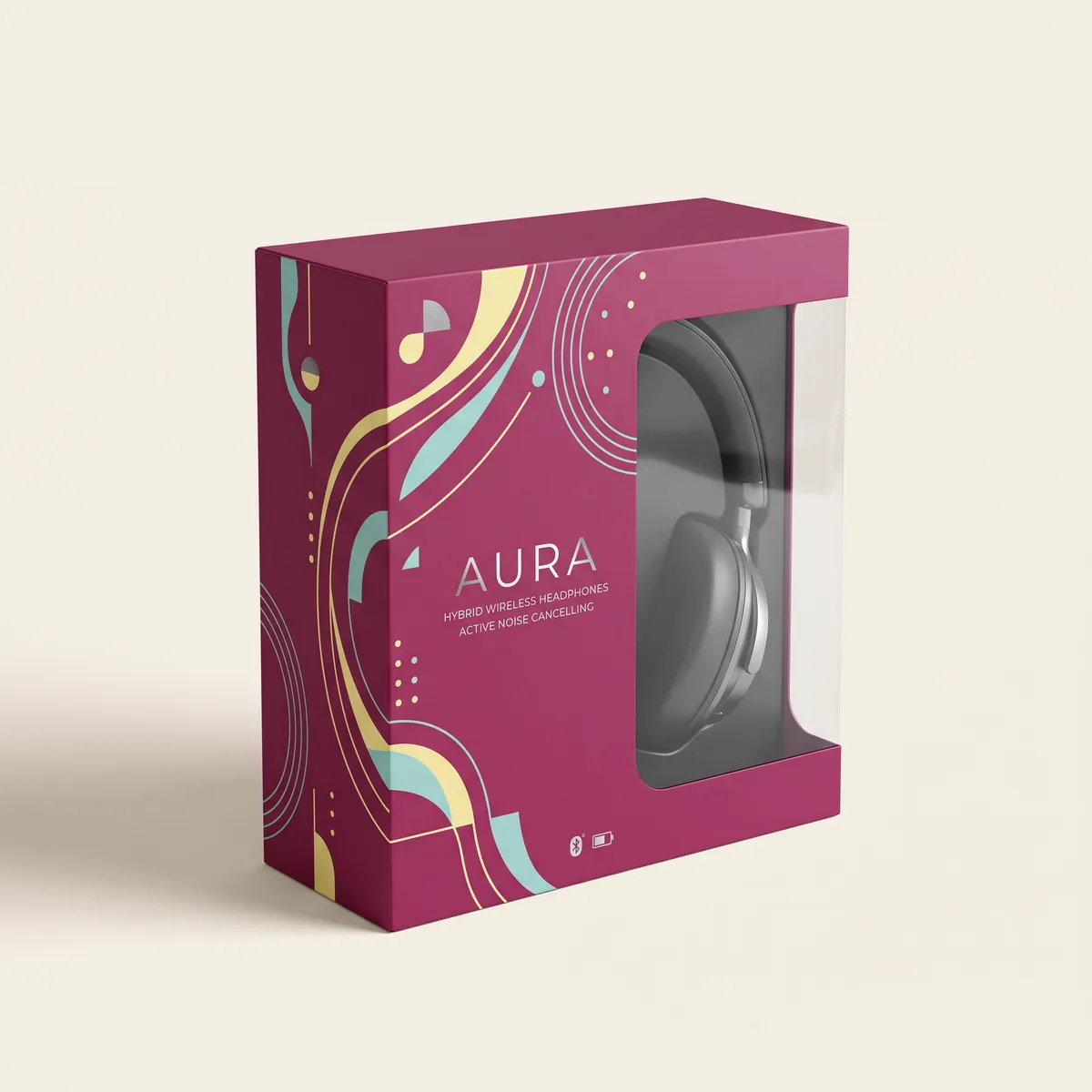
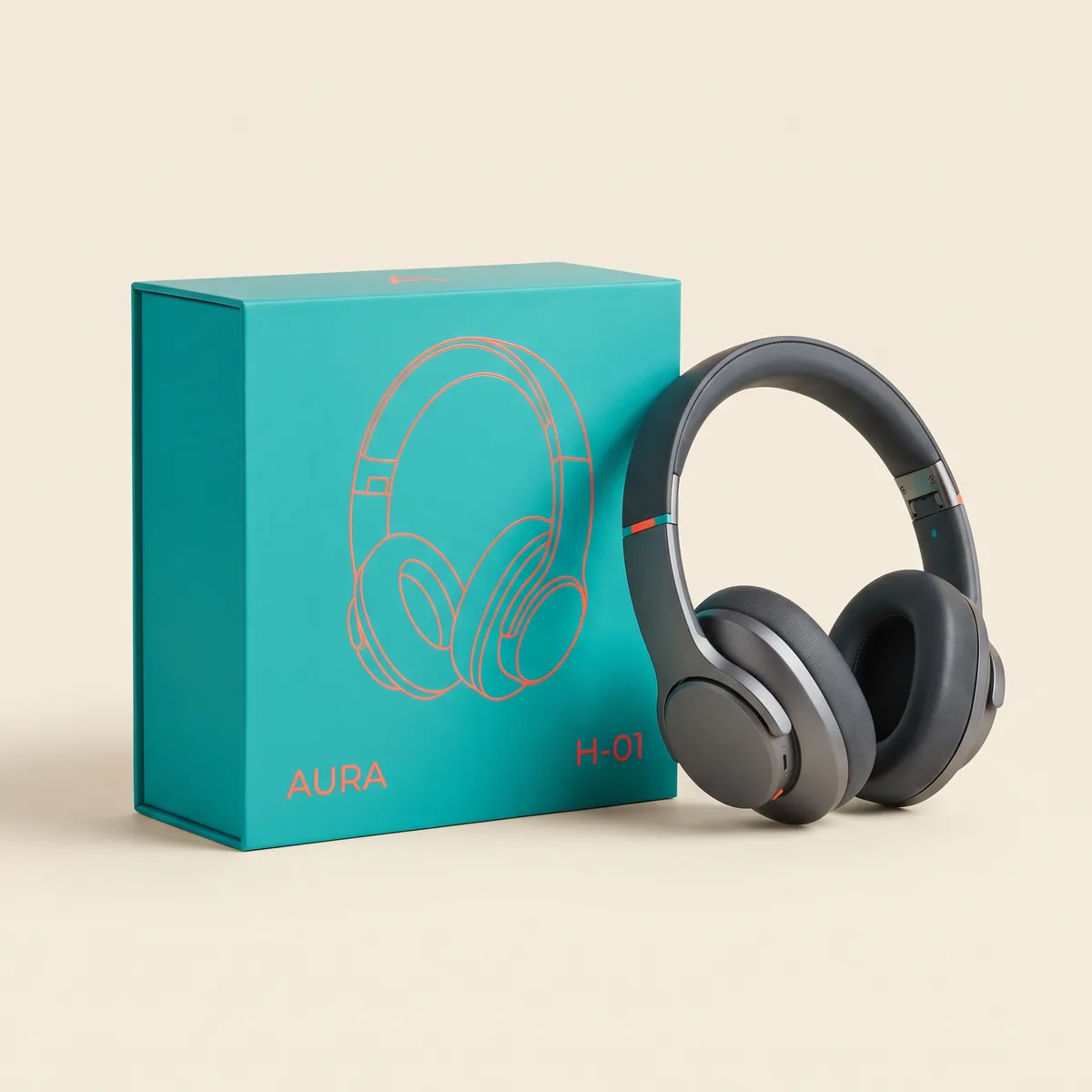
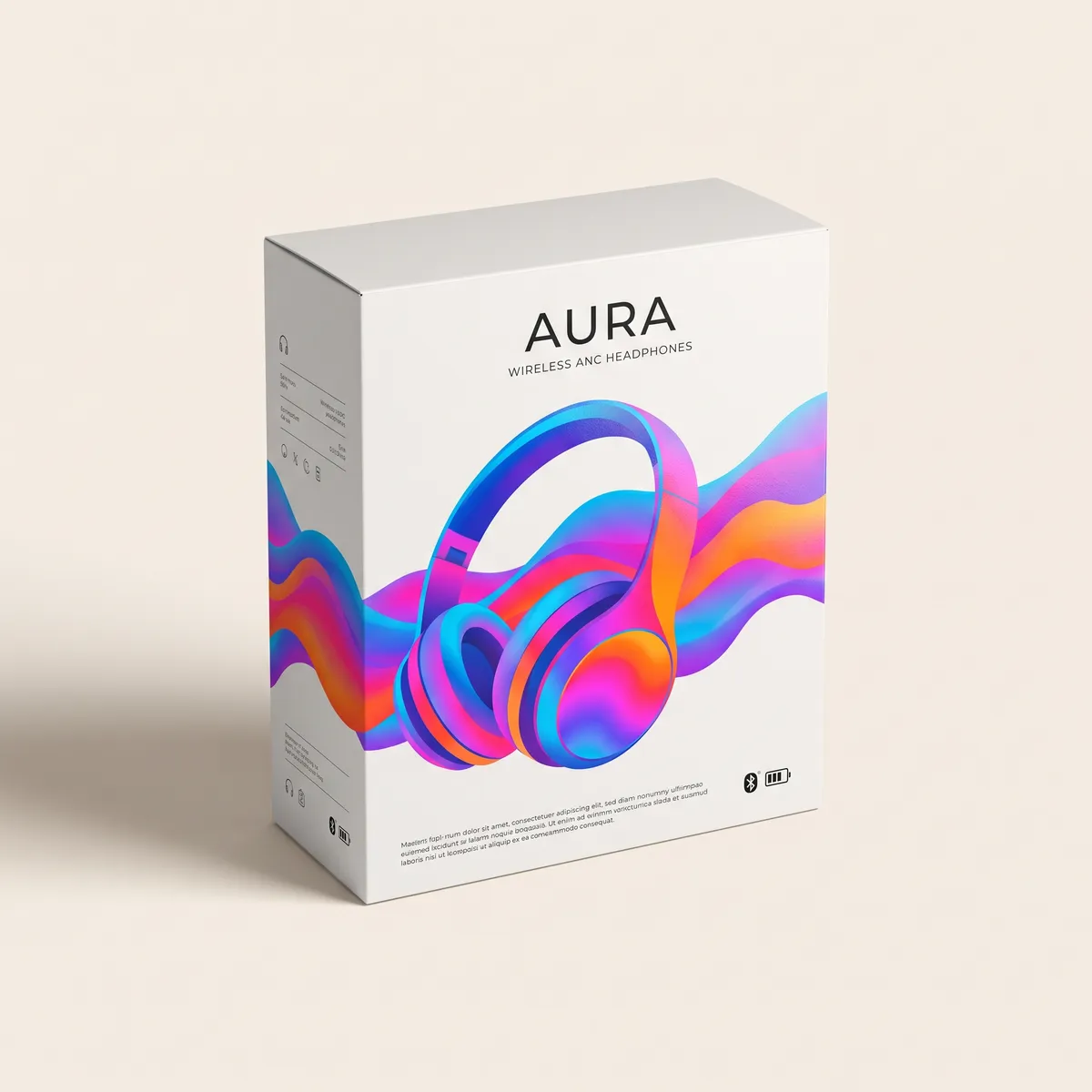
Few devices are as awkward to box as a pair of headphones. The band curves, the cups swivel or fold flat, and the set comes with a cable, an adapter and sometimes a travel pouch, none of which share a shape. A box that treats all of that as one load lets the parts shift against each other in transit. These boxes give the headphones and each extra their own space in a single layout. The buyers are audio brands selling over-ear models, earbud makers with charging cases, and gaming headset brands, often with all three in one lineup. Each needs a different build, and the right one depends mostly on the price of what's inside.
Rigid, Corrugated and Tray Specs for Headphones
Over-ear models usually sit in a grayboard outer for over-ear sets, with corrugated or folding builds for earbuds and volume ranges.
| Spec | Headphone boxes |
|---|---|
| Rigid outer | Grayboard, 2–3mm, wrapped |
| Corrugated outer | B-flute, or BC double-wall for heavier sets |
| Tray | Cavities for cups, band and accessories |
| Tolerance | Around ±1mm on the box, tighter on the cavity |
| ESD-safe | Liner or insert, when specified |
| Size | Built from your product dimensions |
The cavity tolerance is the number to watch. A cup that can move a few millimeters inside its recess rubs against the tray every time the box is carried.
Why Over-Ear Headphones Suit a Lid and Cavity Tray
An over-ear set is large, light for its size and expensive, and the box is often the first thing a buyer handles after paying. A lid lifting off a cavity tray shows the whole set at once, laid out in its recesses, with the accessories in their own compartment beside it. The lid comes away cleanly, so nothing is pulled out of place as the box opens. A rigid case adds the weight and steady opening that a high price leads the buyer to expect. That reasoning stops at earbuds: they are small, sold in volume and often bought as replacements, so a folding carton with a well-cut tray protects them just as well for far less.
Soft-Touch, Spot UV and the Tray Reveal
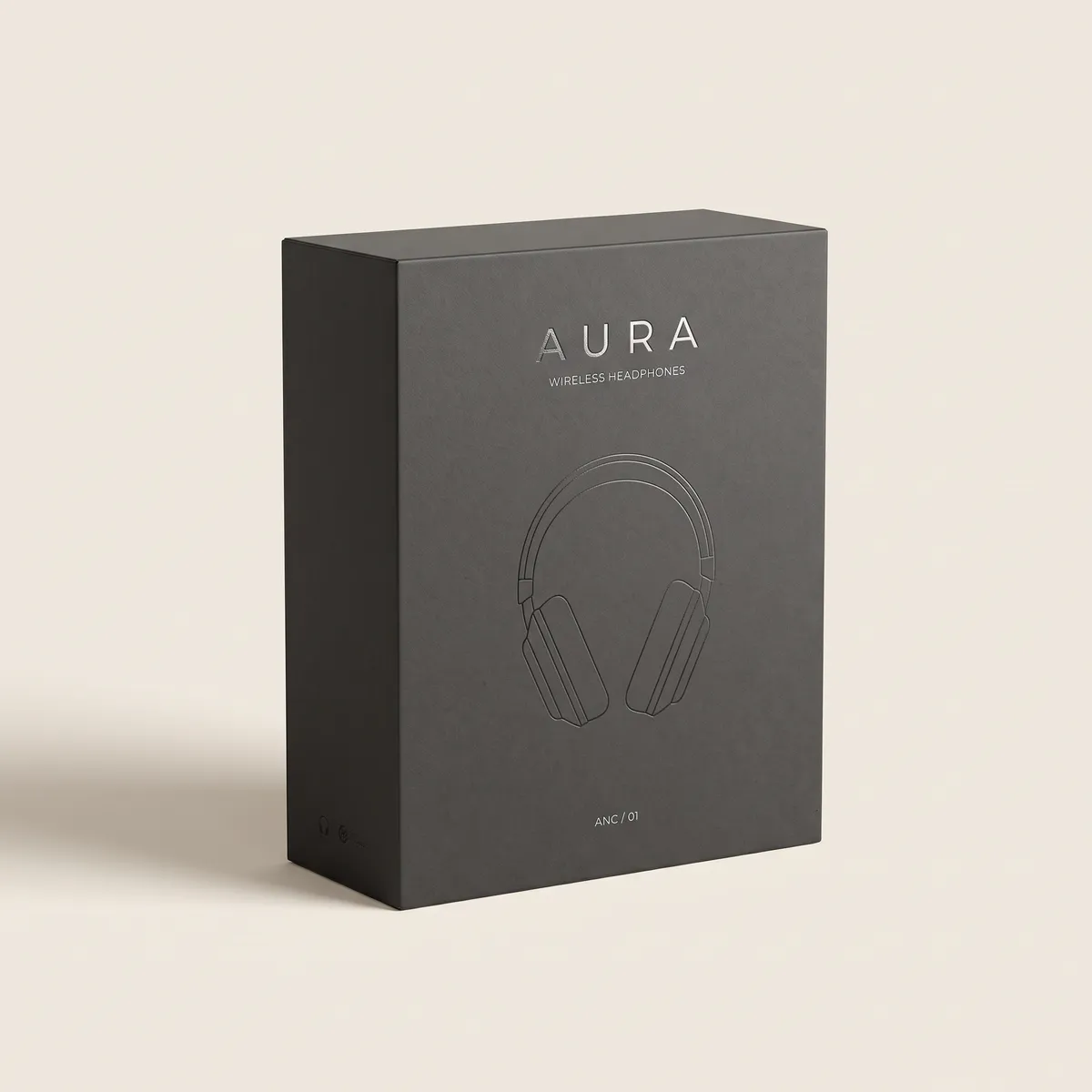
Audio packaging follows the products it holds: dark, matte and quiet. Soft-touch lamination with a spot UV logo is the usual pairing on the lid, and a debossed mark works where the brand wants no gloss at all. The part buyers remember is often inside, so a printed tray surface or a message inside the lid usually earns more than extra decoration outside. Two cautions apply. Soft-touch marks easily, so a box that ships direct needs an anti-scuff film or an outer carton. And where an ESD-safe liner is specified, settle it before choosing coatings, since it can rule out some materials near the components. Skip foil on the tray; it sits under the product and mostly goes unseen.
Headphone Boxes for Over-Ear Sets, Earbuds and Gaming Headsets
Over-ear and studio headphones are the main use for the rigid build, often sold at prices where premium audio presentation is part of what the buyer pays for. Earbuds come next, usually in a folding carton with a tray holding the charging case and a small pocket for spare tips. Gaming headsets sit between the two: bulky like over-ear models, but often sold through retail chains where a corrugated or folding outer stacks better on the shelf. Brands also use these boxes for limited editions and bundles, such as a headset packed with a stand or a second cable. Where a model has static-sensitive electronics, the ESD-safe insert is specified at the start rather than added later.
Ordering Headphone Boxes With Tray Rounds Planned
Tray layouts for headphones rarely land on the first draft, because the cups, band and accessories all have to fit one footprint. Allow time for that before the production clock starts. Design help is unlimited and free, and each round adjusts the cavities against your actual dimensions, confirmed in writing as internal or external. Rigid builds then take 20 business days from proof approval, and rush is available at an extra cost quoted upfront. Orders start at 100 boxes, with free samples on orders above 10,000 so you can see a set in its tray before the full run. If bulk misses the approved proof, we reprint at our cost, and shipping is included either way.
One connected process, start to finish.
Structural Design
Dieline drafted to your exact fit and freight tolerances.
Proof & Sample
Sign off on a digital proof, or request a physical sample.
Tooling
Dies and plates are cut for your job and archived on file.
Production
Print, die-cut, and assembly run under in-line quality checks.
Ship & Reorder
Freight goes out, and the cycle resets for your next run.
Steady process. Powerful results.
Like everything we build, our process is engineered to hold up — no shortcuts, no surprises. Five dependable stages that run the same way every single time, so reorders are just as fast as the first order.
- One dedicated teamFrom first sketch to final freight, the same people carry your order start to finish.
- Dies archived on fileReorders skip tooling and re-setup entirely — we already have your exact spec.
- Checked against your sign-offEvery run is inspected against the digital proof or physical sample you approved.
Set up your file once, correctly
Nine in ten delayed jobs are delayed by artwork, not production. Match these four rules and your proof lands the next morning.
- Bleed1/8 in (3 mm) past every cut line
- Safe ZoneKeep text 1/4 in clear of every crease
- ColourCMYK or named Pantone. No RGB.
- Resolution300 dpi at final size, fonts outlined
No print-ready file?
Send a logo and a rough idea. Our studio builds the production file free with any order over 500 units — you keep the source file either way.
Ask the StudioBackground art must run all the way to the outer bleed edge. Anything inside the white dashed line survives fold tolerance.
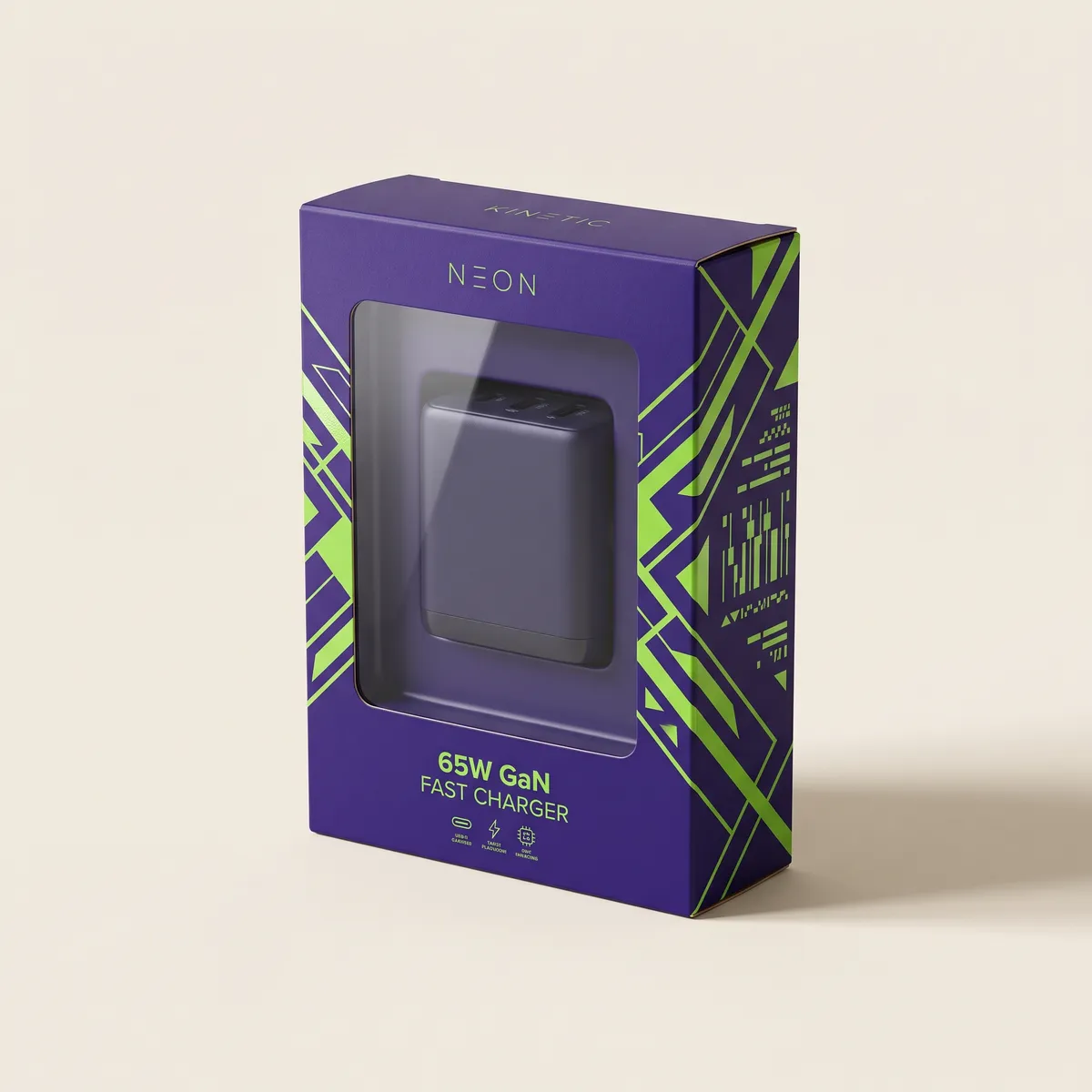
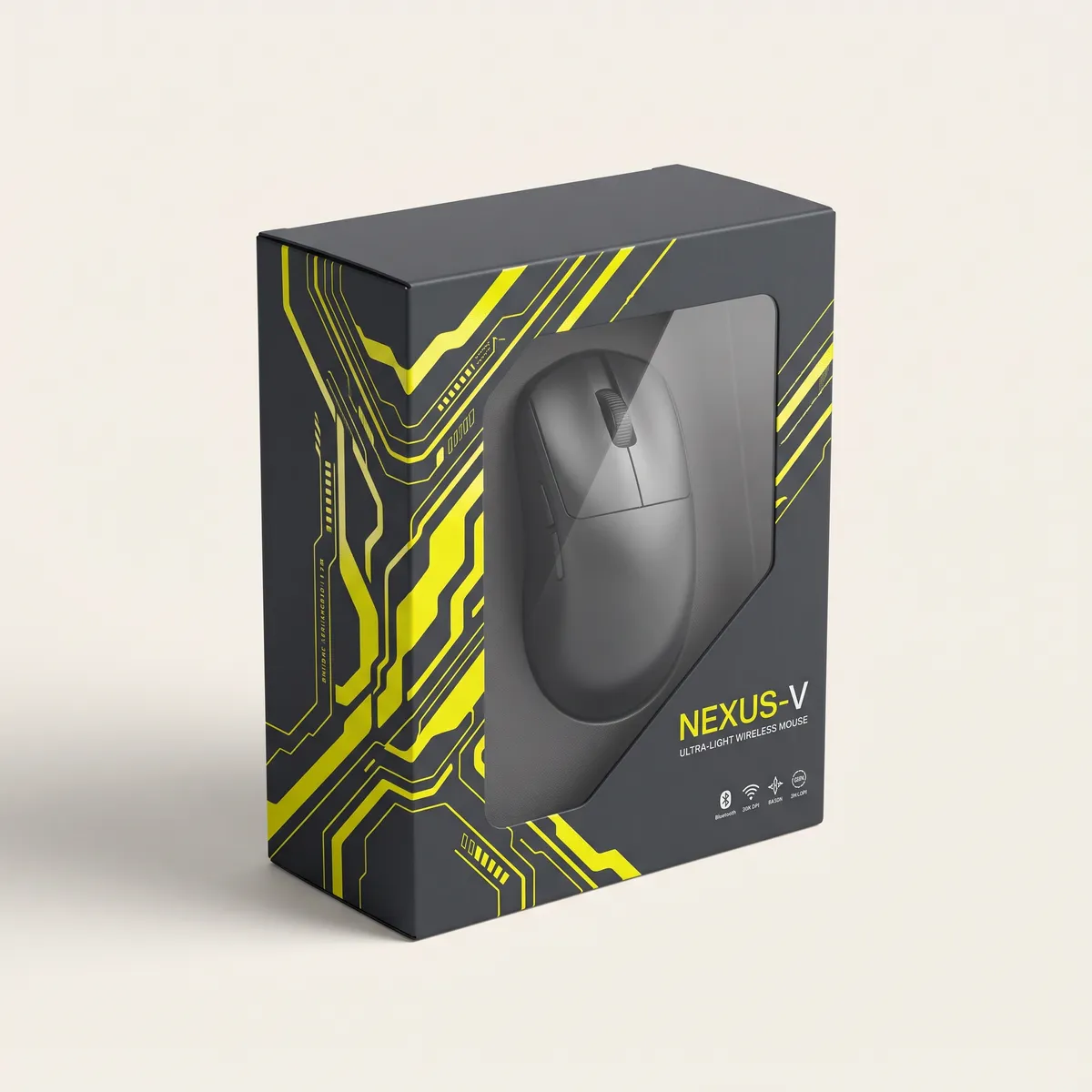
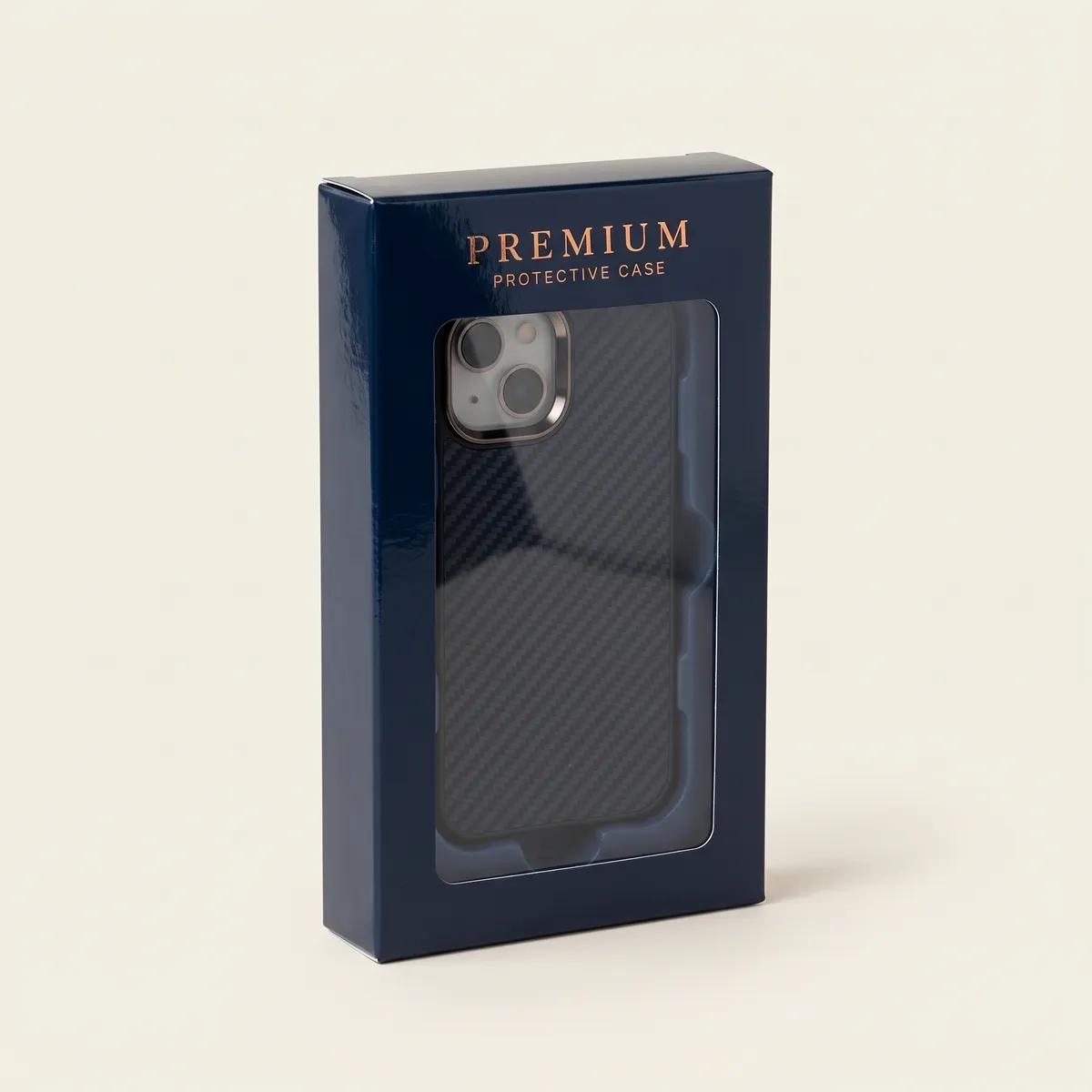
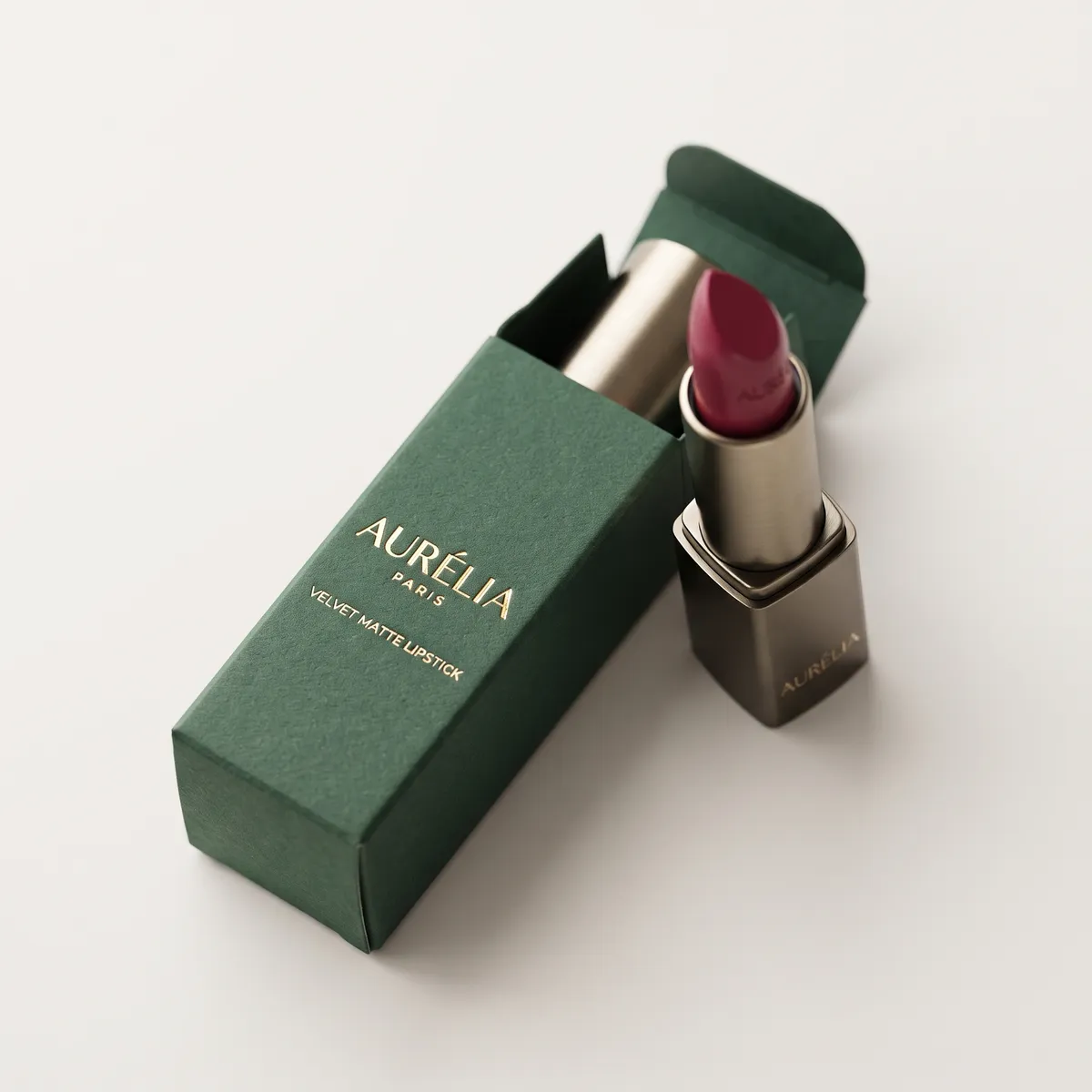

What brands say about this box
They live there rather than here, where we can't edit them, delete them, or pick which ones you get to see. That is exactly what makes them worth reading.
Read all reviews on Trustpilot(opens in a new tab)Answers before you have to ask.
How do headphone boxes hold cables separately?
With a divided tray or a separate compartment. Cables left with the headphones scratch the cups and tangle around the headband, so separation matters as much for appearance as for protection.
Can headphone boxes be ESD-safe?
Yes, if specified. ESD-safe liners and inserts are available for sensitive components. Tell us whether the product is static-sensitive and we'll spec the insert material accordingly.
Do headphone boxes need to be rigid?
For premium over-ear models, usually — the weight and the controlled open match the price. For earbuds and volume ranges, a folding carton with a good tray does the job at far lower cost.
What's the turnaround on headphone boxes?
Folding builds take about 8–12 business days from proof approval, tray included; rigid takes 20. Rush is available on both at a stated premium.
What's the minimum on headphone boxes?
100 boxes across rigid and folding builds. Design help is unlimited and free, which is worth using since tray layouts for cables and accessories usually take a round or two.