
Charger Boxes
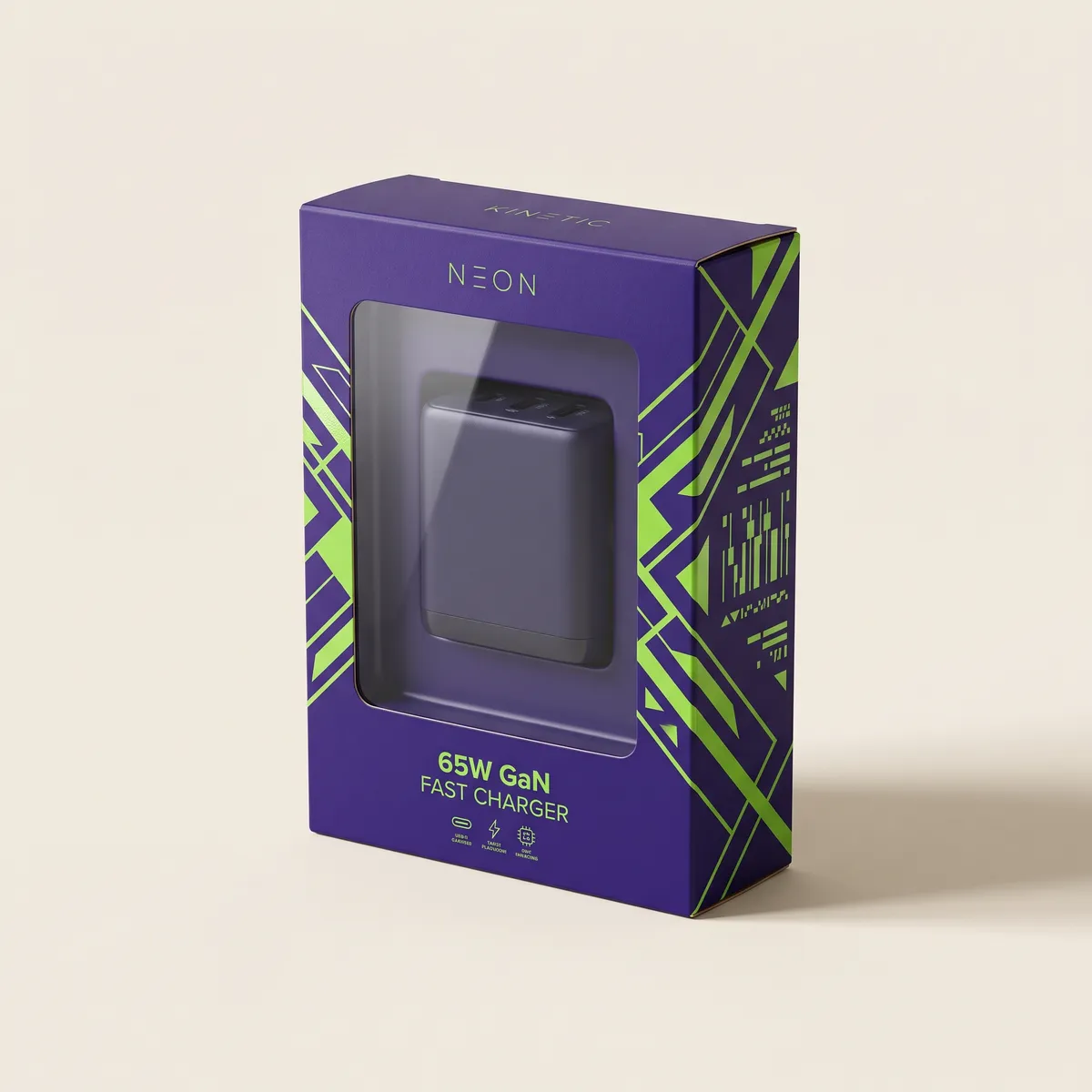
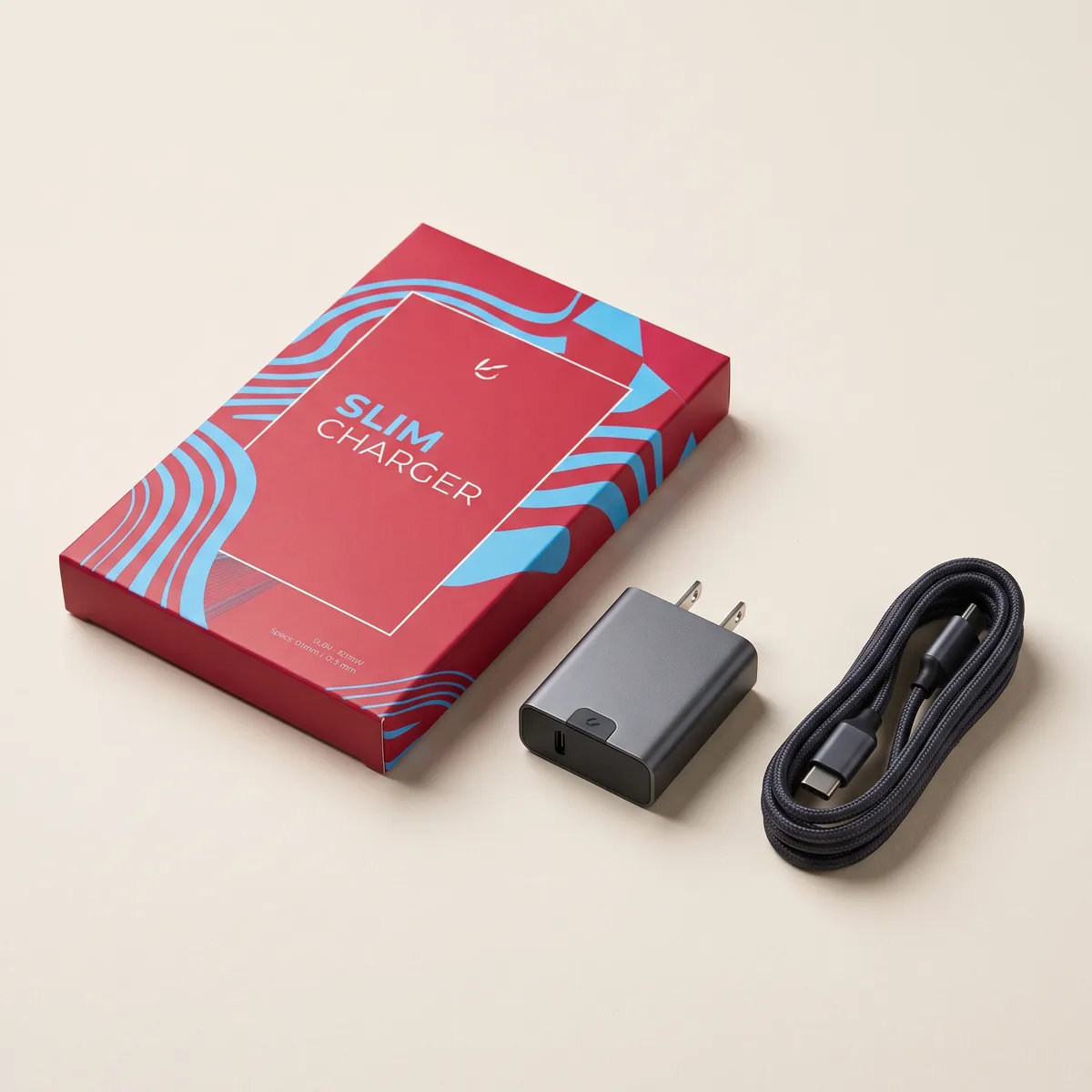
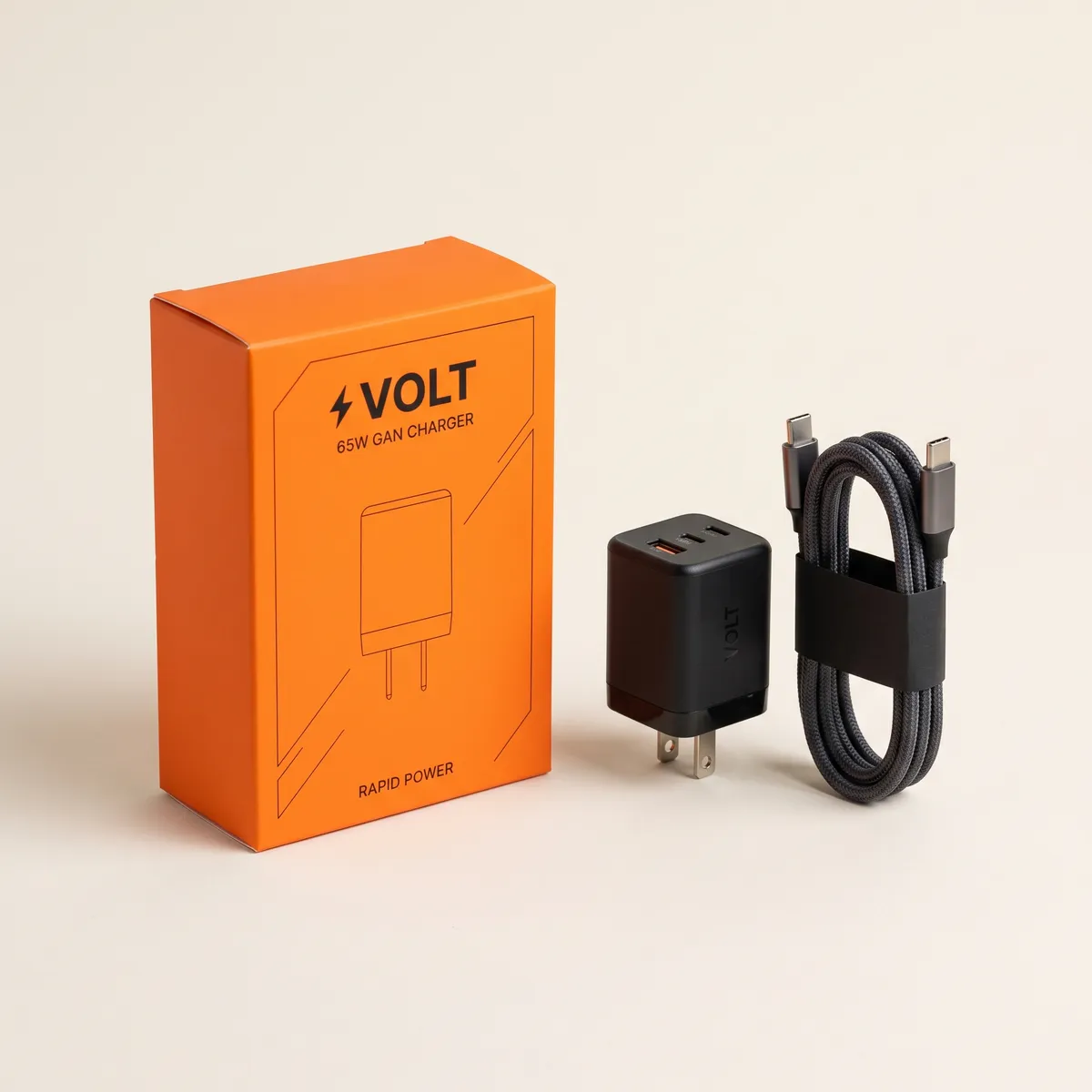
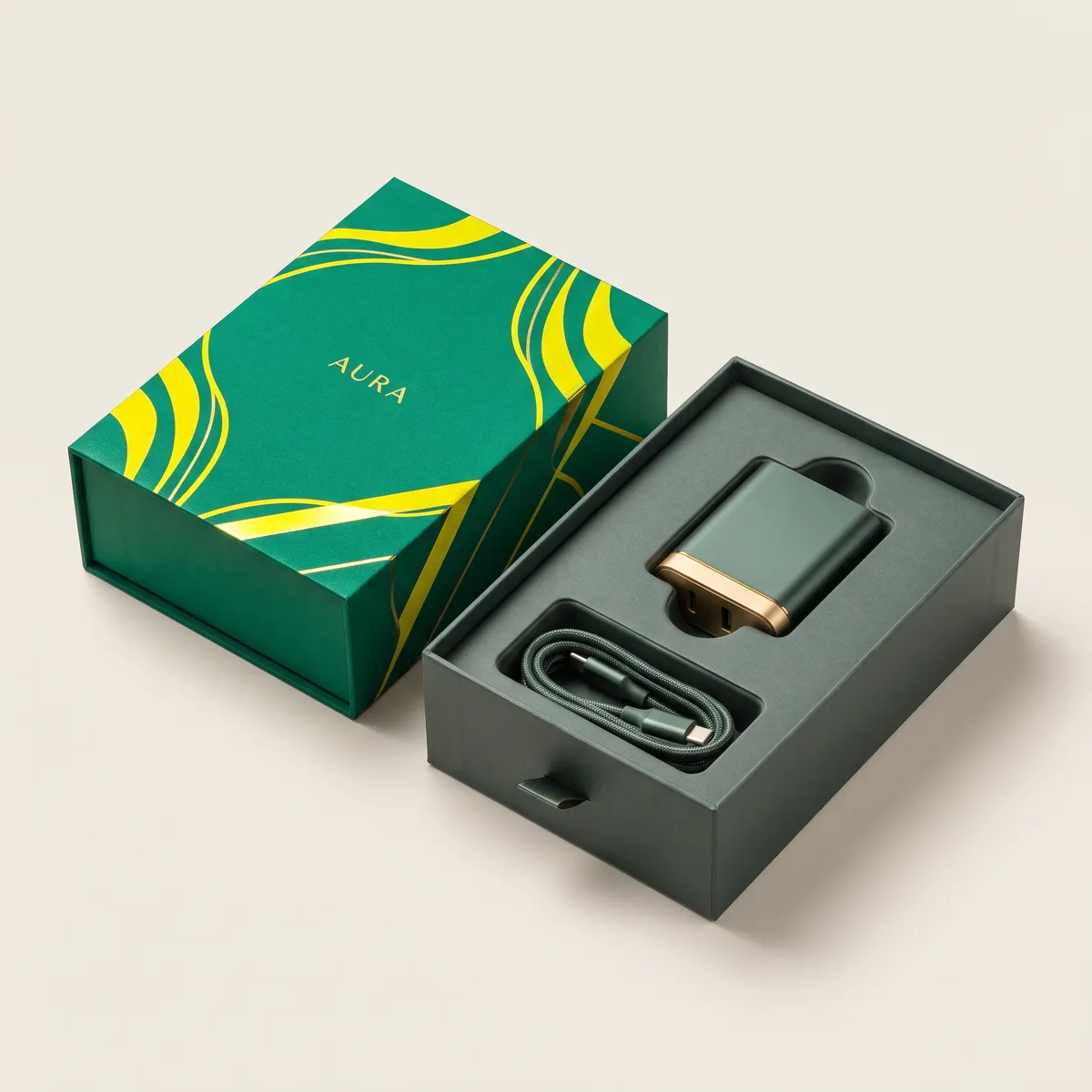
Charger boxes give the plug a cut cavity and the cable a separate coiling channel, because a loose cable tangles around the plug and the box opens onto a knot of wire. Chargers are dense for their size, so an unsecured one rattles around, damaging the carton from the inside. International kits get a dedicated cavity per plug head, and each plug type orders separately.
Ours are on Trustpilot, where we can't edit them or choose which ones you see.
Read them on Trustpilot →(opens in a new tab)Four stages, twelve days
Quote confirmed
A specialist checks your spec against the board and comes back with a firm price inside 4 business hours.
Proof approved
You get a flat dieline and a 3D render. Nothing goes to press until you approve it in writing.
On press
Print, die-cut, glue, and fold. You get a press-side photo the day your job runs.
QC and delivery
Every pallet is sampled against the digital proof or physical sample you approved, then shipped with tracking to your dock or 3PL.
If a box doesn't match the digital proof or physical sample you approved, we reprint the run at no charge.
Read the reprint terms →Know exactly what you're ordering.
Charger Packaging for Retail Shelves and Device Kits
Chargers reach buyers two ways: on their own from a retail shelf, or as one part of a device kit. Either way the box has the same job, holding a compact block and a coil of cable so they arrive in the order they were packed. The buyers are accessory brands selling replacement and fast chargers, device makers packing a charger alongside a product, and travel brands with multi-plug kits. Most carry several versions, by output, by connector or by plug type, and each version needs its own fit inside a shared outer design. Volumes are usually high, so the box is specified to be quick to pack and consistent from one run to the next.
Plug Cavity, Cable Channel and Carton Specs
Charger trays are commonly cut from dense chipboard for plug cavities, which holds its shape under a heavy plug.
| Spec | Charger boxes |
|---|---|
| Tray | Chipboard, die-cut |
| Plug cavity | Cut to the plug body and prongs |
| Cable channel | Separate recess for the coiled cable |
| Tolerance | Around ±1mm on the box, tighter on the cavity |
| Outer | Printed folding carton |
| Multi-plug kits | One cavity per plug head |
Measure the prongs separately from the plug body, along with the cable's coiled diameter, and the cavity is cut to all three. That keeps the plug seated on its body rather than resting on its pins.
Why a Cavity Tray Beats Loose Packing for Chargers
There are three common ways to hold a charger: a poly bag inside a plain carton, a foam insert, or a die-cut board tray. The bag is cheapest but lets the plug move freely, and a heavy plug moving inside a light carton is how corners get dented. Foam holds well but adds a second material for the buyer to separate and throw away. A plug-and-cable cavity tray holds the plug about as firmly as foam, gives the cable its own recess, and goes into recycling with the carton. It also speeds packing, since each part has one obvious place. For a bare cable sold with no plug, a simple card wrap is enough and a tray isn't worth paying for.
Printing Plug Type and Output on a Small Carton
On a charger box, the details buyers check are technical: plug type, connector, output and which devices it suits. Those belong on a clear spec panel, set in a size people can read without opening the box, and repeated on the end panel if the box sits spine-out on a shelf. Full-color print carries the brand on the front, and a matte finish with a single spot UV mark suits most accessory ranges. Where a range runs by plug type, keep one design and change only the plug icon and spec text between versions, so the shelf reads as one family. Any required marks or safety wording come from you; we place them exactly where you specify.
Charger Boxes for Travel Kits, Device Bundles and Toy Ranges
Travel adapters and international chargers are a natural fit, with each plug head in its own cavity so the kit stays complete. Device makers use small charger boxes inside a larger product package, where a separate box keeps the charger from scratching the device it ships with. Replacement chargers sold alone go in a shelf carton or one with a hanging tab. Battery-powered products outside electronics need the same thing, including toys that ship with a charger, where a boxed charger stops a heavy plug knocking against painted parts. Accessory brands also bundle chargers with cables or power banks, using one tray with a cavity for each item so the bundle opens as a set.
Sending Plug Dimensions Before the Tray Is Cut
The tray is only as accurate as the measurements behind it, so start with the full dimensions: plug body, prongs, coiled cable and any adapter heads. We build the dieline and cavity layout from those and confirm internal versus external measurements in writing. Design help is unlimited and free, which helps when a tray needs a round of adjustment. Orders start at 100 boxes and take 8–12 business days from proof approval, with rush at an extra cost quoted upfront. Shipping is included, and the quote covers dies and setup with no hidden costs. Every run passes a three-stage check, so a cavity that doesn't fit is caught by us before anything is dispatched.
One connected process, start to finish.
Structural Design
Dieline drafted to your exact fit and freight tolerances.
Proof & Sample
Sign off on a digital proof, or request a physical sample.
Tooling
Dies and plates are cut for your job and archived on file.
Production
Print, die-cut, and assembly run under in-line quality checks.
Ship & Reorder
Freight goes out, and the cycle resets for your next run.
Steady process. Powerful results.
Like everything we build, our process is engineered to hold up — no shortcuts, no surprises. Five dependable stages that run the same way every single time, so reorders are just as fast as the first order.
- One dedicated teamFrom first sketch to final freight, the same people carry your order start to finish.
- Dies archived on fileReorders skip tooling and re-setup entirely — we already have your exact spec.
- Checked against your sign-offEvery run is inspected against the digital proof or physical sample you approved.
Set up your file once, correctly
Nine in ten delayed jobs are delayed by artwork, not production. Match these four rules and your proof lands the next morning.
- Bleed1/8 in (3 mm) past every cut line
- Safe ZoneKeep text 1/4 in clear of every crease
- ColourCMYK or named Pantone. No RGB.
- Resolution300 dpi at final size, fonts outlined
No print-ready file?
Send a logo and a rough idea. Our studio builds the production file free with any order over 500 units — you keep the source file either way.
Ask the StudioBackground art must run all the way to the outer bleed edge. Anything inside the white dashed line survives fold tolerance.




What brands say about this box
They live there rather than here, where we can't edit them, delete them, or pick which ones you get to see. That is exactly what makes them worth reading.
Read all reviews on Trustpilot(opens in a new tab)Answers before you have to ask.
How do charger boxes stop cables tangling?
With a cavity cut for the plug and a separate channel or recess for the cable to coil into. A cable left loose tangles around the plug and the box looks disordered when opened.
Can charger boxes hold multiple plug types?
Yes, with a divided insert. International kits with several plug heads are common, and each needs its own cavity or they knock together and mark the housing.
Do charger boxes need protective inserts?
Yes. Chargers are dense and heavy for their size, so a loose one becomes a weight knocking around inside the box. A cavity holds it still and stops it damaging the carton from inside.
How soon can charger boxes ship?
Around 8–12 business days once you approve the proof, cavities included. Rush production is available at an extra cost we'll quote before you commit.
Can charger boxes be ordered per plug type?
Yes, and it's the sensible approach. Each plug type needs its own cavity dimensions, so running them together shares setup while giving each a properly fitted insert.