
Window Cookie Boxes
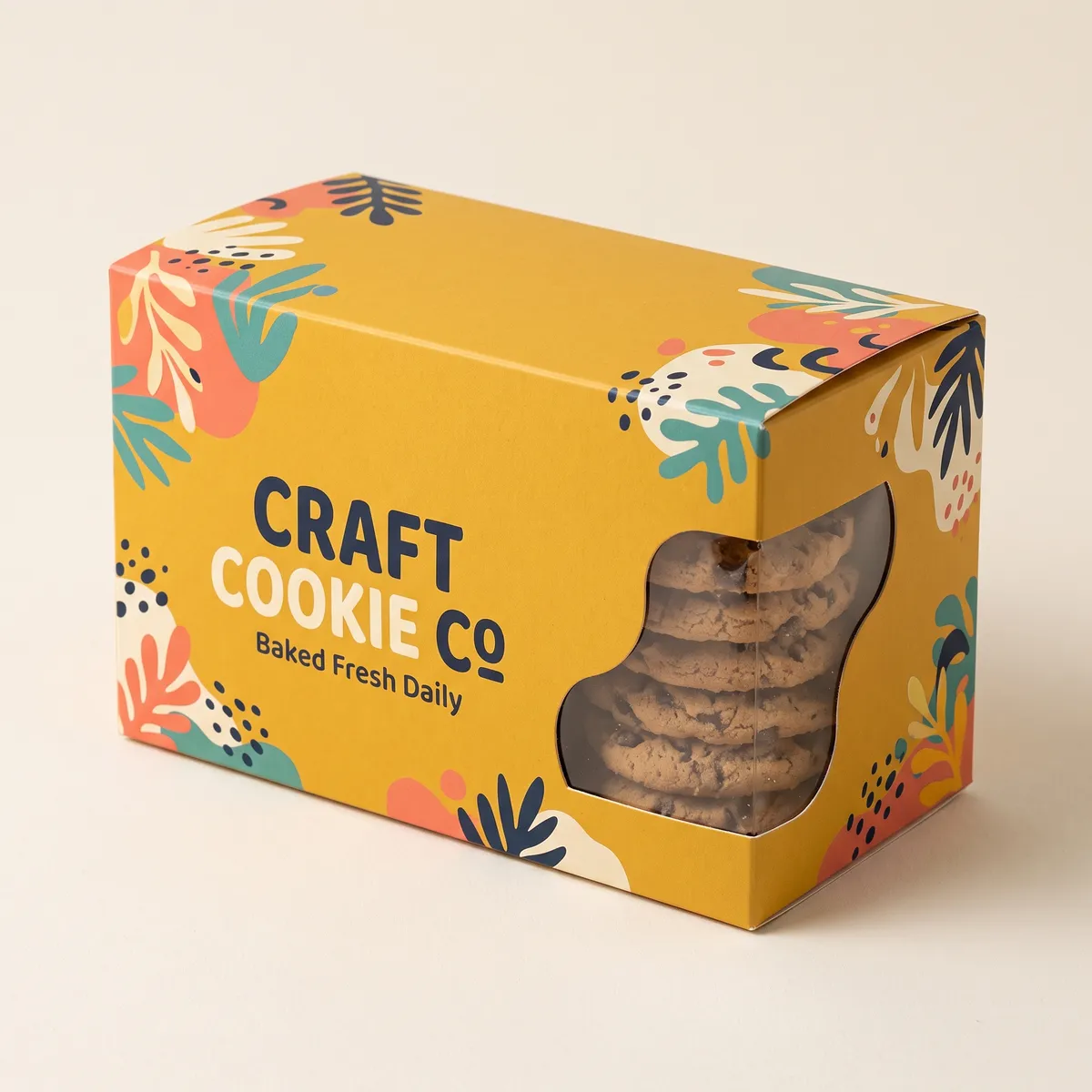
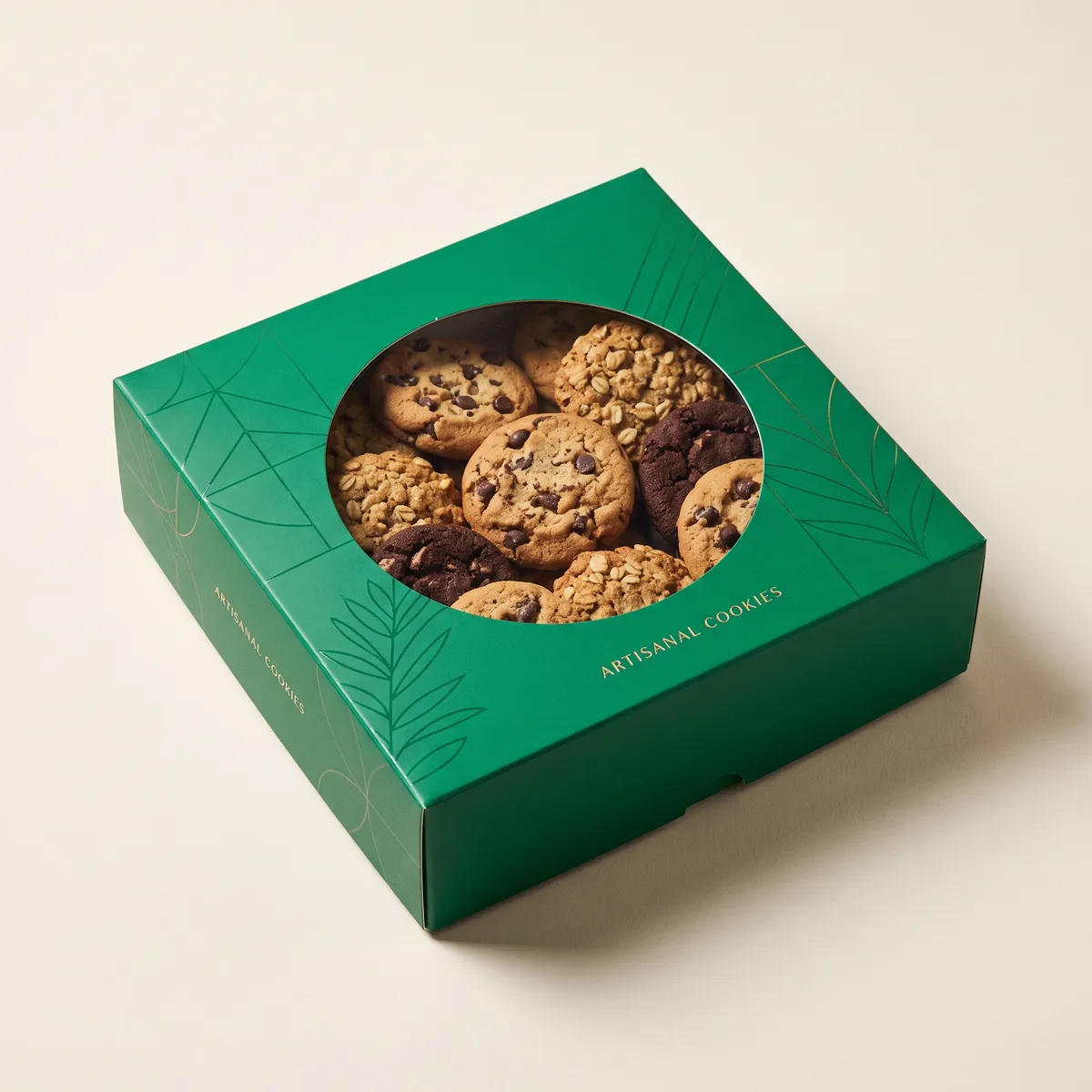
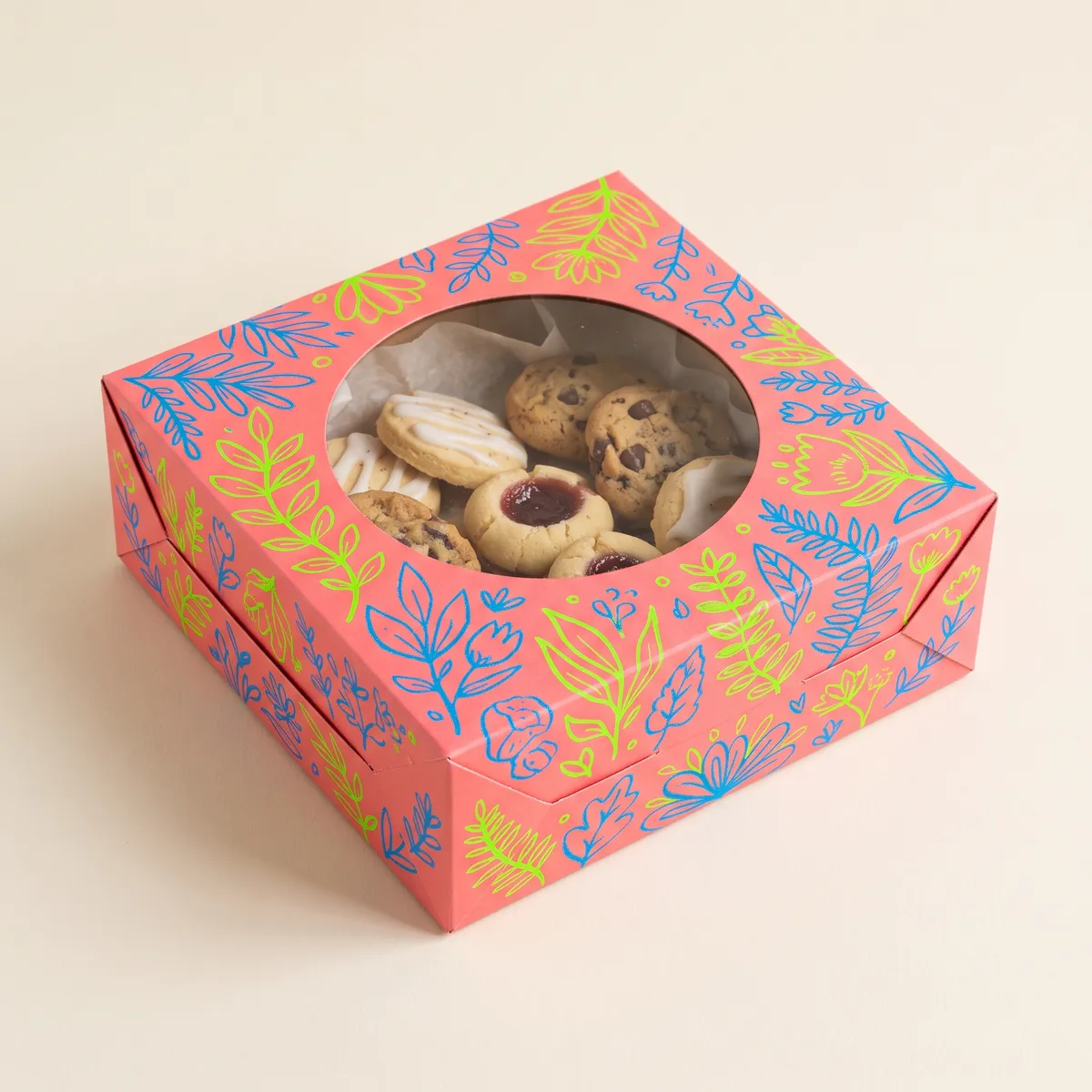
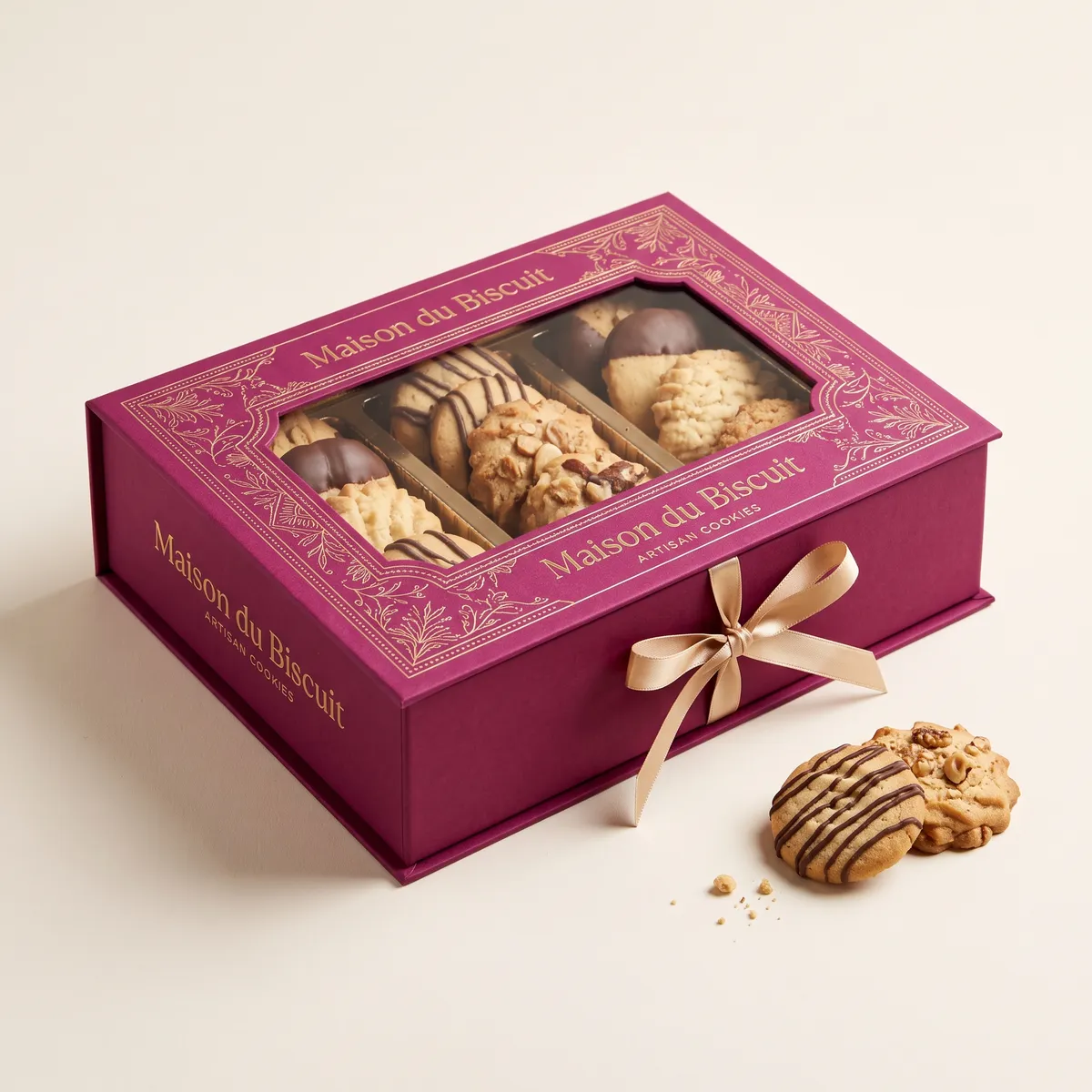
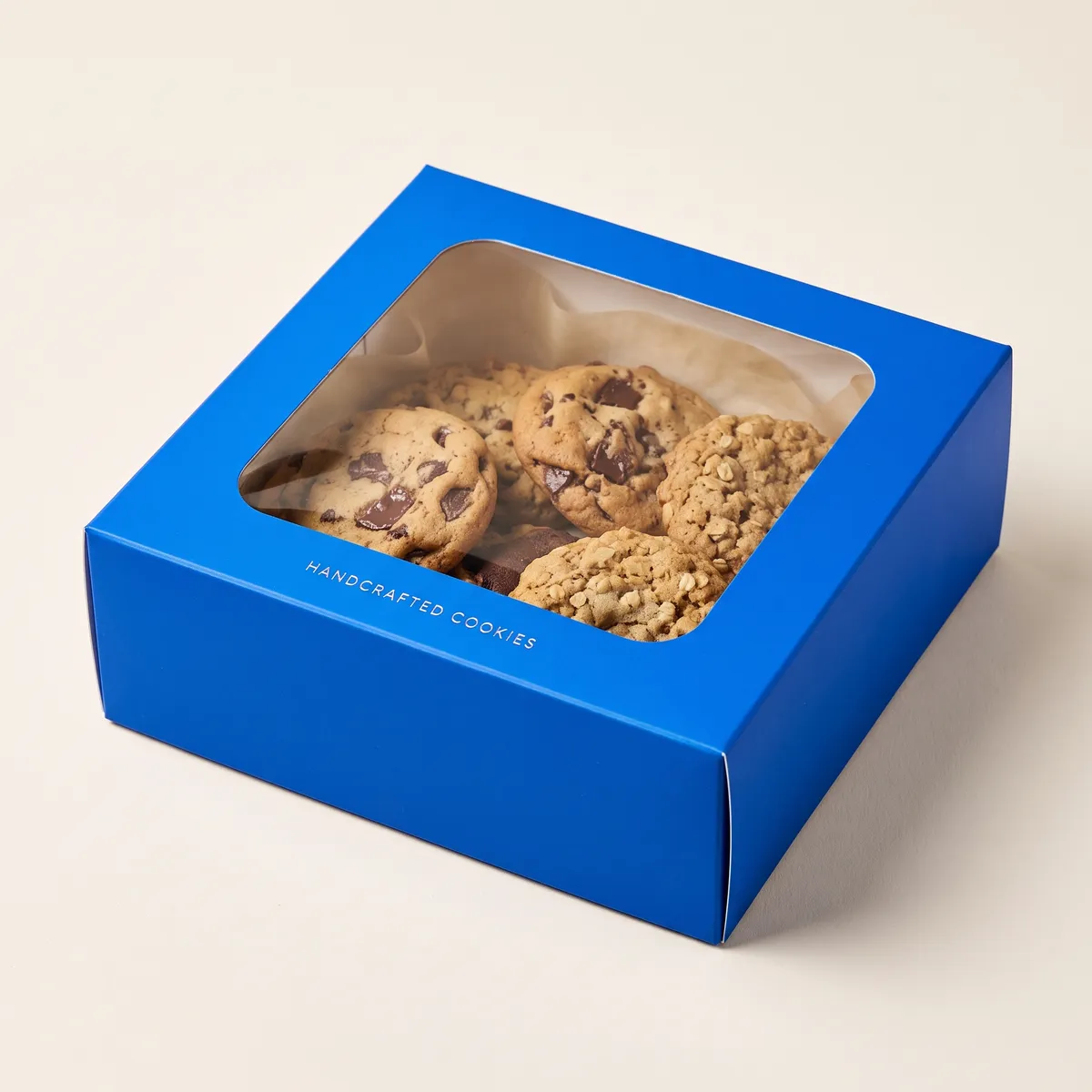
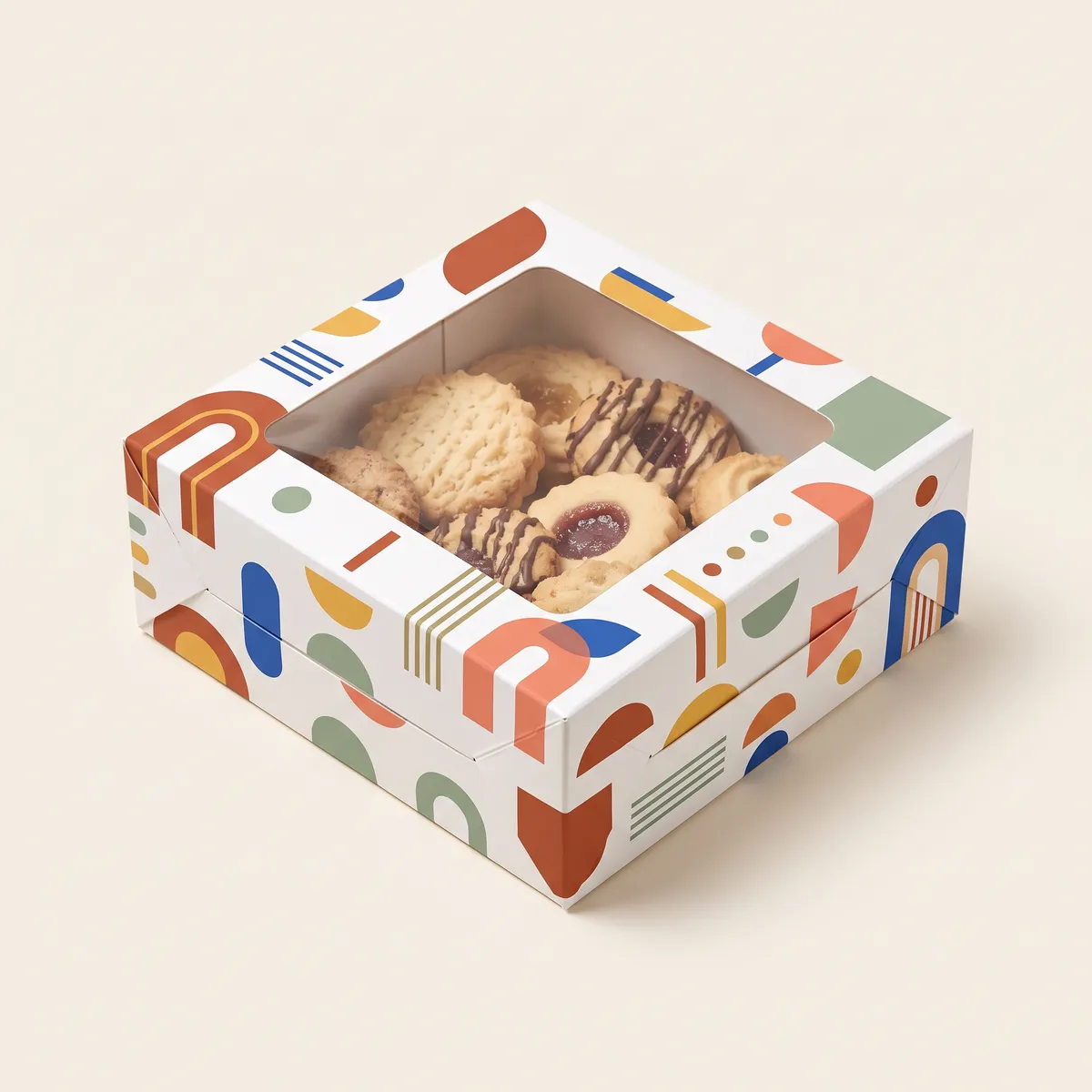
Window cookie boxes combine printed board with a film-backed cut-out, usually in the lid, since cookie boxes are viewed from above at a counter. A tray underneath keeps the arrangement in place; without one, cookies slide against the film and the display looks disordered. The window costs less than most expect, and a 100-box run lets you check the framing before scaling up.
Ours are on Trustpilot, where we can't edit them or choose which ones you see.
Read them on Trustpilot →(opens in a new tab)Four stages, twelve days
Quote confirmed
A specialist checks your spec against the board and comes back with a firm price inside 4 business hours.
Proof approved
You get a flat dieline and a 3D render. Nothing goes to press until you approve it in writing.
On press
Print, die-cut, glue, and fold. You get a press-side photo the day your job runs.
QC and delivery
Every pallet is sampled against the digital proof or physical sample you approved, then shipped with tracking to your dock or 3PL.
If a box doesn't match the digital proof or physical sample you approved, we reprint the run at no charge.
Read the reprint terms →Know exactly what you're ordering.
Window Cookie Boxes That Keep the Print and Show the Batch
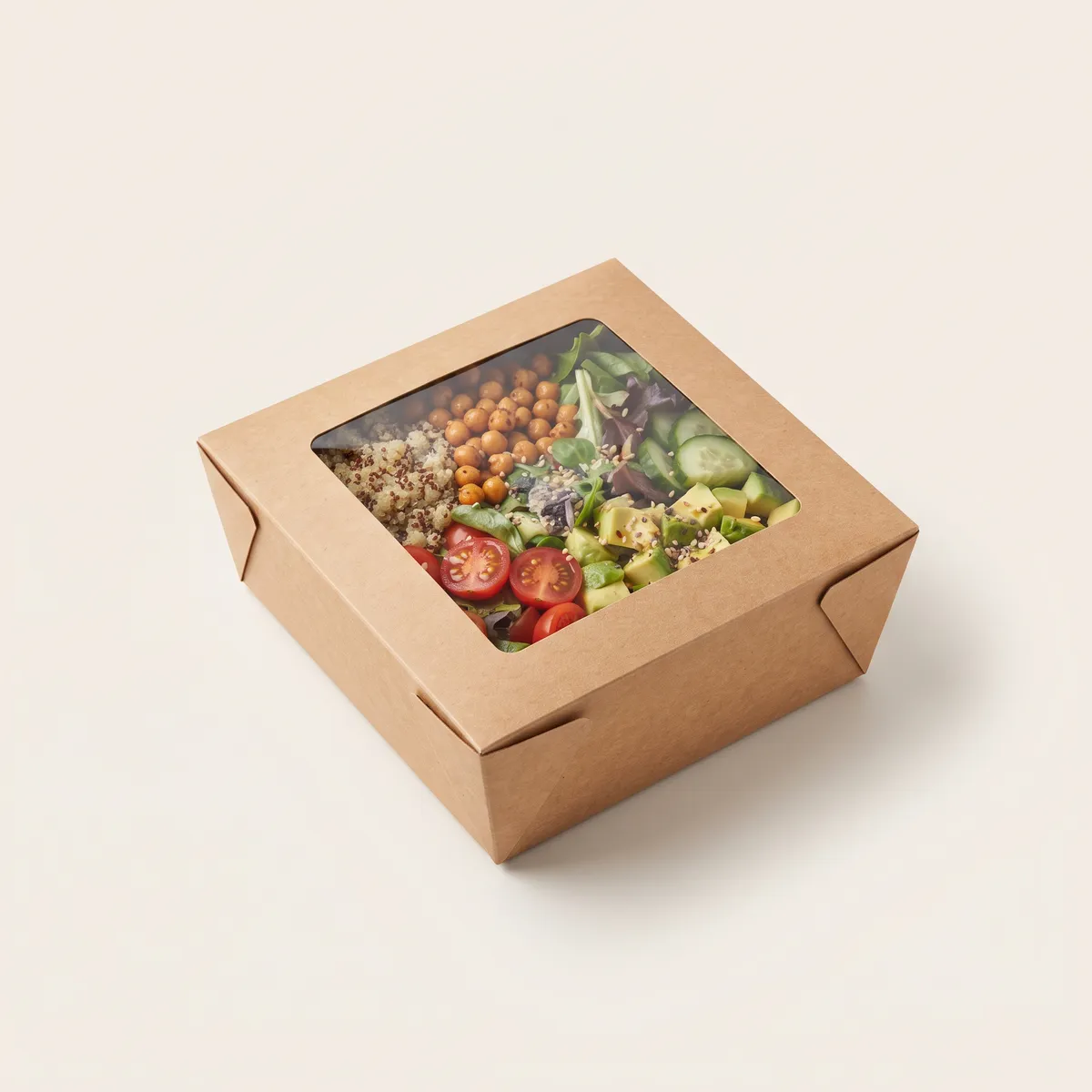
A window cookie box is a compromise that usually lands in the right place. The board around the opening carries the brand name, flavor, ingredients and price sticker, and the opening shows enough of the cookies to prove they look the way the print promises. Bakeries choose it when the box has to work as both a label and a display, which covers most retail cookie sales. It suits brands with a recognizable look that still want the product to do some of the persuading. Where cookies sit in neat rows, the opening shows the whole arrangement. Where they're stacked or bagged inside, a printed box with no opening may make more sense.
Board, Film and Cut-Out Specs for a Window Cookie Box
| Element | Detail |
|---|---|
| Board | Food-grade coated board, around 18–24pt |
| Inside face | Grease-resistant |
| Window | Die-cut opening backed with film |
| Window size | Set against your layout at the dieline stage |
| Insert | Optional tray under the film |
| Tolerance | ±0.5–1mm |
The box is built on printable white board that holds the window's edge cleanly after the cut, and its coated face takes print right up to the opening. A grease-resistant inside face keeps butter from showing through the board around the film, where a stain would sit right next to the product. Tell us the cookie count and we set the window size against it.
Why a Framed Opening Beats Going Fully Clear
Going fully clear gives up the panels that tell a customer what they're buying. A framed opening keeps them. The flavor, the brand and the ingredients stay printed on board, while the cut-out shows a slice of the batch, enough to prove the cookies are whole and as good as the artwork suggests. It also costs less per unit than a transparent build, and board is far easier to print well. The usual build is a tuck carton with the opening die-cut into the lid, which ships flat and folds up quickly at the counter. That carton is the cheaper structure, which matters when the window already adds a cutting step.
Artwork That Works Around the Opening
Artwork on a window box has a hole in it, and the design has to plan for that. Keep the logo and product name well clear of the cut line, since anything placed near the edge gets crowded by the film or trimmed. Treat the board around the opening as a frame, in a color that complements the cookies rather than competing with them. Film quality matters more than any finish: a cheap film fogs with condensation and hides the very thing the window exists to show. Skip gloss lamination if cookies go in warm, since trapped moisture softens board and bake together. One to three colors on the outer usually beats a heavy finish.
Window Cookie Boxes for Bakery Counters and Cookie Shops
Cookie shops stocking pre-boxed half-dozens and dozens are the main buyers, since a customer can pick a box by flavor without asking staff to open anything. Cafés selling a boxed set beside the till use the same format. Farm shops and delis carry window boxes from local bakers, where the printed panels name the bakery and the opening proves the product. The format suits bakeries boxing cookies by the half-dozen alongside brownies or bars in a matching box. It's less suited to cookies that crumble at the edges in handling, because the window will show every broken piece. A fitted insert helps, but very fragile bakes may be better kept out of sight.
Proofing the Window Position Before the Run
Design help is free and unlimited, which is useful here because a window changes the layout of every panel around it. We place the opening on the dieline against your cookie arrangement, and you see a proof before anything is cut. If the opening cuts across the edge of the arrangement, or the logo sits too near the film, we revise until it's right. Each order is inspected at three stages, so a misaligned window gets caught on our side. Boxes are made within 8–12 business days of your approval, and a rush slot is possible at an added charge stated before you book it. The smallest run is 100 boxes, with delivery built into the price.
One connected process, start to finish.
Structural Design
Dieline drafted to your exact fit and freight tolerances.
Proof & Sample
Sign off on a digital proof, or request a physical sample.
Tooling
Dies and plates are cut for your job and archived on file.
Production
Print, die-cut, and assembly run under in-line quality checks.
Ship & Reorder
Freight goes out, and the cycle resets for your next run.
Steady process. Powerful results.
Like everything we build, our process is engineered to hold up — no shortcuts, no surprises. Five dependable stages that run the same way every single time, so reorders are just as fast as the first order.
- One dedicated teamFrom first sketch to final freight, the same people carry your order start to finish.
- Dies archived on fileReorders skip tooling and re-setup entirely — we already have your exact spec.
- Checked against your sign-offEvery run is inspected against the digital proof or physical sample you approved.
Set up your file once, correctly
Nine in ten delayed jobs are delayed by artwork, not production. Match these four rules and your proof lands the next morning.
- Bleed1/8 in (3 mm) past every cut line
- Safe ZoneKeep text 1/4 in clear of every crease
- ColourCMYK or named Pantone. No RGB.
- Resolution300 dpi at final size, fonts outlined
No print-ready file?
Send a logo and a rough idea. Our studio builds the production file free with any order over 500 units — you keep the source file either way.
Ask the StudioBackground art must run all the way to the outer bleed edge. Anything inside the white dashed line survives fold tolerance.
What brands say about this box
They live there rather than here, where we can't edit them, delete them, or pick which ones you get to see. That is exactly what makes them worth reading.
Read all reviews on Trustpilot(opens in a new tab)Answers before you have to ask.
Where should the window sit on a cookie box?
Usually the lid, since cookie boxes are looked down on at a counter. A front window suits shelf display at eye level. We cut it to frame the arrangement rather than cropping the outer rows.
Can window cookie boxes hold a tray?
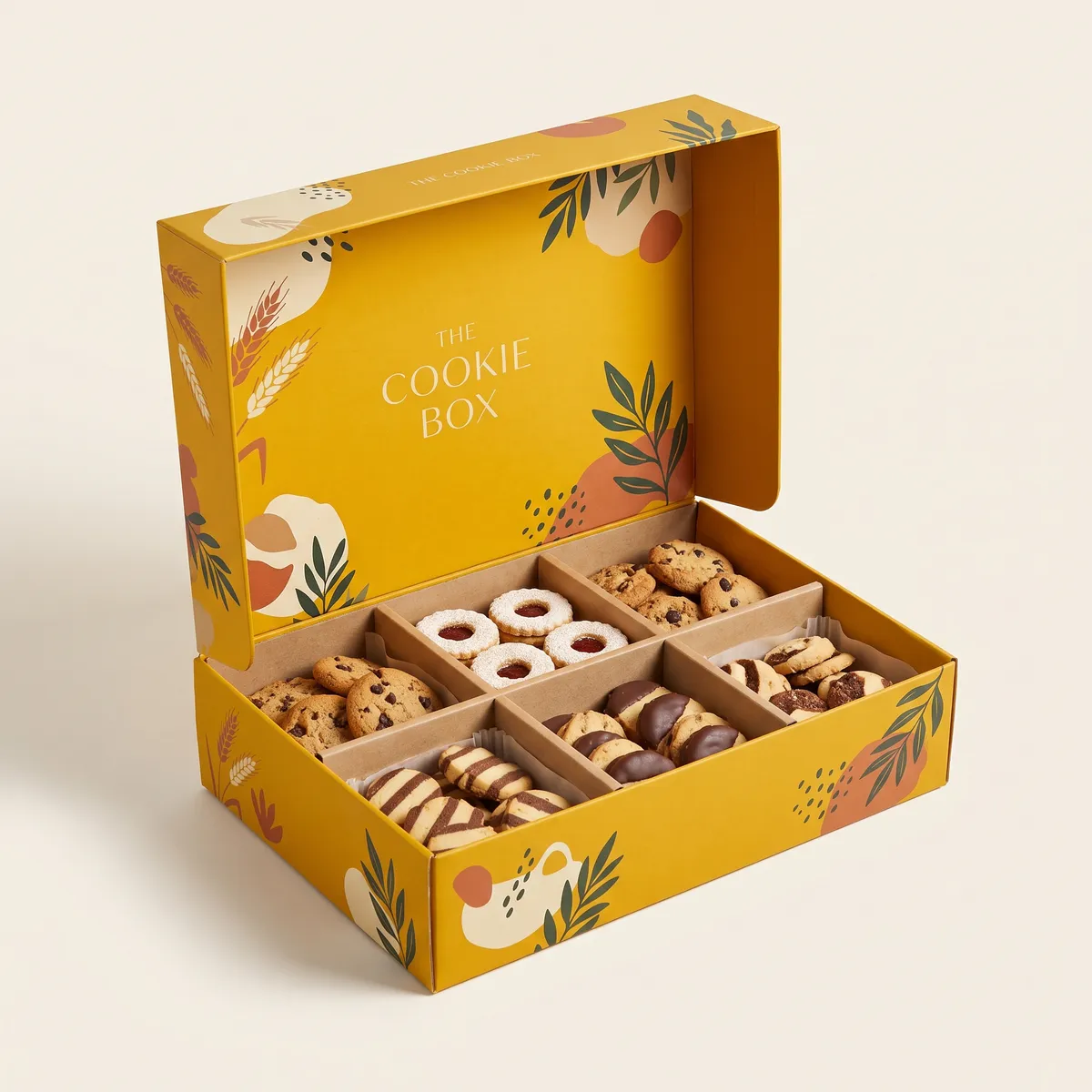
Yes, and they usually should. The window shows the cookies while the tray holds them arranged. Without one they slide against the film and the display looks disordered.
Does a window add much cost?
Less than most people expect. The die cut and film are inexpensive at volume, and in a category where the product sells itself visually, the conversion lift usually covers it several times over.
What's the turnaround on window cookie boxes?
About 8–12 business days once the proof is approved, window and tray included. Rush production is available at an extra cost stated upfront, with shipping included.
Can I test window boxes before scaling?
Yes. At 100 boxes you can check how the window frames your arrangement and whether the tray holds your cookie size, then scale with real information rather than a guess.