
Cookie Boxes with Dividers
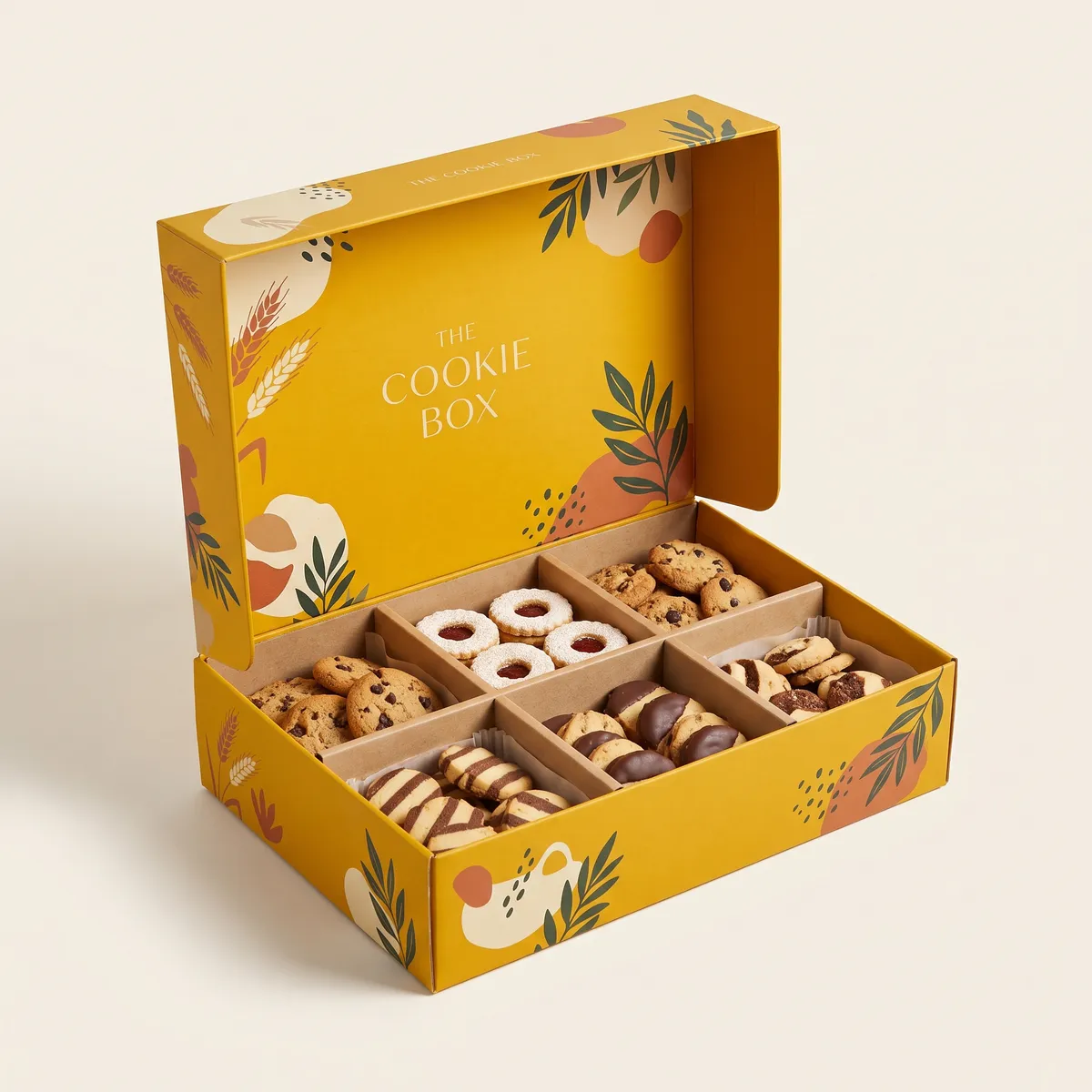
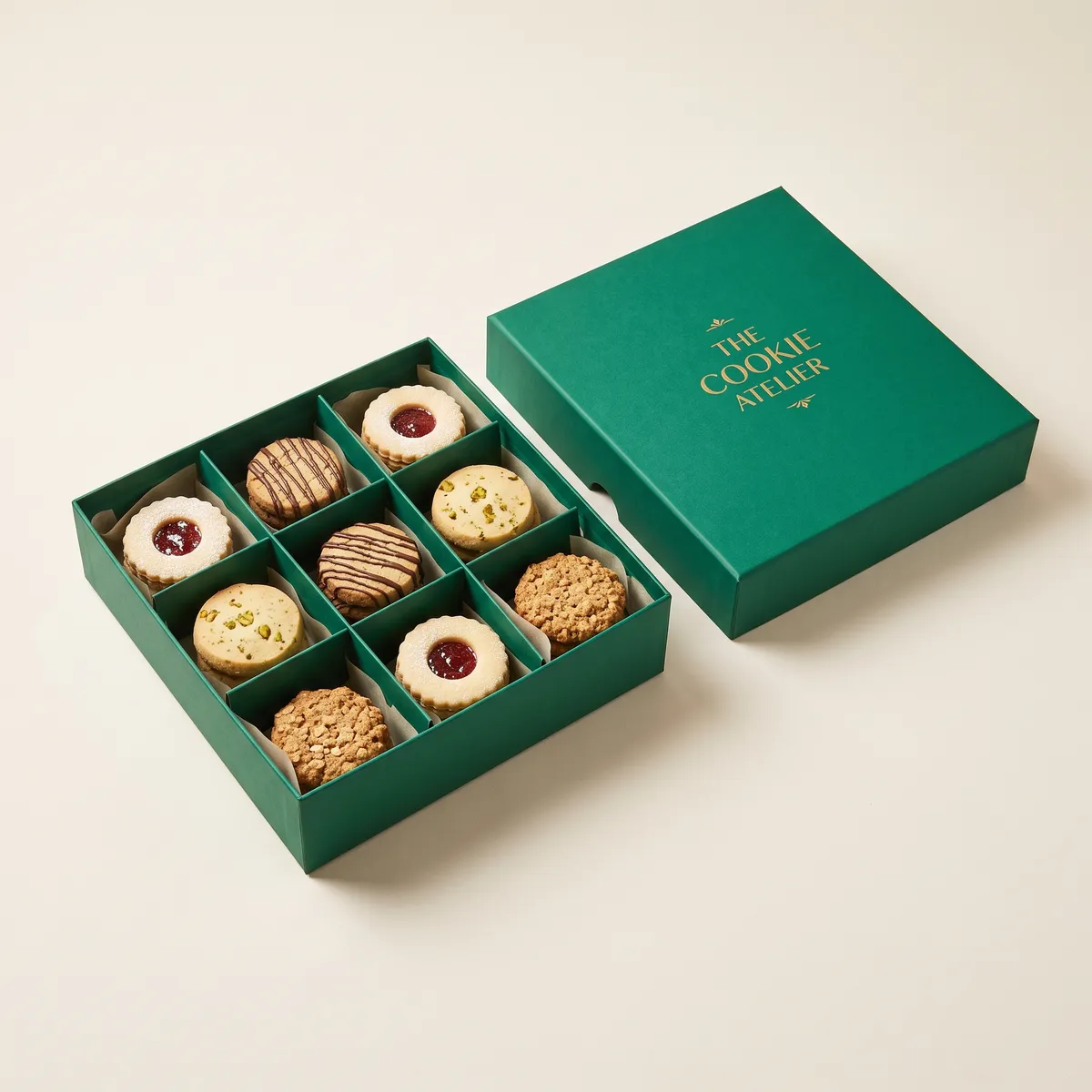
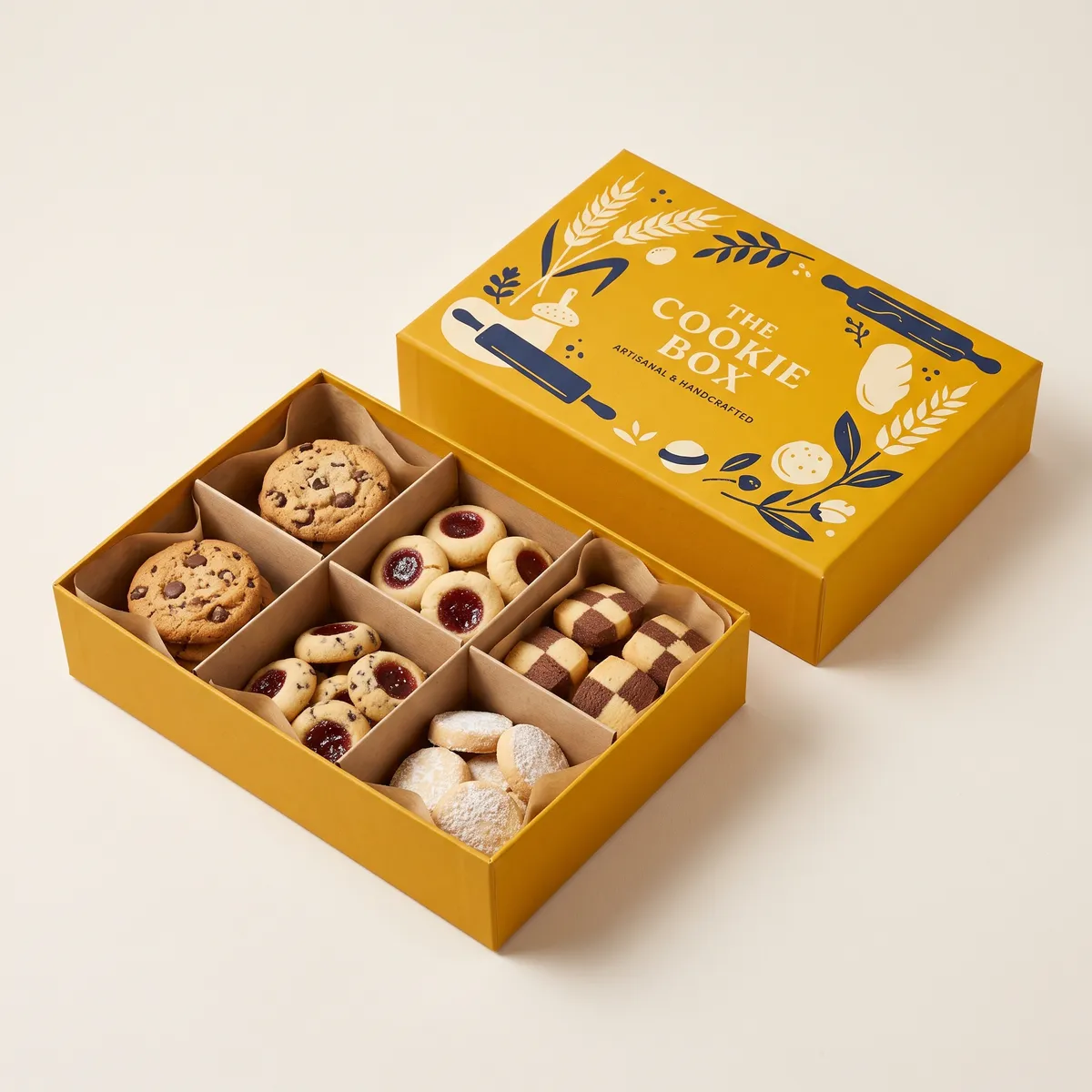
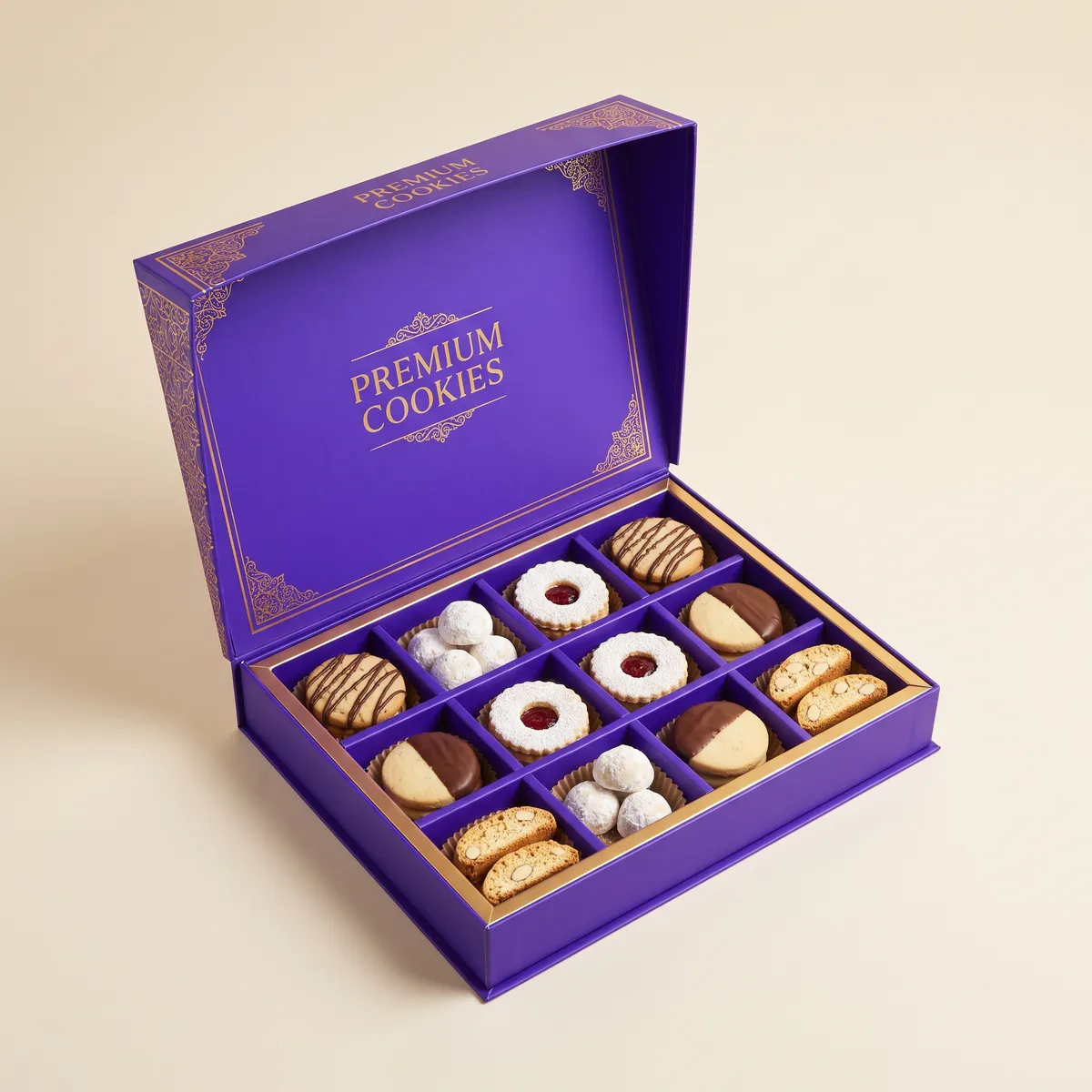
Cookie boxes with dividers keep rows, grids or stacked layers apart, laid out around your cookie diameter and count so nothing knocks together and crumbles in transit. Die-cut paperboard dividers are inexpensive at volume and cheaper than the refunds broken cookies inevitably generate. Layouts can change without new box tooling, provided the outer box footprint stays identical.
Ours are on Trustpilot, where we can't edit them or choose which ones you see.
Read them on Trustpilot →(opens in a new tab)Four stages, twelve days
Quote confirmed
A specialist checks your spec against the board and comes back with a firm price inside 4 business hours.
Proof approved
You get a flat dieline and a 3D render. Nothing goes to press until you approve it in writing.
On press
Print, die-cut, glue, and fold. You get a press-side photo the day your job runs.
QC and delivery
Every pallet is sampled against the digital proof or physical sample you approved, then shipped with tracking to your dock or 3PL.
If a box doesn't match the digital proof or physical sample you approved, we reprint the run at no charge.
Read the reprint terms →Know exactly what you're ordering.
Cookie Boxes With Dividers for Batches That Can't Touch
Cookies rarely break because a box is dropped. They break because they slide into one another, edge on edge, every time the box tilts. A box with dividers removes that movement. It's bought by sellers whose cookies are thin, brittle or decorated, where one chipped edge spoils a set, and by anyone packing mixed flavors that shouldn't trade crumbs or aromas. Gift assortments and sampler boxes use it most, along with bakers driving boxes to events. If your cookies are thick, soft-baked and packed tight in a single stack, dividers add little; the stack itself holds them still.
Divider Layouts, Board and Fit for Partitioned Cookie Boxes
Two parts make this box: the outer that faces the customer and the insert that holds the cookies apart.
| Part | Spec |
|---|---|
| Outer box | Food-grade board, around 18–24pt |
| Divider stock | Commonly chipboard |
| Layouts | Rows, grid cells or layer separators |
| Cell size | Set from cookie diameter and thickness |
| Tolerance | ±0.5–1mm on the outer, so the insert seats without forcing |
| Inside face | Grease-resistant |
Dividers are commonly cut from dense recycled board for partition walls, which stays stiff in thin strips where lighter carton board would bow. Each cell is drawn so a cookie sits upright or flat without rattling, and layer separators sit flat between tiers.
Separation Inside the Box Matters More Than Thicker Walls
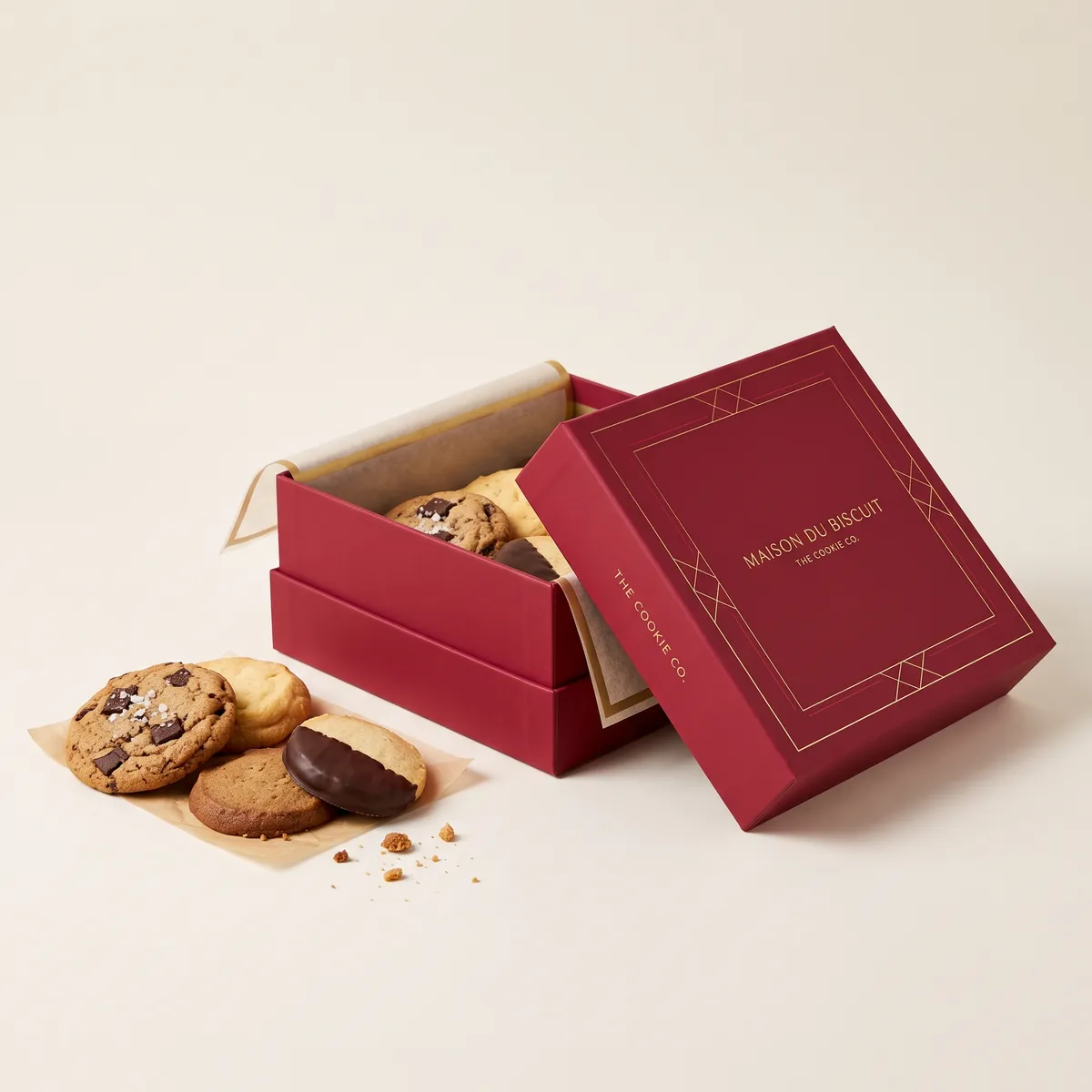
Upgrading the outer board to a heavier caliper protects against crushing from outside, but it does nothing about cookies hitting each other inside. That's where most breakage starts, so the money is better spent on separation. A divided insert turns one loose batch into a set of individual spaces, and in a tiered box it stops the bottom row carrying the weight of every layer above it. In practice the insert is a partitioned insert tray that drops into the outer box and lifts out as a unit. That leaves the outer free to be whatever style suits the brand, from a tuck carton to a lidded gift box, while the protection lives inside.
Spend the Print on the Outer, Not the Partitions
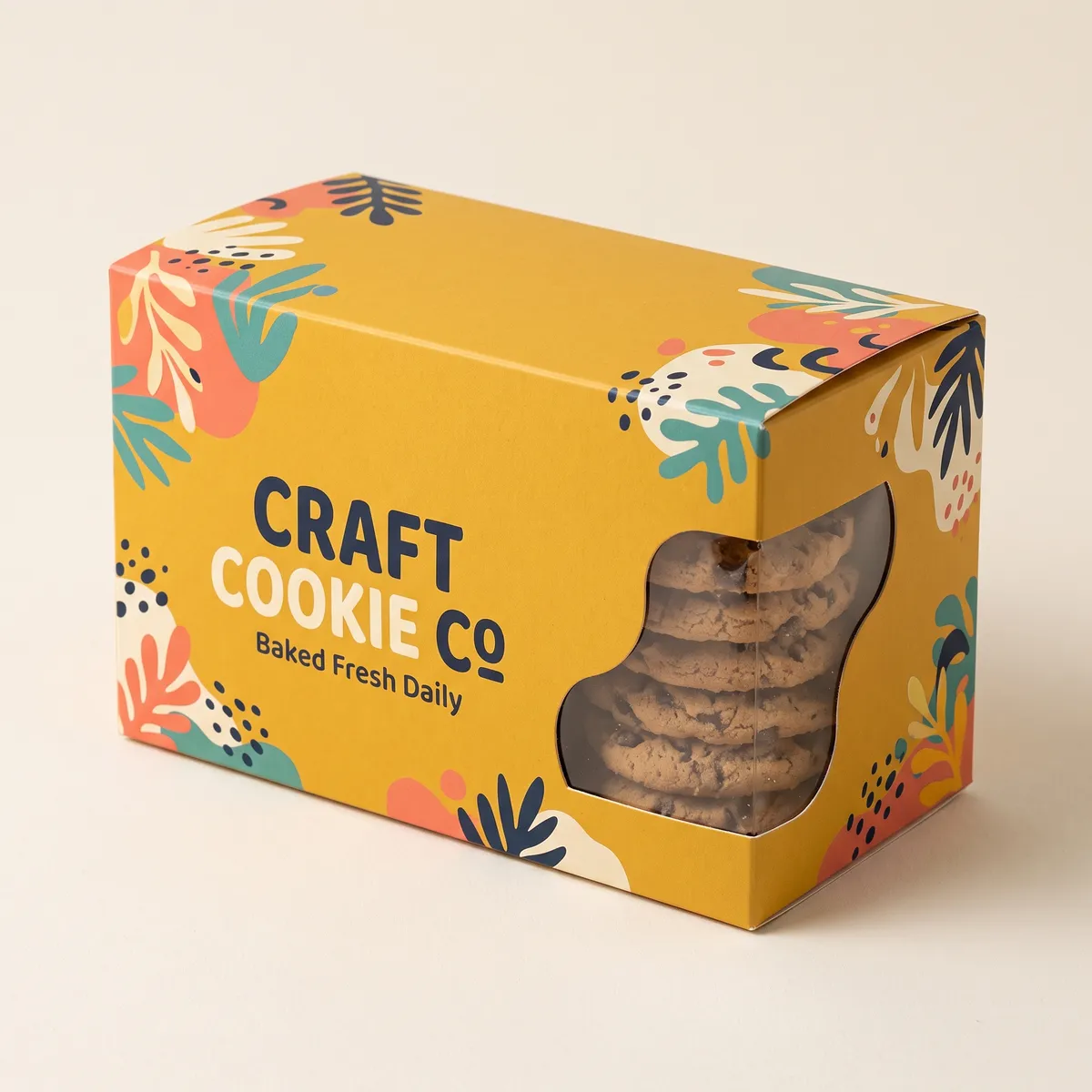
The outer box is what the customer sees on a shelf and in a photo, so it's where the print budget earns its keep. Full-color artwork, a logo in one or two colors, or a window in the lid all apply here, exactly as they would on an undivided box. The dividers have a structural job, and plain board does it well. If you want the inside to look finished, a printed lid interior is visible as soon as the lid lifts, while the partitions stay plain beneath it. A window over a divided layout works particularly well, because the grid presents each cookie as its own piece and makes a modest assortment look generous.
Divided Cookie Boxes for Assortments, Tiers and Sampler Packs
Sampler boxes are the clearest use: six or nine flavors, each in its own cell, so a customer tastes the range before buying a full box of one. Holiday assortments follow the same pattern, mixing gingerbread, shortbread and iced pieces that would scratch each other if packed loose. Tiered gift boxes use layer separators so a second and third row sit above the first without pressing on it. Sellers of mixed confectionery assortments use the same divided format for cookies alongside truffles or fudge. Wedding and event bakers order divided boxes for take-home favors of two or three cookies, where a single broken piece is the only thing a guest notices.
Counting the Cavities Before You Order
Start with the count per box and the size of your largest cookie, and we draw the dieline for both the outer and the insert from those numbers. Whether each measurement is inside or outside the box is confirmed in writing, since an insert drawn to the wrong figure either won't drop in or leaves cookies loose. You approve a proof before production, and from there expect 8–12 business days to finished boxes. Rush is an option at extra cost, quoted upfront. A 100-box minimum applies. Three separate checks run on every order, and a bulk run that strays from the approved proof is reprinted at our cost. Shipping adds nothing to the quote.
One connected process, start to finish.
Structural Design
Dieline drafted to your exact fit and freight tolerances.
Proof & Sample
Sign off on a digital proof, or request a physical sample.
Tooling
Dies and plates are cut for your job and archived on file.
Production
Print, die-cut, and assembly run under in-line quality checks.
Ship & Reorder
Freight goes out, and the cycle resets for your next run.
Steady process. Powerful results.
Like everything we build, our process is engineered to hold up — no shortcuts, no surprises. Five dependable stages that run the same way every single time, so reorders are just as fast as the first order.
- One dedicated teamFrom first sketch to final freight, the same people carry your order start to finish.
- Dies archived on fileReorders skip tooling and re-setup entirely — we already have your exact spec.
- Checked against your sign-offEvery run is inspected against the digital proof or physical sample you approved.
Set up your file once, correctly
Nine in ten delayed jobs are delayed by artwork, not production. Match these four rules and your proof lands the next morning.
- Bleed1/8 in (3 mm) past every cut line
- Safe ZoneKeep text 1/4 in clear of every crease
- ColourCMYK or named Pantone. No RGB.
- Resolution300 dpi at final size, fonts outlined
No print-ready file?
Send a logo and a rough idea. Our studio builds the production file free with any order over 500 units — you keep the source file either way.
Ask the StudioBackground art must run all the way to the outer bleed edge. Anything inside the white dashed line survives fold tolerance.

What brands say about this box
They live there rather than here, where we can't edit them, delete them, or pick which ones you get to see. That is exactly what makes them worth reading.
Read all reviews on Trustpilot(opens in a new tab)Answers before you have to ask.
How many dividers can one box hold?
Whatever your layout needs. Dividers can run in rows, a grid, or as layer separators in a tiered box. Tell us the cookie diameter and count and we'll lay the divisions out around them.
Can dividers be changed without new tooling?
Yes, within limits. If the new layout fits the same box footprint, dividers can change without new box tooling. Changing the box dimensions themselves does need a new die.
Do dividers add much to the price?
Modestly, and they're among the better spends here. A die-cut divider is cheap at volume and prevents the breakage that generates refunds, which costs far more than the divider did.
How long do boxes with dividers take?
Usually 8–12 business days from proof approval. Cutting dividers doesn't extend the timeline. Rush is available at an added cost quoted before you order.
Can I order boxes with different divider layouts?
Yes. As long as the outer box footprint stays the same, different divider layouts can run without new box tooling — useful if you sell several count sizes.