
Paper Cookie Boxes
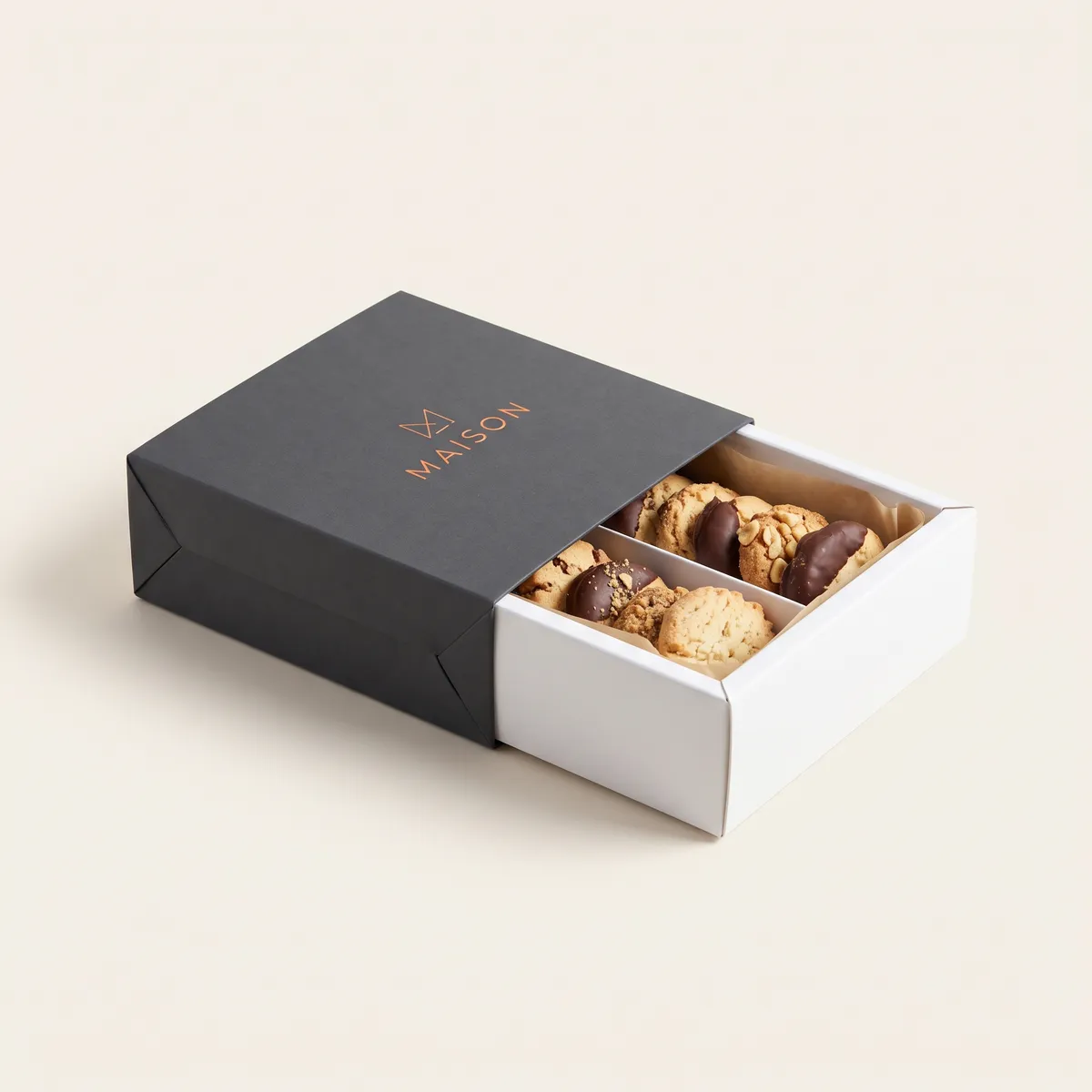
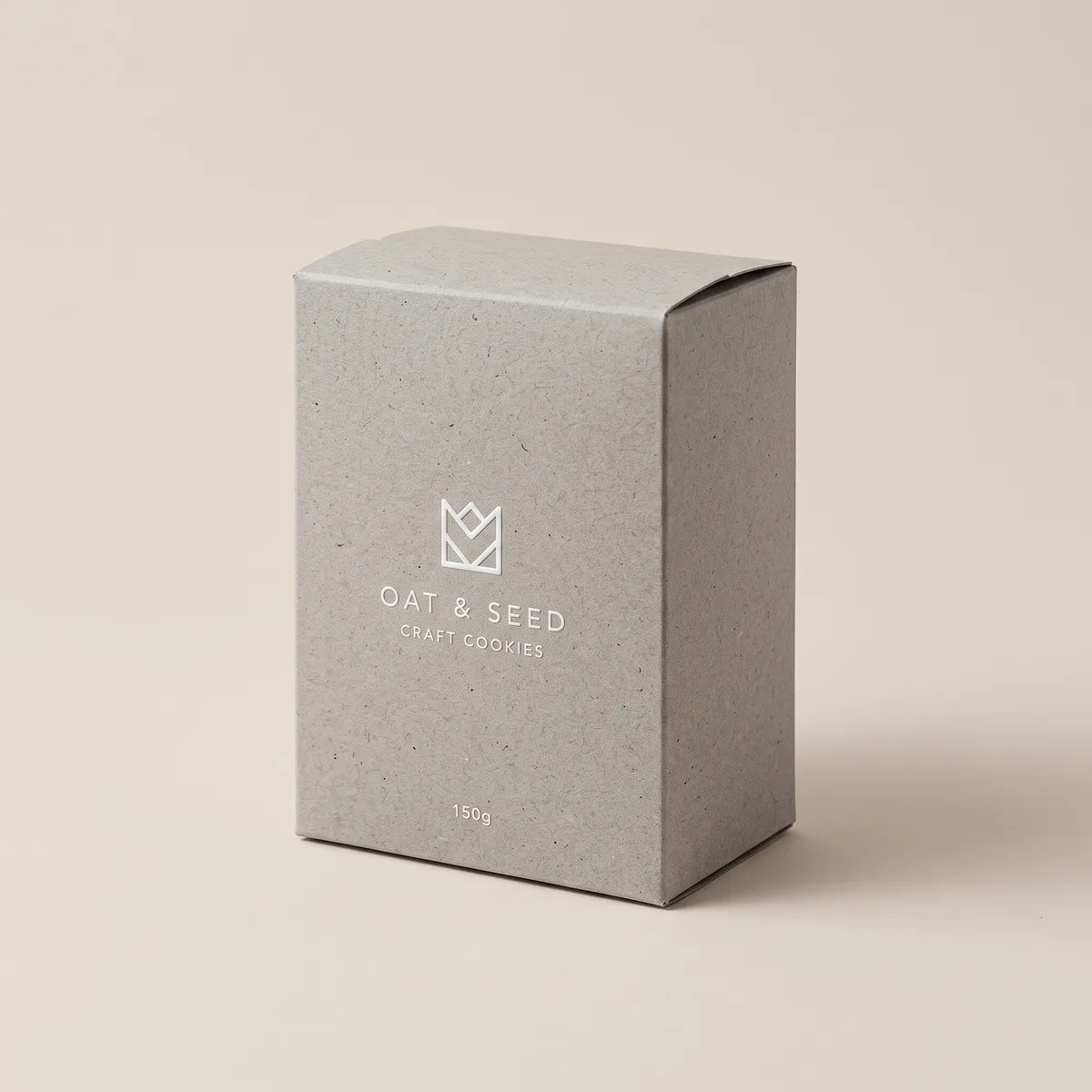
Cookies weigh very little, so paper cookie boxes choose board for grease resistance and print rather than load strength, keeping cost and weight down on high-volume runs. Paper recycles readily, though some grease coatings affect that, so tell us if recyclability is a public claim. For large counts needing real load strength, heavier board is the sensible specification.
Ours are on Trustpilot, where we can't edit them or choose which ones you see.
Read them on Trustpilot →(opens in a new tab)Four stages, twelve days
Quote confirmed
A specialist checks your spec against the board and comes back with a firm price inside 4 business hours.
Proof approved
You get a flat dieline and a 3D render. Nothing goes to press until you approve it in writing.
On press
Print, die-cut, glue, and fold. You get a press-side photo the day your job runs.
QC and delivery
Every pallet is sampled against the digital proof or physical sample you approved, then shipped with tracking to your dock or 3PL.
If a box doesn't match the digital proof or physical sample you approved, we reprint the run at no charge.
Read the reprint terms →Know exactly what you're ordering.
Paper Cookie Boxes for High-Volume, Low-Cost Runs
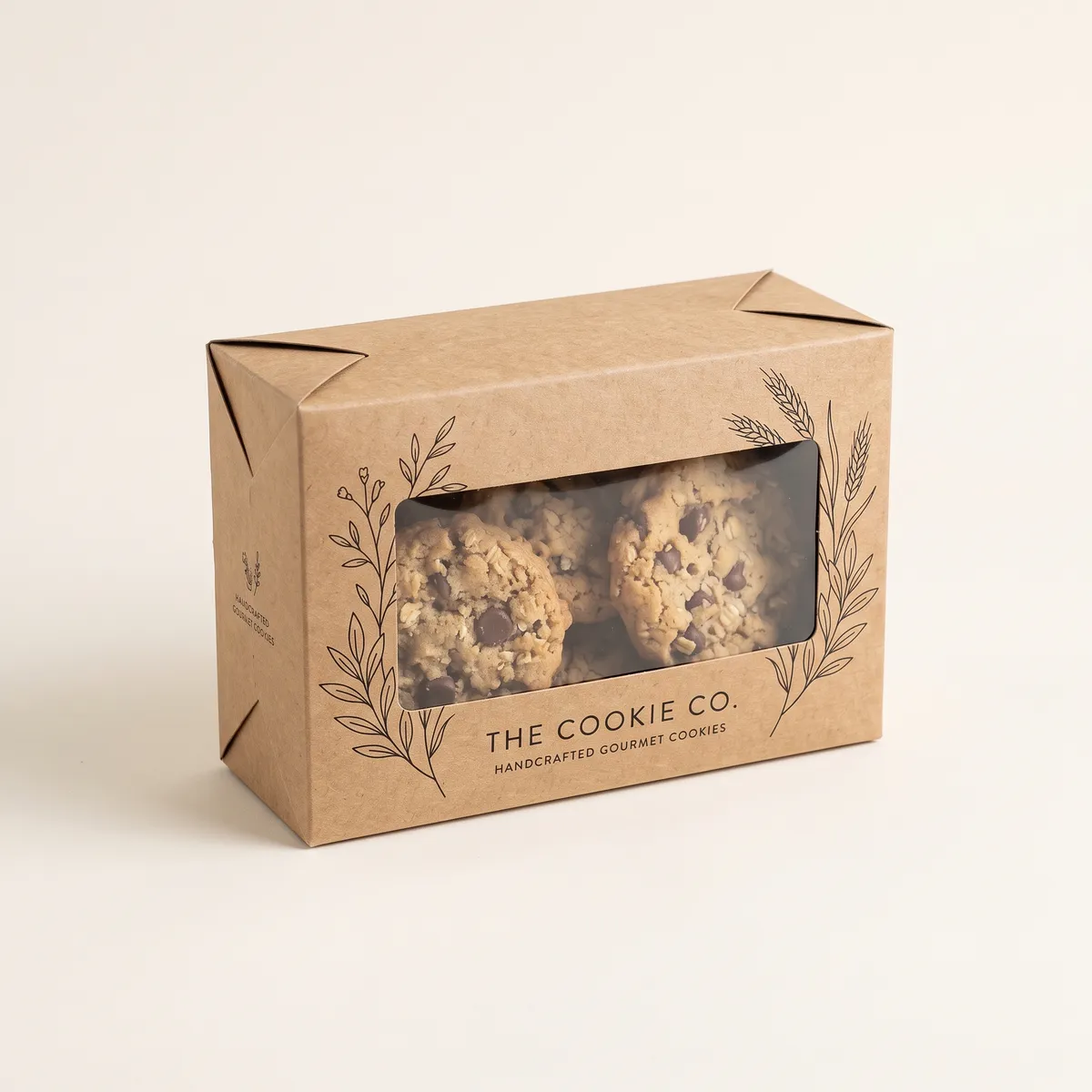
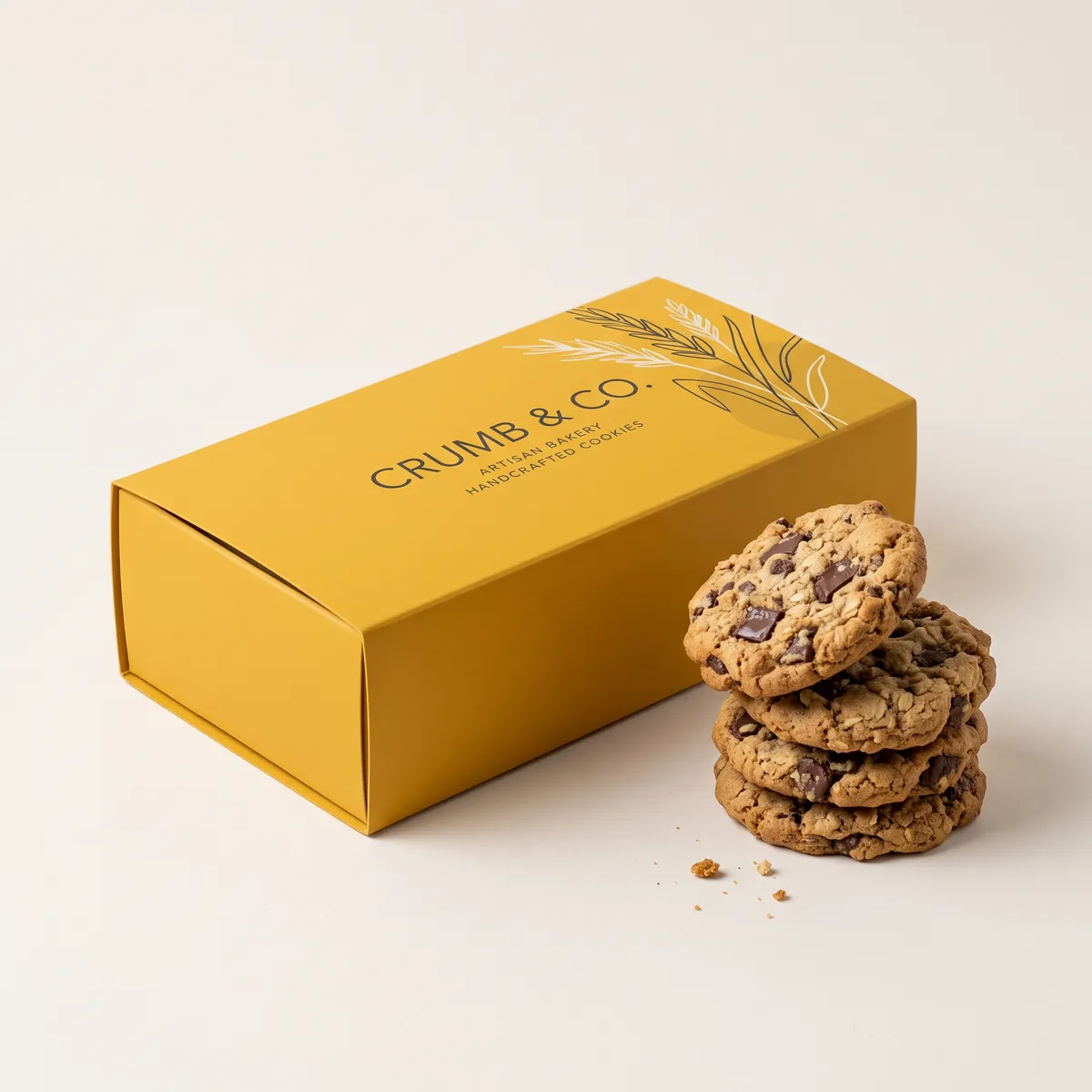
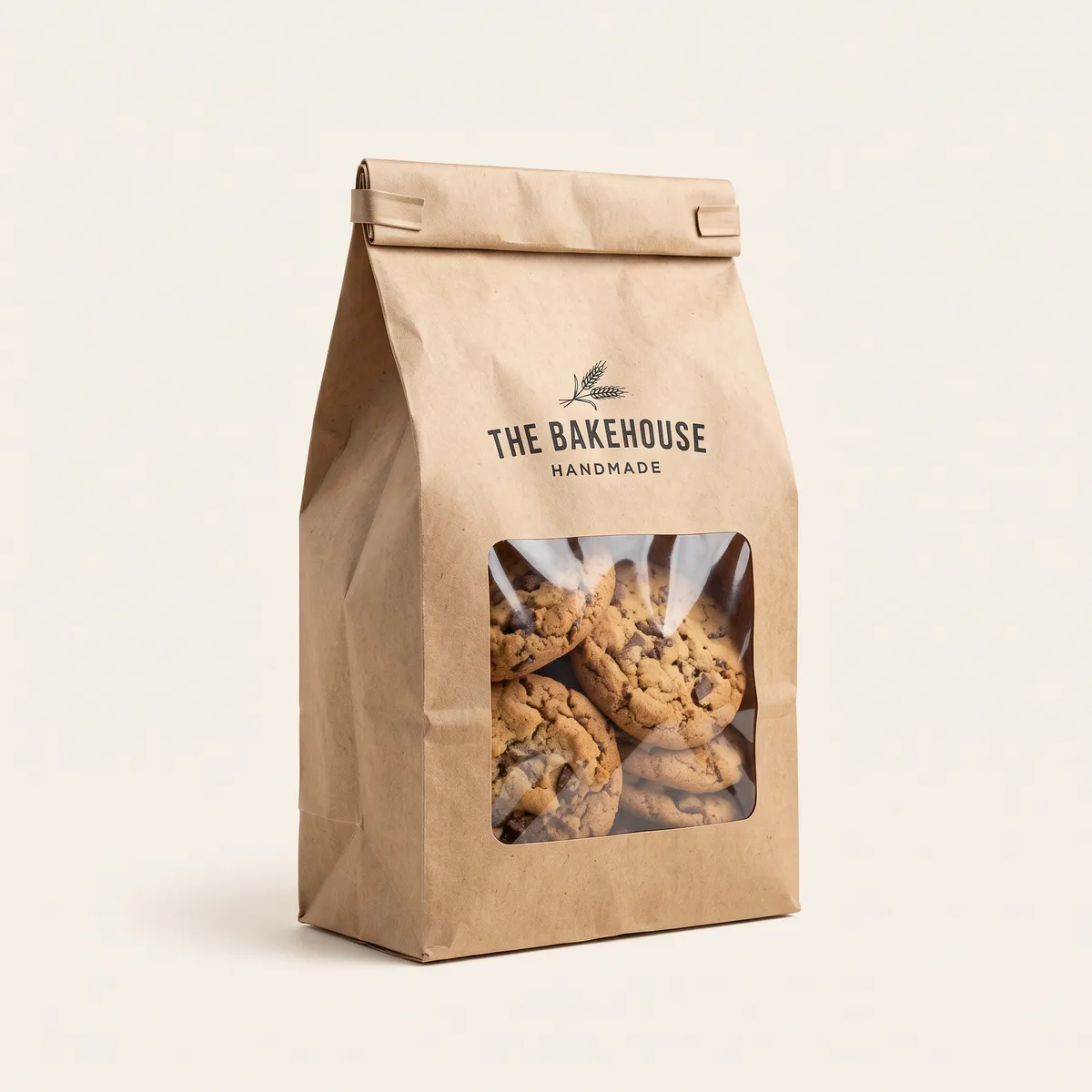
When cookies are sold by the thousand, a cent or two per box decides the margin. Paper cookie boxes are bought by wholesale bakeries, supermarket suppliers, event caterers and promotional campaigns handing out samples, where the box is functional first and the cookies are priced for volume. The board is chosen to be just enough: it holds the batch, resists butter and carries a logo, without extra weight or thickness the product doesn't need. It suits buyers who've already settled the look and now care about cost per unit across a long run, often with the same design repeated for years.
Light Stock and Grease-Resistance Specs
Every line in this spec is set to the minimum the job needs, because the saving repeats on every unit.
| Spec point | Detail |
|---|---|
| Stock | Lightweight paperboard, commonly kraft |
| Inside face | Grease-resistant |
| Logo, one or two colors | |
| Weight | Kept low for freight and storage |
| Recyclability | Recycles readily; the grease coating type matters |
| Sizing | Cut to your cookie count |
These boxes are commonly made from light unbleached paper stock, at the thinner end of what holds a cookie batch. A grease-resistant face keeps butter off the outer, and the low weight cuts onward freight on every pallet you send to stores.
Why Lighter Board Is Enough for a Light Product
A dozen cookies weighs very little, and the stress on their box comes mostly from grease and handling, not load. Heavier board buys strength the product never uses, at a cost repeated on every unit. Lighter stock keeps the price down, takes less room flat-packed and costs less to move. These boxes tend to be a single-blank carton kept to minimal board, with no inserts, no lamination and no wasted panels. The limit is size. Very large counts, tiered packs or boxes stacked high in a warehouse need a heavier sheet, and choosing paper there to save money ends in crushed boxes.
Keeping Print Simple on Economy Stock
Print is where economy boxes quietly gain cost back, so keep it lean. A one-color logo on the lid covers most needs; a second color adds a flavor name or tagline. Full coverage on paper stock rarely pays at high volume, since ink coverage drives cost on every unit. Stickers are the cheapest way to vary flavor or season across one printed box, rather than running separate designs. Leave lamination and foil off entirely here; they add cost and make the box harder to recycle. If the box sits on a supermarket shelf where impact matters more than price, that's the point to move up to a printed or window format.
Paper Cookie Boxes for Supermarkets, Events and Food Markets
Bakeries supplying supermarket and food-market ranges are the largest buyers, where a cookie box competes on price beside dozens of others. Event caterers use paper boxes for take-home cookies at conferences and weddings, ordered in thousands for a single day. Brands running sampling campaigns hand out two-cookie boxes at stores and events. School and charity bake sales order plain boxes with a simple logo. Hotels and conference venues pack cookies for meeting breaks. Each of these buyers orders at volume and sees every cent of unit cost multiplied across the run, which is exactly the problem this box is built to solve.
Samples Above 10,000 and Pricing Without Add-Ons
Orders above 10,000 boxes come with free samples, so you can check board, fit and print before the full run arrives. At those volumes the quote has to hold, and ours does: dies, plates and setup are included, with nothing added later. Smaller runs start from 100 boxes. Each run takes 8–12 business days from approval, and rush is quoted separately, at extra cost, before you order. Three checks on every order matter most here, where a fault would otherwise repeat across thousands of units. Freight is in the price too, on a product where it can otherwise rival the cost of the boxes.
One connected process, start to finish.
Structural Design
Dieline drafted to your exact fit and freight tolerances.
Proof & Sample
Sign off on a digital proof, or request a physical sample.
Tooling
Dies and plates are cut for your job and archived on file.
Production
Print, die-cut, and assembly run under in-line quality checks.
Ship & Reorder
Freight goes out, and the cycle resets for your next run.
Steady process. Powerful results.
Like everything we build, our process is engineered to hold up — no shortcuts, no surprises. Five dependable stages that run the same way every single time, so reorders are just as fast as the first order.
- One dedicated teamFrom first sketch to final freight, the same people carry your order start to finish.
- Dies archived on fileReorders skip tooling and re-setup entirely — we already have your exact spec.
- Checked against your sign-offEvery run is inspected against the digital proof or physical sample you approved.
Set up your file once, correctly
Nine in ten delayed jobs are delayed by artwork, not production. Match these four rules and your proof lands the next morning.
- Bleed1/8 in (3 mm) past every cut line
- Safe ZoneKeep text 1/4 in clear of every crease
- ColourCMYK or named Pantone. No RGB.
- Resolution300 dpi at final size, fonts outlined
No print-ready file?
Send a logo and a rough idea. Our studio builds the production file free with any order over 500 units — you keep the source file either way.
Ask the StudioBackground art must run all the way to the outer bleed edge. Anything inside the white dashed line survives fold tolerance.
What brands say about this box
They live there rather than here, where we can't edit them, delete them, or pick which ones you get to see. That is exactly what makes them worth reading.
Read all reviews on Trustpilot(opens in a new tab)Answers before you have to ask.
Is paper stock strong enough for cookies?
Yes, for cookies specifically. Cookies are light, so the board is chosen for grease resistance and print rather than load strength. Paper stock keeps cost and weight down while handling butter fine.
Are paper cookie boxes recyclable?
Yes, and readily. Paper stock recycles well, though a grease-resistant coating can affect it depending on the type used. Tell us if recyclability is a public claim you're making.
Is paper cheaper than board?
Generally yes, because it's lighter. For cookies that's an advantage since the product weighs little. Where you need load strength for a large count, heavier board is the right call regardless.
How soon can paper cookie boxes be made?
Usually 8–12 business days once you approve the proof, often at the faster end. Rush is available at an added cost quoted before you order, shipping included.
Do paper cookie boxes get better bulk pricing?
Yes, meaningfully. Unit price drops as volume rises, and repeat runs of the same design drop further since there's no new setup. Tell us your annual volume and we'll quote tiers.