
Parking Hang Tags
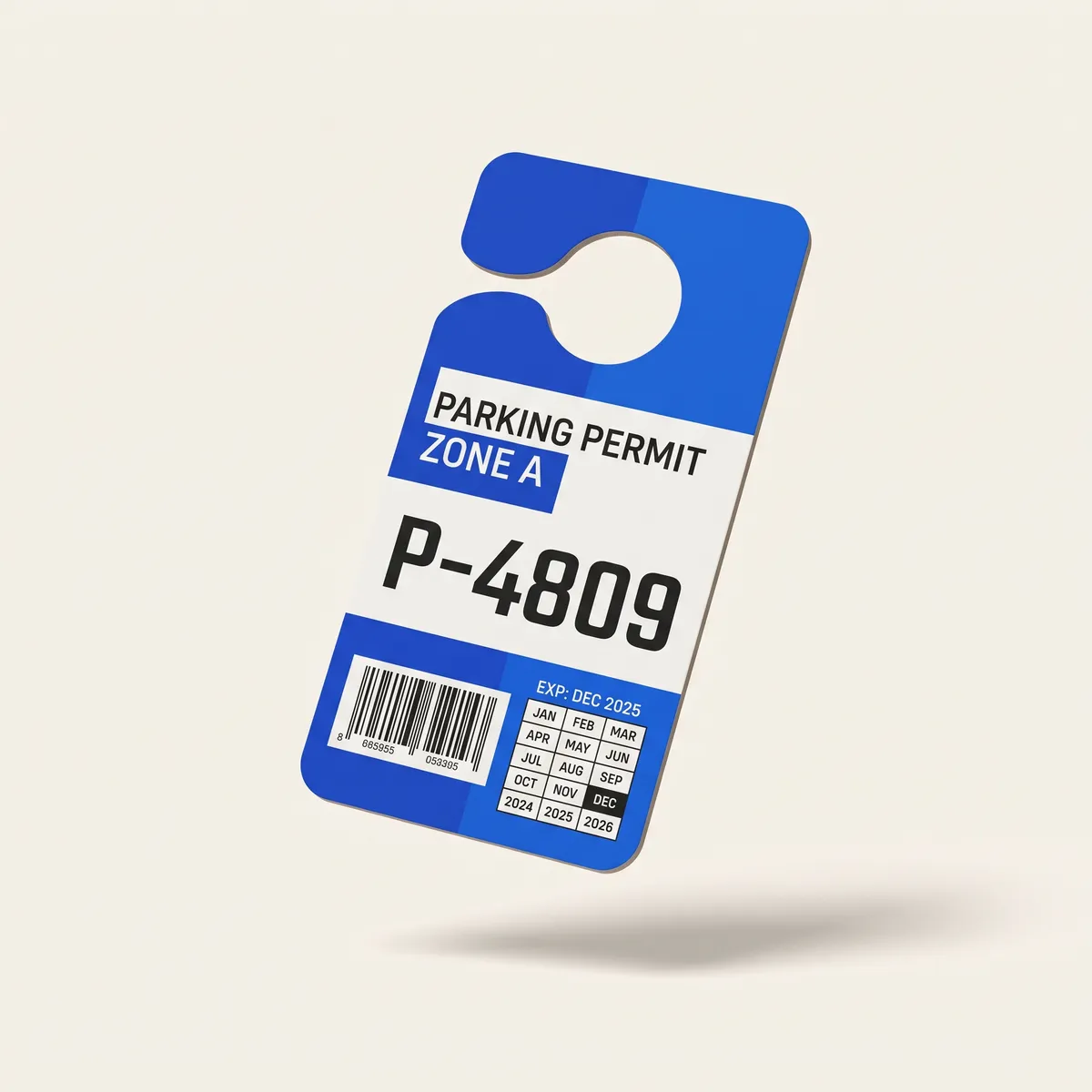
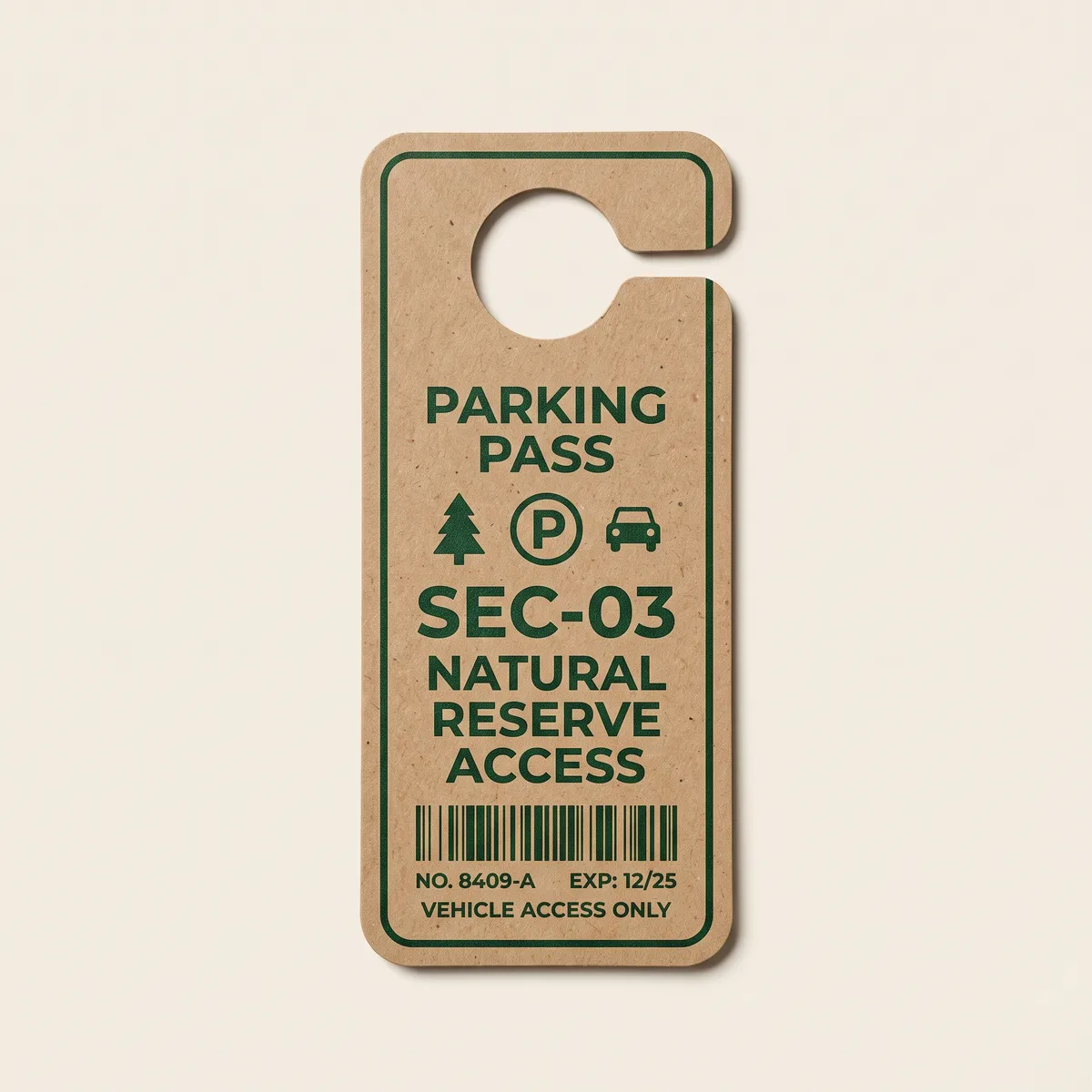
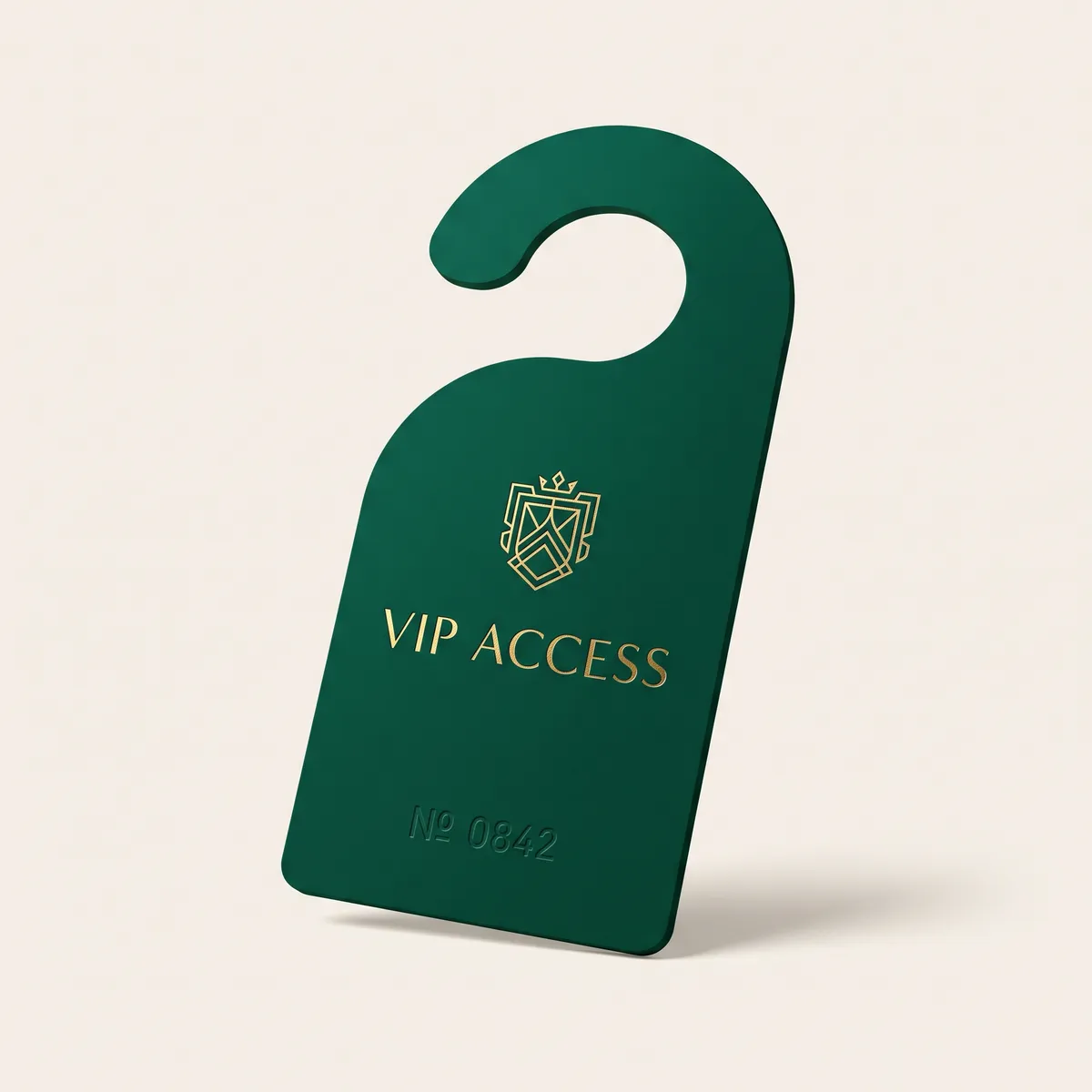
Parking hang tags sit in a windscreen taking direct sun for a full permit period, so fading and curling are the failure modes, not tearing. Board weight and a protective coating keep the tag readable; without that, colors fade noticeably within weeks. Printing both sides suits permits checked from outside the vehicle. Most orders run once per permit season or calendar year.
Ours are on Trustpilot, where we can't edit them or choose which ones you see.
Read them on Trustpilot →(opens in a new tab)Four stages, twelve days
Quote confirmed
A specialist checks your spec against the board and comes back with a firm price inside 4 business hours.
Proof approved
You get a flat dieline and a 3D render. Nothing goes to press until you approve it in writing.
On press
Print, die-cut, glue, and fold. You get a press-side photo the day your job runs.
QC and delivery
Every pallet is sampled against the digital proof or physical sample you approved, then shipped with tracking to your dock or 3PL.
If a box doesn't match the digital proof or physical sample you approved, we reprint the run at no charge.
Read the reprint terms →Know exactly what you're ordering.
Permits That Still Read Clearly in the Last Month
A parking permit has one job: to be read at a glance by whoever checks the lot. It does that easily on day one. The real test is the last few weeks of the permit period, after months of sun and heat and being pulled off the mirror and put back.
If it has faded or curled by then, attendants have to lean in to check it, residents get ticketed on a permit they paid for, and the issuer ends up reprinting mid-season.
This page is for property managers, campuses, employers, hospitals and event organizers that issue hang tags to drivers. It covers what keeps a permit legible for its full period, not just on the day it's handed out.
The Permit Spec Sheet: Board, Coating, Layout
Permits are printed on heavier coated stock for windshield use, with a protective coating over the print.
| Attribute | Parking tag spec |
|---|---|
| Stock | Heavier coated cardboard |
| Protection | Coating against fading and curling |
| Hanging | Die-cut to slip over the mirror stem |
| Both sides, laid out for checks from outside | |
| Shape | Cut to your outline |
| Runs | One design per permit period, or one per lot |
Plan the outward face first. It's what an attendant reads through the glass, so the permit type, lot or zone, and expiry date should be large enough to read from a few feet away, with nothing else competing for that space.
Why a Permit Gets a Different Spec From a Dealer Tag
Car tags and parking tags hang in the same place, but they stay there for very different lengths of time. A dealer tag sits on a mirror for days or weeks while a car is sold or serviced. A permit stays for a full season or year, in the same sun, every day.
That difference is the axis of this page. Heat warps a light board quickly, but over a permit period the bigger risk is fading, so the coating matters as much as the thickness.
A permit also has to prove something to a stranger, which a dealer tag never does. Sites that use electronic gate fobs and access devices can still issue a hang tag, because an attendant can't see a fob from outside the car.
Color Choices That Survive a Windshield
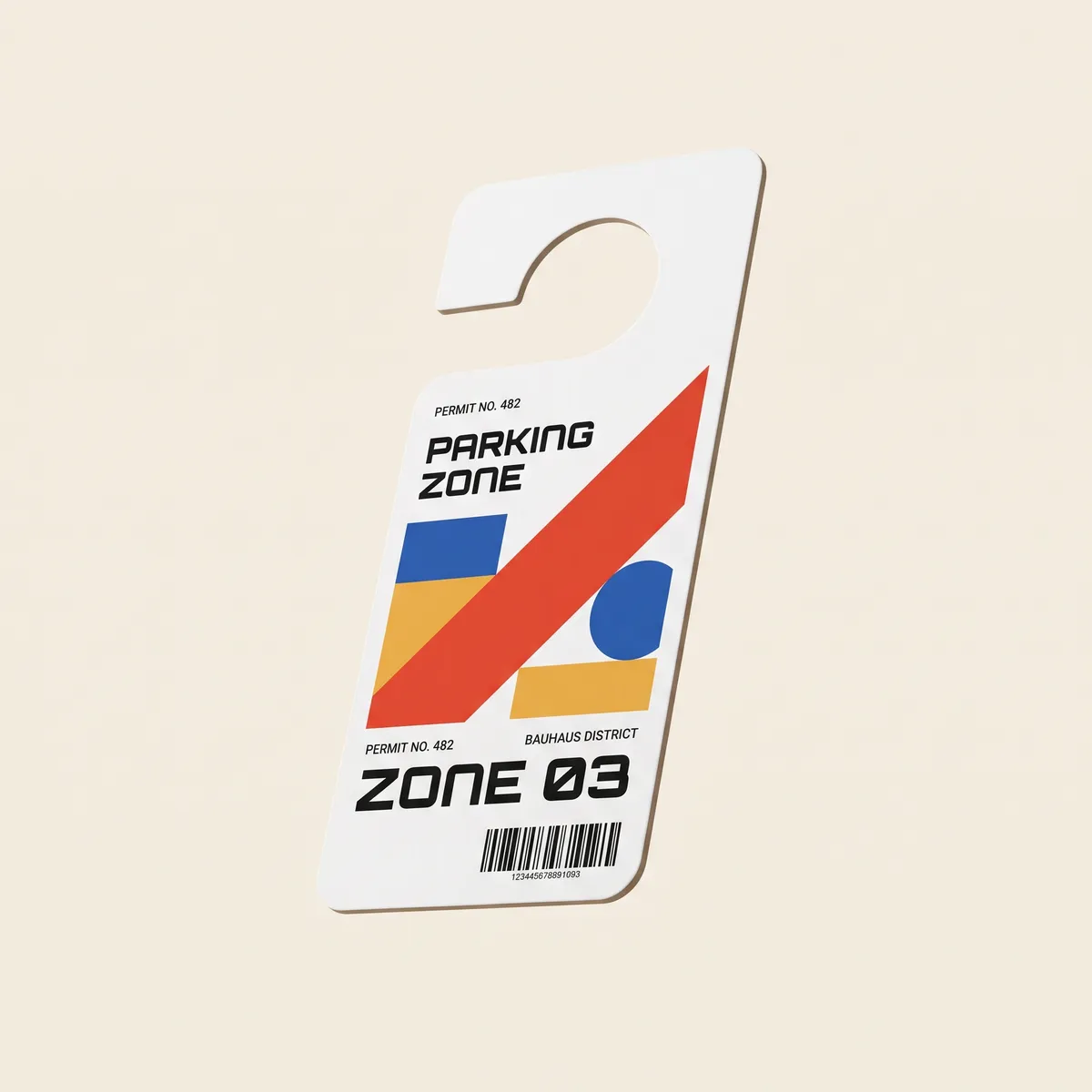
Sun fades some colors faster than others, and on a permit the colors usually carry meaning: one for staff, another for residents, a third for visitors. If those colors drift toward each other by midseason, the system stops working.
So keep the color coding bold and clearly distinct, and back it up with a large printed word or zone letter that still reads if the color weakens. Black type on a light ground stays legible longest. Avoid pale tints and fine reversed-out text on the outward face.
Change the main color between permit periods, so last year's tag is easy to spot at a glance. The protective coating is where the money should go; foil and embossing add cost without helping a permit do its job.
Permits for Residents, Students and Staff Lots
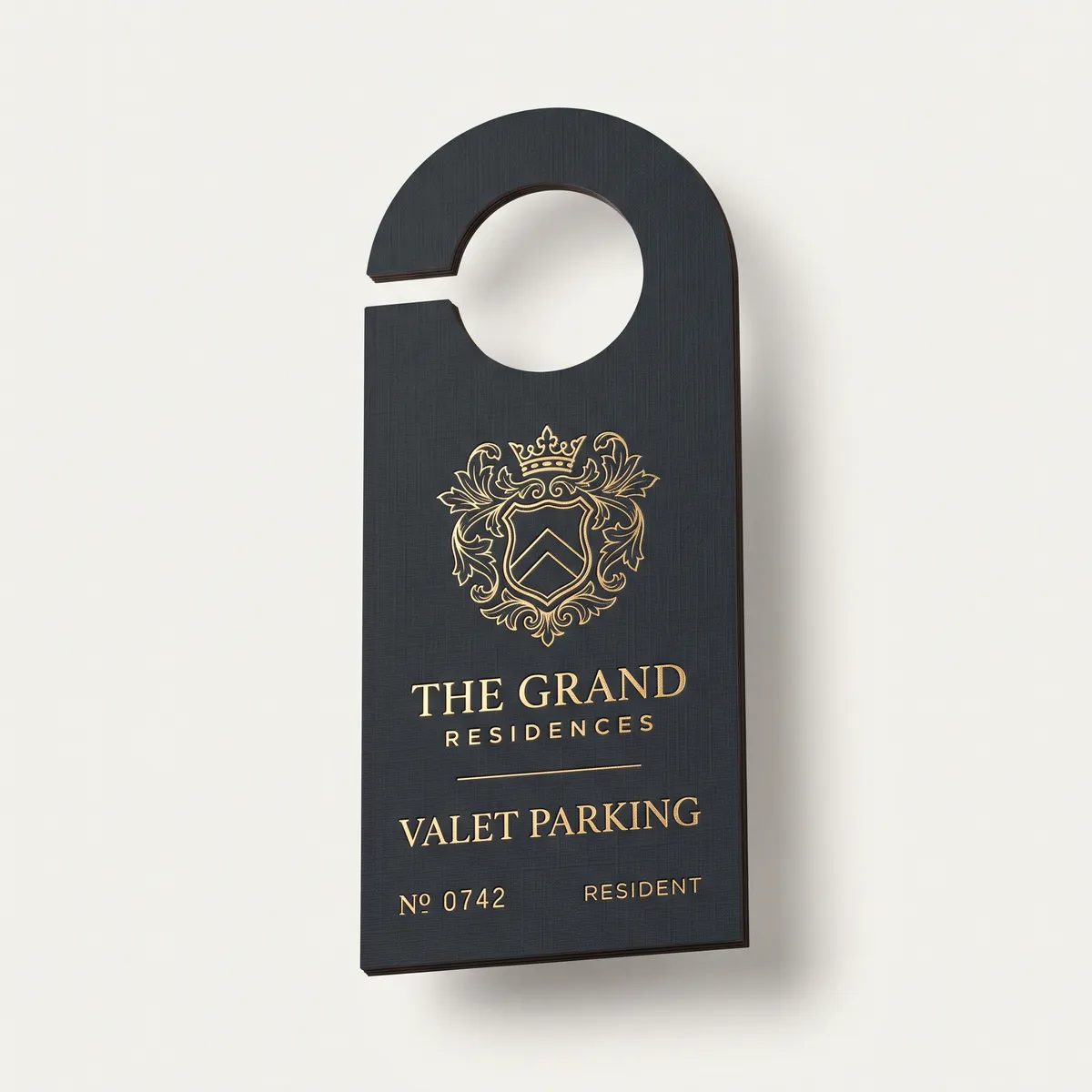
Apartment buildings and homeowner associations issue resident and visitor permits to control who uses limited parking. Universities and colleges issue them to students and staff by lot or zone, often in several colors. Hospitals and large employers use them for staff parking, sometimes with separate tags for shift workers.
Event venues and festivals issue them for crew, vendors and VIP areas, usually for a single date. Churches, schools and sports clubs use them for reserved spaces.
Multi-site issuers that send batches of permits out to each building can pack them in boxes for mailing permits out in bulk. Whatever the site, the permit's job stays the same: tell an attendant, at a glance, that this car belongs here.
Proof, Check and Delivery for a Permit Run
Permits have a hard start date, so plan the order back from it. Production takes 8–12 business days once you approve the proof, and rush is available at an extra cost, quoted upfront if your date is close.
Send the permit types, colors, zone names and dates you need. Design help is free and unlimited, and the proof shows both faces before anything prints. Check dates and zone names closely at that stage, since a wrong year makes the whole run unusable.
The minimum is 100 tags, and shipping is included in the price. Every run passes a three-stage check, and if the bulk doesn't match the approved proof, we reprint at our cost.
One connected process, start to finish.
Structural Design
Dieline drafted to your exact fit and freight tolerances.
Proof & Sample
Sign off on a digital proof, or request a physical sample.
Tooling
Dies and plates are cut for your job and archived on file.
Production
Print, die-cut, and assembly run under in-line quality checks.
Ship & Reorder
Freight goes out, and the cycle resets for your next run.
Steady process. Powerful results.
Like everything we build, our process is engineered to hold up — no shortcuts, no surprises. Five dependable stages that run the same way every single time, so reorders are just as fast as the first order.
- One dedicated teamFrom first sketch to final freight, the same people carry your order start to finish.
- Dies archived on fileReorders skip tooling and re-setup entirely — we already have your exact spec.
- Checked against your sign-offEvery run is inspected against the digital proof or physical sample you approved.
Set up your file once, correctly
Nine in ten delayed jobs are delayed by artwork, not production. Match these four rules and your proof lands the next morning.
- Bleed1/8 in (3 mm) past every cut line
- Safe ZoneKeep text 1/4 in clear of every crease
- ColourCMYK or named Pantone. No RGB.
- Resolution300 dpi at final size, fonts outlined
No print-ready file?
Send a logo and a rough idea. Our studio builds the production file free with any order over 500 units — you keep the source file either way.
Ask the StudioBackground art must run all the way to the outer bleed edge. Anything inside the white dashed line survives fold tolerance.



What brands say about this box
They live there rather than here, where we can't edit them, delete them, or pick which ones you get to see. That is exactly what makes them worth reading.
Read all reviews on Trustpilot(opens in a new tab)Answers before you have to ask.
What makes a parking tag last a season?
Board weight and a protective coating. Parking tags sit in a windscreen taking direct sun for months, so UV fading and curling are the failure modes rather than tearing.
Can parking tags be numbered sequentially?
Yes, and sequential numbering is available. Tell us the range you need and whether numbering should be on one side or both, since permits are often checked from outside the vehicle.
Do parking tags need UV protection?
Yes, if they're displayed in a windscreen for a full permit period. Without it, colors fade noticeably within weeks of direct sun, which undermines the permit's readability.
How long do parking hang tags take?
Usually 8–12 business days from proof approval, including sequential numbering. Rush is available at a stated premium, with shipping included.
Can parking tags be ordered per permit period?
Yes, from 100 tags. Permits are inherently periodic, so most orders are one-off runs per season or year rather than ongoing stock.