
Egg Boxes
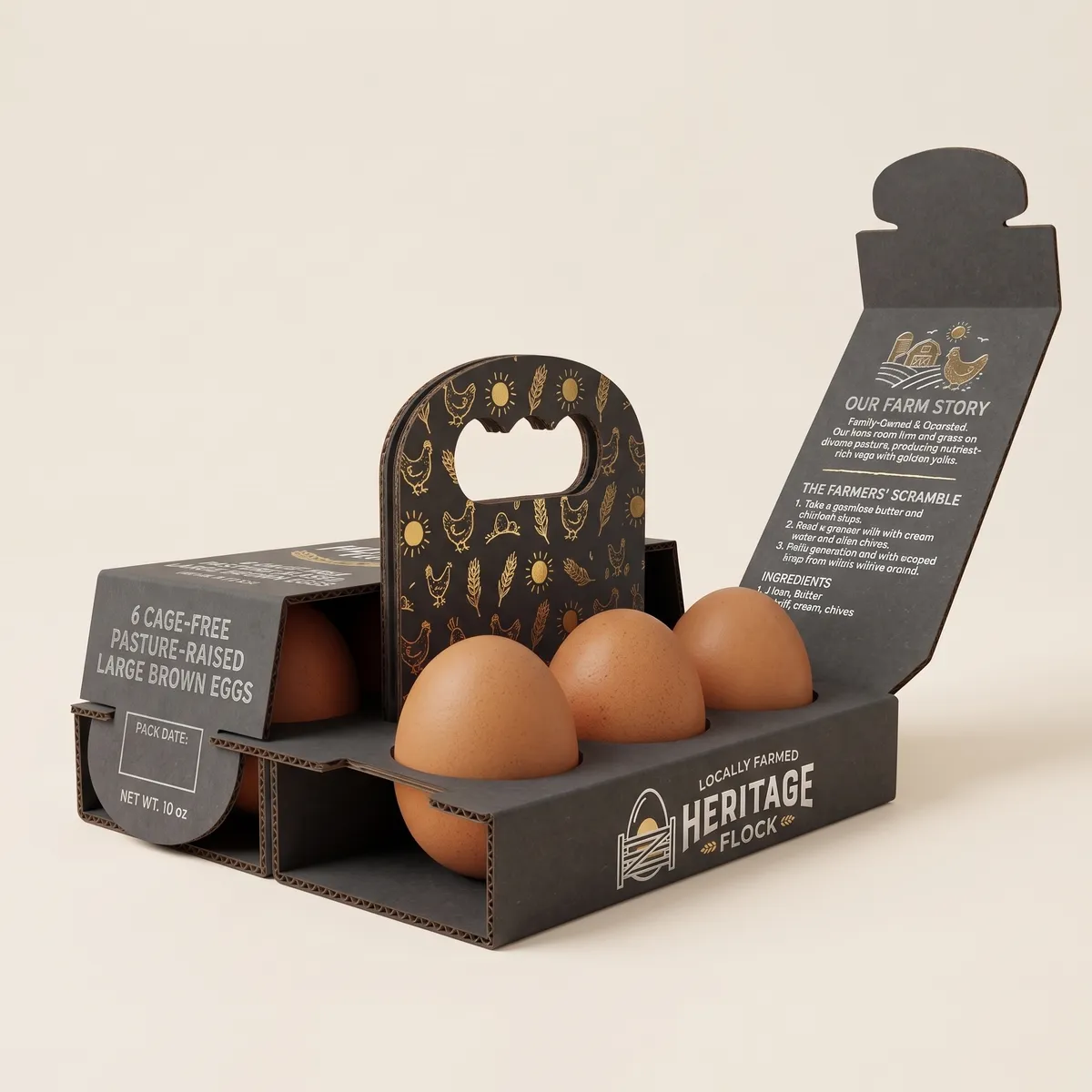
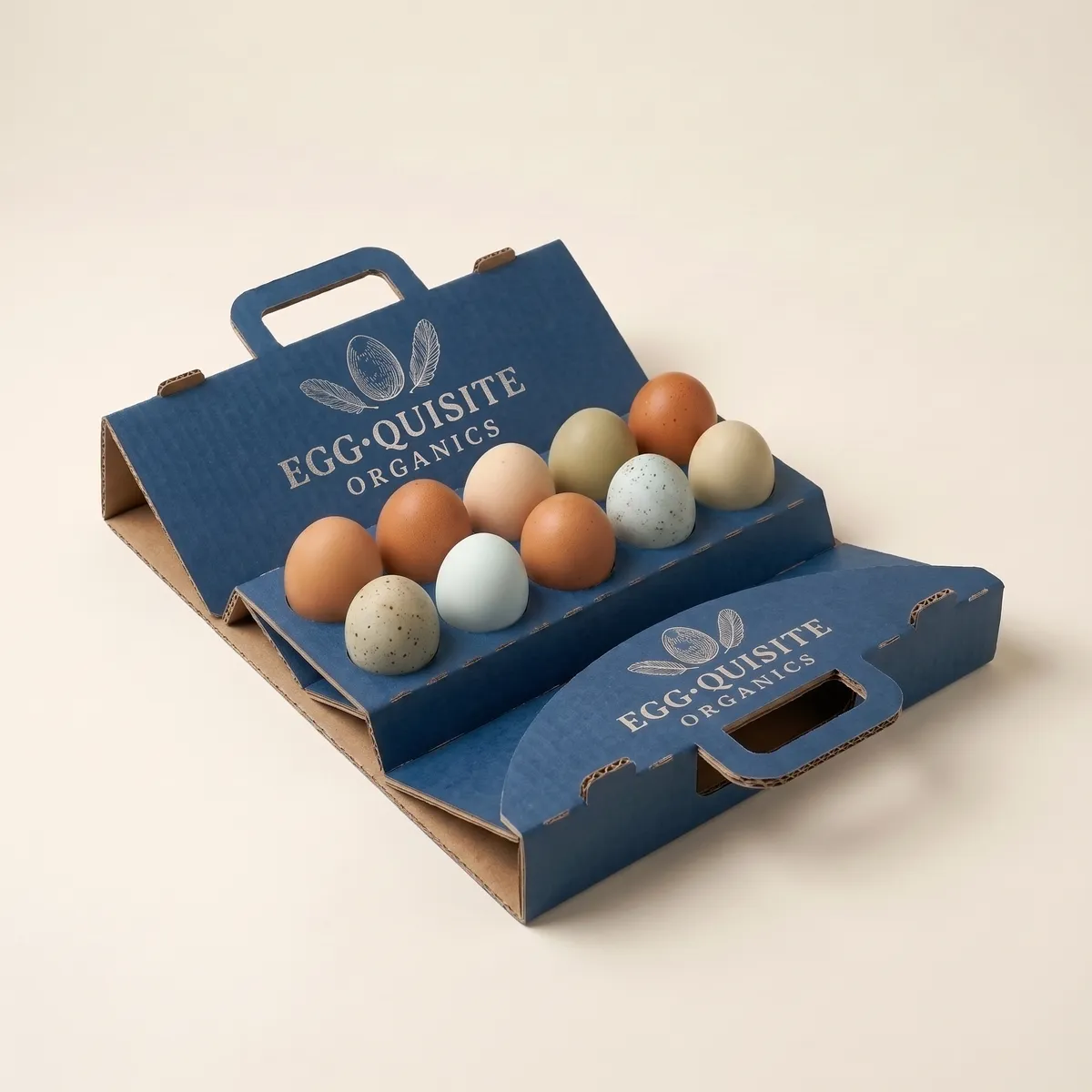
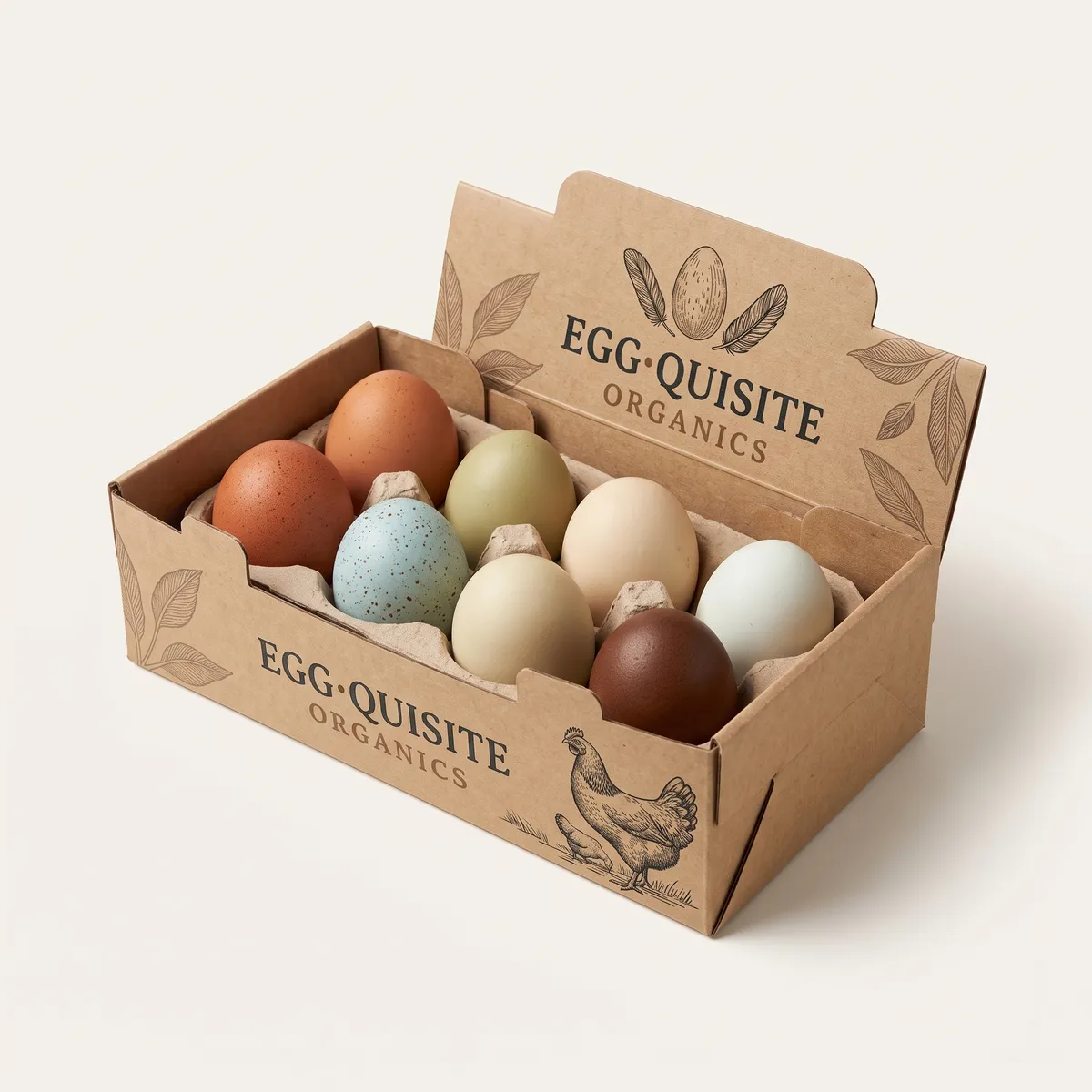
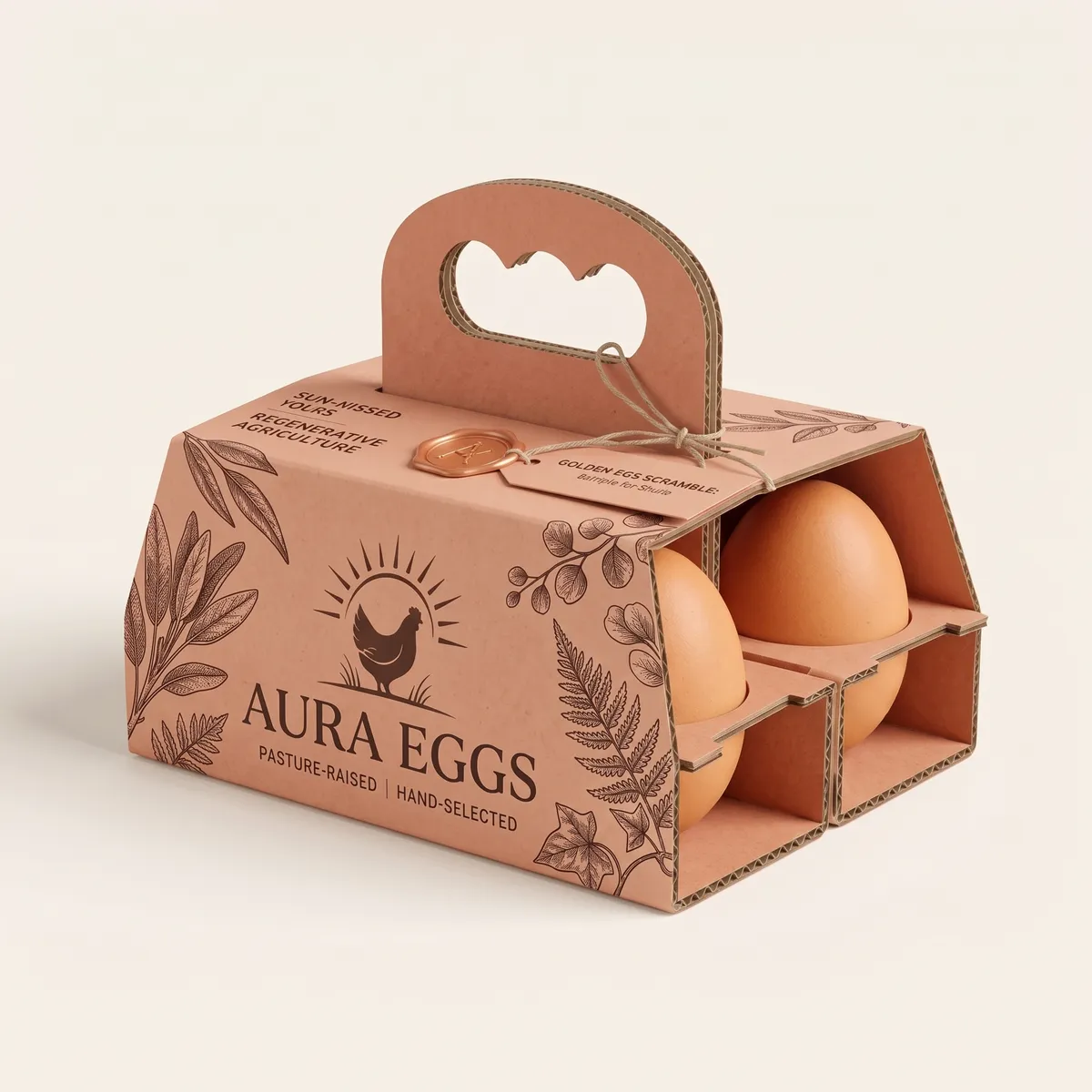
Eggs crack when they knock against each other, so egg boxes give every egg its own corrugated cell instead of a shared space. Half-dozen and dozen layouts are standard, other counts are cut to order, and fluted board holds up on a farm-shop counter or through couriers. A window lid displays the eggs before purchase, a carry handle is optional, and orders start at 100.
Ours are on Trustpilot, where we can't edit them or choose which ones you see.
Read them on Trustpilot →(opens in a new tab)Four stages, twelve days
Quote confirmed
A specialist checks your spec against the board and comes back with a firm price inside 4 business hours.
Proof approved
You get a flat dieline and a 3D render. Nothing goes to press until you approve it in writing.
On press
Print, die-cut, glue, and fold. You get a press-side photo the day your job runs.
QC and delivery
Every pallet is sampled against the digital proof or physical sample you approved, then shipped with tracking to your dock or 3PL.
If a box doesn't match the digital proof or physical sample you approved, we reprint the run at no charge.
Read the reprint terms →Know exactly what you're ordering.
Egg Cartons Built One Cell at a Time
Egg boxes on this page are corrugated cartons with a separate cell for every egg, sold to poultry farms, farm shops, market stalls, grocers and egg delivery businesses. The buyer is usually someone packing eggs by hand, often hundreds a week, who needs the carton to close cleanly, stack on a counter and carry a brand name home with the customer.
That last part gets overlooked. A plain carton tells the shopper nothing about where the eggs came from, and in a category where provenance is most of the sale, the lid is the only label most people read. A printed carton turns the farm name, the hens and the packing date into something the buyer sees every time they open the fridge.
Egg Box Specs: Cells, Counts and Lid Options
Every egg box is built on fluted corrugated board, with the cell grid cut to the eggs you actually pack rather than a generic size.
| Spec | Egg Boxes |
|---|---|
| Stock | Corrugated board |
| Standard counts | Half-dozen and dozen |
| Other counts | Cut to order |
| Cells | One per egg, sized to your egg grade |
| Lid | Plain or with a window |
| Handle | Optional carry handle |
| Size | Built from your egg size and count |
| Minimum order | 100 boxes per count |
Send us the largest egg you pack, since cells sized for medium eggs pinch a large one at the shoulder. We confirm the internal cell dimensions in writing before cutting, so the grid fits the eggs and not just the drawing.
Why a Cell Grid Beats a Loose Carton
A carton with one open space and a divider or two relies on the eggs being packed tight enough not to move. In practice they never are. Customers lift a box by one end or set it down hard on a counter, and every one of those moments tips the eggs into each other.
Cells change where the force goes. Each egg sits in its own pocket, so a knock to the box is taken by the cell walls instead of the neighboring shell. That is the same logic as a fitted cavity tray, applied to a product that is uniform in shape but fragile everywhere. Corrugated adds the spring a thin carton lacks, which is why the cell grid holds square when the box is full and stacked.
What to Print on an Egg Carton Lid
The lid is the panel that sells, so most egg boxes put the farm or brand name there, with any welfare or origin wording you choose to make close beneath it. Those claims are yours; we print exactly what you approve on the proof.
Corrugated reproduces bold shapes and one or two solid colors well, which suits the simple, rural look most egg brands want anyway. Large logos, hand-drawn marks and clear type do better than photography. A window cut into the lid replaces a printed image of eggs with the real thing, which is the more convincing option on a farm-shop shelf.
Skip foil, soft-touch film and heavy lamination. An egg carton is opened in a kitchen, maybe reused once, then recycled, so that spend goes nowhere.
Farm Shops, Markets and Egg Delivery Rounds
Small poultry farms are the core buyers, packing half-dozens for honesty boxes at the gate and dozens for local shops. Farm shops and delis use printed cartons to put their own name on eggs bought in from several suppliers, keeping one look across the shelf.
Market traders tend to choose the carry handle, because customers walking a market want a box they can hold without squeezing the lid. Grocers stocking free-range or specialty eggs use a window lid so the shell color is visible from the aisle.
Egg delivery and veg-box businesses send cartons out with the rest of the order, sometimes inside a courier carton and sometimes on their own. Corrugated is what makes the second option practical, since the cells keep their shape through a van.
From Egg Count to Printed Cartons
Start by telling us the counts you sell and the largest egg grade you pack. We build the dieline from those, confirm internal dimensions in writing, and send a proof. Design help is unlimited and free if you need artwork for the lid.
Once you approve the proof, production takes 8–12 business days. Rush is available at an extra cost, quoted upfront. Shipping is included in the price, and the minimum is 100 boxes per count, enough to trial a printed carton first.
Every run passes a three-stage check before dispatch, so a cell grid cut wrong is caught by us rather than discovered on the packing bench. If bulk doesn't match the approved proof, we reprint at our cost. Free samples are included on orders above 10,000 boxes.
One connected process, start to finish.
Structural Design
Dieline drafted to your exact fit and freight tolerances.
Proof & Sample
Sign off on a digital proof, or request a physical sample.
Tooling
Dies and plates are cut for your job and archived on file.
Production
Print, die-cut, and assembly run under in-line quality checks.
Ship & Reorder
Freight goes out, and the cycle resets for your next run.
Steady process. Powerful results.
Like everything we build, our process is engineered to hold up — no shortcuts, no surprises. Five dependable stages that run the same way every single time, so reorders are just as fast as the first order.
- One dedicated teamFrom first sketch to final freight, the same people carry your order start to finish.
- Dies archived on fileReorders skip tooling and re-setup entirely — we already have your exact spec.
- Checked against your sign-offEvery run is inspected against the digital proof or physical sample you approved.
Set up your file once, correctly
Nine in ten delayed jobs are delayed by artwork, not production. Match these four rules and your proof lands the next morning.
- Bleed1/8 in (3 mm) past every cut line
- Safe ZoneKeep text 1/4 in clear of every crease
- ColourCMYK or named Pantone. No RGB.
- Resolution300 dpi at final size, fonts outlined
No print-ready file?
Send a logo and a rough idea. Our studio builds the production file free with any order over 500 units — you keep the source file either way.
Ask the StudioBackground art must run all the way to the outer bleed edge. Anything inside the white dashed line survives fold tolerance.
What brands say about this box
They live there rather than here, where we can't edit them, delete them, or pick which ones you get to see. That is exactly what makes them worth reading.
Read all reviews on Trustpilot(opens in a new tab)Answers before you have to ask.
Why does each egg need its own cell?
Because eggs rarely break from a drop. They crack against each other or the box wall as the contents shift. A cell per egg keeps them apart, so a knock to the box doesn't pass from one shell to the next.
Can egg boxes have a window or a handle?
Yes, both. A window in the lid lets shoppers check the eggs without opening the box. A carry handle suits boxes bought at a farm shop or market and carried home, and is worth skipping on boxes that only sit on a shelf.
Why are egg boxes made from corrugated?
The flute cushions the eggs and keeps the cells square under the weight of a full box, including through a courier. The trade-off is print: the flute softens fine type, so bold, simple artwork reproduces best.
How long do egg boxes take to produce?
About 8–12 business days from proof approval, cells, window and handle included. Rush is available at an extra cost quoted upfront, and shipping is included on every order.
What counts can egg boxes hold?
Half-dozen and dozen are the standard layouts, and other counts are cut to order. Tell us the count and the egg size you pack, and we'll lay out the cells around them. Each count orders from 100 boxes.