
Seafood Boxes
Seafood boxes deal with sustained moisture from melting ice and with odor, which travels with that moisture. Coated stock with a barrier on the inside face stops liquid reaching the board, which keeps both the structure and the smell contained. A standard grease coating isn't enough here. Orders start at 100 boxes, barrier included, so you can trial the specification first.
Ours are on Trustpilot, where we can't edit them or choose which ones you see.
Read them on Trustpilot →(opens in a new tab)Four stages, twelve days
Quote confirmed
A specialist checks your spec against the board and comes back with a firm price inside 4 business hours.
Proof approved
You get a flat dieline and a 3D render. Nothing goes to press until you approve it in writing.
On press
Print, die-cut, glue, and fold. You get a press-side photo the day your job runs.
QC and delivery
Every pallet is sampled against the digital proof or physical sample you approved, then shipped with tracking to your dock or 3PL.
If a box doesn't match the digital proof or physical sample you approved, we reprint the run at no charge.
Read the reprint terms →Know exactly what you're ordering.
Seafood Boxes Built Around the Ice
Fish and shellfish packed in ice have to stay presentable from the counter, dock or kitchen until someone opens the box. Seafood boxes do that job for fishmongers, seafood restaurants doing takeout, seafood markets and the suppliers delivering to local kitchens. A seafood box is judged at the moment of unpacking: a soft base, a wet bag or a smell in the car undoes the impression of fresh product before anyone tastes it. So the box is specified from the conditions inward, not from the artwork outward. How long it holds, how much ice sits in it and how far it travels decide the build, and print comes after that.
Barrier, Coating and Board for Wet Holds
The board carries the weight, and the barrier keeps the board dry.
| Attribute | Spec |
|---|---|
| Board | Coated stock, or coated fluted board for heavier holds |
| Inner barrier | Moisture barrier or liner on the inside face |
| Longer holds | Heavier barrier specified |
| Sizes | Cut to your product and ice volume |
Grease coatings are made for oil, not standing water, so they aren't enough here. The barrier is what stops liquid soaking into the board, and keeping the board dry is also what keeps the odor inside the box. Tell us the hold time and the weight of product plus ice, and the barrier is set to match those conditions.
Why a Tray Build Suits Fish on Ice
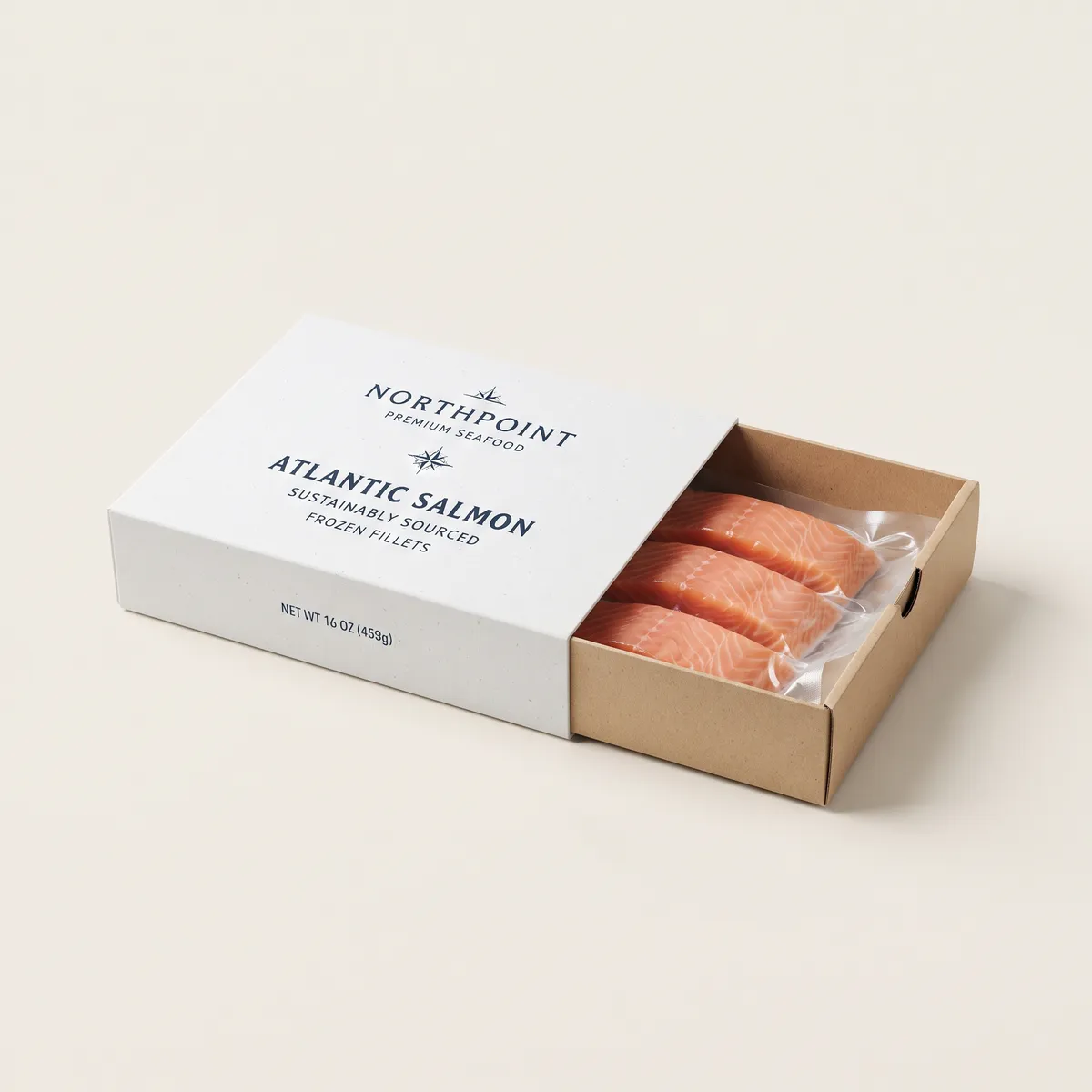
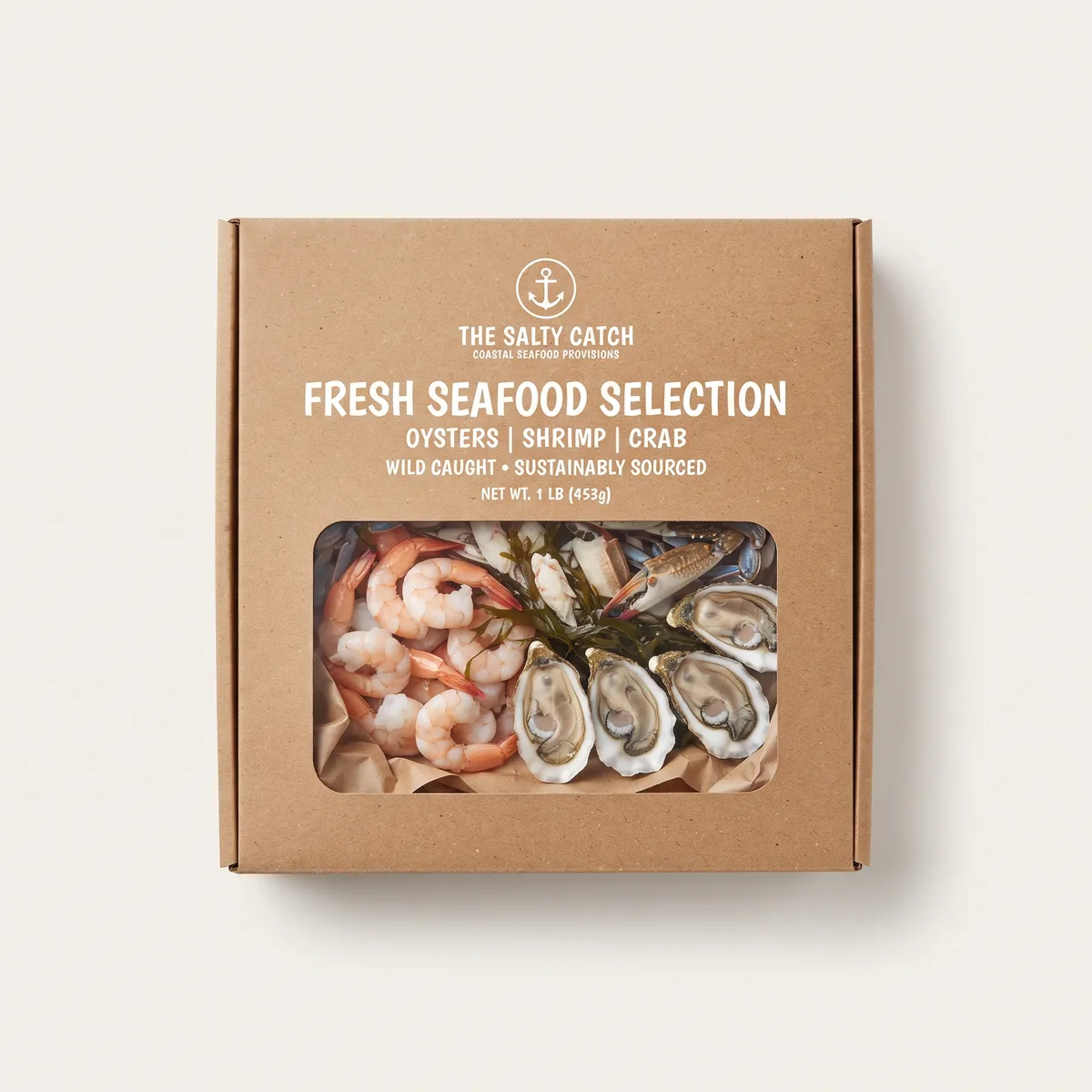
Seafood boxes can be built as an open tray with lid, or as coated corrugated for heavier or longer holds. The tray format earns its place for counter sales and takeout. Fish lies flat and visible, ice packs around it evenly, and the lid lifts straight off. A tall carton does the opposite: product piles on top of itself and water collects at the bottom. Corrugated becomes the better choice when the box carries real weight or travels further, since the flutes add stiffness a single sheet can't. If your orders are mostly small and short-hop, a tray build will do. Don't buy corrugated strength you won't use.
Printing on a Box That Lives in Ice
Print and barrier sit on opposite faces: the moisture barrier goes on the inside and the print on the outside, so artwork never touches the ice directly. The outer face still deals with cold, damp hands and wet counters, which is why a simple design is usually the better spend. A one-color logo on plain board is quick to read and inexpensive. Full color on coated stock suits retail seafood brands selling from a chiller cabinet, where the box is seen before it's opened. A plain unprinted box with a label is the lowest-cost route for wholesale. Whatever you choose, trial the print together with the barrier spec on a small first order.
Fishmongers, Seafood Counters and Fish Fry Takeout
Fishmongers and supermarket seafood counters pack whole fish, fillets and shellfish on ice for customers to carry home. Seafood restaurants and shacks doing fish fry and seafood takeout use them for raw platters, oysters and crab legs sold to go. Seafood markets and dockside sellers pack for walk-in trade. Local suppliers delivering to restaurants use the heavier corrugated build for wholesale drops. Caterers serving seafood at events use tray builds as a display that doubles as transport. If your product travels only a short distance with little ice, tell us, because the barrier can be scaled to the hold rather than set at the heaviest option.
What to Send Us for a Seafood Quote
Three details shape the spec: what the product is, how long it stays in the box, and roughly how much ice goes in with it. Add the dimensions or a photo of how you pack now, and we'll build the dieline and confirm internal versus external measurements in writing. The minimum is 100 boxes with the barrier included, which is the sensible way to test the build against your own ice and hold time before ordering in volume. Production takes 8–12 business days after you approve the proof. Rush is available at extra cost, quoted upfront. Shipping is in the price, and design help is free if you want a logo on the lid.
One connected process, start to finish.
Structural Design
Dieline drafted to your exact fit and freight tolerances.
Proof & Sample
Sign off on a digital proof, or request a physical sample.
Tooling
Dies and plates are cut for your job and archived on file.
Production
Print, die-cut, and assembly run under in-line quality checks.
Ship & Reorder
Freight goes out, and the cycle resets for your next run.
Steady process. Powerful results.
Like everything we build, our process is engineered to hold up — no shortcuts, no surprises. Five dependable stages that run the same way every single time, so reorders are just as fast as the first order.
- One dedicated teamFrom first sketch to final freight, the same people carry your order start to finish.
- Dies archived on fileReorders skip tooling and re-setup entirely — we already have your exact spec.
- Checked against your sign-offEvery run is inspected against the digital proof or physical sample you approved.
Set up your file once, correctly
Nine in ten delayed jobs are delayed by artwork, not production. Match these four rules and your proof lands the next morning.
- Bleed1/8 in (3 mm) past every cut line
- Safe ZoneKeep text 1/4 in clear of every crease
- ColourCMYK or named Pantone. No RGB.
- Resolution300 dpi at final size, fonts outlined
No print-ready file?
Send a logo and a rough idea. Our studio builds the production file free with any order over 500 units — you keep the source file either way.
Ask the StudioBackground art must run all the way to the outer bleed edge. Anything inside the white dashed line survives fold tolerance.
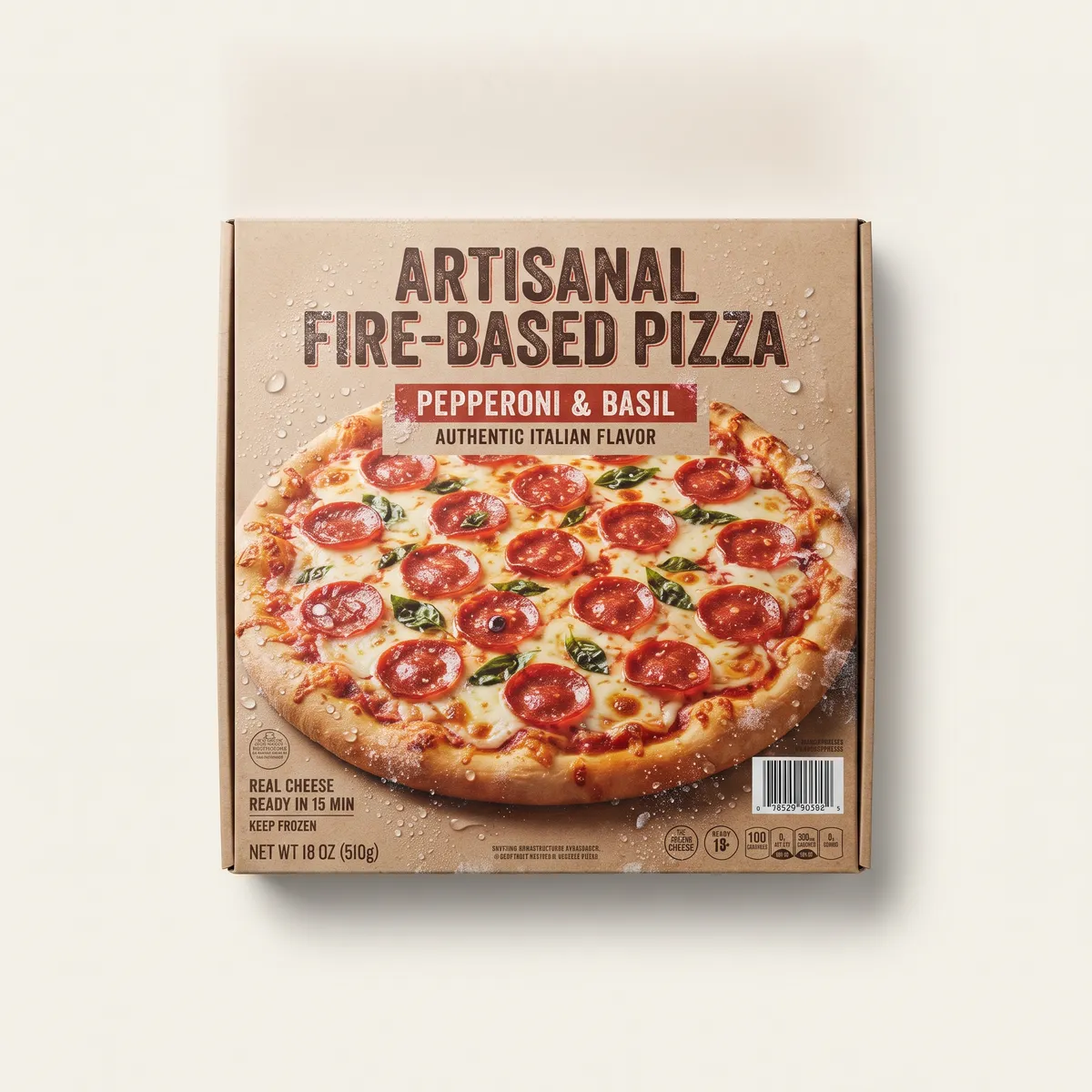
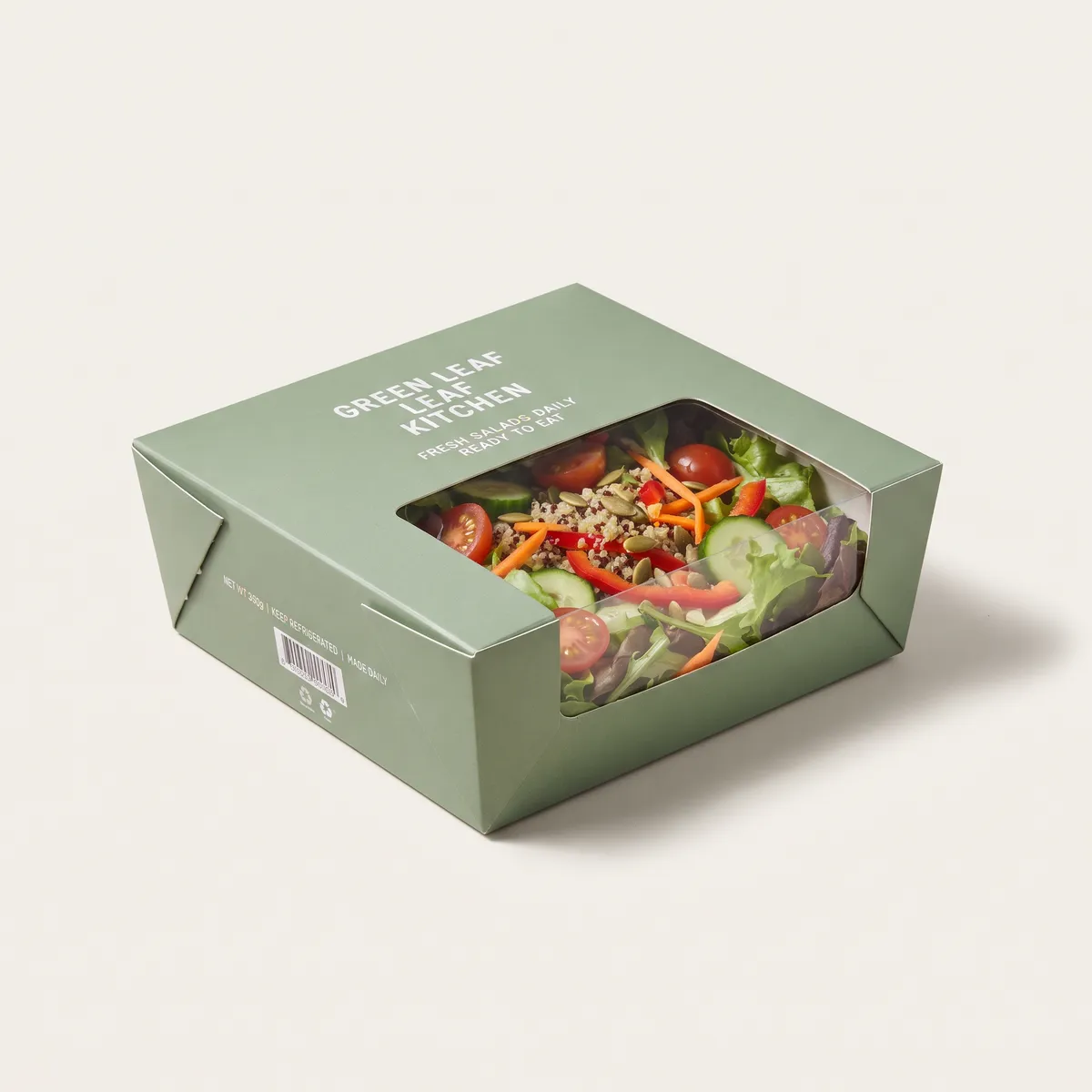
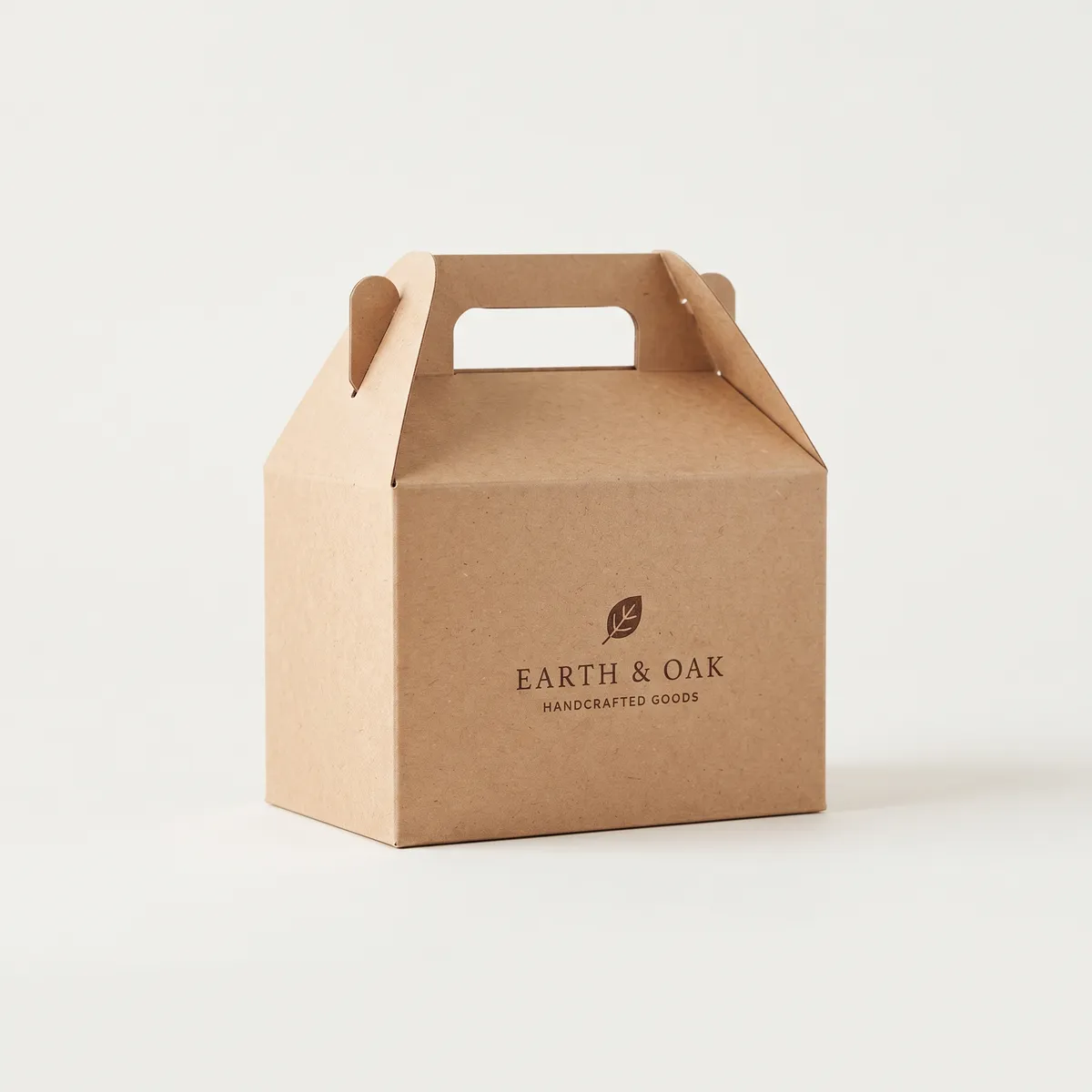
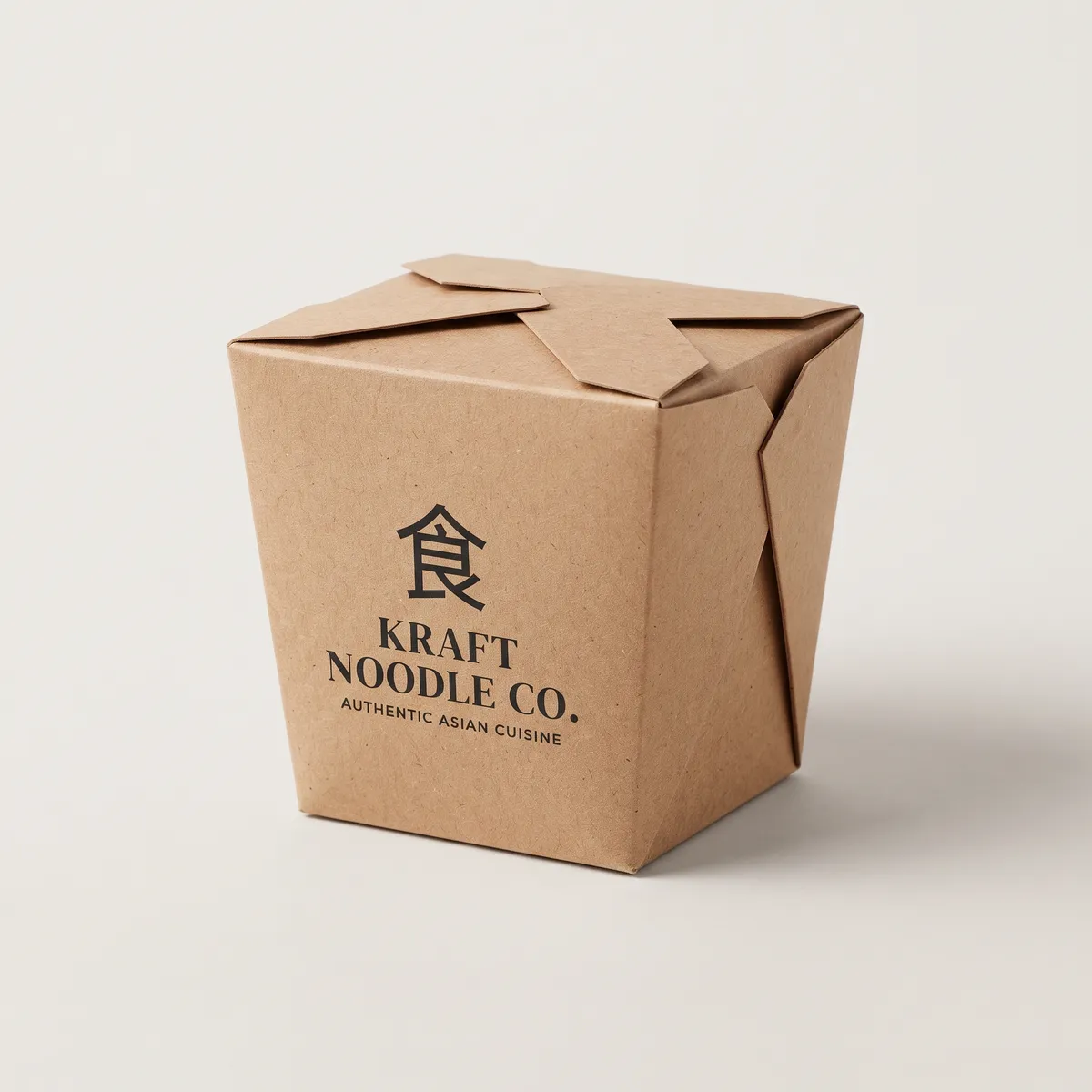
What brands say about this box
They live there rather than here, where we can't edit them, delete them, or pick which ones you get to see. That is exactly what makes them worth reading.
Read all reviews on Trustpilot(opens in a new tab)Answers before you have to ask.
How do you stop seafood odor escaping?
With a coated stock and a moisture barrier on the inside face. Odor travels with moisture, so stopping liquid from reaching the board stops the smell escaping through it. For longer holds, we'd recommend a heavier barrier.
Can seafood boxes hold ice?
Yes, with a moisture barrier specified for it. Ice means sustained wet contact, which ordinary board can't take. We use a coated stock and a liner or barrier so the box holds its structure as the ice melts.
Do seafood boxes need a specific coating?
Yes. Seafood means sustained moisture and strong odor, so a standard grease coating isn't enough. We specify a moisture barrier that stops liquid reaching the board, which is what keeps both the structure and the smell contained.
What's the lead time on seafood boxes?
About 8–12 business days once the proof is approved, barrier included. Rush production is available at an extra cost we'll state first. Shipping comes included.
What's the minimum on seafood boxes?
100 boxes, including the moisture barrier. That's low enough to trial the spec with your actual product before committing, which we'd recommend given how demanding the conditions are.