
Chinese Food Boxes
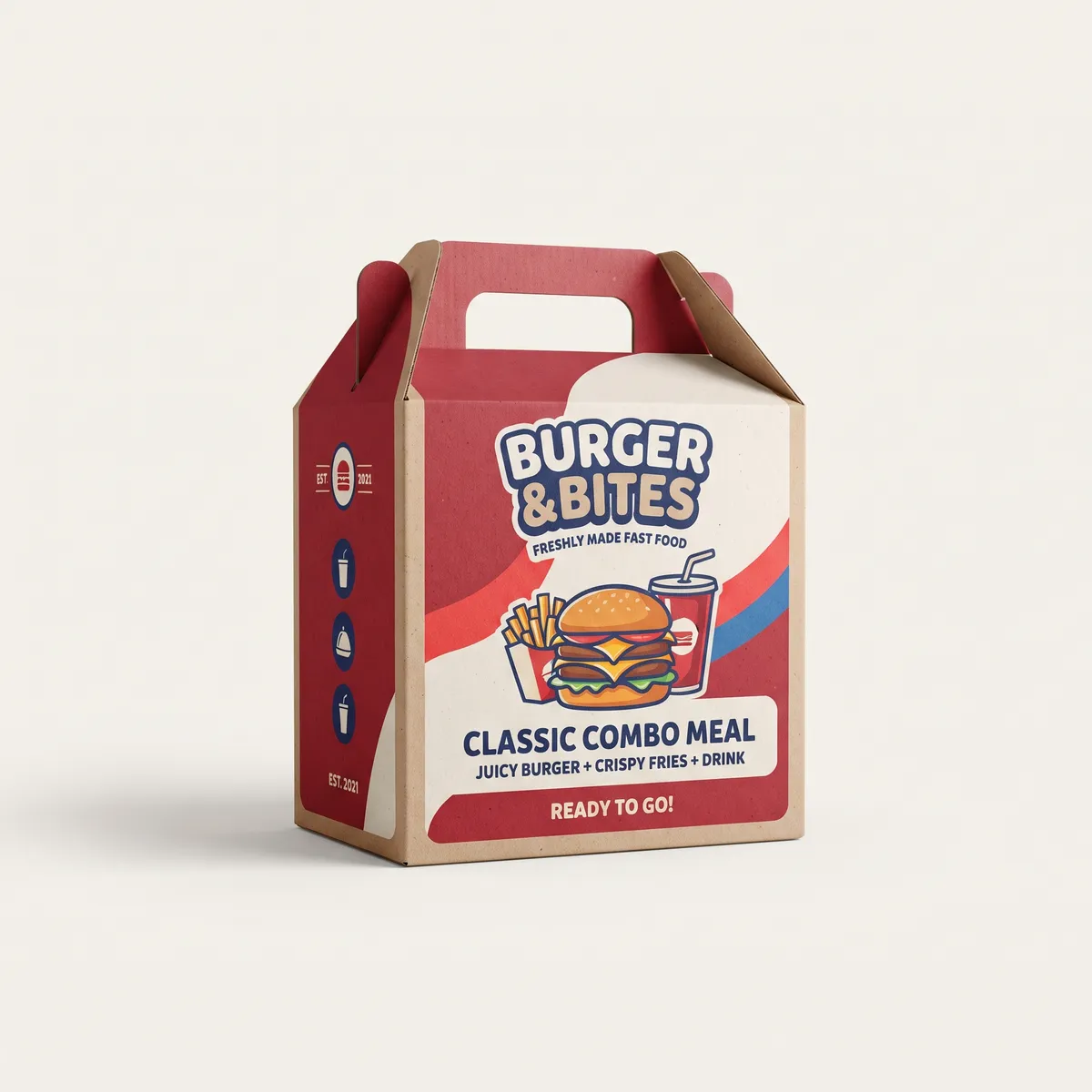
Chinese food boxes fold into pail cartons with the seams above the fill line, so sauces and broths stay inside, and a food-safe coating on the inner face stops moisture wicking through the board. They store flat and assemble in one motion during a busy takeout service. Most kitchens carry two or three fill sizes, and we quote them together as a single production order.
Ours are on Trustpilot, where we can't edit them or choose which ones you see.
Read them on Trustpilot →(opens in a new tab)Four stages, twelve days
Quote confirmed
A specialist checks your spec against the board and comes back with a firm price inside 4 business hours.
Proof approved
You get a flat dieline and a 3D render. Nothing goes to press until you approve it in writing.
On press
Print, die-cut, glue, and fold. You get a press-side photo the day your job runs.
QC and delivery
Every pallet is sampled against the digital proof or physical sample you approved, then shipped with tracking to your dock or 3PL.
If a box doesn't match the digital proof or physical sample you approved, we reprint the run at no charge.
Read the reprint terms →Know exactly what you're ordering.
One Flat Sheet, Folded Into a Pail
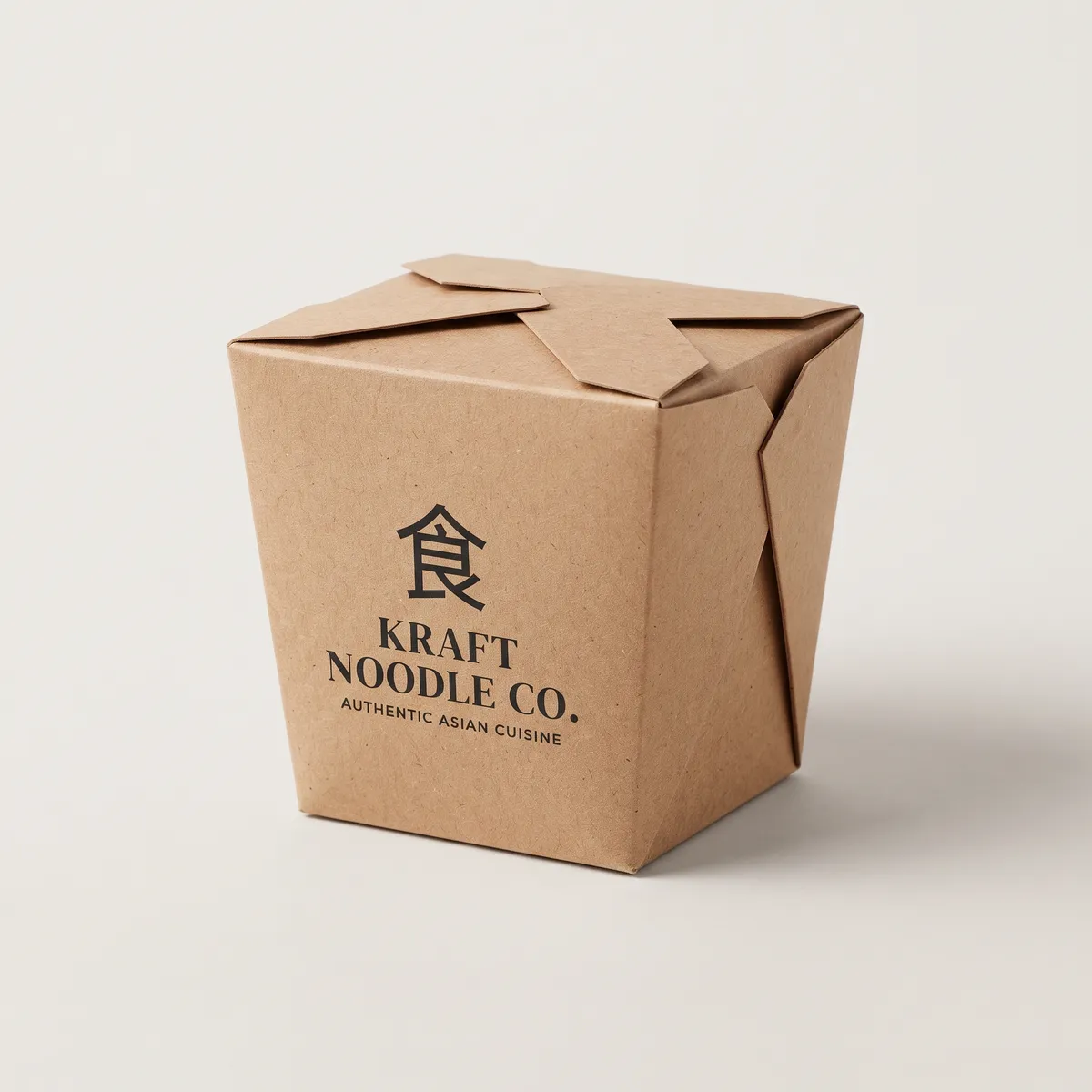
The Chinese food box is one of the most recognizable shapes in takeout: a square base, tapered sides and a top that folds closed. Customers know what's inside before they open it.
Buyers are Chinese, Thai, Japanese and pan-Asian restaurants, noodle bars and rice bowl chains, along with kitchens outside Asian cuisine that like the shape for pasta, mac and cheese or grain salads. A lot of people eat straight from the pail with chopsticks or a fork, at a desk or on a sofa, so the box doubles as the bowl. That changes what it has to do. It has to look good open, sit steady on a flat surface and still hold its shape halfway through the meal.
Pail Carton Specs: Fill Size, Seams and Inner Coating
Pails come in brown unbleached paperboard or coated white board, both food-grade.
| Spec | Detail |
|---|---|
| Board | Kraft or coated white, food-grade |
| Inner face | Food-safe coating; heavier barrier for very wet dishes |
| Seams | Folded to sit above the fill line |
| Sizes | Built to your fill volume, single to family portions |
| Tolerance | ±1/16" (1.5mm) |
Measure each dish by volume, in fluid ounces or milliliters, rather than guessing at outer dimensions. We turn that volume into a dieline and confirm the measurements in writing, so a full portion of noodles leaves room for the top to close without pressing on the food.
Why a Pail Beats a Flat Box for Noodles and Rice
Saucy food in a flat clamshell spreads in a thin layer across a wide base, with the hinge and side seams at the same level as the sauce. A pail does the opposite. The food sits deep in a narrow base, the sauce stays low and the folds are well above it.
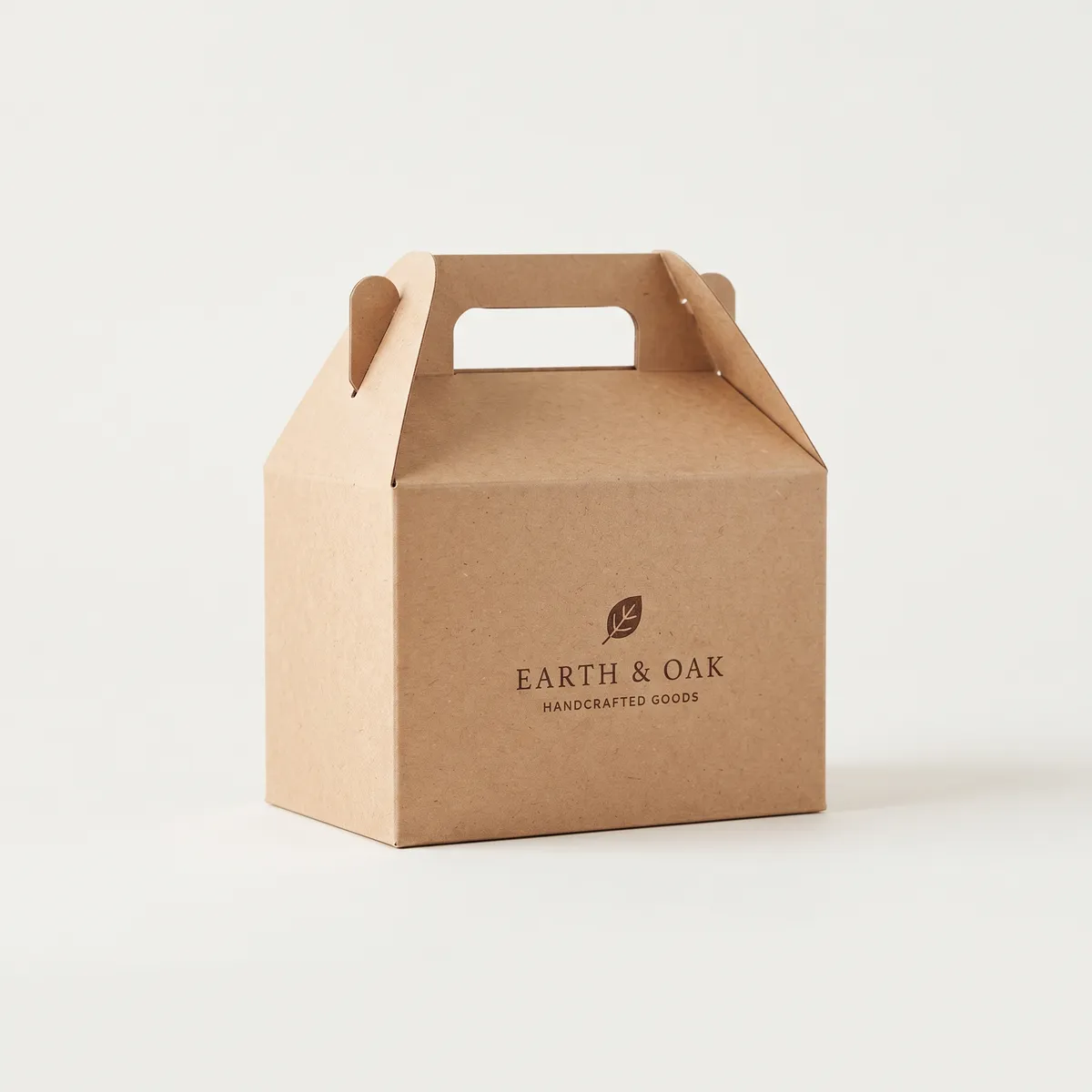
Depth also means the pail stands upright in a delivery bag without sliding into its neighbors. The pail shares its logic with folding carry cartons in the gable family: one sheet, folded by hand in seconds and closed at the top. Where a pail isn't the right box is crisp fried food such as spring rolls or tempura, which steams and softens when packed deep. A flat, vented box serves those better.
Logo Print on a Takeout Pail
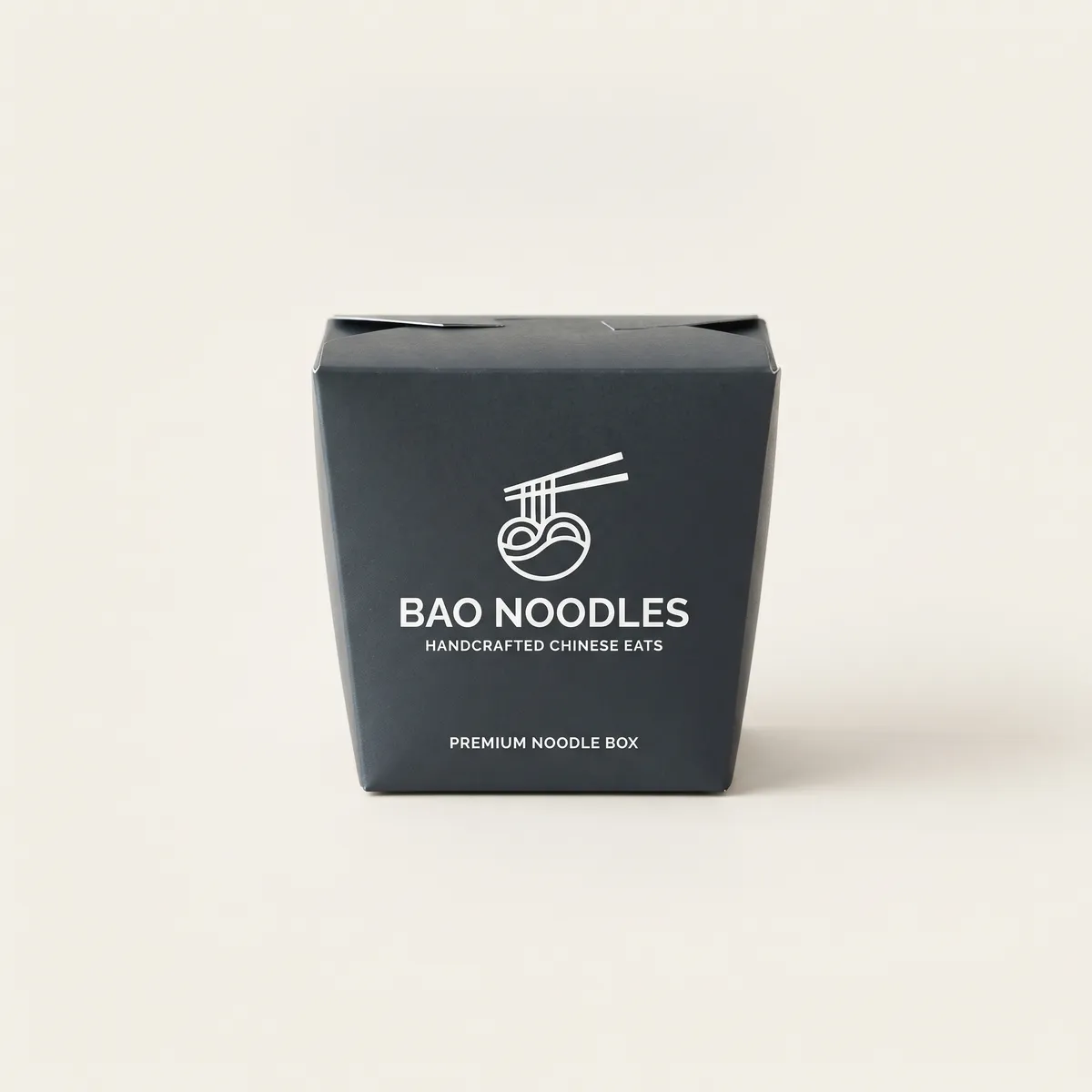
The print area is four tapered side panels, and most restaurants keep it simple: a logo on two sides, with a phone number or a QR code for reorders on a third. One or two colors on kraft look deliberate and keep the cost down.
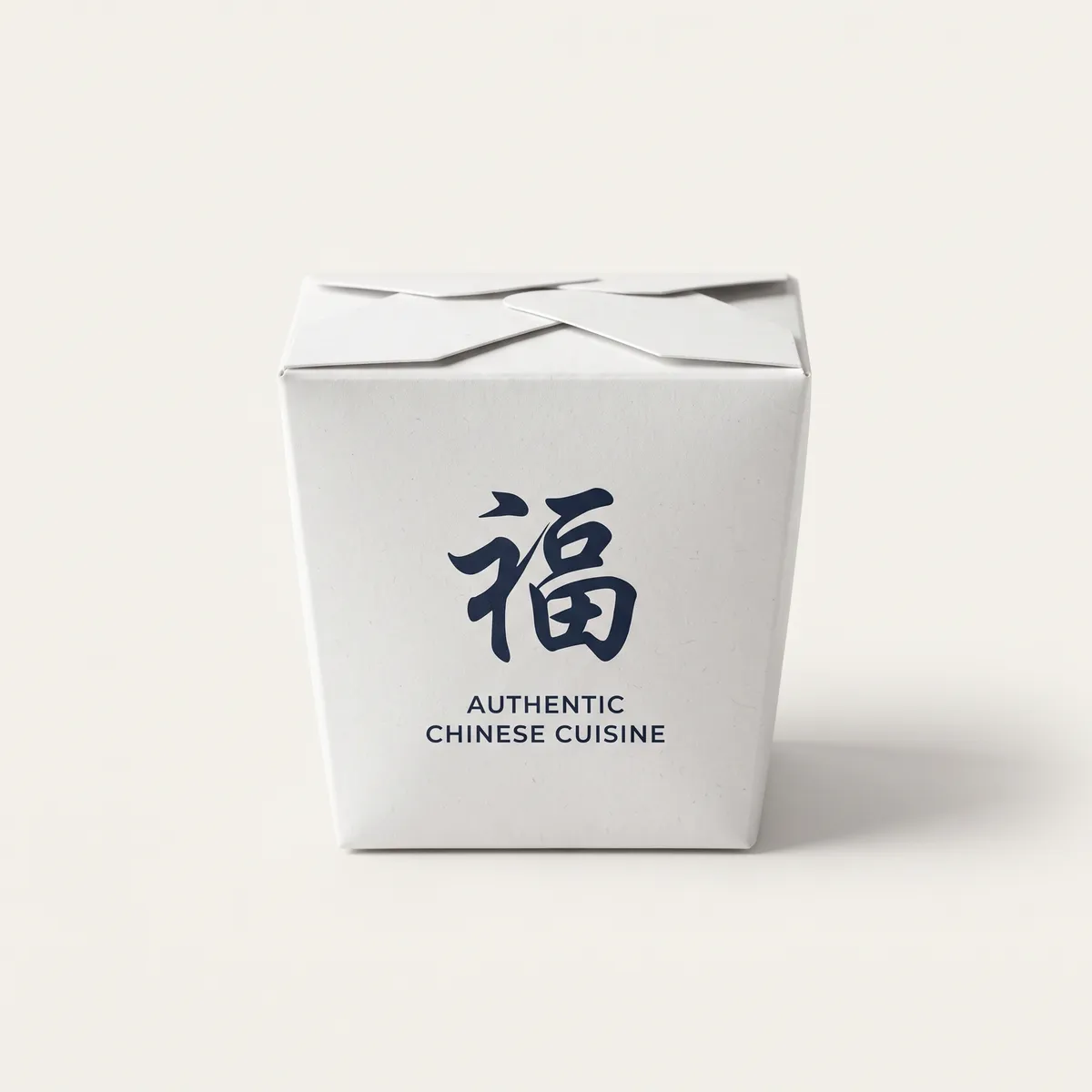
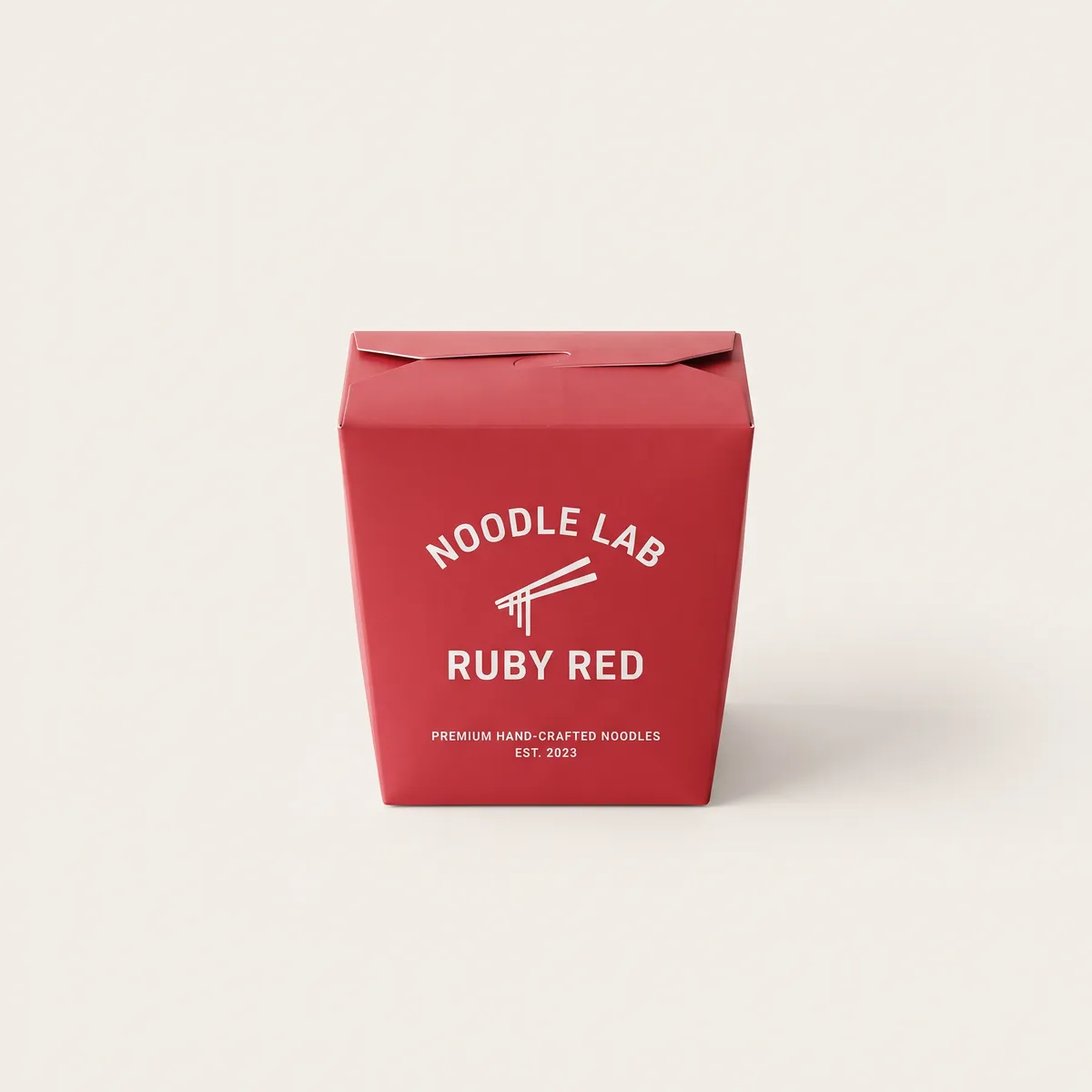
Coated white pails take full color, which suits chains with photography or a strong brand palette. Because the panels lean outward, keep key text away from the fold lines, where it can bend out of view when the pail is open. A small mark on the closing flaps is visible when bags are packed and checked at the pass. Free design help includes placing your artwork on the flat dieline, so you can see where each panel lands once folded.
Noodle Bars, Rice Dishes and Takeout Lines
Noodle bars are the core buyer: lo mein, pad thai, ramen-style dry noodles and stir-fries all sit well in a pail. Fried rice, biryani and rice bowls with sauce on top are the next biggest group. Quick-service takeout kitchens use pails for sides and soups in smaller sizes, alongside larger ones for mains.
Beyond Asian cuisine, pasta shops, mac-and-cheese counters and salad bars use the shape because customers like eating from it. Caterers serving office lunches use pails for individual portions that people carry back to their desks. Food trucks like them because they store flat in a small space and fold quickly when a queue builds at the window.
Lead Time and Setup for Takeout Pails
Pails are quoted with the die, plates and setup included, so nothing is added after you approve the price. Tell us the volume for each dish and the stock you want, and we'll send a proof showing the artwork on every panel.
After you sign it off, production takes 8–12 business days. Opening a new site or launching a menu sooner than that? Rush production can be added at extra cost, and you'll see the figure before you commit. Every run is checked at three stages, bulk that misses the approved proof is reprinted at our cost, and shipping is included. The minimum is 100 boxes, which suits a new restaurant still working out which sizes it needs.
One connected process, start to finish.
Structural Design
Dieline drafted to your exact fit and freight tolerances.
Proof & Sample
Sign off on a digital proof, or request a physical sample.
Tooling
Dies and plates are cut for your job and archived on file.
Production
Print, die-cut, and assembly run under in-line quality checks.
Ship & Reorder
Freight goes out, and the cycle resets for your next run.
Steady process. Powerful results.
Like everything we build, our process is engineered to hold up — no shortcuts, no surprises. Five dependable stages that run the same way every single time, so reorders are just as fast as the first order.
- One dedicated teamFrom first sketch to final freight, the same people carry your order start to finish.
- Dies archived on fileReorders skip tooling and re-setup entirely — we already have your exact spec.
- Checked against your sign-offEvery run is inspected against the digital proof or physical sample you approved.
Set up your file once, correctly
Nine in ten delayed jobs are delayed by artwork, not production. Match these four rules and your proof lands the next morning.
- Bleed1/8 in (3 mm) past every cut line
- Safe ZoneKeep text 1/4 in clear of every crease
- ColourCMYK or named Pantone. No RGB.
- Resolution300 dpi at final size, fonts outlined
No print-ready file?
Send a logo and a rough idea. Our studio builds the production file free with any order over 500 units — you keep the source file either way.
Ask the StudioBackground art must run all the way to the outer bleed edge. Anything inside the white dashed line survives fold tolerance.
What brands say about this box
They live there rather than here, where we can't edit them, delete them, or pick which ones you get to see. That is exactly what makes them worth reading.
Read all reviews on Trustpilot(opens in a new tab)Answers before you have to ask.
Will the pail leak with sauce or broth?
Not with the right build. Pail cartons are folded so the seams sit above the fill line, and a food-safe coating on the inside face stops moisture wicking through the board. For very wet items, tell us and we'll spec a heavier barrier.
Do pail cartons assemble quickly?
Yes, that's their main practical advantage. They fold flat for storage and assemble in one motion, which matters during a busy service. Tell us your throughput and we'll confirm the build suits the pace.
What sizes do pail cartons come in?
We build to your portion rather than stocking fixed sizes. Common pail sizes cover single servings through to family portions. Send us the fill volume you need and we'll build the dieline around it.
How quickly can Chinese food boxes ship?
Around 8–12 business days once you approve the proof. Rush is available at an added cost we'll quote upfront. Shipping is included, and your minimum is 100 boxes rather than thousands.
Can pail cartons be ordered in several sizes?
Yes. Most kitchens carry two or three fill sizes rather than one, and running them together shares the setup cost. Tell us the volumes and we'll quote them as one order.