
Biscuit Boxes
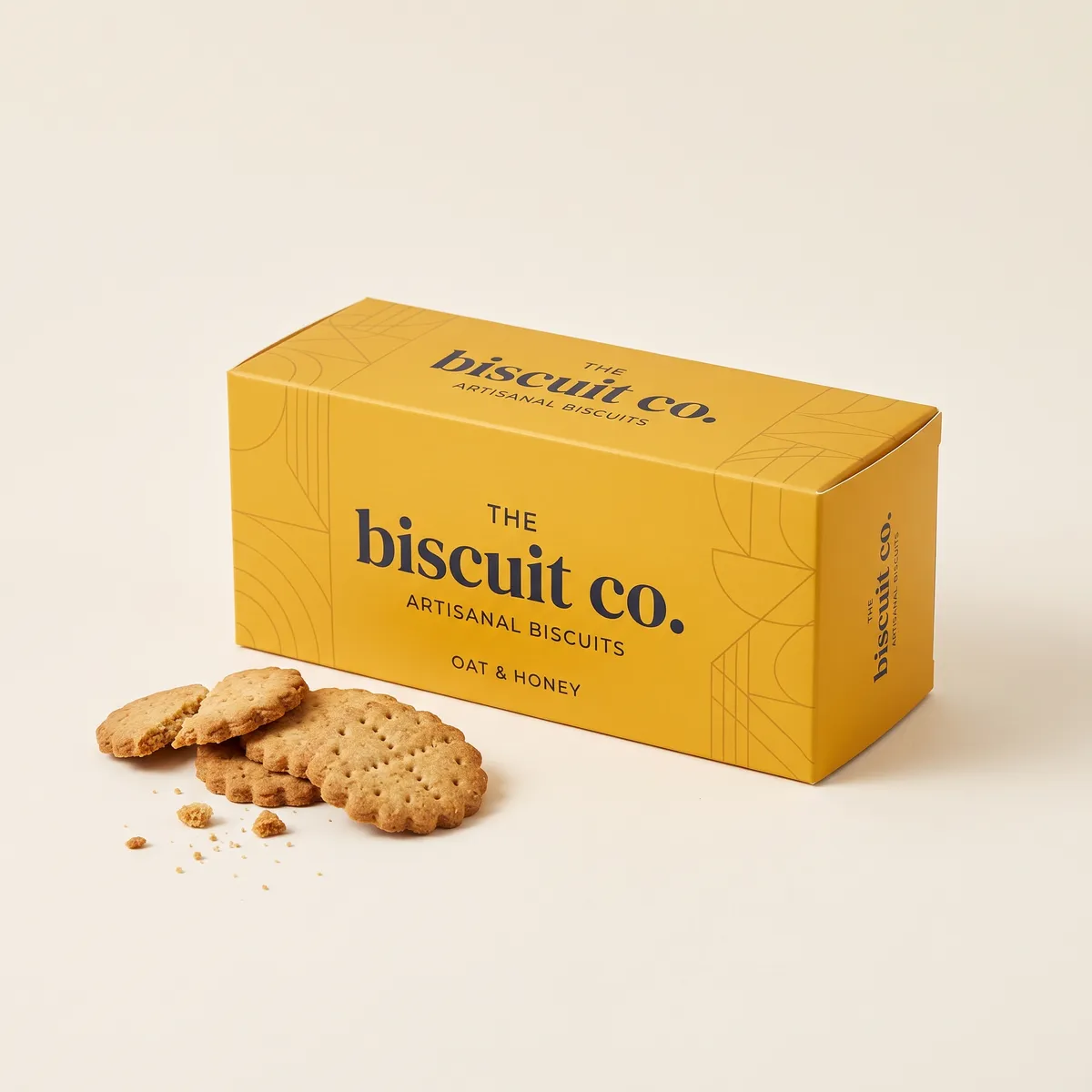
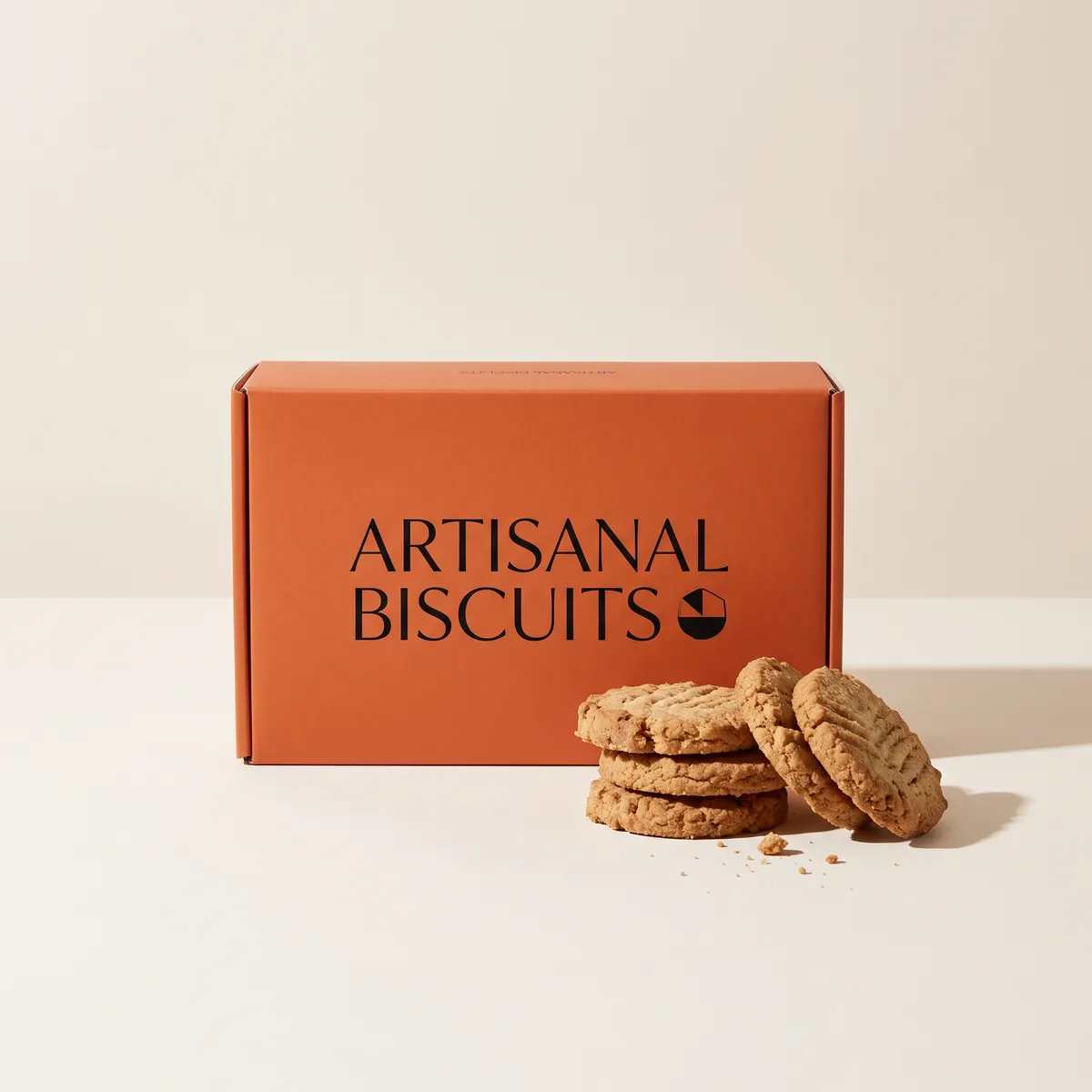
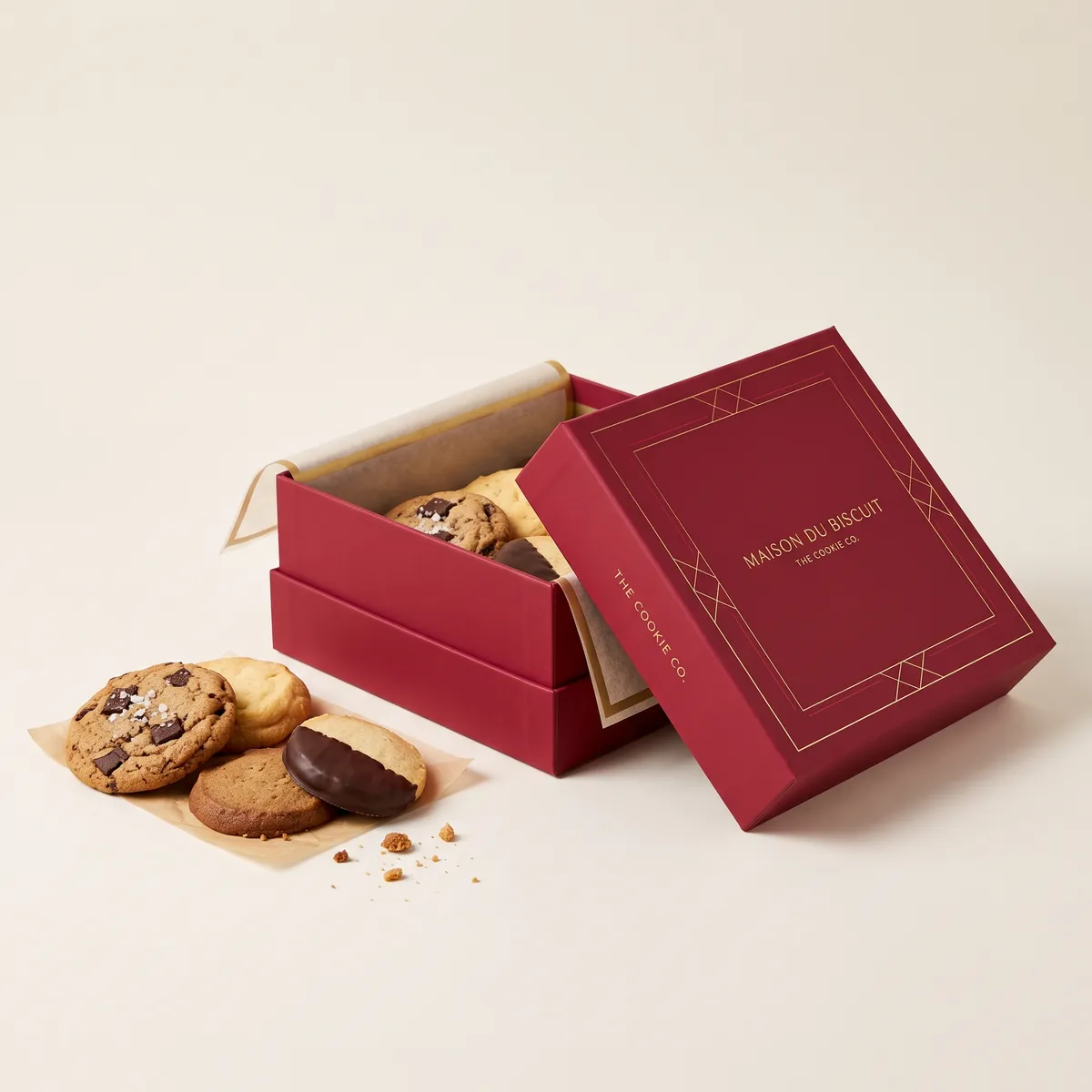
Biscuit boxes lean toward tins, sleeved packs and retail cartons for supermarket shelves and seasonal gifting, where cookie boxes lean toward counter service. An inner tray holds the arrangement while the carton carries shelf presence and product information. Premium and gift biscuits often go rigid at 20 business days; own-brand and volume ranges use folding cartons at 8–12.
Ours are on Trustpilot, where we can't edit them or choose which ones you see.
Read them on Trustpilot →(opens in a new tab)Four stages, twelve days
Quote confirmed
A specialist checks your spec against the board and comes back with a firm price inside 4 business hours.
Proof approved
You get a flat dieline and a 3D render. Nothing goes to press until you approve it in writing.
On press
Print, die-cut, glue, and fold. You get a press-side photo the day your job runs.
QC and delivery
Every pallet is sampled against the digital proof or physical sample you approved, then shipped with tracking to your dock or 3PL.
If a box doesn't match the digital proof or physical sample you approved, we reprint the run at no charge.
Read the reprint terms →Know exactly what you're ordering.
Biscuit Boxes for Shelf Sale and Seasonal Gifting
Biscuits are bought in two very different ways. Most go into a shopping basket from a supermarket or deli shelf, picked by flavor, price and brand. A smaller share are bought as gifts, especially at Christmas, when a tin-style box of shortbread or assorted biscuits is the present itself. Biscuit boxes are bought by bakeries supplying retail, own-brand producers and gift companies covering one market or both. The box has to stand on a shelf, carry the information a shopper looks for and keep the biscuits whole on a long route to the store. Which version you need depends on whether it's a weekly purchase or a once-a-year gift.
Folding, Rigid and Tray Specs for Biscuit Packs
Biscuit packs split into two builds, with a third, simpler format beside them.
| Folding carton | Rigid box | |
|---|---|---|
| Board | Food-grade carton board | Thick grayboard core, wrapped |
| Use | Shelf and own-brand | Gift and premium |
| Inner tray | Commonly chipboard | Commonly chipboard |
| Food contact | Grease-resistant inside face | Food-safe liner built in |
| Turnaround | 8–12 business days | 20 business days |
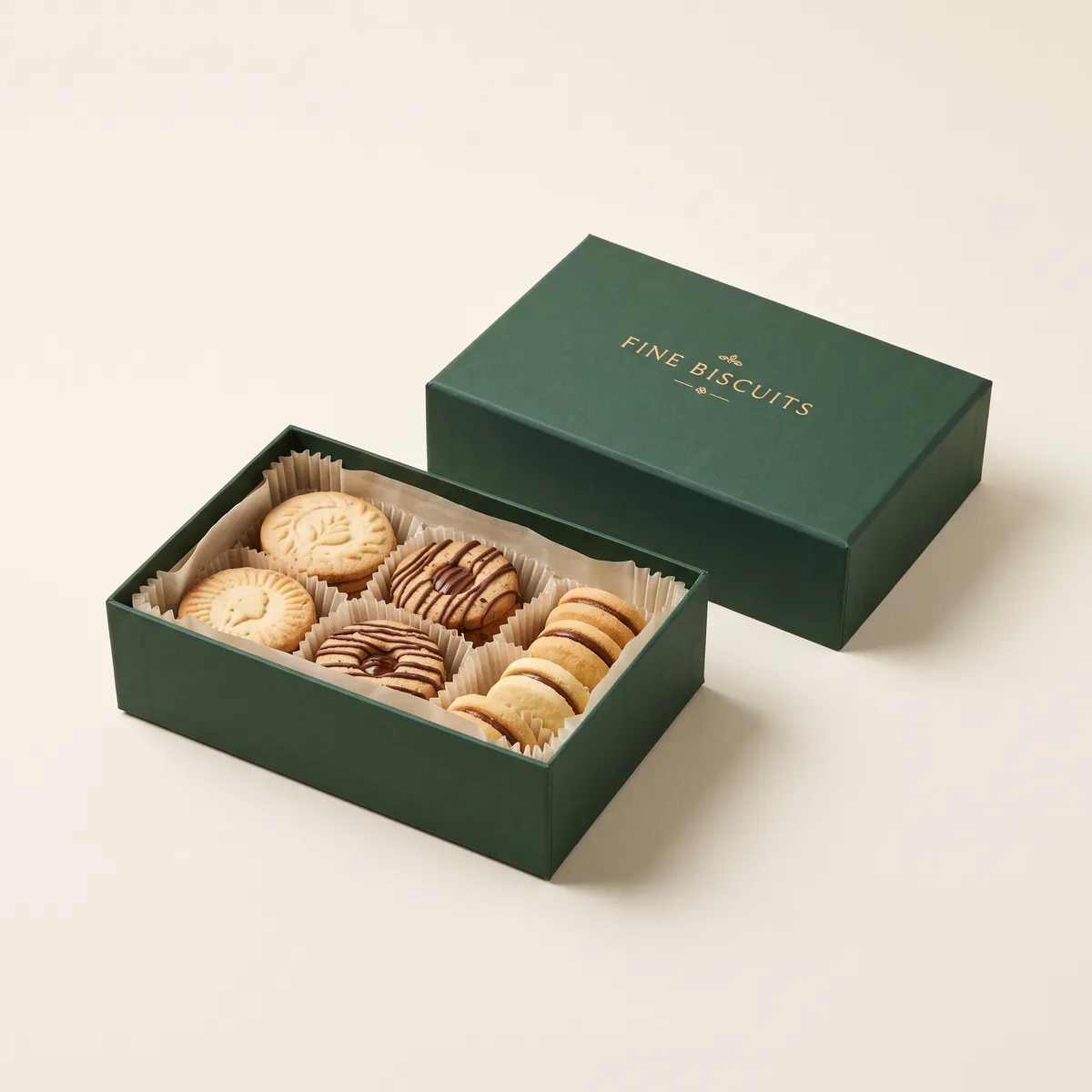
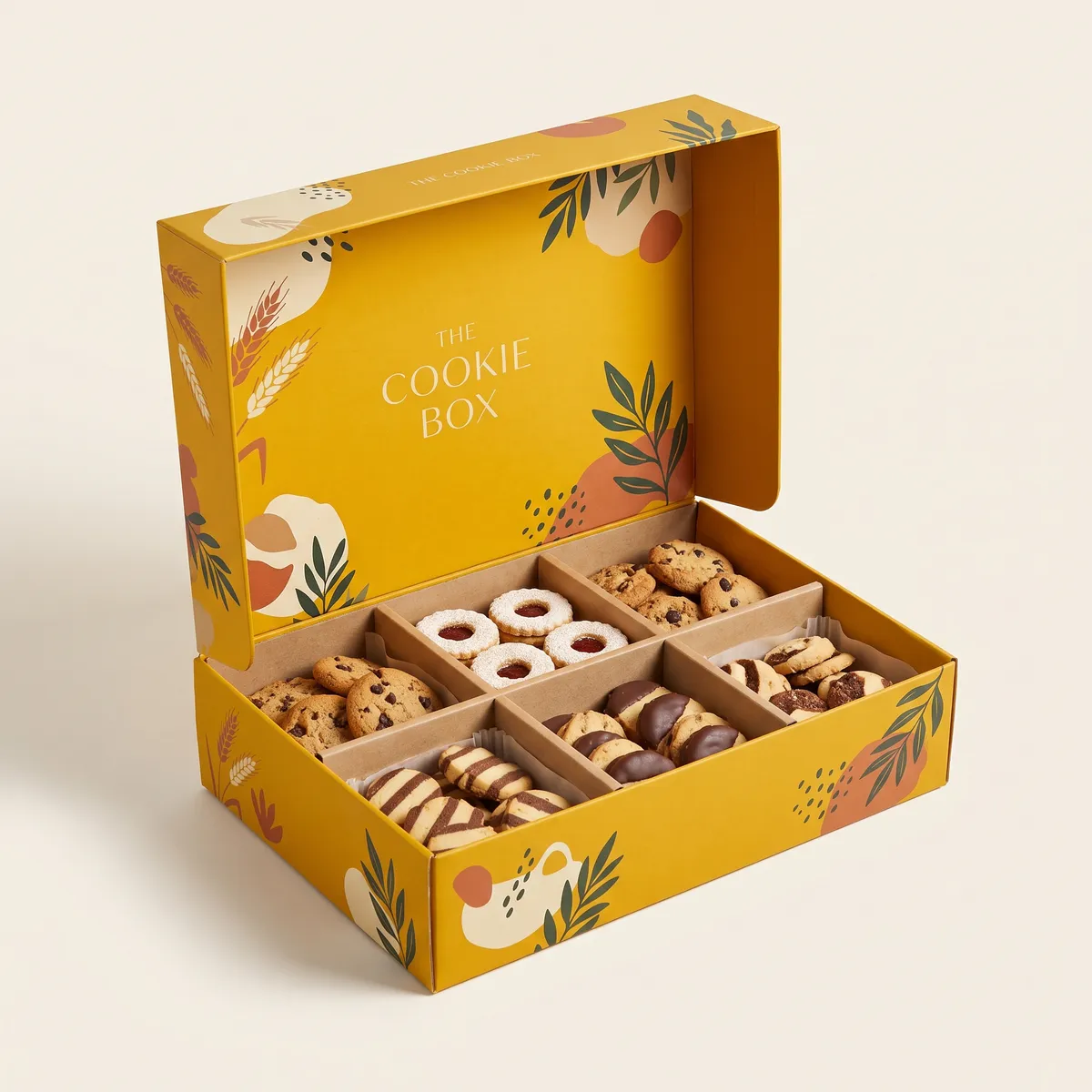
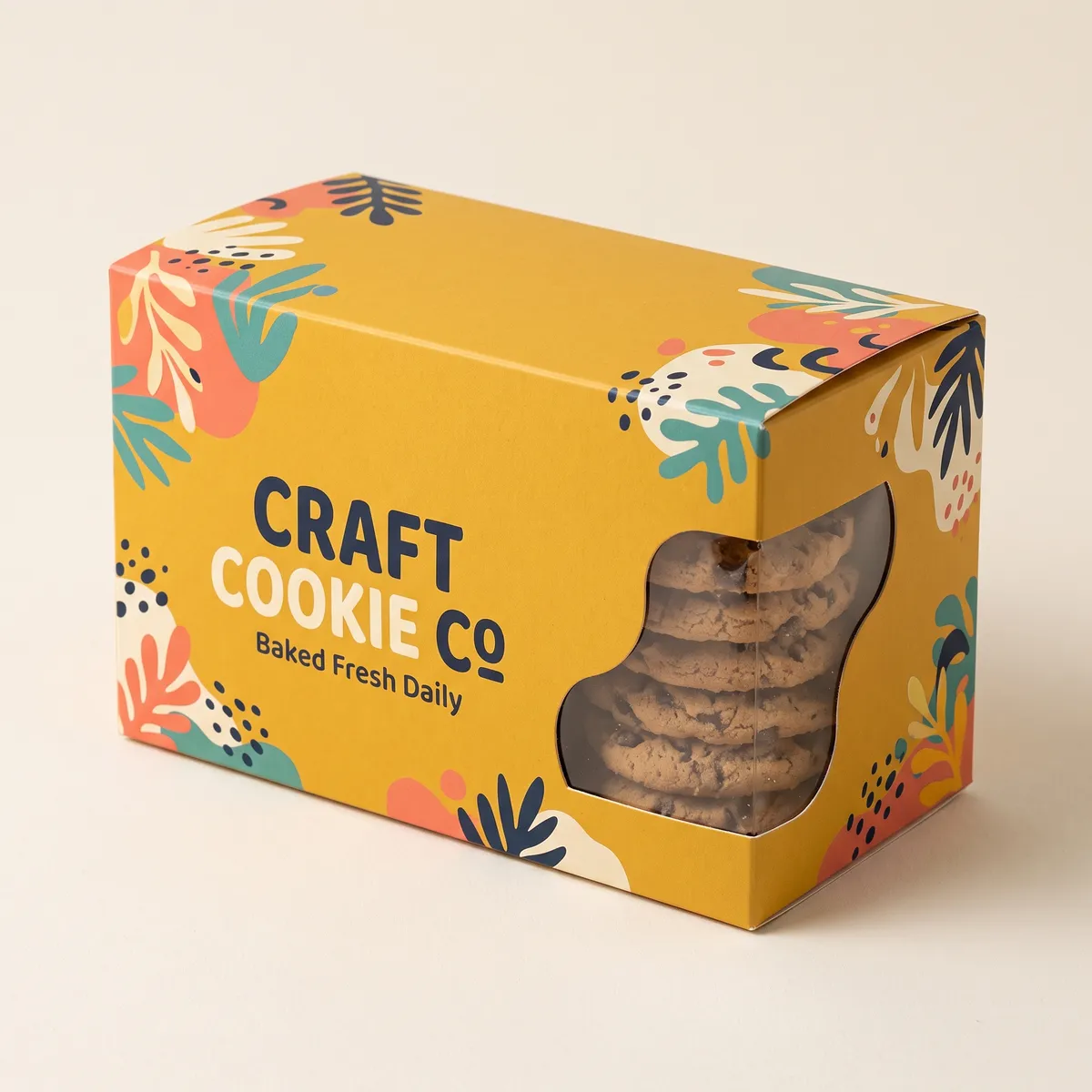
Both builds take a tray cut from compact board for the inner tray, holding biscuits upright or flat in rows. Sleeve packs, a printed band slid over a tray, are the third format for simpler shelf lines.
Why an Inner Tray Carries a Biscuit Assortment
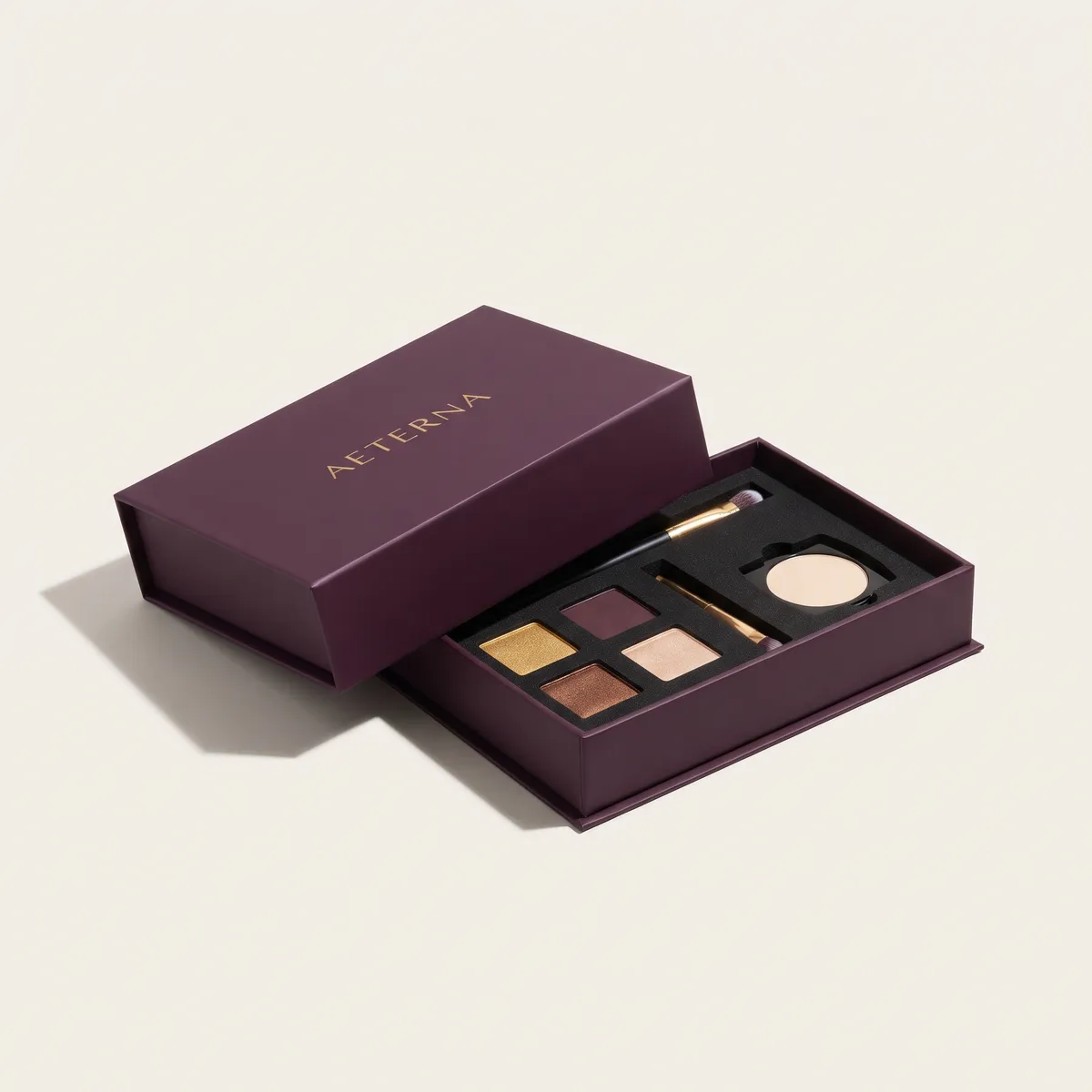
Biscuits travel through more hands than counter cookies: from the bakery to a distribution center, onto a shelf, into a basket and home. A loose stack inside a carton shifts at every stage, and the edges chip. A tray stops that. It locks each variety into its own channel, keeps an assortment apart and lets the carton or rigid box focus on presentation. What does that work is typically a fitted tray that holds rows in place, cut to your biscuit sizes. It also makes an assortment look generous, since every biscuit sits straight when the lid comes off. For a single variety in a sleeve pack, a tray matters less.
Shelf Print: Front Panel, Product Information and Finish
A biscuit box on a shelf is read in two steps: the front panel catches the shopper from a distance, and the side and back panels answer questions once the box is in hand. Put the brand, variety and a strong image on the front; ingredients, nutrition and the barcode go on the back or sides. Confirming what your market requires on pack is your call, and we'll lay out whatever you send. Full color suits most retail ranges, while foil or a printed wrap sets apart a gift edition. Keep the front simple enough to read from a few steps away, and give seasonal designs artwork worth keeping.
Biscuit Boxes for Tea Rooms, Delis and Own-Brand Ranges
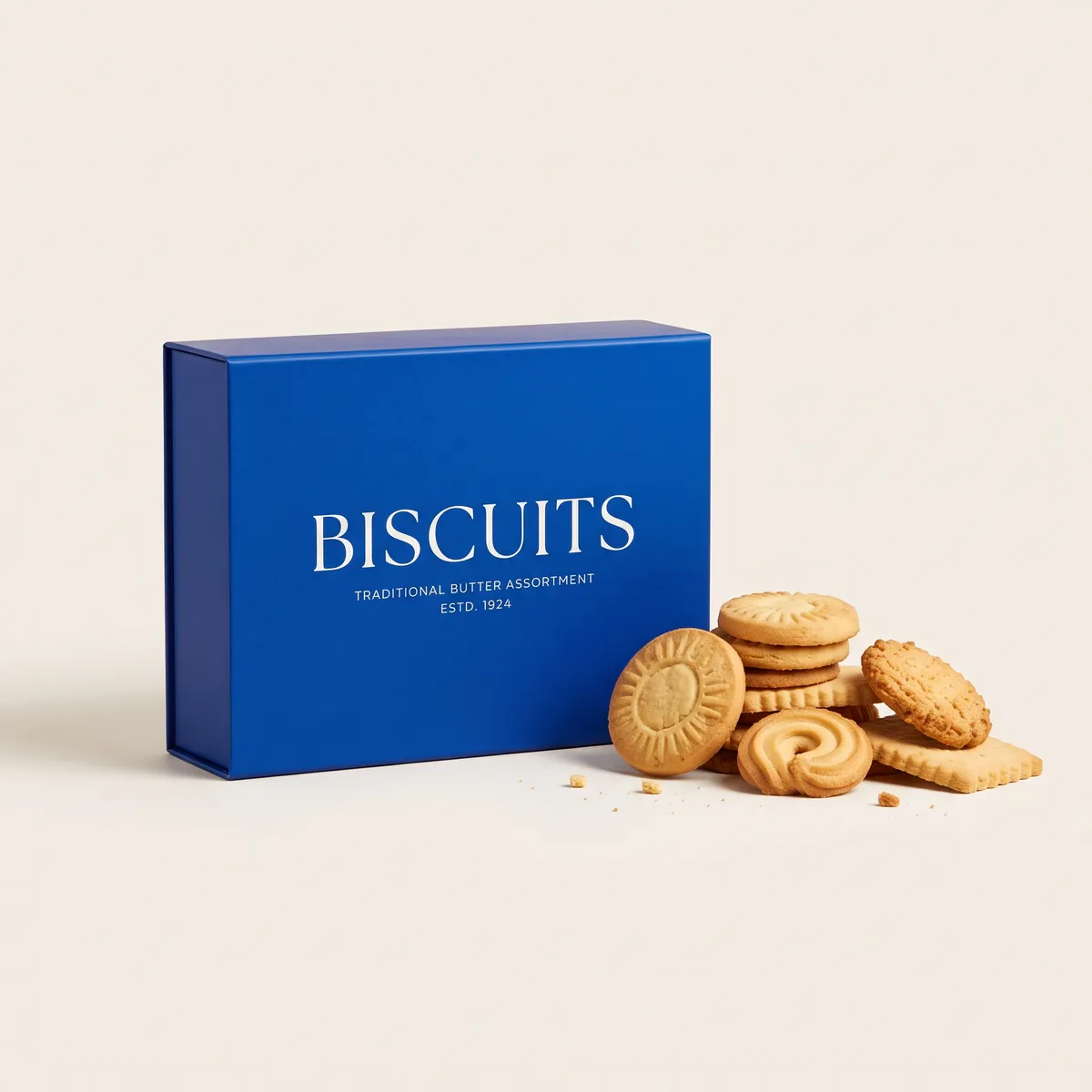
Tea rooms and heritage brands sell boxed shortbread and butter biscuits as souvenirs, often in rigid gift editions. Tea and coffee retailers stock biscuits beside their loose tea and beans, where a well-printed box sits naturally on the same shelf. Delis and farm shops carry regional bakers' biscuits in folding cartons. Own-brand producers supplying grocery chains order folding cartons in large volumes. Corporate gift buyers choose rigid biscuit boxes at Christmas. Hotels order small biscuit packs for in-room trays. The folding and rigid routes serve different buyers, and many producers end up running both.
Two Lead Times for Two Kinds of Biscuit Box
Folding cartons and sleeve packs take 8–12 business days from proof approval. Rigid gift boxes take 20, because they're built and wrapped rather than shipped flat, and that figure holds whatever the design. If you run both, put the rigid edition into production first. Rush is available on either, at an extra cost we quote before you commit. Every order is checked at three points before it leaves us, and a bulk run that doesn't match your approved proof is redone at our cost. Freight is included for flat cartons and assembled rigid boxes alike. Design help is free, with as many revisions as the artwork needs.
One connected process, start to finish.
Structural Design
Dieline drafted to your exact fit and freight tolerances.
Proof & Sample
Sign off on a digital proof, or request a physical sample.
Tooling
Dies and plates are cut for your job and archived on file.
Production
Print, die-cut, and assembly run under in-line quality checks.
Ship & Reorder
Freight goes out, and the cycle resets for your next run.
Steady process. Powerful results.
Like everything we build, our process is engineered to hold up — no shortcuts, no surprises. Five dependable stages that run the same way every single time, so reorders are just as fast as the first order.
- One dedicated teamFrom first sketch to final freight, the same people carry your order start to finish.
- Dies archived on fileReorders skip tooling and re-setup entirely — we already have your exact spec.
- Checked against your sign-offEvery run is inspected against the digital proof or physical sample you approved.
Set up your file once, correctly
Nine in ten delayed jobs are delayed by artwork, not production. Match these four rules and your proof lands the next morning.
- Bleed1/8 in (3 mm) past every cut line
- Safe ZoneKeep text 1/4 in clear of every crease
- ColourCMYK or named Pantone. No RGB.
- Resolution300 dpi at final size, fonts outlined
No print-ready file?
Send a logo and a rough idea. Our studio builds the production file free with any order over 500 units — you keep the source file either way.
Ask the StudioBackground art must run all the way to the outer bleed edge. Anything inside the white dashed line survives fold tolerance.

What brands say about this box
They live there rather than here, where we can't edit them, delete them, or pick which ones you get to see. That is exactly what makes them worth reading.
Read all reviews on Trustpilot(opens in a new tab)Answers before you have to ask.
How do biscuit boxes differ from cookie boxes?
Mainly format and market. Biscuit boxes lean toward tins, sleeved packs and retail cartons for shelf sale, where cookie boxes lean toward counter service and gifting. The board requirements are similar.
Can biscuit boxes hold an inner tray?
Yes, and most retail biscuit packaging does. The tray holds the arrangement and protects the biscuits while the carton provides shelf presence and information.
Are biscuit boxes usually rigid?
Often, particularly tins and premium retail packs, since biscuits are commonly bought as gifts. Volume and own-brand ranges use folding cartons. Rigid takes 20 business days rather than 8–12.
How long do biscuit boxes take?
Folding builds run about 8–12 business days from proof approval; rigid tins and boxes take 20. Rush is available on both at a stated extra cost.
What's the minimum on biscuit boxes?
100 boxes across folding and rigid builds. Allow 20 business days for rigid rather than 8–12. Free samples are available on orders above 10,000 units.