
Coffee Sleeves
Coffee sleeves are sized to a specific cup diameter, so a 12oz sleeve slides loose on an 8oz cup; tell us every cup size you serve and we'll match each one. Recycled kraft is the standard stock. A plain sleeve handles the heat job perfectly well, but the difference between plain and one-color printing is small at volume. Sleeves are straightforward to produce and reorder.

Ours are on Trustpilot, where we can't edit them or choose which ones you see.
Read them on Trustpilot →(opens in a new tab)Four stages, twelve days
Quote confirmed
A specialist checks your spec against the board and comes back with a firm price inside 4 business hours.
Proof approved
You get a flat dieline and a 3D render. Nothing goes to press until you approve it in writing.
On press
Print, die-cut, glue, and fold. You get a press-side photo the day your job runs.
QC and delivery
Every pallet is sampled against the digital proof or physical sample you approved, then shipped with tracking to your dock or 3PL.
If a box doesn't match the digital proof or physical sample you approved, we reprint the run at no charge.
Read the reprint terms →Know exactly what you're ordering.
Coffee Sleeves for Cafés That Keep Their Cups Plain
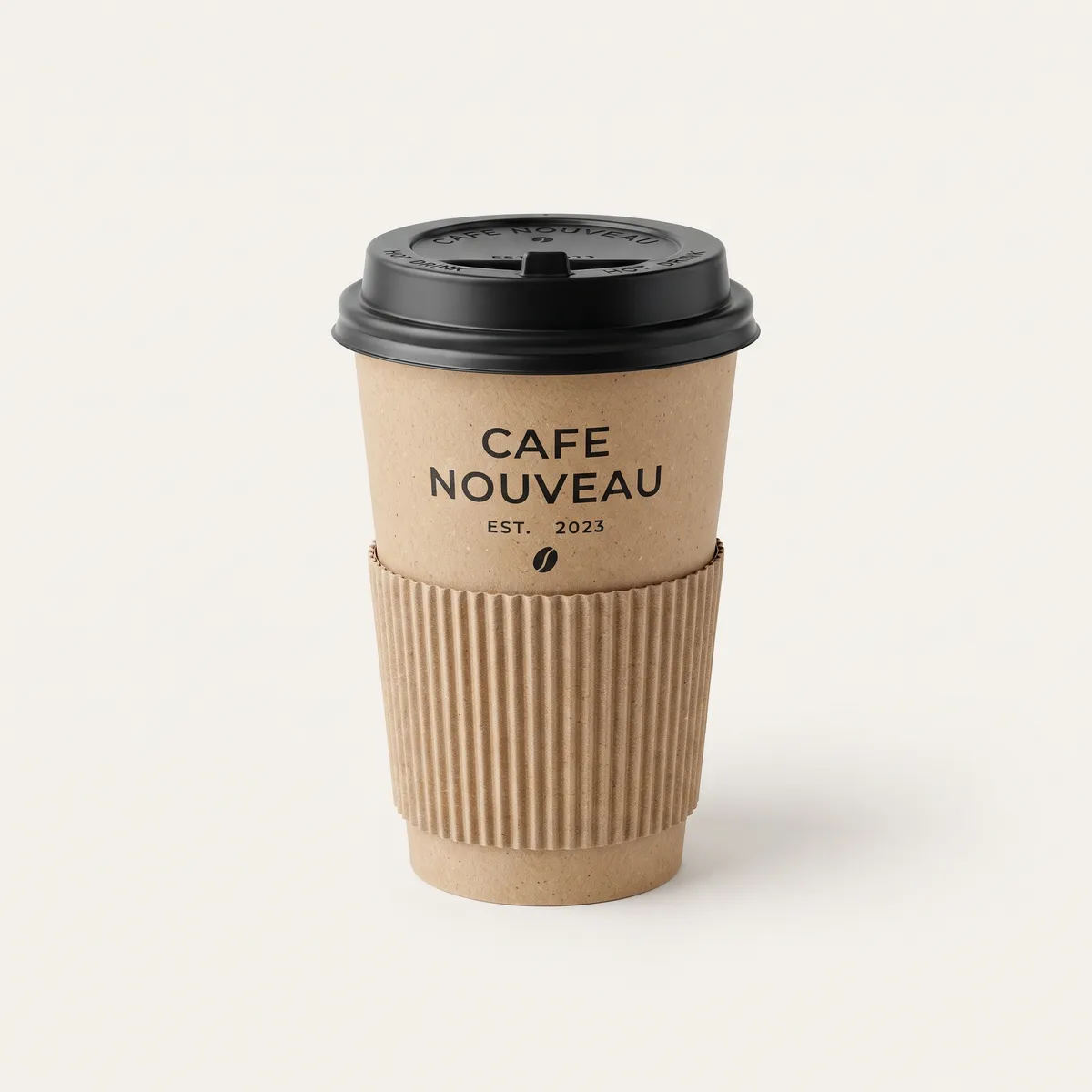
Plenty of cafés buy plain cups in bulk and put their brand on the sleeve instead. It keeps cup stock simple, since one plain cup works through any season or promotion, and the branded part becomes a small, cheap item ordered on its own schedule. Sleeves also go on the hot drinks that need them, so the brand ends up on the cups customers carry furthest. Sleeves get ordered by coffee shops, roasters with a retail counter, bakeries and delis that sell coffee, and caterers serving hot drinks at events. For a café watching its cup budget, it's the low-cost way to brand every hot drink.
Sleeve Stock, Diameter and Die Shape
A sleeve is a curved, die-cut band, so its specs are about stock and fit rather than depth.
| Spec | Coffee sleeve |
|---|---|
| Stock | Kraft or coated stock |
| Fit | Sized to one cup diameter; one sleeve per cup size |
| Shape | Curved die line that follows the cup's taper |
| Plain, one-color or full-color |
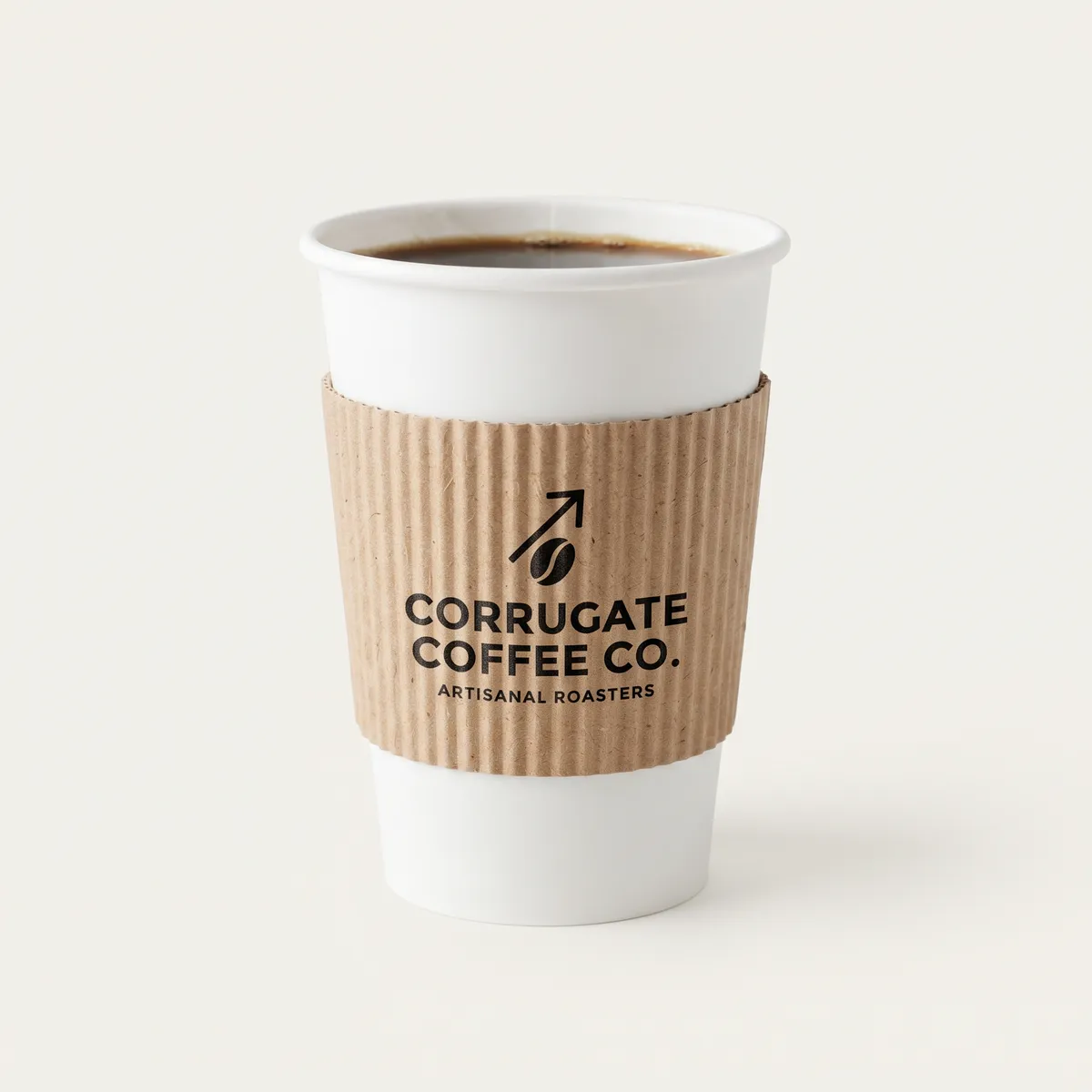
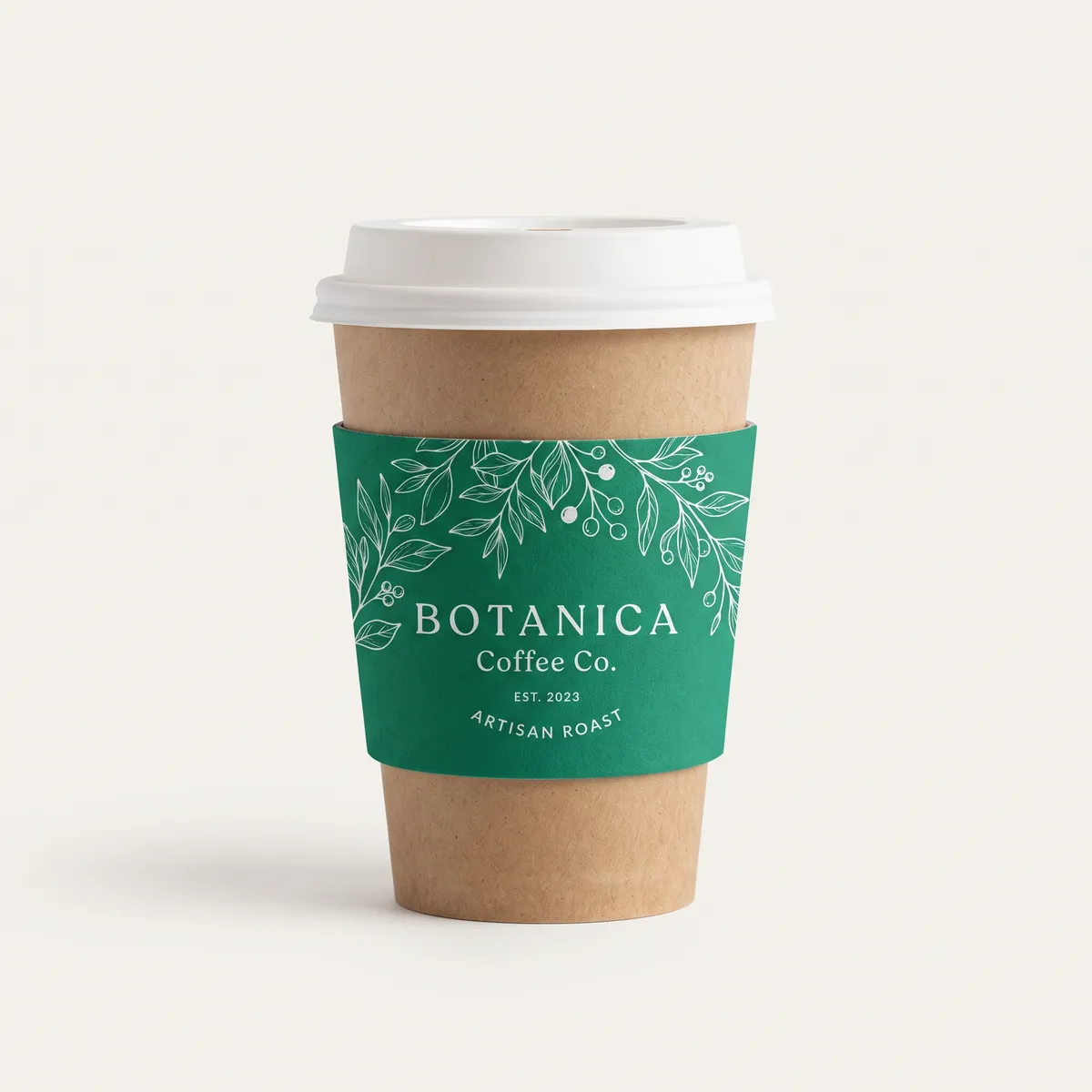
Most cafés choose recycled brown kraft, which takes one- or two-color logos cleanly and reads as a natural material in the hand. Coated stock is the choice when the sleeve carries full-color artwork or photography. Send us the cup sizes you use, or a sample cup of each, and we build the dieline around them so the band sits at the same height on every size.
Why a Band Around the Cup Costs Less Than a Printed Cup
A printed cup puts ink on every cup, including the ones that go out iced or get used behind the counter. A sleeve puts ink only on a band that slides over the container, which uses a fraction of the material and can be printed in shorter, more frequent runs. That's the real case for it: when artwork changes, you reorder sleeves and the plain cups already on the shelf stay usable. A sleeve also adds a paper layer between hand and cup, which a single-wall cup otherwise lacks. The trade is labor and coverage. Someone has to slide a sleeve on during service, and a cup that goes out without one carries no brand at all. If every drink must be branded, print the cup instead.
One-Color, Full-Color and Seasonal Sleeve Print
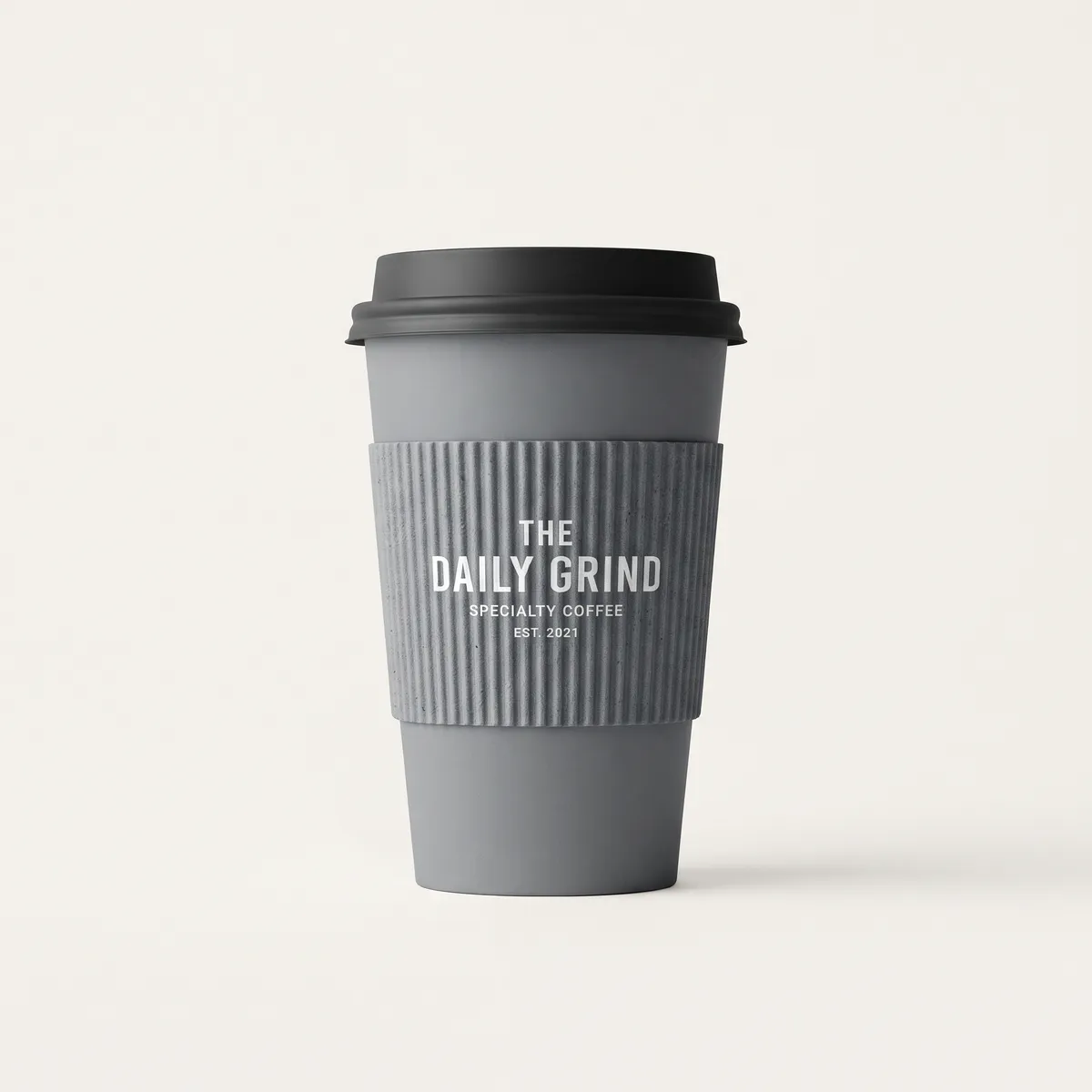
A sleeve's print area is small and curved, so simple artwork works best. One-color print on kraft is the most common choice: a logo, a short line and perhaps a web address, which reads clearly from across a counter. Full-color print on coated stock suits illustrated or photographic designs. Because sleeves cost little per unit, many cafés run a seasonal design for the holidays or a summer menu and go back to the standard sleeve afterwards without touching their cup order. Keep type away from the join, and repeat the logo on both faces of the band, since a customer holds the cup at any angle. Foil and specialty finishes rarely pay back on an item used for one drink.
Sleeves for Coffee Shops, Bakery Counters and Catered Events
Coffee shops are the core buyer, ordering sleeves for each cup size they serve. Roasters with a café counter use them to tie the drink back to the beans on the shelf. Bakeries, delis and sandwich shops that sell coffee use sleeves to brand the drink without changing cup supplier. Caterers and event organizers order short runs printed for a wedding, a conference or a product launch, where a sleeve is a cheap place for a name or a date. Kitchens serving hot drinks sold beside takeout meals use them so the coffee carries the same brand as the bag it leaves in. Tea and hot chocolate take the same sleeve as coffee, so one design covers the whole hot menu.
Reordering Sleeves Across a Multi-Size Cup Range
The first order does the setup work: cup sizes, stock, artwork and a dieline for each diameter. After that, reorders are simple, because the spec stays on file. Plan around 8–12 business days from proof approval; if you've run low before a busy weekend, rush is available at an extra cost we quote upfront. The minimum is 100 sleeves, which makes a single-event run realistic. Shipping is included whatever the size of the run, and orders above 10,000 sleeves come with free samples. Three separate checks run on every sleeve, so a misprinted batch never reaches your counter.
One connected process, start to finish.
Structural Design
Dieline drafted to your exact fit and freight tolerances.
Proof & Sample
Sign off on a digital proof, or request a physical sample.
Tooling
Dies and plates are cut for your job and archived on file.
Production
Print, die-cut, and assembly run under in-line quality checks.
Ship & Reorder
Freight goes out, and the cycle resets for your next run.
Steady process. Powerful results.
Like everything we build, our process is engineered to hold up — no shortcuts, no surprises. Five dependable stages that run the same way every single time, so reorders are just as fast as the first order.
- One dedicated teamFrom first sketch to final freight, the same people carry your order start to finish.
- Dies archived on fileReorders skip tooling and re-setup entirely — we already have your exact spec.
- Checked against your sign-offEvery run is inspected against the digital proof or physical sample you approved.
Set up your file once, correctly
Nine in ten delayed jobs are delayed by artwork, not production. Match these four rules and your proof lands the next morning.
- Bleed1/8 in (3 mm) past every cut line
- Safe ZoneKeep text 1/4 in clear of every crease
- ColourCMYK or named Pantone. No RGB.
- Resolution300 dpi at final size, fonts outlined
No print-ready file?
Send a logo and a rough idea. Our studio builds the production file free with any order over 500 units — you keep the source file either way.
Ask the StudioBackground art must run all the way to the outer bleed edge. Anything inside the white dashed line survives fold tolerance.
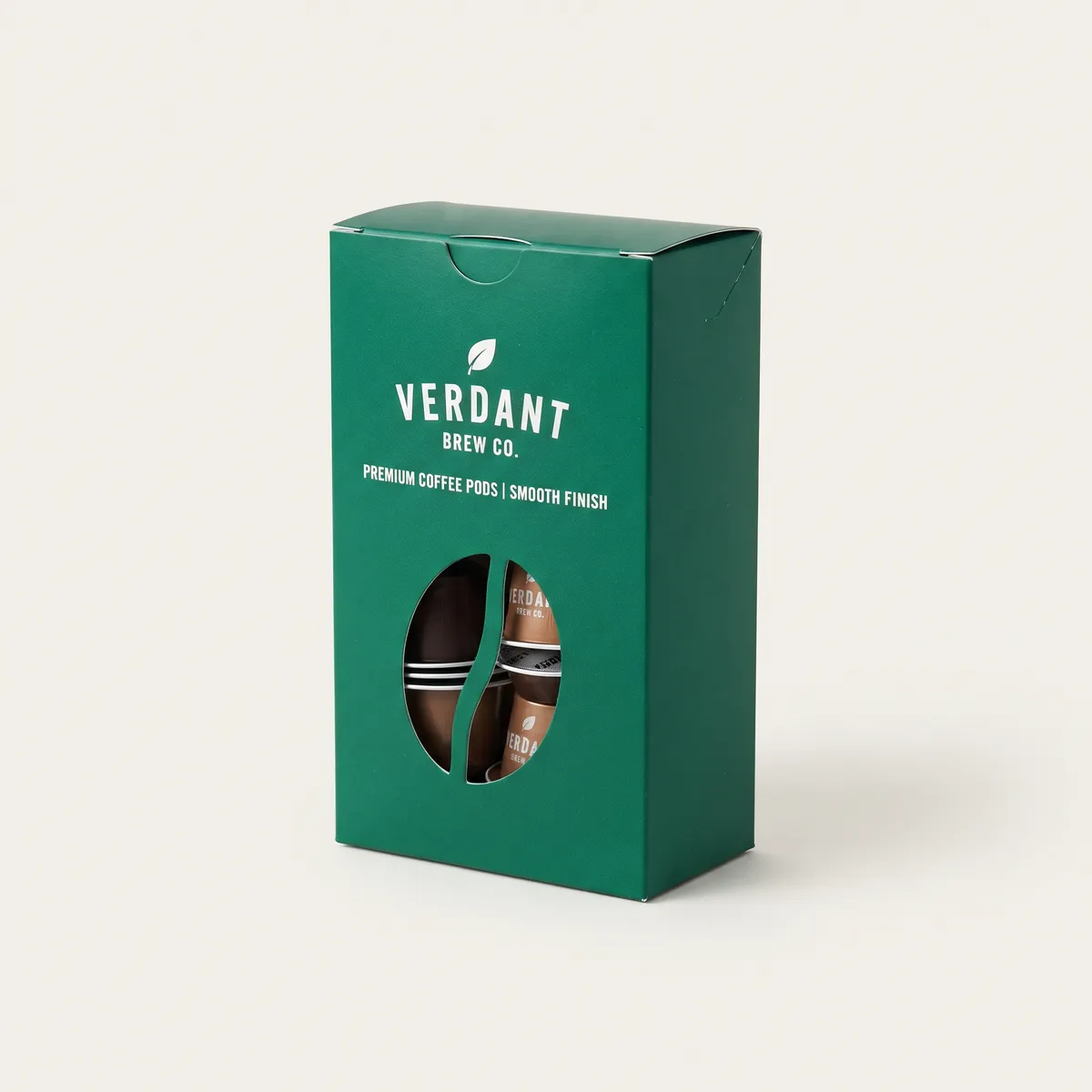

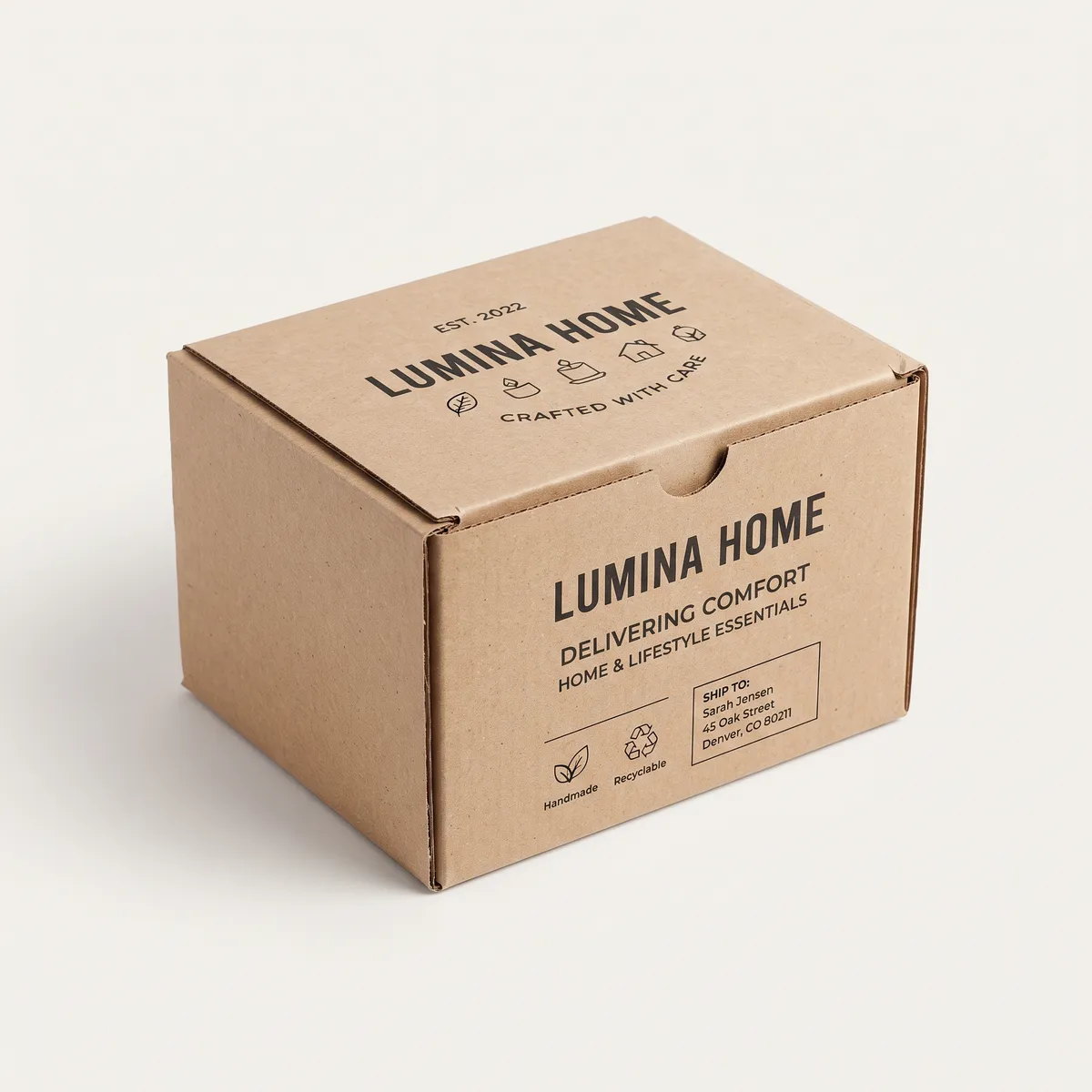
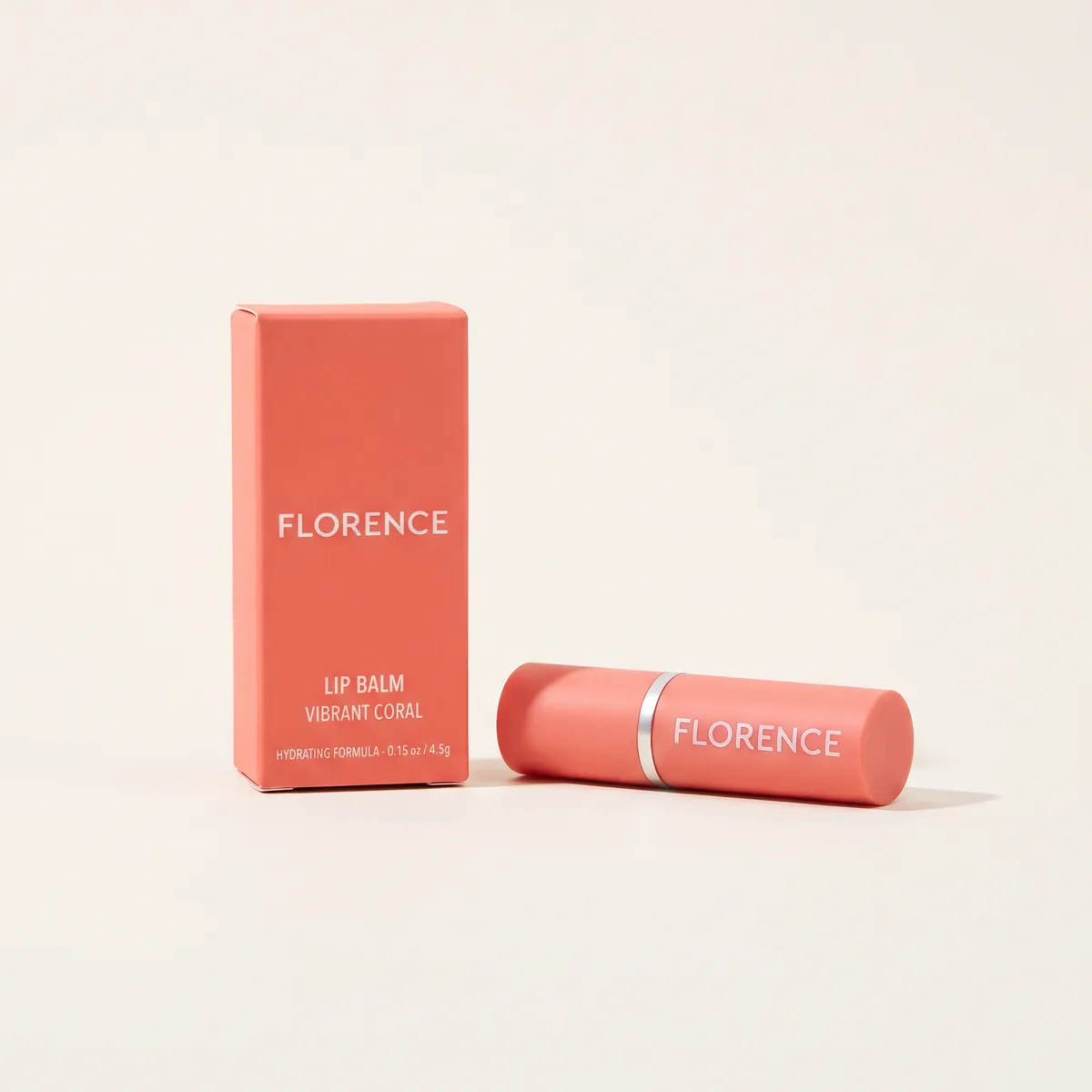
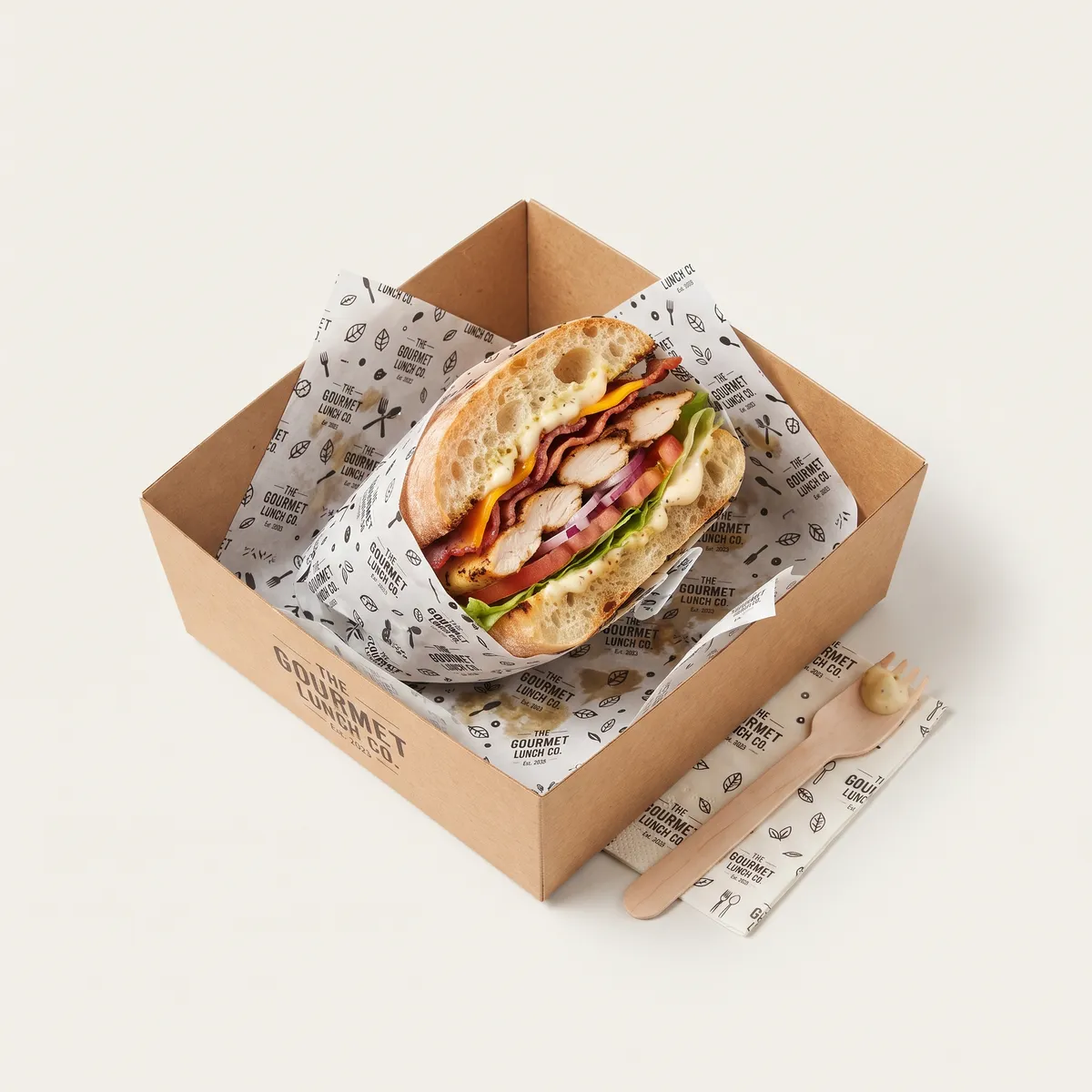
What brands say about this box
They live there rather than here, where we can't edit them, delete them, or pick which ones you get to see. That is exactly what makes them worth reading.
Read all reviews on Trustpilot(opens in a new tab)Answers before you have to ask.
Will a sleeve fit any cup size?
No, and that's worth checking before ordering. Sleeves are sized to a cup diameter, so a 12oz sleeve slides loose on an 8oz cup. Tell us which cup sizes you serve and we'll match sleeves to each.
Can sleeves be made from recycled stock?
Yes, and most are. Recycled kraft is the standard for sleeves and suits the positioning most coffee brands want. If you need to meet a specific recyclability screen, tell us and we'll spec accordingly.
Do sleeves need to be printed to be worth it?
Not strictly — a plain kraft sleeve does the heat job perfectly well. But an unprinted sleeve is a branding opportunity missed, and the cost difference between plain and one-color printing is small at volume.
How soon can coffee sleeves be made?
About 8–12 business days once the proof is approved, often at the faster end since sleeves are simple to produce. Rush is available at an added cost quoted first.
Can I order sleeves for several cup sizes?
Yes, and you'll usually need to. Sleeves are sized per cup diameter, so running them together means each size fits properly while sharing one printed design and one setup.