
Coffee Pod Boxes
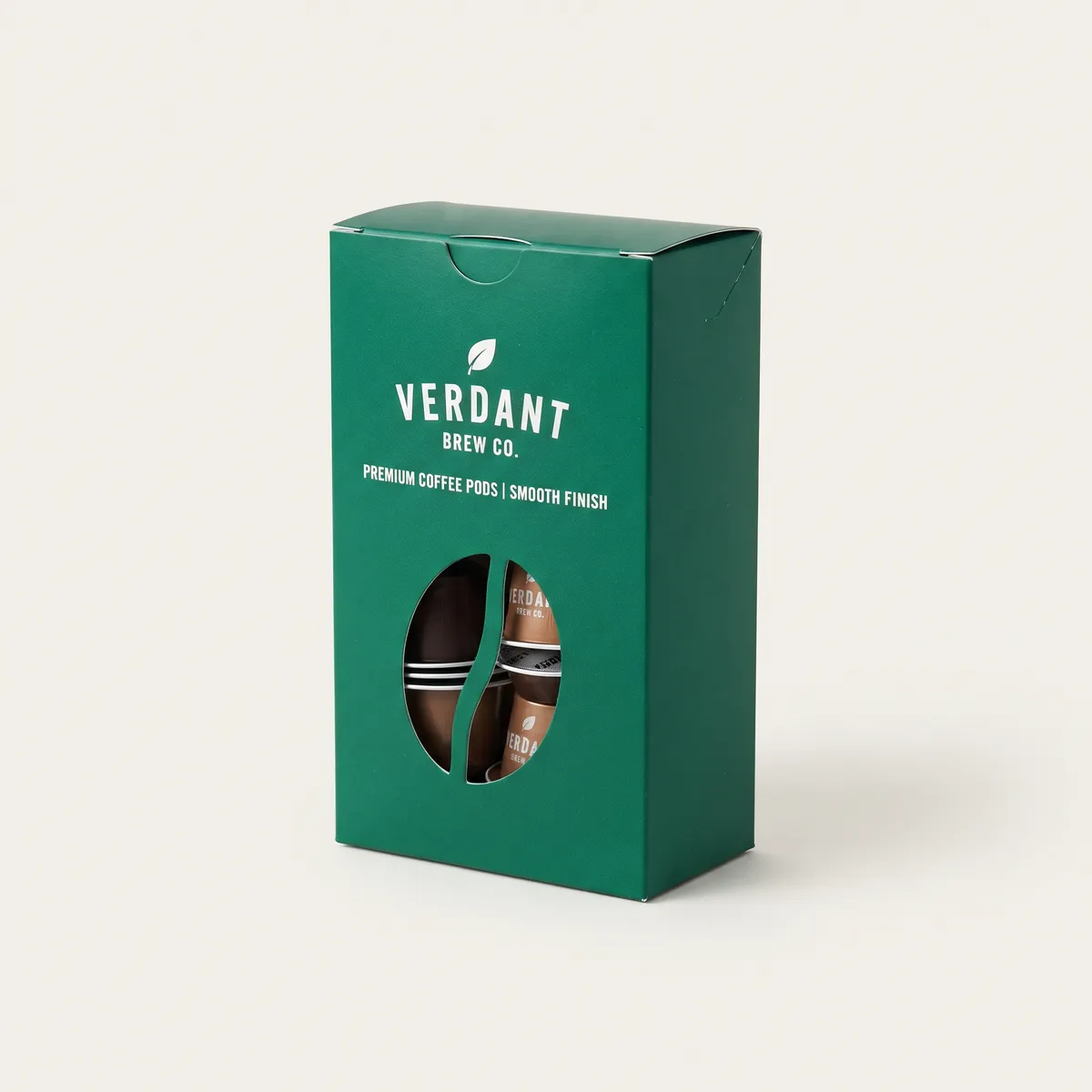
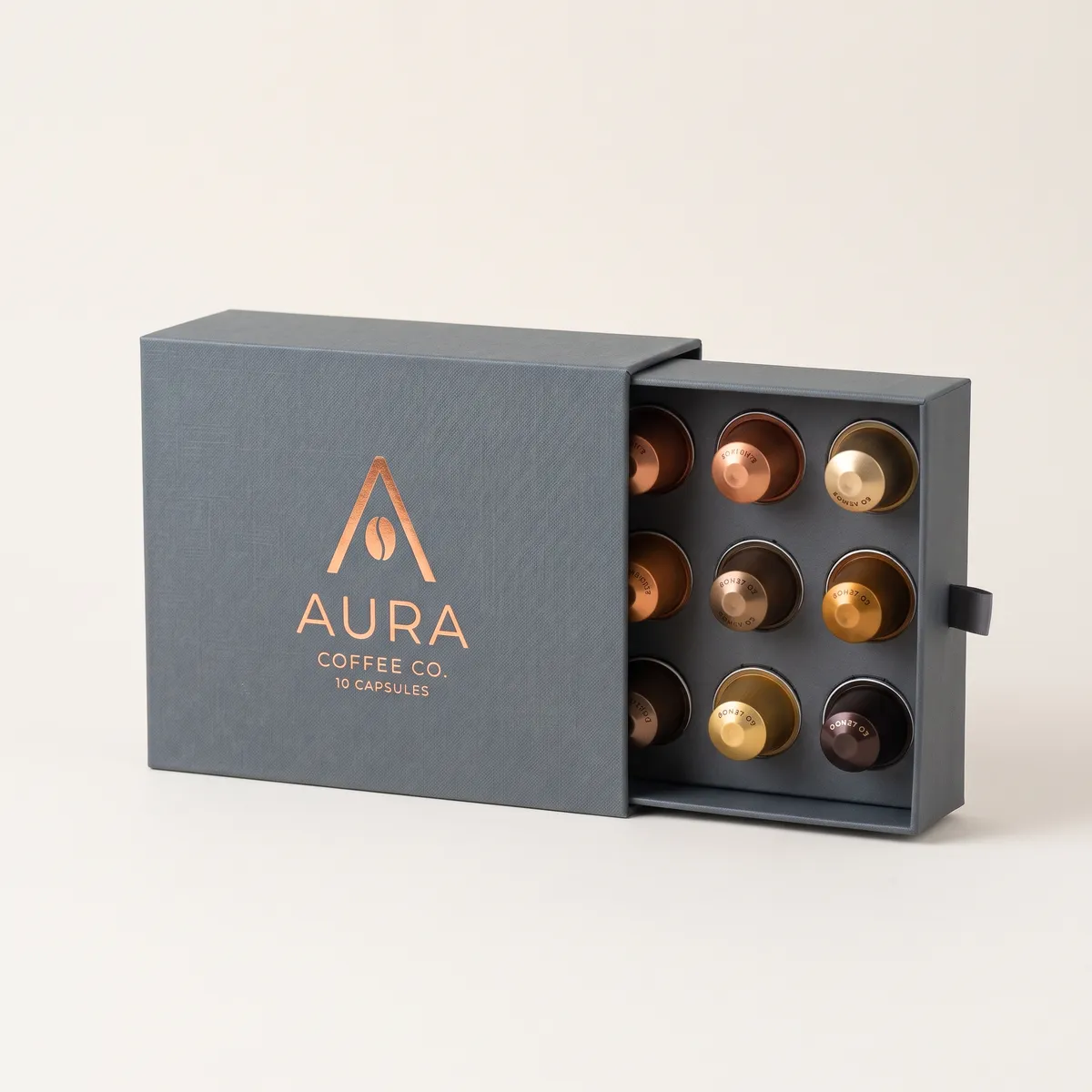
Coffee pod boxes use a cavity tray cut to your pod diameter, because loose pods rattle and their foil lids can puncture against each other. Mixed variety packs get a defined position per flavor, which helps customers and simplifies restocking for retailers. Sealed pods need no moisture barrier; unsealed or bulk pods need a lined carton. The minimum is 100 boxes per count.
Ours are on Trustpilot, where we can't edit them or choose which ones you see.
Read them on Trustpilot →(opens in a new tab)Four stages, twelve days
Quote confirmed
A specialist checks your spec against the board and comes back with a firm price inside 4 business hours.
Proof approved
You get a flat dieline and a 3D render. Nothing goes to press until you approve it in writing.
On press
Print, die-cut, glue, and fold. You get a press-side photo the day your job runs.
QC and delivery
Every pallet is sampled against the digital proof or physical sample you approved, then shipped with tracking to your dock or 3PL.
If a box doesn't match the digital proof or physical sample you approved, we reprint the run at no charge.
Read the reprint terms →Know exactly what you're ordering.
Coffee Pod Boxes Planned Around the Count on the Front Panel
A coffee pod box is picked off the shelf by the number on its front panel, and that number shapes everything behind it. The count sets how many cavities the tray needs, how they line up in rows, and how wide and deep the carton ends up. Capsule brands, roasters who have added a pod line beside their bagged coffee, and suppliers who stock office kitchens by the case make up most of the orders. Most sell more than one count or more than one blend, so the box has to work as a family: the same footprint logic across sizes and the same panel layout across flavors, so a retailer can face them up side by side. Get the count right and the rest follows.
Pod Box Specs: Carton Board, Cavity Grid and Fit
The outer carton is folding board and the tray inside is cut to your capsule.
| Spec | Pod box |
|---|---|
| Outer carton | Coated cardboard, 16–24pt |
| Tray | Cavity insert cut to pod diameter and height |
| Cavity count | Matches the count printed on the pack |
| Tolerance | ±0.5–1mm on the outer carton |
| Dieline | Built from your capsule measurements |
Most pod cartons run on printable white carton board, which keeps flavor colors accurate across a range. Send us one capsule or its measurements and we build the dieline from it, confirming in writing whether the figures are internal or external. A millimeter lost there shows up as a tray that pinches the capsule or leaves gaps between rows.
Why a Cavity Tray Beats a Loose-Fill Carton for Pods
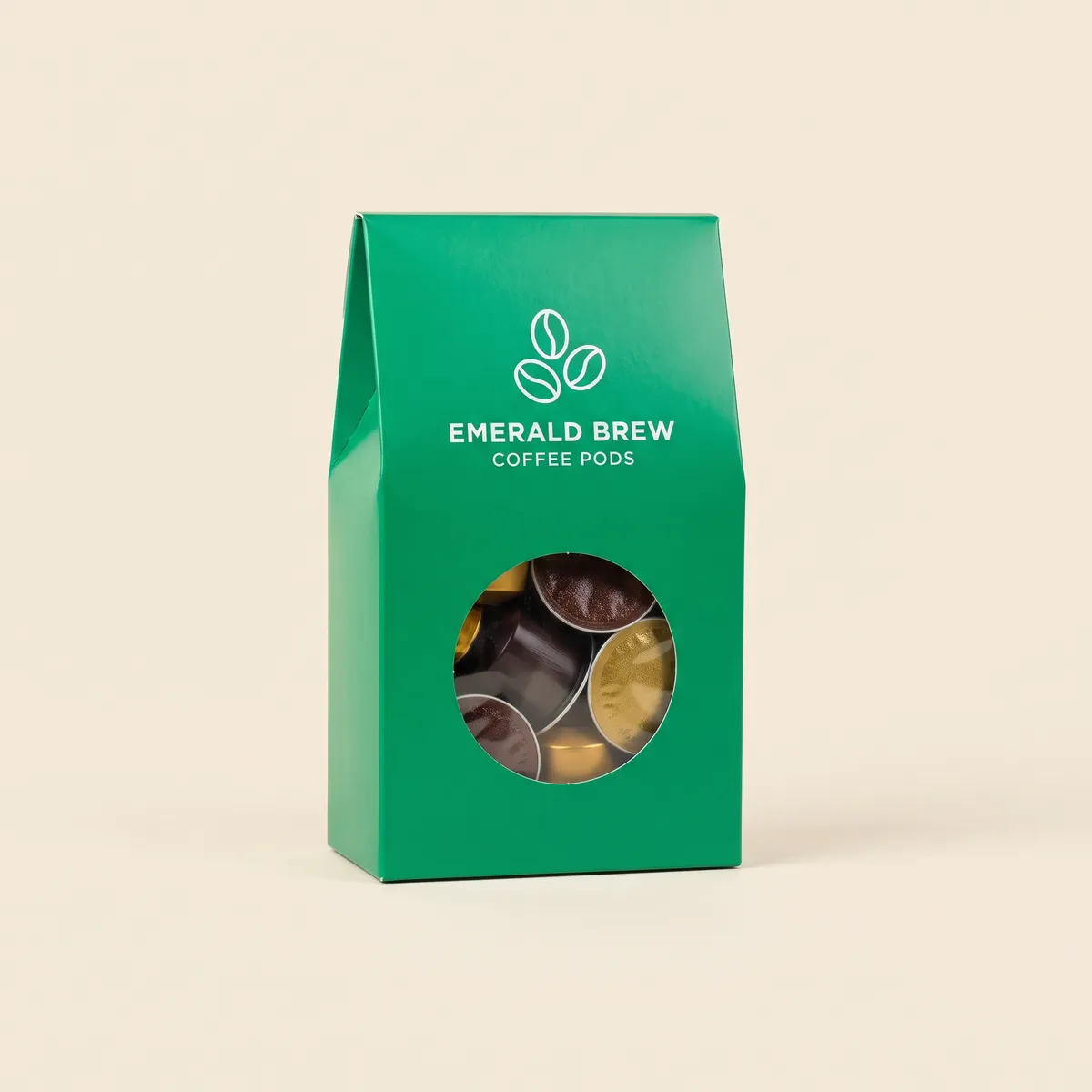
A loose-fill carton is cheaper to cut, and for some products it's the right call. Pods aren't one of them. A capsule-cavity tray gives every pod its own seat, so the box opens to a neat grid instead of a heap, and the customer can see at a glance how many are left. That matters on a product people dip into once or twice a day for weeks. The tray also fixes the carton's shape from the inside: a full box and a half-empty one stand the same way on a counter, and the side panels don't cave in when the box is gripped. Where a brand already sells its pods inside sealed outer bags, the tray earns less, and a plain carton may be enough.
Printing a Pod Carton That Names Every Flavor Inside
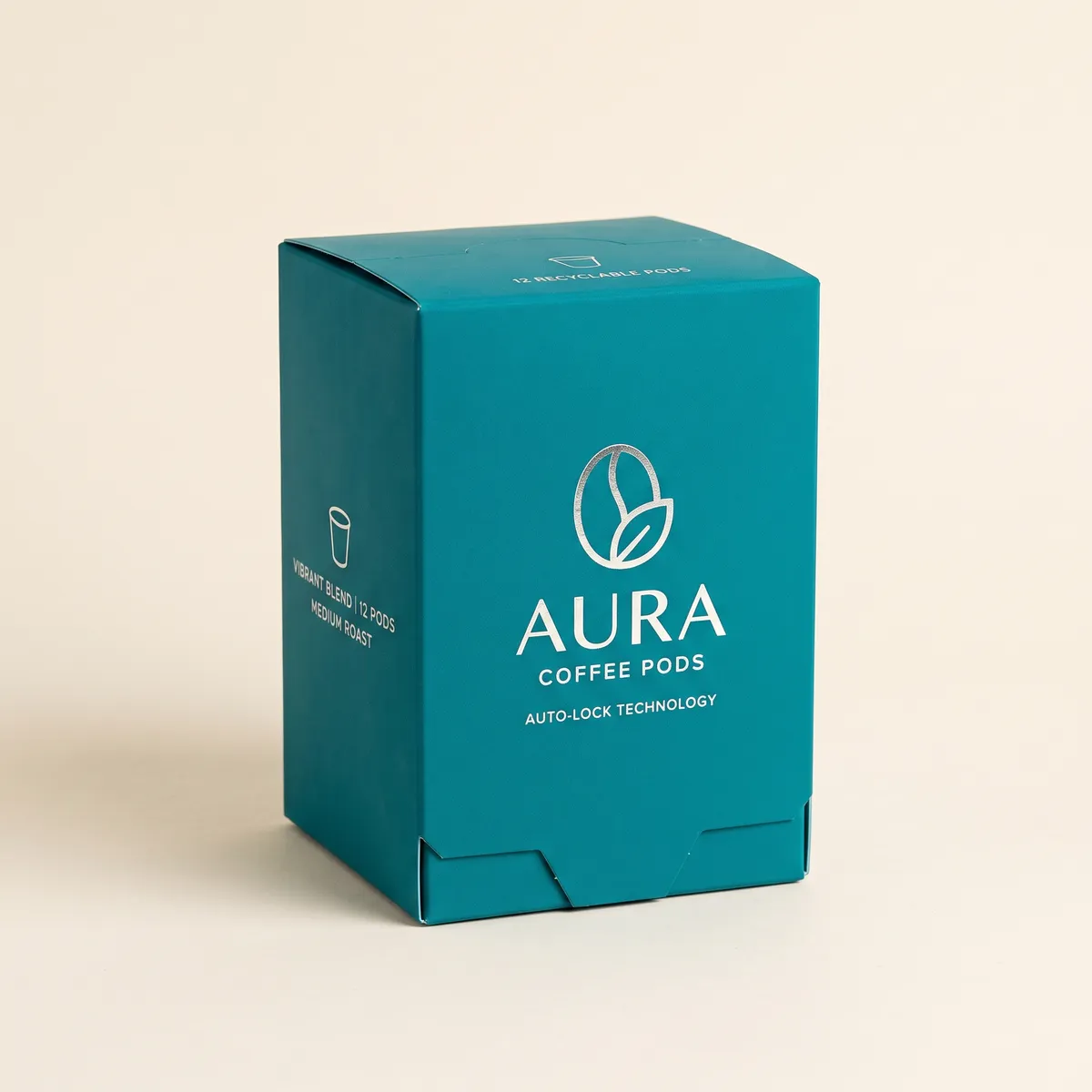
On a multi-blend pod line, most of the print job is helping shoppers tell flavors apart quickly. One shared base design with a color band that changes per blend keeps the range coherent while letting a buyer find their roast without reading the small print. Put the count and roast strength where they read from the shelf edge, usually the top third of the front panel. Full-color print on coated board handles photographic coffee imagery well, and spot colors are worth specifying when blend colors must match exactly from one reorder to the next. A matte finish suits the category; gloss tends to look generic next to specialty coffee. Foil is better kept for a seasonal or limited pack than the everyday count.
Pod Boxes for Roasters, Capsule Brands and Office Coffee Supply
Roasters adding a capsule line use pod boxes to put their bagged blends into a format that fits the machines their customers already own. Capsule-only brands run them as the main retail pack, often in several counts so a first-time buyer can start small. Office coffee suppliers order larger counts for break rooms, where the box sits open beside the machine for days and the grid shows when it's time to restock. Variety and tasting packs suit gifting and subscription starter boxes, since the whole selection is visible at once. Retailers stocking pods next to other grocery and pantry lines prefer cartons that stand upright and face cleanly. Hotels with a pod machine in each room are another steady buyer.
Getting a Pod Box From Capsule Measurement to Shelf
Start with one capsule, the counts you sell, and the blends you plan to run. From those we draft the dieline and tray layout and send a proof. Once you approve it, production takes 8–12 business days; if a launch date is tighter than that, rush is available at an extra cost we quote before you commit. The minimum is 100 boxes, so a new blend can be tested without a large stock commitment. Tray builds are where our three-stage check earns its keep, since a cavity cut slightly off would repeat across the whole run. Free samples come first on orders above 10,000 boxes, with shipping already in your quote.
One connected process, start to finish.
Structural Design
Dieline drafted to your exact fit and freight tolerances.
Proof & Sample
Sign off on a digital proof, or request a physical sample.
Tooling
Dies and plates are cut for your job and archived on file.
Production
Print, die-cut, and assembly run under in-line quality checks.
Ship & Reorder
Freight goes out, and the cycle resets for your next run.
Steady process. Powerful results.
Like everything we build, our process is engineered to hold up — no shortcuts, no surprises. Five dependable stages that run the same way every single time, so reorders are just as fast as the first order.
- One dedicated teamFrom first sketch to final freight, the same people carry your order start to finish.
- Dies archived on fileReorders skip tooling and re-setup entirely — we already have your exact spec.
- Checked against your sign-offEvery run is inspected against the digital proof or physical sample you approved.
Set up your file once, correctly
Nine in ten delayed jobs are delayed by artwork, not production. Match these four rules and your proof lands the next morning.
- Bleed1/8 in (3 mm) past every cut line
- Safe ZoneKeep text 1/4 in clear of every crease
- ColourCMYK or named Pantone. No RGB.
- Resolution300 dpi at final size, fonts outlined
No print-ready file?
Send a logo and a rough idea. Our studio builds the production file free with any order over 500 units — you keep the source file either way.
Ask the StudioBackground art must run all the way to the outer bleed edge. Anything inside the white dashed line survives fold tolerance.
What brands say about this box
They live there rather than here, where we can't edit them, delete them, or pick which ones you get to see. That is exactly what makes them worth reading.
Read all reviews on Trustpilot(opens in a new tab)Answers before you have to ask.
How do you stop pods shifting inside the box?
With a cavity tray cut to your pod diameter. Pods left loose in a carton rattle and the foil lids can puncture against each other. We cut the tray to your actual pod size and count rather than a standard layout.
Can pod boxes hold mixed varieties?
Yes, and mixed variety packs are common. We lay out cavities so each variety sits in a defined position, which helps customers see the assortment and makes restocking simpler for retailers.
Do pod boxes need a moisture barrier?
Not usually, since pods are individually sealed. The box provides structure and branding rather than a barrier. If you're packaging unsealed or bulk pods, that changes and we'd spec a lined carton.
How long do coffee pod boxes take?
Most orders are ready in about 8–12 business days once you approve the proof, cavity tray included. Rush production is available at an extra cost, quoted upfront, with shipping included.
What's the minimum order for pod boxes?
100 boxes per count. If you package several pod quantities, running them together shares setup while keeping the branding consistent across the range.