
Cake Slice Boxes
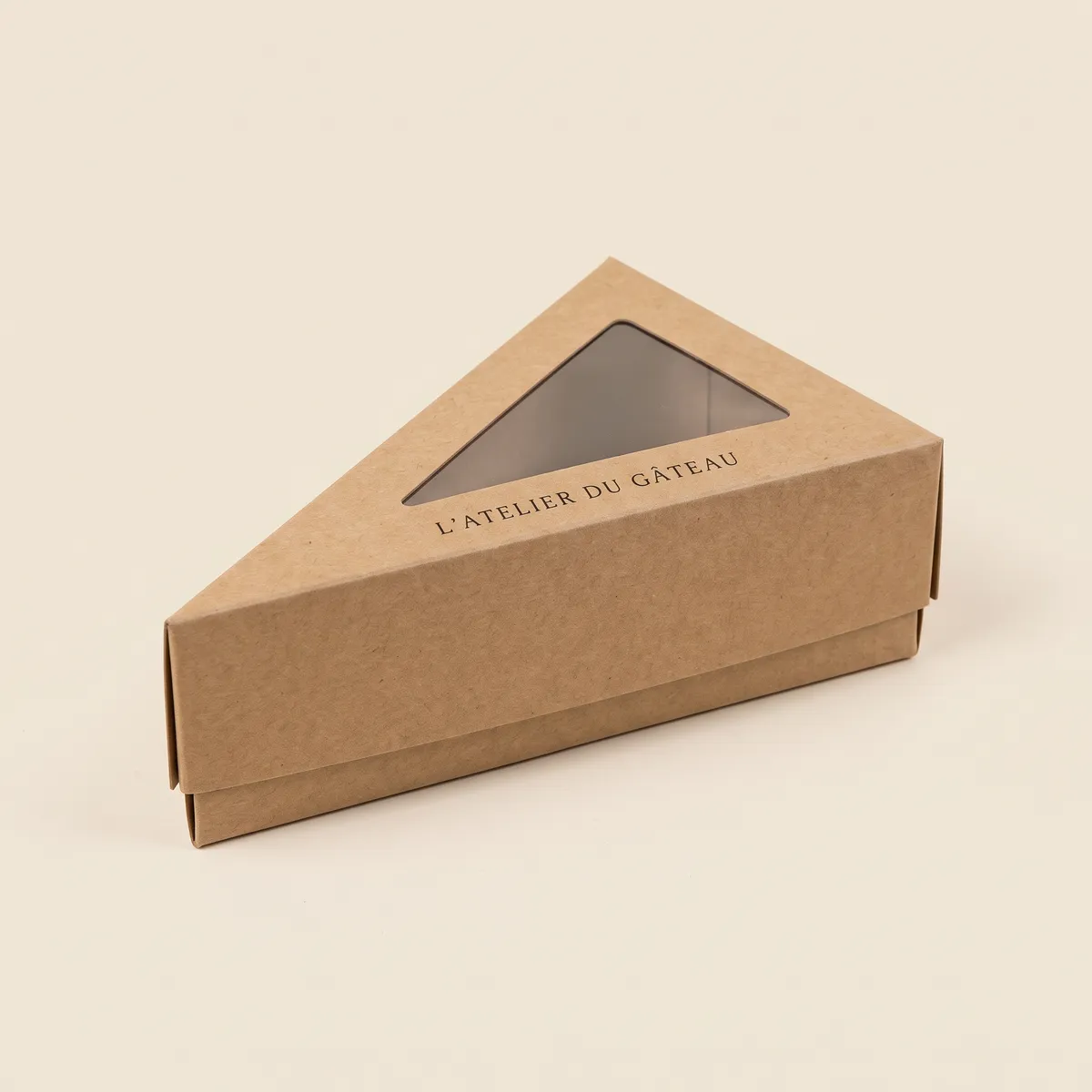
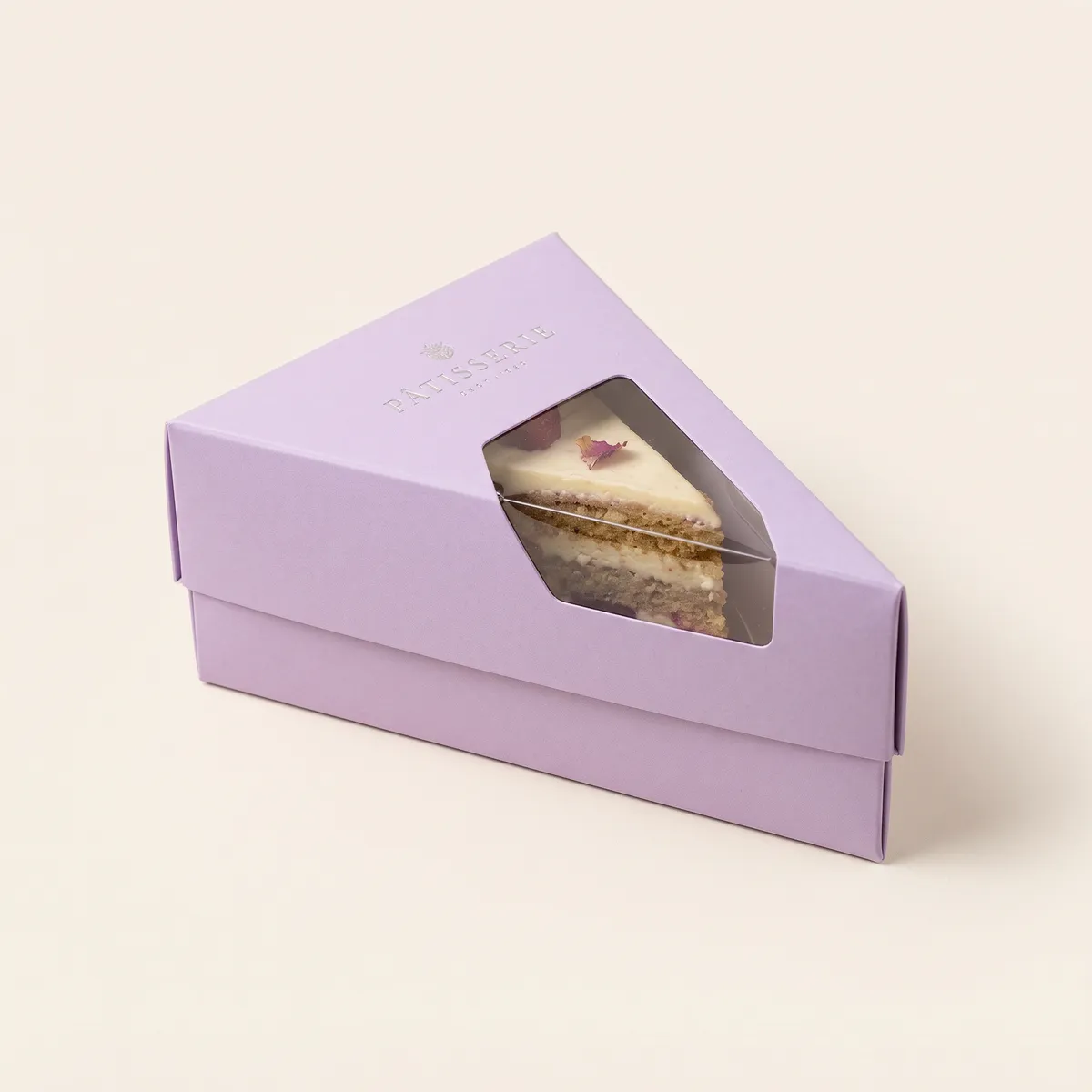
Cake slice boxes use a wedge-shaped footprint, because a slice laid in a rectangular box slides and the point folds over, the most common complaint with slice packaging. Moisture and grease concentrate where cut filling sits on a small area, so a grease-proof face is essential. A window cut to the wedge shows the layers, and slice boxes can match your whole-cake boxes.
Ours are on Trustpilot, where we can't edit them or choose which ones you see.
Read them on Trustpilot →(opens in a new tab)Four stages, twelve days
Quote confirmed
A specialist checks your spec against the board and comes back with a firm price inside 4 business hours.
Proof approved
You get a flat dieline and a 3D render. Nothing goes to press until you approve it in writing.
On press
Print, die-cut, glue, and fold. You get a press-side photo the day your job runs.
QC and delivery
Every pallet is sampled against the digital proof or physical sample you approved, then shipped with tracking to your dock or 3PL.
If a box doesn't match the digital proof or physical sample you approved, we reprint the run at no charge.
Read the reprint terms →Know exactly what you're ordering.
Cake Slice Boxes for Cakes Sold by the Portion
Selling cake by the slice turns one cake into many sales, and each of those sales needs its own box. The slice is the most fragile form a cake takes: cut faces exposed, filling showing, and a narrow point that's the first thing to break. Cake slice boxes hold a single portion the way it was cut, standing upright with its layers facing out. Buyers are cafés, coffee shops, bakeries and dessert counters selling slices to take away, and caterers boxing portions for events. For these businesses the slice box is high-volume packaging, so it has to be cheap enough to use on every portion and good enough that the slice still looks worth its price when it's opened.
Wedge Footprint and Grease-Proof Face Specs
Most slice boxes are cut from kraft with a grease-proof inner face, with coated board available for full-color print.
| Attribute | Cake slice box |
|---|---|
| Board | Food-grade kraft, around 20–24pt |
| Inside face | Grease-proof, where cut filling sits |
| Footprint | Wedge-shaped, cut to your slice |
| Height | Clears the slice and its tip |
| Window | Optional, cut to the wedge |
| Tolerance | ±1/16" (1.5mm) |
Send the slice's depth, height and the number of portions you cut from each cake, and the wedge is built from that. The dieline is confirmed in writing as internal dimensions before anything is cut.
Why a Wedge Carton Beats a Rectangle for a Slice
A rectangular box is the obvious choice for a slice, and it's the one that causes most of the trouble. It leaves empty corners for the slice to travel into, and the narrow end is the part that meets the wall. A box that follows the cut solves it. Cake slice boxes are usually made as a wedge-shaped folding carton: one die-cut blank folding into a triangular footprint that holds the slice at its back edge and along both cut faces. There's no dead space to move into. Because it folds from a single sheet, it stays inexpensive and ships flat. Where a slice is unusually tall, the wedge simply gets deeper rather than wider.
A Window Cut to Follow the Wedge
A slice is bought for what's inside it, so a window on a slice box usually pays for itself. Cut to the outline of the wedge rather than a standard rectangle, it puts the cut face on show, which is what a customer compares across a counter. Keep print to one or two colors on kraft, sized for a small lid, and leave the window clear of artwork. A printed flavor panel helps cafés selling several cakes from one box design. Lamination isn't needed on a box that holds a slice for an hour or two, and the inside face matters more than any outer finish. Spend on the grease-proof lining and the window cut, and stop there.
Cake Slice Boxes for Cafés, Cheesecake Counters and Dessert Bars
The steadiest buyers are cafés selling cake by the slice alongside coffee, where a takeaway slice is a regular add-on to a drink order. Cheesecake specialists use wedge boxes because a dense cheesecake slice is heavy at the back and fragile at the point. Dessert bars and patisseries box slices of layer cakes and tortes for customers who don't want a whole cake. Caterers portion cakes into individual boxes for conferences, school events and office lunches, where slices are handed out rather than cut on site. Bakeries with whole-cake ranges sell leftover cakes by the slice at the end of the day, which turns unsold stock into revenue. Restaurants boxing dessert to go use them for the same reason.
Running Slice Boxes Alongside Whole-Cake Boxes
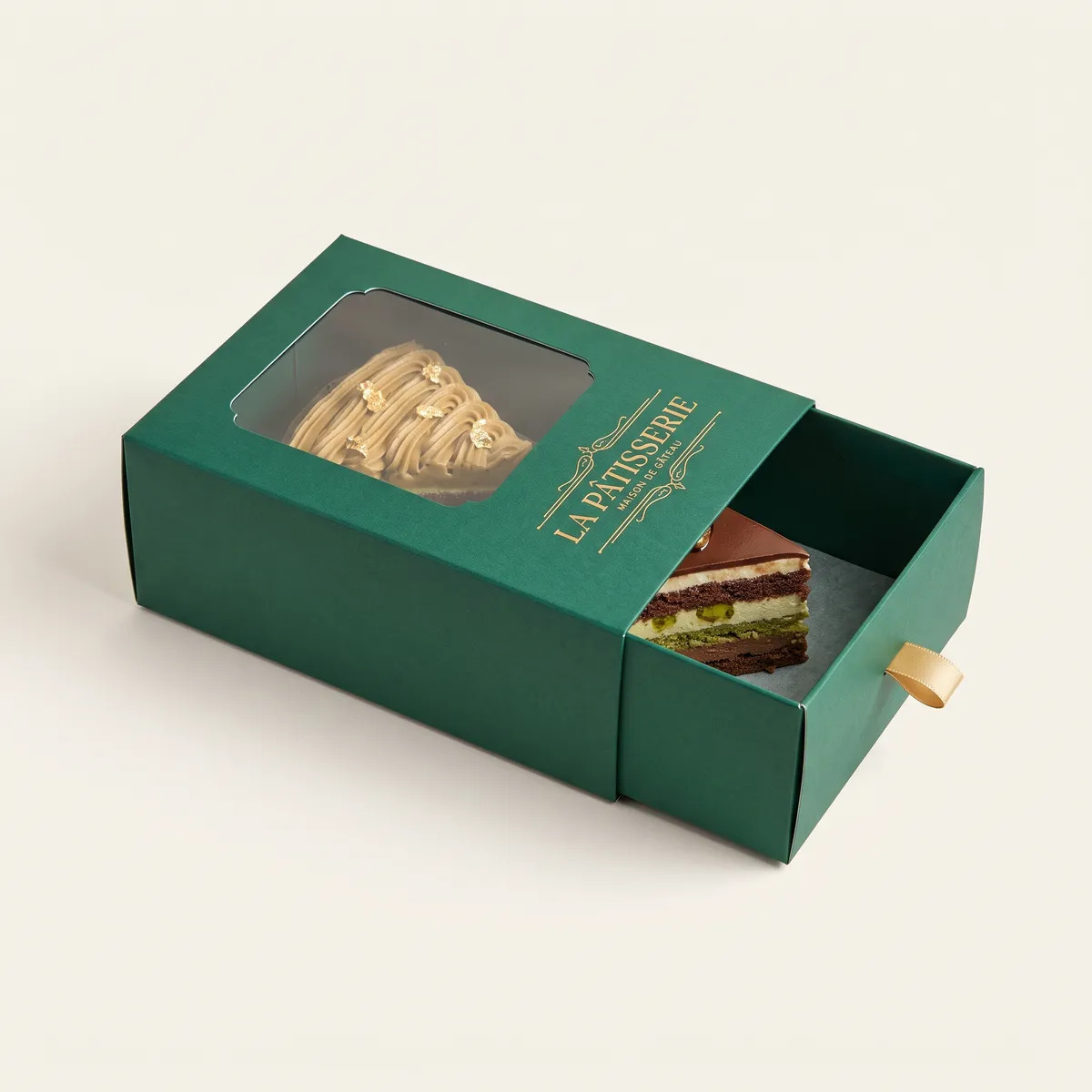
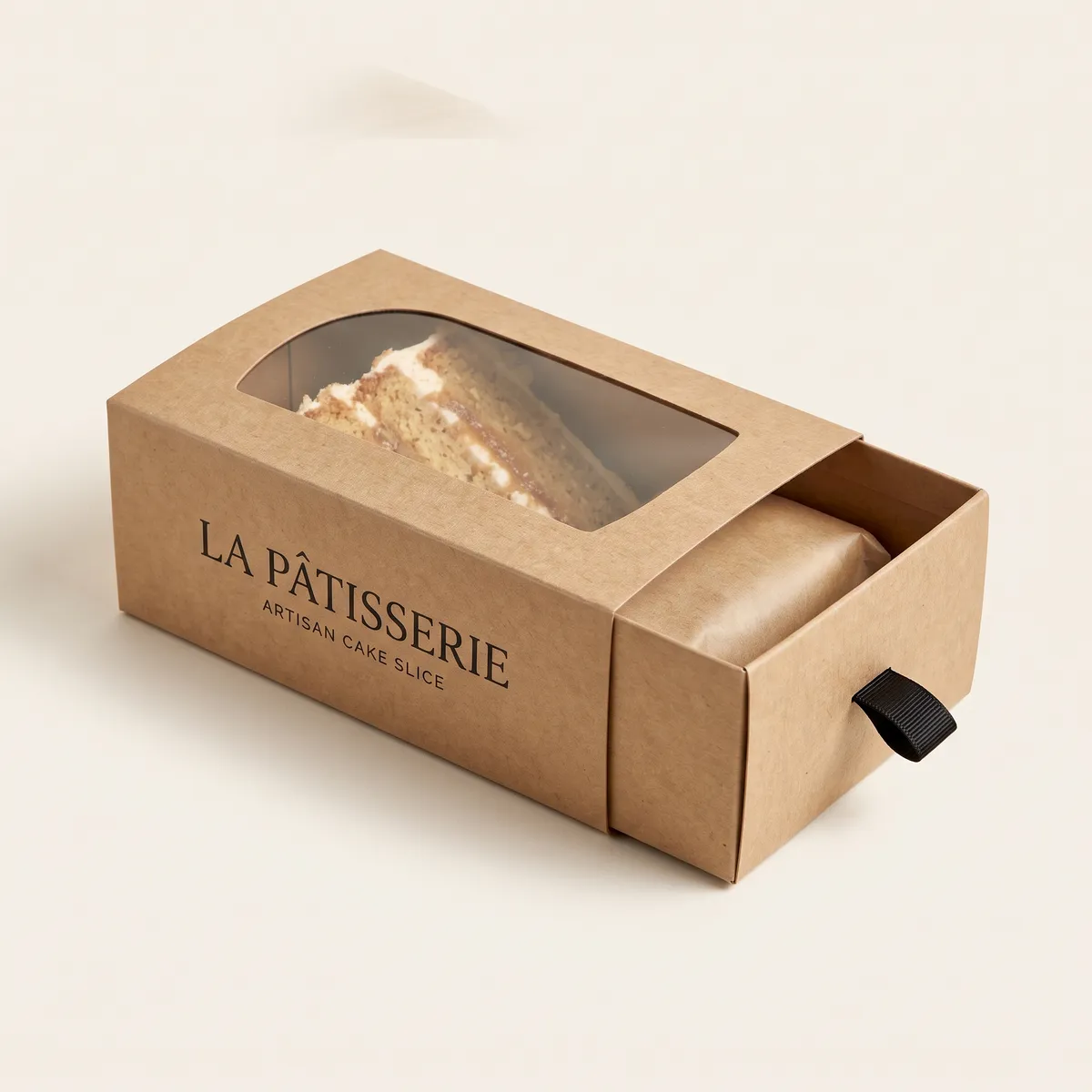
A slice box that carries the same branding as your whole-cake box makes the range look intentional, and ordering both together keeps it affordable. Send your slice dimensions with the specs for your other cake boxes and we'll prepare the dielines side by side, so the artwork lines up across both. Design help is free and revisions are unlimited. The minimum is 100 boxes. Production runs 8–12 business days from proof approval, window included, with rush available at an added cost we quote first. Before shipping, each box clears three checks; should the bulk still differ from the approved proof, we cover the reprint. Dies, setup and delivery are priced in from the first quote.
One connected process, start to finish.
Structural Design
Dieline drafted to your exact fit and freight tolerances.
Proof & Sample
Sign off on a digital proof, or request a physical sample.
Tooling
Dies and plates are cut for your job and archived on file.
Production
Print, die-cut, and assembly run under in-line quality checks.
Ship & Reorder
Freight goes out, and the cycle resets for your next run.
Steady process. Powerful results.
Like everything we build, our process is engineered to hold up — no shortcuts, no surprises. Five dependable stages that run the same way every single time, so reorders are just as fast as the first order.
- One dedicated teamFrom first sketch to final freight, the same people carry your order start to finish.
- Dies archived on fileReorders skip tooling and re-setup entirely — we already have your exact spec.
- Checked against your sign-offEvery run is inspected against the digital proof or physical sample you approved.
Set up your file once, correctly
Nine in ten delayed jobs are delayed by artwork, not production. Match these four rules and your proof lands the next morning.
- Bleed1/8 in (3 mm) past every cut line
- Safe ZoneKeep text 1/4 in clear of every crease
- ColourCMYK or named Pantone. No RGB.
- Resolution300 dpi at final size, fonts outlined
No print-ready file?
Send a logo and a rough idea. Our studio builds the production file free with any order over 500 units — you keep the source file either way.
Ask the StudioBackground art must run all the way to the outer bleed edge. Anything inside the white dashed line survives fold tolerance.
What brands say about this box
They live there rather than here, where we can't edit them, delete them, or pick which ones you get to see. That is exactly what makes them worth reading.
Read all reviews on Trustpilot(opens in a new tab)Answers before you have to ask.
How does a slice box hold the wedge upright?
With a wedge-shaped footprint and enough height that the tip isn't pressed. A slice laid in a rectangular box slides and the point folds over, which is the most common complaint with slice packaging.
Can slice boxes have a window?
Yes, and it sells well on a counter. A window shows the layers and filling, which is what customers judge a slice by. We cut it to follow the wedge shape rather than a rectangle.
Do slice boxes need a coating?
Yes, and more than a whole-cake box does. A slice sits on a small area of board with cut filling exposed, so moisture and grease concentrate. A grease-proof face is essential.
How soon can cake slice boxes be produced?
Usually 8–12 business days once the proof is approved, window included. Rush is available at an added cost quoted first, with shipping included on every order.
Can slice boxes be ordered with matching cake boxes?
Yes, and matching them is worth doing. Customers notice when a slice box doesn't match the cake box it came from, and running both together shares the setup cost.