
Pie Boxes
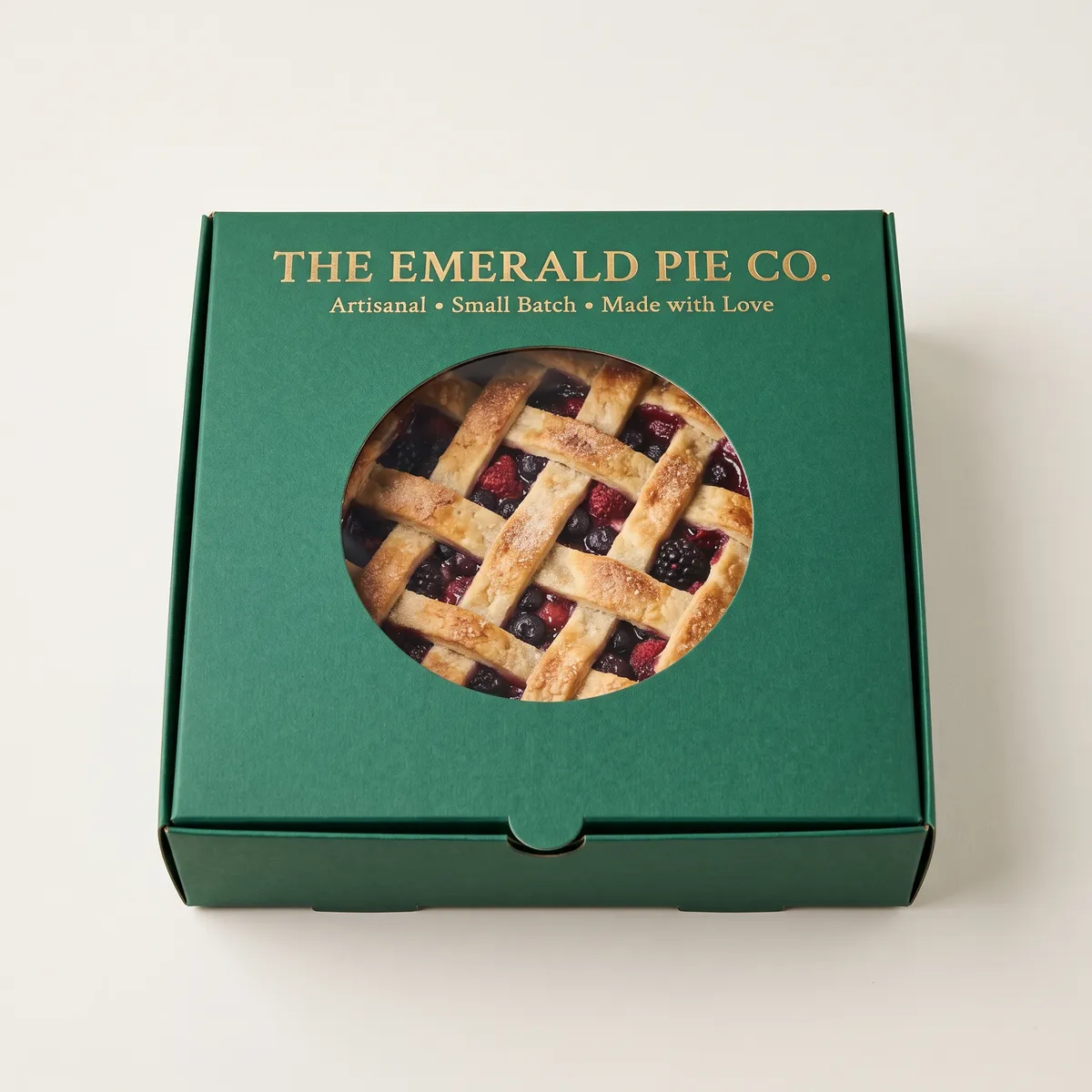
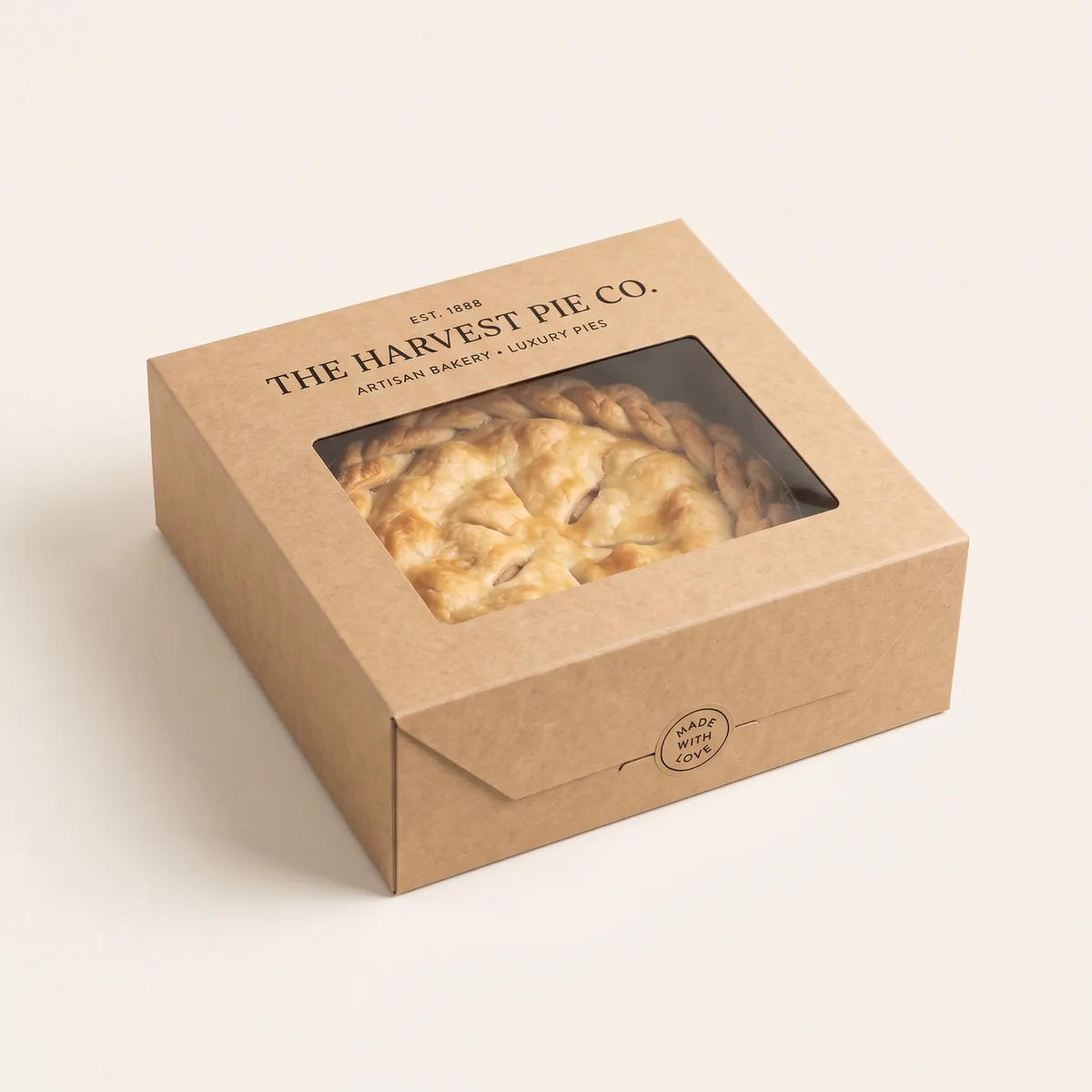
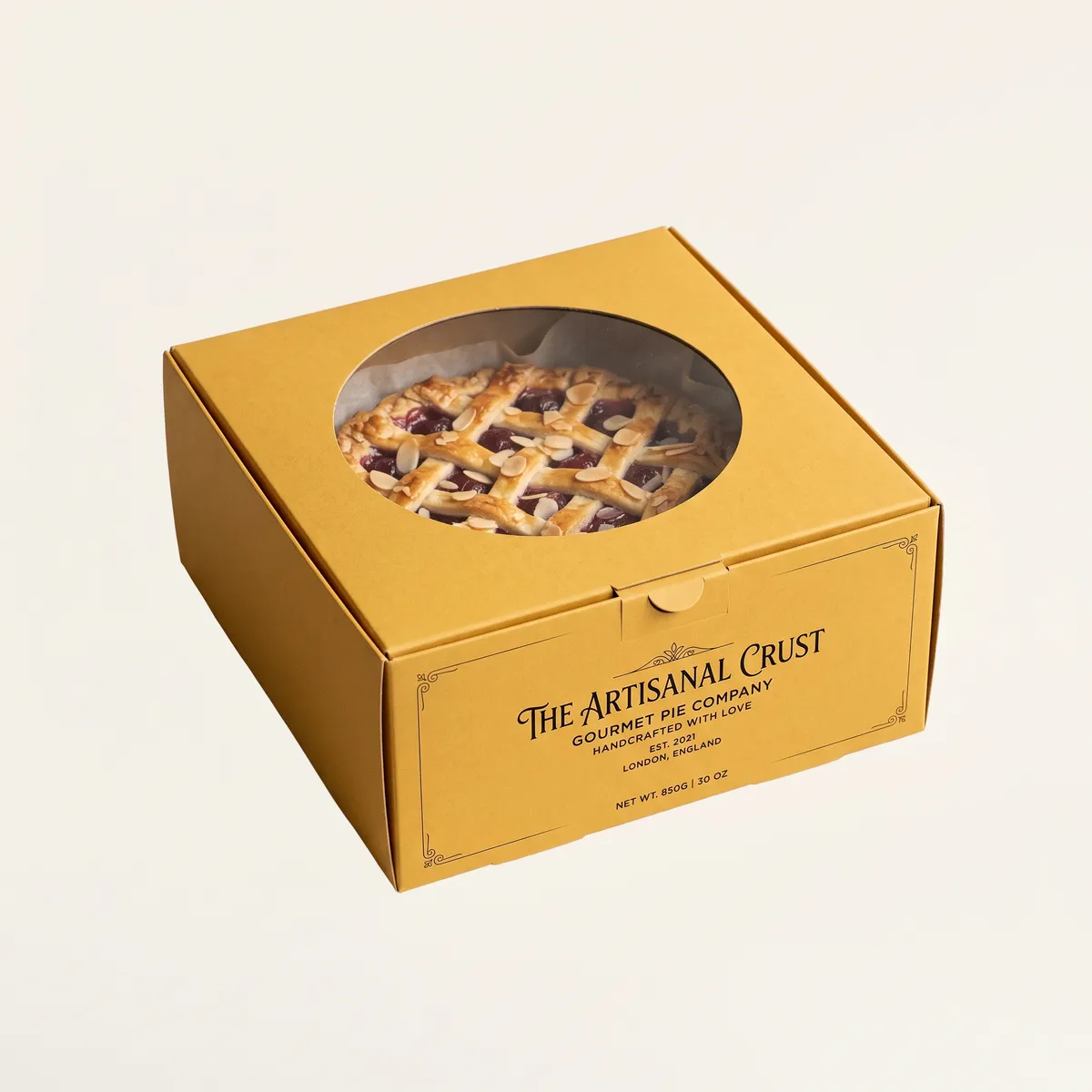
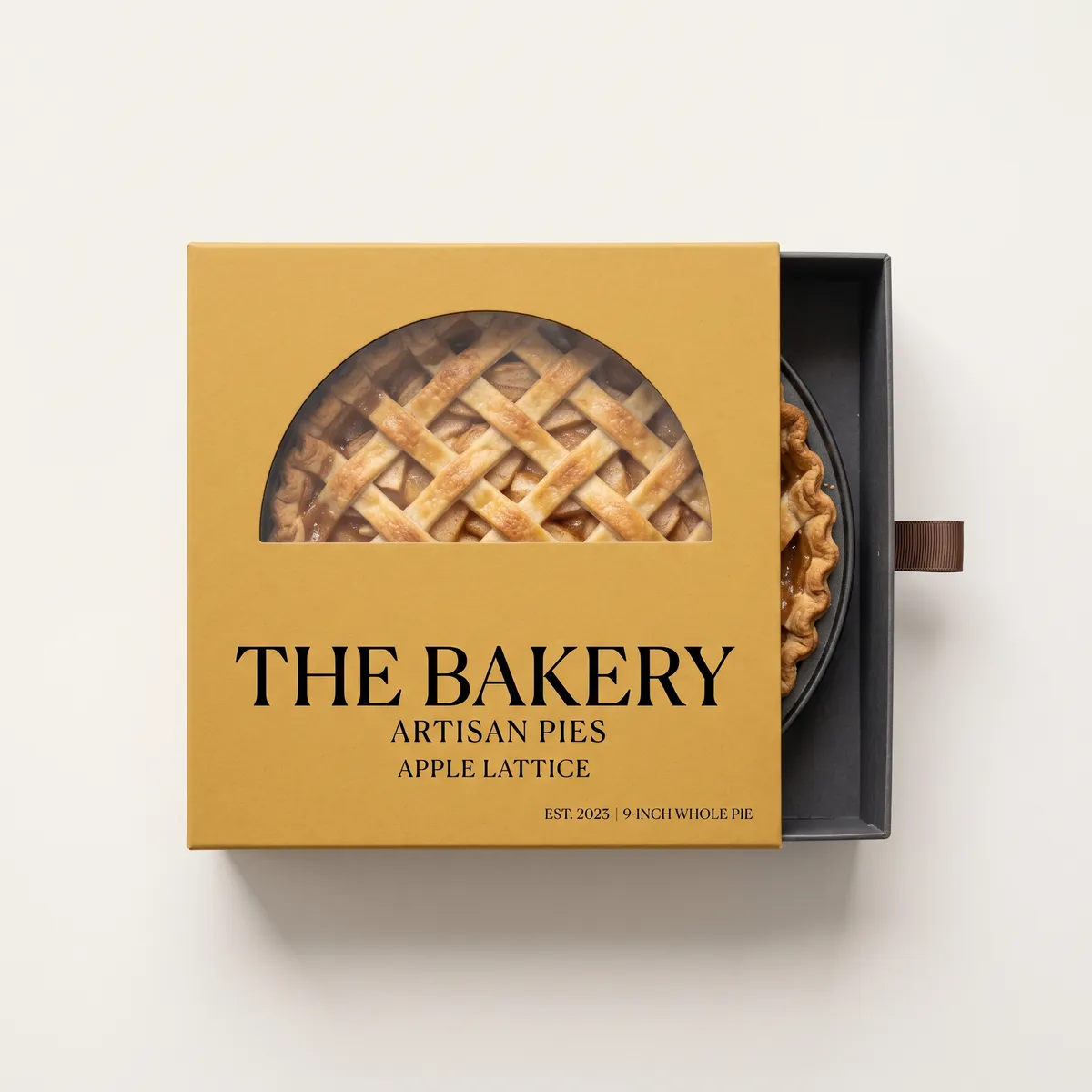
Pie boxes face a wide base carrying a heavy product, often balanced on one hand, and an ordinary tuck bottom flexes under it. We rate the base for your diameter, using corrugated or a locking base rather than simply enlarging a smaller dieline. Boxes are built to the diameters you bake, not predetermined sizes, and several diameters can run together from 100 boxes each.
Ours are on Trustpilot, where we can't edit them or choose which ones you see.
Read them on Trustpilot →(opens in a new tab)Four stages, twelve days
Quote confirmed
A specialist checks your spec against the board and comes back with a firm price inside 4 business hours.
Proof approved
You get a flat dieline and a 3D render. Nothing goes to press until you approve it in writing.
On press
Print, die-cut, glue, and fold. You get a press-side photo the day your job runs.
QC and delivery
Every pallet is sampled against the digital proof or physical sample you approved, then shipped with tracking to your dock or 3PL.
If a box doesn't match the digital proof or physical sample you approved, we reprint the run at no charge.
Read the reprint terms →Know exactly what you're ordering.
Pie Boxes for a Heavy Bake on a Wide, Flat Base
A whole pie is heavy, wide and shallow, and it has to stay level from the counter to the table. Tilt it and the filling shifts; flex the base and the crust cracks. Pie boxes are built around that problem. The buyers are bakeries and pie shops, farm stands selling fruit pies in season, restaurants selling whole pies to take home, and caterers supplying holiday tables. Most sell several sizes, from small individual pies to family-size, and the box has to scale across all of them without the larger sizes going soft in the middle. A box that works on the small pie and sags on the big one is the usual complaint.
Pie Box Specs by Diameter and Board Grade
Every pie box is built to one of your diameters, on folding board for lighter sizes or E- or B-flute board where the span calls for it.
| Attribute | Detail |
|---|---|
| Diameter | Built to each size you bake |
| Board | Folding board, or E-/B-flute corrugated |
| Base | Locking or snap-lock, rated for the span |
| Depth | Set to the pie, including any raised crust |
| Inside face | Grease-resistant coating |
| Tolerance | Around ±1/16" (1.5mm) |
Tell us the diameter, depth and rough weight of each pie. Weight and diameter together decide the board, and a deep-dish fruit pie needs more support than a shallow custard tart of the same width.
A Locking Base Rated for the Span, Not a Scaled-Up Tuck
The usual mistake is taking a box that works for a small pie and enlarging it. Every extra inch of diameter adds unsupported span to the base, and an ordinary tuck bottom that holds up under a small pie flexes under a family-size one. These boxes are commonly made with a snap-lock bottom that carries weight, which interlocks across the base instead of relying on a single fold. For the largest and heaviest pies, corrugated adds stiffness folding board can't. The result is a base that stays flat when someone lifts the box from underneath. If you only sell small individual pies, a lighter build is enough, and we'll tell you so.
Printing the Lid of a Shallow Pie Box
A pie box is mostly lid, and the sides are shallow, so the lid carries almost all the branding. Logo print in one or two colors suits most pie shops and keeps cost down. Full color works on coated folding board, while corrugated prints simpler artwork more cleanly. The side walls have room for a name or phone number, not much more. Seasonal artwork, such as a holiday design, can run on the same structure as your standard box and share its setup. Food-safe inks are used anywhere near product. Skip gloss film on boxes that take a pie still warm from the oven, since condensation builds under it and softens the crust.
Pie Boxes for Holiday Orders and Bakery Pie Programs
Holiday orders are the peak for most pie sellers. Thanksgiving and Christmas bring a rush of pre-ordered whole pies, often collected within a few hours, and the boxes need to be assembled, filled and stacked quickly. Bakeries handling holiday cake and pie orders through the same counter often order pie and cake boxes together. Pie shops sell several sizes year-round. Farm stands and orchards sell fruit pies in season, usually in a single size. Restaurants offer whole pies to take home. Caterers supply pies for weddings and events. Quiche and savory tart makers use the same box for the same reason: a wide, heavy bake that has to stay flat.
Matching Boxes to Every Diameter You Bake
Each diameter you bake gets its own dieline, built from the measurements you send and confirmed in writing as internal or external. There's no catalog of fixed pie sizes to fit around. Ordering several diameters at once means one setup across all of them, and the minimum is 100 boxes for each diameter. Production takes 8–12 business days from proof approval, so for a holiday season, approve proofs well ahead of your first pre-order date. Rush is available at an extra cost quoted upfront. Dies, plates and setup are in the quote with no hidden costs, shipping is included, and every box passes a three-stage check before it ships.
One connected process, start to finish.
Structural Design
Dieline drafted to your exact fit and freight tolerances.
Proof & Sample
Sign off on a digital proof, or request a physical sample.
Tooling
Dies and plates are cut for your job and archived on file.
Production
Print, die-cut, and assembly run under in-line quality checks.
Ship & Reorder
Freight goes out, and the cycle resets for your next run.
Steady process. Powerful results.
Like everything we build, our process is engineered to hold up — no shortcuts, no surprises. Five dependable stages that run the same way every single time, so reorders are just as fast as the first order.
- One dedicated teamFrom first sketch to final freight, the same people carry your order start to finish.
- Dies archived on fileReorders skip tooling and re-setup entirely — we already have your exact spec.
- Checked against your sign-offEvery run is inspected against the digital proof or physical sample you approved.
Set up your file once, correctly
Nine in ten delayed jobs are delayed by artwork, not production. Match these four rules and your proof lands the next morning.
- Bleed1/8 in (3 mm) past every cut line
- Safe ZoneKeep text 1/4 in clear of every crease
- ColourCMYK or named Pantone. No RGB.
- Resolution300 dpi at final size, fonts outlined
No print-ready file?
Send a logo and a rough idea. Our studio builds the production file free with any order over 500 units — you keep the source file either way.
Ask the StudioBackground art must run all the way to the outer bleed edge. Anything inside the white dashed line survives fold tolerance.
What brands say about this box
They live there rather than here, where we can't edit them, delete them, or pick which ones you get to see. That is exactly what makes them worth reading.
Read all reviews on Trustpilot(opens in a new tab)Answers before you have to ask.
How do you stop a pie base from bowing?
With a base rated for the diameter, not just scaled up from a smaller box. A wide base has more unsupported span, so we use a heavier board or a locking base rather than enlarging a small dieline.
Do pie boxes come in different diameters?
Yes. We build to the diameters you bake rather than stocking fixed sizes, and running several together shares setup. Tell us the pie sizes and we'll match the boxes to them.
Do pie boxes need a heavier board?
Usually. A pie is heavy for its footprint and the base is wide, so an ordinary tuck base flexes. Corrugated or a locking base keeps it flat, which matters when the pie is carried on one hand.
How long do pie boxes take to produce?
Around 8–12 business days from proof approval, whatever diameter. Rush production is available at an added cost stated upfront, with shipping included.
What's the minimum on pie boxes?
100 boxes per diameter. If you bake several pie sizes, running the boxes together shares setup and gives you matching packaging across the range.