
Cupcake Boxes
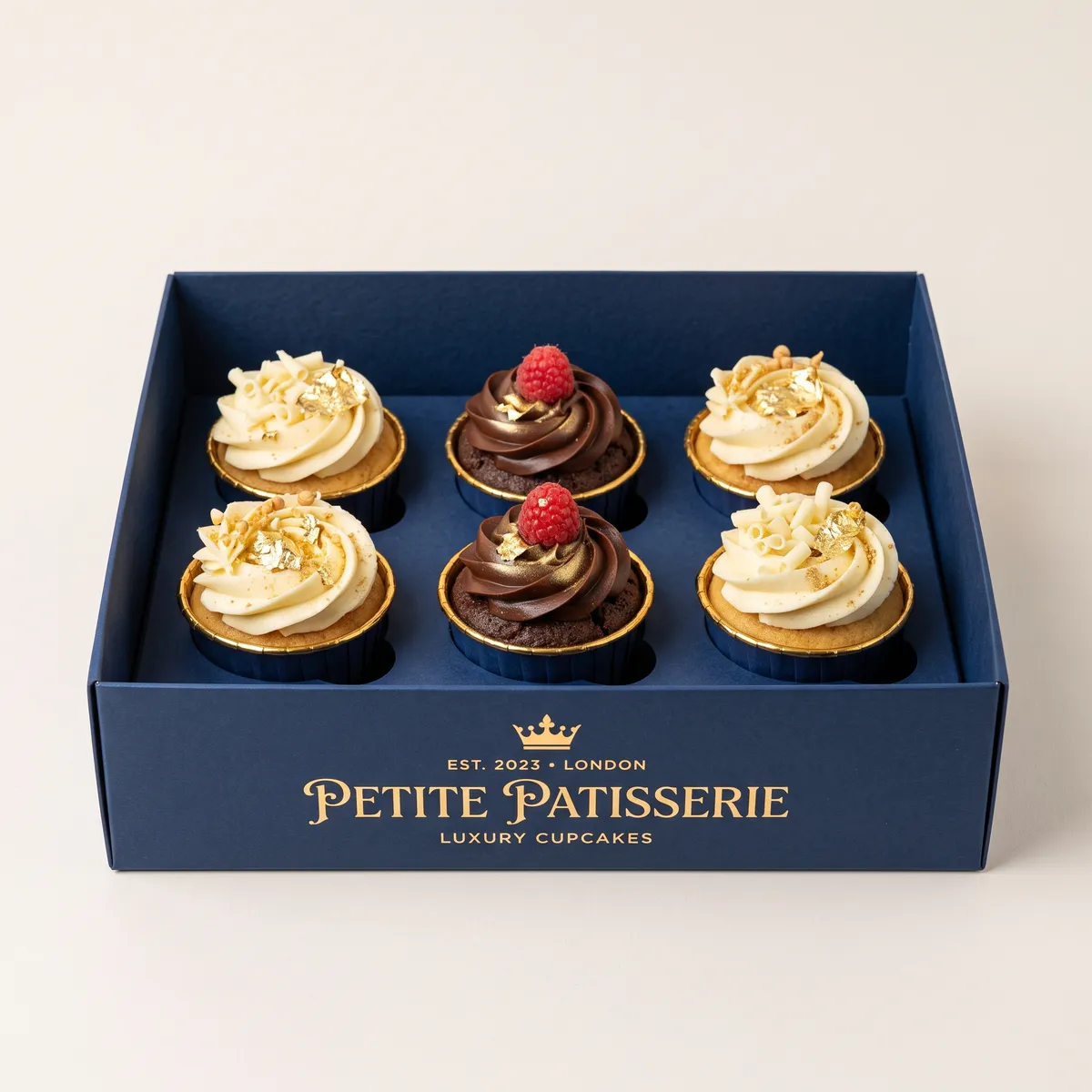
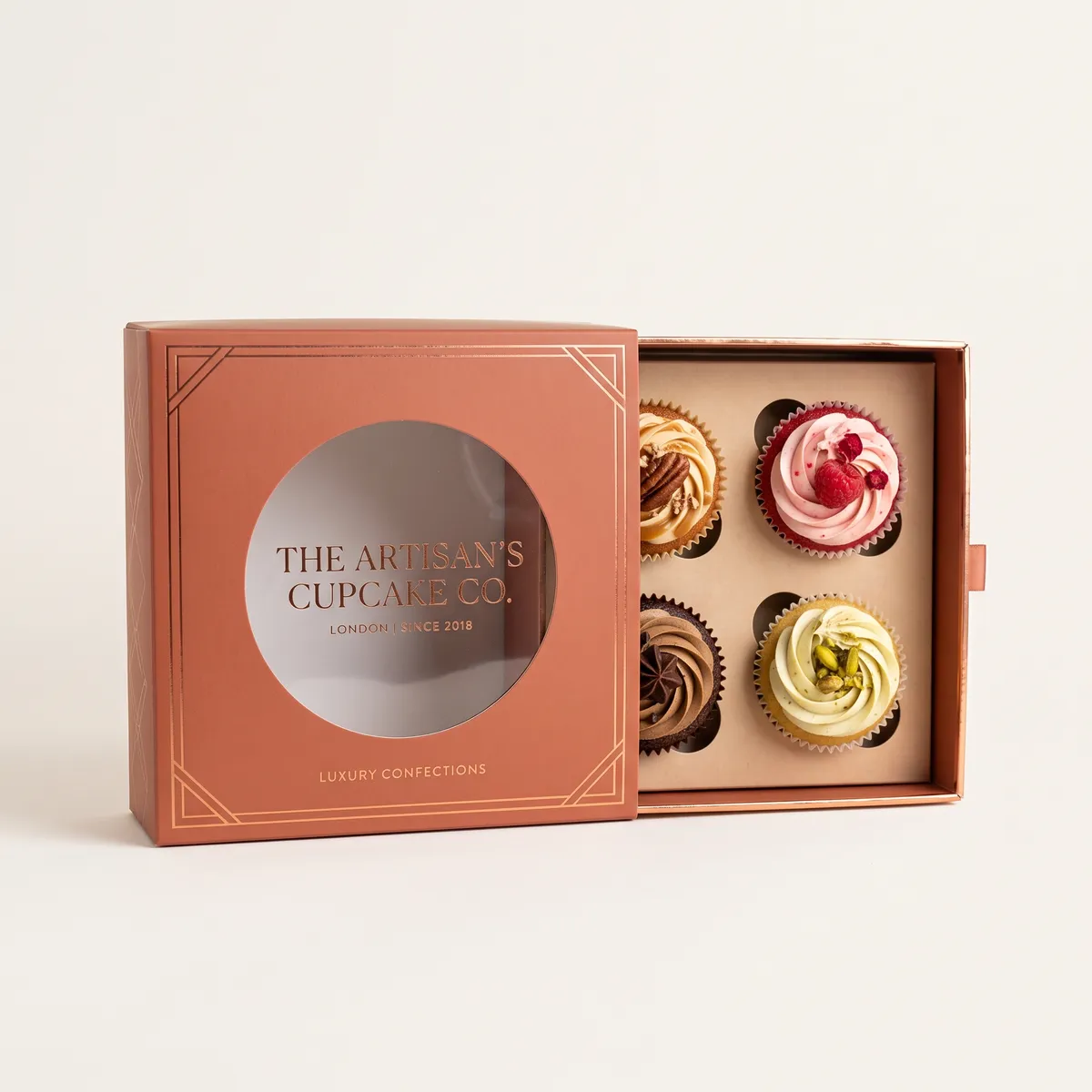
Cupcake boxes need an insert for anything frosted, because a cupcake that slides deposits its frosting on the wall or the neighboring cake. We cut cavities for every count from single servings to a dozen or more. Beyond about six, a full box carries genuine weight, so we specify a locking or auto-bottom base. Single, six and dozen counts can share one production order.
Ours are on Trustpilot, where we can't edit them or choose which ones you see.
Read them on Trustpilot →(opens in a new tab)Four stages, twelve days
Quote confirmed
A specialist checks your spec against the board and comes back with a firm price inside 4 business hours.
Proof approved
You get a flat dieline and a 3D render. Nothing goes to press until you approve it in writing.
On press
Print, die-cut, glue, and fold. You get a press-side photo the day your job runs.
QC and delivery
Every pallet is sampled against the digital proof or physical sample you approved, then shipped with tracking to your dock or 3PL.
If a box doesn't match the digital proof or physical sample you approved, we reprint the run at no charge.
Read the reprint terms →Know exactly what you're ordering.
Cupcake Boxes for Bakers Choosing Their First Range
Most bakers come to cupcake boxes with one order in mind and leave with a range: a single for counter sales, a four or six for families, a dozen for parties. Cupcake boxes cover that whole span, with three narrower versions for when one feature matters most: a box built for a single cake, a box with a window, and a box designed around a precision insert. The buyers are home bakers going commercial, cupcake shops, and bakeries adding cupcakes to a wider counter. What they share is a product that's light, tall and easily marked, sold in quantities that change from day to day, and judged entirely on how the frosting looks when the lid comes off.
Cupcake Box Specs From One Cake to a Dozen
The usual build is food-grade carton board, coated so the outside prints cleanly, with a cavity insert holding each cake.
| Attribute | Detail |
|---|---|
| Counts | One to twelve, more on request |
| Insert | Cavity insert sized to your liner |
| Base | Tuck at small counts; locking or auto-bottom above about six |
| Board | Food-grade, 18–24pt for counter boxes |
| Height | Set by frosting height, not liner width |
| Inside face | Grease-resistant coating |
A dozen with an insert weighs more than most bakers expect, which is why the base changes as the count rises. Past twelve, the box moves to a reinforced base, and we'll specify it once we know the count and cake size.
Single, Windowed or Insert-Led: Picking a Cupcake Format
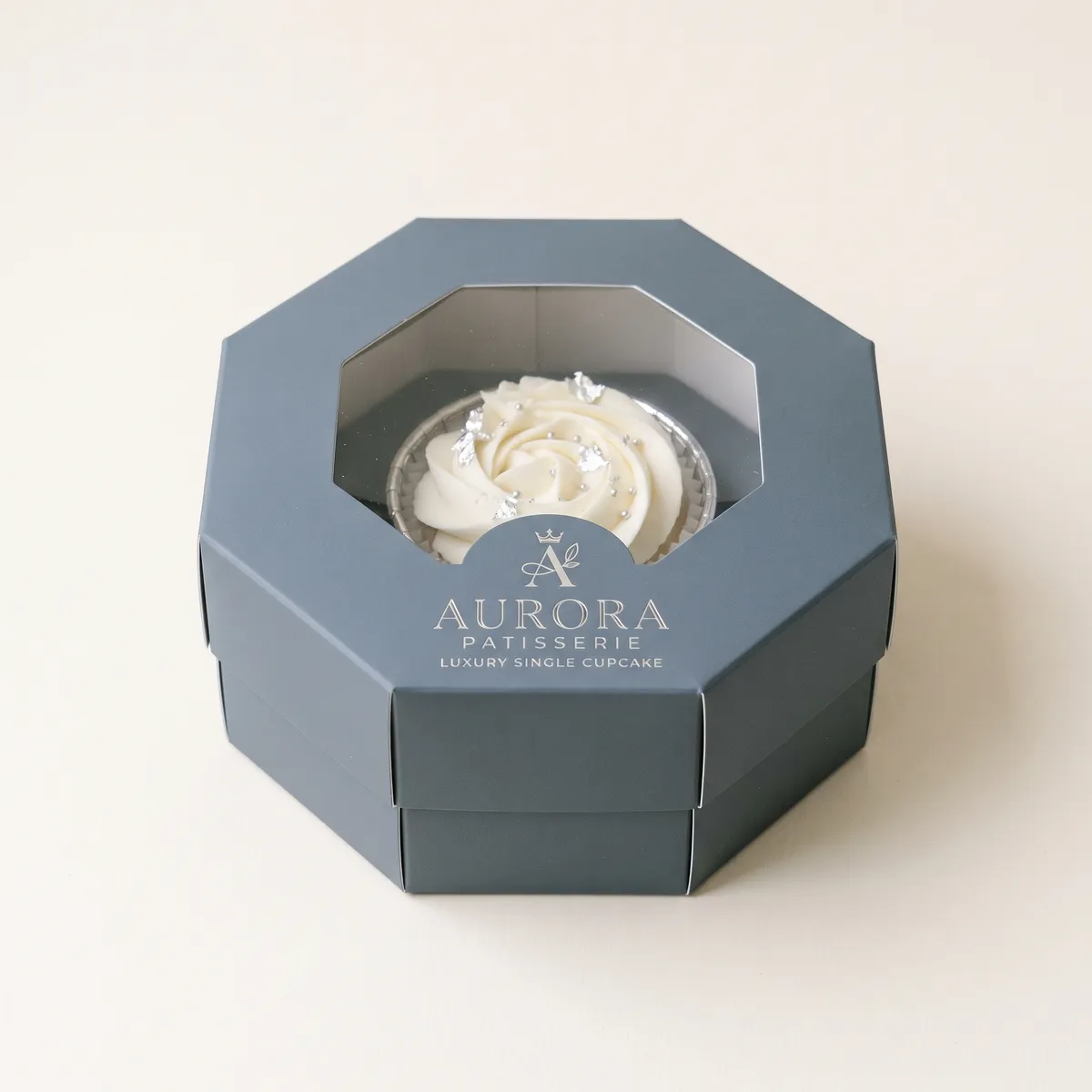
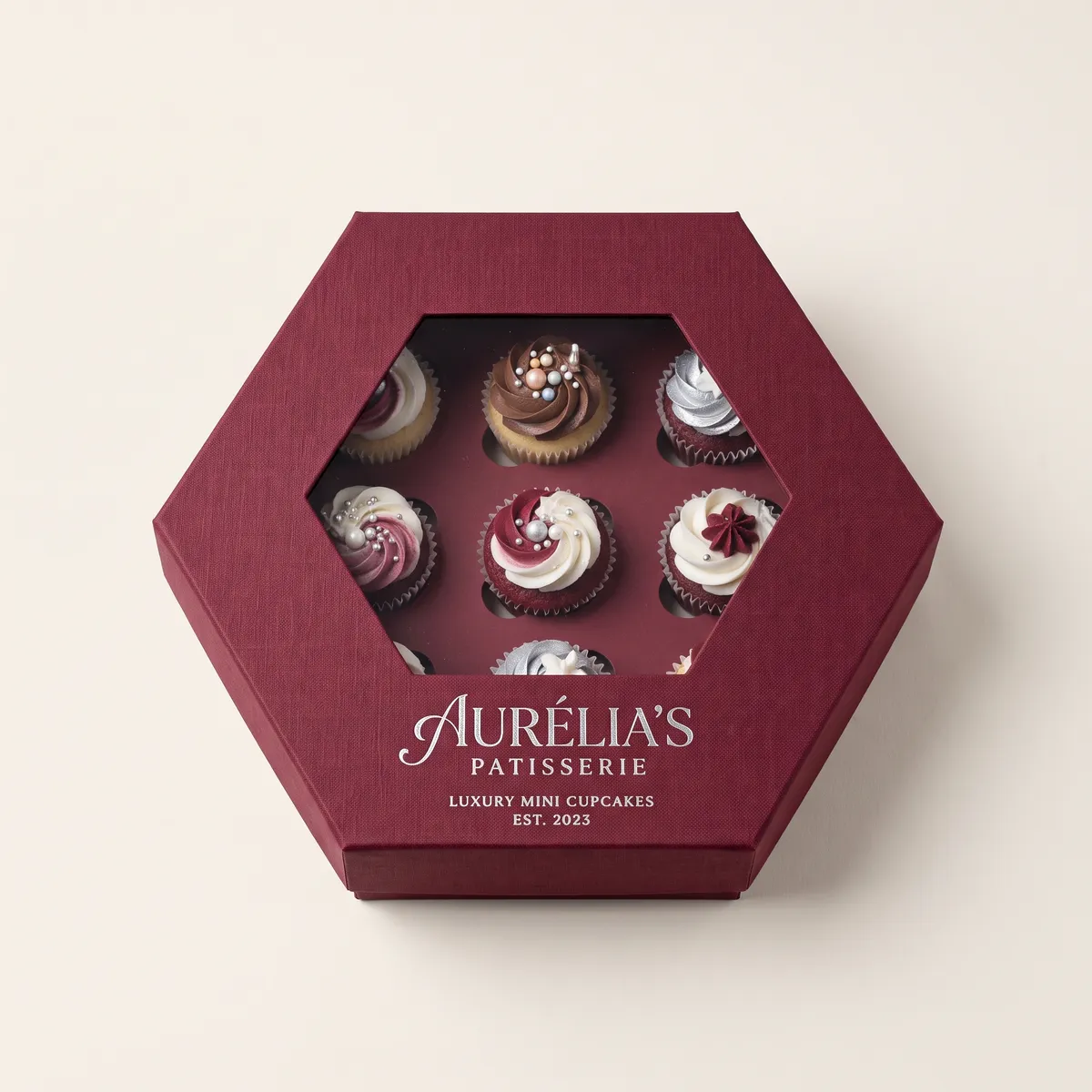
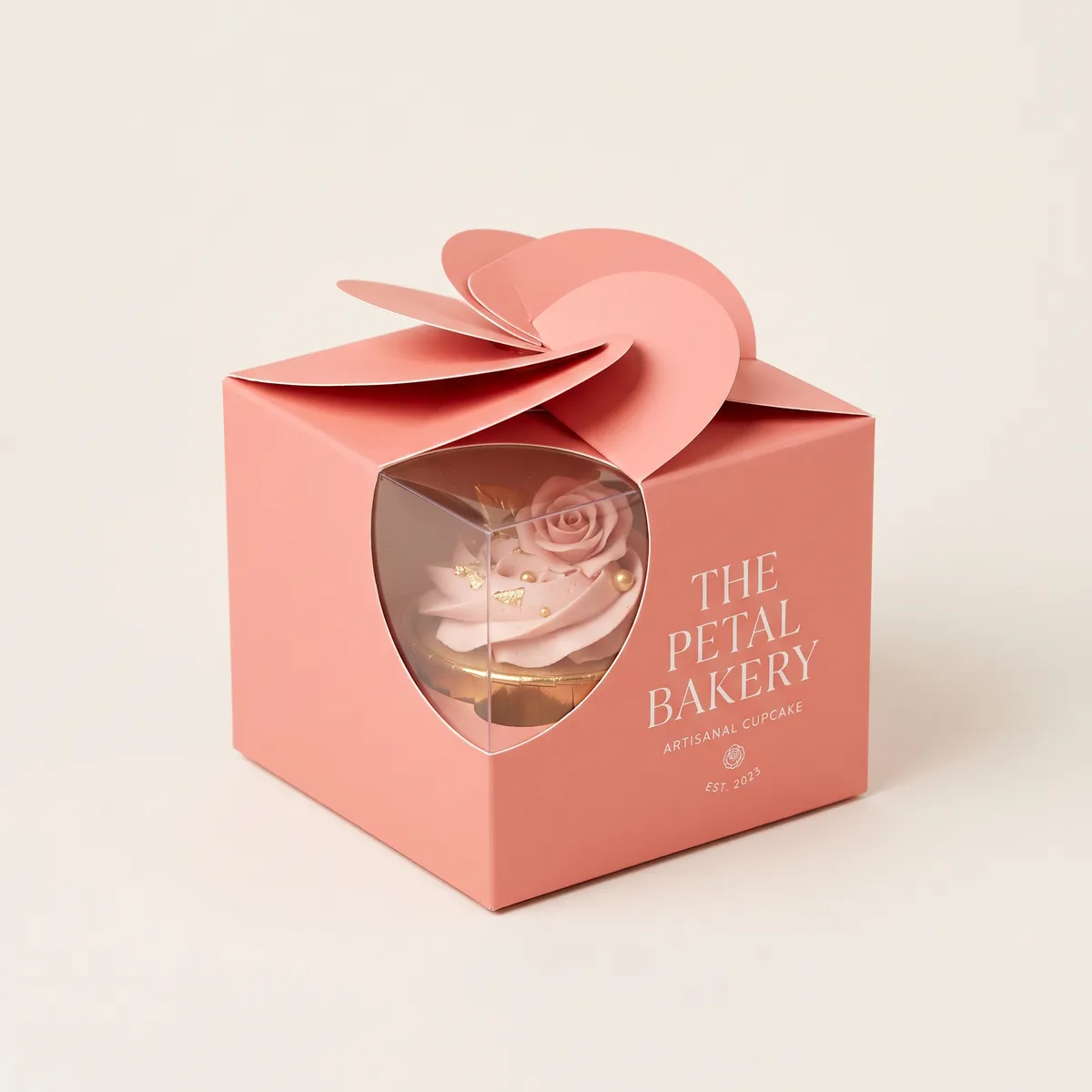
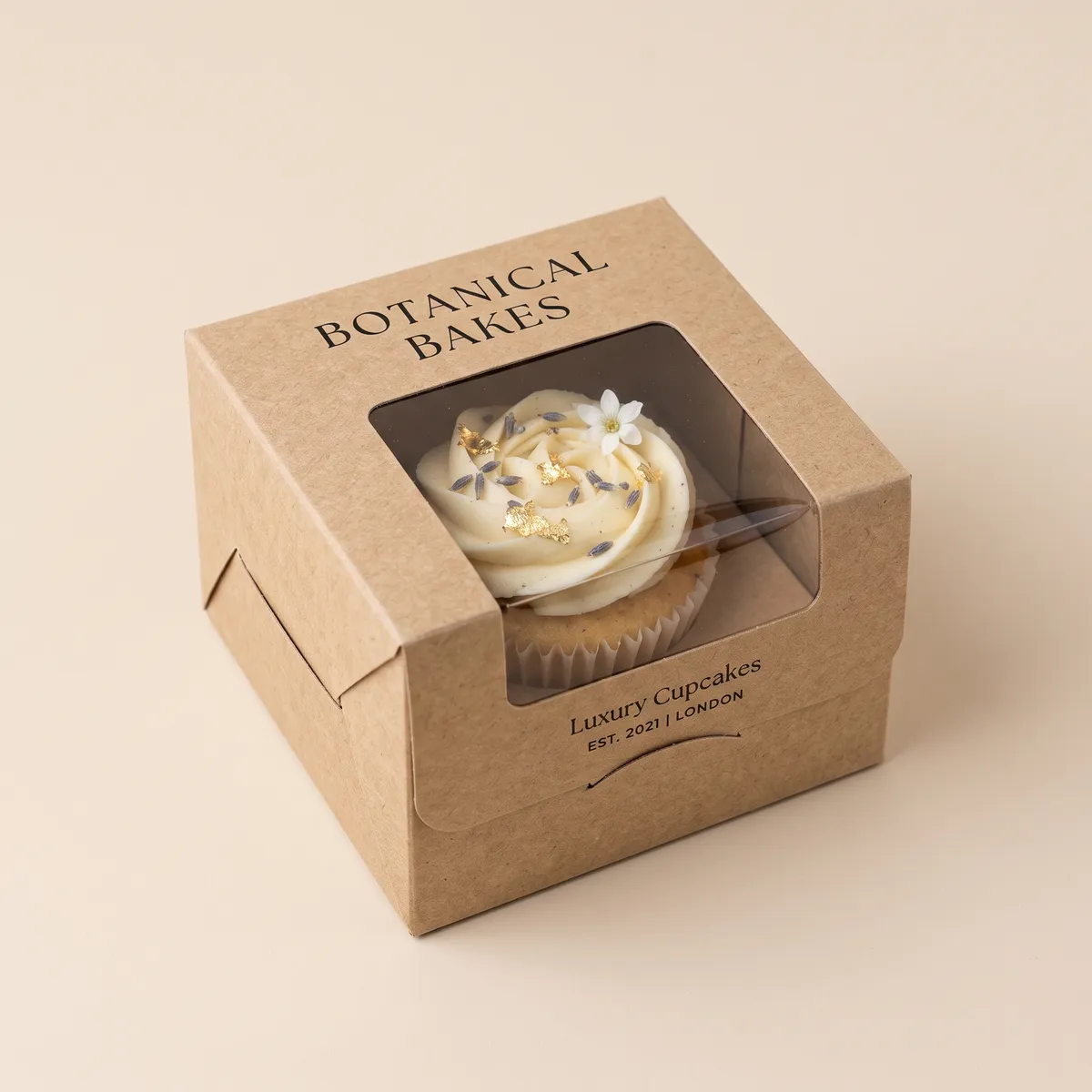
The general cupcake box suits a baker who needs several counts and doesn't want any one feature to drive the cost. Inside, a cavity tray that holds each cake keeps them upright and apart. Three narrower formats exist for when one thing matters more. A single-cake box is for gifting, where the cost per cake is higher but so is the sale price. A window box is for counters where customers choose with their eyes and the lid stays shut. An insert-led box is for delivery and long carries, where the cavity fit is the whole point. If none of those describes your main sale, start here. Most bakeries do, then add one narrower box later.
Printing Cupcake Boxes Without Crowding the Lid
A cupcake box lid is smaller than it looks once a window takes its share, so the artwork has less room than on a cake box. Lid print carries the logo. Side panels suit flavor names or a phone number. Interior print shows when the box opens, which is when the customer is paying the most attention. A window takes lid space but usually earns it on a counter. Food-safe inks are used anywhere near product. Lamination is available, though a heavy gloss film traps moisture on anything boxed while warm. The honest advice is that one strong logo on the lid beats a busy design, because the frosting inside is what people actually want to look at.
Cupcake Boxes for Birthday Orders and Cake Counters
Birthday parties drive the dozen. A customer orders twelve frosted cupcakes, collects them on the day and carries them to a venue, so the insert and the base do most of the work. Cupcake shops sell fours and sixes over the counter all day and need a box that assembles quickly between customers. Bakeries already taking birthday and celebration cake orders add cupcake counts as a cheaper option for smaller parties. School events and office celebrations order dozens in multiples. Home bakers moving into paid orders usually start with one size, then add a second once they know which count sells. Weddings tend to want single boxes, which the individual version covers.
Ordering Singles, Sixes and Dozens Together
Putting every count on one order means one setup and one proof instead of three, and the artwork lines up across the whole range on the counter. Tell us the liner size and frosting height, and we'll build each insert and dieline, confirming internal and external dimensions in writing before anything prints. The minimum is 100 boxes. Turnaround is 8–12 business days after proof approval, and rush is available at an added cost stated before you order. Dies, plates and setup are already in the quote, with nothing added after. Every box gets a three-stage check before it ships, and design help is free at every stage, including the insert layout.
One connected process, start to finish.
Structural Design
Dieline drafted to your exact fit and freight tolerances.
Proof & Sample
Sign off on a digital proof, or request a physical sample.
Tooling
Dies and plates are cut for your job and archived on file.
Production
Print, die-cut, and assembly run under in-line quality checks.
Ship & Reorder
Freight goes out, and the cycle resets for your next run.
Steady process. Powerful results.
Like everything we build, our process is engineered to hold up — no shortcuts, no surprises. Five dependable stages that run the same way every single time, so reorders are just as fast as the first order.
- One dedicated teamFrom first sketch to final freight, the same people carry your order start to finish.
- Dies archived on fileReorders skip tooling and re-setup entirely — we already have your exact spec.
- Checked against your sign-offEvery run is inspected against the digital proof or physical sample you approved.
Set up your file once, correctly
Nine in ten delayed jobs are delayed by artwork, not production. Match these four rules and your proof lands the next morning.
- Bleed1/8 in (3 mm) past every cut line
- Safe ZoneKeep text 1/4 in clear of every crease
- ColourCMYK or named Pantone. No RGB.
- Resolution300 dpi at final size, fonts outlined
No print-ready file?
Send a logo and a rough idea. Our studio builds the production file free with any order over 500 units — you keep the source file either way.
Ask the StudioBackground art must run all the way to the outer bleed edge. Anything inside the white dashed line survives fold tolerance.
What brands say about this box
They live there rather than here, where we can't edit them, delete them, or pick which ones you get to see. That is exactly what makes them worth reading.
Read all reviews on Trustpilot(opens in a new tab)Answers before you have to ask.
Do cupcakes really need an insert?
For anything frosted, yes. Cupcakes slide, and a slide means the frosting hits the wall or the neighboring cake. An insert is the difference between a box arriving presentable and arriving smeared.
How many cupcakes can one box hold?
Whatever you need, from one up to a dozen or more. Past a dozen the box gets heavy and needs a reinforced base. Tell us the count and cake size and we'll spec accordingly.
Do cupcake boxes need a stronger base?
Past six or so, yes. Cupcakes are light individually but a full dozen with inserts has real weight, and a tuck base can give way. We'd use a locking or auto-bottom base at larger counts.
What's the lead time on cupcake boxes?
Around 8–12 business days once you approve the proof, inserts included. Rush is available at an added cost quoted upfront, with shipping included.
Can I order several cupcake counts together?
Yes, and it's the economical way to do it. Most bakeries run a single, a four or six, and a dozen. Sharing setup across all three costs less than three separate orders.