
Cupcake Boxes with Inserts
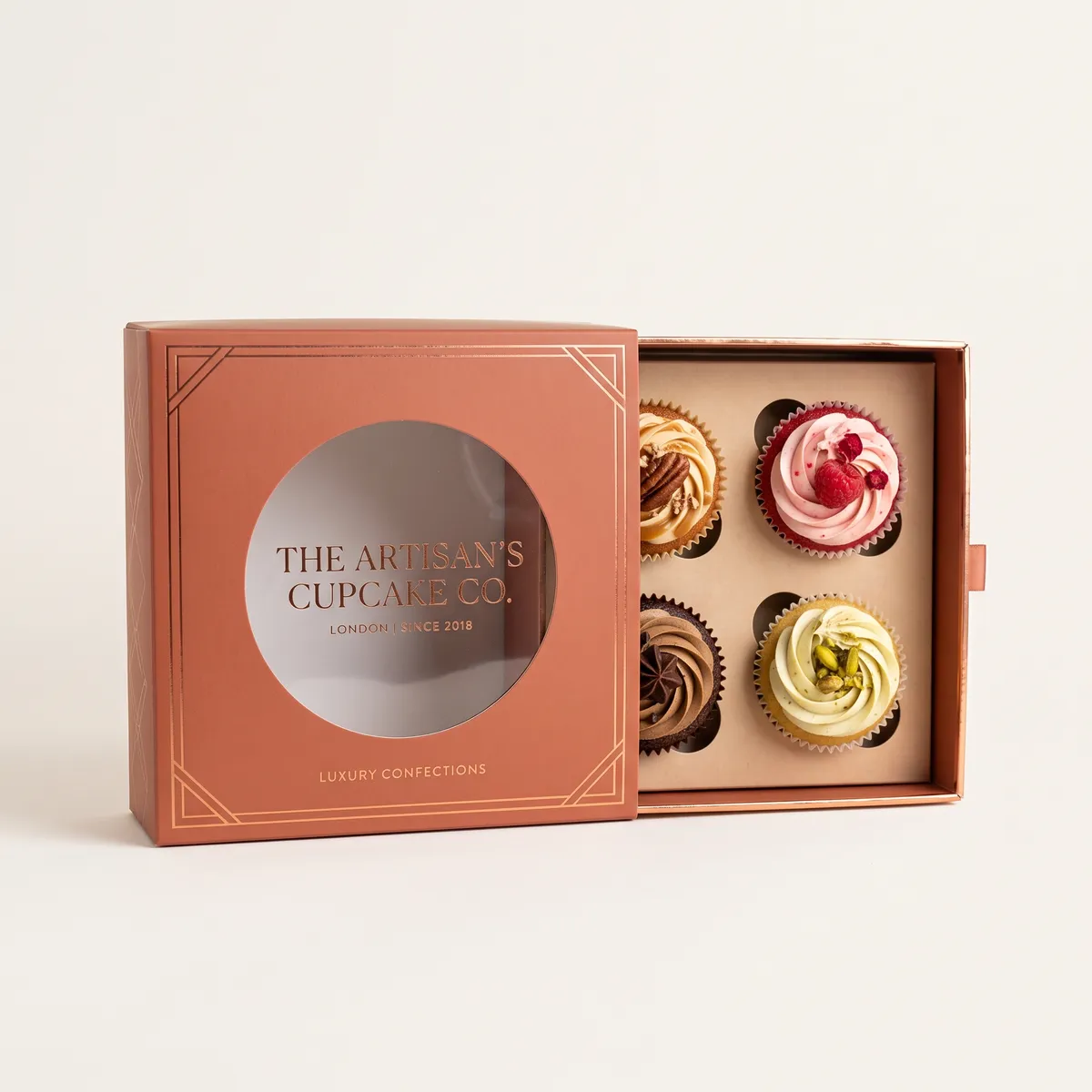
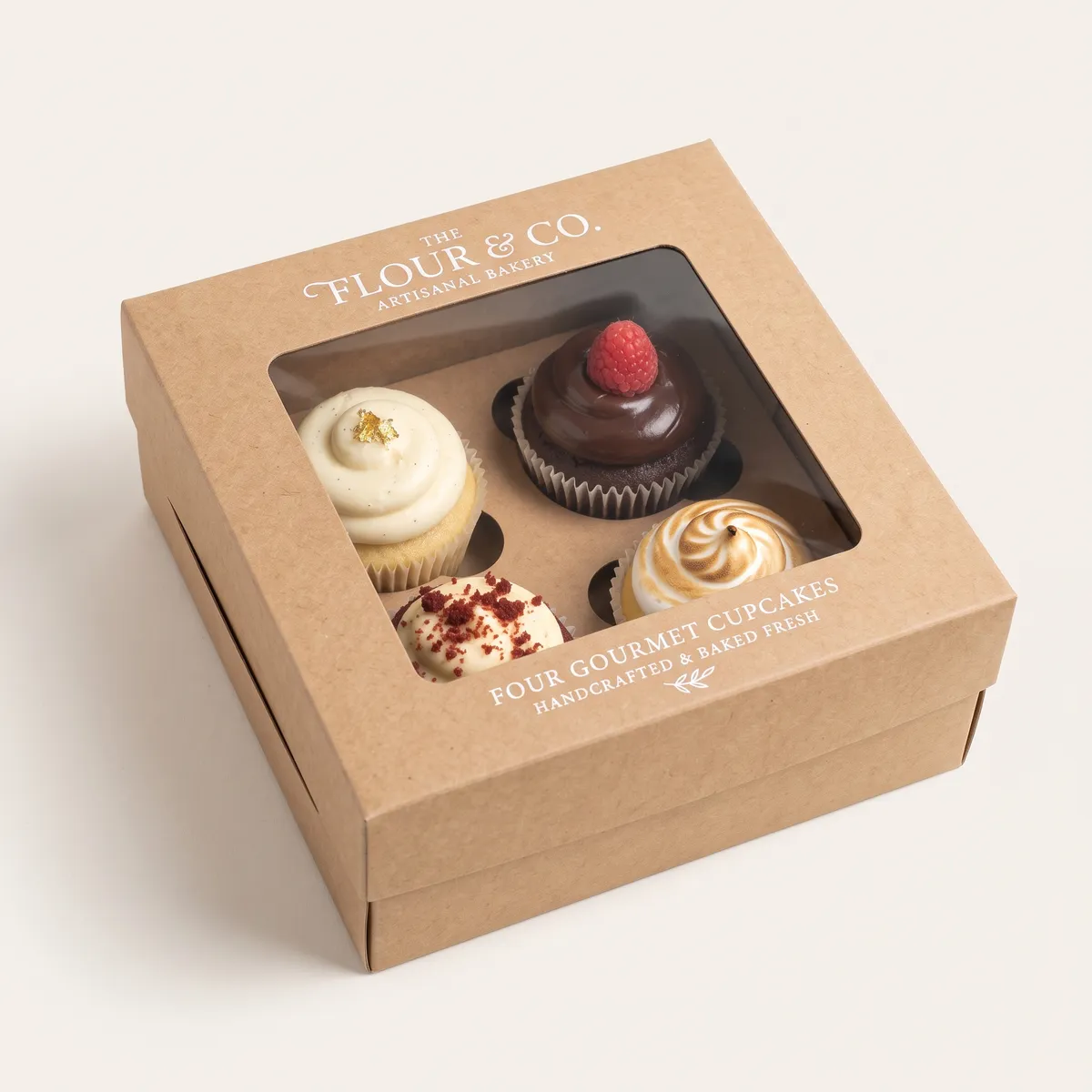
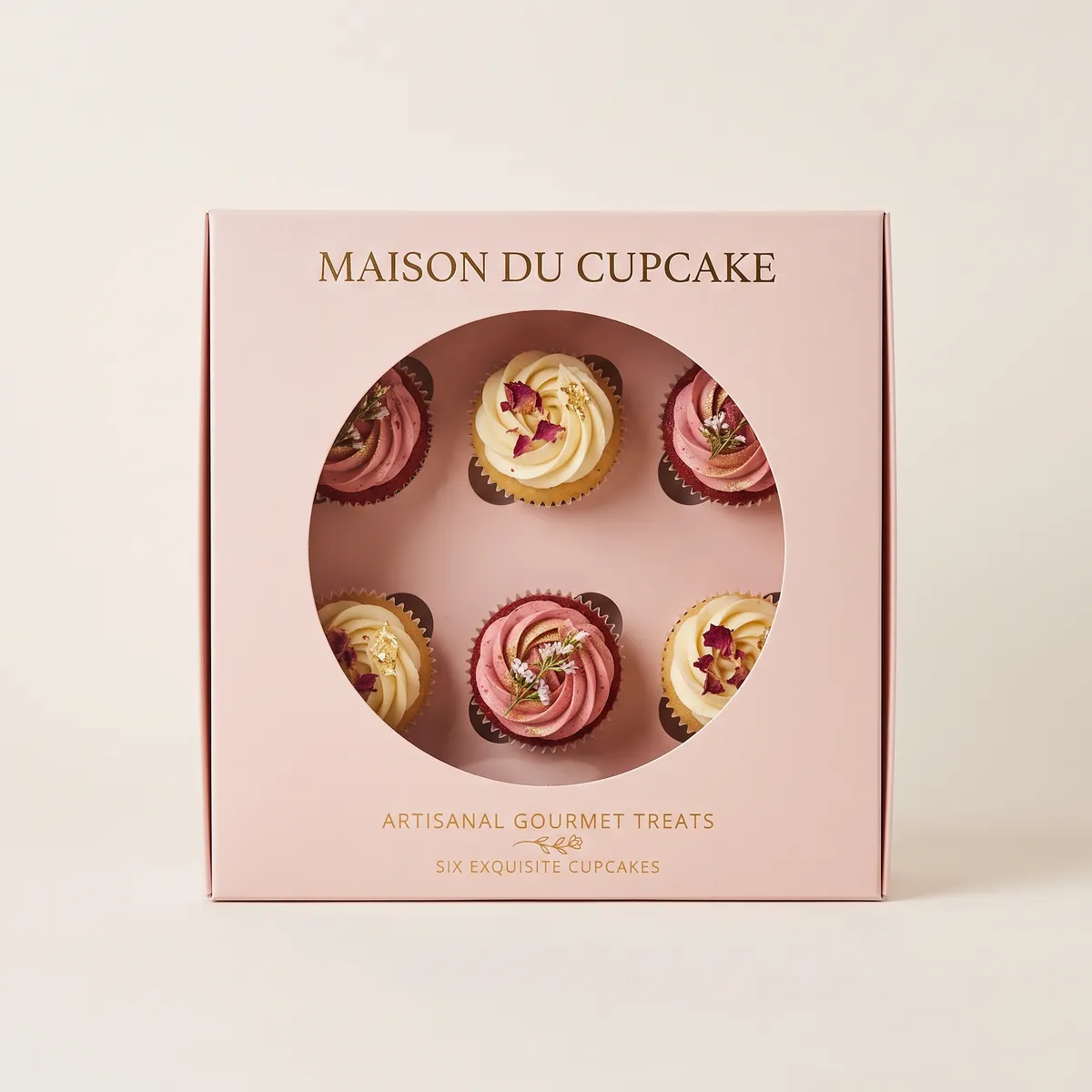
Cupcake boxes with inserts have cavities die-cut within a millimeter or two of your liner size: wider and the cake moves, tighter and the liner tears during loading. The insert is inexpensive at volume and almost always cheaper than the refunds and remakes from smeared cakes. Cavity layouts can change without new box tooling, provided the outer footprint stays the same.
Ours are on Trustpilot, where we can't edit them or choose which ones you see.
Read them on Trustpilot →(opens in a new tab)Four stages, twelve days
Quote confirmed
A specialist checks your spec against the board and comes back with a firm price inside 4 business hours.
Proof approved
You get a flat dieline and a 3D render. Nothing goes to press until you approve it in writing.
On press
Print, die-cut, glue, and fold. You get a press-side photo the day your job runs.
QC and delivery
Every pallet is sampled against the digital proof or physical sample you approved, then shipped with tracking to your dock or 3PL.
If a box doesn't match the digital proof or physical sample you approved, we reprint the run at no charge.
Read the reprint terms →Know exactly what you're ordering.
Cupcake Boxes With Inserts for Orders That Travel
A cupcake that sits still for a few steps across a shop floor is easy to protect. One that rides across town on a car seat, or in the back of a delivery van, is the real test. Cupcake boxes with inserts are for bakers whose cakes leave the counter and keep moving: delivery services, catering orders, and anyone sending frosted batches to events. On these boxes the insert is the product, and the outer carton is mostly there to close it and carry the brand. Every decision starts inside, with the liner and the cavity, and works outward. Bakers who've had a full dozen arrive smeared usually find their way to this box after the first refund.
Insert Specs: Cavity Size, Count and Board
Inserts are commonly cut from dense chipboard, set inside a food-grade outer box.
| Attribute | Detail |
|---|---|
| Cavity fit | Cut to your liner, held to 1–2mm |
| Counts | One to twelve per insert |
| Insert stock | Commonly chipboard |
| Outer box | Food-grade board, 18–24pt |
| Base | Locking or auto-bottom at larger counts |
| Inside face | Grease-resistant coating on the outer box |
Measure the liner at its widest point, where the pleats flare, as well as at the base. A cavity cut to the base alone grips the bottom of the cake and leaves the top free to tip. If you use more than one liner size, each needs its own insert layout.
Why the Insert Matters More Than the Outer Box
A heavier outer box does nothing for a cupcake that's free to move inside it. Damage happens when a cake tips or slides into its neighbor, and that's decided by the cavity, not the carton. So the money on this box goes into the fit. Too loose, and the cake rocks every time the car takes a corner; too snug, and loading it creases the liner pleats before the cake has gone anywhere. These boxes are built around cavity-cut trays for that reason, with the outer box sized to the insert rather than the other way round. If your cupcakes are collected and carried a short distance, the general cupcake box is enough. If they travel, the insert is where to spend.
What Gets Printed When the Insert Does the Work
Print goes on the outer box. The lid carries the logo and is the panel people photograph. Side panels suit flavor lists or care instructions. A window works well on this box, since the insert holds each cake in place under the film rather than letting it slide into view. Interior print on the underside of the lid shows the moment the box opens. We'd leave the insert itself plain: it sits under frosting and liners, and printing it adds cost nobody sees. One thing to plan for if you deliver is the order label. Leave a clear panel for the sticker, so it doesn't land on top of your branding.
Inserts for Cake Shops Delivering Frosted Batches
Bakers running their own delivery are the core buyers, since every order spends time in a vehicle. Caterers ordering dozens for conferences and weddings use them because cakes are moved, unloaded and stacked before anyone eats them. Cake shops already handling frosted cake deliveries across town add cupcake counts on the same route. Online bakeries sending local orders by courier rely on the insert more than anyone. Corporate gifting orders, where a box arrives at a reception desk and waits, need the cakes to look untouched hours later. Event planners ordering for weddings often want matching cavity layouts across several box sizes, so every table looks the same.
Sending Liner Sizes and Signing Off the Dieline
Start with the liner. Send us its base diameter, top diameter and height, plus the frosted height of a finished cake, and we'll build the insert and the outer dieline from those numbers. We confirm in writing whether each dimension is internal or external, because a millimeter in the wrong direction changes the fit. You then approve a proof before production. Inserts are part of the standard run, which takes 8–12 business days from approval, with rush available at an added cost we quote upfront. Shipping is included, every box passes a three-stage check, and a bulk run that misses the approved proof is reprinted at our cost. The minimum is 100 boxes per order.
One connected process, start to finish.
Structural Design
Dieline drafted to your exact fit and freight tolerances.
Proof & Sample
Sign off on a digital proof, or request a physical sample.
Tooling
Dies and plates are cut for your job and archived on file.
Production
Print, die-cut, and assembly run under in-line quality checks.
Ship & Reorder
Freight goes out, and the cycle resets for your next run.
Steady process. Powerful results.
Like everything we build, our process is engineered to hold up — no shortcuts, no surprises. Five dependable stages that run the same way every single time, so reorders are just as fast as the first order.
- One dedicated teamFrom first sketch to final freight, the same people carry your order start to finish.
- Dies archived on fileReorders skip tooling and re-setup entirely — we already have your exact spec.
- Checked against your sign-offEvery run is inspected against the digital proof or physical sample you approved.
Set up your file once, correctly
Nine in ten delayed jobs are delayed by artwork, not production. Match these four rules and your proof lands the next morning.
- Bleed1/8 in (3 mm) past every cut line
- Safe ZoneKeep text 1/4 in clear of every crease
- ColourCMYK or named Pantone. No RGB.
- Resolution300 dpi at final size, fonts outlined
No print-ready file?
Send a logo and a rough idea. Our studio builds the production file free with any order over 500 units — you keep the source file either way.
Ask the StudioBackground art must run all the way to the outer bleed edge. Anything inside the white dashed line survives fold tolerance.
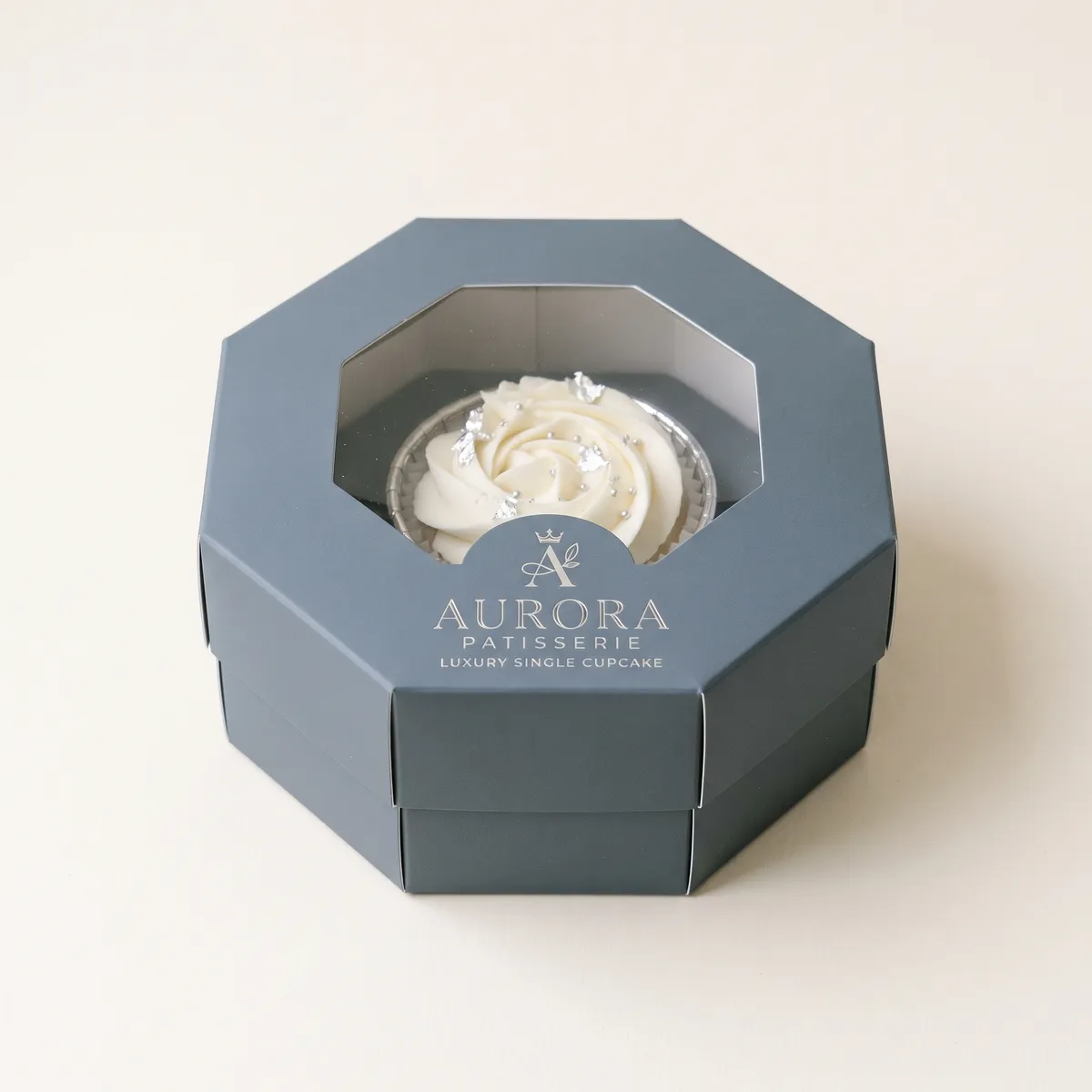
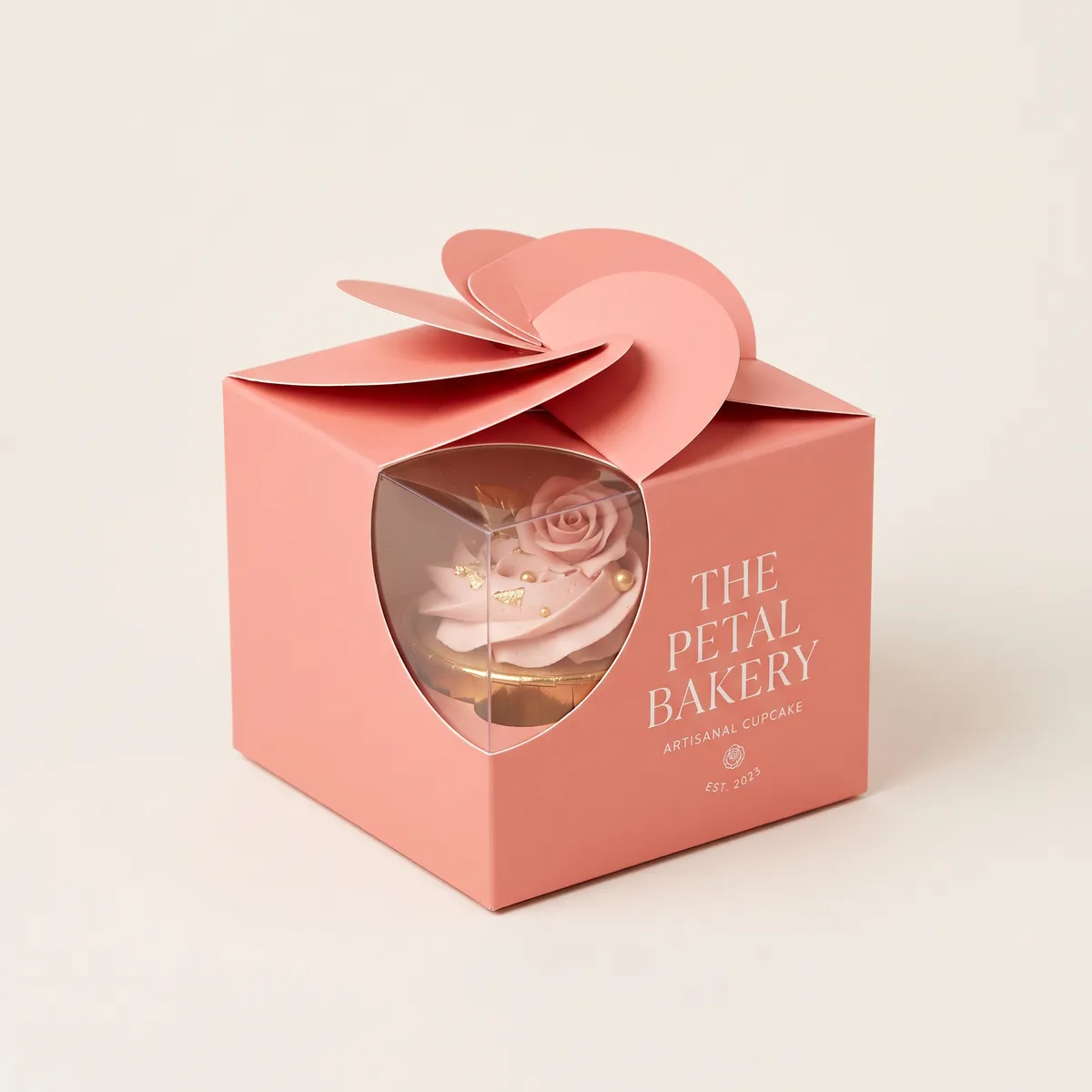
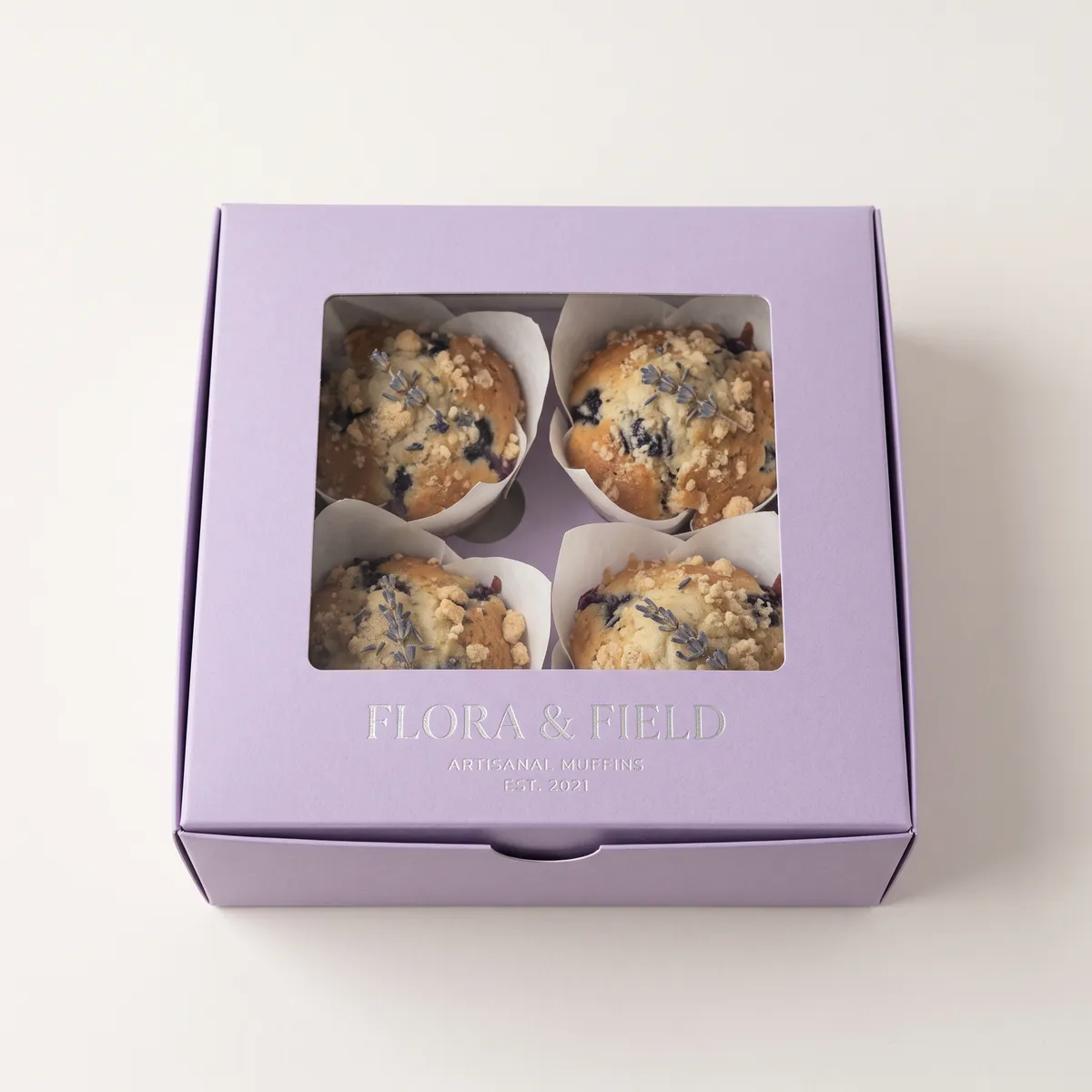

What brands say about this box
They live there rather than here, where we can't edit them, delete them, or pick which ones you get to see. That is exactly what makes them worth reading.
Read all reviews on Trustpilot(opens in a new tab)Answers before you have to ask.
How exact do insert cavities need to be?
Within a millimeter or two. A cavity cut too wide lets the cake move and defeats the point, while one cut too tight damages the liner when loading. Send us the liner dimensions and we'll cut to them.
Can inserts be changed without a new box?
Yes, within limits. If the new insert fits the same box footprint, you can change the cavity layout without new box tooling. Changing the number of cavities is usually fine; changing the box size is not.
Do inserts add much to the price?
Modestly. A die-cut cavity insert is inexpensive at volume, and it's almost always cheaper than the refunds and remakes that come from cakes arriving smeared.
How long do cupcake boxes with inserts take?
Around 8–12 business days from proof approval. Cutting cavities doesn't extend the timeline. Rush production is available at an added cost we'll state upfront.
Can I order boxes with different insert counts?
Yes. As long as the outer box footprint stays the same, different cavity layouts can be run without new box tooling. Changing the box size itself does need new tooling.