
Kraft Dispenser Boxes
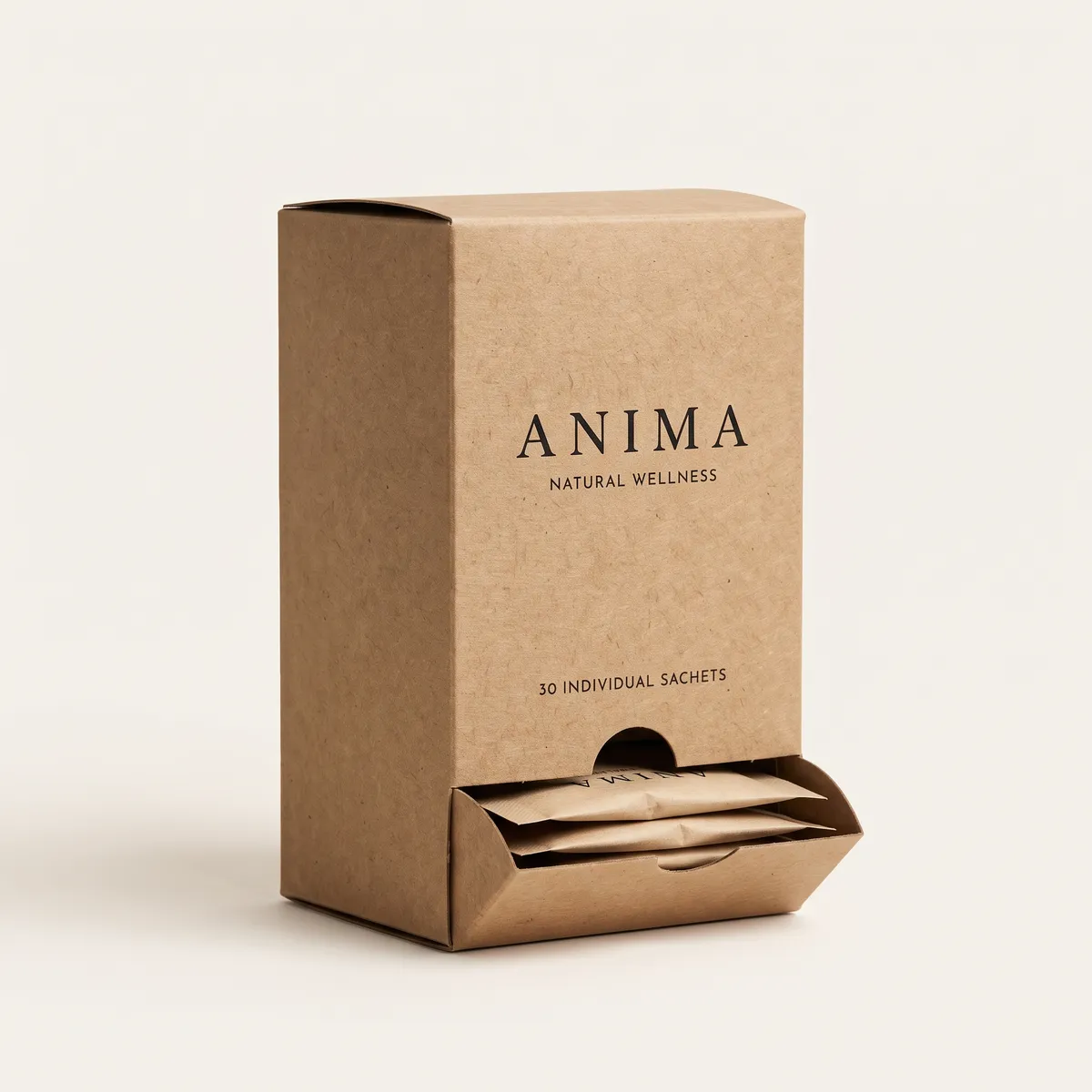
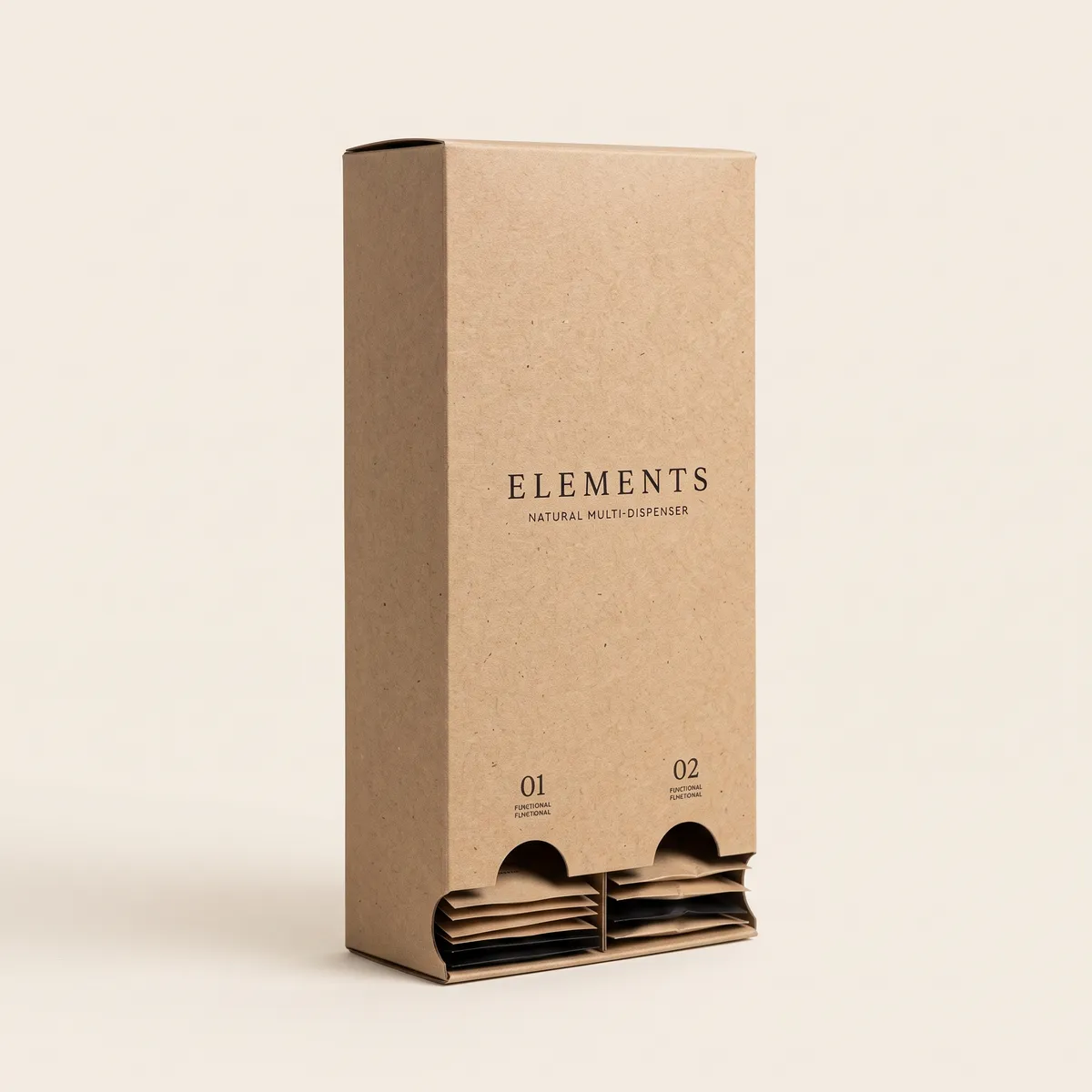
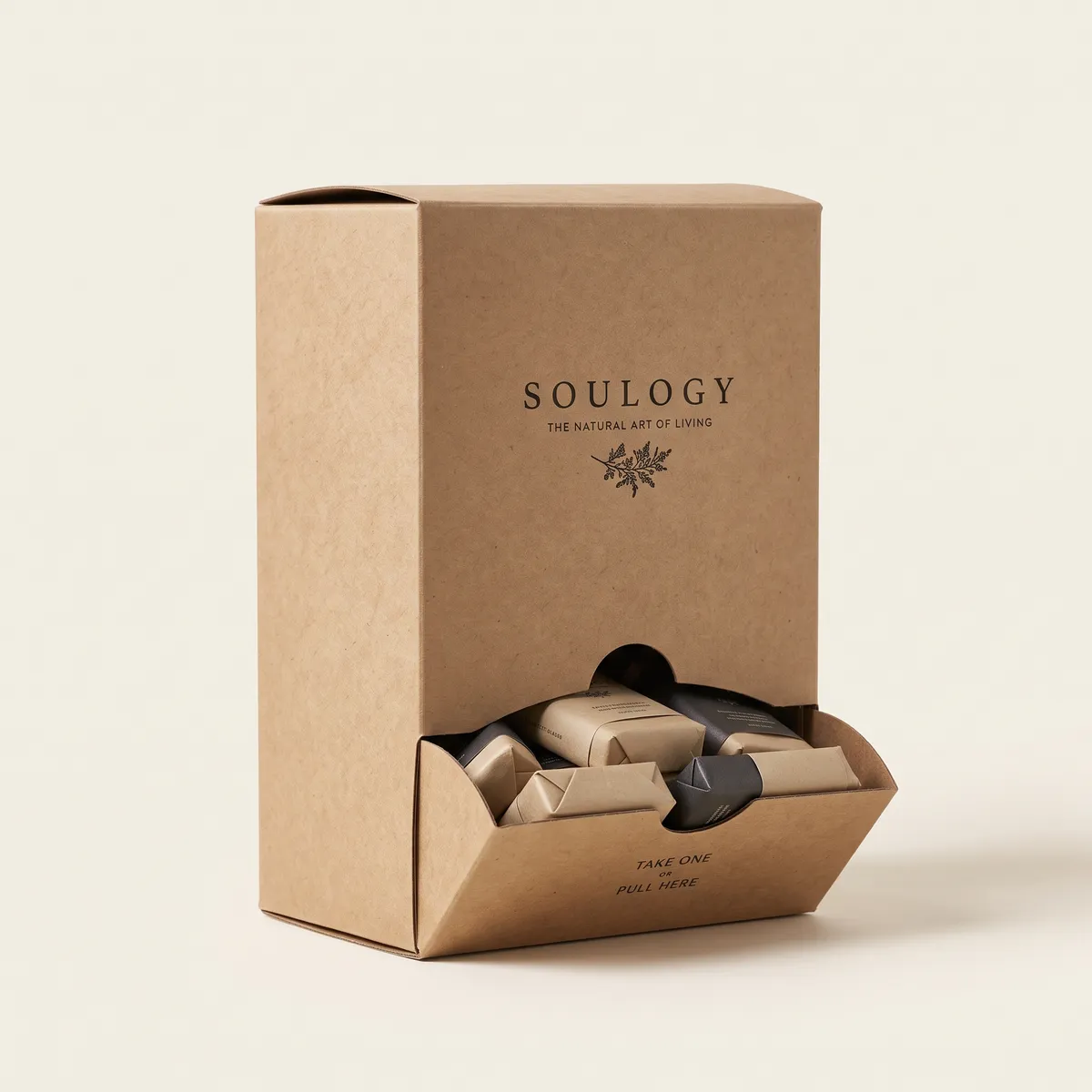
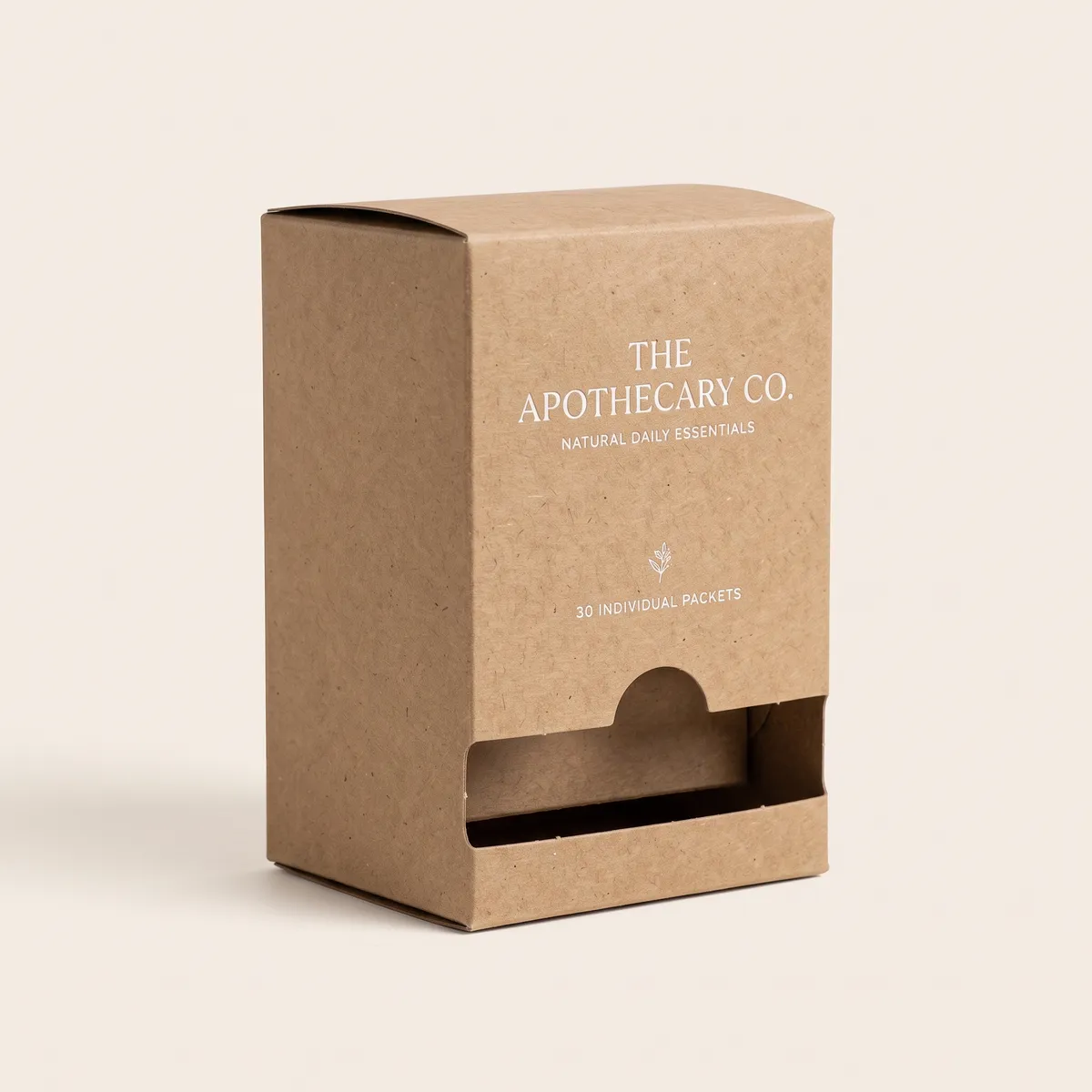
Kraft dispenser boxes suit natural and artisan ranges where the material is part of the message, and they work well for lightweight items such as sachets and small packets. Heavier product needs coated board or corrugated with more caliper. Two colors on kraft give contrast without full-color cost. For bright consumer goods, kraft mutes exactly what a counter unit needs.
Ours are on Trustpilot, where we can't edit them or choose which ones you see.
Read them on Trustpilot →(opens in a new tab)Four stages, twelve days
Quote confirmed
A specialist checks your spec against the board and comes back with a firm price inside 4 business hours.
Proof approved
You get a flat dieline and a 3D render. Nothing goes to press until you approve it in writing.
On press
Print, die-cut, glue, and fold. You get a press-side photo the day your job runs.
QC and delivery
Every pallet is sampled against the digital proof or physical sample you approved, then shipped with tracking to your dock or 3PL.
If a box doesn't match the digital proof or physical sample you approved, we reprint the run at no charge.
Read the reprint terms →Know exactly what you're ordering.
Natural-Stock Dispensers for Light, Small Items
Start with what goes inside. A kraft dispenser is unbleached carton board with a tear-away opening, and it works best when each unit weighs very little and a full box stays modest: tea sachets, seed packets, lip balms, sample soaps, sugar sticks.
Within that range it gives natural brands a counter unit that matches the rest of their packaging, instead of one glossy box sitting among paper bags and stamped labels. Buyers are often small producers placing their first display in a shop or café, or a larger brand launching a low-waste line that needs its point of sale to look the part. The unit is a dispenser first, and the stock decides how it presents.
Kraft Dispenser Specs: Caliper, Tear Line and Load
| Spec | Kraft dispenser |
|---|---|
| Stock | Unbleached kraft paperboard |
| Caliper | 14–18pt for sachets and packets, 18–24pt for denser counts |
| Opening | Perforated tear-away panel |
| Surface | Uncoated, natural fiber |
| Tolerance | ±0.5–1mm |
| Sizing | Matched to unit size and count |
The board is uncoated kraft stock, so the perforation tears through bare fiber rather than a coated skin, and the edge it leaves is slightly soft. That suits the look. What decides the caliper is the weight of a full box, because the walls have to stay upright as the count runs down. If a full box sags when you lift it by one corner, tell us; that's the point to discuss a different board.
Where Kraft Suits a Counter Unit and Where It Doesn't
Kraft makes sense on a counter when the product's whole story is natural. For herbal tea and drip-bag makers, an unbleached dispenser beside the till looks like part of the same range as the pouches on the shelf behind it.
Setting matters as much as product. At a farm shop or a co-op, kraft blends in with everything around it. In a pharmacy aisle lined with coated cartons, the same unit can look like stock waiting to be unpacked. Price is a minor factor: kraft can come in slightly under coated board, but the gap is small enough that fit should decide. A quick test is to set your current packaging next to a plain kraft sheet. If they look as if they belong together, the dispenser will too.
Two Colors as the Kraft Dispenser Default
Two inks is the natural ceiling on kraft and, for a dispenser, usually the right number. A dark ink for the brand and a second for product names or a flavor code are enough to be read from a step back.
Ink choice matters more than ink count. Kraft absorbs and darkens every color, so pale tones disappear; pick inks a shade or two stronger than they look on screen. Put large type on the front panel and keep small print to the sides. Foil is possible on a logo and stands out against matte fiber. Full color will print, but muted and warm, and lamination covers the very fiber you're paying to show, so most makers skip both.
Sachets, Packets and Teabags Pulled From Unbleached Board
Kraft dispensers suit small, light units sold singly in natural or low-waste settings. Spice and condiment brands use them for seasoning sachets and snack packets set on a deli or farm-shop counter. Tea blenders dispense individually wrapped bags, and seed companies sell packets from a unit beside the garden-center till.
Zero-waste shops use them for solid shampoo samples, soap ends and bamboo swabs. Cafés stock sugar and honey sticks in them for self-service. Each case involves a light product, a counter that shoppers help themselves from, and a brand that wants the unit to look as if it was made from the same paper as everything else in the shop.
Checking the Tear Before a Kraft Run Ships
With the unit size and the count per box, we'll draw the dieline. Every kraft dispenser order then goes through a three-stage check, and on this build that includes how the perforation tears on uncoated fiber, which behaves differently from coated board. A tear that wanders is found by us, not by a shop assistant opening the unit.
If the delivered run doesn't match your approved proof, we reprint at our cost. Lead time is 8–12 business days from proof approval, and if a launch date is tighter than that, rush is available at an extra cost quoted upfront. Shipping is included, so the number you approve is the number you pay.
One connected process, start to finish.
Structural Design
Dieline drafted to your exact fit and freight tolerances.
Proof & Sample
Sign off on a digital proof, or request a physical sample.
Tooling
Dies and plates are cut for your job and archived on file.
Production
Print, die-cut, and assembly run under in-line quality checks.
Ship & Reorder
Freight goes out, and the cycle resets for your next run.
Steady process. Powerful results.
Like everything we build, our process is engineered to hold up — no shortcuts, no surprises. Five dependable stages that run the same way every single time, so reorders are just as fast as the first order.
- One dedicated teamFrom first sketch to final freight, the same people carry your order start to finish.
- Dies archived on fileReorders skip tooling and re-setup entirely — we already have your exact spec.
- Checked against your sign-offEvery run is inspected against the digital proof or physical sample you approved.
Set up your file once, correctly
Nine in ten delayed jobs are delayed by artwork, not production. Match these four rules and your proof lands the next morning.
- Bleed1/8 in (3 mm) past every cut line
- Safe ZoneKeep text 1/4 in clear of every crease
- ColourCMYK or named Pantone. No RGB.
- Resolution300 dpi at final size, fonts outlined
No print-ready file?
Send a logo and a rough idea. Our studio builds the production file free with any order over 500 units — you keep the source file either way.
Ask the StudioBackground art must run all the way to the outer bleed edge. Anything inside the white dashed line survives fold tolerance.
What brands say about this box
They live there rather than here, where we can't edit them, delete them, or pick which ones you get to see. That is exactly what makes them worth reading.
Read all reviews on Trustpilot(opens in a new tab)Answers before you have to ask.
Does kraft suit a counter dispenser?
Yes, particularly for natural and artisan ranges where the material is part of the message. For bright consumer goods it mutes the color a counter unit depends on to catch attention.
Can kraft dispensers take a second color?
Yes, and two colors on kraft is a strong combination. It gives contrast without full CMYK cost, and it reads as deliberate on natural board rather than as a compromise.
Is kraft strong enough for a dispenser?
For light items, yes. Kraft dispensers work well for sachets and small packets. For heavier product we'd move to a coated board or corrugated with more caliper behind it.
How long do kraft dispenser boxes take?
About 8–12 business days from proof approval. Rush is available at an extra cost stated before you commit, with shipping included in what you pay.
Can kraft dispensers be ordered in small runs?
Yes, from 100 units. That suits artisan and natural brands testing counter display without committing to the volumes a national rollout would need.