
Jewelry Hang Tags
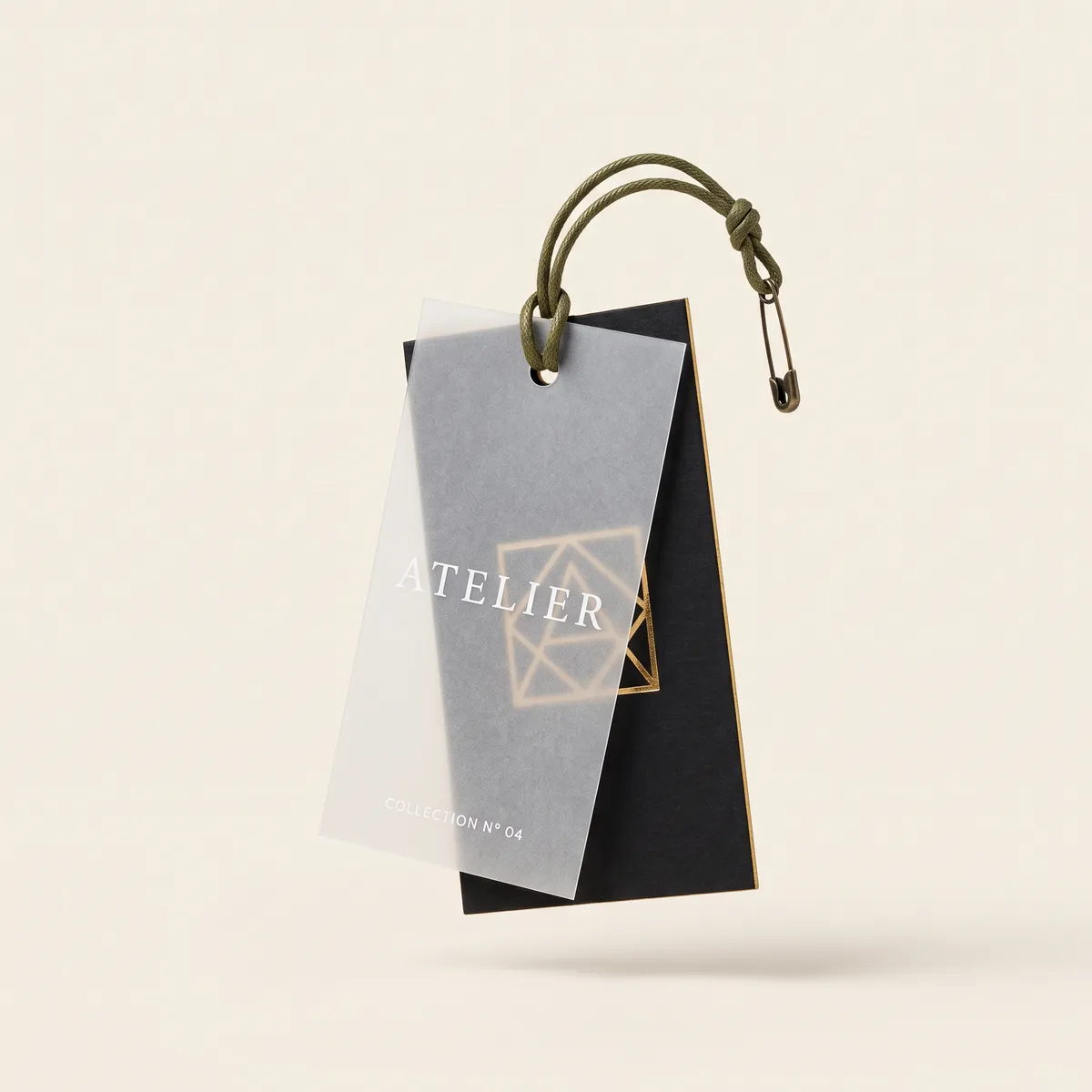
Jewelry hang tags run small, and below a certain size the punch hole and string start to dominate, so send your piece dimensions and we'll advise. Fine type and foil need a smooth coated surface to hold definition. Foiling the front and printing the reverse reads just as premium as double-sided foil at lower cost. Tags can be ordered to match your existing jewelry boxes.
Ours are on Trustpilot, where we can't edit them or choose which ones you see.
Read them on Trustpilot →(opens in a new tab)Four stages, twelve days
Quote confirmed
A specialist checks your spec against the board and comes back with a firm price inside 4 business hours.
Proof approved
You get a flat dieline and a 3D render. Nothing goes to press until you approve it in writing.
On press
Print, die-cut, glue, and fold. You get a press-side photo the day your job runs.
QC and delivery
Every pallet is sampled against the digital proof or physical sample you approved, then shipped with tracking to your dock or 3PL.
If a box doesn't match the digital proof or physical sample you approved, we reprint the run at no charge.
Read the reprint terms →Know exactly what you're ordering.
Tags Sized to the Piece, Not the Price
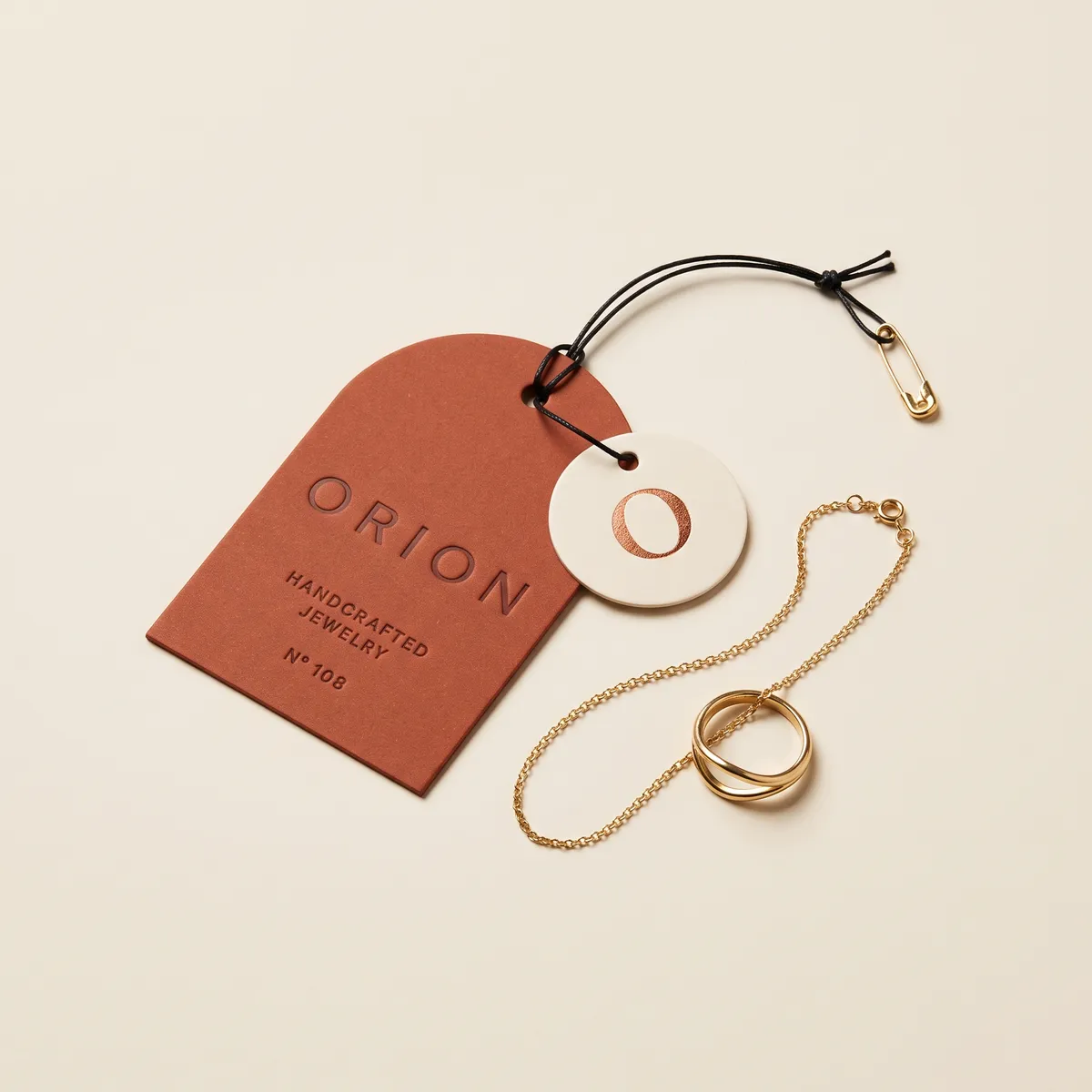
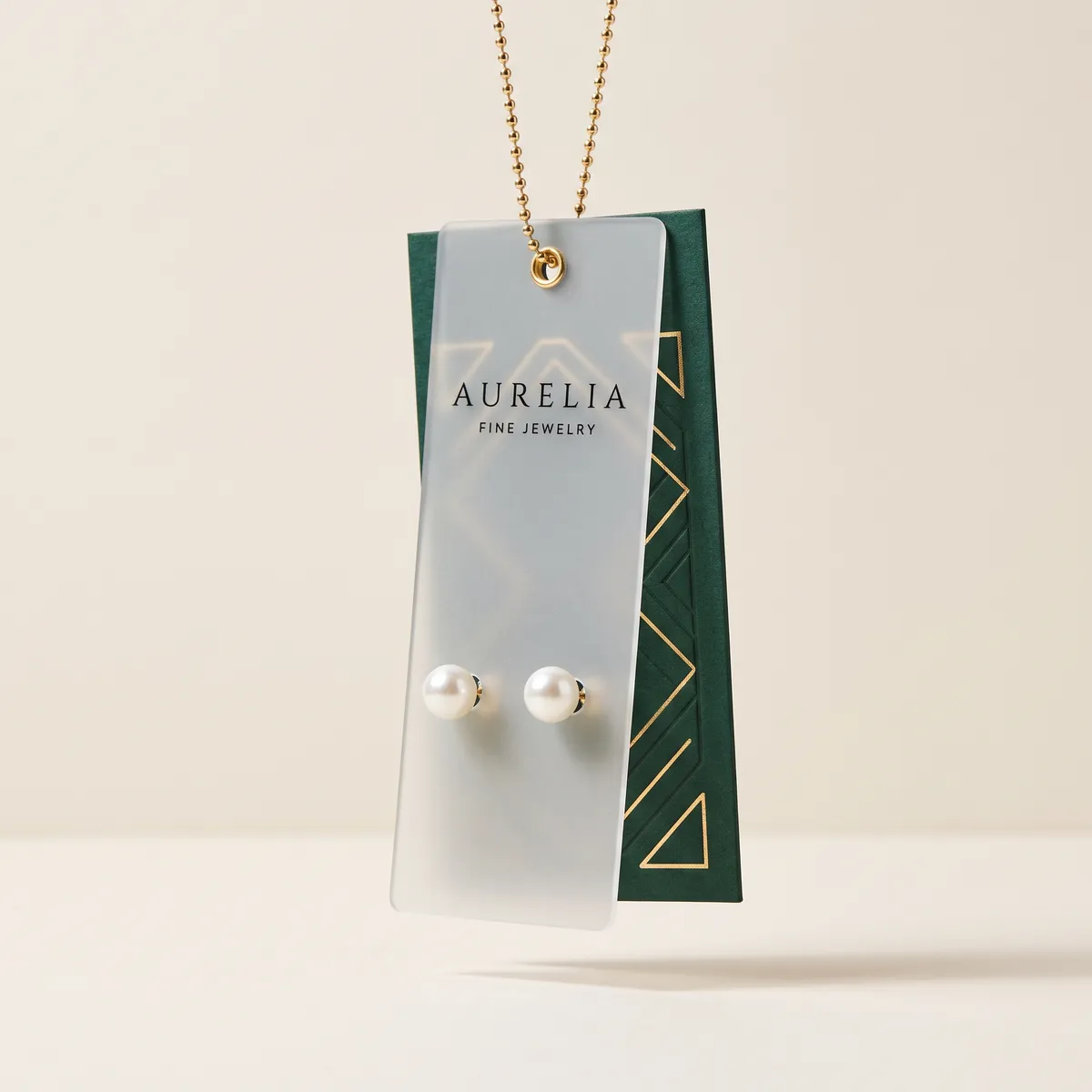
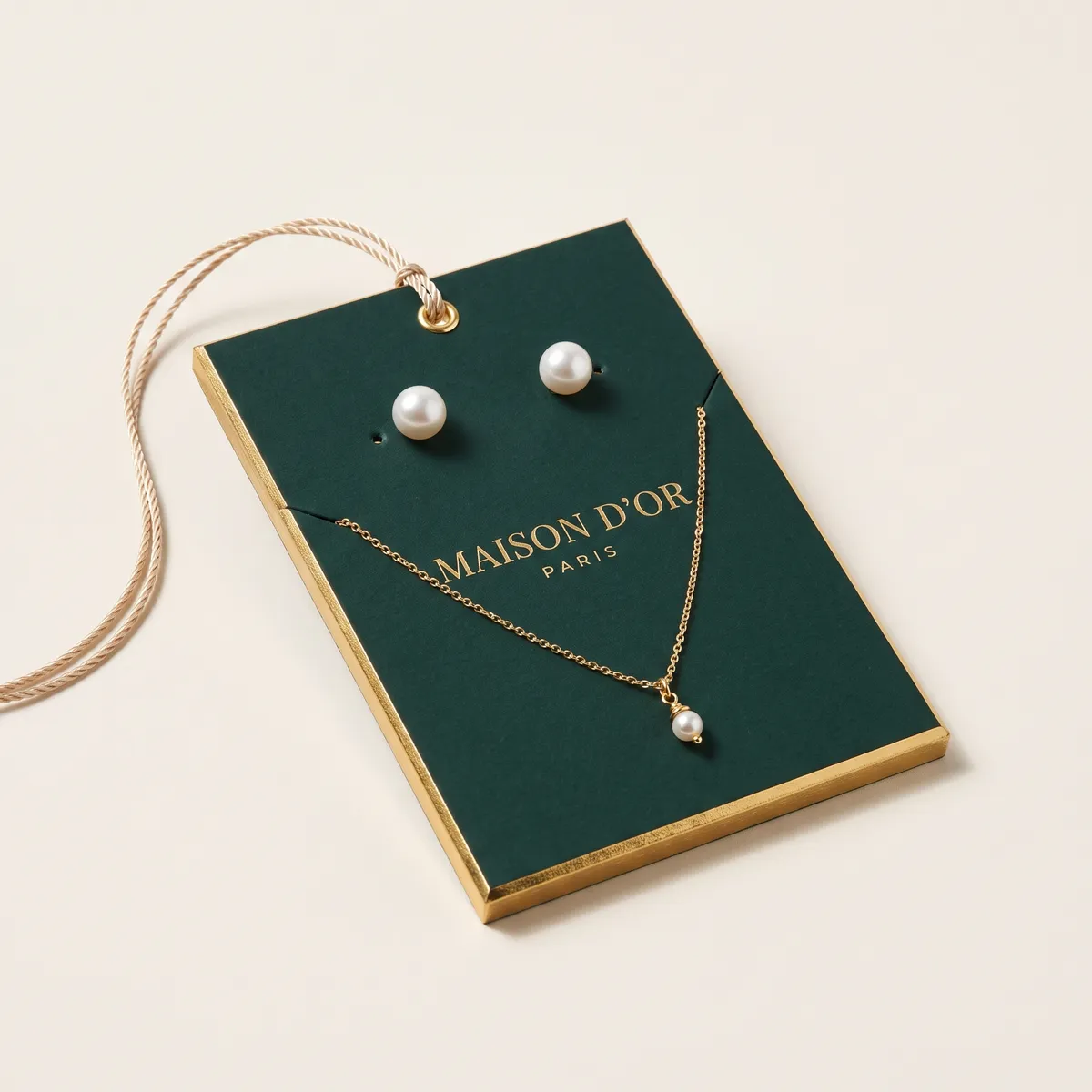
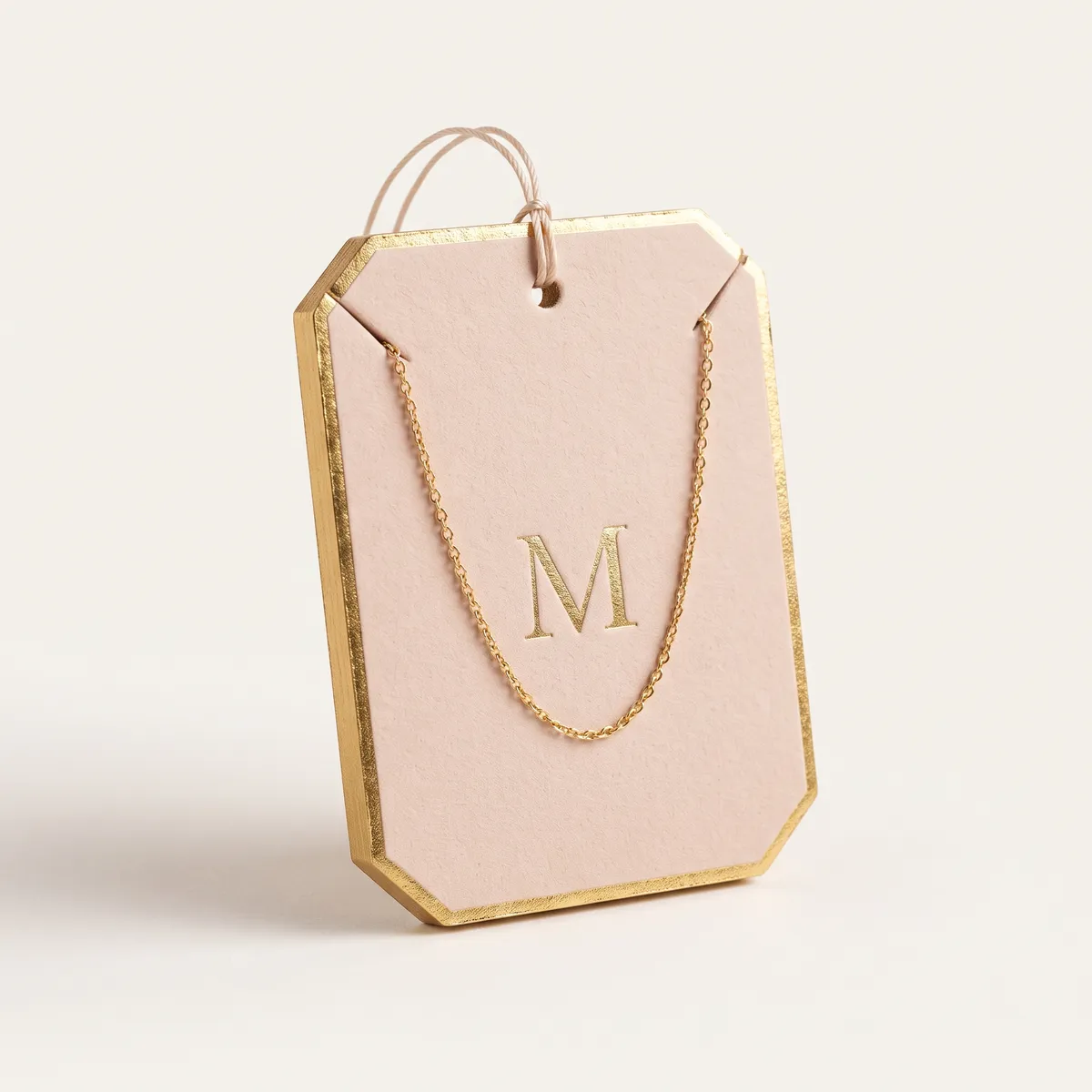
A jewelry tag has an odd brief. It has to carry a price, a stock code and usually a brand mark, while staying small and quiet enough that the piece remains the thing a shopper looks at.
A tag that's too large pulls the eye away from a ring or a pendant. One that's too bright makes a fine silver chain look plain beside it. Get the balance right and the tag reads clearly at arm's length but doesn't register until someone wants to know the price.
This page is for jewelers, designers and boutique sellers who tag individual pieces for display, whether on a counter, in a tray or on a stand, and who want every tag in the case to look like part of the same range.
Slot or Punch, and How Small the Tag Can Go
Jewelry tags are printed on smooth-faced card for fine type, because small text and foil both lose definition on a rough surface.
| Attribute | Jewelry tag spec |
|---|---|
| Stock | Coated cardboard |
| Fixing | Slotted or punched, depending on display |
| Size | Scaled to the piece; we advise from its dimensions |
| Front and reverse | |
| Finish | Foil, deboss or plain print |
| Attachment | Fine string, attached if specified |
The choice between a slot and a punch comes down to how the piece is shown. A slot lets the tag sit on a ring shank or chain without any thread. A punched hole takes a fine string, which suits pieces laid flat in a tray.
Why Fine Pieces Get a Smaller, Smoother Tag
A general hang tag is meant to be seen. A jewelry tag is meant to be read and then forgotten, and that changes three things.
The size comes down until the tag sits in proportion with the piece. The stock moves to coated card, because a price in small type has to stay legible on a surface that small. And the finish usually narrows to one metallic accent instead of full color, since color competes with the stones and metal beside it. A standard tag does the job on a scarf; next to a pendant, it looks like it belongs to something else.
The tag also works harder when it matches the boxes those pieces leave in, so the counter display and the purchase look like the same brand.
Foil and Deboss at Earring-Card Scale
At jewelry-tag size, finishes behave differently than they do on a box. Foil holds up well on a logo or a short brand name but loses definition across a long line of small text, so keep foiled words few and set them a little larger than you would in plain print.
A deboss works where an emboss can flatten out on thin card. Choose a foil tone that sits comfortably with the metal your range is mostly made in, rather than defaulting to one color for everything.
Leave the price, metal and stock code in plain print. Staff need to read them quickly, and they change far more often than the brand mark does. Free, unlimited design help lets you compare two foil options on proof.
Who Tags Jewelry, and Where the Tag Gets Seen
Independent jewelers tag every piece in the case so staff can quote a price without checking a list. Designer-makers selling at markets and fairs use tags to carry the brand on pieces that leave in a pouch, not a box. Boutiques stocking several jewelry brands put their own tag on everything so the counter reads as one shop.
Online sellers include a tag in the order, so the piece arrives with its name and material attached. Watch and accessory counters use the same small format on straps and bands.
For luxury pieces where the tag sits in the reveal, the tag is often the first printed thing a buyer sees when the lid comes off, which is a good reason to finish it properly.
Setting Up a Jewelry Tag Order and Proof
Send the dimensions of the piece the tag will sit on, along with your logo and the text you want on each side. If the range spans very different sizes, a ring and a statement necklace for example, tell us at the start so we can advise on one tag size or two.
Design help is free and unlimited, and every layout comes back as a proof before production. The minimum is 100 tags. From approval, production takes 8–12 business days, and rush is available at an extra cost that we quote upfront.
Each run goes through a three-stage check, so a smudged foil or an off-center hole is caught before the tags leave. The quote includes the die, setup and shipping, with nothing added later.
One connected process, start to finish.
Structural Design
Dieline drafted to your exact fit and freight tolerances.
Proof & Sample
Sign off on a digital proof, or request a physical sample.
Tooling
Dies and plates are cut for your job and archived on file.
Production
Print, die-cut, and assembly run under in-line quality checks.
Ship & Reorder
Freight goes out, and the cycle resets for your next run.
Steady process. Powerful results.
Like everything we build, our process is engineered to hold up — no shortcuts, no surprises. Five dependable stages that run the same way every single time, so reorders are just as fast as the first order.
- One dedicated teamFrom first sketch to final freight, the same people carry your order start to finish.
- Dies archived on fileReorders skip tooling and re-setup entirely — we already have your exact spec.
- Checked against your sign-offEvery run is inspected against the digital proof or physical sample you approved.
Set up your file once, correctly
Nine in ten delayed jobs are delayed by artwork, not production. Match these four rules and your proof lands the next morning.
- Bleed1/8 in (3 mm) past every cut line
- Safe ZoneKeep text 1/4 in clear of every crease
- ColourCMYK or named Pantone. No RGB.
- Resolution300 dpi at final size, fonts outlined
No print-ready file?
Send a logo and a rough idea. Our studio builds the production file free with any order over 500 units — you keep the source file either way.
Ask the StudioBackground art must run all the way to the outer bleed edge. Anything inside the white dashed line survives fold tolerance.


What brands say about this box
They live there rather than here, where we can't edit them, delete them, or pick which ones you get to see. That is exactly what makes them worth reading.
Read all reviews on Trustpilot(opens in a new tab)Answers before you have to ask.
How small can a jewelry tag go?
Small enough for a single earring card, though below a certain size the punch hole and the string start to dominate the tag. Send us your piece dimensions and we'll advise.
Can jewelry tags be foiled on both sides?
Yes, though double-sided foil on a small tag costs more than it adds. Most jewelry brands foil the front and print the reverse, which reads just as premium at a lower cost.
Do jewelry tags need coated stock?
For fine detail, yes. Jewelry tags carry small type and often foil, both of which need a smooth coated surface to hold definition at that size.
How soon can jewelry hang tags be made?
Usually 8–12 business days once the proof is approved, foil included. Rush production is available at a quoted premium, with shipping included.
Can jewelry tags be ordered with matching boxes?
Yes, and matching them is worth doing. A tag that echoes the box finish reads as deliberate, and running both together shares setup across the order.