
Cardboard Gable Boxes
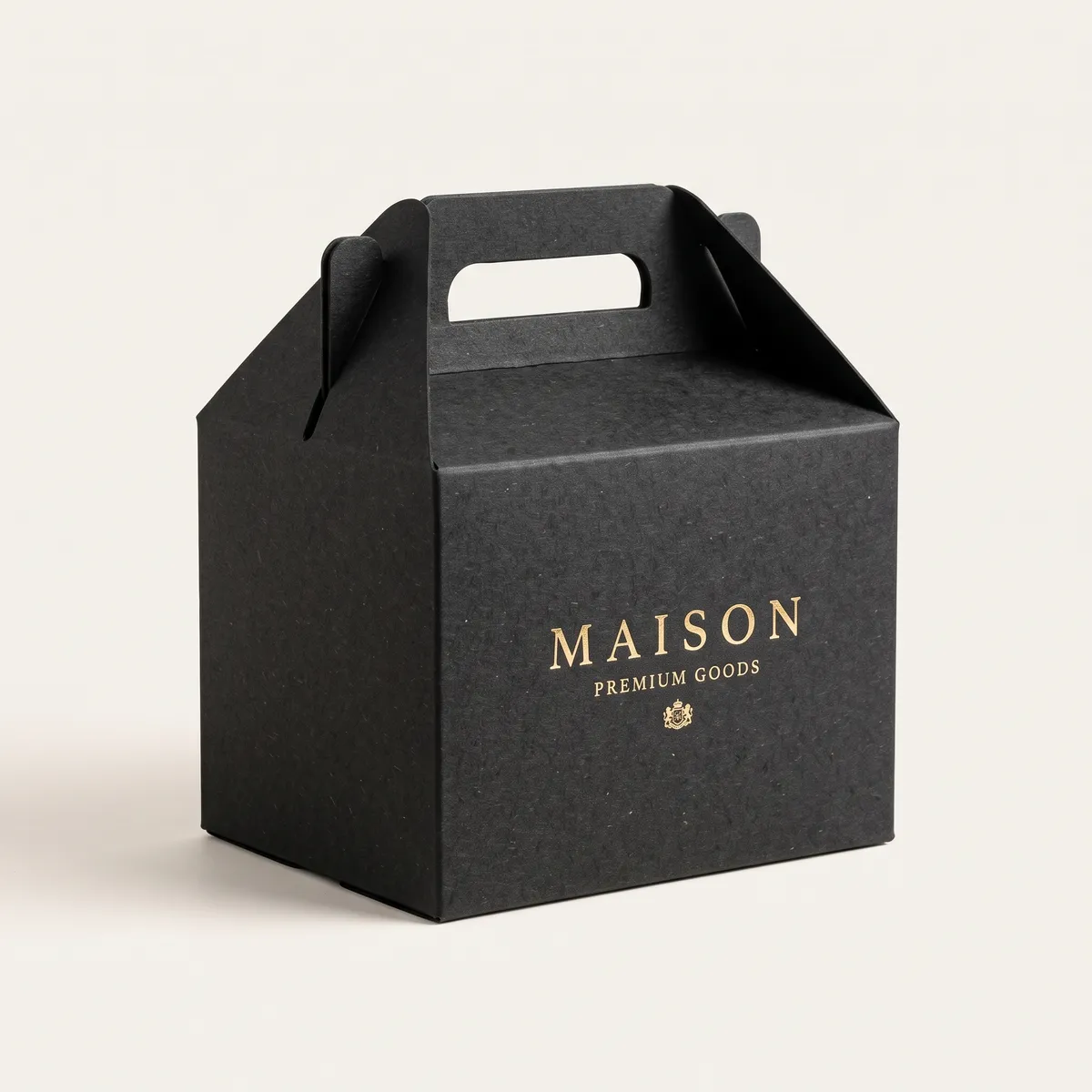
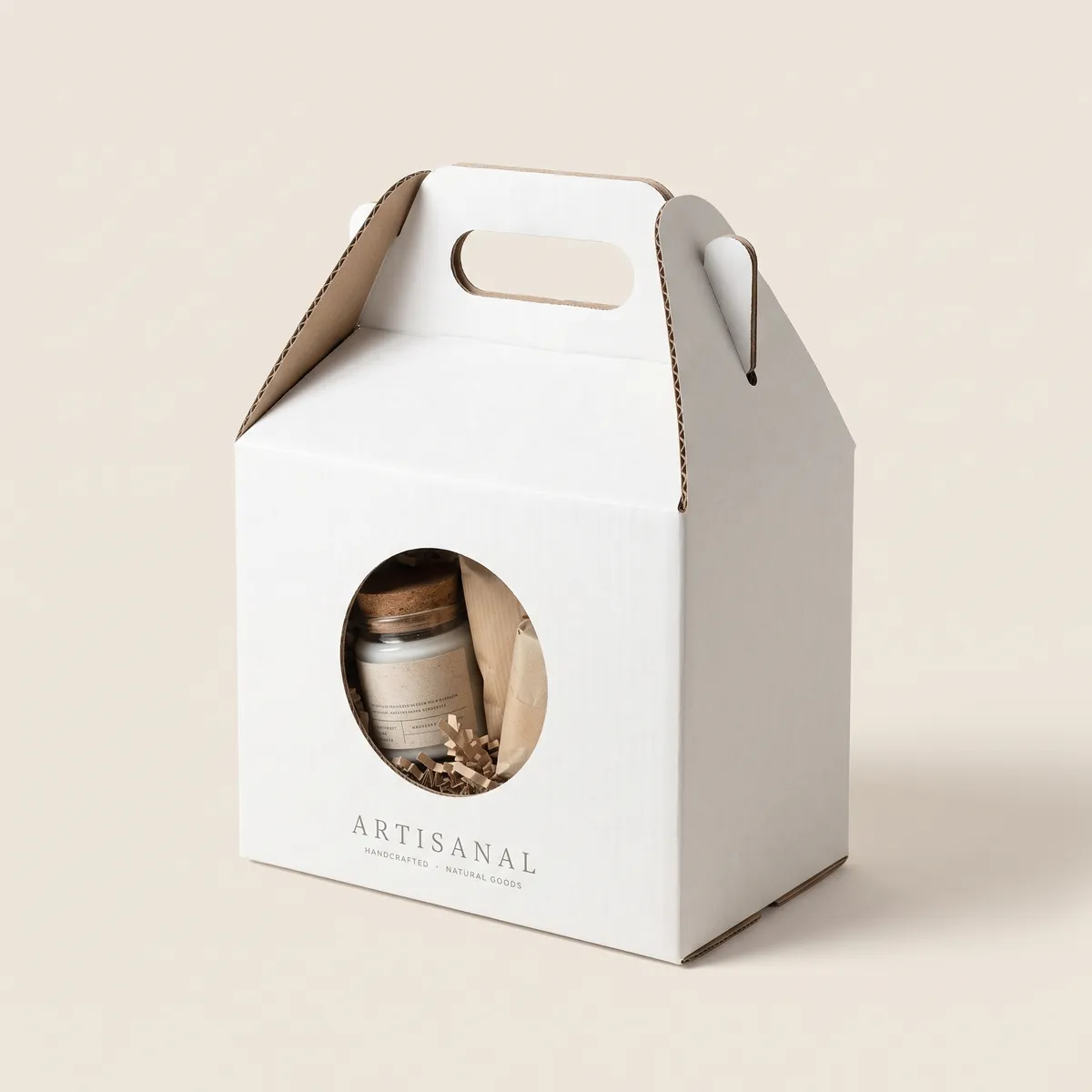
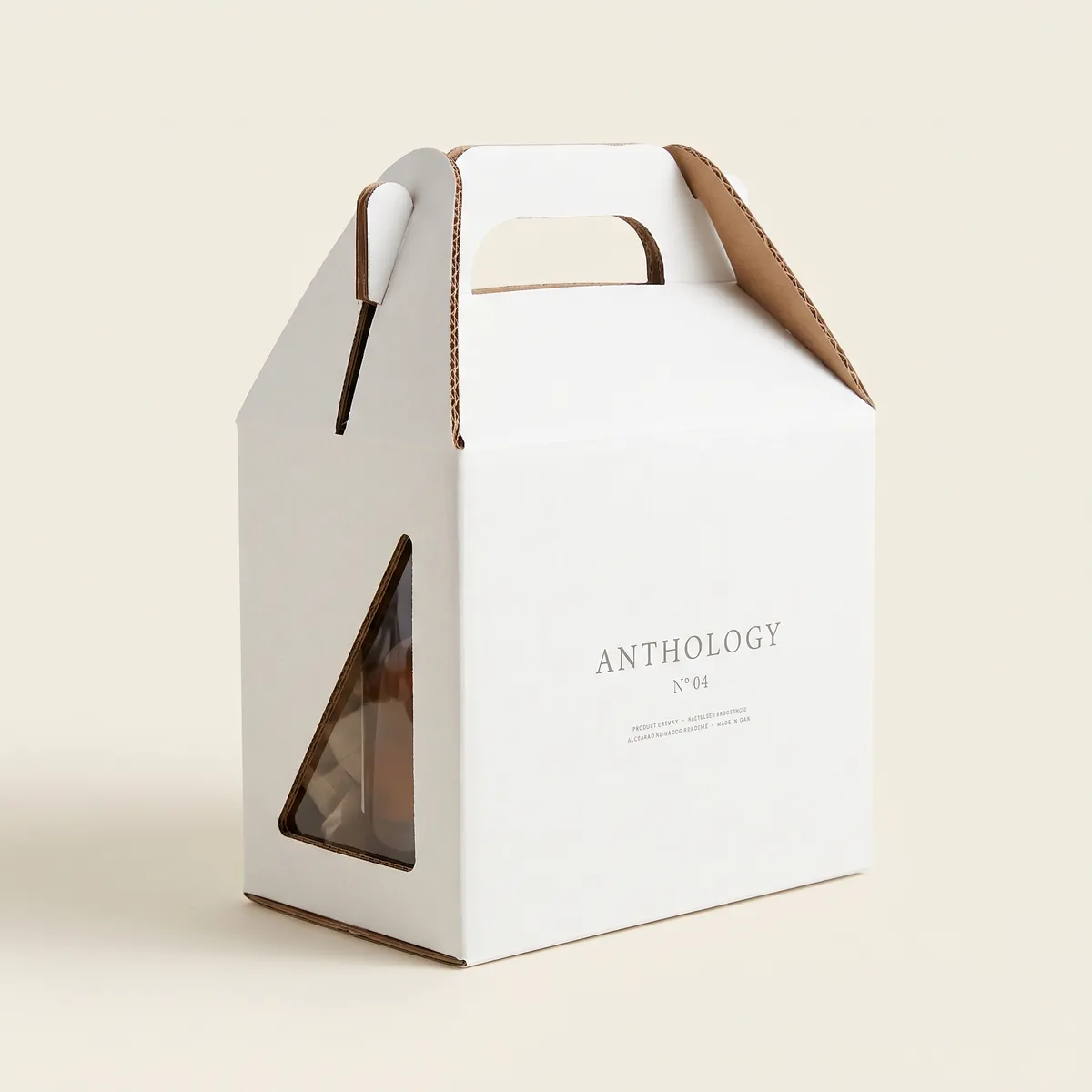
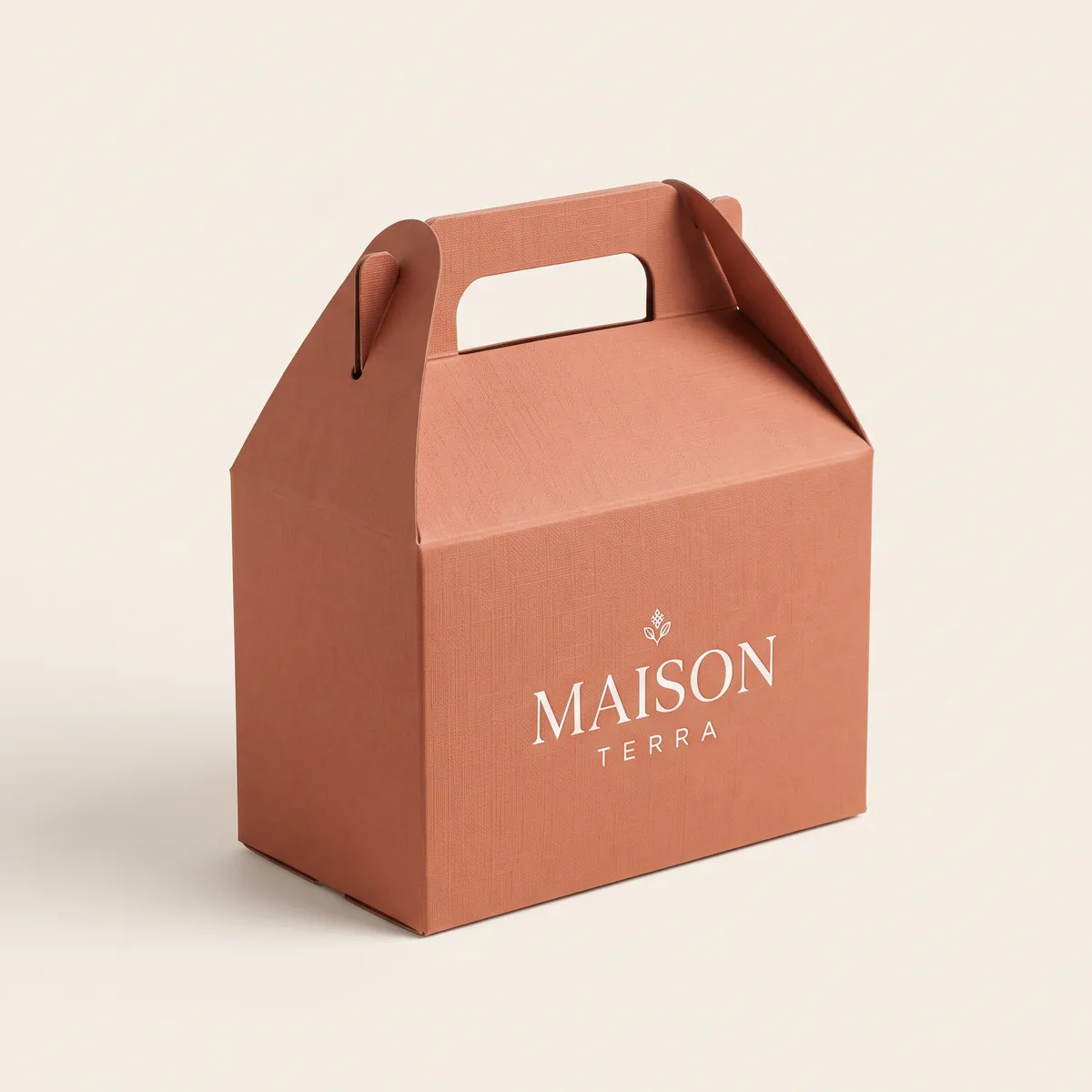
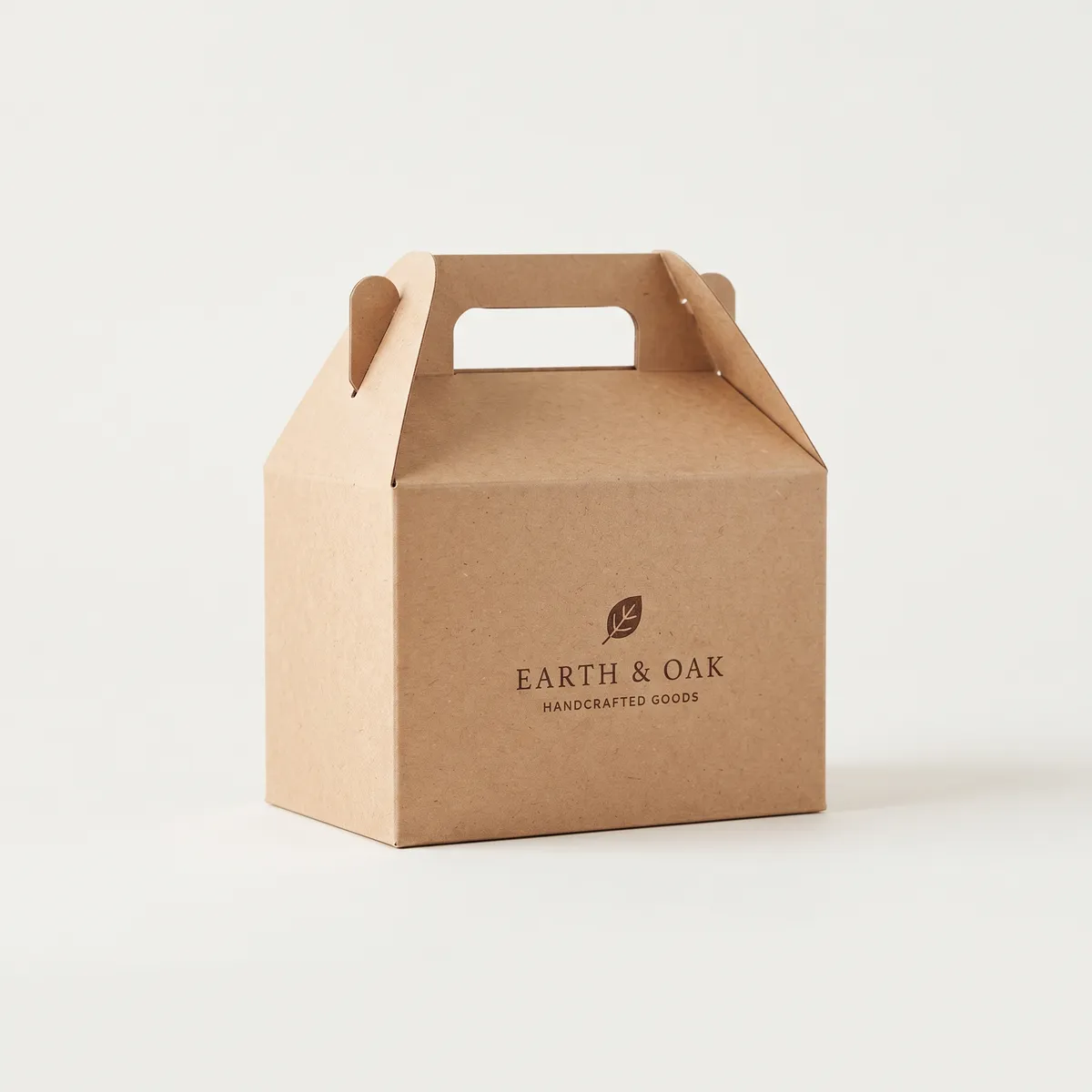
Cardboard gable boxes use coated white board when bright, accurate color or lamination matters, since coated stock holds ink on the surface. Strength is no different from kraft at the same weight; load comes from caliper. Full-color artwork has to sit across the angled top panels, so free design help is worth using. Lamination adds grease and moisture resistance as well.
Ours are on Trustpilot, where we can't edit them or choose which ones you see.
Read them on Trustpilot →(opens in a new tab)Four stages, twelve days
Quote confirmed
A specialist checks your spec against the board and comes back with a firm price inside 4 business hours.
Proof approved
You get a flat dieline and a 3D render. Nothing goes to press until you approve it in writing.
On press
Print, die-cut, glue, and fold. You get a press-side photo the day your job runs.
QC and delivery
Every pallet is sampled against the digital proof or physical sample you approved, then shipped with tracking to your dock or 3PL.
If a box doesn't match the digital proof or physical sample you approved, we reprint the run at no charge.
Read the reprint terms →Know exactly what you're ordering.
Cardboard Here Means Coated Paperboard, Not Corrugated
In packaging, "cardboard" gets used loosely, and on a gable that causes real confusion. Here it means a single layer of pressed paperboard, bleached and coated on the face so ink sits on the surface. It doesn't mean corrugated, which has a fluted middle layer and belongs on heavier builds. Buyers who ask for cardboard gables usually want one thing: color that prints the way it looks on screen. Brand managers matching an existing palette, toy and confectionery brands with bright artwork, and anyone planning a laminated finish tend to land here. If what you actually need is a tougher box rather than better print, the board weight is the thing to change, not the word on the order.
Coated Paperboard Gable Spec: Weight, Coat and Laminate
These are built on smooth coated paperboard, with the board weight specified separately from the coating.
| Attribute | Cardboard gable boxes |
|---|---|
| Stock | Bleached paperboard, coated on the print face |
| Board weight | Rated to your filled weight; can be specified heavier |
| Lamination | Optional; adds grease and moisture resistance |
| Full color, outside and inside | |
| Size | Cut to your product's dimensions |
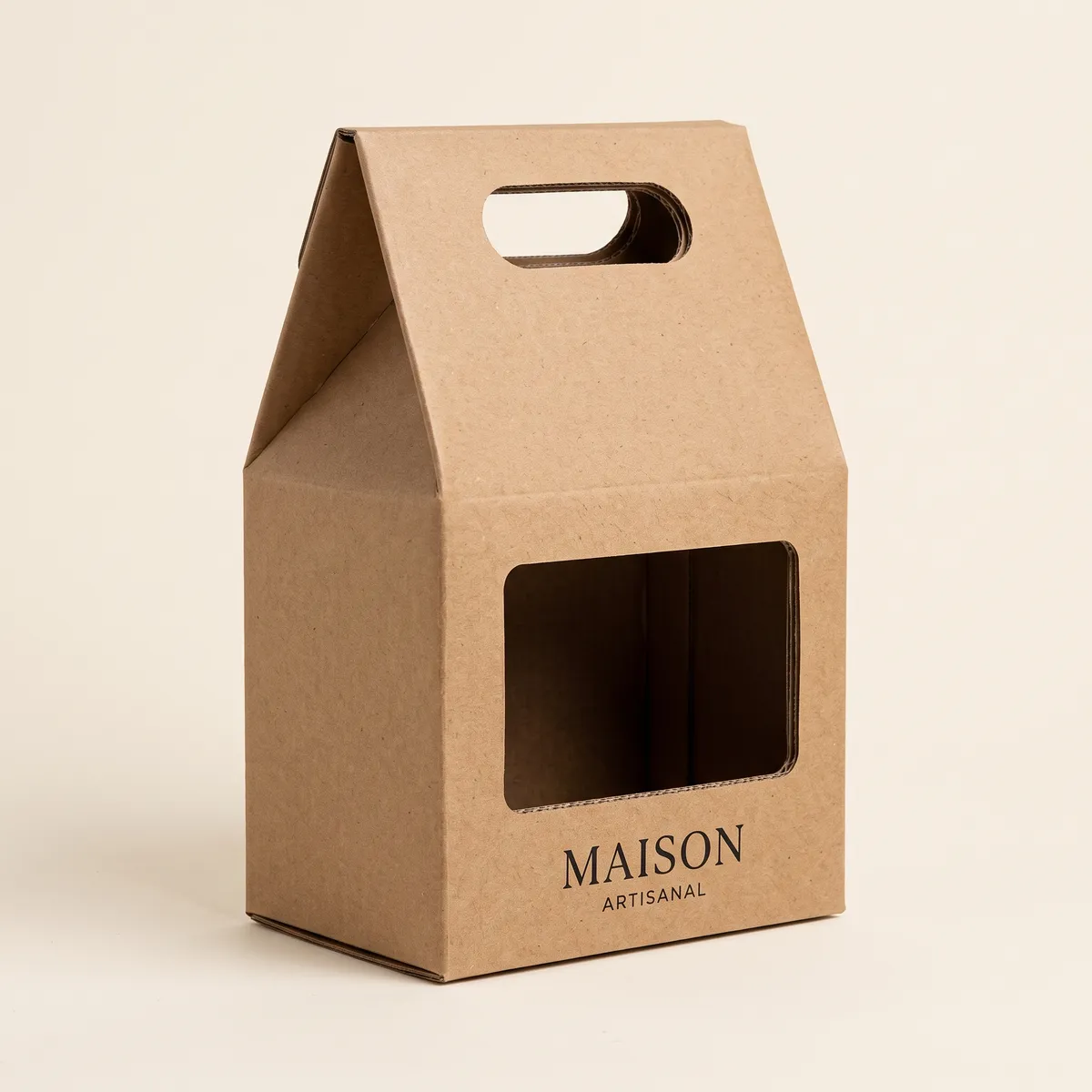
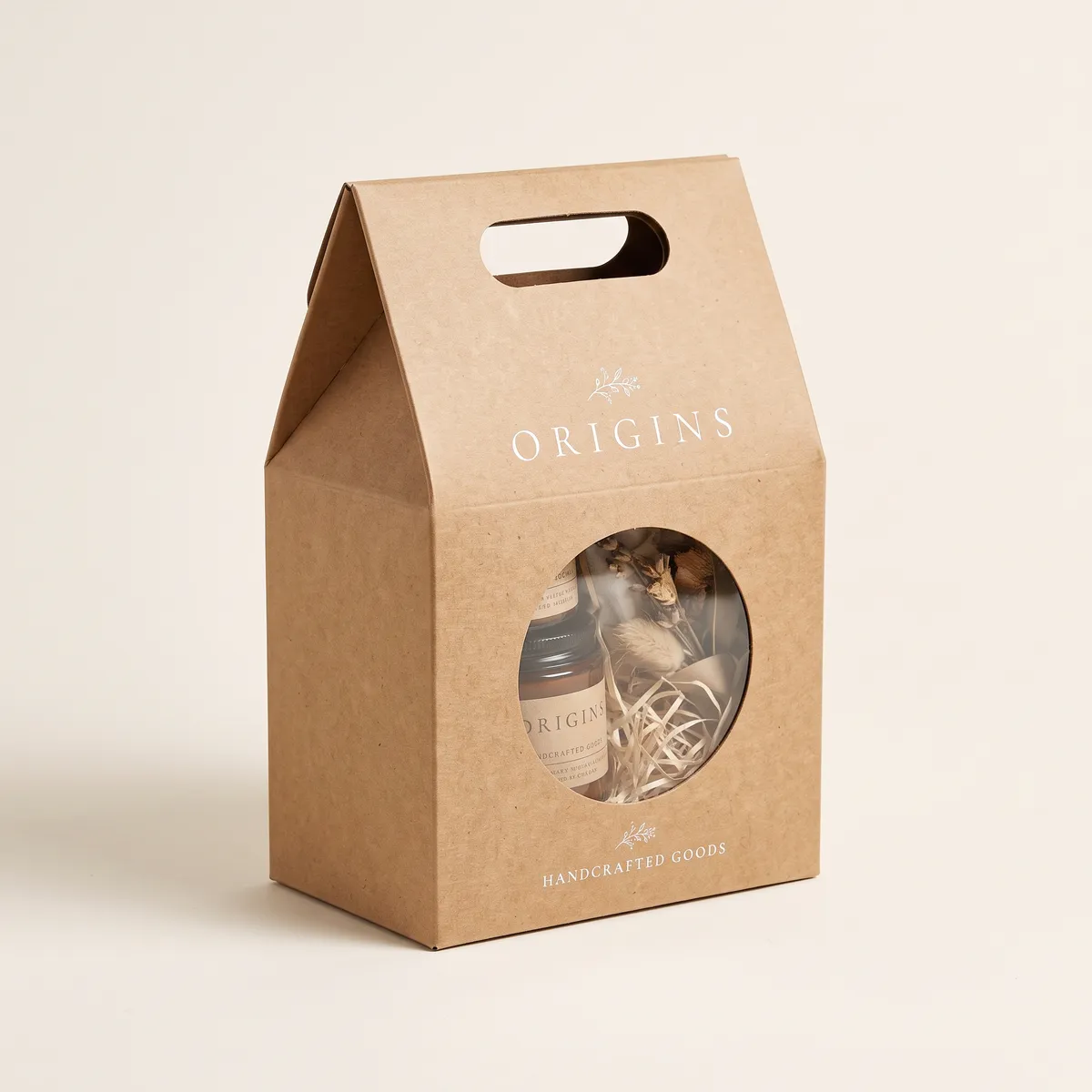
| Window | Optional film-backed front cut-out |
Lamination bonds more evenly to a coated face than to kraft, so this is the stock to start from if a laminated finish is planned. The handle is cut from the same coated sheet and takes the same rating.
Paying for Coated Board Only When Color Has to Be Exact
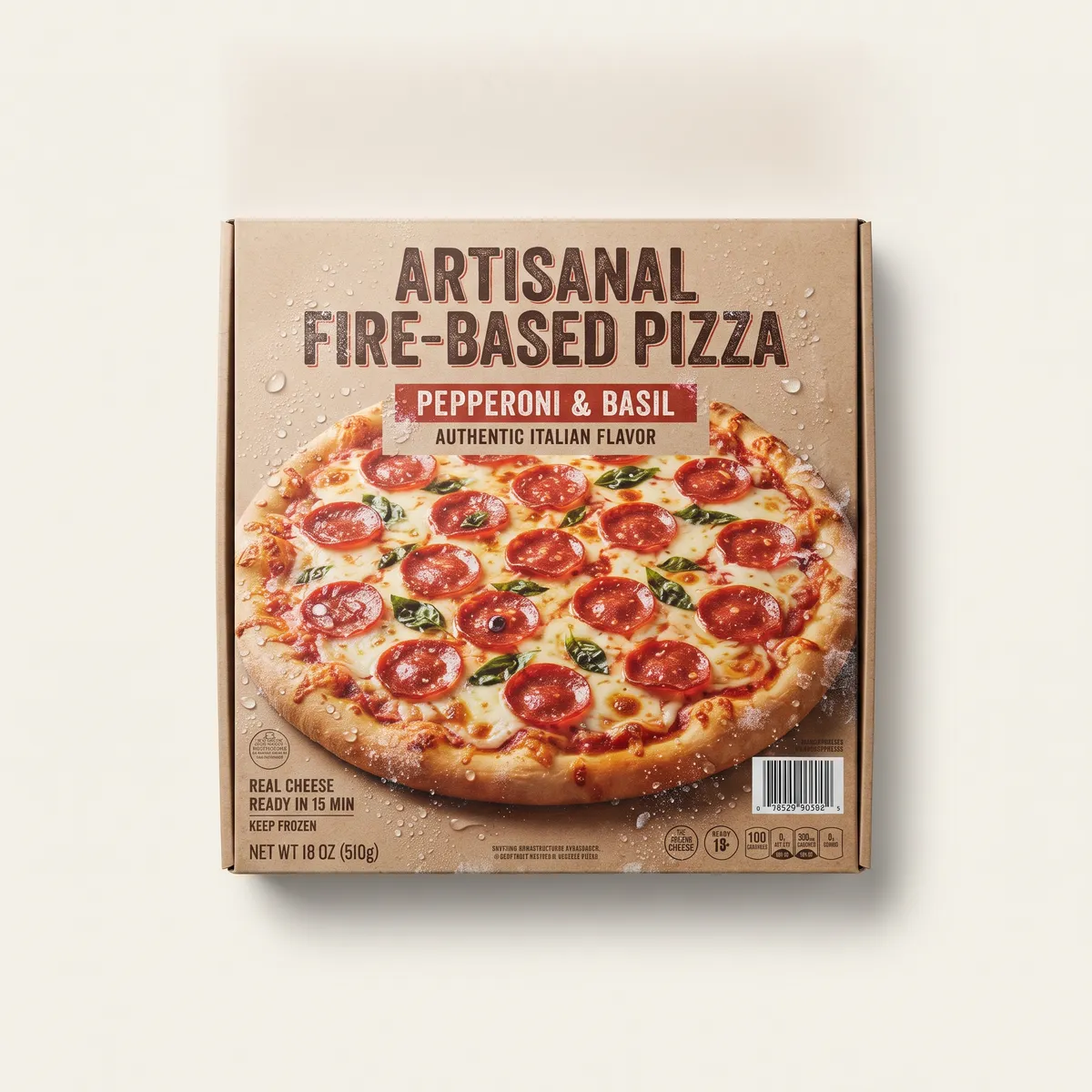
Coated board doesn't make a gable stronger. At the same weight it carries the same load as kraft, so the extra spend buys print quality and nothing else. That's worth paying for when color is part of the product: a brand palette that has to match across a range, packaging photographed for listings, or a counter full of competitors in bright colors. It isn't worth it for a one-color logo that kraft would print cleanly enough. Bright-wrapped confectionery ranges are the clearest case for coated board, since the box sits beside the wrappers and a muddy version of the brand color would look wrong next to them. A plain handled box for a market stall is the opposite case.
Lamination and Full Color Across Angled Top Panels
The angled panels at the top of a gable meet at the handle, so artwork crossing them is folded twice and cut through once. Patterns that repeat cope with that; a logo split across the peak usually doesn't. Keep the main mark on a flat wall and let the top panels carry color or a simple repeat. On this board you can specify full-color print, inside print and lamination for a protective finish, with a grease-resistant face where the contents need it. Avoid heavy gloss film on boxes holding anything warm, since it traps moisture. Solid color running across a crease will crack along the score over time, so leave a little space either side of each fold.
Cardboard Gables for Confectionery, Toys and Launch Kits
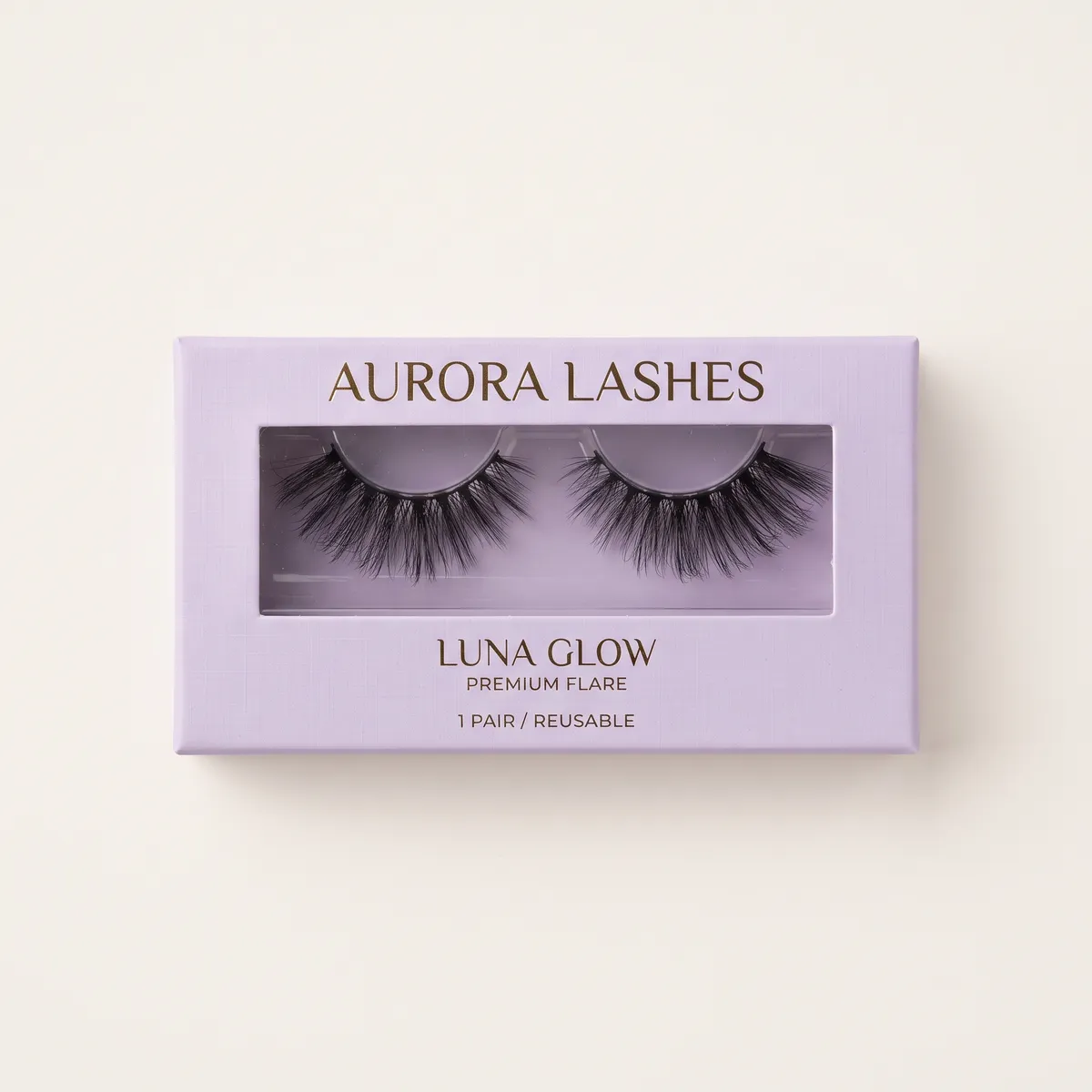
Coated gables go where the box has to look as good as the product. Toy shops and brands use them for small toys handed out at parties and launches, and for party bags printed with a theme. Confectioners use them for seasonal assortments that sit on a counter before they're sold. Beauty and lifestyle brands use them for sample kits and press kits handed out at events. Retailers order them as a branded alternative to a carrier bag for small purchases. Marketing teams use them for product launches, where a photographed box carries the brand further than the event itself, and where a laminated finish keeps the box looking new through a day of handling.
No Setup Surprises on a Laminated Gable Quote
A laminated, full-color gable has more parts to price than a plain one, so the quote lists everything up front: the board, the coating, the lamination, the cutting die and the print plates. Nothing appears afterward as a setup charge. Orders start at 100 boxes, and shipping is included. Production takes 8–12 business days once the proof is approved, with rush available at extra cost, quoted before you commit. Every box goes through a three-stage check, and a bulk run that doesn't match the approved proof is reprinted at our cost. Design help is unlimited and free before proof approval, so changes to the artwork never show up as a line on the invoice.
One connected process, start to finish.
Structural Design
Dieline drafted to your exact fit and freight tolerances.
Proof & Sample
Sign off on a digital proof, or request a physical sample.
Tooling
Dies and plates are cut for your job and archived on file.
Production
Print, die-cut, and assembly run under in-line quality checks.
Ship & Reorder
Freight goes out, and the cycle resets for your next run.
Steady process. Powerful results.
Like everything we build, our process is engineered to hold up — no shortcuts, no surprises. Five dependable stages that run the same way every single time, so reorders are just as fast as the first order.
- One dedicated teamFrom first sketch to final freight, the same people carry your order start to finish.
- Dies archived on fileReorders skip tooling and re-setup entirely — we already have your exact spec.
- Checked against your sign-offEvery run is inspected against the digital proof or physical sample you approved.
Set up your file once, correctly
Nine in ten delayed jobs are delayed by artwork, not production. Match these four rules and your proof lands the next morning.
- Bleed1/8 in (3 mm) past every cut line
- Safe ZoneKeep text 1/4 in clear of every crease
- ColourCMYK or named Pantone. No RGB.
- Resolution300 dpi at final size, fonts outlined
No print-ready file?
Send a logo and a rough idea. Our studio builds the production file free with any order over 500 units — you keep the source file either way.
Ask the StudioBackground art must run all the way to the outer bleed edge. Anything inside the white dashed line survives fold tolerance.
What brands say about this box
They live there rather than here, where we can't edit them, delete them, or pick which ones you get to see. That is exactly what makes them worth reading.
Read all reviews on Trustpilot(opens in a new tab)Answers before you have to ask.
When is coated board worth it on a gable?
When you need bright, accurate color or lamination. For food service printed in one or two colors, kraft costs less and performs the same. It's positioning more than performance.
Can cardboard gable boxes be laminated?
Yes, and coated board takes lamination better than kraft. It adds grease and moisture resistance as well as finish. Avoid heavy gloss films on hot food, since they trap steam.
Is cardboard stronger than kraft for gables?
Not inherently — both come in similar weights and either can be specified heavier. Cardboard's advantage is print quality. Load strength comes from caliper rather than the liner.
What's the lead time on cardboard gable boxes?
Around 8–12 business days from proof approval, lamination included if specified. Rush production is available at an added cost quoted before you order.
What's the minimum on cardboard gable boxes?
100 boxes. Design help is unlimited and free, which is worth using if you're working out how full-color artwork sits across the gable's angled top panels.