
Bracelet Boxes
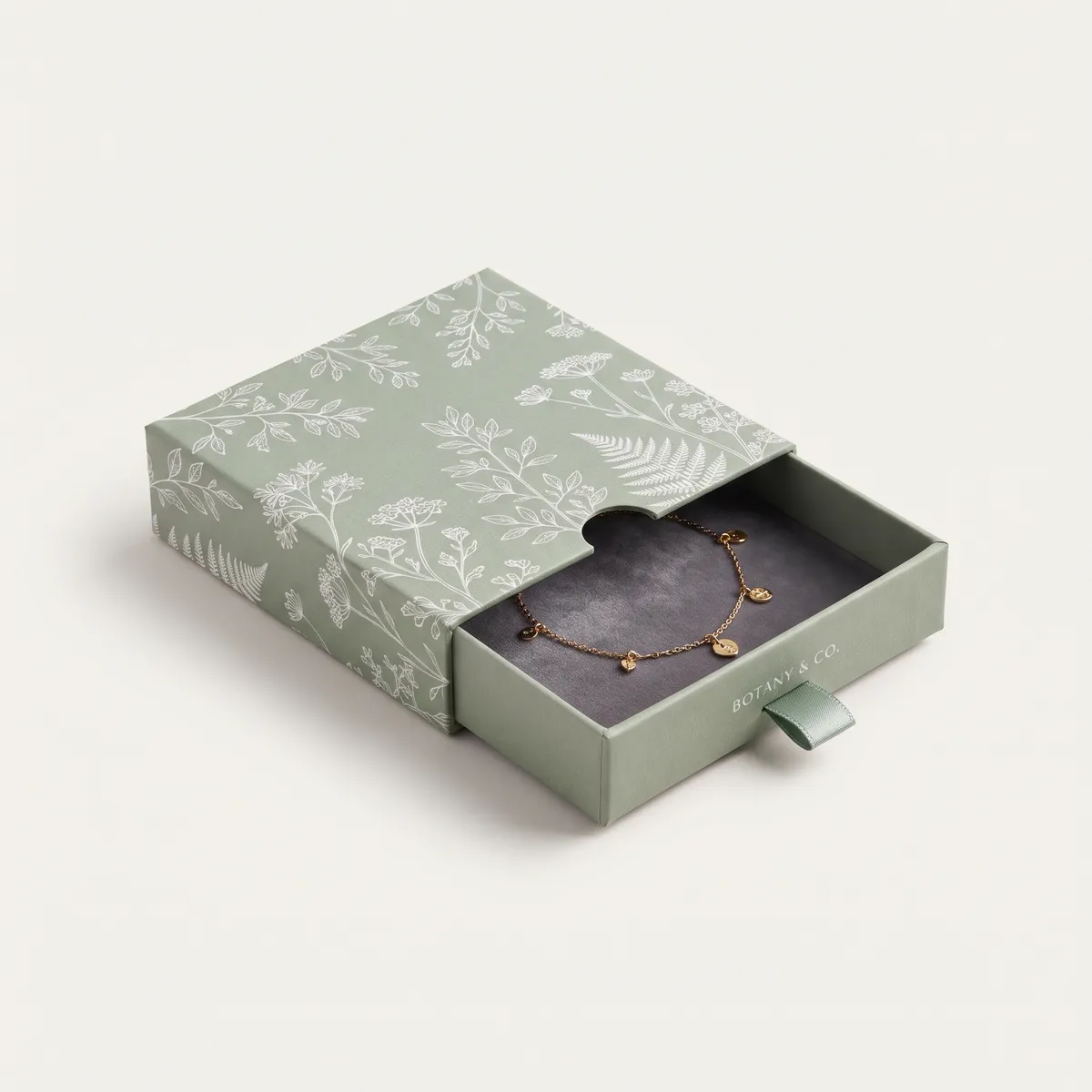
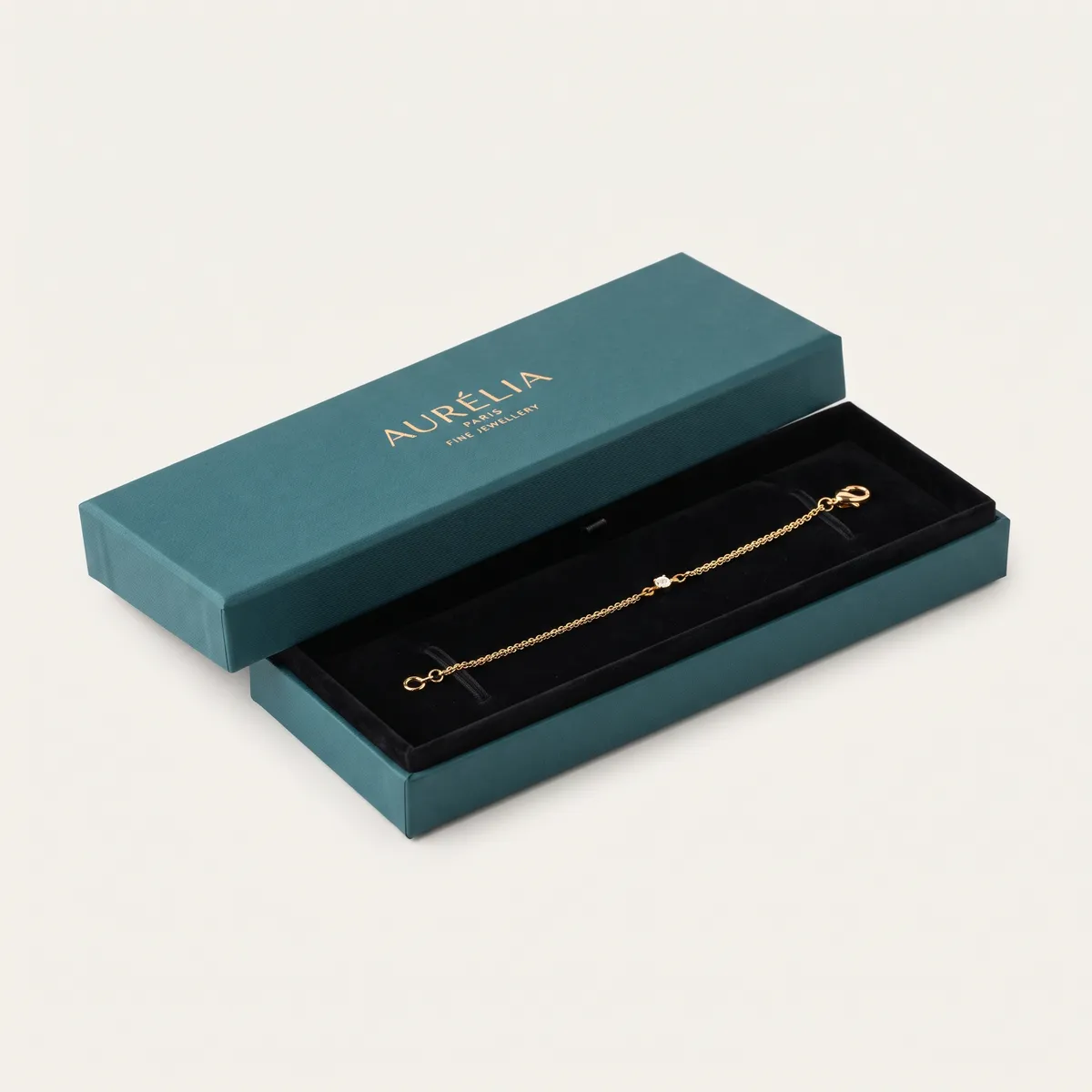
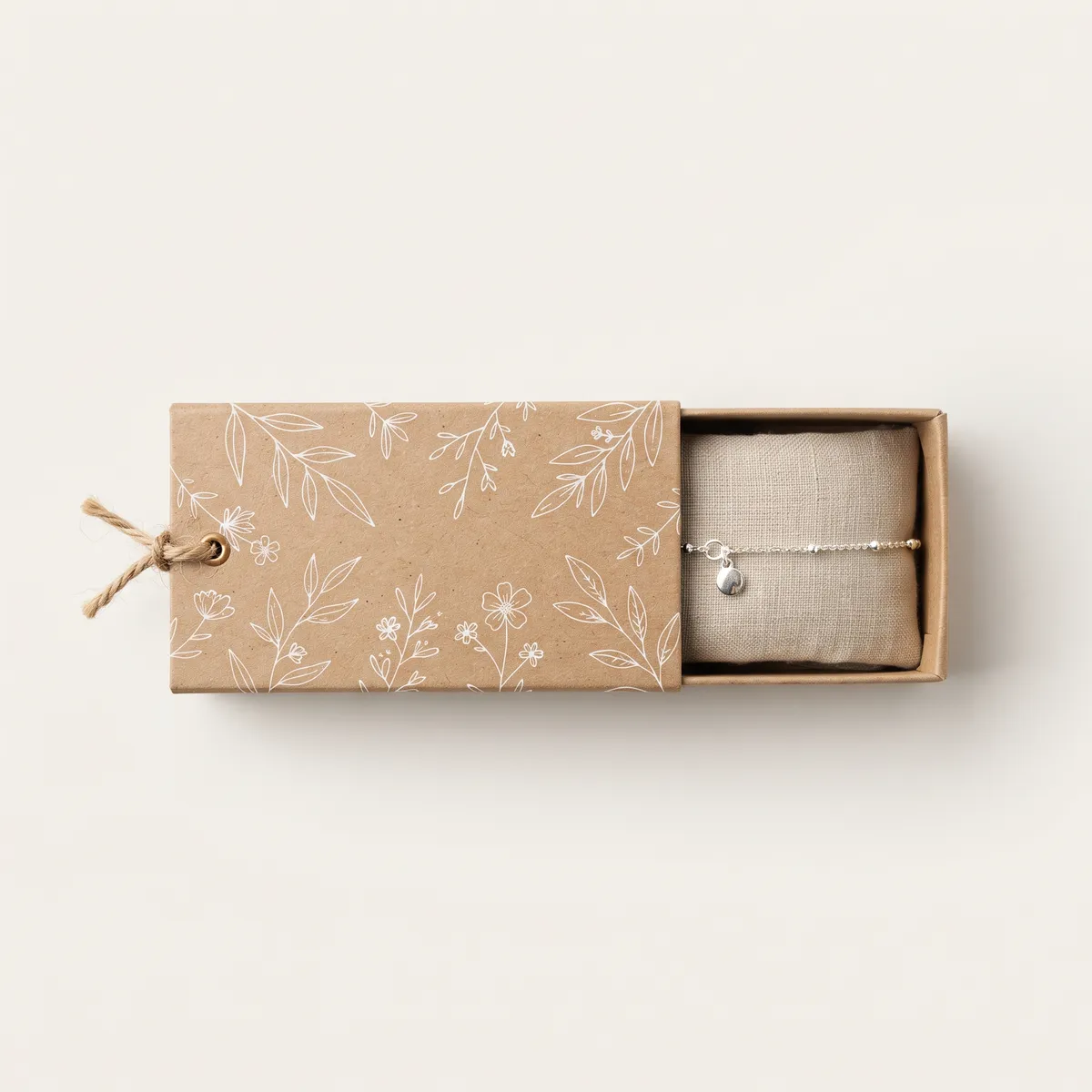
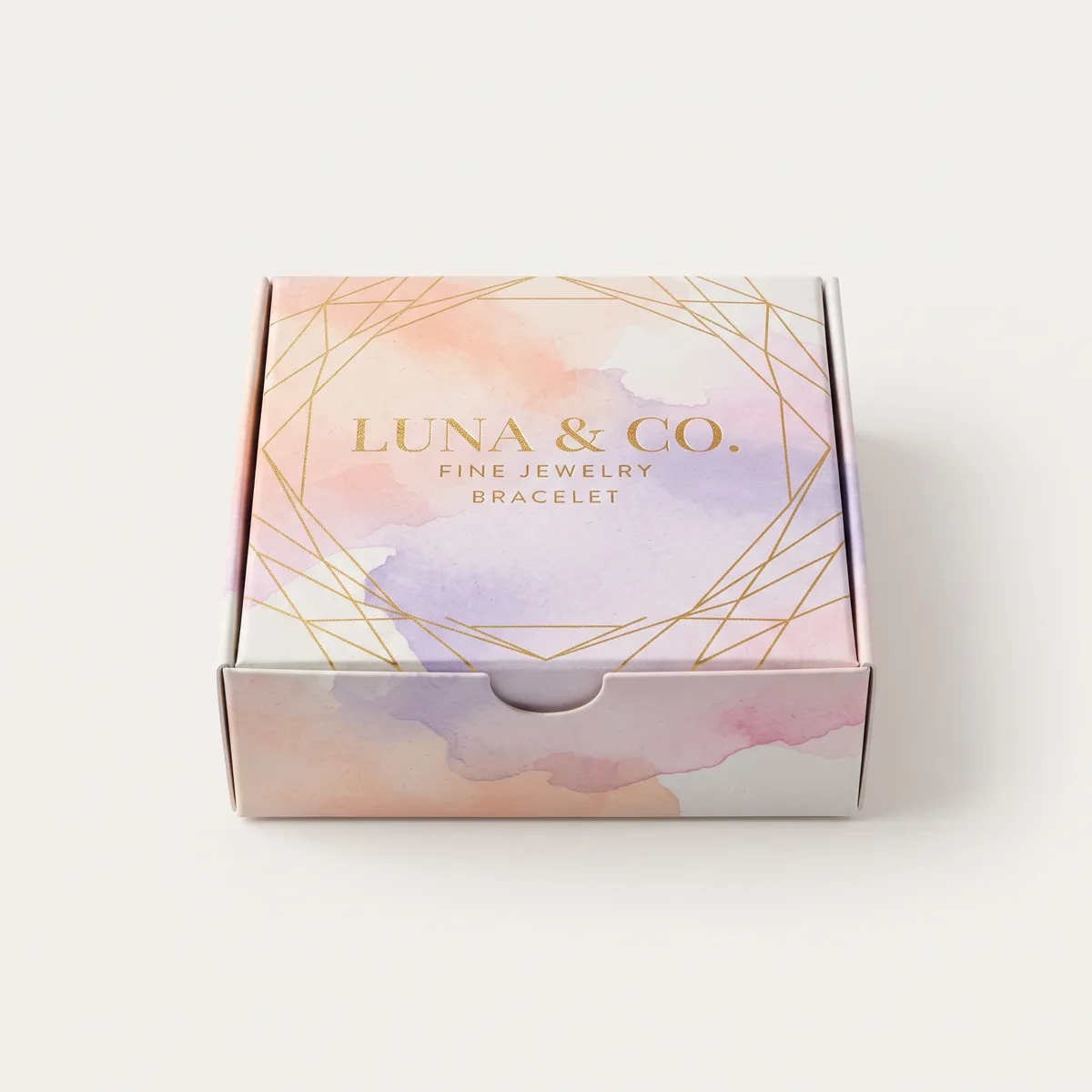
Bracelet boxes run wider because a cuff or bangle has to lie flat or coil without being forced, and a box proportioned like a ring box would bend it. Padded rolls or open cavities hold each piece, while divided inserts suit stacking sets. Fine bracelets usually justify rigid, since a wide folding carton flexes noticeably when handled. Both constructions start at 100 boxes.
Ours are on Trustpilot, where we can't edit them or choose which ones you see.
Read them on Trustpilot →(opens in a new tab)Four stages, twelve days
Quote confirmed
A specialist checks your spec against the board and comes back with a firm price inside 4 business hours.
Proof approved
You get a flat dieline and a 3D render. Nothing goes to press until you approve it in writing.
On press
Print, die-cut, glue, and fold. You get a press-side photo the day your job runs.
QC and delivery
Every pallet is sampled against the digital proof or physical sample you approved, then shipped with tracking to your dock or 3PL.
If a box doesn't match the digital proof or physical sample you approved, we reprint the run at no charge.
Read the reprint terms →Know exactly what you're ordering.
Bracelet Boxes Shaped Around Pieces That Won't Fold
A ring will sit in almost any small box. A cuff won't. It has a fixed curve and a fixed width, and pressing it into a box that is too narrow bends the metal or scratches the surface. Bangles are harder still, since they are closed loops with no give at all. Bracelet boxes are sized around those shapes, wider and flatter than other jewelry boxes, with an insert that either rolls a chain bracelet into a curve or gives a solid piece an open bed. Buyers are jewelers with bracelet lines, cuff and bangle brands, and stacking-bracelet sellers who package several pieces together.
Bracelet Box Specs: Width, Roll and Divided Inserts
Because the box is wide, the base spans further than a ring box, and thin board sags in the middle. Fine bracelet boxes use non-flexing board, 2–3mm grayboard wrapped in paper, while fashion ranges can use a folding carton.
| Attribute | Detail |
|---|---|
| Core | 2–3mm grayboard (rigid) or coated board (folding) |
| Insert | Padded roll, open cavity or divided tray |
| Cavity fit | Within a millimeter or two |
| Divisions | One per piece for stacking sets |
| Lid fit | ±0.5mm tolerance on rigid |
Bangle inserts are cut from the inner diameter, and chain bracelets from length and width, so each cavity matches the piece rather than a standard size.
Why a Drawer Build Suits a Bracelet Lying Flat
A bracelet lies longer than it stands tall, and a slide-out drawer box matches that shape. The drawer pulls out of its sleeve and reveals the piece gradually, lying flat in its roll or cavity, without the buyer lifting anything over it. That slow reveal suits a piece that is often a gift. The sleeve also gives two printable surfaces, the outer shell and the drawer front. A lid-and-tray build works too and costs less, and it is the better choice for wide bangles where a drawer would need to be unusually deep. For stacking sets, the drawer's long tray holds a divided insert comfortably.
Print and Finish for Bracelet Boxes Across a Range
On a drawer box, branding has two places to go: the sleeve, which is seen first, and the drawer front, seen as it is pulled. A logo on the sleeve and a color or pattern on the drawer works well and costs no more than printing one surface. Foil and deboss suit rigid sleeves. On folding builds, full-color print and soft-touch film do more for the money. The drawer interior can be lined or printed so the piece sits on brand color rather than plain board. Skip foil on the pull tab itself, since it is handled constantly and that edge wears first.
Bracelet Boxes for Cuffs, Bangles and Stacking Sets
Most orders come from cuff and bangle brands, along with fine jewelers selling tennis and charm bracelets that need to lie flat. Stacking-bracelet brands pack three or four pieces together in a divided insert, often sold as stacking-bracelet gift sets. Beaded and friendship-bracelet sellers use folding builds for volume, where the price of the piece can't carry rigid. Wellness brands selling gemstone and mala bracelets want a box that keeps beads from rolling. Christening and baby bangles, often engraved, are given in rigid boxes intended to be kept for decades.
Bracelet Box Orders for Fine and Fashion Ranges
Choose the build by the piece. Fine bracelets usually go rigid, which takes 20 business days from proof approval, and fashion and stacking ranges often go folding at 8–12. Rush is quoted at extra cost on either. Send us the bracelet dimensions, meaning inner diameter for bangles and length and width for chains and cuffs, and we lay out the insert and dieline, confirming them in writing. The minimum is 100 boxes. Design help is unlimited, pricing includes setup and shipping, and any run that doesn't match its approved proof is reprinted at our cost. Orders above 10,000 come with free samples, worth taking before committing a large divided-insert run.
One connected process, start to finish.
Structural Design
Dieline drafted to your exact fit and freight tolerances.
Proof & Sample
Sign off on a digital proof, or request a physical sample.
Tooling
Dies and plates are cut for your job and archived on file.
Production
Print, die-cut, and assembly run under in-line quality checks.
Ship & Reorder
Freight goes out, and the cycle resets for your next run.
Steady process. Powerful results.
Like everything we build, our process is engineered to hold up — no shortcuts, no surprises. Five dependable stages that run the same way every single time, so reorders are just as fast as the first order.
- One dedicated teamFrom first sketch to final freight, the same people carry your order start to finish.
- Dies archived on fileReorders skip tooling and re-setup entirely — we already have your exact spec.
- Checked against your sign-offEvery run is inspected against the digital proof or physical sample you approved.
Set up your file once, correctly
Nine in ten delayed jobs are delayed by artwork, not production. Match these four rules and your proof lands the next morning.
- Bleed1/8 in (3 mm) past every cut line
- Safe ZoneKeep text 1/4 in clear of every crease
- ColourCMYK or named Pantone. No RGB.
- Resolution300 dpi at final size, fonts outlined
No print-ready file?
Send a logo and a rough idea. Our studio builds the production file free with any order over 500 units — you keep the source file either way.
Ask the StudioBackground art must run all the way to the outer bleed edge. Anything inside the white dashed line survives fold tolerance.
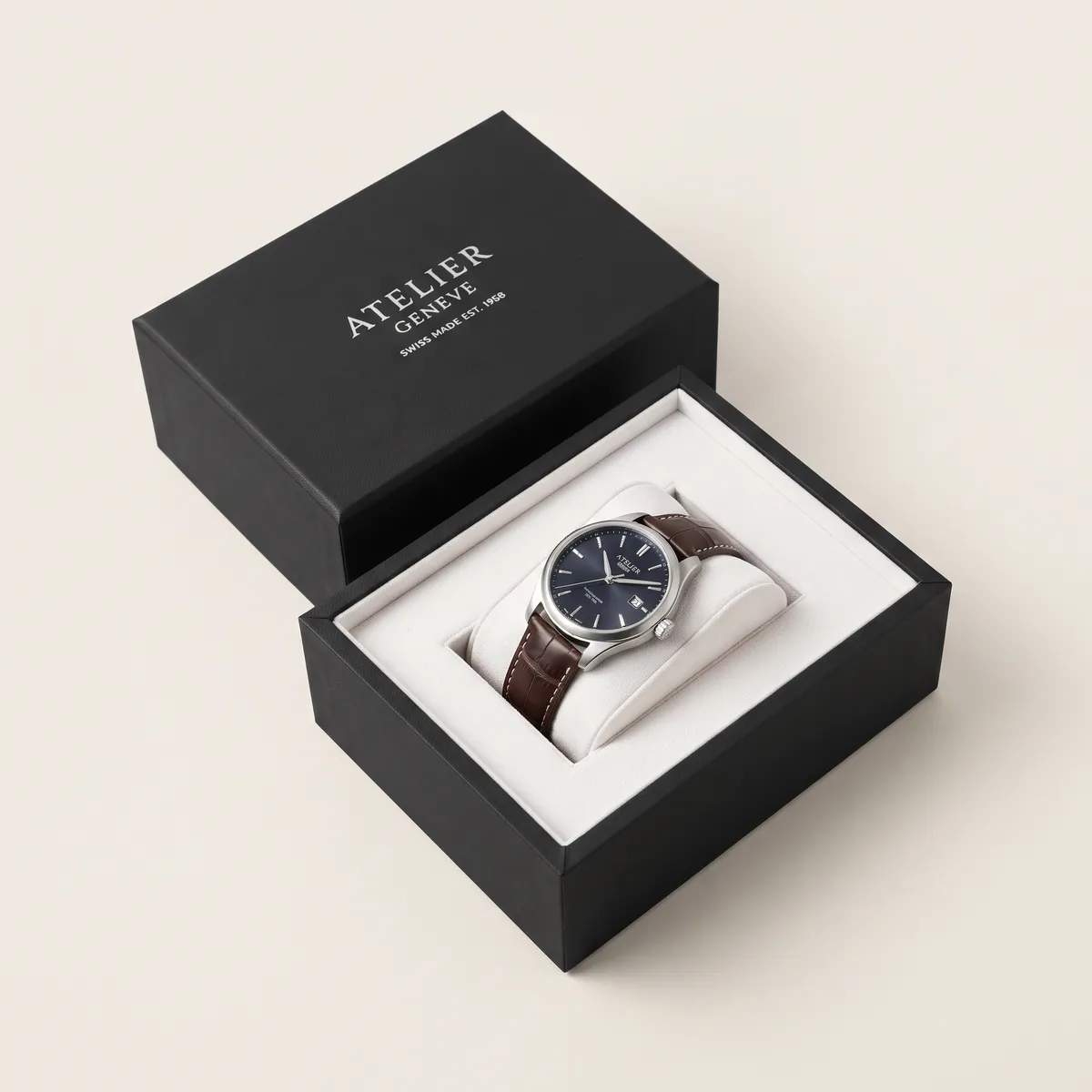
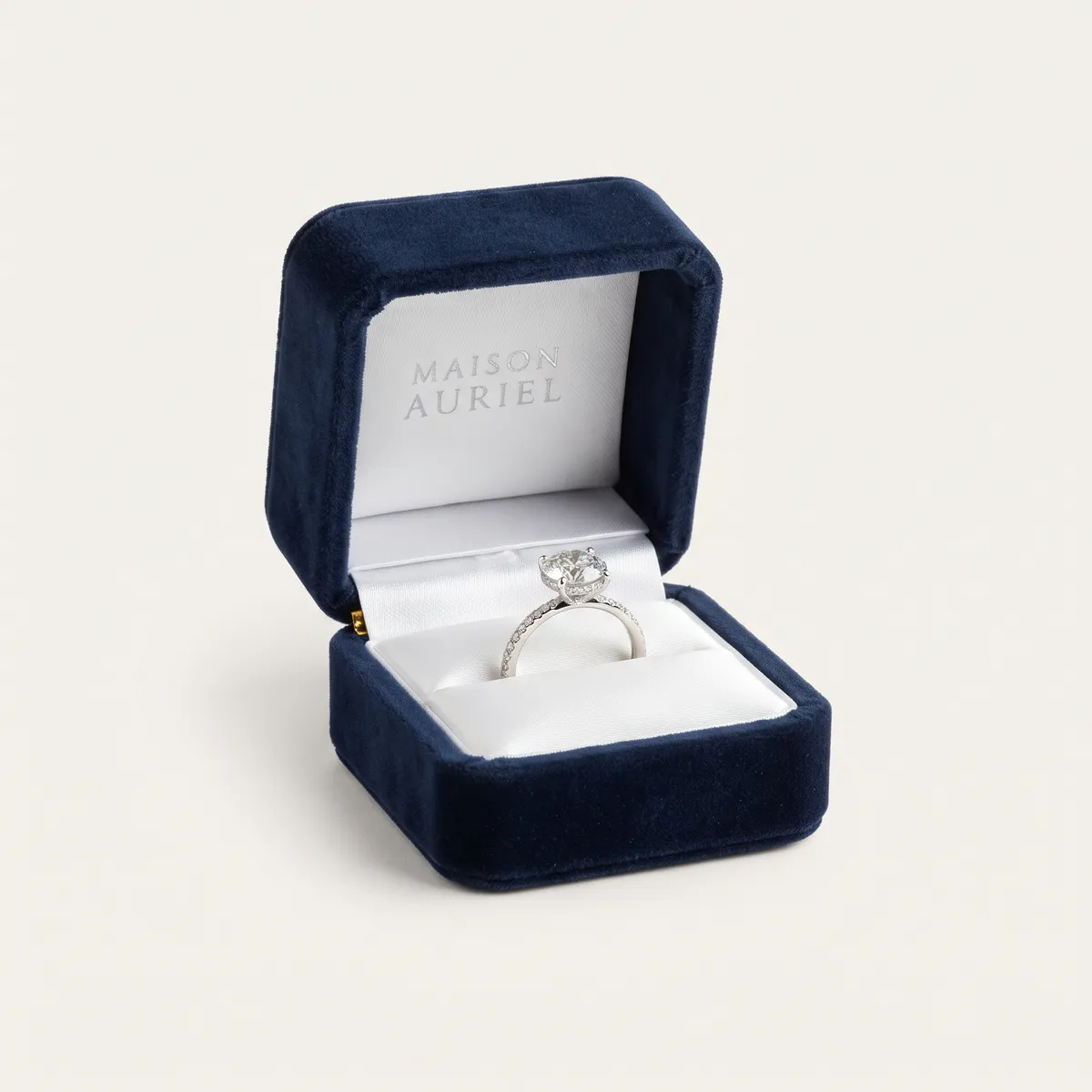
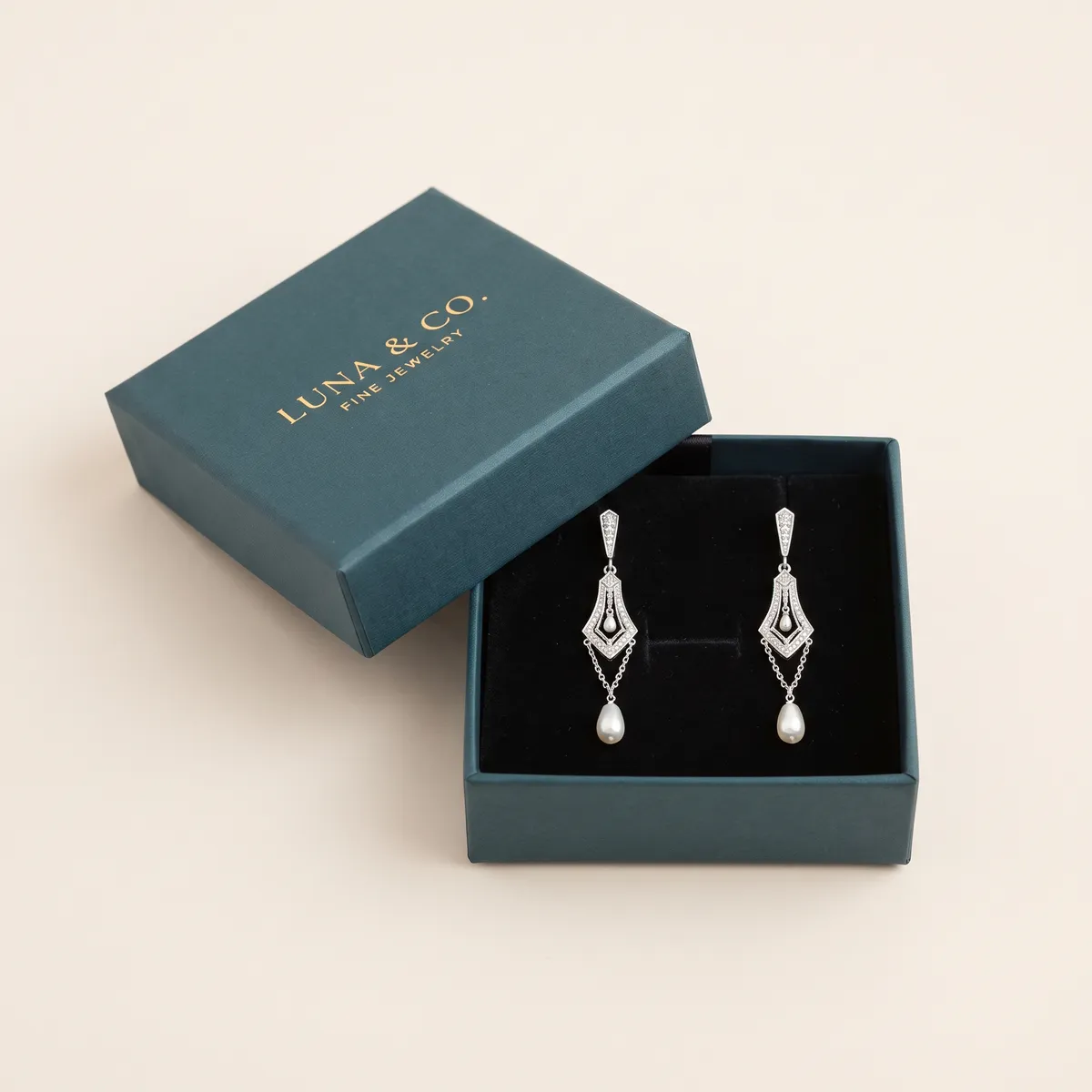
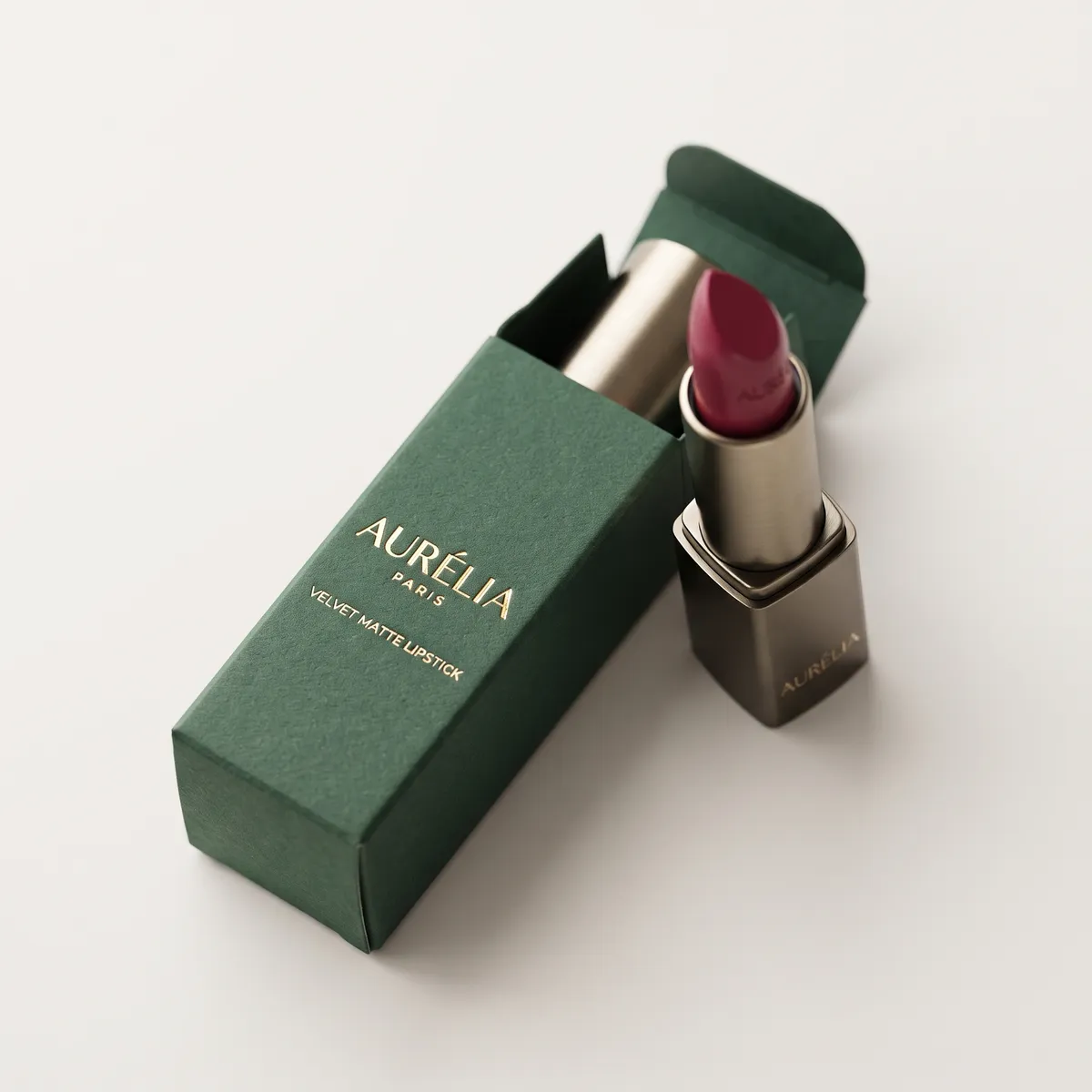

What brands say about this box
They live there rather than here, where we can't edit them, delete them, or pick which ones you get to see. That is exactly what makes them worth reading.
Read all reviews on Trustpilot(opens in a new tab)Answers before you have to ask.
Why are bracelet boxes wider than other builds?
Because a cuff or bangle has to lie flat or coil without being forced. Bracelets are longer and less flexible than most pieces, so a box sized like a ring box would bend them. The extra width is structural, not decorative.
Can bracelet boxes hold more than one piece?
Yes, with a divided insert. Stacking bracelets and multi-piece sets are common, and each needs its own cavity or they knock together. We lay out the divisions around your actual pieces.
Do bracelet boxes need a rigid build?
For fine bracelets, usually yes — the width means a folding box flexes more noticeably. For fashion and stacking ranges a folding build with a divided insert works well and costs less.
What's the turnaround on bracelet boxes?
Rigid bracelet boxes take 20 business days from proof approval; folding builds run 8–12. Rush production is available on both at a premium stated before you order.
What's the minimum on bracelet boxes?
100 boxes across rigid and folding builds. If you carry several bracelet styles, running them together on one box structure with different printed panels keeps costs down.