
Fry Boxes
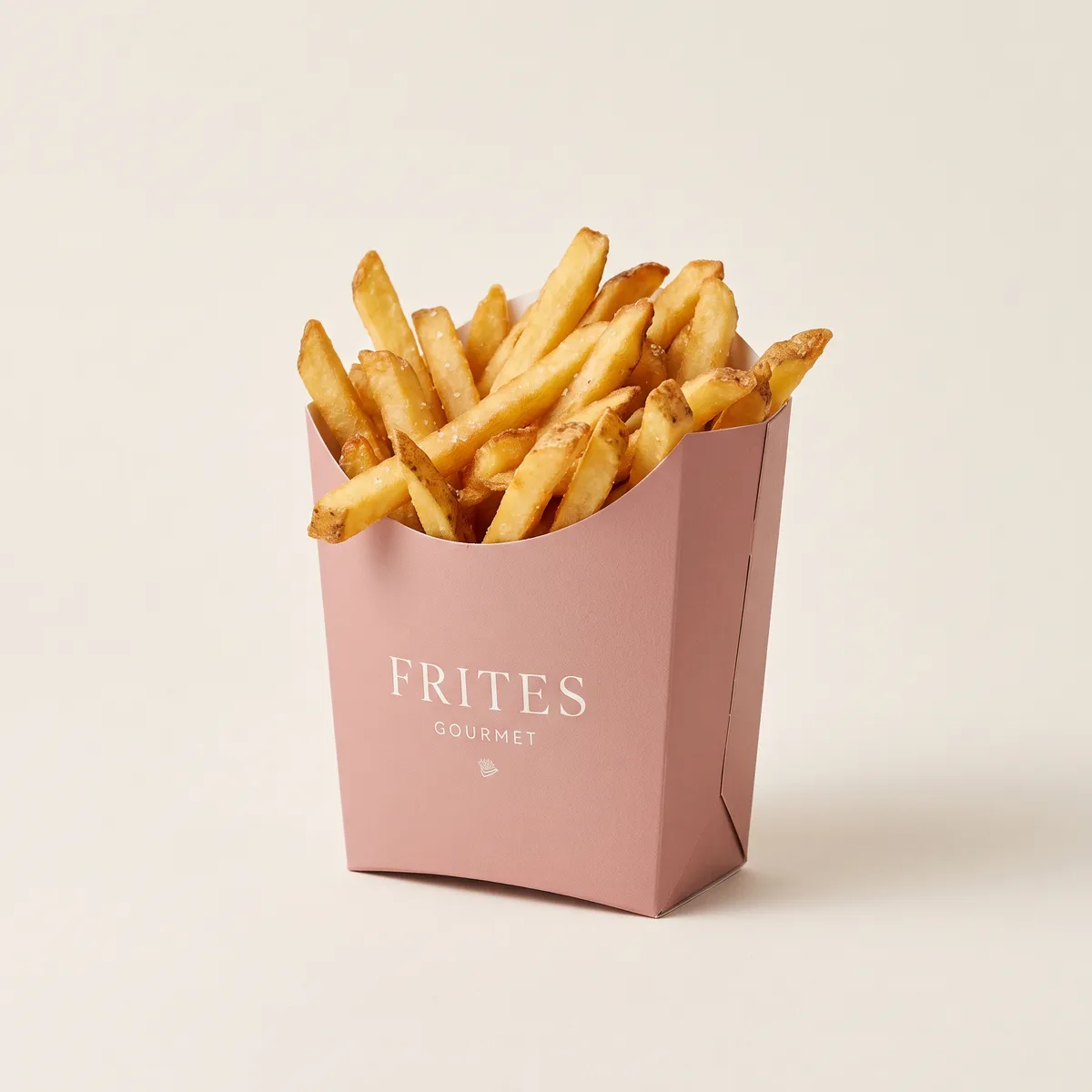
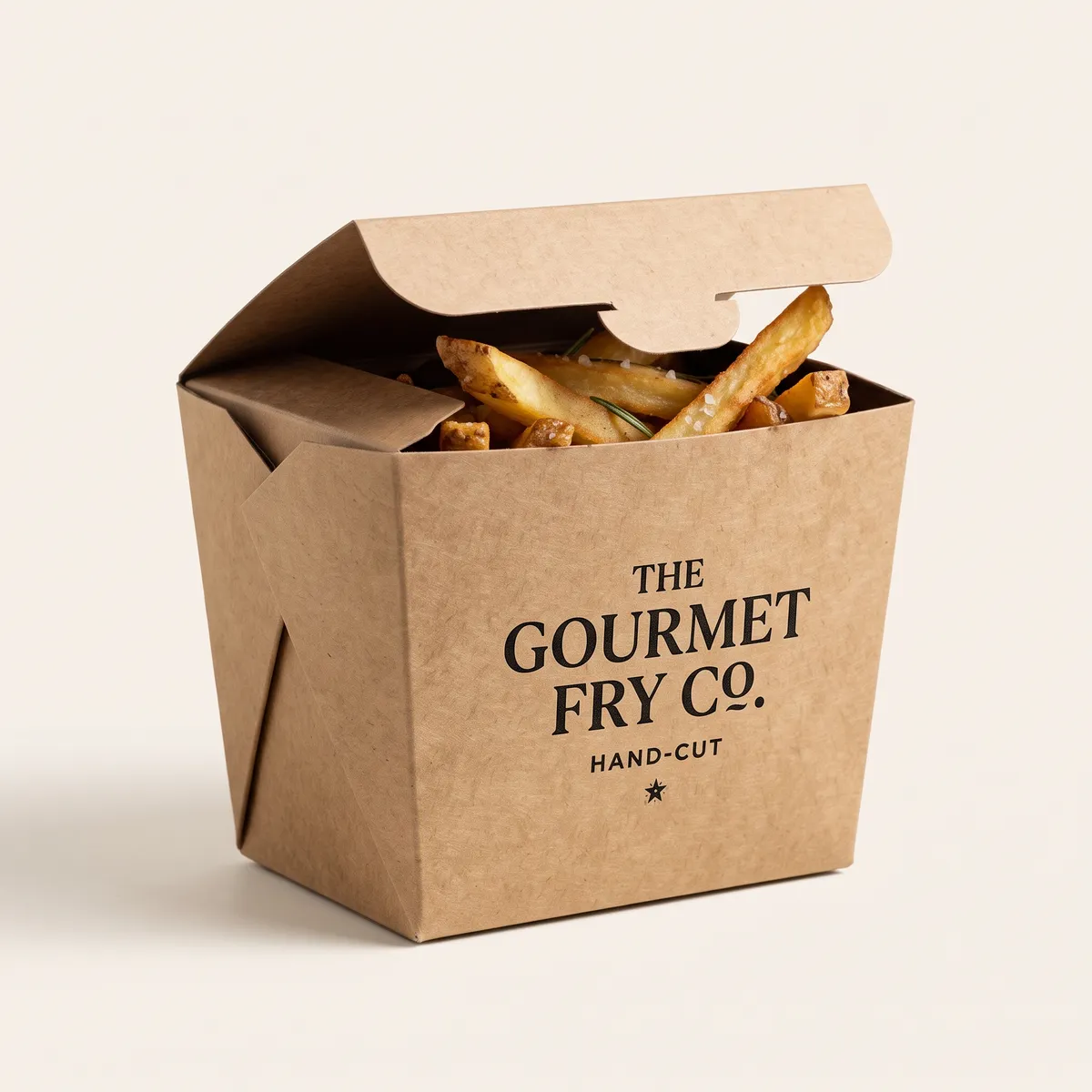
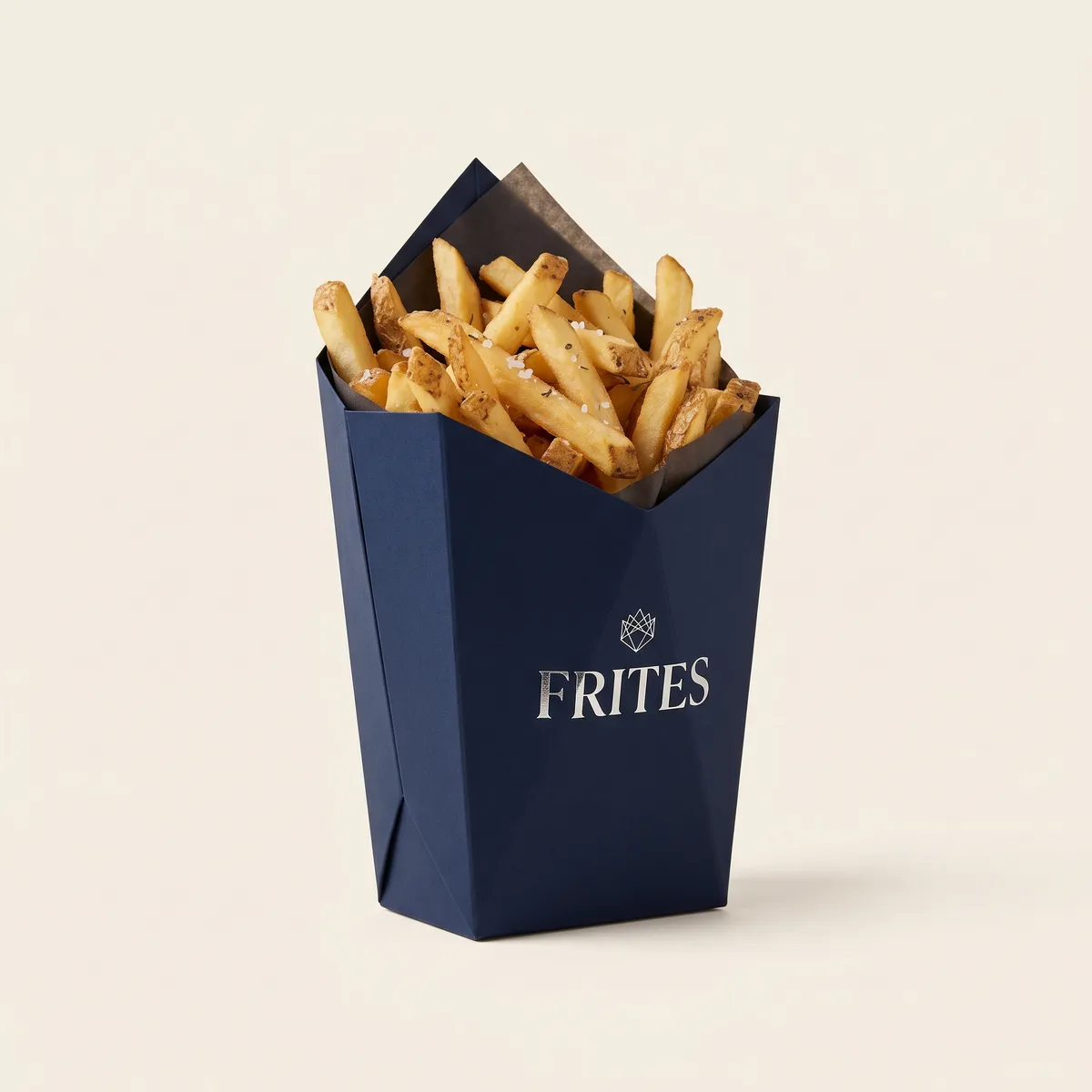
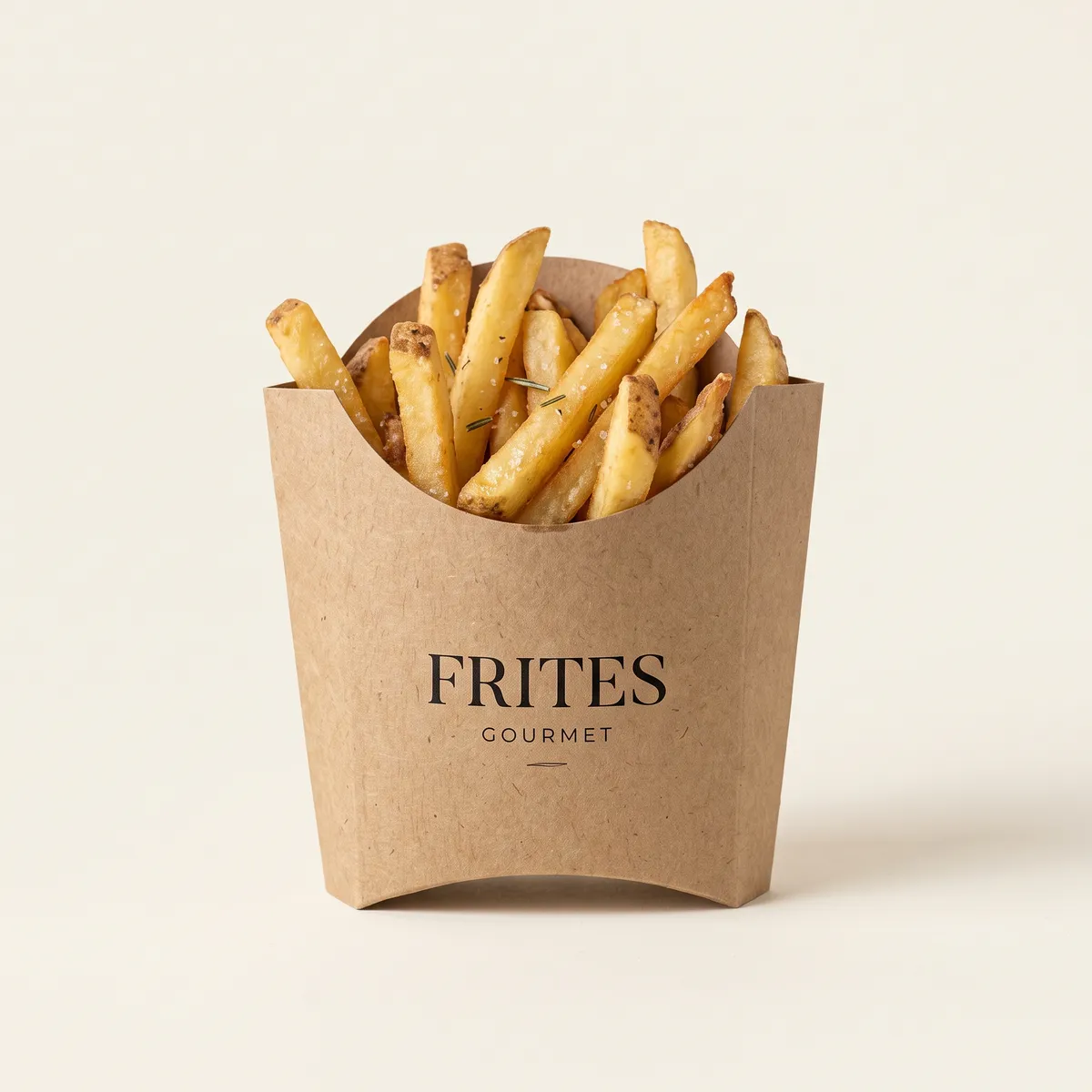
Fry boxes come as scoops and cartons sized to your actual portions, typically small, regular and large, because a box sized wrong either overflows or looks stingy to customers. Fries release a lot of oil onto a small area, so a grease-proof face is essential, not optional. Open scoops cost less than closed cartons but retain heat less effectively over longer delivery distances.
Ours are on Trustpilot, where we can't edit them or choose which ones you see.
Read them on Trustpilot →(opens in a new tab)Four stages, twelve days
Quote confirmed
A specialist checks your spec against the board and comes back with a firm price inside 4 business hours.
Proof approved
You get a flat dieline and a 3D render. Nothing goes to press until you approve it in writing.
On press
Print, die-cut, glue, and fold. You get a press-side photo the day your job runs.
QC and delivery
Every pallet is sampled against the digital proof or physical sample you approved, then shipped with tracking to your dock or 3PL.
If a box doesn't match the digital proof or physical sample you approved, we reprint the run at no charge.
Read the reprint terms →Know exactly what you're ordering.
Fry Boxes That Serve as the Plate
Fries are rarely tipped onto a plate. They're eaten straight from whatever they're served in, at a counter, in a car or walking down the street, so the fry box is the plate. It has to stand upright on a tray, keep its shape while fingers dig in, and stay clean enough to hold through the whole portion. Burger restaurants, fish and chip shops, food trucks and stadium and cinema concessions all buy them, as does anyone serving loaded fries or wedges. Most run more than one size and put other fried sides, onion rings, nuggets and churros, into the same box, which is worth planning for when you choose shapes.
Fry Box Stock, Grease Face and Portion Volumes
A fry box is a small folding build whose size comes from the portion, not a catalog.
| Spec | Fry box |
|---|---|
| Board | Kraft, 18–24pt folding stock |
| Food-contact face | Grease-resistant, food-safe |
| Formats | Open scoop or closed carton |
| Sizes | Set to your portion volumes |
| Tolerance | ±1/16" (1.5mm) |
Fry boxes are almost always kraft that takes a grease barrier on the inside face; plain brown board darkens within minutes under hot oil. Give us each portion by weight, or the scoop your kitchen already uses, and we work the box dimensions back from it, so a full serving sits level with the rim rather than sunk inside.
Why Fries Go in a Folded Carton Rather Than a Bag
A paper bag is the cheapest way to hand over fries, and plenty of shops use one. It's also the weakest for presentation: the fries slump to the bottom, the paper goes translucent with oil, and there's nowhere to set it down. A carton folded from one die-cut blank stands up on its own, keeps the portion upright and gives you a printable face. It ships flat and folds quickly beside the fryer. A scoop shape, higher at the back than the front, is easy to fill straight from the basket and easy to eat from. If most fries go into a delivery bag beside a burger box, a closed carton with a tuck top travels better than an open scoop.
Bold Flexo on a Small Fry Scoop
A fry scoop has one face that matters: the raised back panel that faces the customer as they eat. Put the logo there, large and simple, and leave the front lip plain or nearly so. Flexo in one or two colors on kraft is the usual choice and keeps unit cost low across high volumes; offset is worth it only for detailed artwork on large runs. A pattern print, such as stripes or a repeated logo, hides grease spots better than one large solid area. The grease-resistant coating sits on the inside and doesn't change how the outside prints. Specialty finishes don't belong on a box this short-lived; spend the money on a design strong enough to read in a customer's photo.
Fry Boxes for Burger Bars, Fish Shops and Stadium Stands
Burger bars serve fries in branded scoops beside the burger box, so the tray looks like one brand. Fish and chip shops use larger cartons for chips sold on their own or alongside a fillet. Stadiums, cinemas and fairgrounds run high volumes from concession stands, where an upright scoop is easy to carry back to a seat. Food trucks selling loaded fries need a deeper carton that holds cheese and toppings without spilling over the edge. Cafés and pubs use them for wedges, onion rings and other fried sides. Kiosks selling fries next to packaged snacks and sides use the same scoop for churros and popcorn chicken, so one order covers several menu lines.
Ordering Small, Regular and Large Fry Boxes Together
Most kitchens order two or three portion sizes at once, and the quote covers every one of them with all costs in: dies, plates and setup are included, and nothing gets added at invoice. The minimum is 100 boxes, low enough to try a new loaded-fries size for a few weeks before committing. Production takes 8–12 business days from proof approval. Rush is available if a menu launch is close, at an extra cost we quote upfront. Multi-site operators ordering above 10,000 boxes get free samples to try at the fryer first, and shipping is part of the price at every quantity.
One connected process, start to finish.
Structural Design
Dieline drafted to your exact fit and freight tolerances.
Proof & Sample
Sign off on a digital proof, or request a physical sample.
Tooling
Dies and plates are cut for your job and archived on file.
Production
Print, die-cut, and assembly run under in-line quality checks.
Ship & Reorder
Freight goes out, and the cycle resets for your next run.
Steady process. Powerful results.
Like everything we build, our process is engineered to hold up — no shortcuts, no surprises. Five dependable stages that run the same way every single time, so reorders are just as fast as the first order.
- One dedicated teamFrom first sketch to final freight, the same people carry your order start to finish.
- Dies archived on fileReorders skip tooling and re-setup entirely — we already have your exact spec.
- Checked against your sign-offEvery run is inspected against the digital proof or physical sample you approved.
Set up your file once, correctly
Nine in ten delayed jobs are delayed by artwork, not production. Match these four rules and your proof lands the next morning.
- Bleed1/8 in (3 mm) past every cut line
- Safe ZoneKeep text 1/4 in clear of every crease
- ColourCMYK or named Pantone. No RGB.
- Resolution300 dpi at final size, fonts outlined
No print-ready file?
Send a logo and a rough idea. Our studio builds the production file free with any order over 500 units — you keep the source file either way.
Ask the StudioBackground art must run all the way to the outer bleed edge. Anything inside the white dashed line survives fold tolerance.
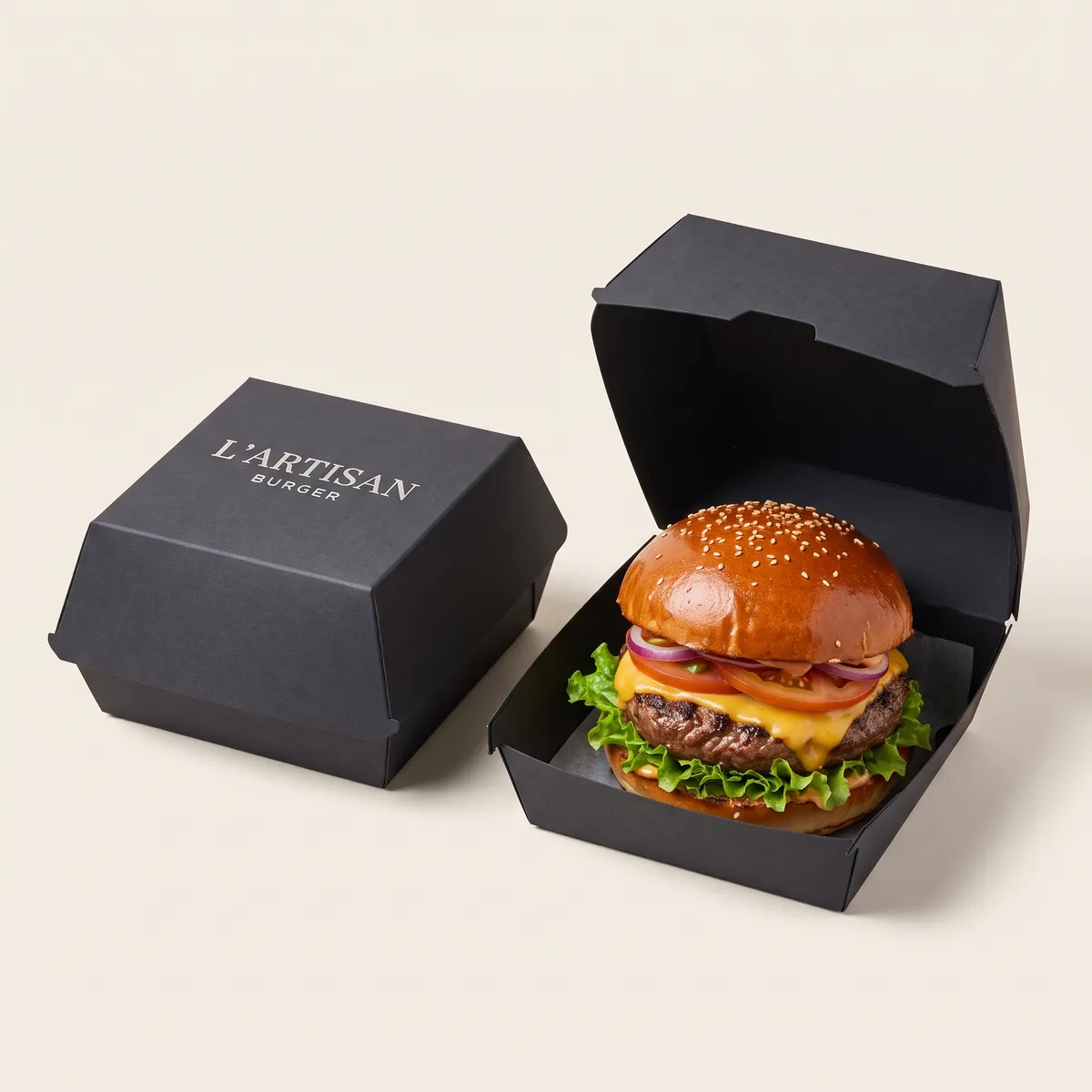
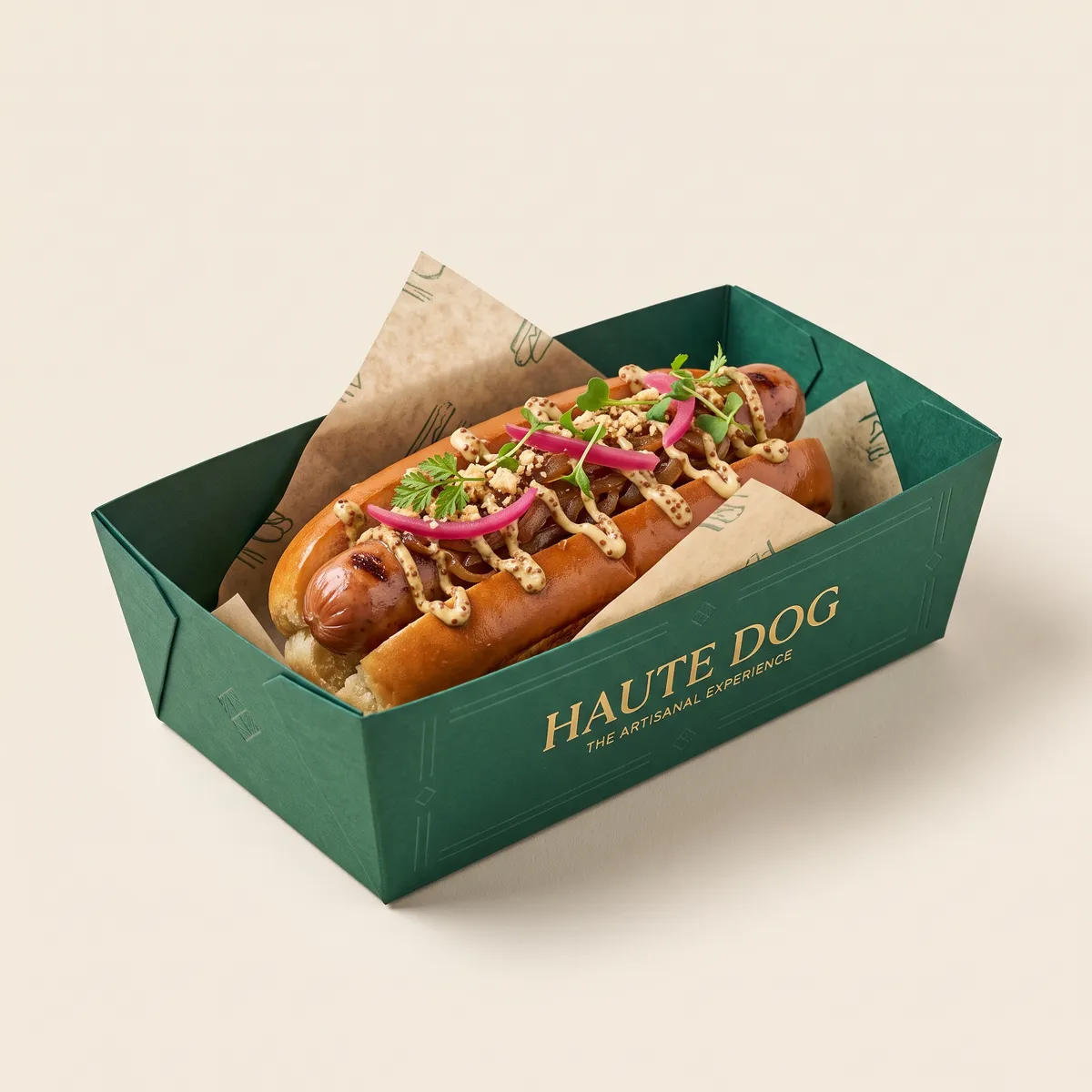
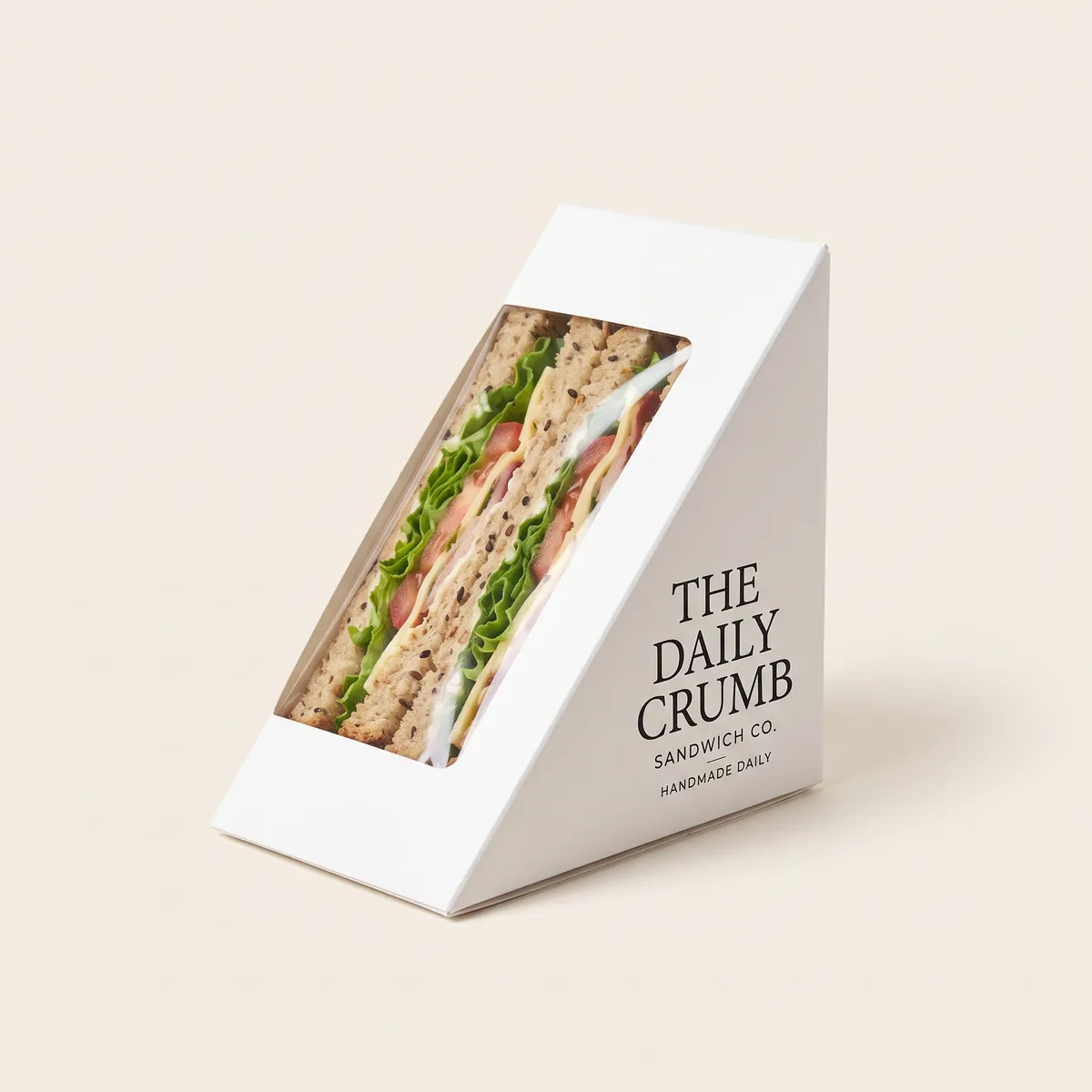
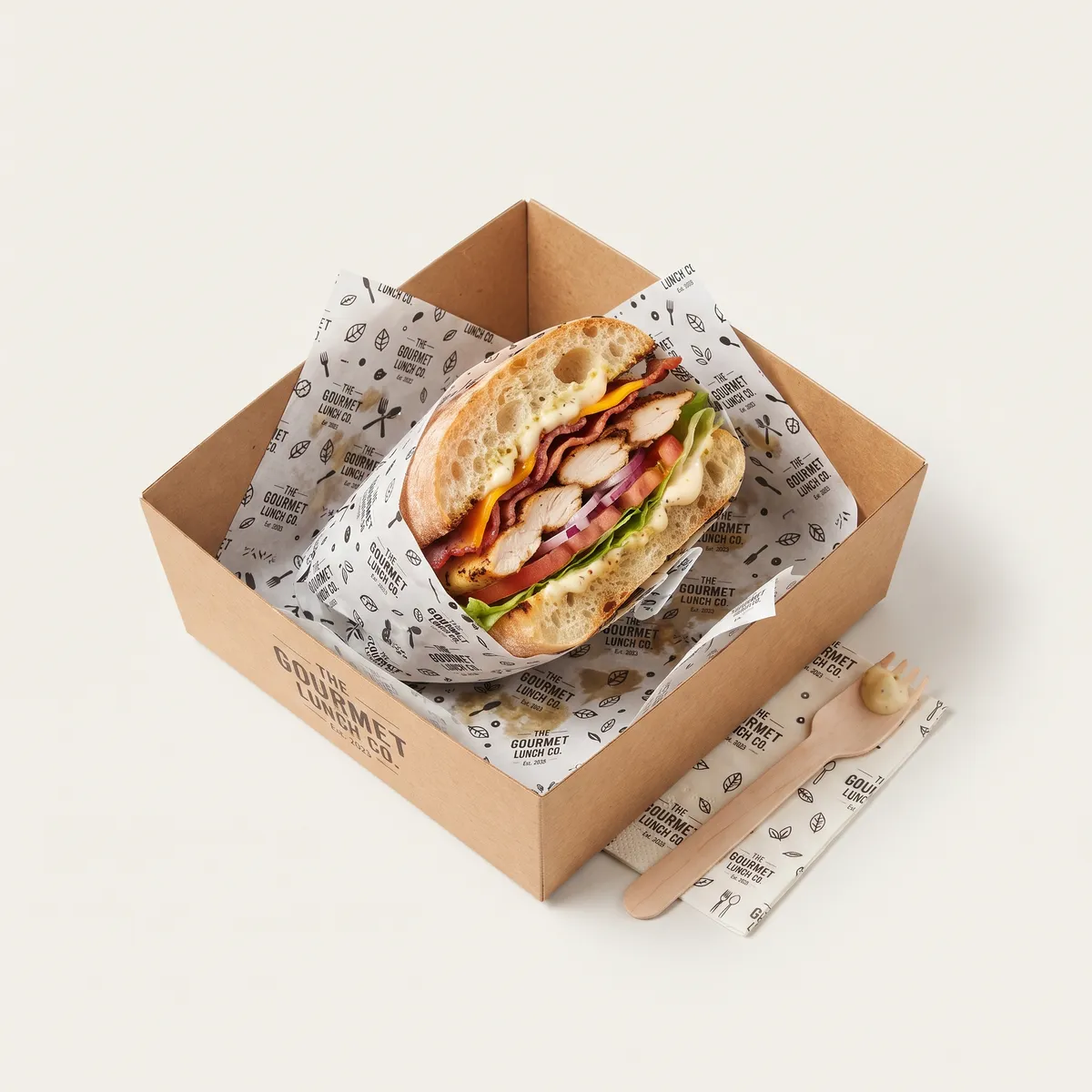
What brands say about this box
They live there rather than here, where we can't edit them, delete them, or pick which ones you get to see. That is exactly what makes them worth reading.
Read all reviews on Trustpilot(opens in a new tab)Answers before you have to ask.
What sizes do fry boxes come in?
Whatever your portions are — small, regular and large scoops are the usual three. We build to your actual serving volume rather than a standard, since a box sized wrong either overfills or looks mean.
Can fry boxes be grease-resistant?
Yes, and they should be. Fries release a lot of oil onto a small area of board, so a grease-proof face is essential. Without it the box darkens and softens before the customer sits down.
Are fry boxes cheaper than cartons?
Generally, since the die is simpler and they use less board. Scoops and open-top boxes cost less than closed cartons. The trade is that they don't hold heat as well, which matters over longer delivery times.
What's the turnaround on fry boxes?
Usually 8–12 business days once the proof is approved, across all portion sizes. Rush is available at an extra cost stated first, with shipping included on every order.
Can I order several fry sizes together?
Yes, and most operations need two or three. Running them together shares setup and keeps the design consistent across portions, which looks better than mismatched boxes on a tray.