
Cardboard Cigarette Boxes
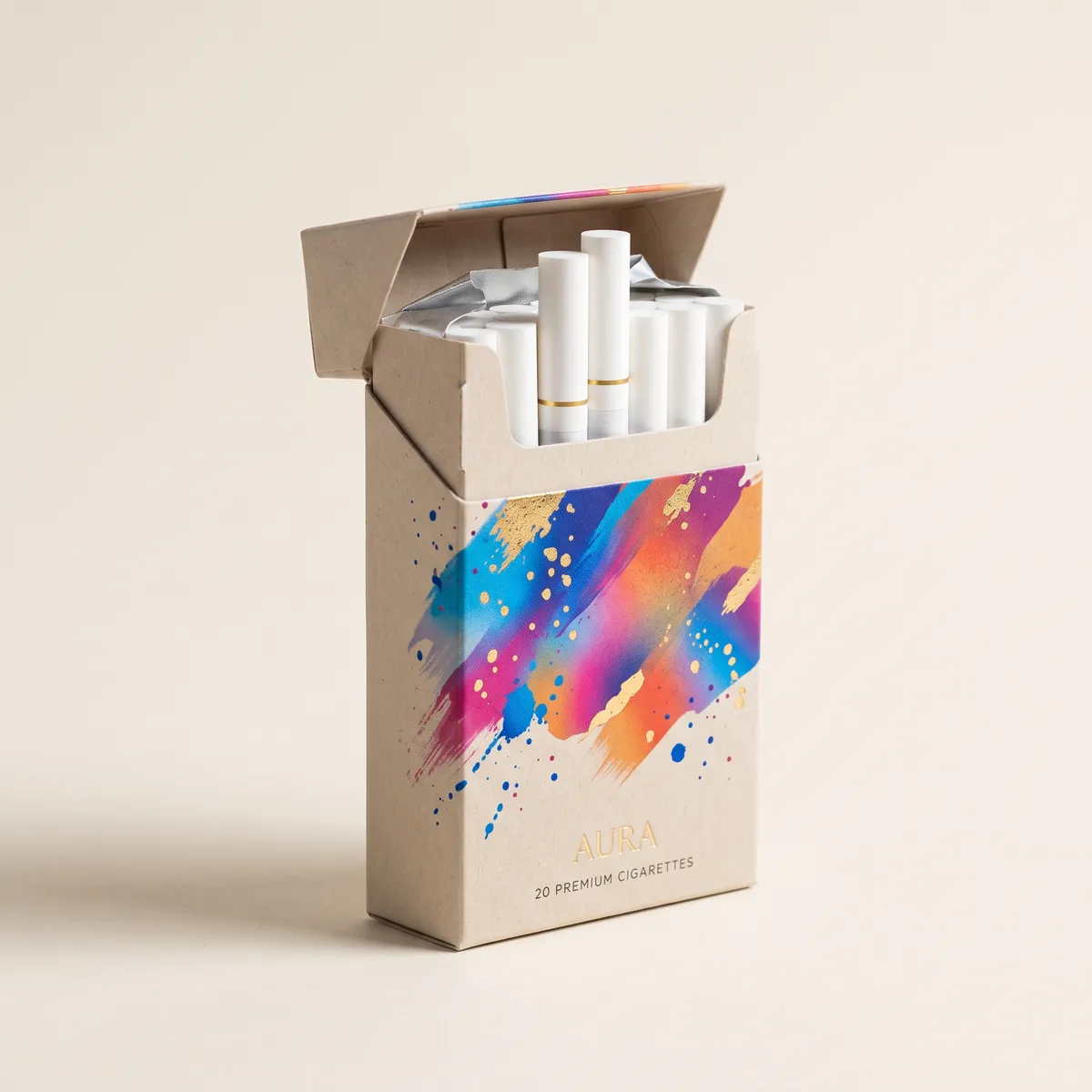
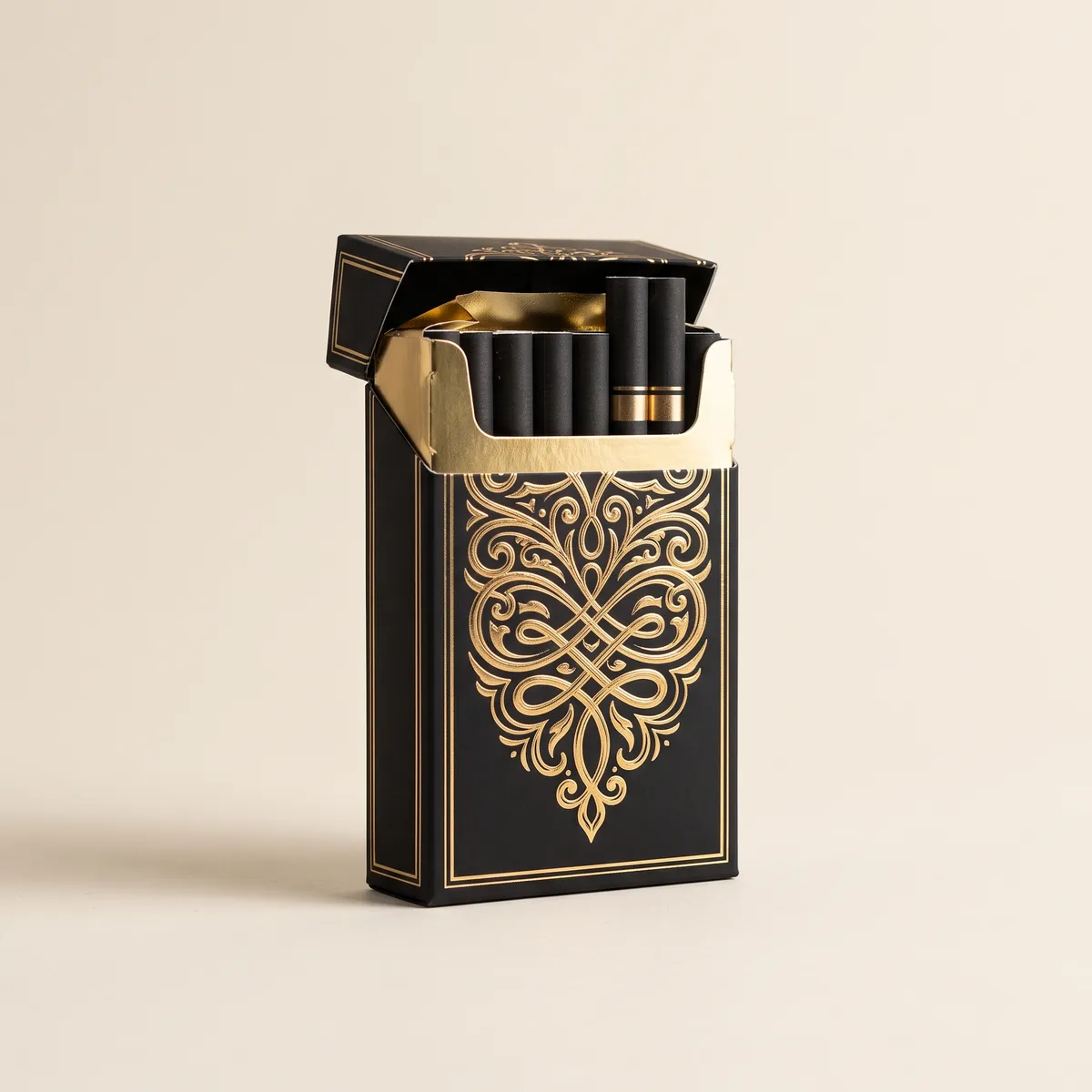
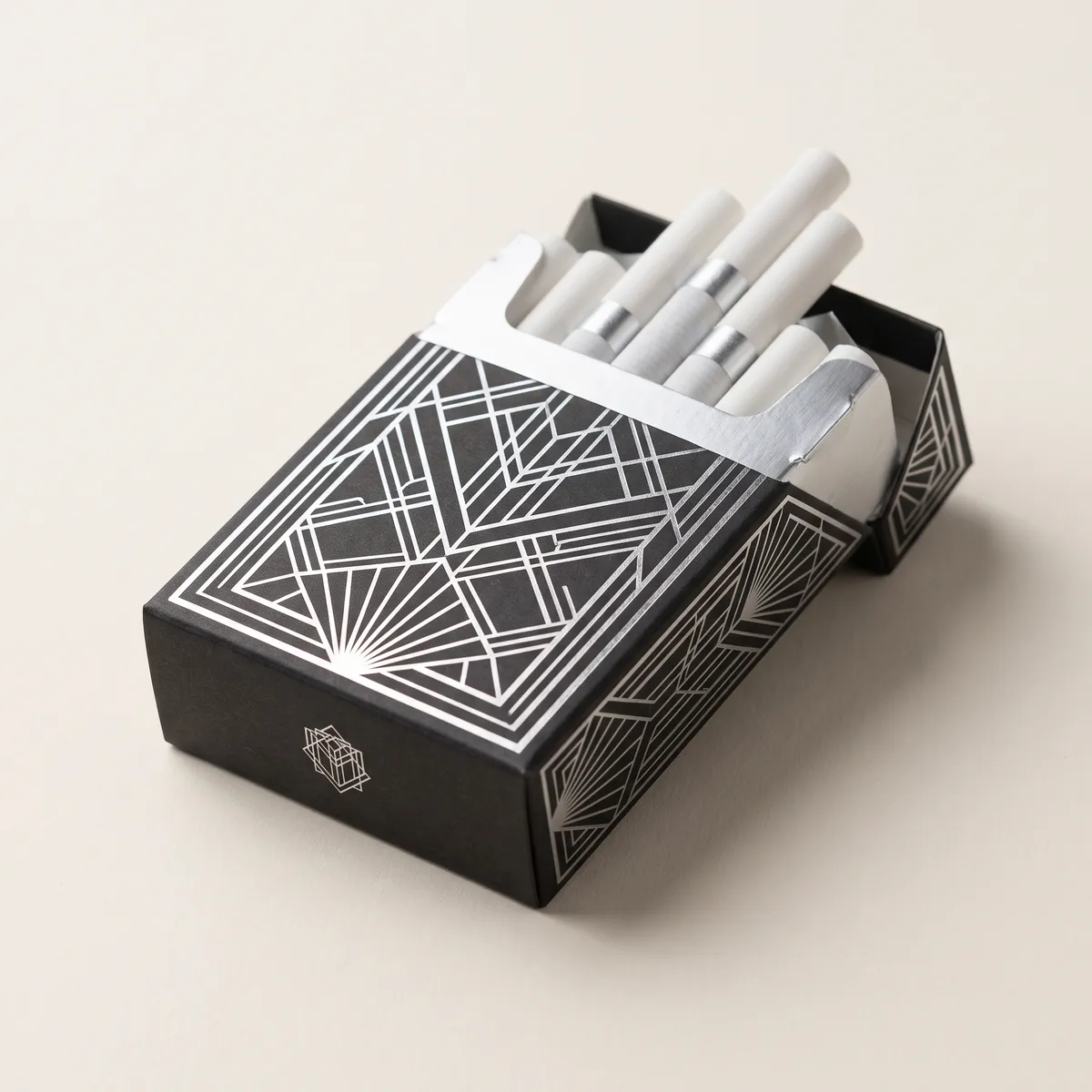
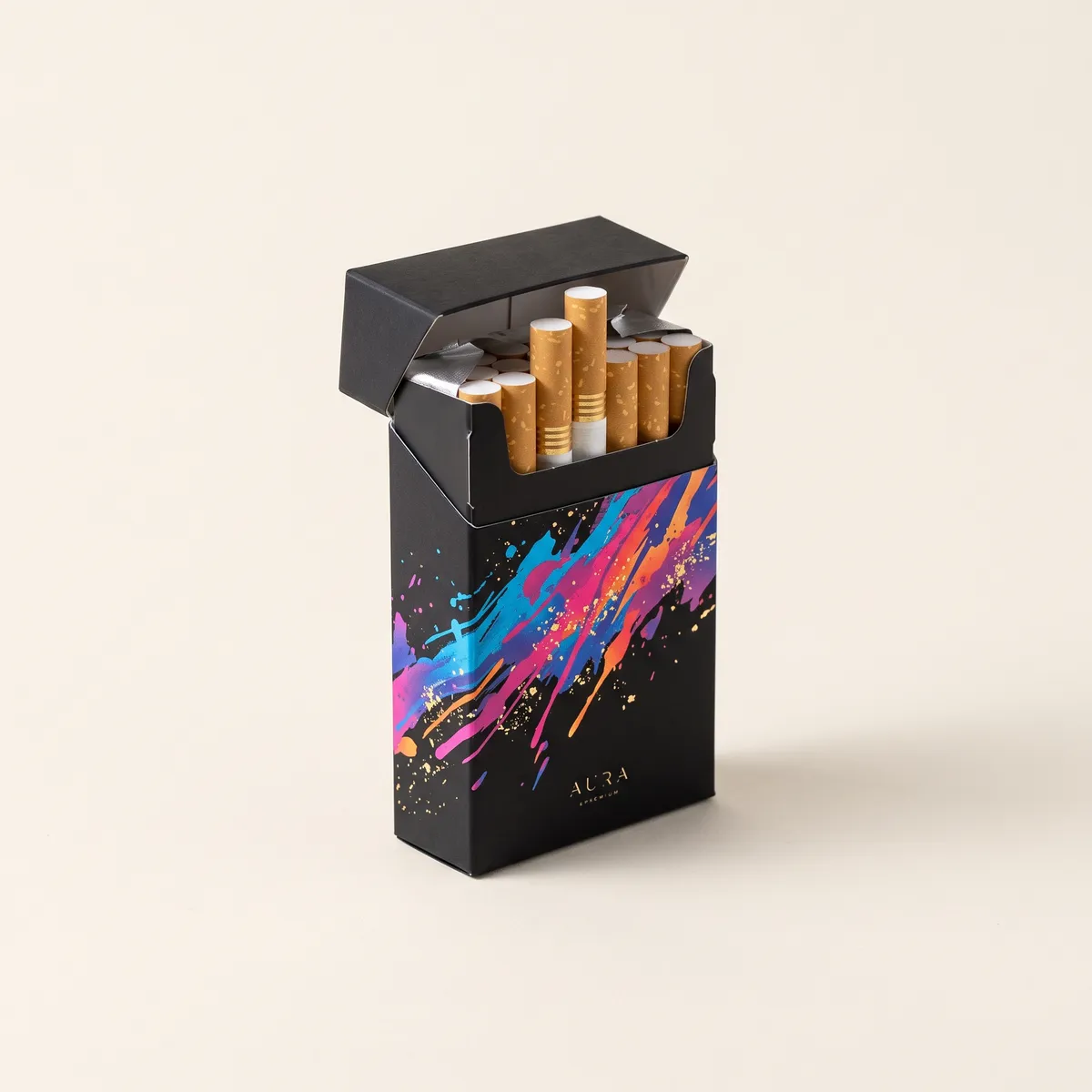
Cardboard cigarette boxes fold to tolerances often around a few tenths of a millimeter, because a pack that varies is obvious in the hand and can push warning panels out of position. Hinge-lid is the dominant format, usually assembled with an inner frame; shell-and-slide is the common alternative build. The board stays thin, since heavier stock makes the fold less precise.
Ours are on Trustpilot, where we can't edit them or choose which ones you see.
Read them on Trustpilot →(opens in a new tab)Four stages, twelve days
Quote confirmed
A specialist checks your spec against the board and comes back with a firm price inside 4 business hours.
Proof approved
You get a flat dieline and a 3D render. Nothing goes to press until you approve it in writing.
On press
Print, die-cut, glue, and fold. You get a press-side photo the day your job runs.
QC and delivery
Every pallet is sampled against the digital proof or physical sample you approved, then shipped with tracking to your dock or 3PL.
If a box doesn't match the digital proof or physical sample you approved, we reprint the run at no charge.
Read the reprint terms →Know exactly what you're ordering.
The Standard Cigarette Pack, Folded to a Repeatable Spec
This is the pack most people picture: a plain paperboard box, printed, folded and glued to the same dimensions every time. It carries a brand's core range rather than a special edition, which means it gets reordered more than anything else the brand buys, often for years. The buyer isn't choosing a look so much as locking a specification that the next run, and the one after it, has to match. Smokers handle the pack many times a day, so a lid that closes a little differently or a panel that sits slightly off shows up quickly. Everything on this page comes back to that point: the box is only as good as its next reorder.
Hinge-Lid and Shell-and-Slide Pack Specs
Both builds fold from low-caliper carton board, printed flat and glued to a fixed size.
| Spec | Hinge-lid | Shell-and-slide |
|---|---|---|
| Board | 12–20pt paperboard | 12–20pt paperboard |
| Tolerance | Around ±0.3–0.5mm | Around ±0.3–0.5mm |
| Construction | Fold-and-glue, attached lid | Inner tray in an outer shell |
| Inner parts | Inner frame, foil or metallized liner | Sliding inner tray |
| Size | Cut to your pack | Cut to your pack |
Dimensions are confirmed in writing as internal or external before the dieline is cut, because a pack this thin has no room to absorb a misread measurement, and a pack that comes out a fraction large won't fit the outer carton either.
Why Precision Folding Beats a Heavier Board
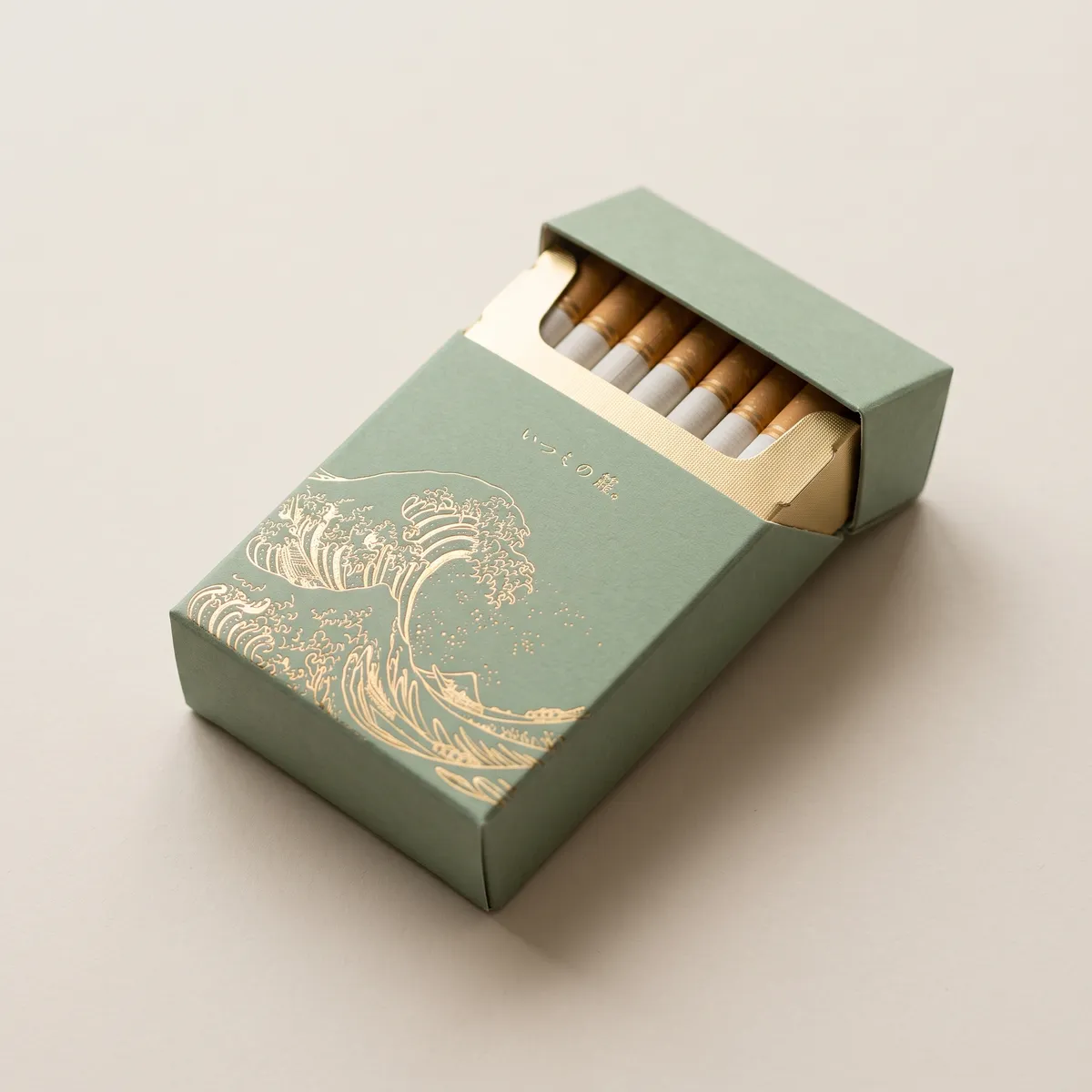
Buyers new to the category often assume thicker board means a better pack. Here it works the other way. A cigarette pack is a small, tight fold with an attached lid, and extra caliper bulks at the corners, pushes the lid off square and stiffens the hinge. The quality comes from the precision fold-and-glue carton itself: scores placed exactly, glue lines that don't creep, and a lid that seats the same way on the ten-thousandth pack as on the first. That's also why this page is about stock and folding rather than color. Black and green packs add a surface decision on top; this one keeps the money in the fold, where a smoker actually notices it.
Embossing and Liners That Hold Up Over Long Runs
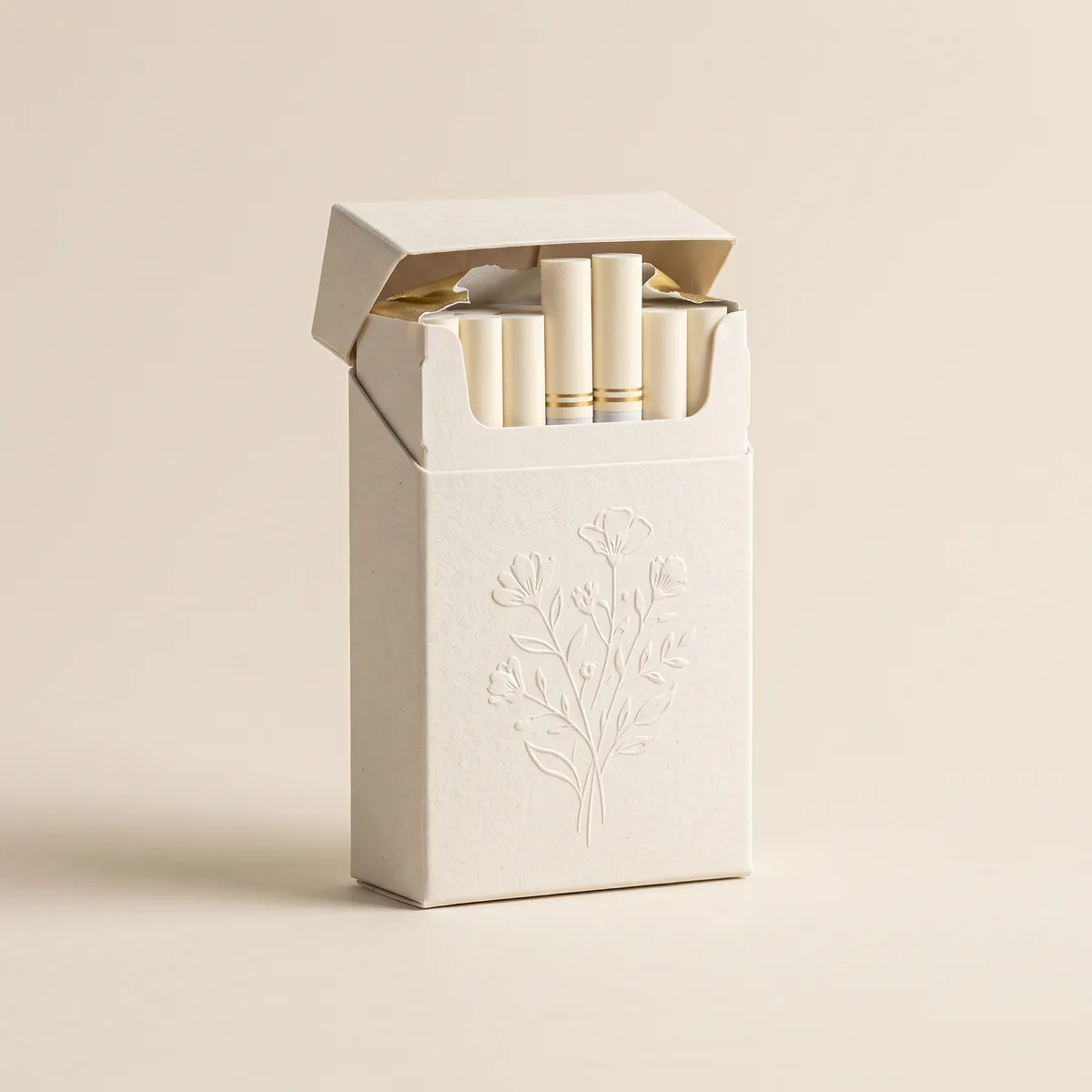
On a pack reordered for years, the finish that matters is the one that repeats. An embossed logo on the lid is the long-standing choice, since it adds feel without adding a color that has to be matched every run. A foil or metallized inner liner goes inside, and the inner frame holds the opening shape. Print at these volumes is usually offset, which pays back its plates quickly, with colors held to a recorded press baseline rather than a Pantone number alone. The one thing to avoid is fine foil detail running over the hinge, which flexes every time the pack opens. Keep foil to flat panels, or leave it off a core pack entirely and let print and emboss carry the brand.
Cardboard Cigarette Boxes for Core Ranges, Regional Brands and Repeat Runs
Core ranges are the main use: the everyday packs that make up most of a brand's volume and get ordered on a fixed cycle. Whatever the market, the brand confirms which warnings apply and where, and the layout keeps flat panel space for that copy. Regional and smaller tobacco brands use the same build to match the fit and finish of larger names without moving to heavier or costlier packaging. Brands extending a range use it as the base that black, green and limited packs grow from, so variants can share one dieline. The same buyers often handle e-cigarette and pod packaging too, where small formats and fixed panel positions raise the same question of where the warnings sit and how to keep them there run after run.
Keeping Every Reorder on the Same Baseline
The first order sets the reference for every one that follows, so it's worth getting right. Send your pack dimensions and current artwork; we build the dieline, confirm the measurements in writing and send a proof, with unlimited free revisions until it's right. From then on, the approved proof is the standard each reorder is measured against. Orders start at 100 boxes, which is enough to check fit on your packing line before a full run, and free samples are available on orders above 10,000. Hinge-lid and shell-and-slide both take 8–12 business days from proof approval, and rush is available at a cost quoted upfront. Shipping is included, and if bulk misses the approved proof, we reprint at our cost.
One connected process, start to finish.
Structural Design
Dieline drafted to your exact fit and freight tolerances.
Proof & Sample
Sign off on a digital proof, or request a physical sample.
Tooling
Dies and plates are cut for your job and archived on file.
Production
Print, die-cut, and assembly run under in-line quality checks.
Ship & Reorder
Freight goes out, and the cycle resets for your next run.
Steady process. Powerful results.
Like everything we build, our process is engineered to hold up — no shortcuts, no surprises. Five dependable stages that run the same way every single time, so reorders are just as fast as the first order.
- One dedicated teamFrom first sketch to final freight, the same people carry your order start to finish.
- Dies archived on fileReorders skip tooling and re-setup entirely — we already have your exact spec.
- Checked against your sign-offEvery run is inspected against the digital proof or physical sample you approved.
Set up your file once, correctly
Nine in ten delayed jobs are delayed by artwork, not production. Match these four rules and your proof lands the next morning.
- Bleed1/8 in (3 mm) past every cut line
- Safe ZoneKeep text 1/4 in clear of every crease
- ColourCMYK or named Pantone. No RGB.
- Resolution300 dpi at final size, fonts outlined
No print-ready file?
Send a logo and a rough idea. Our studio builds the production file free with any order over 500 units — you keep the source file either way.
Ask the StudioBackground art must run all the way to the outer bleed edge. Anything inside the white dashed line survives fold tolerance.
What brands say about this box
They live there rather than here, where we can't edit them, delete them, or pick which ones you get to see. That is exactly what makes them worth reading.
Read all reviews on Trustpilot(opens in a new tab)Answers before you have to ask.
What tolerance do cigarette packs need?
Tighter than almost any other packaging — often around a few tenths of a millimeter. A pack that varies is immediately obvious in a customer's hand and can put warning panels out of required position.
Can cardboard cigarette boxes be hinge-lid?
Yes, and it's the dominant format. A hinge-lid pack is a precision fold-and-glue build with an attached lid, usually with an inner frame. Shell-and-slide is the other common option.
How thin is cigarette board typically?
Thinner than most packaging — typically in the low caliper range, so it folds crisply into a hinge-lid without bulking. Going heavier doesn't improve it; it makes the fold less precise.
What's the turnaround on cardboard cigarette boxes?
Around 8–12 business days from proof approval, whether hinge-lid or shell-and-slide. Rush is available at an added cost stated before you order, with shipping included.
Can cardboard cigarette boxes be reordered consistently?
Yes, and consistency is the point in this category. We hold your spec and press baseline on file so repeat runs match, and every run passes a three-stage check before dispatch.