
Window Candle Boxes
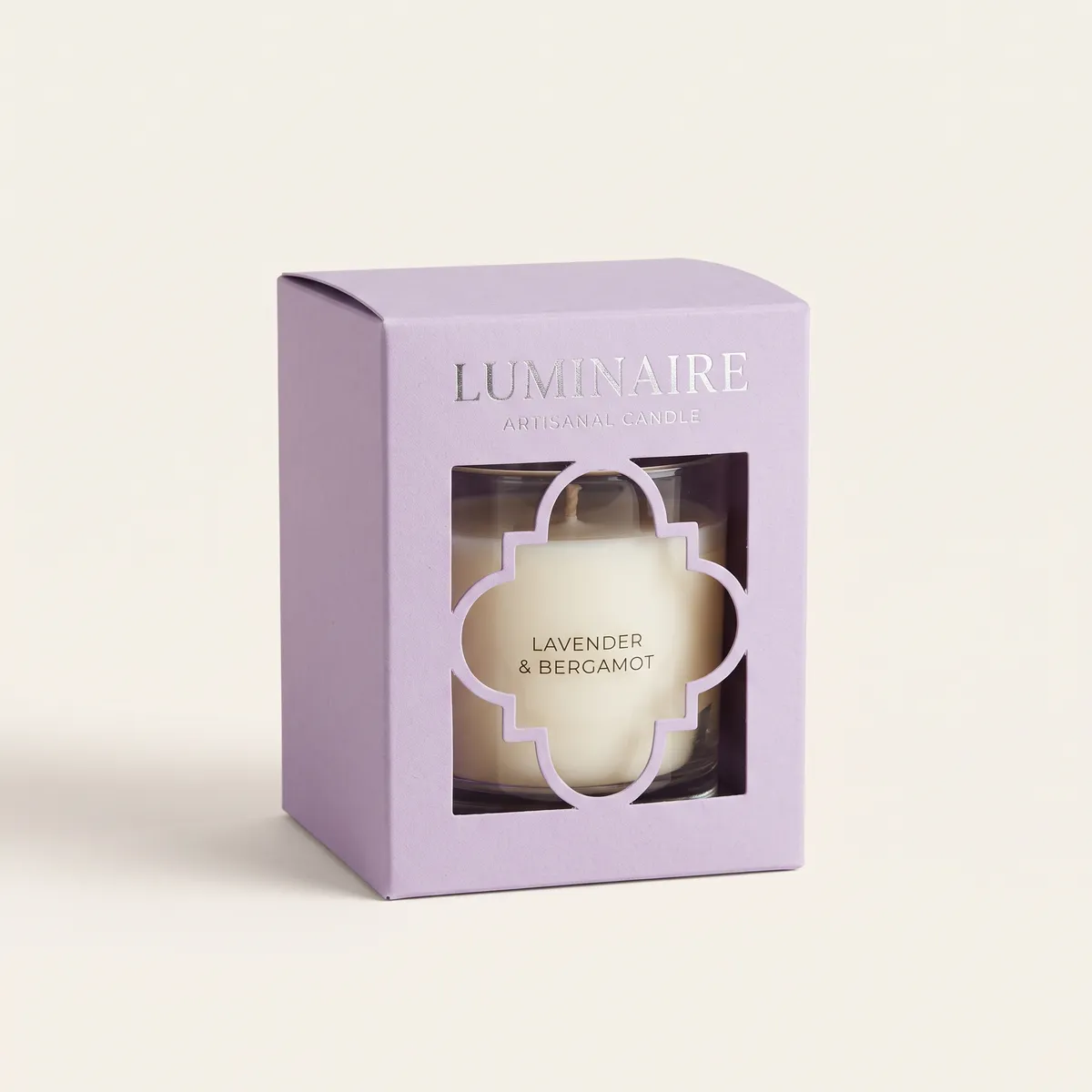
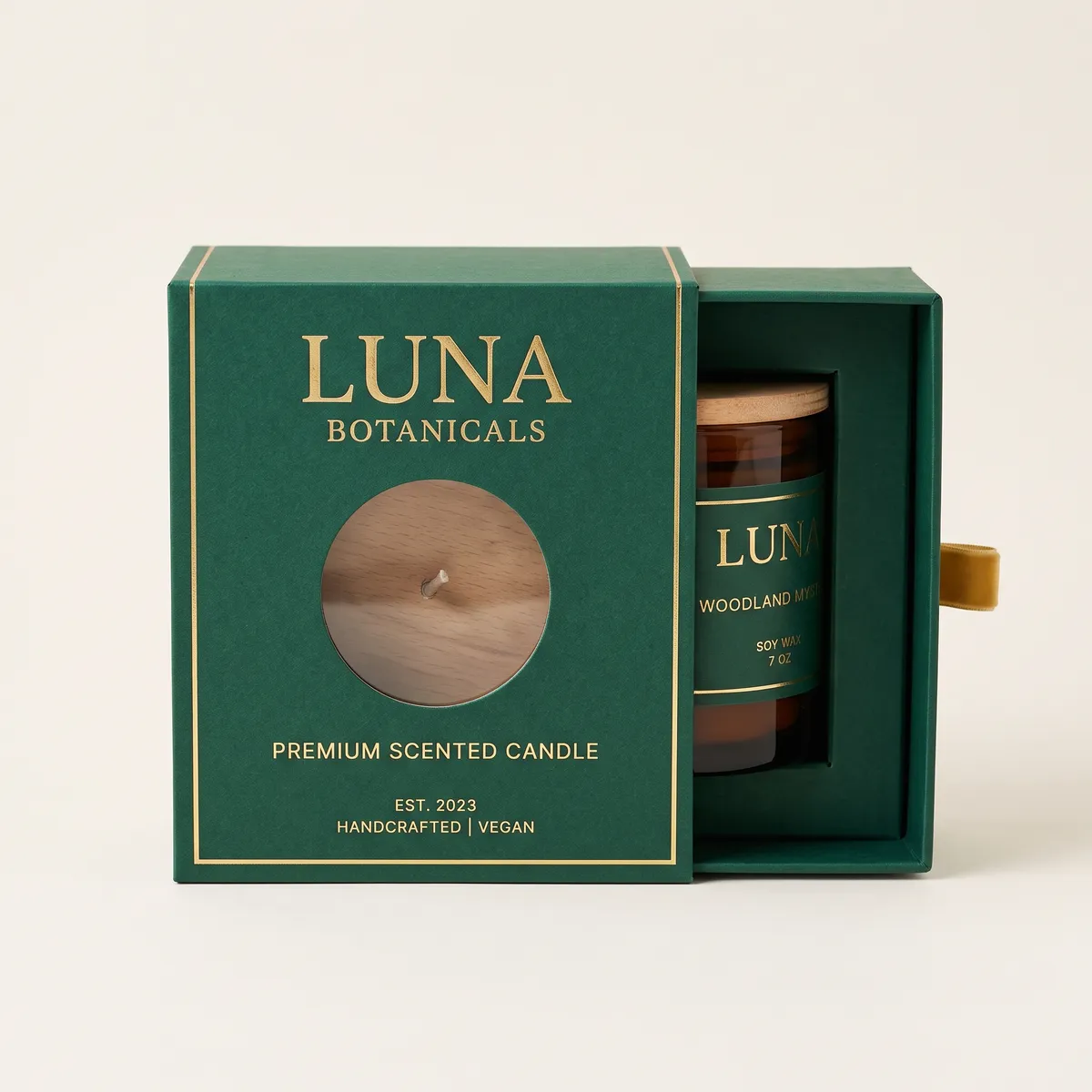
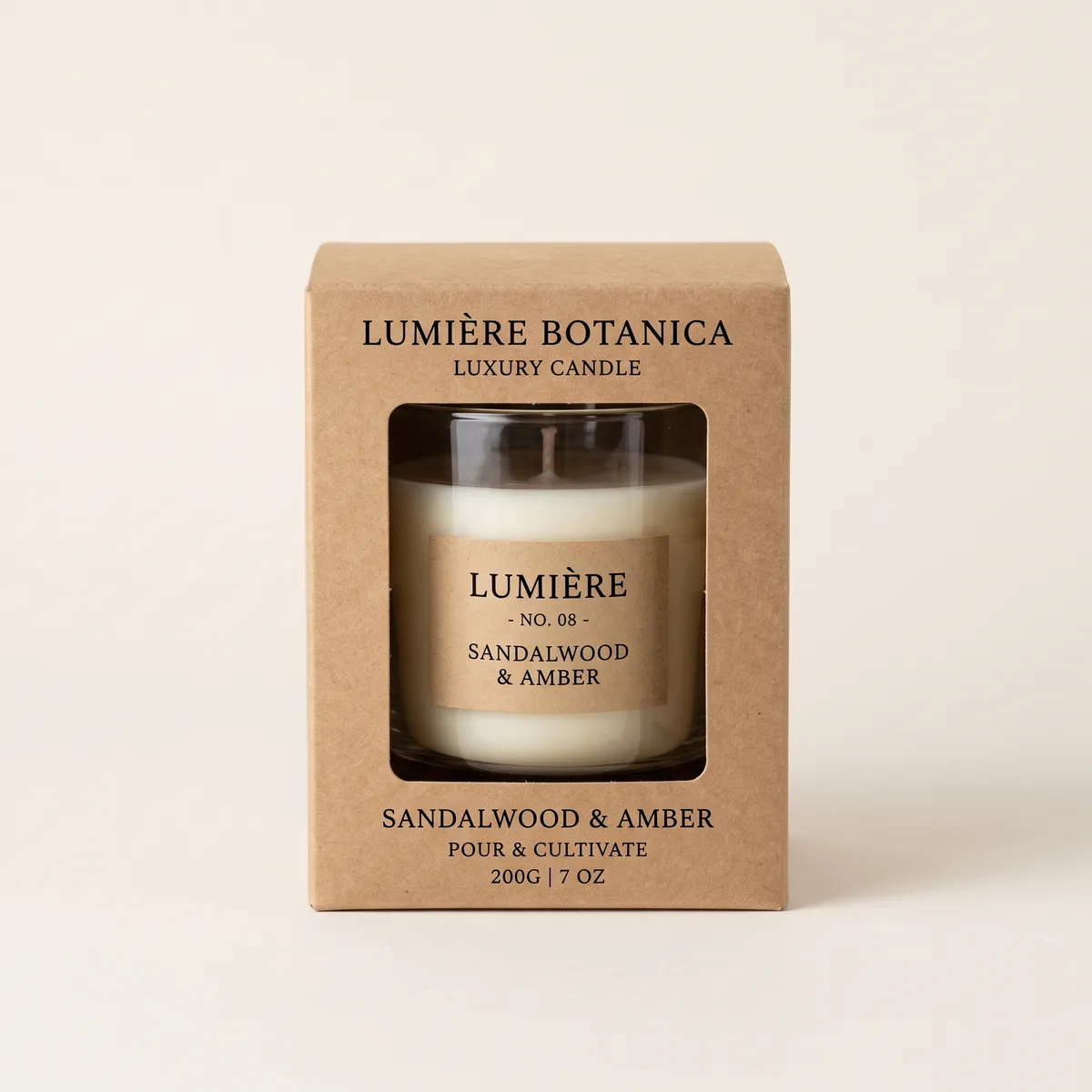
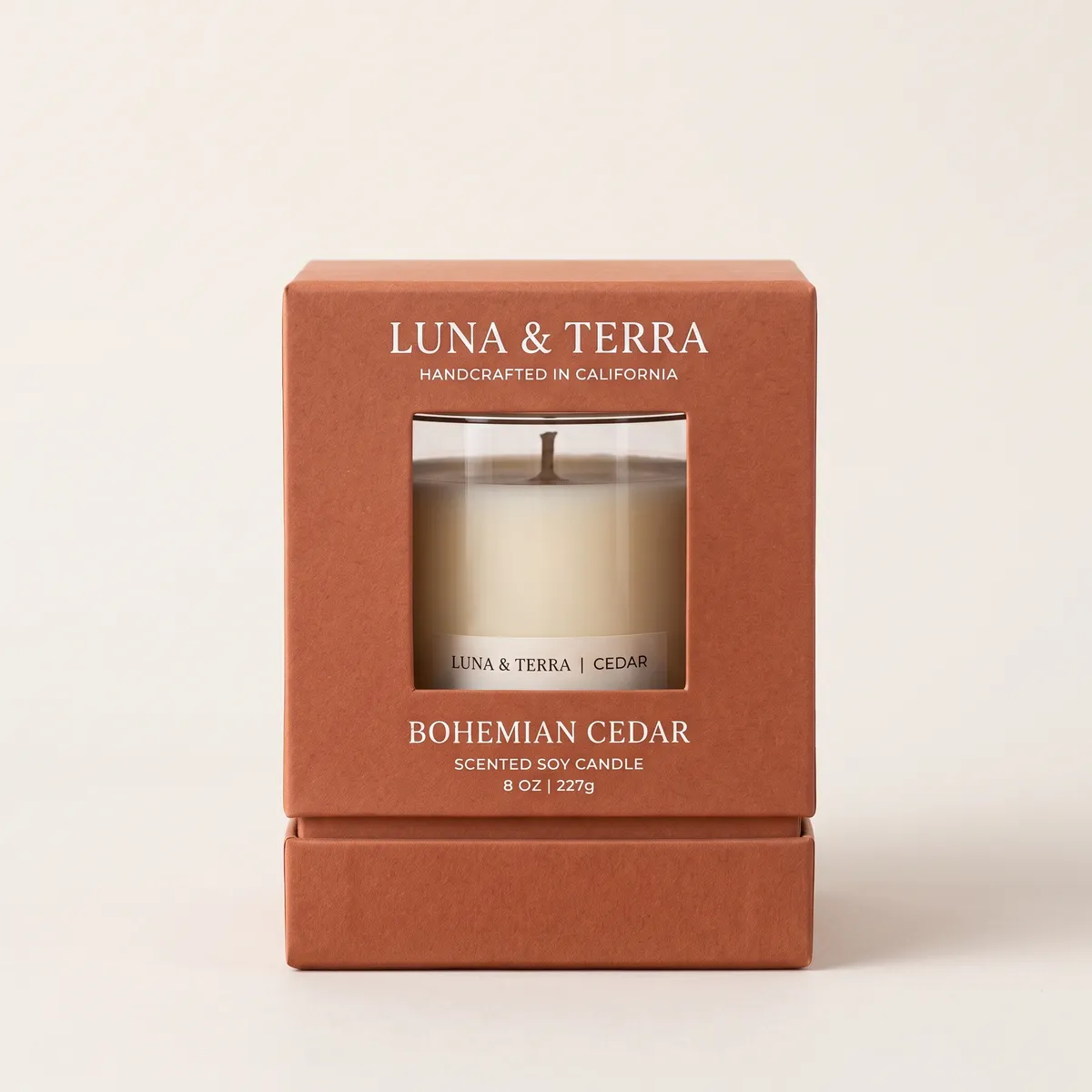
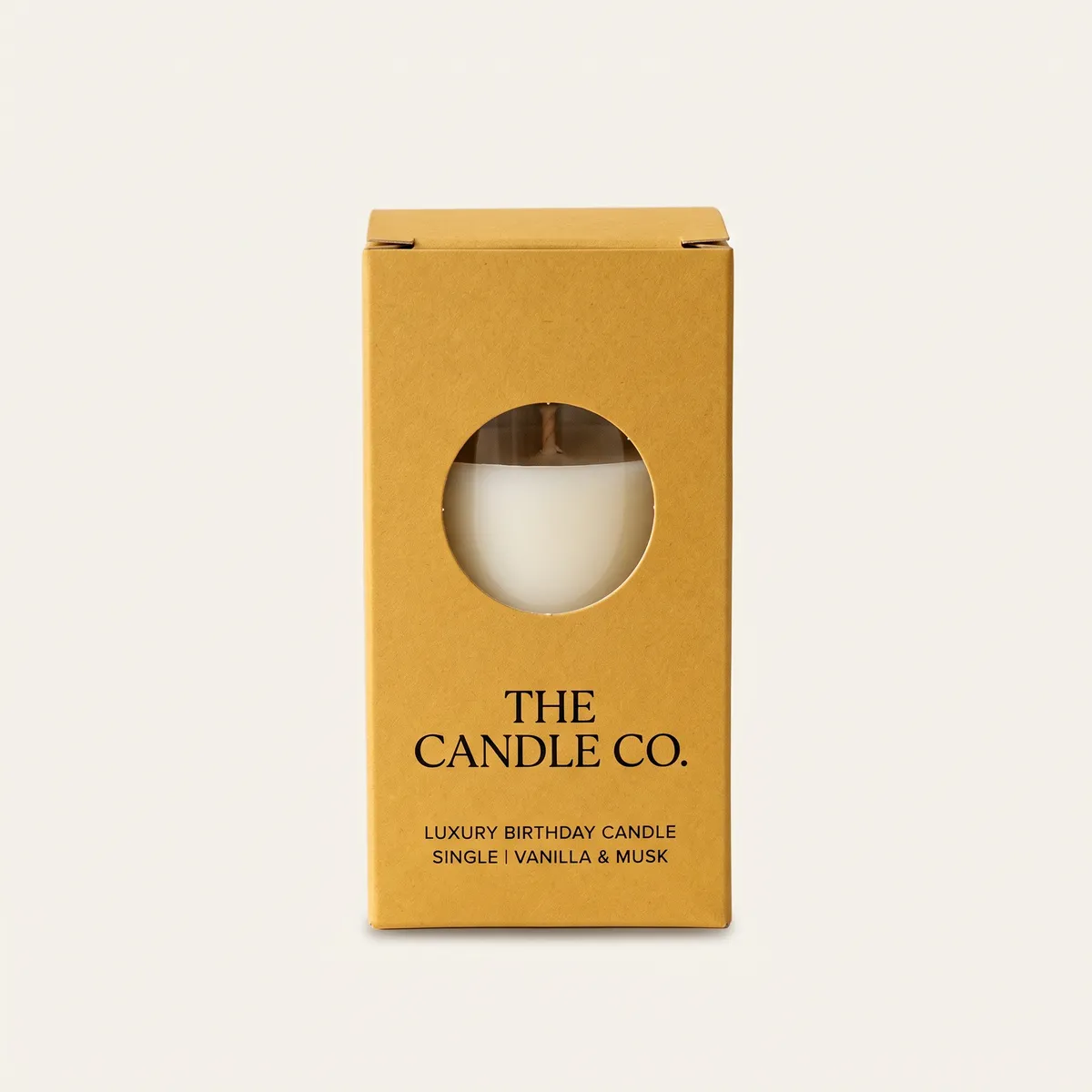
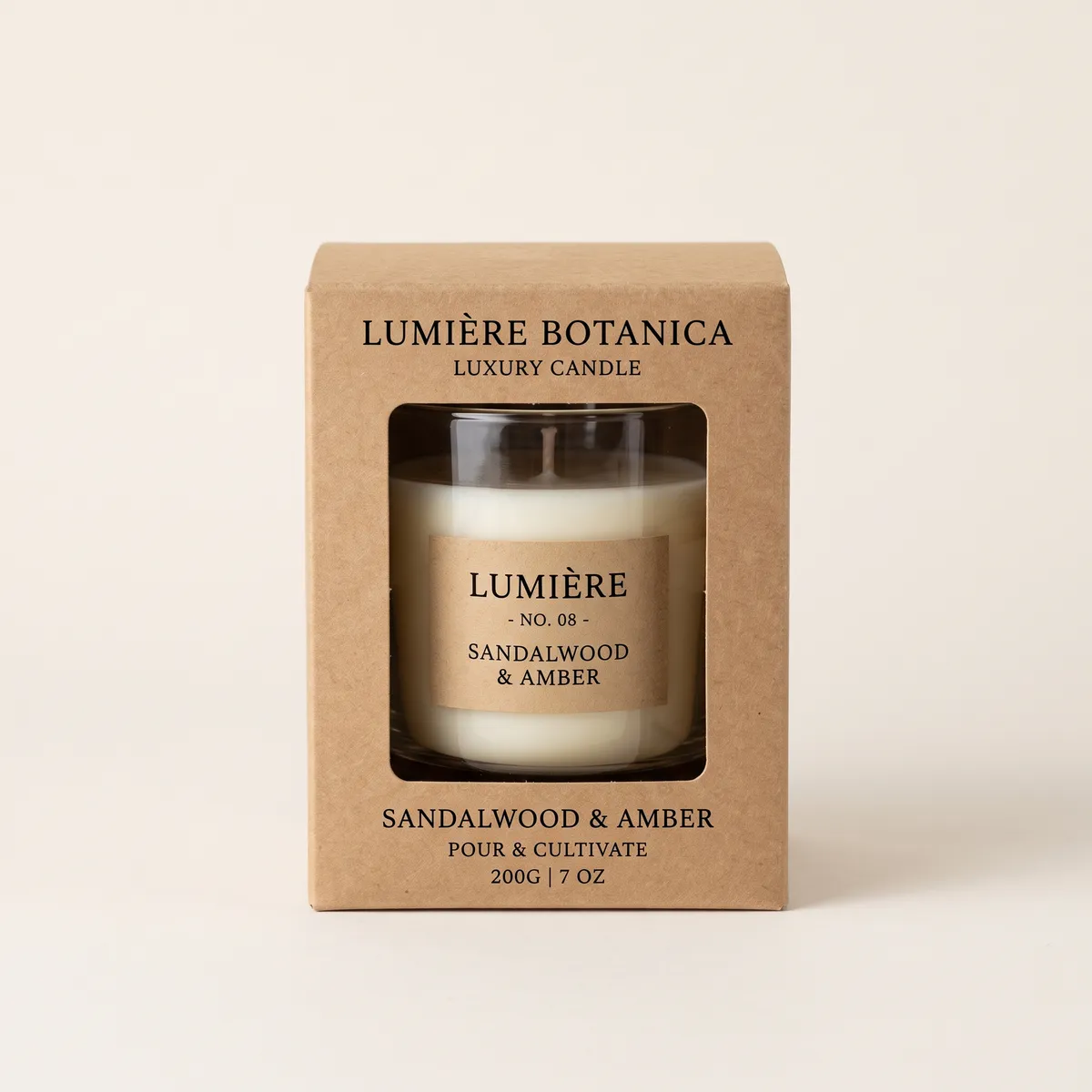
Window candle boxes show the vessel and wax color through the front panel; for jar candles, a taller window outperforms a wider one, displaying the fill depth as well. A fitted insert is essential: without one, a heavy jar presses against the film and can crack it in transit. We position the window away from structural corners, so the panel retains its strength under load.
Ours are on Trustpilot, where we can't edit them or choose which ones you see.
Read them on Trustpilot →(opens in a new tab)Four stages, twelve days
Quote confirmed
A specialist checks your spec against the board and comes back with a firm price inside 4 business hours.
Proof approved
You get a flat dieline and a 3D render. Nothing goes to press until you approve it in writing.
On press
Print, die-cut, glue, and fold. You get a press-side photo the day your job runs.
QC and delivery
Every pallet is sampled against the digital proof or physical sample you approved, then shipped with tracking to your dock or 3PL.
If a box doesn't match the digital proof or physical sample you approved, we reprint the run at no charge.
Read the reprint terms →Know exactly what you're ordering.
Selling Wax Color Through the Front Panel
In a shop, candle customers want to look before they buy, and a closed box gives them two options: guess, or open it. Opened boxes are the ones that end up with fingerprints on the jar, torn flaps and a lid put back crooked, and they're the last to sell. A window answers the question without anyone touching the product. It earns its place most when the wax itself is part of the appeal: tinted wax, a two-tone pour, botanicals set into the surface, or a vessel with an interesting color or texture. For a plain white candle in a frosted jar, a window shows very little, and a well-printed panel will do more for the sale.
Window Candle Box Specs: Film, Cut-Out Position and Insert
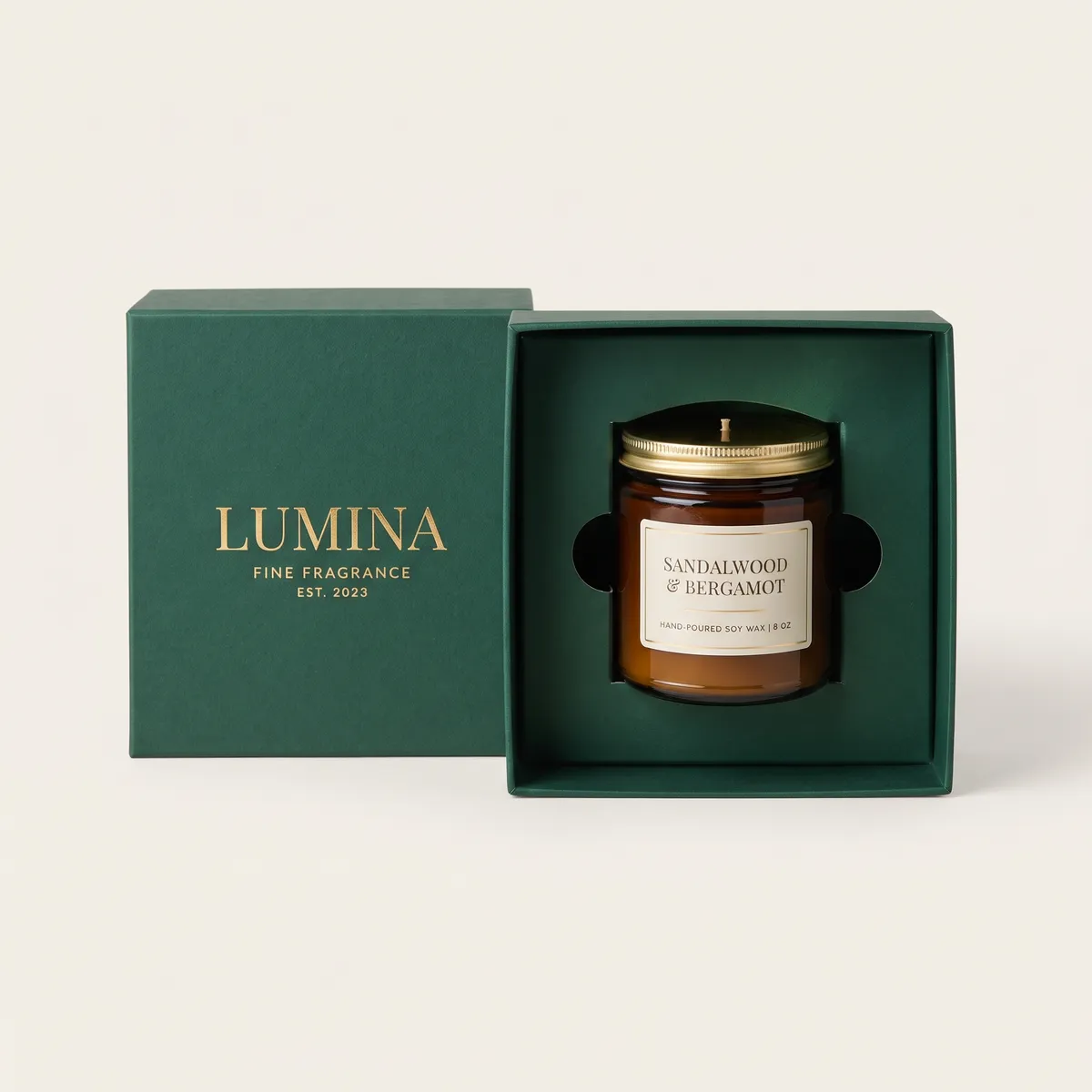
The outer is commonly white coated carton stock framing the window, with clear film backing the cut-out and an insert holding the jar off the film.
| Attribute | Specification |
|---|---|
| Window | Die-cut, film-backed |
| Position | Front face, clear of structural corners |
| Shape | Taller than wide for jar candles |
| Insert | Cut to vessel diameter and height |
| Insert tolerance | ±0.5mm |
| Box tolerance | ±1mm |
The window is drawn on the dieline against your vessel measurements, so the proof shows exactly which part of the jar will be visible: the label, the wax line, or both. Moving it a few millimeters at proof stage costs nothing.
Why a Windowed Folding Carton Rather Than an Open Tray
Showing the candle doesn't require leaving it exposed. An open tray or a short sleeve displays more of the jar, but the top of the candle gathers dust on the shelf and the wick gets touched by every curious customer. Most window candle boxes are made as a front-windowed tuck carton instead, where the film shows the wax and vessel while the closed carton keeps the candle clean and the boxes stackable. The tuck ends also let you pack the jar from top or bottom without disturbing the window panel. Open formats still suit tins and travel sizes, where the lid is part of the vessel. For a jar candle sold on a shop shelf, the windowed carton is the better balance.
Print That Frames the Jar Instead of Competing With It
The window should be the focal point, so the printing around it works as a frame rather than a second feature. Keep the logo above or below the cut-out, not beside it, so the eye moves straight from brand to wax. Place the scent name close to the window, since that's where the customer is already looking. A thin printed border around the opening gives the cut edge a clean, finished line. Coated board takes gloss or matte lamination, and foil works well for the logo. Avoid busy patterns on the front panel; they compete with the wax color you're trying to show. Save detailed copy, such as burn time and ingredients, for the side and back panels.
Window Candle Boxes for Tinted Wax, Dried Florals and Craft Fairs
Window candle boxes suit makers whose wax is the selling point. Candles with tinted or layered wax, where two or three colors sit in visible bands, lose their appeal in a solid box. Makers pressing dried florals or citrus peel into the top surface use a window placed higher on the panel so the decoration shows. Craft fair sellers like them because customers can browse a table of boxed candles without opening any. Many candle studios share stalls and suppliers with glycerin and clear soap makers, and a windowed box lets both ranges show their color the same way. Gift shops carrying many scents use windows so staff can restock by color without checking labels.
Checking the Window Against Your Vessel at 100 Boxes
Nothing judges a window like your own jar behind it. With a first run of 100 boxes, put a few on a shelf and look at them from a customer's distance: does the window catch the wax line, does the label sit centered, does the jar stay put when the box is tipped? Production takes 8–12 business days from proof approval, with the window and insert included. Rush is available at an added cost, quoted before you commit. Send us the vessel's diameter, height and label position, and we'll mark the window on the dieline so you see it on the proof. Revisions are free and unlimited. If the run doesn't match the signed proof, we reprint at our cost, and shipping is already included.
One connected process, start to finish.
Structural Design
Dieline drafted to your exact fit and freight tolerances.
Proof & Sample
Sign off on a digital proof, or request a physical sample.
Tooling
Dies and plates are cut for your job and archived on file.
Production
Print, die-cut, and assembly run under in-line quality checks.
Ship & Reorder
Freight goes out, and the cycle resets for your next run.
Steady process. Powerful results.
Like everything we build, our process is engineered to hold up — no shortcuts, no surprises. Five dependable stages that run the same way every single time, so reorders are just as fast as the first order.
- One dedicated teamFrom first sketch to final freight, the same people carry your order start to finish.
- Dies archived on fileReorders skip tooling and re-setup entirely — we already have your exact spec.
- Checked against your sign-offEvery run is inspected against the digital proof or physical sample you approved.
Set up your file once, correctly
Nine in ten delayed jobs are delayed by artwork, not production. Match these four rules and your proof lands the next morning.
- Bleed1/8 in (3 mm) past every cut line
- Safe ZoneKeep text 1/4 in clear of every crease
- ColourCMYK or named Pantone. No RGB.
- Resolution300 dpi at final size, fonts outlined
No print-ready file?
Send a logo and a rough idea. Our studio builds the production file free with any order over 500 units — you keep the source file either way.
Ask the StudioBackground art must run all the way to the outer bleed edge. Anything inside the white dashed line survives fold tolerance.
What brands say about this box
They live there rather than here, where we can't edit them, delete them, or pick which ones you get to see. That is exactly what makes them worth reading.
Read all reviews on Trustpilot(opens in a new tab)Answers before you have to ask.
Where should the window sit on a candle box?
Usually the front face, positioned so the vessel and wax color show rather than the lid. For jar candles a taller window works better than a wide one, since it shows the fill depth as well as the color.
Can window boxes still hold an insert?
Yes, and they usually should. The window shows the vessel while the insert stops it sliding into the film. Without an insert the jar presses against the window and can crack it in transit.
Does a window weaken the box?
Slightly, since you're removing board from a panel. On candle boxes it matters more than most because the jar is heavy, so we position the window away from structural corners and keep the insert doing the load work.
What's the lead time on window candle boxes?
Around 8–12 business days from proof approval, window and insert included. Rush production is available at an extra cost we'll state before you commit.
Can I test window boxes before scaling?
Yes. At 100 boxes you can check how the window frames your vessel and whether the insert holds it properly, then scale with real information rather than a guess.