
Tie Boxes
Tie boxes run long and slim because a tie folded into a shorter box develops a crease that won't come out; it has to lie flat or roll loosely. Individual dividers stop multi-tie gift sets rubbing against each other. Since ties are frequently purchased as gifts, rigid earns its cost more often here than elsewhere across apparel. Rigid takes 20 business days, folding 8–12.
Ours are on Trustpilot, where we can't edit them or choose which ones you see.
Read them on Trustpilot →(opens in a new tab)Four stages, twelve days
Quote confirmed
A specialist checks your spec against the board and comes back with a firm price inside 4 business hours.
Proof approved
You get a flat dieline and a 3D render. Nothing goes to press until you approve it in writing.
On press
Print, die-cut, glue, and fold. You get a press-side photo the day your job runs.
QC and delivery
Every pallet is sampled against the digital proof or physical sample you approved, then shipped with tracking to your dock or 3PL.
If a box doesn't match the digital proof or physical sample you approved, we reprint the run at no charge.
Read the reprint terms →Know exactly what you're ordering.
Tie Boxes Sized Around a Tie That Can't Be Folded
A tie box is one of the few pieces of apparel packaging where the garment fixes one dimension and leaves the others open. A single tie, a tie with a pocket square, or a set of three all need the same internal length; only the width and depth change. The buyers are neckwear makers, menswear retailers, formal-wear and wedding suppliers, and companies ordering branded ties for staff or clients. Many of those ties are bought for someone else, so the box usually arrives at a counter or a table rather than through a mailbox. That shifts the job toward presentation: the box needs to open well, hold the tie still, and look as though it was chosen on purpose.
Tie Box Build: Rigid Case, Folding Option and Internal Length
Premium tie boxes are usually rigid, using a grayboard case that won't bow along its length. A long, narrow box is where a light carton flexes first, so board choice matters more here than on a square box.
| Attribute | Rigid build | Folding build |
|---|---|---|
| Board | 2–3mm grayboard, wrapped | Coated paperboard |
| Internal length | Set by the tie flat or rolled | Set by the tie flat or rolled |
| Width | One tie, or set by tie count | One tie, or set by tie count |
| Dividers | Optional, spaced to tie width | Optional, spaced to tie width |
| Tolerance | ±1mm | Built to your confirmed dieline |
A rolled tie needs a shorter, deeper box; a flat tie needs the full length. Tell us which before the dieline is drawn.
The Long Lid-and-Tray and Why Neckwear Needs It
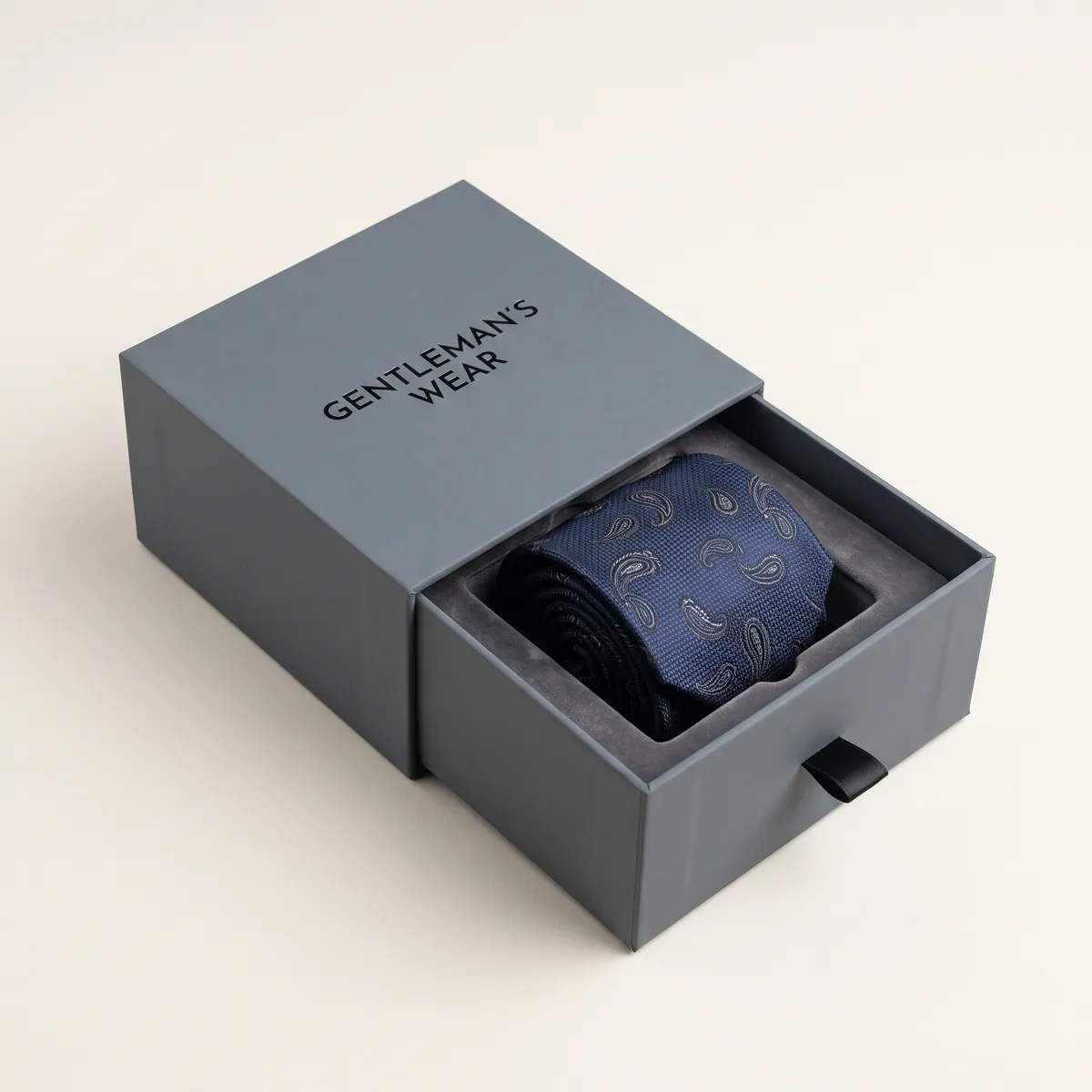
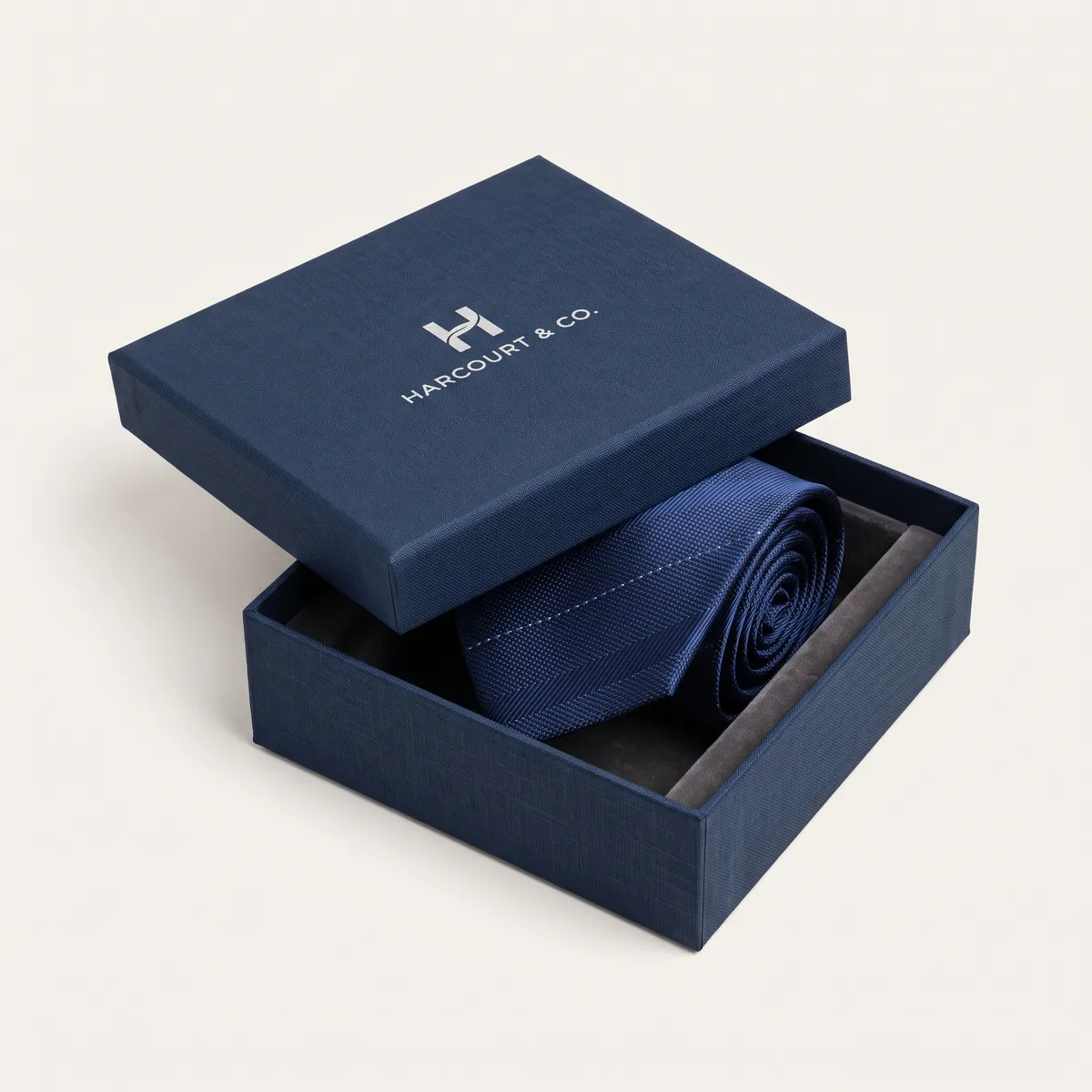
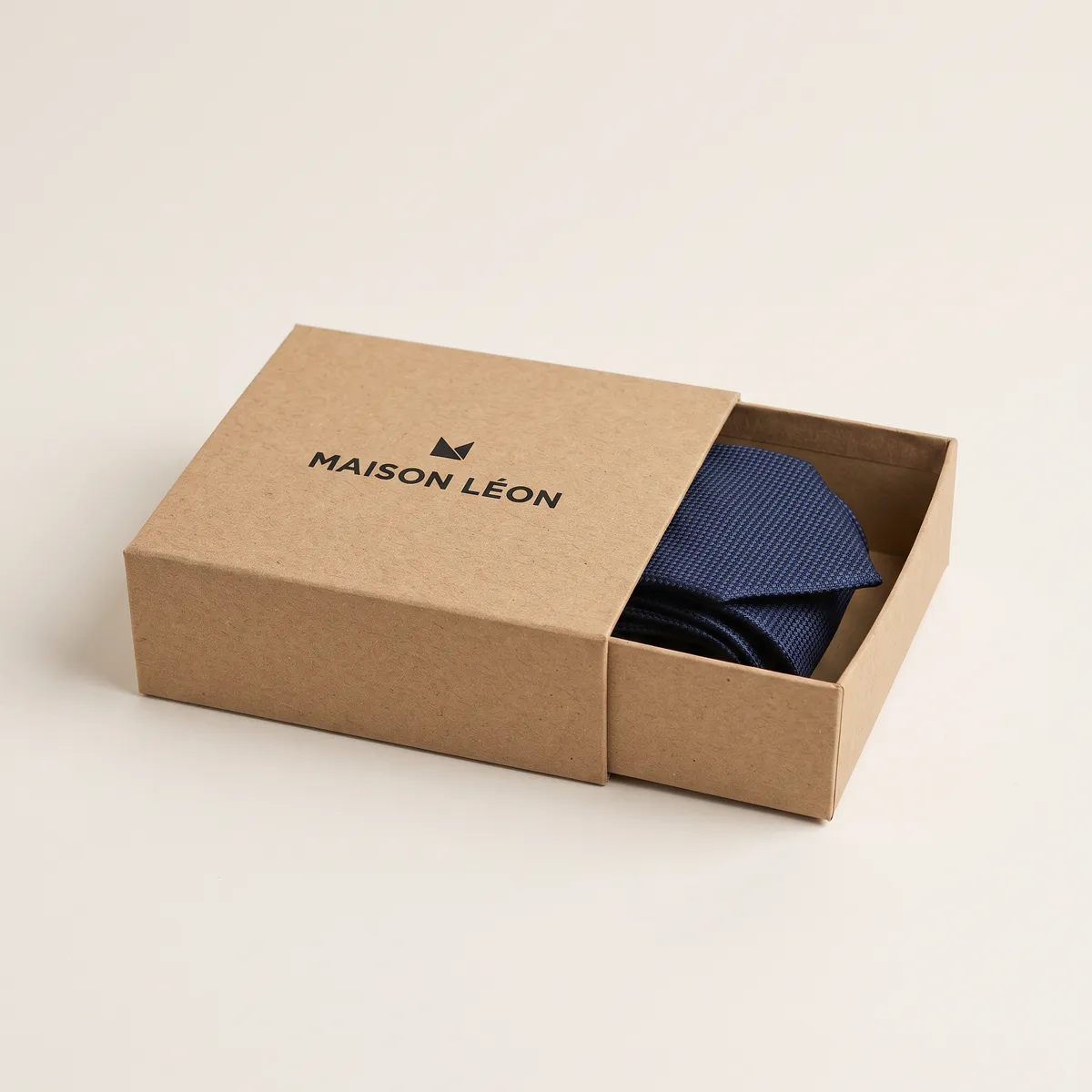
A tie laid along a base and lifted out from above never has to bend, slide or be threaded through an opening, so tie boxes are commonly made as a long lid lifting off a slim tray. Compare that with a sleeve or tuck-end, where the tie is pushed in from one end and the silk can catch on the board edge or bunch at the tip. A lid also lets the person giving it open the box, check the tie and close it again without any wear showing. The format uses more board than a slim carton, and on a plain tie sold in volume that may not be worth it. On a silk tie, a set or anything given as a present, it usually is.
Foil, Wrap Paper and Insert Choices for Neckwear
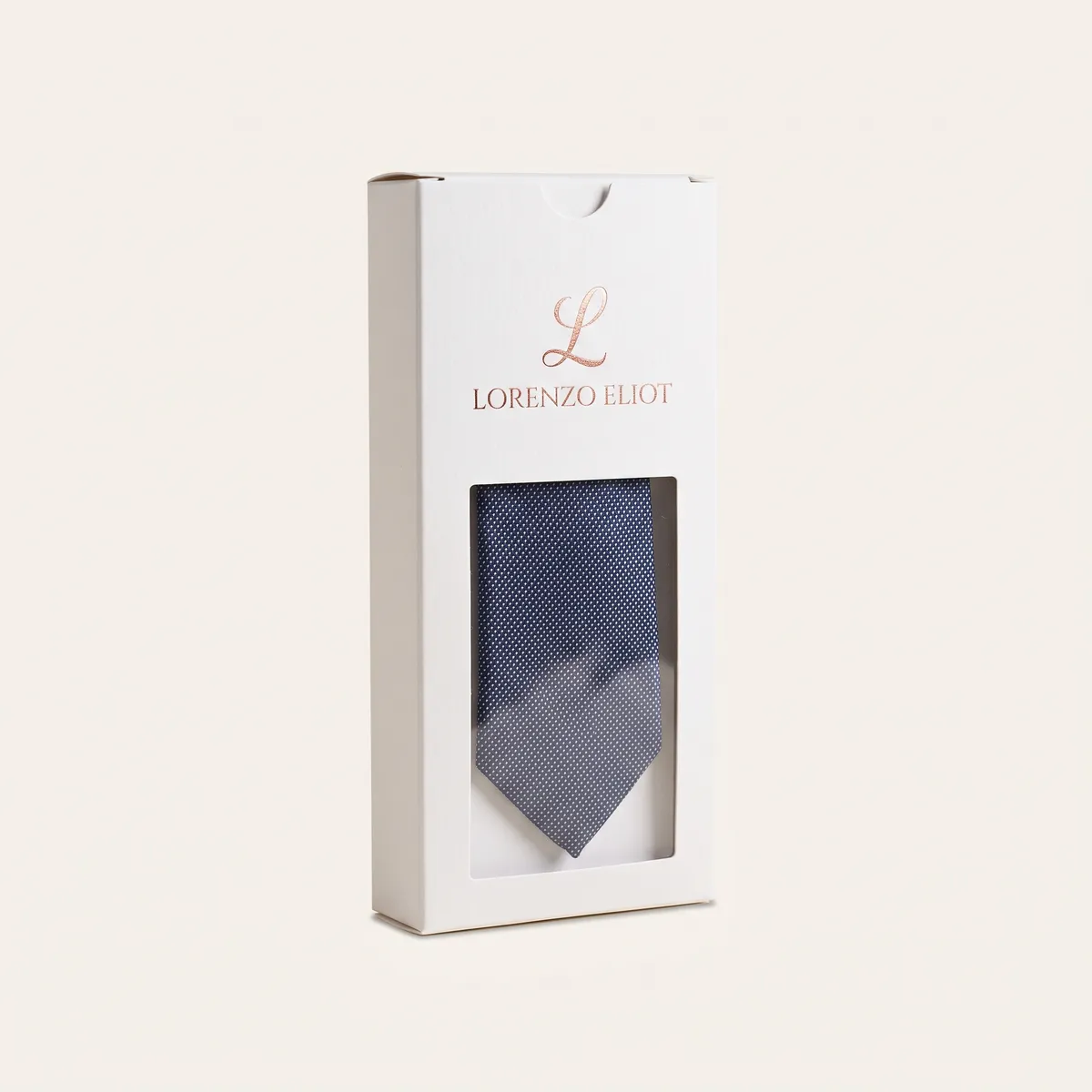
Rigid tie boxes are finished in the wrap paper, which can be printed full-color, kept to one solid color, or textured. A single foil logo on the lid is the most common upgrade and usually does more than full-coverage print on a box this narrow. Embossing suits brands that want the logo felt rather than seen. Inside, a fitted insert or a card base holds the tie in place, and on sets, dividers keep each tie and pocket square apart. Folding tie boxes take full-color print directly on the board and suit volume ranges where the box won't be kept. What to skip: a large window on a rigid gift box. It gives the present away before it's opened and breaks up the wrap.
Who Packs Ties This Way, From Tailors to Wedding Planners
Tailors and bespoke shops use rigid tie boxes to finish a suit order with something that matches the cloth. Neckwear brands use them for silk ties and pocket-square sets sold through their own stores and online. Wedding planners and formal-wear shops order them in batches for groomsmen, where matching ties go out in matching boxes on the morning. Menswear retailers stock up before Father's Day and holiday gift sales, the two points in the year when ties sell as presents rather than workwear. Clubs, schools and associations order boxed club ties for members and anniversaries. Companies hand out branded ties to staff and clients, usually in a folding box with the logo on the lid.
Planning a Tie Box Run Around Gift Season
Most tie box orders are tied to a date, whether Father's Day, the holidays or a wedding, so work back from it. Rigid tie boxes take 20 business days from proof approval, and the proof only comes once artwork and dimensions are settled, so start earlier than feels necessary. If the date is close, rush is available at extra cost, quoted upfront. Send the tie's width and whether it will lie flat or rolled, plus the count for sets, and we draw the dieline around them. Artwork help costs nothing, however many revisions it takes. Should the delivered boxes differ from the proof you signed, the reprint is on us. Shipping is included, dies and setup sit in the quote, and the minimum is 100 boxes.
One connected process, start to finish.
Structural Design
Dieline drafted to your exact fit and freight tolerances.
Proof & Sample
Sign off on a digital proof, or request a physical sample.
Tooling
Dies and plates are cut for your job and archived on file.
Production
Print, die-cut, and assembly run under in-line quality checks.
Ship & Reorder
Freight goes out, and the cycle resets for your next run.
Steady process. Powerful results.
Like everything we build, our process is engineered to hold up — no shortcuts, no surprises. Five dependable stages that run the same way every single time, so reorders are just as fast as the first order.
- One dedicated teamFrom first sketch to final freight, the same people carry your order start to finish.
- Dies archived on fileReorders skip tooling and re-setup entirely — we already have your exact spec.
- Checked against your sign-offEvery run is inspected against the digital proof or physical sample you approved.
Set up your file once, correctly
Nine in ten delayed jobs are delayed by artwork, not production. Match these four rules and your proof lands the next morning.
- Bleed1/8 in (3 mm) past every cut line
- Safe ZoneKeep text 1/4 in clear of every crease
- ColourCMYK or named Pantone. No RGB.
- Resolution300 dpi at final size, fonts outlined
No print-ready file?
Send a logo and a rough idea. Our studio builds the production file free with any order over 500 units — you keep the source file either way.
Ask the StudioBackground art must run all the way to the outer bleed edge. Anything inside the white dashed line survives fold tolerance.
What brands say about this box
They live there rather than here, where we can't edit them, delete them, or pick which ones you get to see. That is exactly what makes them worth reading.
Read all reviews on Trustpilot(opens in a new tab)Answers before you have to ask.
Why do tie boxes need to be so long?
Because a tie has to lie flat or roll loosely — folding it to fit a shorter box presses a crease that doesn't come out. The length is a structural requirement rather than a styling choice.
Can tie boxes hold more than one tie?
Yes, with dividers. Multi-tie gift sets are common, and without separation the ties rub and mark each other. We lay out dividers to your tie width and count.
Should tie boxes be rigid or folding?
Folding works for most retail. Rigid suits gift sets and premium neckwear where the box is part of the purchase. Given ties are often bought as gifts, rigid earns its cost more often here than in other apparel.
What's the lead time on tie boxes?
Folding builds take about 8–12 business days from proof approval; rigid takes 20. Rush is available on both at a premium we'll state upfront, with shipping included.
What's the minimum on tie boxes?
100 boxes. Tie boxes are often seasonal or gift-led, so the low minimum makes a one-off run practical rather than requiring year-round volume.