
Sock Boxes
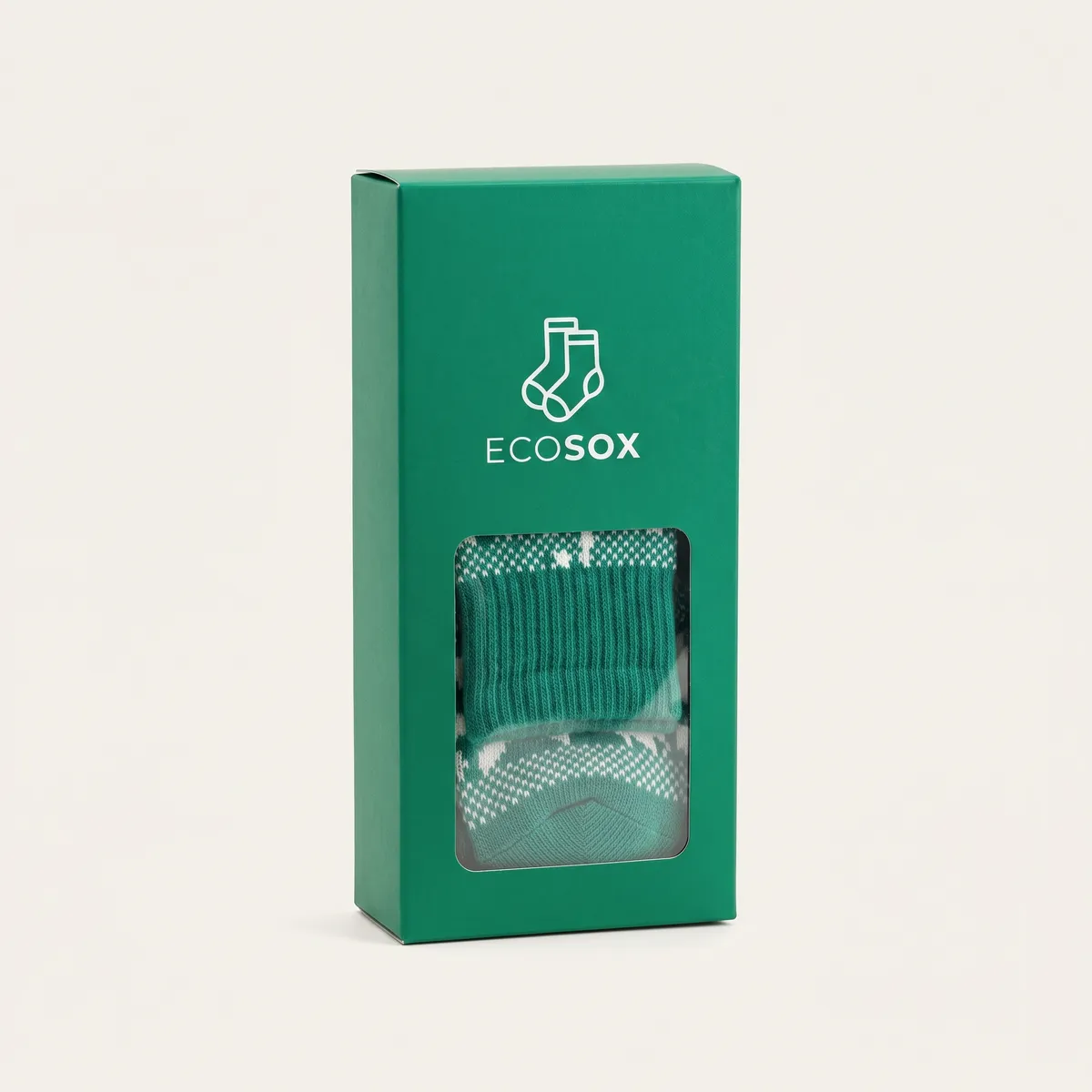
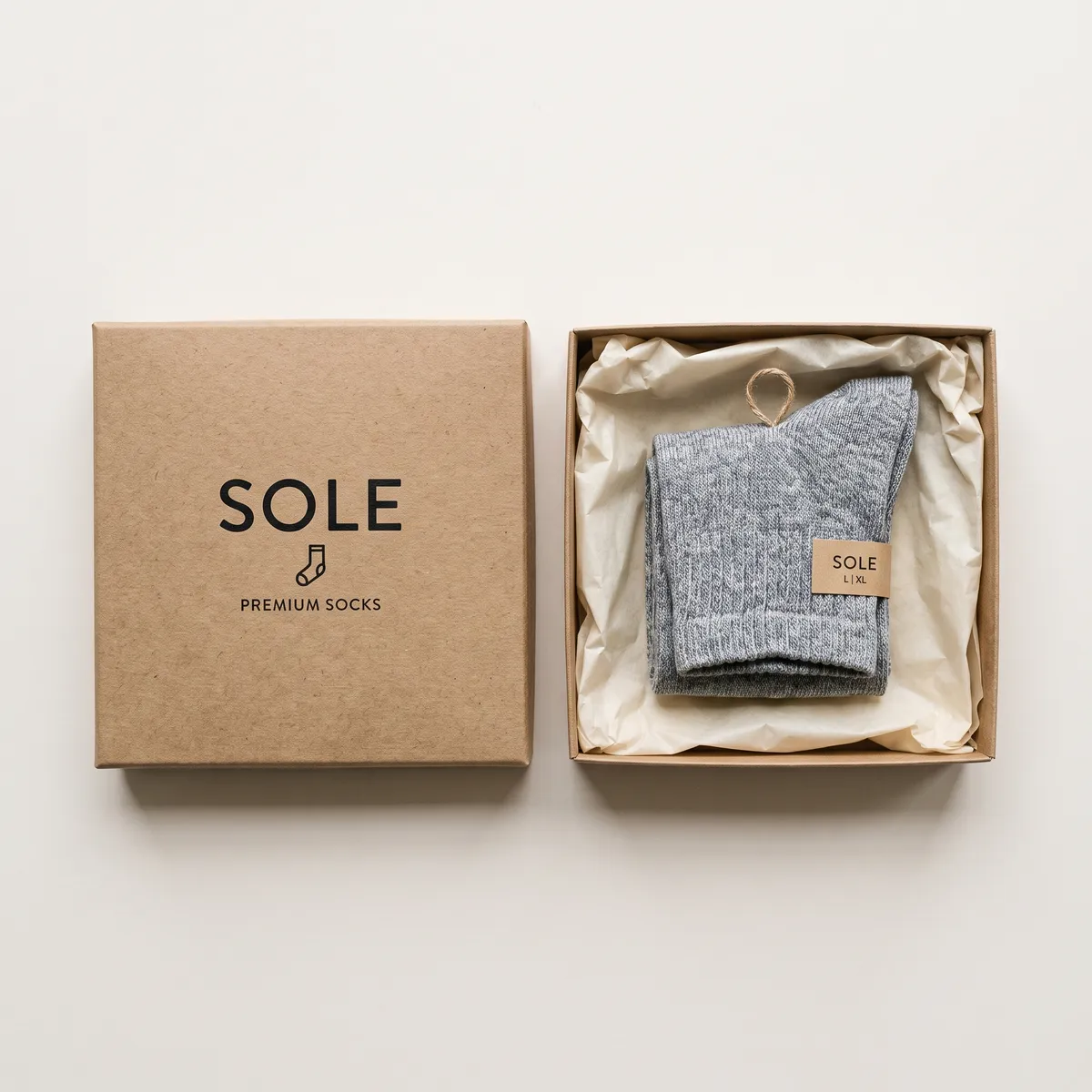
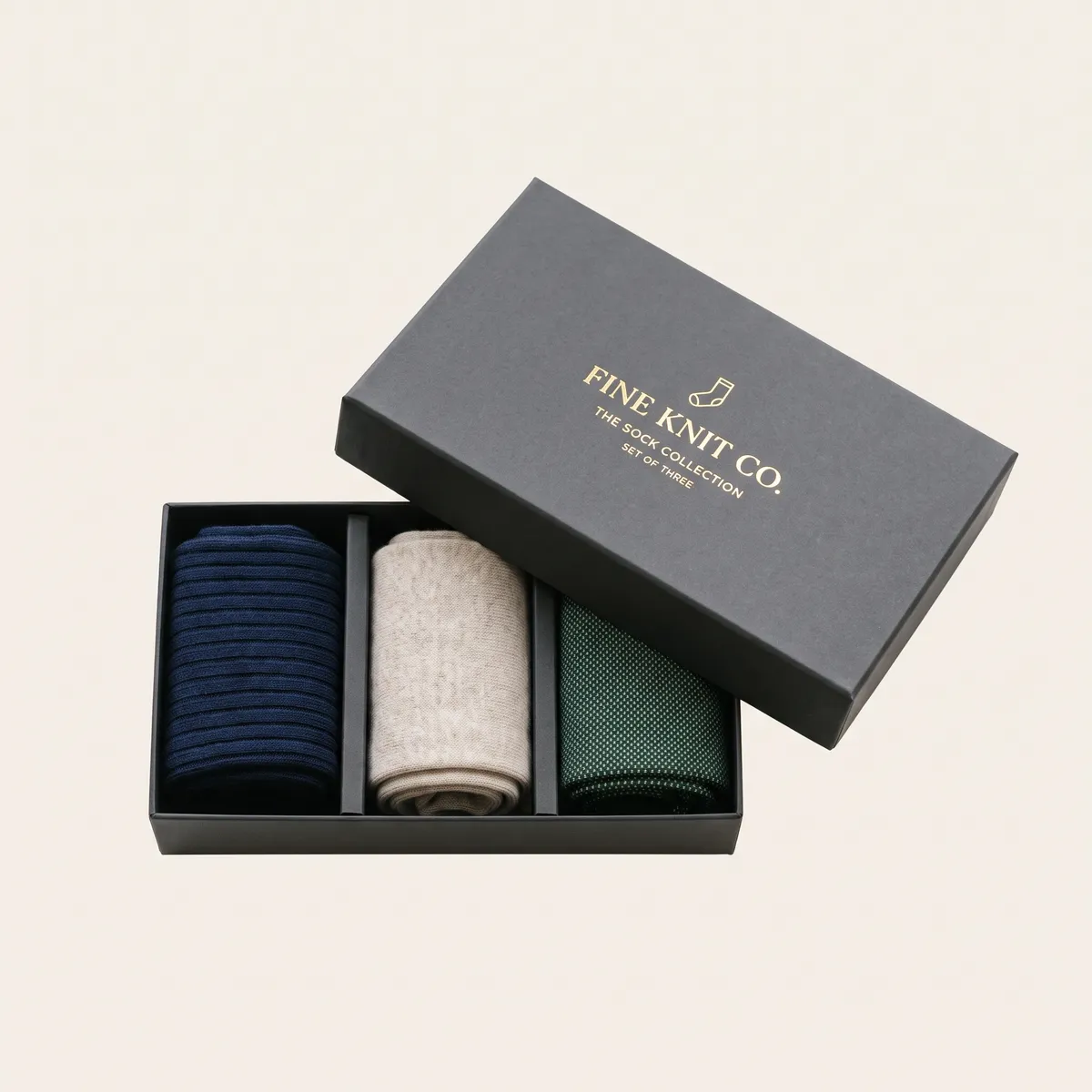
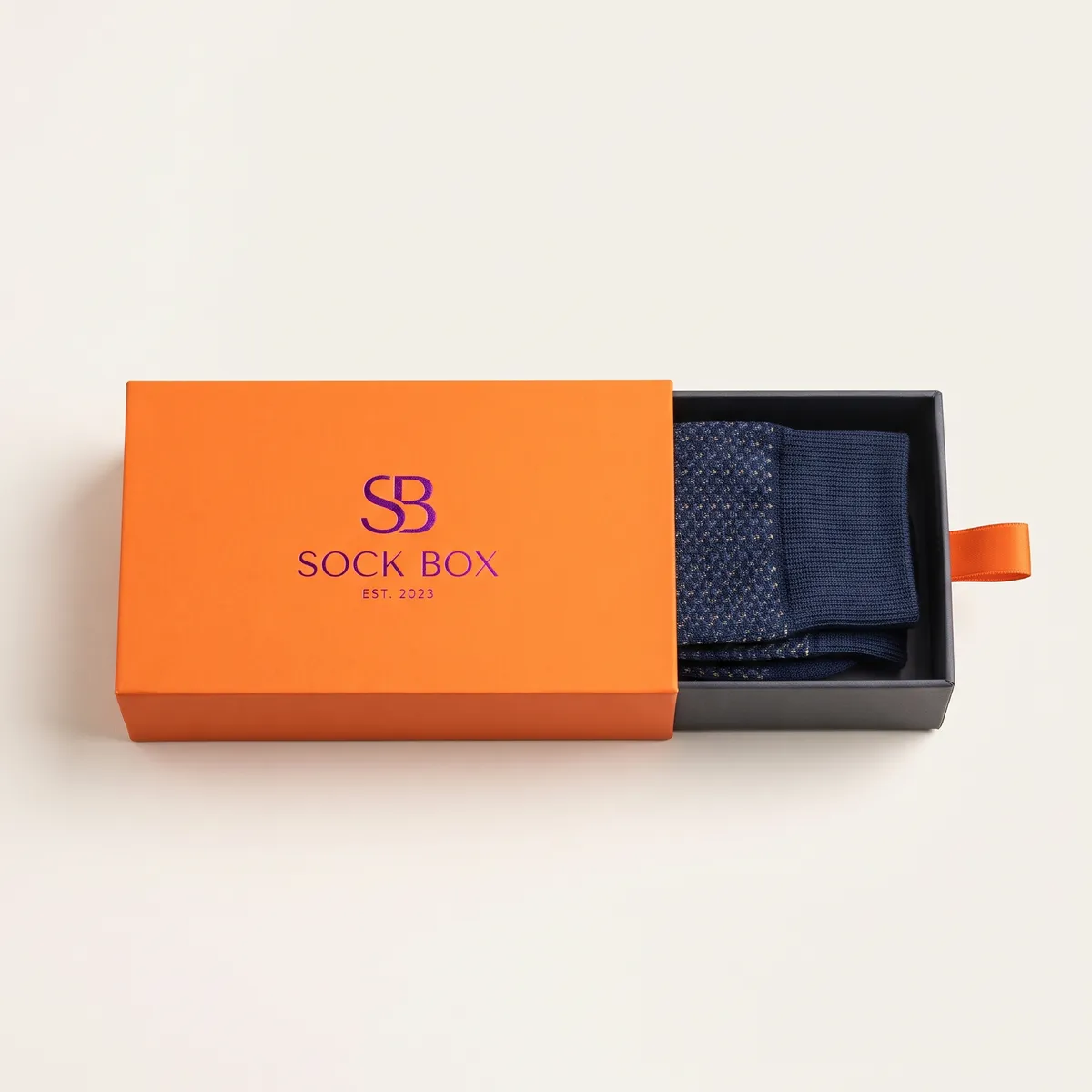
Sock boxes keep multipacks presented as a set, with dividers sized to your pack count, so each pair stays separated and visible instead of arriving as a jumble. A reinforced die-cut hanging tab holds the pack on a retail peg. Compared with bags, boxes provide printable panels and protect the pack's shape on shelves, though bags suit plain, online-only multipack sales.
Ours are on Trustpilot, where we can't edit them or choose which ones you see.
Read them on Trustpilot →(opens in a new tab)Four stages, twelve days
Quote confirmed
A specialist checks your spec against the board and comes back with a firm price inside 4 business hours.
Proof approved
You get a flat dieline and a 3D render. Nothing goes to press until you approve it in writing.
On press
Print, die-cut, glue, and fold. You get a press-side photo the day your job runs.
QC and delivery
Every pallet is sampled against the digital proof or physical sample you approved, then shipped with tracking to your dock or 3PL.
If a box doesn't match the digital proof or physical sample you approved, we reprint the run at no charge.
Read the reprint terms →Know exactly what you're ordering.
Sock Boxes for a Small Product Sold in Sets
A pair of socks is light, soft and low-priced, which makes it hard to sell one at a time. Sock boxes exist to sell them in counts, such as three, five or a week's worth, at a price where the box becomes part of the value. The buyers are sock brands, underwear and basics labels, gift retailers, and subscription services sending a new design each month. Most sock packs are small enough to hang, stack or sit near a register, and they're often an add-on purchase rather than the reason for the visit. That puts the job on presentation at a glance: the count, the colors and the brand need to be readable in the second a shopper looks.
Sock Box Board, Divider Layout and Peg Tab
A sock pack carries very little weight, so the construction stays light: a folding carton in coated card stiff enough for a peg tab, printed on the outer face.
| Attribute | Specification |
|---|---|
| Board | Bleached paperboard, coated one side |
| Footprint | Set by folded pair size and pack count |
| Dividers | Laid out to your pack count |
| Hanging tab | Die-cut, reinforced around the hole |
| Window | Film-backed, optional |
| Tolerance | Built to your confirmed dieline |
Give us one folded pair's dimensions and the count per pack, and we work out the footprint and divider spacing from there before anything goes to proof.
Why a Five-Panel Hanger Turns a Sock Pack to Face the Aisle
How socks get bought explains why sock boxes are commonly made in a peg-hung five-panel format. Hung on a peg, the pack faces outward with the front panel square to the shopper, and the hanging tab takes the weight instead of the box sides. Flat packaging on a shelf sits edge-on or gets stacked, and the colors disappear. Socks sell largely on color and pattern, so the display does more selling than the structure. The format also uses little board for the face it creates. Where it's the wrong choice: sock packs sold only online, or gift sets packed inside a larger box, where a peg tab adds nothing and a plain carton does the job.
Color, Window and Panel Print on a Sock Pack
Full-color print suits sock packs better than almost any other apparel box, because the product itself is about color and pattern. A window on the front panel lets the actual socks show, which matters when shoppers judge by pattern, so keep the artwork around it simple. The back panel carries size range, fiber content and care details; leave room for them at the design stage instead of squeezing them in at proof. A matte or gloss coating protects print on packs handled on a peg. What to skip: foil, embossing and soft-touch on a low-priced, high-volume pack. They add cost per unit that a sock price rarely absorbs, and soft-touch marks easily once shoppers start handling it.
Sock Boxes for Multipacks, Gift Sets and Subscription Drops
Basics brands use them for weekday multipacks and three-packs hung on pegs in clothing and department stores. Sock labels with bold patterns use single-pair boxes as an impulse buy near the register. Gift retailers lean on stocking-stuffer sock sets through the holidays, often in boxes with a printed message panel. Subscription services box each month's pairs so the delivery looks considered rather than tipped loose out of a mailer. Sports and hiking sock brands use them to show fiber and cushioning details on the back panel. Corporate buyers order branded socks in small boxes as event giveaways, where a 100-box minimum sits comfortably against a typical headcount.
From Pack Count to Proof on a Sock Box Order
Start with the count. Tell us how many pairs go in each pack and send one folded pair's dimensions, and we build the dieline, confirming internal against external in writing. Unlimited free design help is useful here, because the back panel has to fit sizing and care details alongside the brand. Nothing prints until you approve the proof. Production takes 8–12 business days after approval, and rush is available at extra cost, quoted upfront. The minimum is 100 boxes, shipping is in the price, and setup costs are written into the quote rather than added later. Each pack is checked at three stages before it ships, so a misprinted panel or a weak tab is caught by us, not by a store.
One connected process, start to finish.
Structural Design
Dieline drafted to your exact fit and freight tolerances.
Proof & Sample
Sign off on a digital proof, or request a physical sample.
Tooling
Dies and plates are cut for your job and archived on file.
Production
Print, die-cut, and assembly run under in-line quality checks.
Ship & Reorder
Freight goes out, and the cycle resets for your next run.
Steady process. Powerful results.
Like everything we build, our process is engineered to hold up — no shortcuts, no surprises. Five dependable stages that run the same way every single time, so reorders are just as fast as the first order.
- One dedicated teamFrom first sketch to final freight, the same people carry your order start to finish.
- Dies archived on fileReorders skip tooling and re-setup entirely — we already have your exact spec.
- Checked against your sign-offEvery run is inspected against the digital proof or physical sample you approved.
Set up your file once, correctly
Nine in ten delayed jobs are delayed by artwork, not production. Match these four rules and your proof lands the next morning.
- Bleed1/8 in (3 mm) past every cut line
- Safe ZoneKeep text 1/4 in clear of every crease
- ColourCMYK or named Pantone. No RGB.
- Resolution300 dpi at final size, fonts outlined
No print-ready file?
Send a logo and a rough idea. Our studio builds the production file free with any order over 500 units — you keep the source file either way.
Ask the StudioBackground art must run all the way to the outer bleed edge. Anything inside the white dashed line survives fold tolerance.
What brands say about this box
They live there rather than here, where we can't edit them, delete them, or pick which ones you get to see. That is exactly what makes them worth reading.
Read all reviews on Trustpilot(opens in a new tab)Answers before you have to ask.
Can sock boxes hold multipacks?
Yes, with dividers. A multipack left loose arrives as a jumble, which undercuts the presentation. We lay out dividers around your actual pack count so each pair stays separated and visible.
Can sock boxes hang on a retail peg?
Yes. A die-cut hanging tab lets the pack sit on a peg, which matters for retail. We reinforce the tab area so it holds the pack weight without tearing after repeated handling.
Are sock boxes worth it over bags?
Usually, for retail. A box presents better on a shelf, protects the pack shape, and gives you printable panels a bag can't match. For plain multipacks and online-only sales, a bag may be the sensible call.
How soon can sock boxes be made?
About 8–12 business days once the proof is approved, dividers and hanging tabs included. Rush production is available at an extra cost stated before you commit.
Can sock boxes be ordered per design?
Yes, and it's the economical way to build a range. Keeping one box structure while changing only the printed panel per design means you're not paying new tooling each time.