
Cardboard Hang Tags
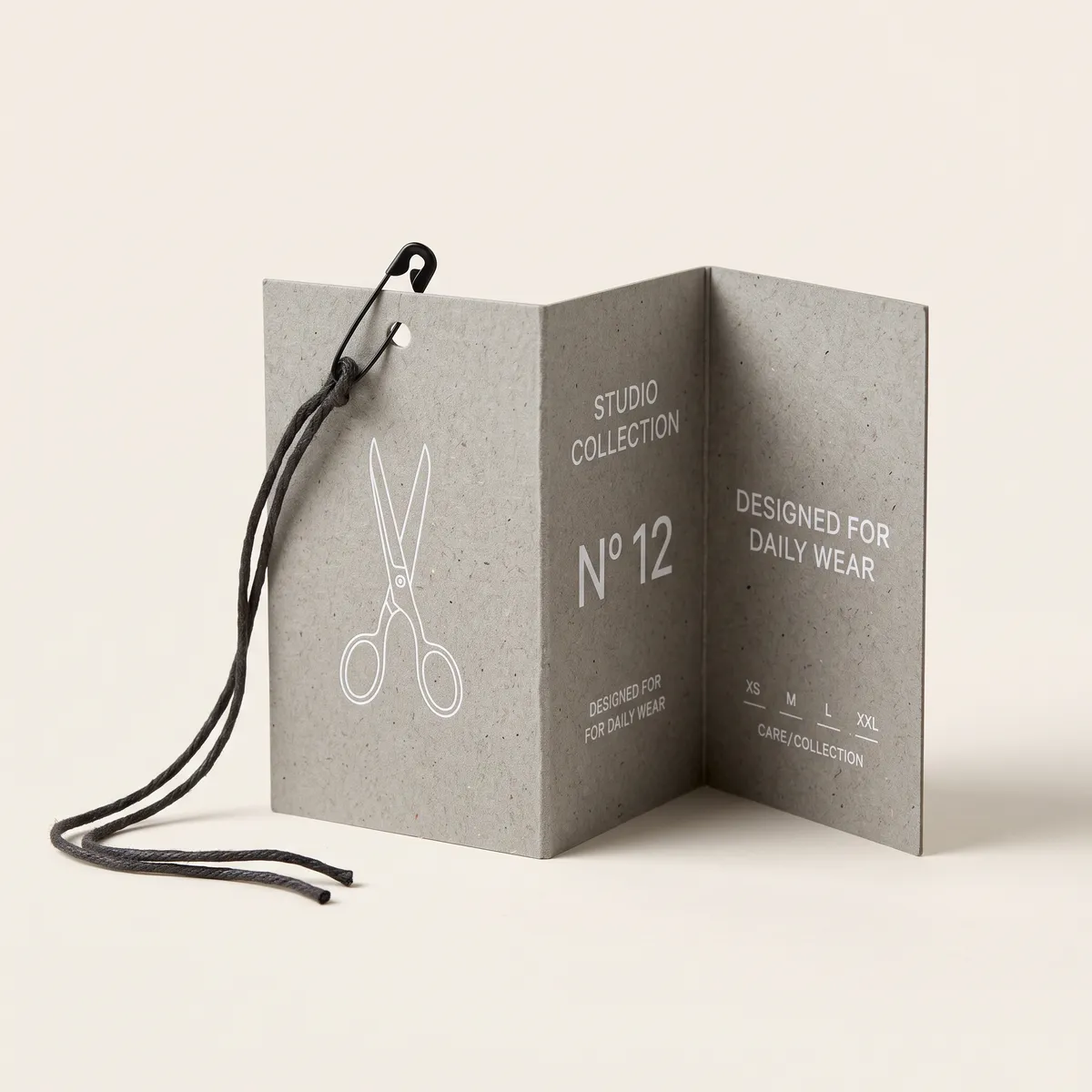
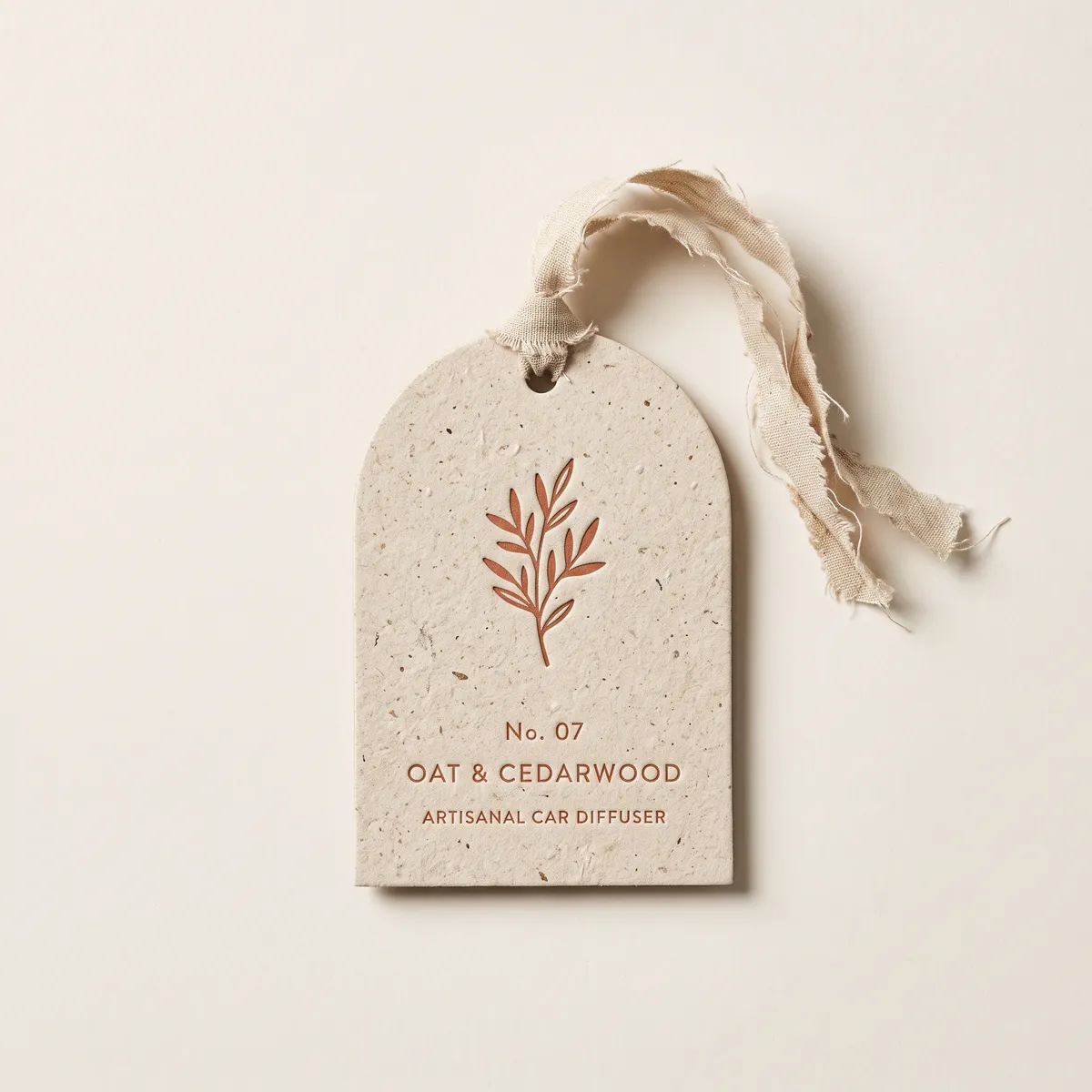
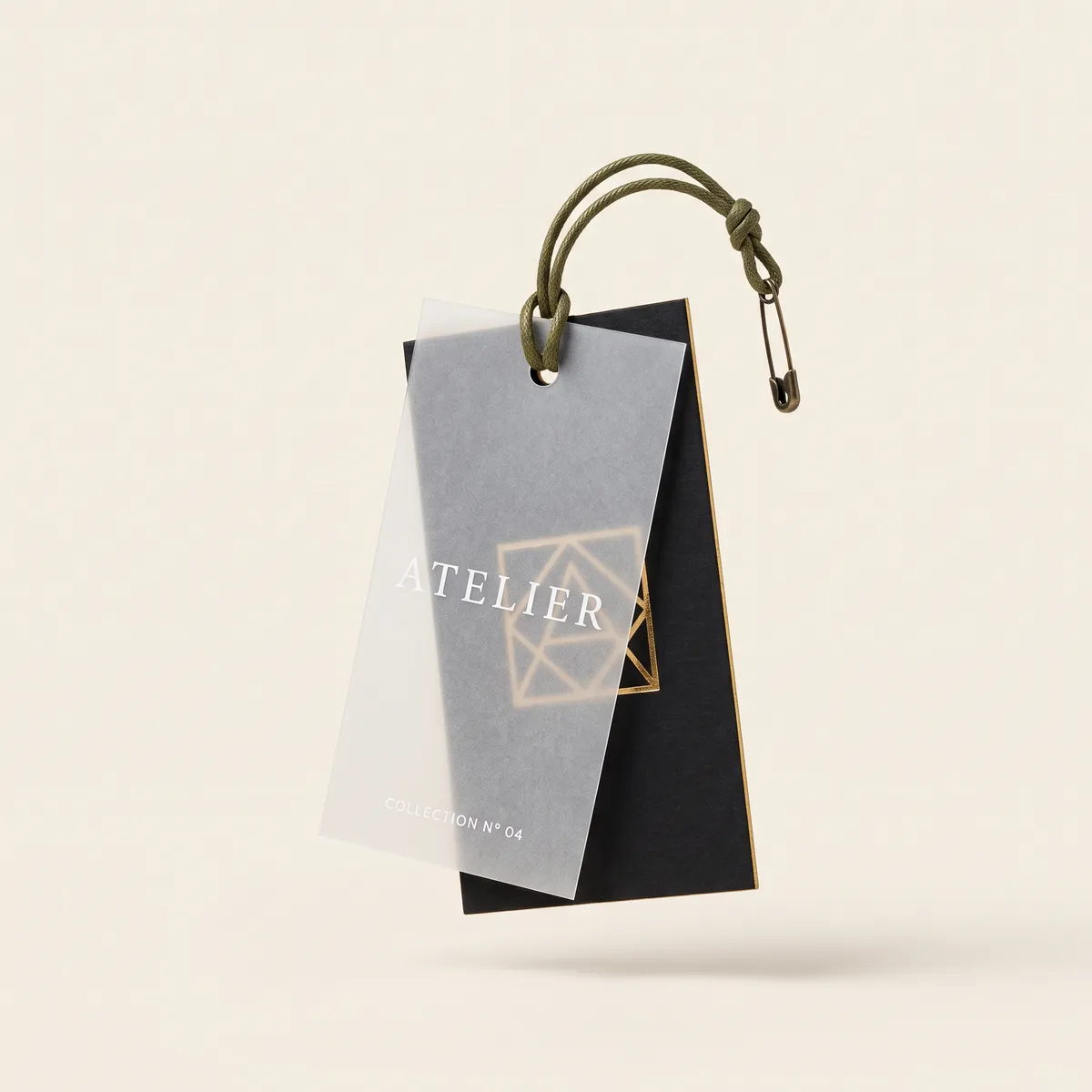
Cardboard hang tags use coated board because tags carry small type, and a coated surface holds sharp print at sizes where uncoated and kraft soften fine detail. Cardboard costs considerably less than rigid tags, which are rare because thickness works against the format. Lamination stops tags softening and curling in humid conditions. Reorders need no new proof once artwork is on file.
Ours are on Trustpilot, where we can't edit them or choose which ones you see.
Read them on Trustpilot →(opens in a new tab)Four stages, twelve days
Quote confirmed
A specialist checks your spec against the board and comes back with a firm price inside 4 business hours.
Proof approved
You get a flat dieline and a 3D render. Nothing goes to press until you approve it in writing.
On press
Print, die-cut, glue, and fold. You get a press-side photo the day your job runs.
QC and delivery
Every pallet is sampled against the digital proof or physical sample you approved, then shipped with tracking to your dock or 3PL.
If a box doesn't match the digital proof or physical sample you approved, we reprint the run at no charge.
Read the reprint terms →Know exactly what you're ordering.
Cardboard Here Means Coated Board, Not Box Corrugate
The word cardboard covers a lot of materials, and that causes confusion on tag orders. Here it means coated paperboard: a single, smooth, printable sheet, not the fluted board used for shipping cartons. Corrugate would be far too thick for a tag and would show its flutes through the print.
This page is for buyers who have settled on a material and want the default tag stock done well. Across almost every application, from garments to candles to car mirrors, most hang tags end up on coated cardboard, because at this size it balances print quality, stiffness and price better than the alternatives.
If you're still choosing between materials, the comparison comes below. If you've already chosen, the spec and print options are what you need.
Coated Tag Board at a Glance
The sheet is a coated paperboard; the materials page explains how coated cardboard prints at tag size if you want the background.
| Attribute | Cardboard tag spec |
|---|---|
| Stock | Coated paperboard |
| Surface | Smooth coated face; lamination optional |
| Shape | Any outline |
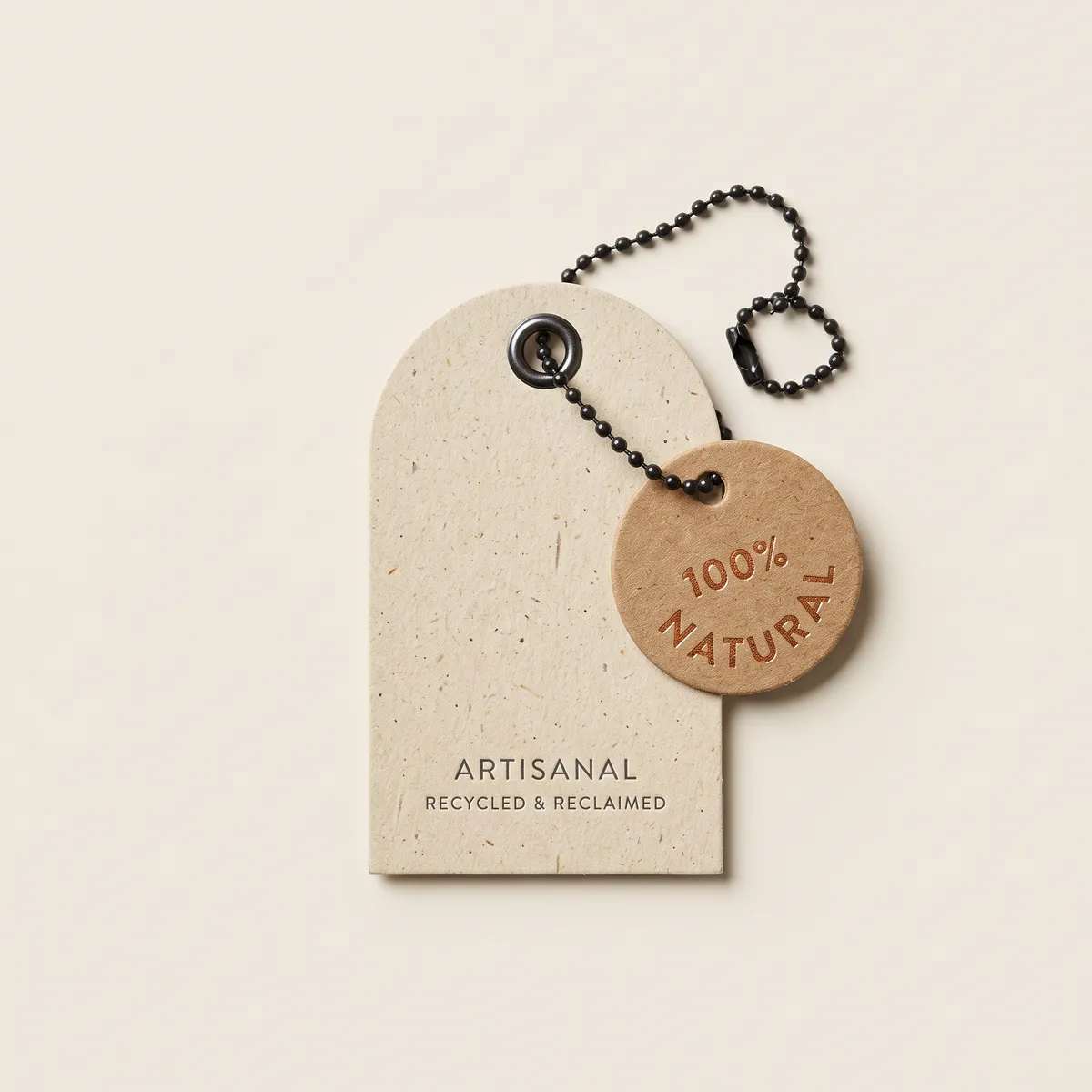
| Punch | Any position, sized to your string |
| Full color, one side or both | |
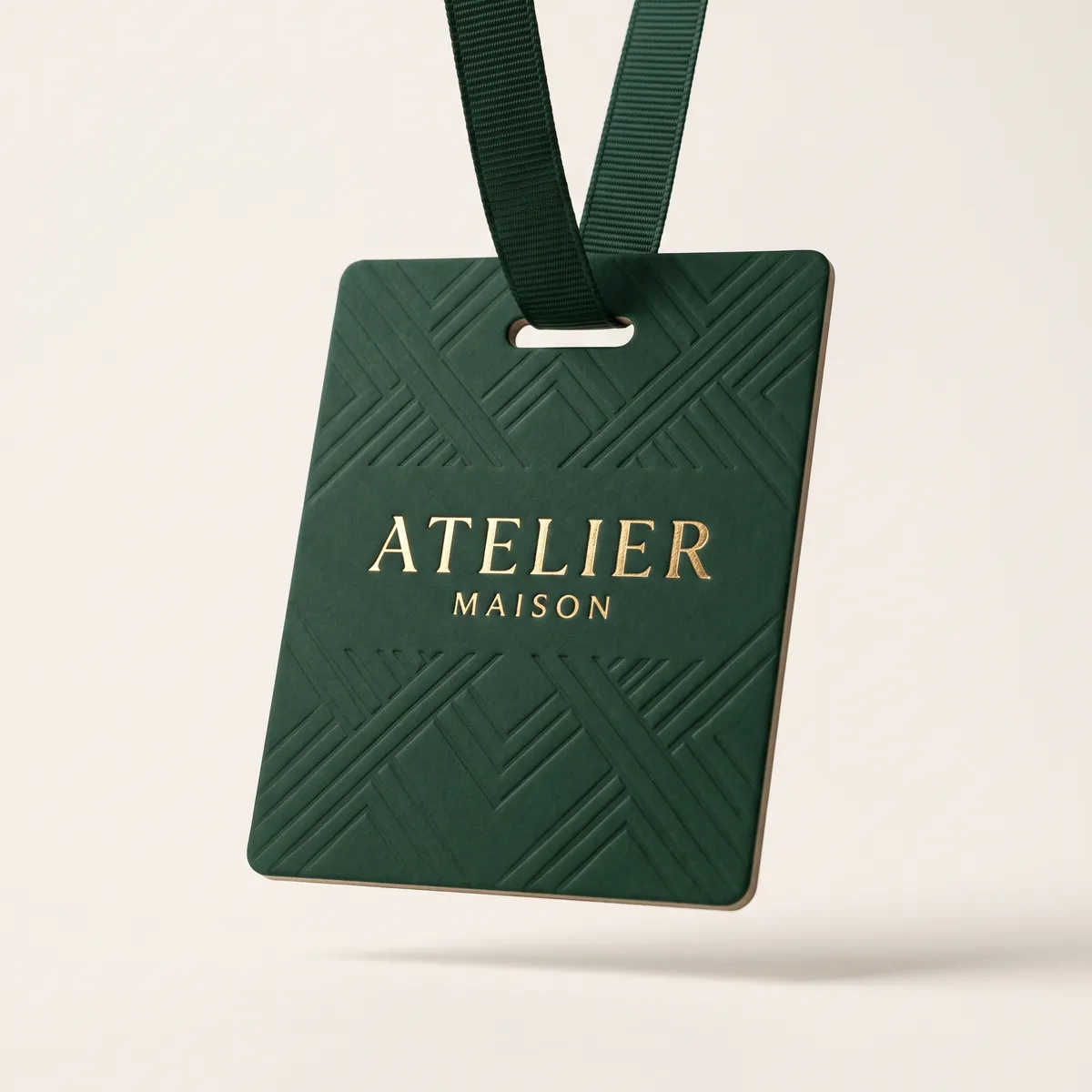
| Finish | Foil, deboss or emboss on request |
We'd specify a reasonably stiff board as standard, and only go heavier where the tag has a harder job, such as hanging from a car mirror or a door handle. For a shelf tag, the standard board is enough.
When Coated Cardboard Beats Kraft or Rigid for a Tag
Kraft and uncoated stocks look natural, and for a brand built on that look they're worth considering. The trade is print detail. Small type and thin lines soften on an absorbent surface, and on a tag almost everything is small. Coated cardboard keeps that detail sharp.
Rigid sits at the other end, and outside a few luxury uses it's rarely worth paying for on something meant to hang from a string.
That leaves coated board as the sensible choice for most tags, with one adjustment worth making in damp places. Bath-shelf soap ranges sit in steamy rooms where an unprotected tag goes soft and curls, so lamination earns its cost there. On dry retail shelves, plain coated board does the job without it.
Small Type, Full Color and Where Lamination Helps
Coated board takes full-color print cleanly, so photographs, gradients and brand colors come out close to the proof. That's the main reason to choose it. Fine print is the other: ingredient lists, care notes and small legal text stay readable at sizes that would blur on kraft.
Foil and deboss both work on coated cardboard, though on most tags one finish is enough. Lamination adds a protective layer that keeps the tag flat and clean where it's handled often or kept somewhere humid. It's an extra cost that dry, short-shelf-life tags can skip.
If your artwork includes a barcode or QR code, keep it on a plain, light area of the tag so it scans reliably. Every option shows on the proof before you approve it.
The Shelves Where Coated Tags Do Most of the Work
Coated cardboard tags are the everyday choice across retail. For candle jars sold with a tied tag, the tag carries the scent name and burn notes without covering the glass. Gift shops price hampers and baskets with them. Bath and body brands tag bottles and bars, usually laminated for the bathroom.
Food and drink makers hang them on bottle necks and jars where a label would hide the product. Homeware and plant sellers use them for care notes. Craft makers put one coated tag across a mixed range so a stall or shelf reads as a single brand.
Whatever the product, the reason is the same: clean print at a low cost per tag, on a board stiff enough to hang straight.
Quoting a Cardboard Tag Run, All Costs Included
A cardboard tag quote covers the die, plates, setup and shipping, so the figure you approve is the figure you pay. Orders start at 100 tags.
Send artwork if you have it, or a logo and the text, and we'll lay it out for free with as many revisions as it takes. Once the proof is approved, production runs 8–12 business days. Rush is available at an extra cost, quoted before you commit.
Free samples come with orders above 10,000 tags, which suits brands tagging a full season's range in one run. Every tag passes a three-stage check before dispatch, and if the run doesn't match the approved proof, we reprint at our cost.
One connected process, start to finish.
Structural Design
Dieline drafted to your exact fit and freight tolerances.
Proof & Sample
Sign off on a digital proof, or request a physical sample.
Tooling
Dies and plates are cut for your job and archived on file.
Production
Print, die-cut, and assembly run under in-line quality checks.
Ship & Reorder
Freight goes out, and the cycle resets for your next run.
Steady process. Powerful results.
Like everything we build, our process is engineered to hold up — no shortcuts, no surprises. Five dependable stages that run the same way every single time, so reorders are just as fast as the first order.
- One dedicated teamFrom first sketch to final freight, the same people carry your order start to finish.
- Dies archived on fileReorders skip tooling and re-setup entirely — we already have your exact spec.
- Checked against your sign-offEvery run is inspected against the digital proof or physical sample you approved.
Set up your file once, correctly
Nine in ten delayed jobs are delayed by artwork, not production. Match these four rules and your proof lands the next morning.
- Bleed1/8 in (3 mm) past every cut line
- Safe ZoneKeep text 1/4 in clear of every crease
- ColourCMYK or named Pantone. No RGB.
- Resolution300 dpi at final size, fonts outlined
No print-ready file?
Send a logo and a rough idea. Our studio builds the production file free with any order over 500 units — you keep the source file either way.
Ask the StudioBackground art must run all the way to the outer bleed edge. Anything inside the white dashed line survives fold tolerance.



What brands say about this box
They live there rather than here, where we can't edit them, delete them, or pick which ones you get to see. That is exactly what makes them worth reading.
Read all reviews on Trustpilot(opens in a new tab)Answers before you have to ask.
Does cardboard suit every kind of tag?
Most of it. Coated board holds sharp print at small sizes, which matters since tags carry small type. Uncoated and kraft suit natural positioning but soften fine detail.
Can cardboard tags be laminated?
Yes, and it's worth considering for tags that stay with a product through its life. Lamination stops the tag softening and curling, particularly in humid conditions.
Is cardboard cheaper than rigid for tags?
Considerably, and for most tags cardboard is the right answer. Rigid tags exist for luxury applications but are rare — the thickness usually works against the format.
What's the lead time on cardboard hang tags?
About 8–12 business days once you approve the proof, often at the faster end. Rush production is available at an extra cost quoted first.
Can cardboard tags be reordered quickly?
Yes. With your artwork and die shape on file, reorders need no new proof unless something changes, and most run in about 8–12 business days.