
Cardboard Dispenser Boxes
Cardboard dispenser boxes use coated board because a counter dispenser is a display piece with seconds to catch attention, and coated stock holds the color accurately. Lamination protects print from restocking and repeated handling, proofed after the film since it shifts color slightly. Different retailers can take different counts or header artwork, produced together to share setup costs.
Ours are on Trustpilot, where we can't edit them or choose which ones you see.
Read them on Trustpilot →(opens in a new tab)Four stages, twelve days
Quote confirmed
A specialist checks your spec against the board and comes back with a firm price inside 4 business hours.
Proof approved
You get a flat dieline and a 3D render. Nothing goes to press until you approve it in writing.
On press
Print, die-cut, glue, and fold. You get a press-side photo the day your job runs.
QC and delivery
Every pallet is sampled against the digital proof or physical sample you approved, then shipped with tracking to your dock or 3PL.
If a box doesn't match the digital proof or physical sample you approved, we reprint the run at no charge.
Read the reprint terms →Know exactly what you're ordering.
Coated Counter Dispensers Built to Be Looked At
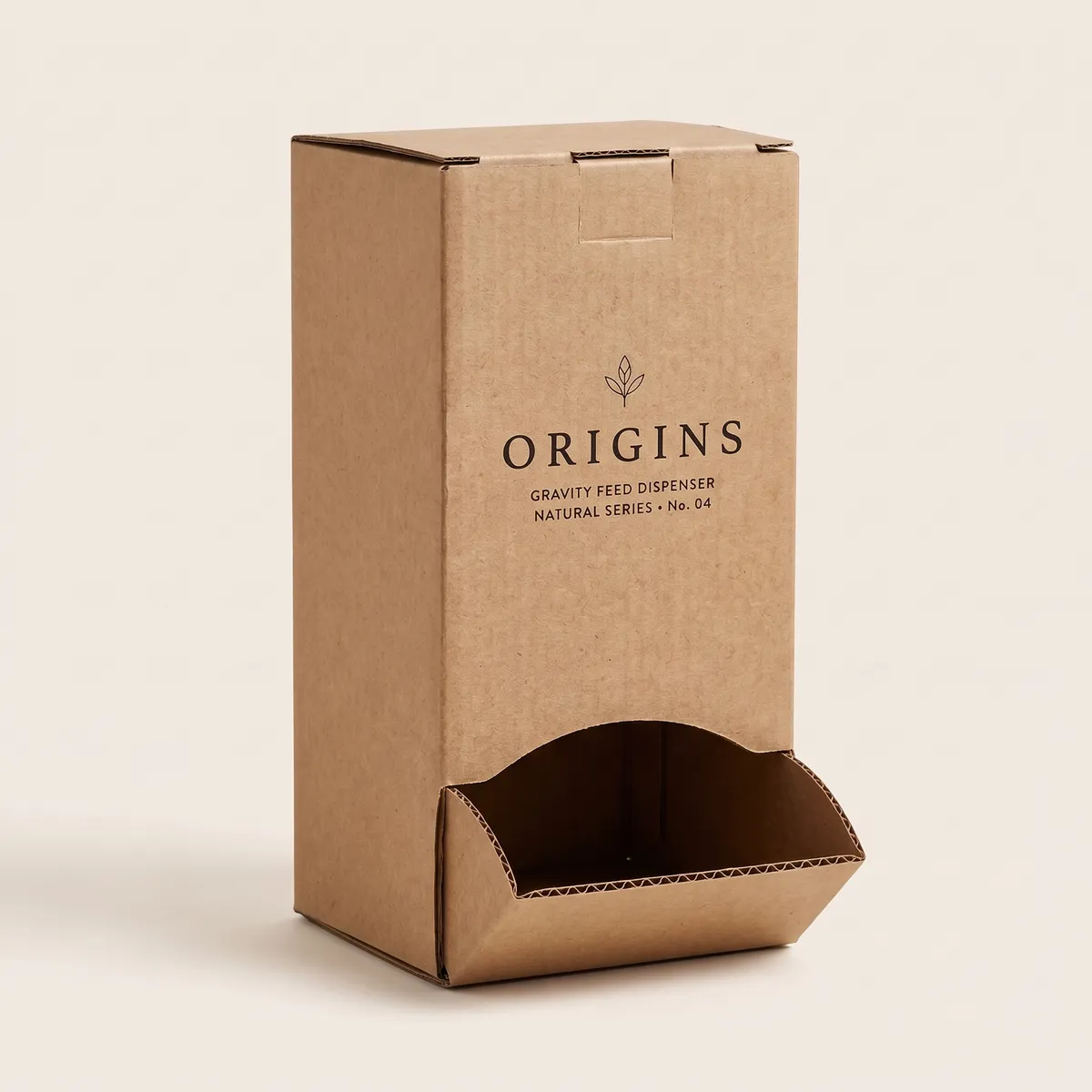
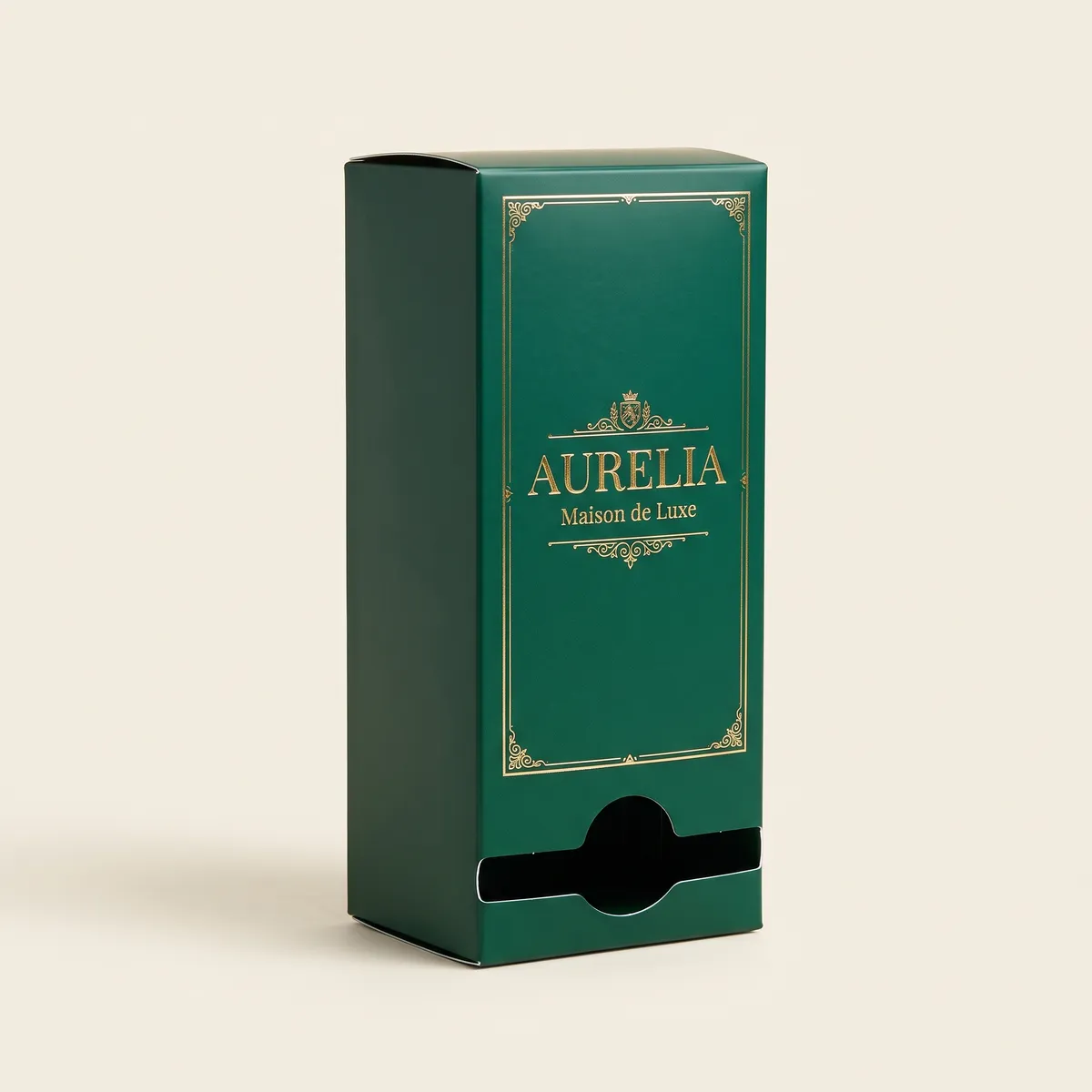
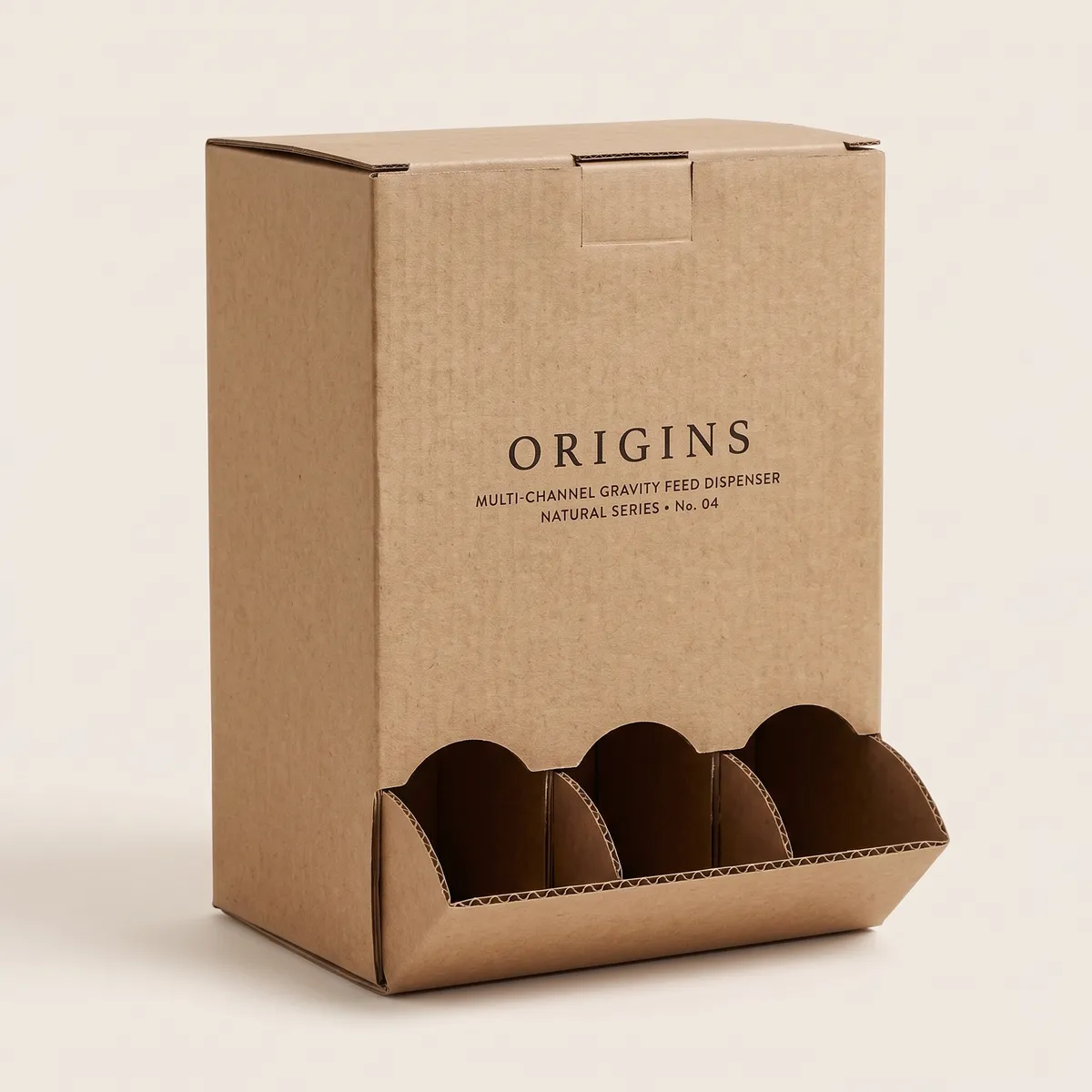
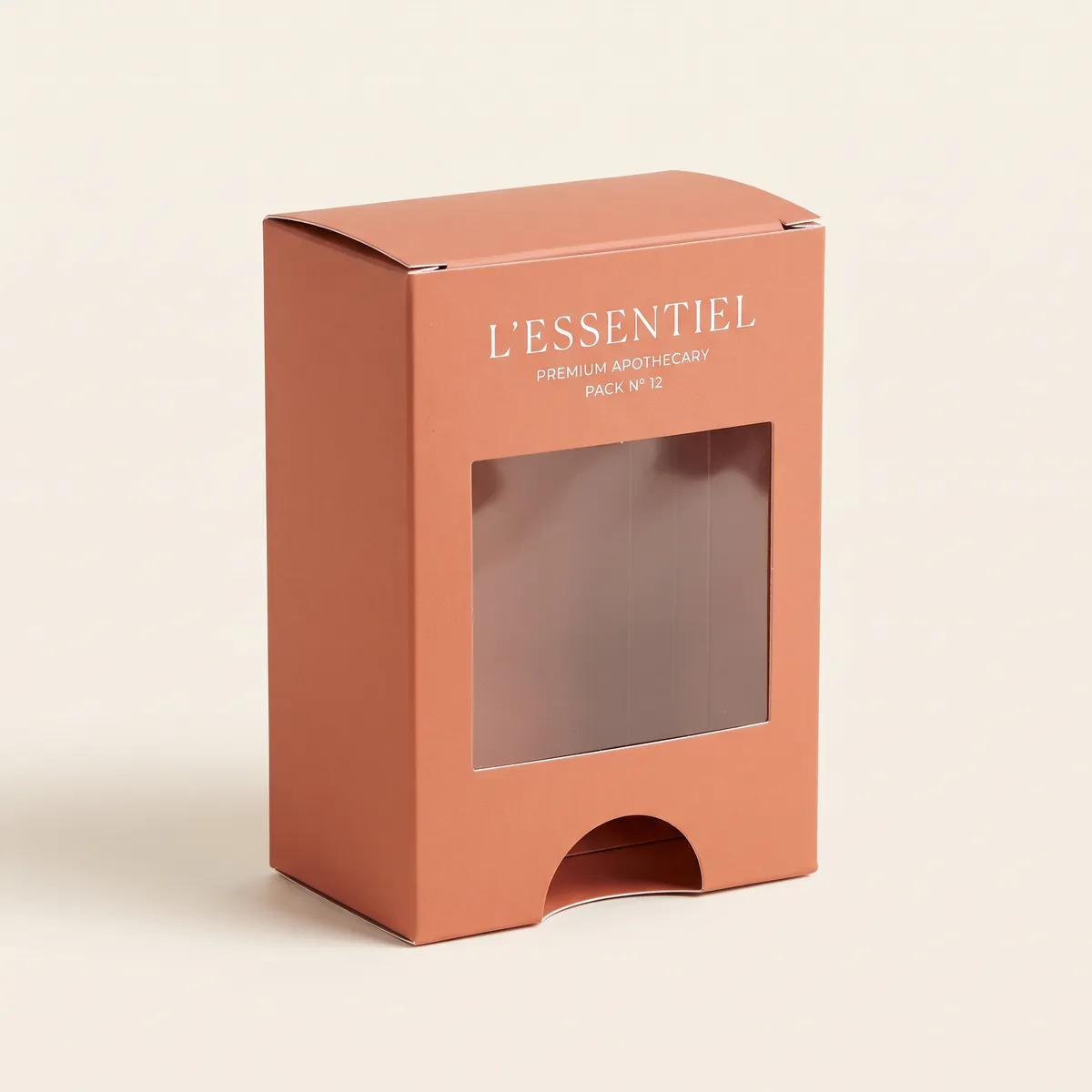
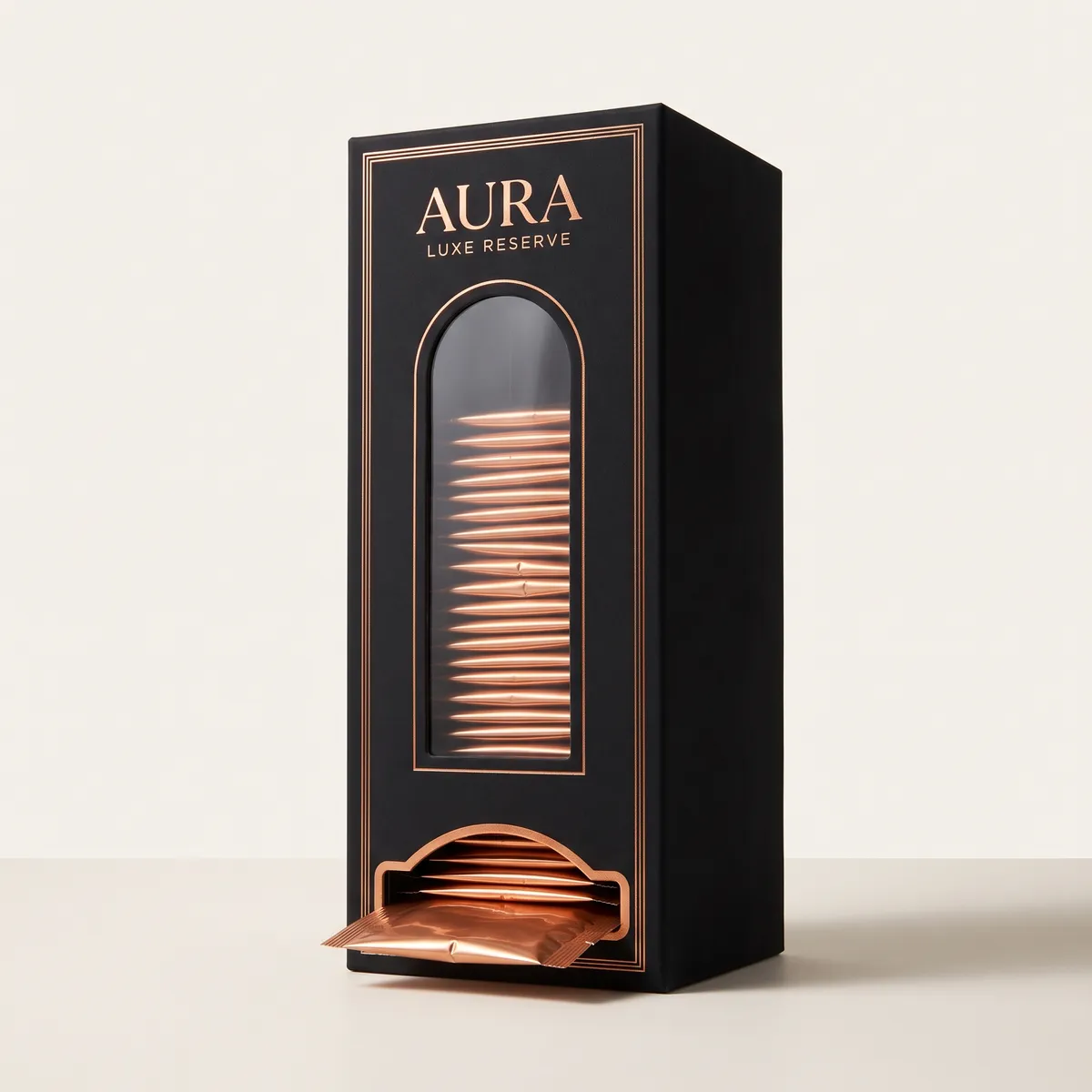
A counter dispenser is usually seen from a few feet away before anyone reaches for it, which makes its printed face the part of the unit doing most of the work. The cardboard version puts the tear-away opening on coated white board, so that face holds strong, accurate color. Brand red stays red, photography stays sharp, and short product names stay legible across a counter.
Buyers are brands with established color identities placing units in pharmacies, convenience stores, beauty counters and checkout lanes, often right beside competitors doing the same. When several dispensers stand side by side, the one with the cleanest color tends to be noticed first, and that's the job this box is specified for.
SBS Dispenser Specs and Lamination Options
| Spec | Cardboard dispenser |
|---|---|
| Stock | SBS coated board |
| Caliper | 14–24pt |
| Opening | Perforated tear-away panel |
| Lamination | Gloss, matte, soft-touch or anti-scuff |
| Header | Optional raised panel for brand or retailer artwork |
| Tolerance | ±0.5–1mm |
The board is bright coated carton board, with the caliper set by the weight of a full unit. Lighter sachet dispensers sit around 14–16pt. Units holding boxed items or small bottles move toward 24pt, so the walls stay square as the count drops. Anti-scuff film is the one to pick for units restocked by hand several times a week, since every refill drags product across the printed walls.
Coated Board for Dispensers That Compete on Color
Coated board wins on a dispenser when the unit competes with other units. Beauty is the clearest case. Sample sachets and beauty minis on a pharmacy counter sit beside half a dozen rival brands, and customers choose partly on which display looks most like the brand they already trust.
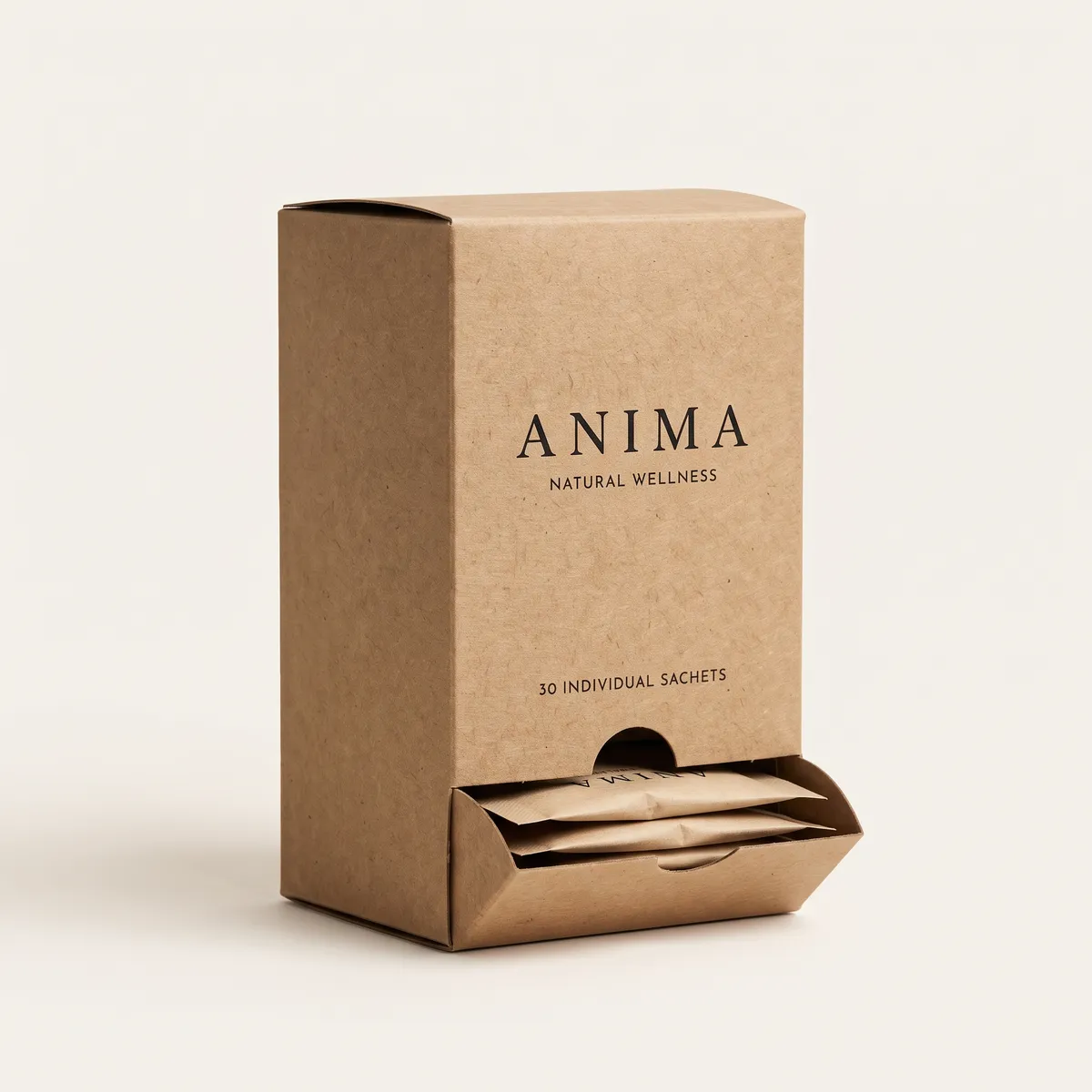
Uncoated stock warms and darkens color, so a carefully matched blush pink or a clinical white drifts away from the product it's meant to match. Coated board keeps the color as designed, and once laminated it holds up better to handling. Where it isn't the right pick: a natural or craft brand whose other packaging is unbleached, or a back-of-house unit no customer ever sees. There, kraft or plain board does the job for less.
Film, Spot Finish and Saturated Ink on a Counter Unit
Coated board opens up the full finishing menu. Full color with photography and gradients prints cleanly. Gloss lamination makes colors punchier and wipes clean, while matte or soft-touch reads more premium but shows fingerprints sooner. Spot UV picks out a logo or product shot against a matte field, and foil works on a brand mark, kept clear of the perforation.
Plan for the opened state as well. Once the front is gone, the product sits in a frame made by the remaining panels, so the header and side panels need the brand name at a size that reads from the aisle. Skip soft-touch on units restocked all day; it marks quickly under constant handling.
Beauty Samples, Accessories and Till-Side Singles
Coated dispensers suit any counter where several brands compete within arm's reach of the till. Beauty brands use them for sachets and minis, pharmacies for travel sizes, and confectioners for wrapped sweets and gum.
Convenience and tobacconist counters carry lighters and rolling papers at the till in printed units supplied by the brand. The panels give room for whatever text the retailer and the market require, and confirming those rules is the buyer's job, not ours. Phone accessory and battery brands use them for small carded items too. The common factor is a crowded counter, a product sold singly and a brand that needs its colors reproduced exactly.
Approving Color After the Film Goes On
Lamination shifts printed color slightly, so the proof you approve should be judged against the laminated finish rather than bare ink. We'll flag the brand colors most likely to move before you sign off, which avoids a counter unit that looks a shade off beside the product it sells.
Allow 8–12 business days from approval. The minimum is 100 units, enough for a pilot across a handful of stores. On orders above 10,000 units, free samples are available before the full run, so you can stand a finished dispenser on a real counter and judge it from a few feet away. Rush production is available at an extra cost, quoted before you order.
One connected process, start to finish.
Structural Design
Dieline drafted to your exact fit and freight tolerances.
Proof & Sample
Sign off on a digital proof, or request a physical sample.
Tooling
Dies and plates are cut for your job and archived on file.
Production
Print, die-cut, and assembly run under in-line quality checks.
Ship & Reorder
Freight goes out, and the cycle resets for your next run.
Steady process. Powerful results.
Like everything we build, our process is engineered to hold up — no shortcuts, no surprises. Five dependable stages that run the same way every single time, so reorders are just as fast as the first order.
- One dedicated teamFrom first sketch to final freight, the same people carry your order start to finish.
- Dies archived on fileReorders skip tooling and re-setup entirely — we already have your exact spec.
- Checked against your sign-offEvery run is inspected against the digital proof or physical sample you approved.
Set up your file once, correctly
Nine in ten delayed jobs are delayed by artwork, not production. Match these four rules and your proof lands the next morning.
- Bleed1/8 in (3 mm) past every cut line
- Safe ZoneKeep text 1/4 in clear of every crease
- ColourCMYK or named Pantone. No RGB.
- Resolution300 dpi at final size, fonts outlined
No print-ready file?
Send a logo and a rough idea. Our studio builds the production file free with any order over 500 units — you keep the source file either way.
Ask the StudioBackground art must run all the way to the outer bleed edge. Anything inside the white dashed line survives fold tolerance.

What brands say about this box
They live there rather than here, where we can't edit them, delete them, or pick which ones you get to see. That is exactly what makes them worth reading.
Read all reviews on Trustpilot(opens in a new tab)Answers before you have to ask.
When is coated board worth it on a dispenser?
When bright, accurate color matters — which for most counter dispensers it does. A dispenser has seconds to catch attention, and coated board holds saturation that kraft mutes.
Can cardboard dispensers be laminated?
Yes, and it protects the print from the scuffing that comes with restocking and repeated handling on a busy counter. Bear in mind lamination shifts printed color slightly.
Is cardboard the best dispenser stock?
For print quality, yes. A dispenser is a display piece as much as a container, so the coated surface that holds color accurately is usually the right call.
How soon can cardboard dispensers ship?
Usually 8–12 business days once the proof is approved, including lamination if specified. Rush production is available at a stated premium.
Can cardboard dispensers be ordered per retailer?
Yes, and it's common. Different retailers often want different counts or header artwork, and running the variants together shares setup across all of them.