
Book Style Magnetic Closure Boxes
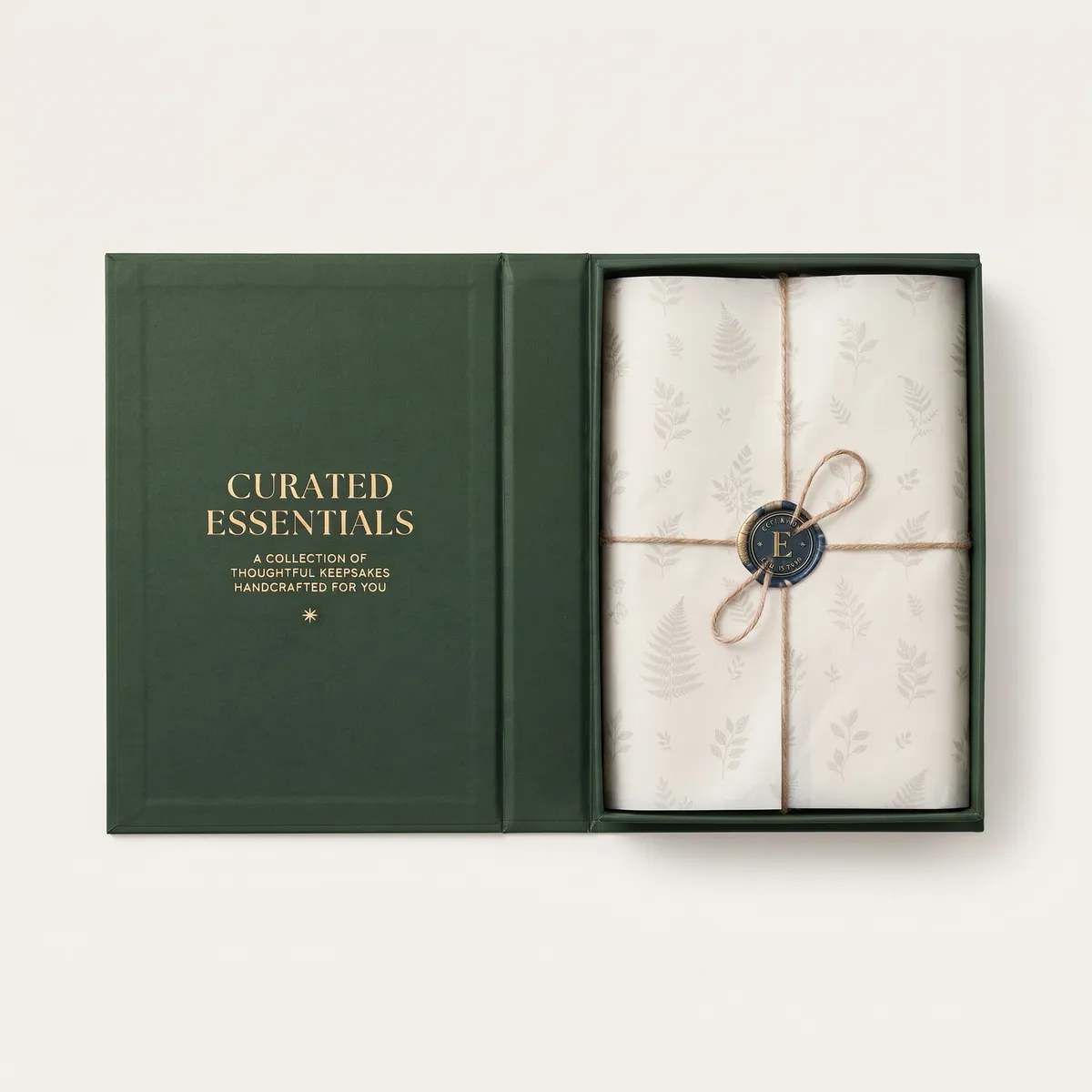
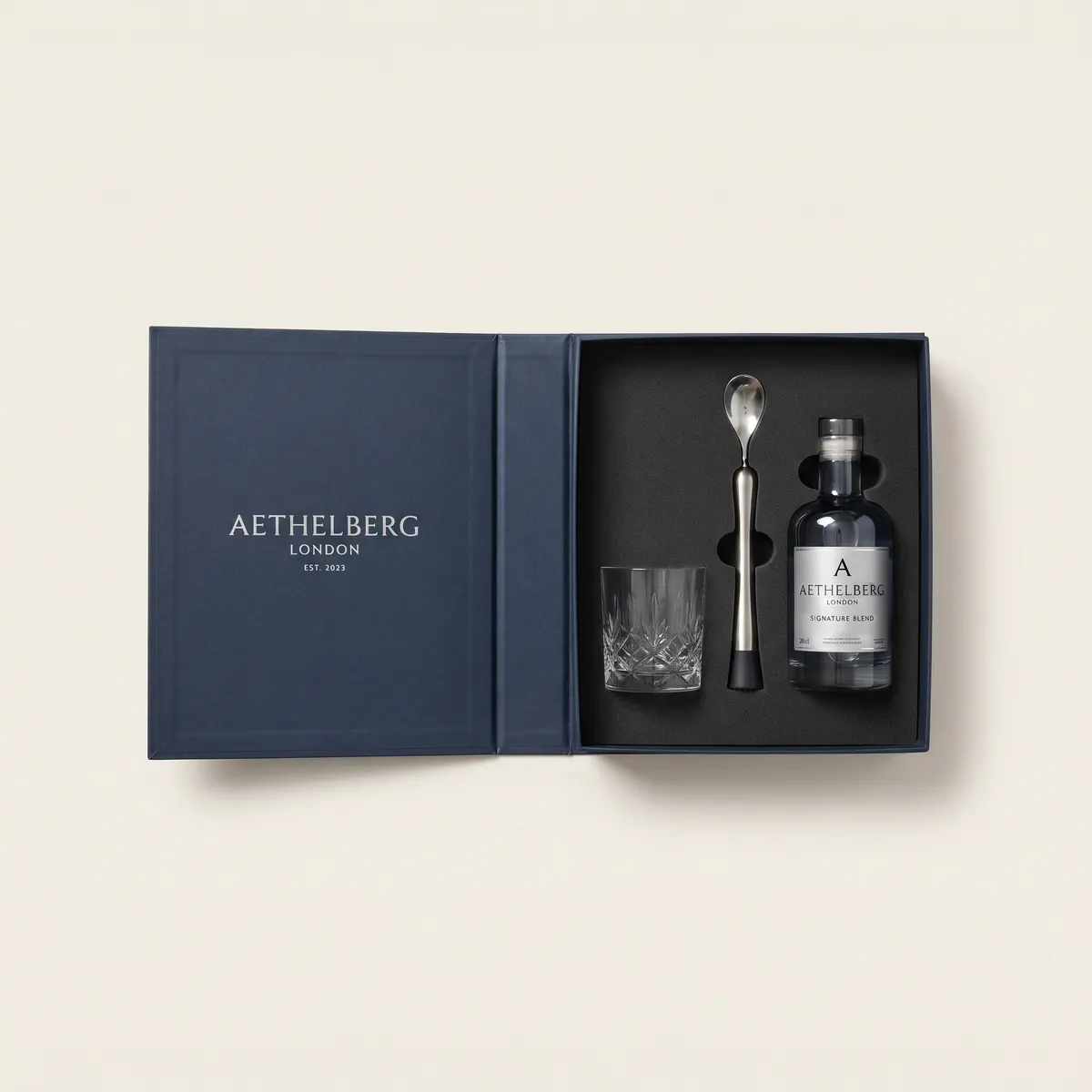
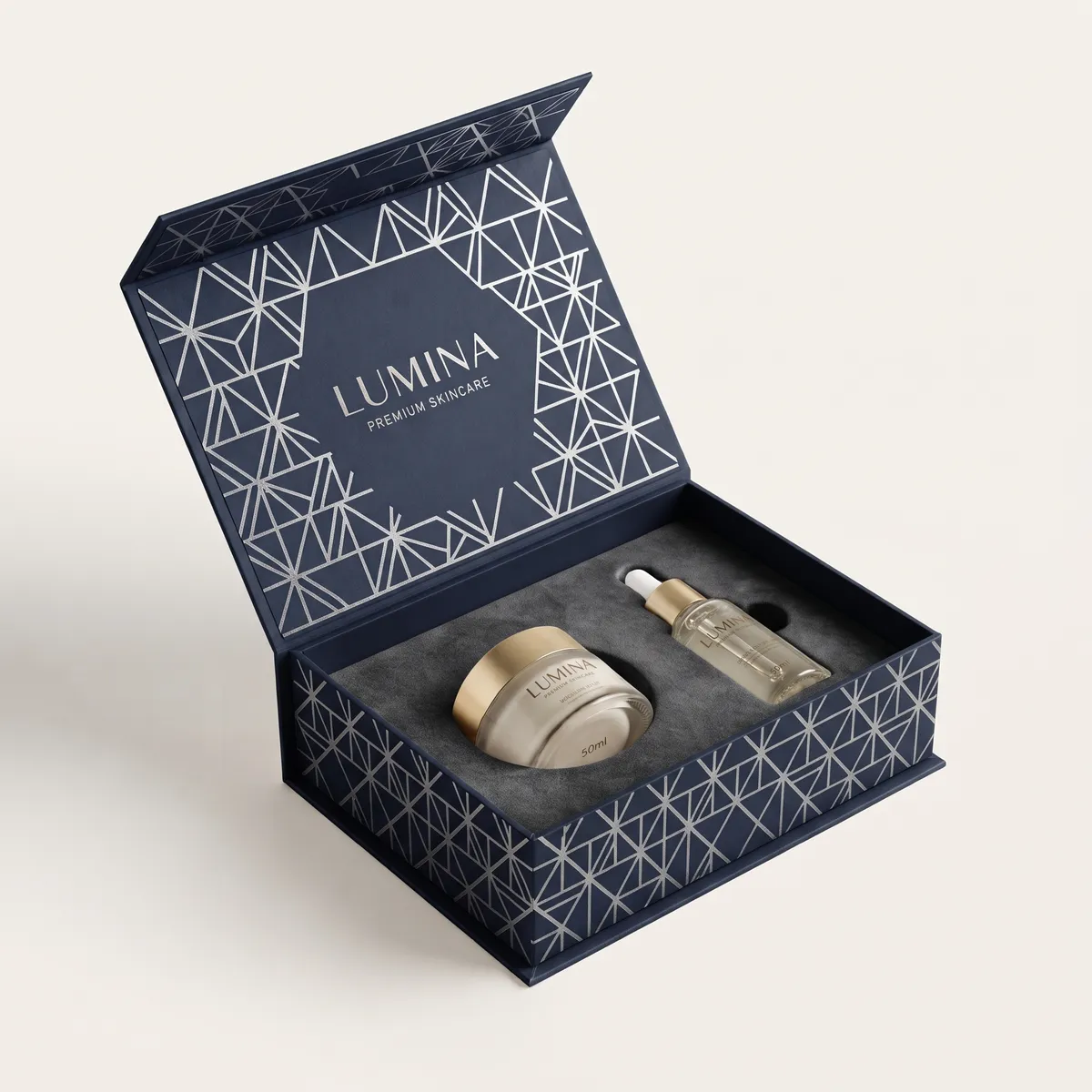
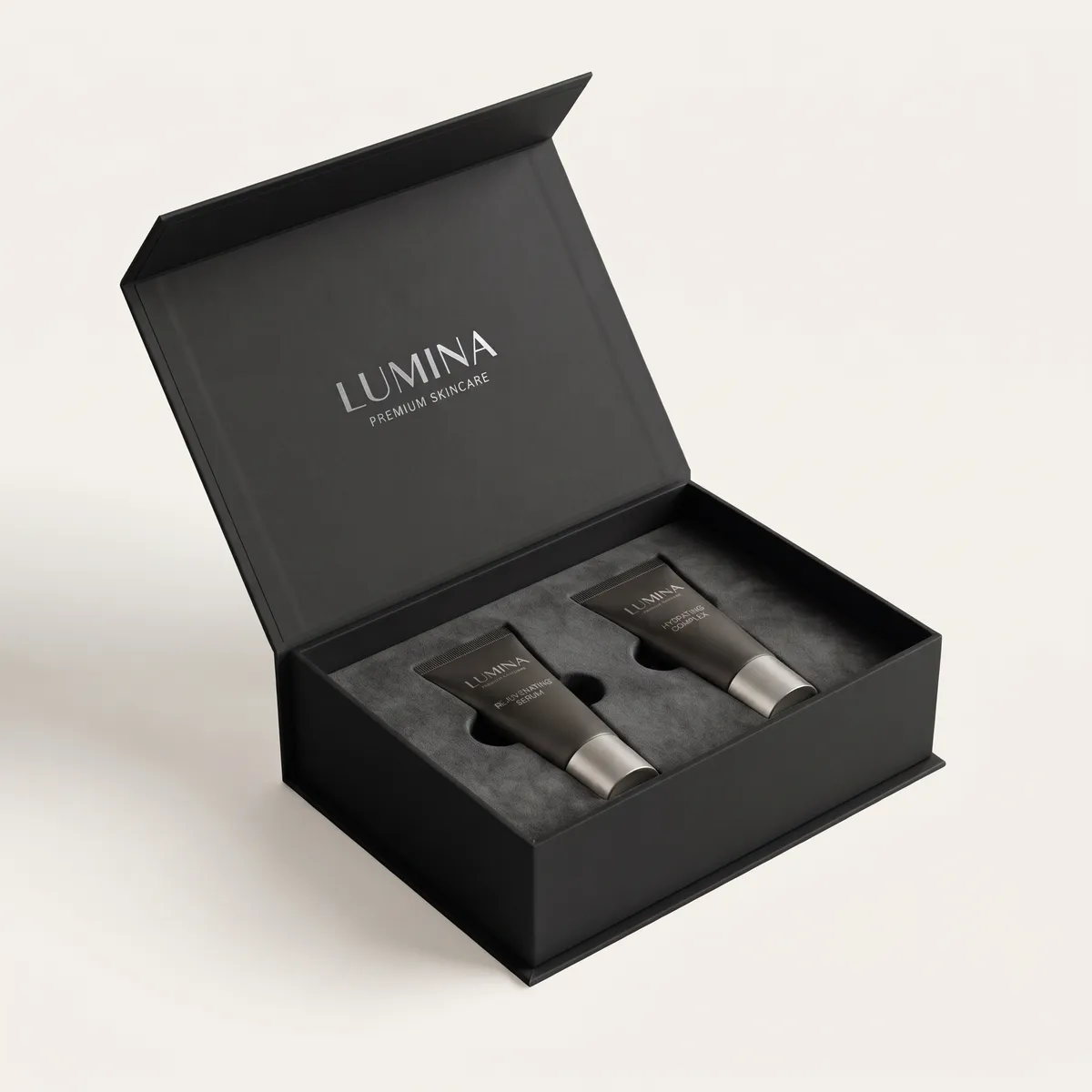
Book style magnetic closure boxes open on a hinged spine like a cover, so the lid swings rather than lifts and the product sits laid out in a wide, flat reveal. That view exposes everything simultaneously, so a fitted presentation tray matters. For shipping, the spine can spring open, so add a secondary closure or an outer carton. Rigid construction takes 20 business days.
Ours are on Trustpilot, where we can't edit them or choose which ones you see.
Read them on Trustpilot →(opens in a new tab)Four stages, twelve days
Quote confirmed
A specialist checks your spec against the board and comes back with a firm price inside 4 business hours.
Proof approved
You get a flat dieline and a 3D render. Nothing goes to press until you approve it in writing.
On press
Print, die-cut, glue, and fold. You get a press-side photo the day your job runs.
QC and delivery
Every pallet is sampled against the digital proof or physical sample you approved, then shipped with tracking to your dock or 3PL.
If a box doesn't match the digital proof or physical sample you approved, we reprint the run at no charge.
Read the reprint terms →Know exactly what you're ordering.
A Box That Opens Like a Hardcover
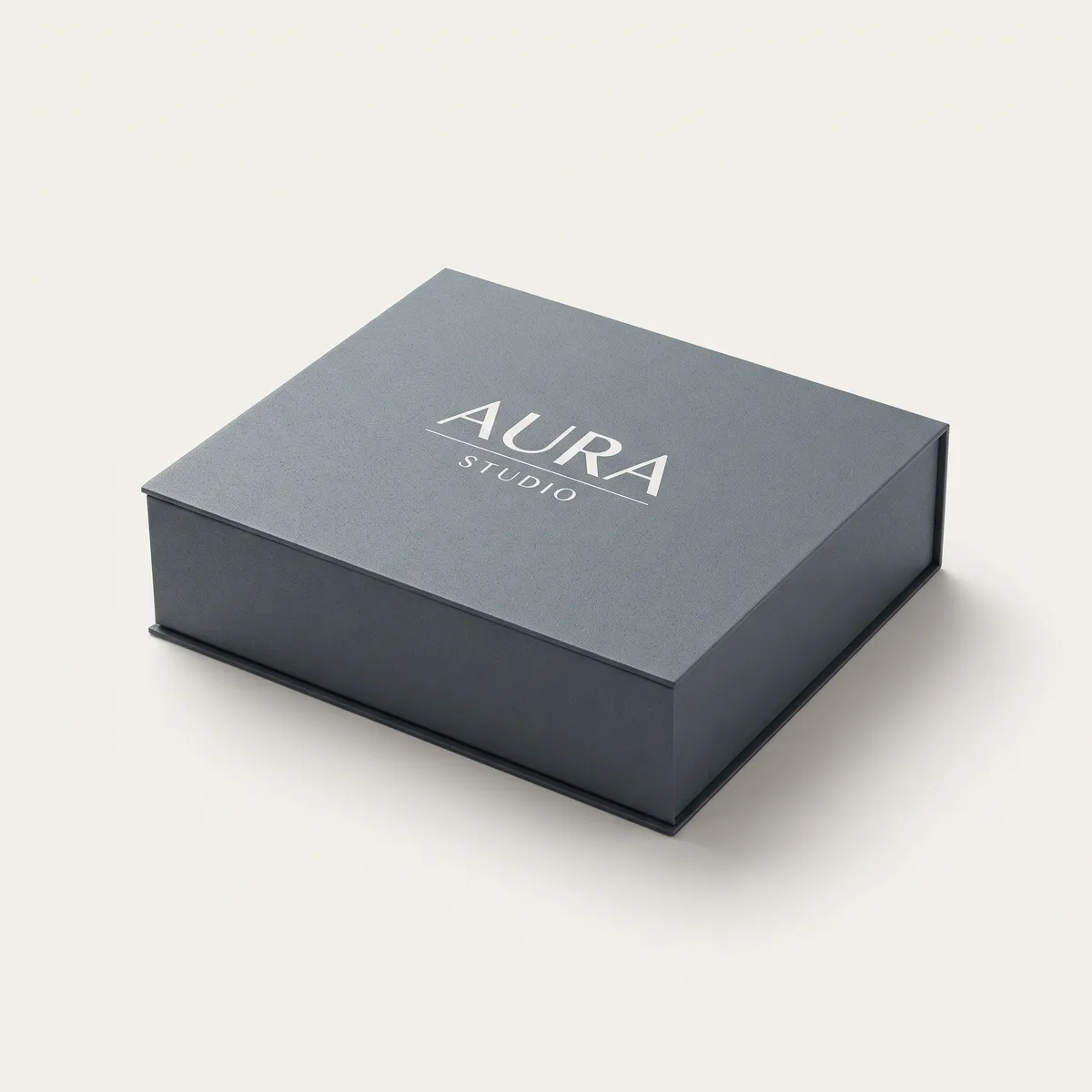
Closed, a book style box looks like a thick hardback lying on a table: a front cover, a back, and a spine running down one side. The front cover is held to the base by magnets along its opening edge, and opening it means turning it like the first page. Because the cover never leaves the box, the whole thing can sit on a shelf spine out afterwards, which is one reason collectors and gift recipients hold on to them.
It's commonly built on a buxboard core under a printed wrap. Buyers here tend to sell sets rather than single items: launch kits, sample collections, tech bundles, stationery and anything where the customer is meant to see every piece at the same moment.
Spine, Covers and Tray in a Book Style Build
The spine joins the cover to the back of the box, so the cover swings sideways rather than lifting.
| Component | Specification |
|---|---|
| Construction | Hinged cover on a spine, base below |
| Core | Buxboard, wrapped |
| Closure | Magnets concealed in cover edge and base |
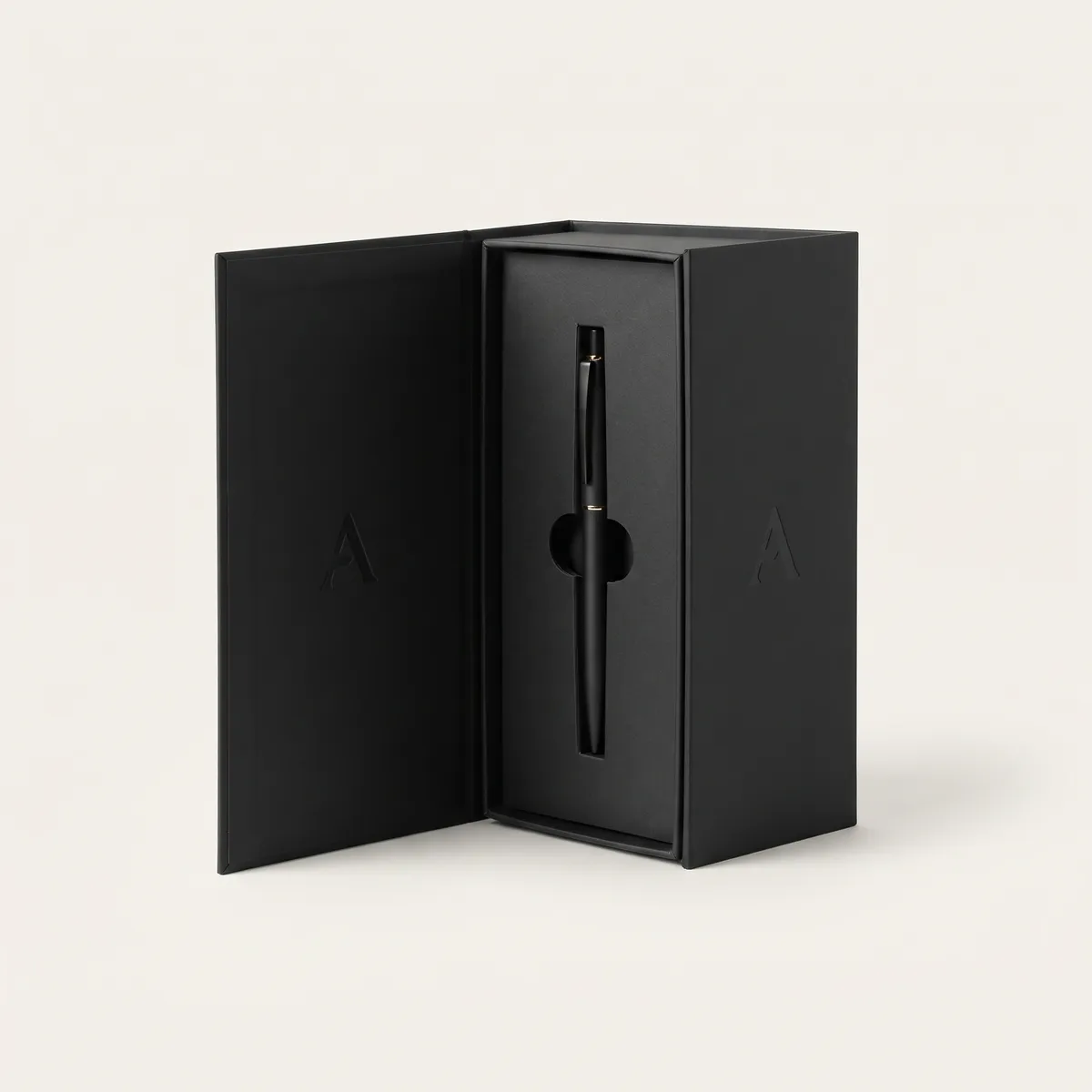
| Interior | Fitted tray with a place for each item |
| Size | Set by the largest item and the item count |
| Wrap | Printed paper, linen or textured paper |
The dense buxboard covers and spine do the structural work while the wrap carries the artwork. Because everything is laid out flat, the depth of the base is set by the tallest item in the tray, not the average, so send us that measurement first.
Why a Swinging Cover Beats a Lift-Off Lid for Sets
A lift-off lid shows a set from above, and if the box is deep, one layer at a time. A cover that swings to the side shows the whole tray in a single view, the way a book falls open on a spread. For a kit of six or eight items, that's the difference between the customer seeing the range you put together and the customer digging for it.
The cover also stays with the box, so the set closes back up as neatly as it arrived. That's why presentation sets given as gifts so often come in this format. If you're boxing a single item, the spine adds little; a standard magnetic box or a lid and base does the same job for one product.
Printing Across a Spine Without Cracking the Art
The spine bends every time the box is opened, so it's where print fails first. Solid color and foil laid across the fold will crack along it over time. Keep the spine to a light tint or a single line of type sitting between the fold lines, the way a title runs down a book.
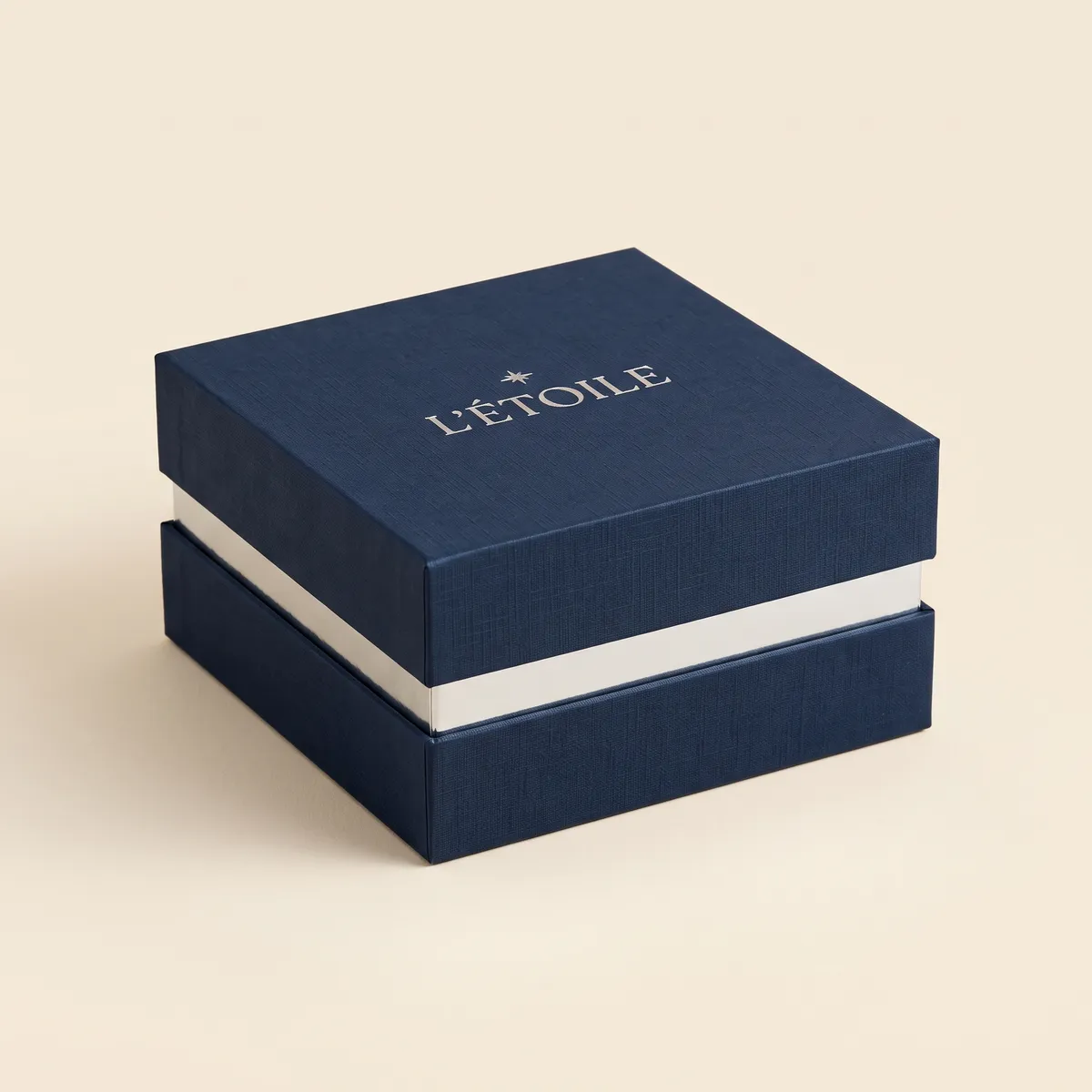
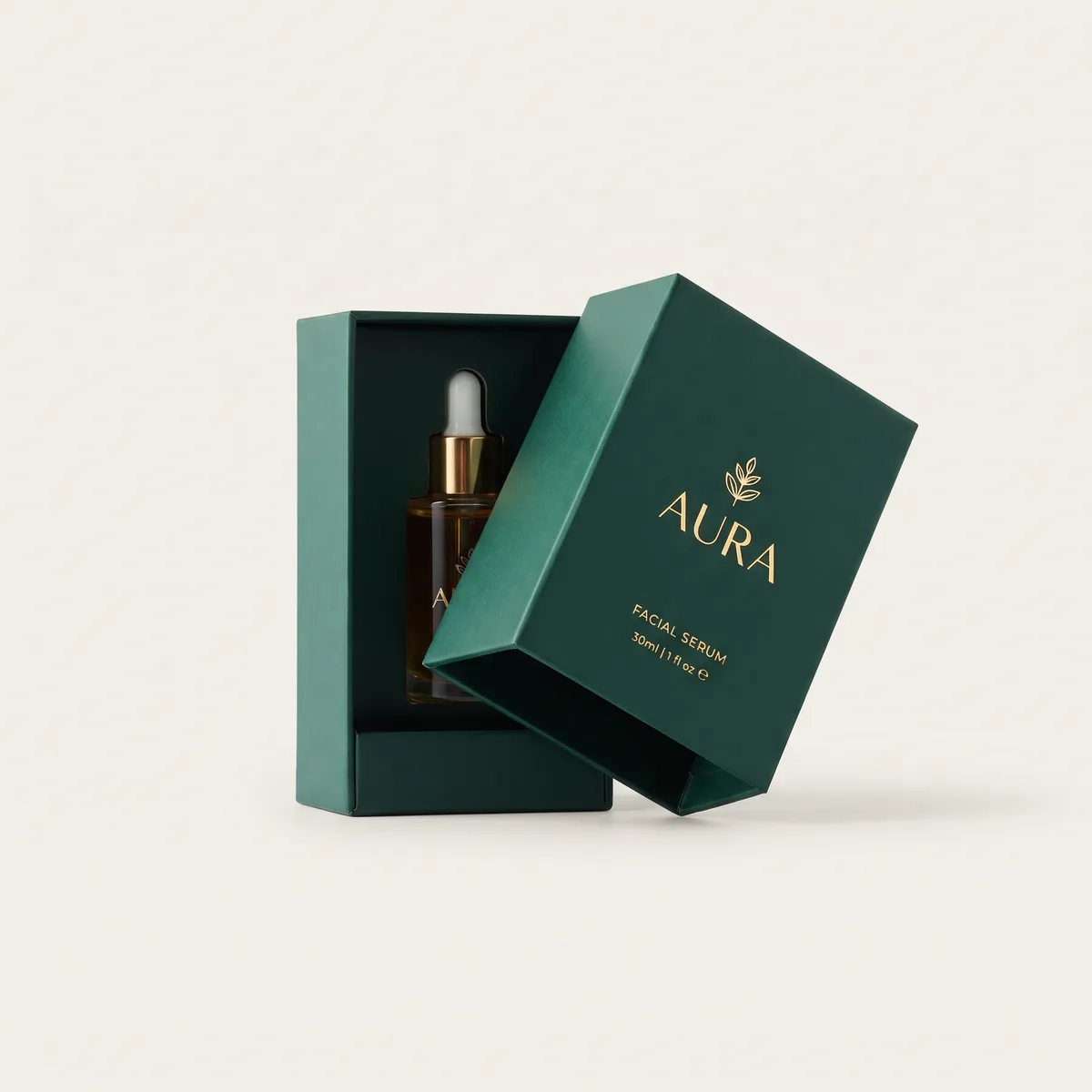
The front cover is a flat, uninterrupted panel and takes any of the rigid finishes: foil stamping, embossing, debossing, spot UV and soft-touch lamination. Buxboard's density gives an emboss somewhere to press into, which suits a title or crest on the cover. Before artwork starts, tell us which way the box will sit on a shelf, so any spine text runs the right way up when it's stored.
Book Style Boxes for Device Kits, Launch Sets and Samplers
The format suits anything sold as a set of parts that should be seen together. Device kits with chargers and cables laid out are a common case, with the device in a central cavity and each accessory in its own slot, so nothing looks missing or tangled when the cover opens.
Beauty brands use it for palettes and sample collections. Tea and coffee brands box tasting flights in it. Stationery, pen and art supply brands use it for sets that are kept and refilled. Press and influencer kits for launches are another regular order, since the opened box photographs as one flat, readable image. Watch and jewelry brands selling several pieces as one set use it for the same reason.
Item Sizes and Counts We Need for a Spine-Hinged Box
A quote for this build depends on the tray more than the box, so the more we know about the contents, the closer the first price will be. Send the dimensions of each item and how many go in, and tell us whether the box travels on its own or inside another carton.
We build the dieline from that and confirm internal and external sizes in writing. The quote includes dies, plates and setup, with nothing added after you approve it, and shipping is already in the price. Build time is 20 business days from proof approval, and rush is quoted upfront at an extra cost. Orders start at 100 boxes. Every box passes a three-stage check before it leaves, including the fit of each item in its slot.
One connected process, start to finish.
Structural Design
Dieline drafted to your exact fit and freight tolerances.
Proof & Sample
Sign off on a digital proof, or request a physical sample.
Tooling
Dies and plates are cut for your job and archived on file.
Production
Print, die-cut, and assembly run under in-line quality checks.
Ship & Reorder
Freight goes out, and the cycle resets for your next run.
Steady process. Powerful results.
Like everything we build, our process is engineered to hold up — no shortcuts, no surprises. Five dependable stages that run the same way every single time, so reorders are just as fast as the first order.
- One dedicated teamFrom first sketch to final freight, the same people carry your order start to finish.
- Dies archived on fileReorders skip tooling and re-setup entirely — we already have your exact spec.
- Checked against your sign-offEvery run is inspected against the digital proof or physical sample you approved.
Set up your file once, correctly
Nine in ten delayed jobs are delayed by artwork, not production. Match these four rules and your proof lands the next morning.
- Bleed1/8 in (3 mm) past every cut line
- Safe ZoneKeep text 1/4 in clear of every crease
- ColourCMYK or named Pantone. No RGB.
- Resolution300 dpi at final size, fonts outlined
No print-ready file?
Send a logo and a rough idea. Our studio builds the production file free with any order over 500 units — you keep the source file either way.
Ask the StudioBackground art must run all the way to the outer bleed edge. Anything inside the white dashed line survives fold tolerance.

What brands say about this box
They live there rather than here, where we can't edit them, delete them, or pick which ones you get to see. That is exactly what makes them worth reading.
Read all reviews on Trustpilot(opens in a new tab)Answers before you have to ask.
How does a book style box open?
On a hinged spine, like a cover, so the lid swings open rather than lifting off. That gives a wide, flat reveal with the product laid out, which suits presentation sets and gifting.
Can book style boxes hold a fitted tray?
Yes, and it usually needs one. The wide flat opening shows everything at once, so an untidy interior is immediately visible. A tray holds each item in a defined position.
Are book style boxes practical for shipping?
Less than a lidded build, since the hinged spine can spring open under pressure. For shipping we'd add a closure or ship inside an outer carton. For handover and retail they're ideal.
What's the lead time on book style boxes?
20 business days from proof approval, tray included. Rush is available at an extra cost quoted first, with shipping included rather than added later.
What's the minimum on book style boxes?
100 boxes. Free samples are available on orders above 10,000 units if you want to check how the tray holds your product before a full run.