
Large Jewelry Boxes
Large jewelry boxes are sized for complete sets and statement pieces, with a multi-cavity insert that keeps each item separate. A bigger footprint flexes more, so we specify a thicker core instead of enlarging a ring-box build. For a single piece, size down, because an oversized box makes an expensive item look lost. Large and small sizes can run together on one order.
Ours are on Trustpilot, where we can't edit them or choose which ones you see.
Read them on Trustpilot →(opens in a new tab)Four stages, twelve days
Quote confirmed
A specialist checks your spec against the board and comes back with a firm price inside 4 business hours.
Proof approved
You get a flat dieline and a 3D render. Nothing goes to press until you approve it in writing.
On press
Print, die-cut, glue, and fold. You get a press-side photo the day your job runs.
QC and delivery
Every pallet is sampled against the digital proof or physical sample you approved, then shipped with tracking to your dock or 3PL.
If a box doesn't match the digital proof or physical sample you approved, we reprint the run at no charge.
Read the reprint terms →Know exactly what you're ordering.
Large Jewelry Boxes Built Around a Whole Set
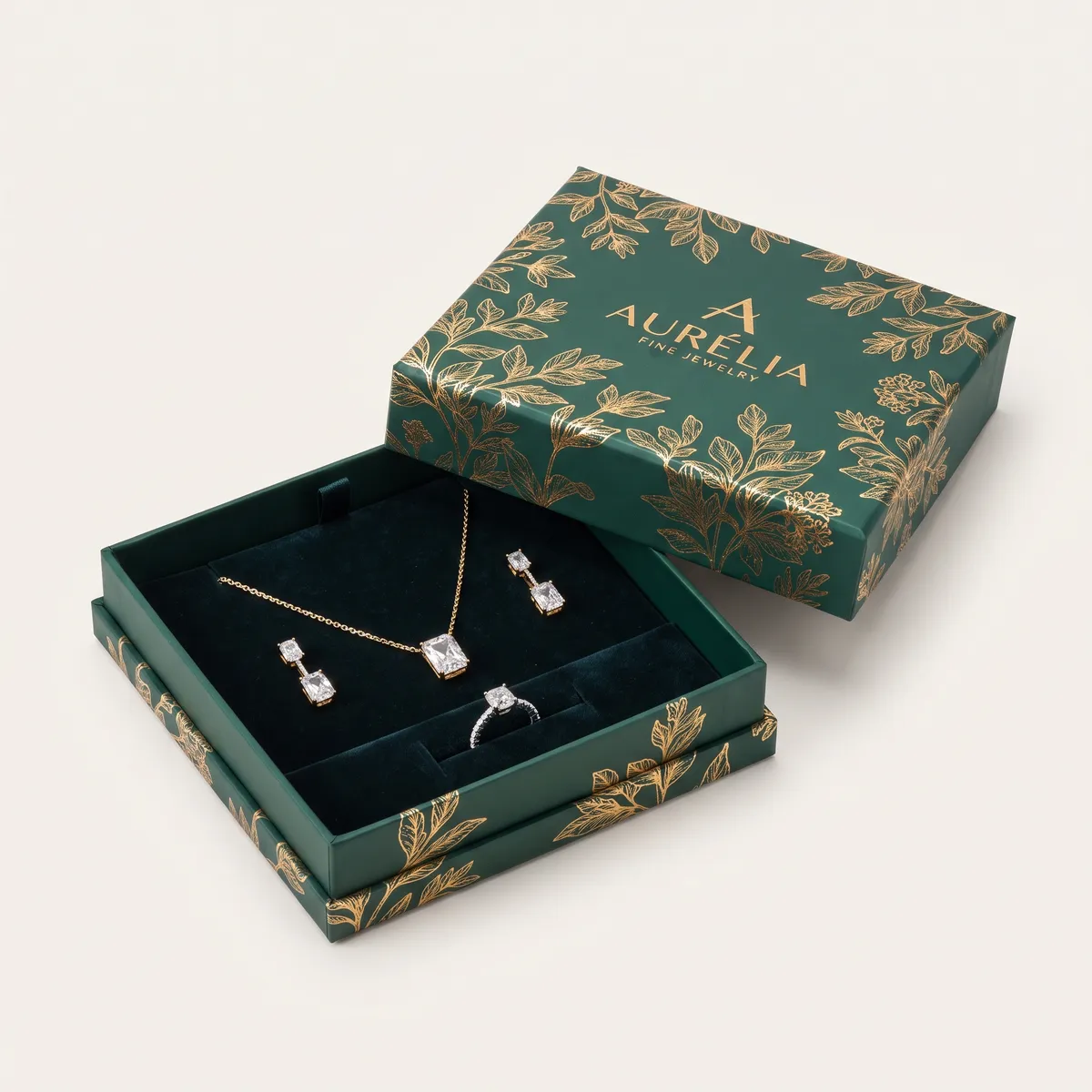
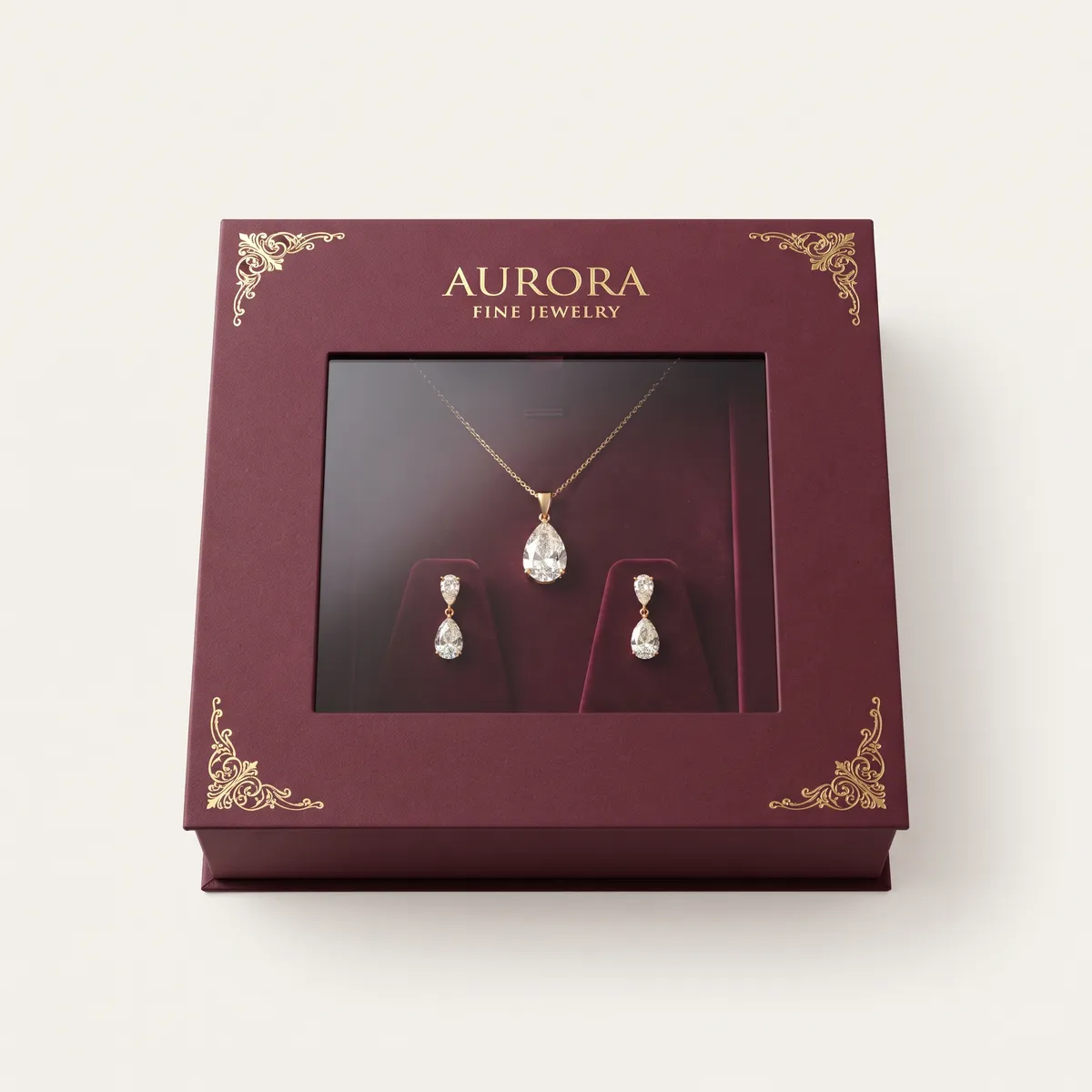
When a necklace, earrings and bracelet sell as one purchase, they need to arrive as one presentation, with each piece in its own place. Three small boxes in a bag look like three items. One large box with a divided insert looks like a set, and the price of a set depends on that. Each large box is sized from the contents outward: the insert is laid out first around the actual pieces, and the box follows it. They suit bridal jewelers, brands selling matched sets, and anyone with a statement collar or cuff too broad for a standard box. They also serve press and launch kits, where several pieces from a new collection go out together.
Large Jewelry Box Construction for Wider Spans
A bigger box has more unsupported board across the lid and base, so the build changes as well as the size. Rather than stretching a small dieline, we specify a thicker rigid core so the lid doesn't bow when pressed in the middle.
| Attribute | Detail |
|---|---|
| Core | Rigid grayboard, heavier than a ring-box build |
| Folding option | Coated board for lighter sets |
| Insert | Multi-cavity foam or card, one cavity per piece |
| Cavity fit | Within a millimeter or two of each piece |
| Lid fit | ±0.5mm tolerance on rigid |
| Size | Set by the insert layout |
Why a Deep-Tray Lid-and-Base Holds a Multi-Piece Set
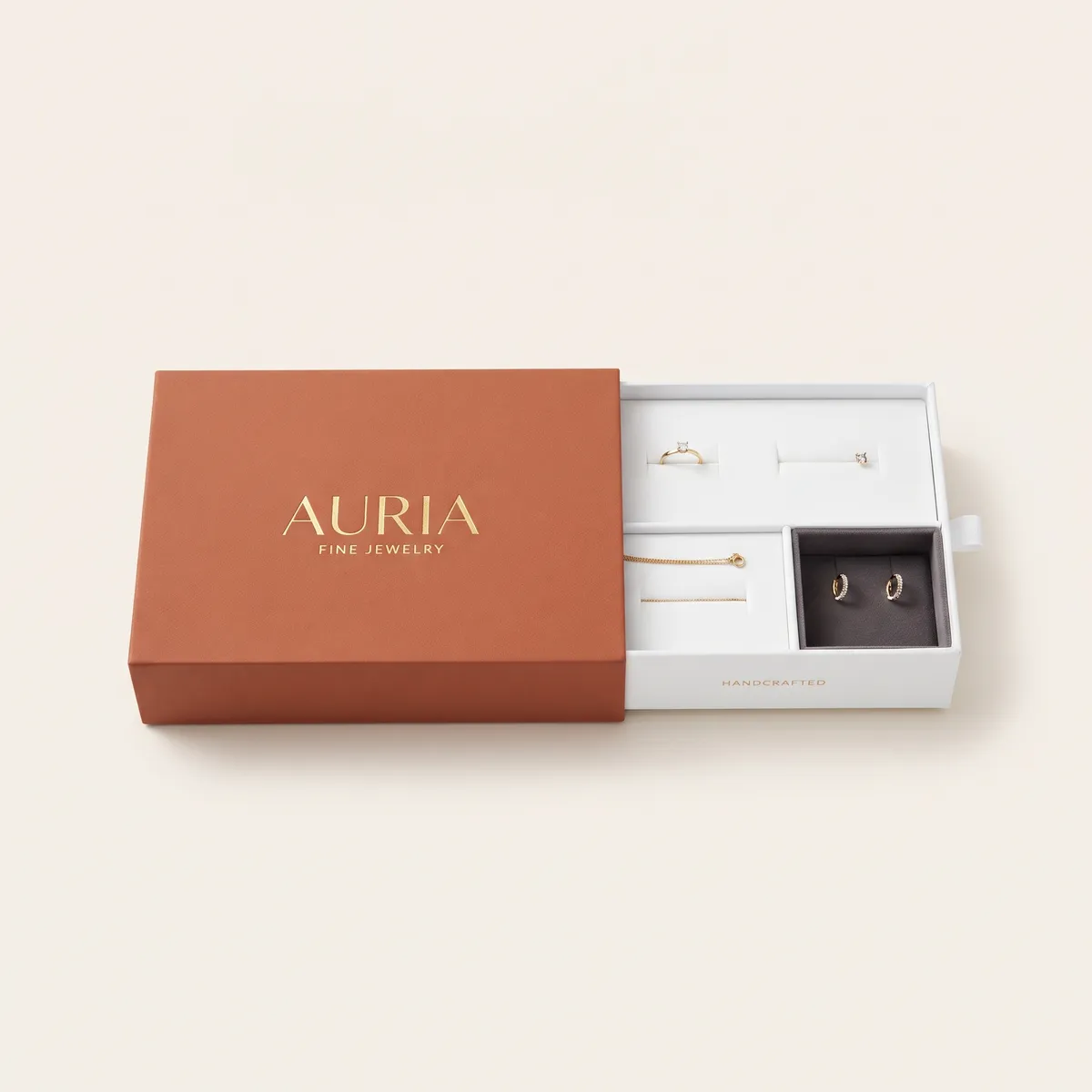
A set needs a base deep enough that each cavity holds its piece below the rim, so nothing catches when the lid comes off. The deep-tray lid-and-base format does that simply. The insert sits in a tray with proper walls, and the lid lifts to show everything at once, which is how a set is meant to be seen. A drawer build hides half the contents until it is fully pulled out, and that works against a set sold on the full picture. A magnetic flap works too, but it adds cost on top of a larger wrap. For most sets, the deep tray with a lift-off lid is the build that shows the most for the least.
Using the Bigger Lid on a Large Jewelry Box
A large lid gives you something smaller boxes can't: room. A foil logo can sit with space around it rather than crowding the edges, and a printed wrap has enough area to show its full repeat. For sets bought as gifts, a colored interior or printed lid underside gives a second moment once the lid is up. The trade-off is that a big flat panel shows flaws plainly. Gloss on a dark wrap shows every fingerprint across a wide lid, so matte or soft-touch is the safer film. Embossing works well here, because the heavier core gives a press enough depth, but keep it to the logo. An embossed border across a large lid tends to look dated.
Large Jewelry Boxes for Bridal Sets and Statement Pieces
Bridal sets are the largest share: a necklace and earrings for the day, sometimes with a bracelet, sold as one item and kept afterward. Anniversary and milestone jewelry follows the same pattern, and jewelers often display these boxes beside their other bridal and anniversary gift sets. Statement pieces are the second use: a broad collar, a wide cuff or a layered necklace that would bend in a standard box. Brands with matching collections use one large box as the hero set and smaller boxes for single pieces, keeping the finishes identical across the range. Some brands send large boxes to press and stylists, where several pieces travel together and are photographed in the box.
How Large Jewelry Box Orders Are Sized and Scheduled
Sizing starts with the set. Tell us every piece and its dimensions, and we lay out the insert cavities around them. Then we build the box dieline from the insert outward and confirm internal measurements in writing before the proof. Revisions are free and unlimited until the layout is right. Rigid large boxes take 20 business days from proof approval, and folding versions take 8–12. Rush costs extra and is quoted upfront. Orders start at 100, and if the delivered run doesn't match the approved proof, we reprint at our cost. Brands ordering above 10,000 get free samples first, which is worth taking on a box this size, since the insert layout is the part most worth checking in hand.
One connected process, start to finish.
Structural Design
Dieline drafted to your exact fit and freight tolerances.
Proof & Sample
Sign off on a digital proof, or request a physical sample.
Tooling
Dies and plates are cut for your job and archived on file.
Production
Print, die-cut, and assembly run under in-line quality checks.
Ship & Reorder
Freight goes out, and the cycle resets for your next run.
Steady process. Powerful results.
Like everything we build, our process is engineered to hold up — no shortcuts, no surprises. Five dependable stages that run the same way every single time, so reorders are just as fast as the first order.
- One dedicated teamFrom first sketch to final freight, the same people carry your order start to finish.
- Dies archived on fileReorders skip tooling and re-setup entirely — we already have your exact spec.
- Checked against your sign-offEvery run is inspected against the digital proof or physical sample you approved.
Set up your file once, correctly
Nine in ten delayed jobs are delayed by artwork, not production. Match these four rules and your proof lands the next morning.
- Bleed1/8 in (3 mm) past every cut line
- Safe ZoneKeep text 1/4 in clear of every crease
- ColourCMYK or named Pantone. No RGB.
- Resolution300 dpi at final size, fonts outlined
No print-ready file?
Send a logo and a rough idea. Our studio builds the production file free with any order over 500 units — you keep the source file either way.
Ask the StudioBackground art must run all the way to the outer bleed edge. Anything inside the white dashed line survives fold tolerance.
What brands say about this box
They live there rather than here, where we can't edit them, delete them, or pick which ones you get to see. That is exactly what makes them worth reading.
Read all reviews on Trustpilot(opens in a new tab)Answers before you have to ask.
What size counts as a large jewelry box?
There's no fixed threshold — it's whatever holds a full set or a statement piece with room for a multi-cavity insert. Practically that means anything from a necklace-and-earring set upward. Tell us what's going inside and we'll size it.
Do large boxes need a stronger build?
Usually. A larger footprint means more unsupported span in the base and lid, so a board that holds at ring-box size will flex when scaled up. We increase the core thickness rather than just enlarging the dieline.
Are large boxes worth it for single pieces?
Rarely. An oversized box makes an expensive piece look lost, which works against the impression you're paying for. Size to the piece — a snug box reads more considered than a roomy one, and costs less.
How long do large jewelry boxes take to produce?
20 business days for rigid from proof approval, or 8–12 for folding builds. Larger dimensions don't extend it. Rush production is available at an added cost stated upfront, with shipping included.
Can I order large boxes alongside smaller ones?
Yes, and running them together shares setup costs. Most brands need two or three sizes across a range rather than one, and matching finishes across them keeps the collection looking coherent.