How Much Does Cardboard Box Weigh? Complete Weight Chart Guide
Find out how much does cardboard box weigh. It depends on multiple factors. On average, a 12x12x12 cubic-inch box is around 10.4 pounds. Read on for the details!
How Much Does Cardboard Box Weigh? A Complete Guide
Cardboard boxes are used in shipping, storage, and packaging. You can find them in the warehouses, retail shops, and at home. People use them in the transportation, storage, and export of goods. One practical question often comes up: how much does cardboard box weigh?
The answer is not always simple. A small single-wall box is much lighter than a big one, a double-wall box. Size affects weight. Thickness also affects weight. The type of flute further influences weight. The paper grade even varies the final mass.
A typical small shipping box can weigh less than 1 pound. A big moving box with 2 walls can weigh up to 5 pounds or more. Triple-wall boxes used in industries weigh even more. The density of the corrugated cardboard box directly impacts the total weight.
Knowing the weight of the box is important for many reasons. Shipping companies such as UPS, FedEx, and DHL use dimensional weight for shipping costs. Storage planning also depends on the total load weight. There are load limits for warehouse racking systems. Ignoring the exact weight can increase costs.
This guide will teach you how to determine the weight of a cardboard box step by step. You will see real examples and compare the box size and the materials. You will also know the effect of weight on shipping cost and storage planning. Keep reading!
How Much Does a Cardboard Box Weigh? A Quick Answer
A cardboard box weighs differently depending on several factors. Its size is the most important. The weight of cardboard box depends on the thickness of the cardboard. The larger a box, the greater the material. The weight is greater for the material.
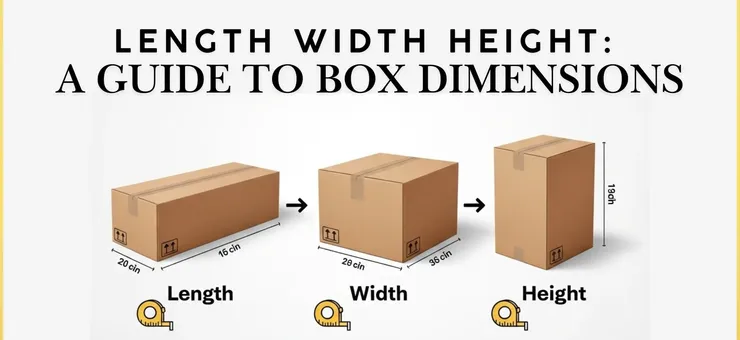
The size of the box also determines the weight. Measure the length, width, and height. Divide these three numbers by multiplying. This will give you the total size value. Then take this number and divide it by a coefficient. The size is converted into weight through the coefficient. The coefficient value depends on the unit. Different units need different formulas.
How To Calculate The Weight of A Cardboard Box?
Consider the important factors before calculating the weight of the cardboard box. Have a look at them.
Box Dimensions
The size of the box makes a colossal contribution to the weight. Greater boxes require additional material. This increases the overall weight. Determine the length, width, and height of the box. These dimensions are estimated to provide an estimate of the final weight.
Material Type
The type of material also has a bearing on weight. Densities of various materials vary. The corrugated cardboard is more likely to be heavier than kraft paper. The harder alloys do add weight, but provide a greater degree of protection.
Box Thickness
The weight is directly related to the thickness of the boxes. Cardboard is stronger and made of a thicker material. This enhances the box of strength and weight. Single-wall boxes are very likely to be light. Cases with a single or triple wall are thicker in weight because of the extra covers. Cardboard boxes that are corrugated are heavier than the flat boxes. They are more resistant and stronger. Packaging is done in kraft paper boxes that are robust. The weight of a final box depends on the material to be used and on the thickness, as well.
Box Design
The box pattern can add capacity to weight. Details such as flaps, handles, inserts, and reinforced areas use additional material. These attachments increase the protection but add weight to the box.
Filler Material
Weight is also affected by the materials used when packing. Bubble wrap is used to gain extra mass, pack poly styrene and paper fillers. The more filler, the greater the weight of the package.
Weight Estimation Formula
In the case you know the dimensions and the material details, then you can know the weight of the box by using the following formula:
Weight = Volume × Density
Volume= Length Width x Height.
Density = Mass of material in 1 unit of volume.
Online box weight calculators can as well be used. Digital scales are another most convenient measure that can be easily undertaken. These are fast and reasonably, good estimates.
To find the weight of a box inpounds (lbs), use the following equation.
Length x Width x Height/166 = Cardboard Box Weight (CBW).
Length x width x height = Length x width x height in inches.
A typical dimensional dividend is 166. It is suggestive of typical corrugated density in shipping. Carriers use the same divisors to compute billable weight. The outcome provides an approximate weight in pounds.
To calculate the Box weight:
Suppose the sides of the box are 12 inches.
To begin with, scale up all dimensions of a box:
CBW = 12 × 12 × 12 / 166
CBW = 1728 / 166
CBW = 10.4 lbs
This value is the dimensional shipping weight. Carriers make this value against the actual scale weight. They charge it at a high price.
| Box Dimensions (inches) | Volume (in³) | Estimated weight (lbs) |
|---|---|---|
| 6 × 6 × 6 | 216 | 1.3 |
| 12 × 12 × 12 | 1,728 | 10.4 |
| 24 × 18 × 18 | 7,776 | 46.8 |
Average Weight of Cardboard Box Sizes
It is important to estimate the weight of an average-sized box and keep this in mind when determining the volume of storage space needed or when determining the cost of transportation. The mean of the weight of different sizes of cuboid-shaped boxes. They are bigger on one side, and rectangular-shaped prisms are as follows:
Extra-Extra-Large Boxes (50-60 inches):
48x60x48 inches: 30-36 pounds (14-16 kg)
54x54x54 inches: 36-42 pounds (16-19 kg)
60x60x60 inches: 42-48 pounds (19-22 kg)
Extra-Large Boxes (40-50 inches):
36x48x30 inches: 18-22 pounds (9-11 kg)
40x40x36 inches: 22-26 pounds (11-13 kg)
48x48x42 inches: 26-30 pounds (13-14 kg)
Large Boxes (30-40 inches):
24x36x18 inches: 10-12 pounds (5-6 kg)
30x30x20 inches: 12-15 pounds (6-7 kg)
36x36x24 inches: 15-18 pounds (7-9 kg)
Medium Boxes (20-30 inches):
18x18x10 inches: 4-6 pounds (2-3 kg)
20x20x12 inches: 6-8 pounds (3-4 kg)
24x24x14 inches: 8-10 pounds (4-5 kg)
Small Boxes (10-20 inches):
10x10x5 inches: 1-2 pounds (0.5-1 kg)
12x12x6 inches: 2-3 pounds (1-1.5 kg)
15x15x8 inches: 3-4 pounds (1.5-2 kg)
These principles concerning the standard-sized boxes should be borne in mind with respect to the weight of the boxes. Because it may vary depending on the cover material used, as well as any embellishments that may be added to the box.
How Much Does Cardboard Box Weigh In Ounces?
In some cases, shipments need smaller units of measurement. Light parcels and postal services are handy in ounces. It is easy to convert pounds into ounces.
1 pound = 16 ounces
CBW (oz) = CBW (lbs) × 16
CBW (oz) = 10.4 × 16 = 166.4 oz
This conversion improves labeling accuracy. It also eliminates billing errors.
| Box Dimensions (inches) | Volume (in³) | Estimated weight (oz) |
|---|---|---|
| 6 × 6 × 6 | 216 | 20.8 |
| 12 × 12 × 12 | 1,728 | 166.4 |
| 24 × 18 × 18 | 7,776 | 749.5 |
How Much Does Cardboard Box Weigh In KG?
Kilograms are commonly used in international shipping. You need to first of all convert inches into centimeters.
CBW (kg) = Length × Width × Height / 6000
L, W, and H should be in centimeters.
1 inch = 2.54 cm
For Example:
Consider that both sides are 12 inches.
12" box = 30.48 cm
CBW = 30.48 × 30.48 × 30.48 / 6000
CBW = 28316.8 / 6000 = 4.72 kg
Convert the weight in kilograms. The cubic centimeters are divided by 6000 to give kilograms. This equation approximates the dimensional weight of international carriers.
| Box Dimensions (inches) | Volume (in³) | Estimated weight (kg) |
|---|---|---|
| 6 × 6 × 6 | 216 | 0.59 |
| 12 × 12 × 12 | 1,728 | 4.72 |
| 24 × 18 × 18 | 7,776 | 21.25 |
How Much A Cardboard Box Weighs In Grams?
The weight of custom packaging is calculated in grams by manufacturers. Gram values are more accurate in the material planning.
1 kilogram = 1000 grams
Weight (g) = 4.72 × 1000
Weight (g) = 4720 grams
This technique is effective in small boxes as well as big packages. The higher grades of paper make the final gram weight. Mass is also added with moisture-resistant coatings.
These formulas help estimate the weight of cardboard box in grams across different measurement systems.
| Box Dimensions (inches) | Volume (in³) | Estimated weight (gm) |
|---|---|---|
| 6 × 6 × 6 | 216 | 590 |
| 12 × 12 × 12 | 1,728 | 4720 |
| 24 × 18 × 18 | 7,776 | 21250 |
How Much Does a Large Cardboard Box Weigh?
Use the same formula to determine the weight of any cardboard packaging box. The technique is effective with small boxes and cartons. The right dimensions are all that you require. The role of box dimensions is significant. Multiply the length, width, and height. Then, divide by the correct divisor.
The result of these calculations provides an estimated weight. They do not specify a scale weight. The weight obtained depends on the thickness of the cardboard. Board grade affects the total weight as well. The weight of the double-wall is greater than that of the single-wall. Waterproof layers are an additional weight.
To get valid results, weigh using a weighing scale. Shipping cost is calculated using dimensional formulae. They facilitate the packaging cost planning. These calculations are used daily by logistics teams.
The size of a large box in the packaging industry is 24 x 18 x 18 inches. This size brings about a volume of 7,776 cubic inches. An increase in the surface area increases the use of materials. The heavier the material, the more weight there is. You can convert the weight of a cardboard box in pounds, kilograms, ounces, or grams. There is a formula used in each unit. The last value is based on the measurement system.
Cardboard Standard Flat Box Weight by Size
Do you want to pack your products perfectly? You can do it by understanding the weight of the flat cardboard depending on its size. With the right size, you not only enhance the product's presentation but also reduce shipping costs.
Example:7x7x7 corrugated kraft shipping boxes are lightweight and ideal for small items. So, if you pack items in a box that is large or heavy, there may be a risk of damage during shipping. Once a product is damaged, it leaves a poor impression on customers. That's why choosing the right size is necessary. Some standard-size options are given below:
| Category | Size (inches) | Weight Range (lbs) | Notes |
|---|---|---|---|
| Small Box | 12 × 9 × 6 | 0.5 – 0.75 | Typically single-wall corrugated |
| Medium Box | 18 × 14 × 12 | 1.5 – 2 | Available in single or double-wall |
| Large Box | 24 × 18 × 18 | 2.5 – 3 | Commonly double-wall construction |
| Extra-Large Box | 24 × 20 × 14 | 4 – 5 | May include triple-wall reinforcement |
Box Material Comparison (Weight vs Use Case)
| Material Type | Average Weight | Typical Use Case |
|---|---|---|
| Kraft Paper | 150 – 180 g | Best for Lightweight packaging, eco-friendly, and dry goods |
| Corrugated (Single-Wall) | 0.75 – 1 lb (12" box) | Perfect for standard shipping and light to medium-weight products |
| Corrugated (Double-Wall) | 1.2 – 1.5 lbs | Suits heavy-duty shipping and heavier items |
| Paperboard (Non-Corrugated) | 100 – 200 g | Ideal for retail packaging, shoes, cereal, and lightweight items |
How Much Does A Pallet Of Cardboard Boxes Weigh?
A pallet's weight depends on a number of factors. The weight is influenced by the quantity of boxes. The size of the box also counts. This will have varying results based on the weight of individual units.
A pallet can have an average of 60 boxes. This pallet may be up to 30-50 pounds. It is a value that is dependent on box size and grade of material.
Take 50 medium boxes, as an example. For instance, each box typically weighs 10 pounds, 50 multiplied by 10. The weight of the pallet is 500 pounds. Now, suppose there are 50 big boxes. Suppose that they all weigh 15 pounds; 50 times 15. The weight of the pallet is now 750 pounds.
| Box Dimensions (inches) | weight (lbs) | weight (oz) | weight (kg) | weight (gm) |
|---|---|---|---|---|
| 24 × 18 × 18 | 46.8 | 749.5 | 21.25 | 21250 |
Large boxes contribute to the weight of pallets. The final load is also increased by the heavier grades of boards. The more the weight of the pallet, the higher the costs of shipping.
Cardboard Material Weight
There is a density value of cardboard material. The cardboard is corrugated. The weight of your cardboard boxes is approximately 0.69 g/cm3. The weight of chipboard (non-corrugated) is about 0.83 g/cm 3. These are approximate values.
Note: Cardboard is susceptible to moisture. It may gain some weight due to humidity. The storage conditions affect the density readings. The weight of a warehouse can vary from that of the workshop. Weight is more stable when it is dry. The fact that it is heavy does not necessarily mean that it is more durable.
Difference in Strength and Difference in Cardboard
There is a difference between weight and strength. The heavier the board, the better, though not necessarily stronger. Durability is not necessarily related to thickness.
The compression strength is influenced by the profile flute. The performance is also affected by paper type. The precision of the construction also varies the load capacity. The quality of cardboard and adhesives has an effect on structural integrity. A dense sheet might not be structurally strong. A lighter-weight board will perform better. Flute designs determine the weight of cardboard. Never use without checking strength ratings.
What is the Cardboard Box Weight Important?
The weight of cardboard packaging boxes has a direct impact on the shipping expenses. Carriers are charging based on the actual or dimensional weight. The larger the box, the greater the costs of transport. Minor weight variations are capable of increasing the overall expenses within a short time.
Durability and safety are also dependent on weight. The thickness of heavier cardboard is more likely. Additional coating may be more effective. The durability of boxes lowers the damage to products during transportation.
The cartons that are lighter are simpler to handle. There is improved safety and efficiency of storage. Well-stacked materials should be used to make the box. Shipping choices are also influenced by the regulations. Boxes that are overfilled can be against carrier regulations. Structural failure may be brought about by excess weight. Penalties and loss of product are avoided through compliance.
Key Factors That Affect Cardboard Box Weight
Many factors affect the box weight. The material used is important. There is extensive use of corrugated cardboard. It has a fluted flaking core. This framework enhances power and weight. Paperboard has a lower weight compared to corrugated. A medium-sized Kraft paper box is still light in terms of weight. The levels of density of each material are varied.
The weight of a wall is also different. Easy to carry are single-wall boxes. The use of a box with two walls will provide extra layers. The triple-wall designs are the heaviest. The box size of the cardboard also determines the weight. Length, width, and height measure surface area. With a larger surface area, more material is required. The heavier the material.
One such example is a 6-inch cube with a weight of 120-150 grams. A 12-inch cube weighs 200–250 grams. A 24-inch cube weighs 400–450 grams. The thickness has an effect on these values.
Cardboard Type
The cardboard type has a direct effect on weight. Cardstock is not as heavy as corrugated cardboard. The corrugated cardboard has fluted layers. These coatings enhance weight and strength.
Material Thickness
Durability and mass depend on thickness. Thick cardboard is heavier than thin cardboard. Heavy-duty boxes are made out of thicker sheets. Heavy materials are required to carry heavy or heavy products.
Box Design
The design of the box changes the weight. The one-wall box has a lower weight. The box with two walls is a heavier box. A triple-wall box adds additional weight. Additional layers enhance weight and strength.
How Cardboard Thickness Impacts Weight?
Cardboard that is thicker is more durable. It contributes to the mass, too. Flute profiles have an influence on strength and density. The most common types of flutes are A, B, C, E, and F.
A box that has two walls weighs more than one that has a single wall. The box with the highest weight is a triple-wall box. The strength of compression depends on the flute height and paper grade. Massive material does not necessarily imply greater strength.
How Box Design Features Add Extra Weight?
Design characteristics add up to mass. Handles require additional material. Corner reinforcement is weight-bearing. Special closures also increase density. Custom printing adds more layers of ink. The mass is increased at surfaces covered with protective material. Internal inserts add up to the total weight. Final mass changes in both features have low values.
The Effect of Moisture on Cardboard Weight
The moisture of the air is absorbed by the cardboard. Cardboard box’s weight is increased by humidity. Under wet conditions, a box can increase its weight by 5-10% weight. The density of materials is altered by water uptake. Dry storage does not have fluctuating weight. Wet weather discourages power. The storage should be kept dry in the long term.
Why Knowing Box Weight Helps You Save Money?
The cost of shipping is calculated by weight. Storage security is related to carrying capacity. Boxes containing too much weight can fall. Consciousness of weight averts injury. The proper weight enhances the safety of stacking. It will help with warehouse planning. It saves on unwarranted shipping costs.
Practical Tips to Control Box Weight
Consider the following practical tips to control the box weight.
Choose Lightweight Materials
Prefer using lightweight materials. Single-wall cardboard can be used to pack lighter products. It cuts down on weight and shipping expenses. It still provides good security for different items.
Avoid Overpackaging
Minimize the amount of packaging used. The weight of the box is increased by additional materials. Grab packs and bound up. This will help in saving space and reducing costs.
Distribute Weight Evenly
Evenly distribute the weight amongst the boxes. This also makes the potential excessive heaviness of one box impossible. Balanced boxes are more convenient to work with. They are also safe when being shipped.
Use Multiple Smaller Boxes
Use several smaller boxes. It is advisable not to put all in the same big box. Small boxes are easier to carry. They also help to prevent damage to products.
Keep Boxes Dry
Store the boxes where there is no moisture. There is moisture that can be introduced into cardboard. Wet boxes are fragile and cumbersome. Correct storage aids in keeping up with the quality of the box.
Add Reinforcement Only as Necessary.
Further assistance must be applied in the required situations. Extraneous tape is additional loading. When required, reinforce boxes. This renders the packaging less costly and efficient.
Bonus Tip:
Choose the size of the box that suits your products. Fitting minimizes space. It also decreases the need of fillers. This helps to reduce the weight of packages.
Optimal Cardboard Box Weight for Cost-Effective Shipping
Shipping companies determine the charges based on size and weight. The two have a direct impact on the total cost. Having box’s weight low will be cost saving. The safety of the product needs to be safeguarded.
Boxes of 0.5-3 pounds are good. This spectrum strikes a balance between efficiency and durability. Lightweight products should be shipped using smaller packages (single-wall boxes). Double-wall boxes protect the heavyweight products.
The correct grade of the board is important to select. Transit damage will be eradicated by heavy material. Additional thickness adds to the cost of shipping. Keep safe and ever productive.
Check with your shipping carrier before shipping. All companies use dimensional weight regulations. Prearrange and confirm limits. There will be no unnecessary bills because of effective communication.
Frequently Asked Questions About Cardboard Box Weight
What is the weight of a 12 × 12 × 12 box?
A 12 × 12 × 12 box usually weighs between 200 and 250 grams. It may weigh 0-3 pounds when empty. The weight of a box made of single-wall corrugated cardboard is about 64 ounces. This may be a two-wall of up to 96 ounces. The final weight is affected by the thickness of cardboard and the type of cardboard used.
What is the weight of a 24 × 24 × 24 box?
A 24 × 24 × 24 box weighs around 400 to 450 grams. It can be 3-7 pounds in weight. The smaller sizes will require less material. The construction of the walls in a double way increases the mass.
What is the weight of a 10 × 10 × 10 box?
A 10 × 10 × 10 box normally weighs about 0.5 pounds. Approximately, it is 226 grams. This value is used when a carton is empty. The weight is slightly contributed to by the type of flute and the power of the liner.
What is the weight of a 4 × 4 × 4 box?
A 4 × 4 × 4 box weighs between 0.07 and 0.10 pounds. In kilograms, it equals 0.03 to 0.045 kg. It has a weight of between 36 and 40 grams. Material variation is affected by the composition of materials.
How heavy is a 12 × 12 × 6-inch box?
A 12 × 12 × 6 box weighs about 1.05 pounds. It is a little bit more than five hundred pounds, 0.48 kg. Some weigh 120-150 grams. Weight is affected by the thickness of the board and the standards of the manufacturer.
Key Takeaways on Cardboard Box Weight
Knowledge about box weight enhances the accuracy in shipping. Proper estimates minimize carrier fees. Weight planning is a way of enhancing safety in the warehouse. The size and surface area are factors in the weight of the box. The weight of the materials affects the density. The flute profile and thickness affect durability. Additional features also increase the weight.
Some basic equations with which you can calculate weight are available. Measure change in pounds, ounces, kilograms, or grams. Correct measurements will improve inventory planning. Boxes with a higher weight ensure better safety. The lighter-weight boxes decrease transportation costs. Use packaging that is based on the products. The Packaging Hippo is the most suitable to achieve a performance-based and reliable packaging solution. Durable material and smart design can assist you in shipping easily. Get in touch with us right away!