
Shoe Boxes
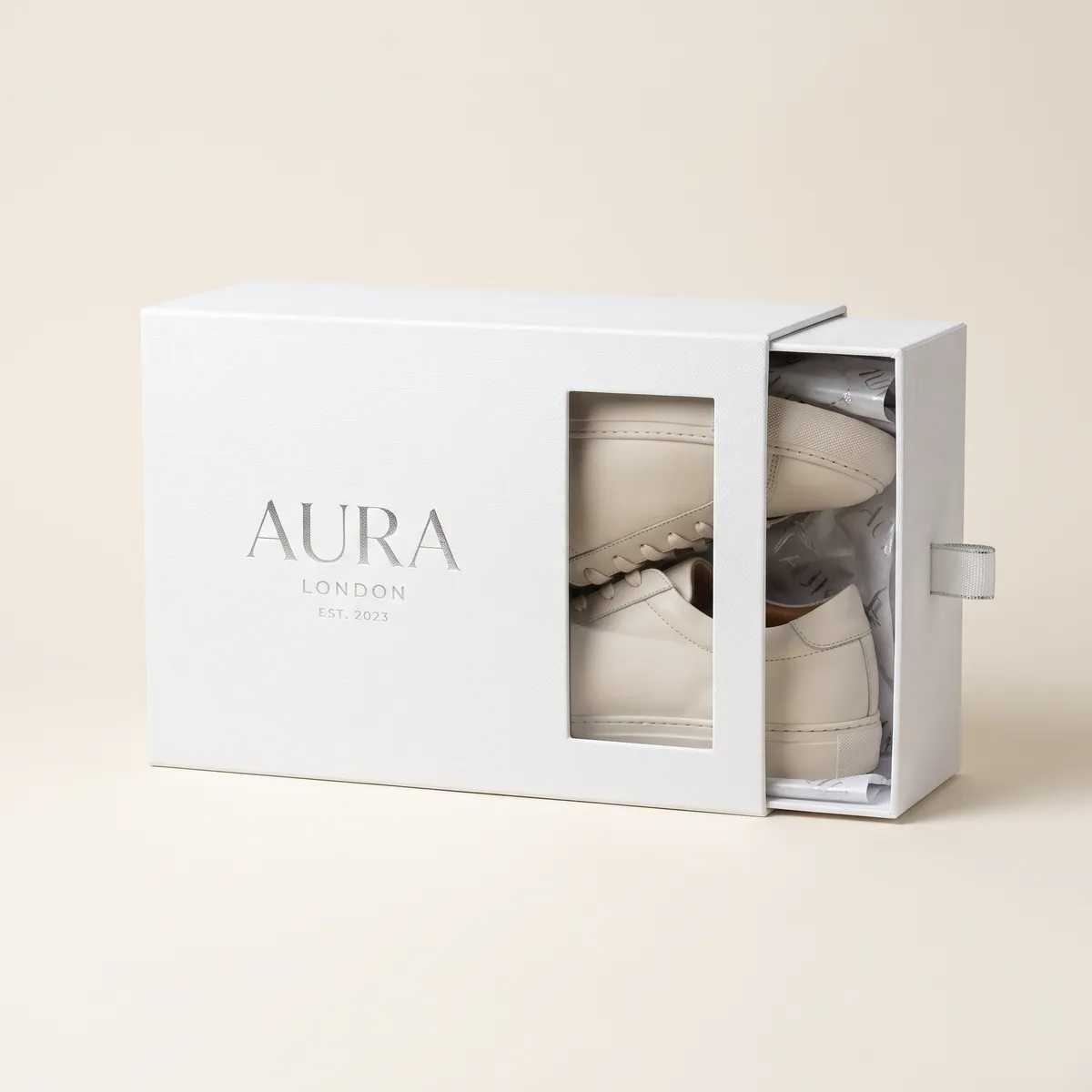
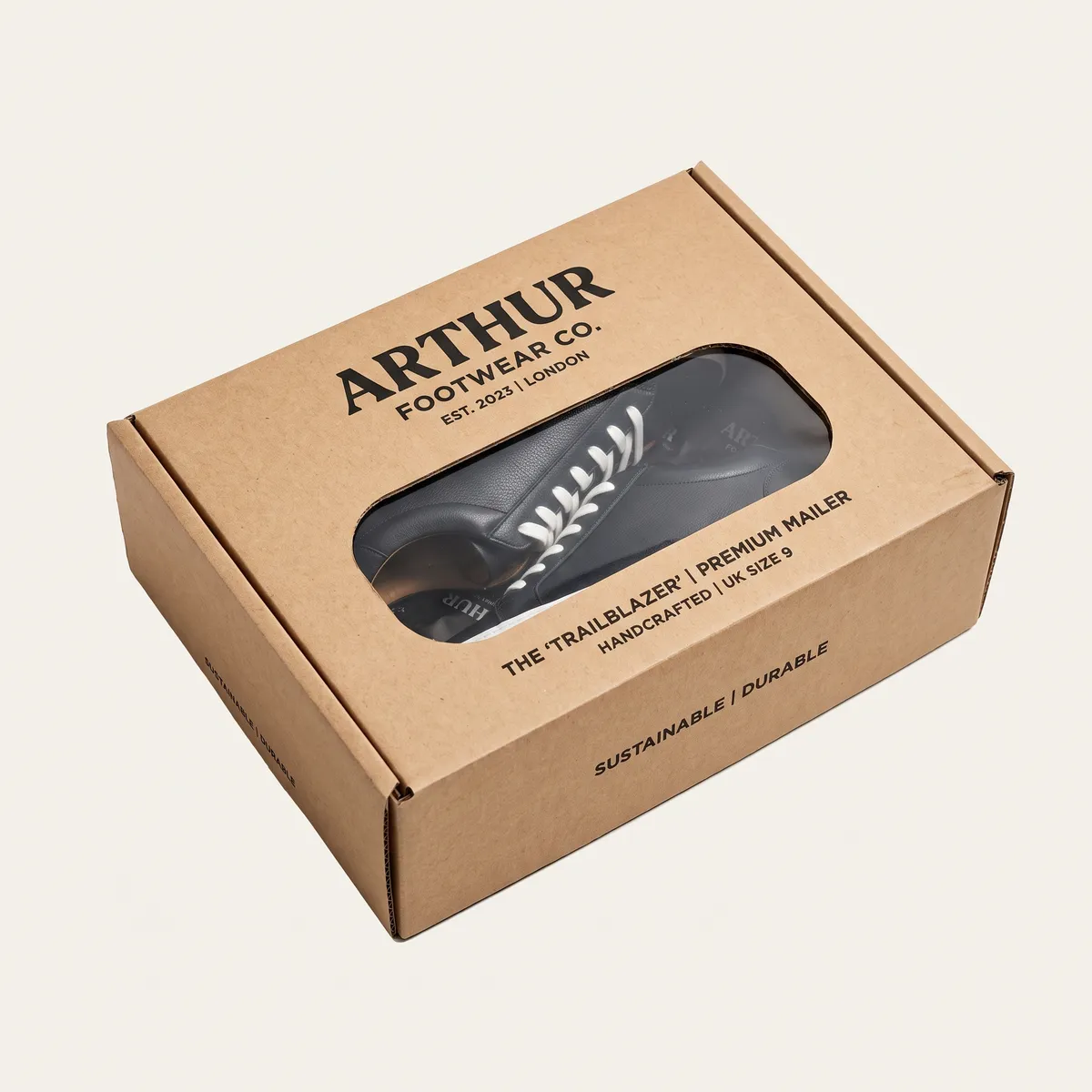
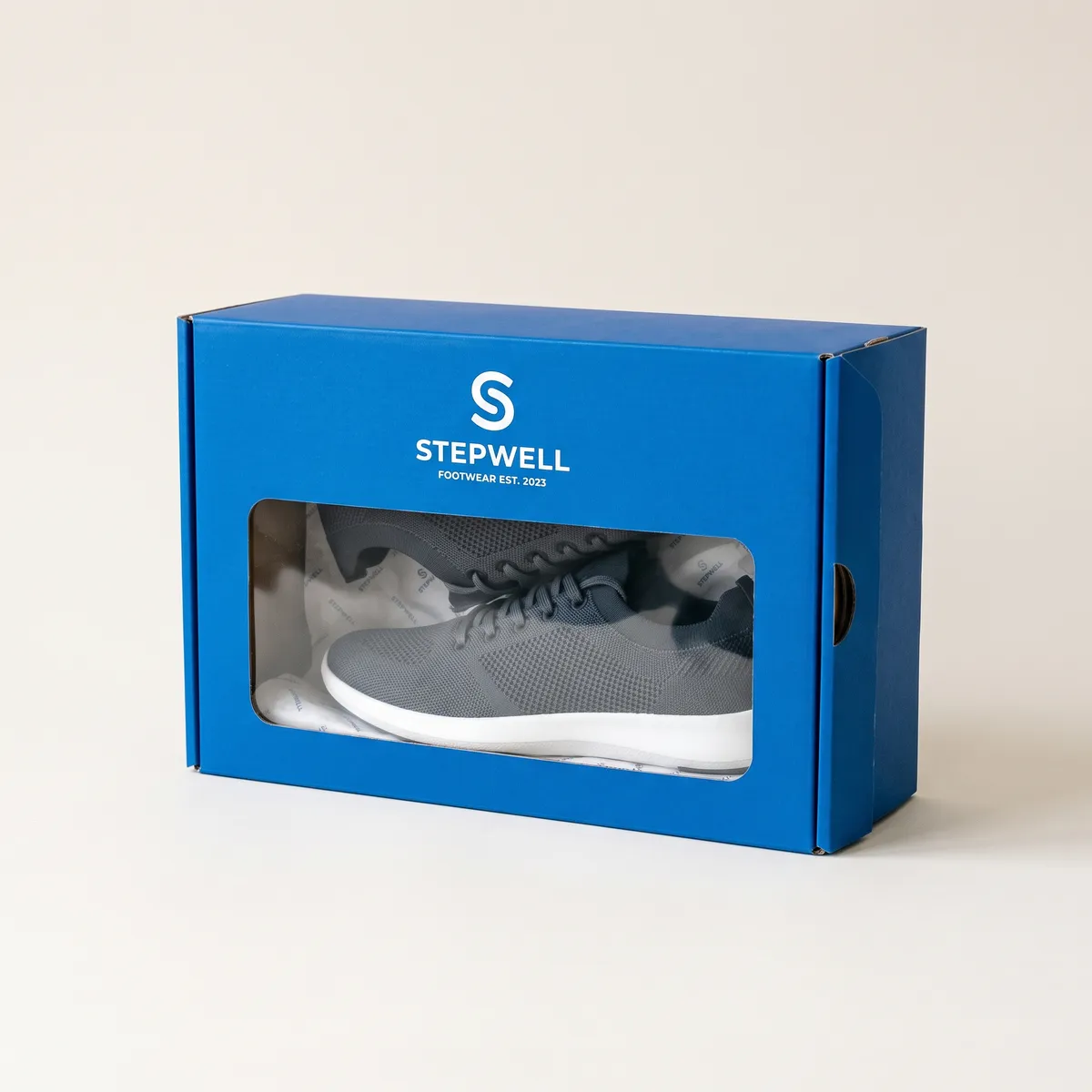
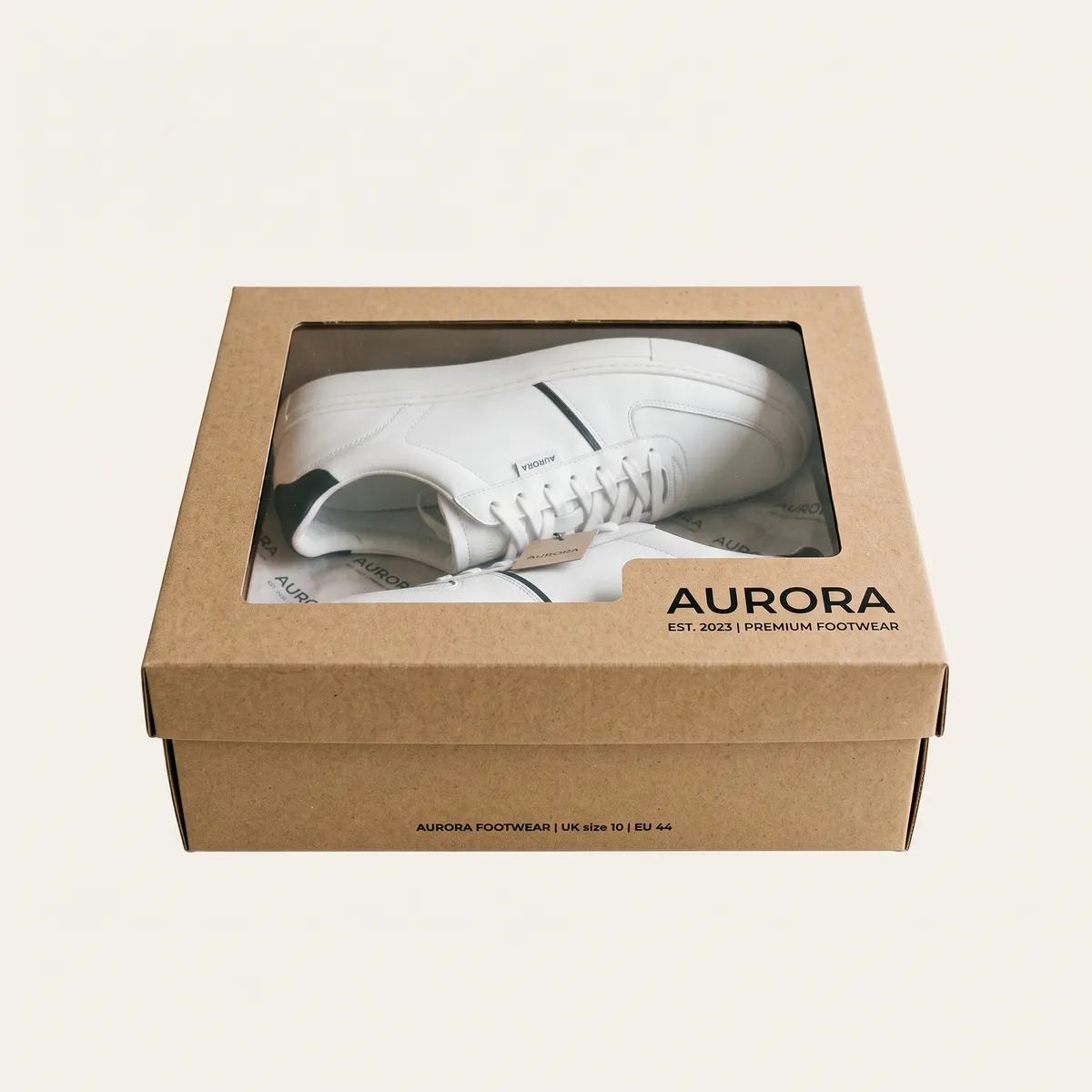
Shoe boxes get handled in-store, stacked in stockrooms and often kept by customers for storage, so they need heavier board or a corrugated build rather than a light folding carton. Hinged lids stay attached and speed up handling in busy stores. Small vents help leather and performance footwear that sits boxed for long periods. Several sizes can share one consistent printed design.
Ours are on Trustpilot, where we can't edit them or choose which ones you see.
Read them on Trustpilot →(opens in a new tab)Four stages, twelve days
Quote confirmed
A specialist checks your spec against the board and comes back with a firm price inside 4 business hours.
Proof approved
You get a flat dieline and a 3D render. Nothing goes to press until you approve it in writing.
On press
Print, die-cut, glue, and fold. You get a press-side photo the day your job runs.
QC and delivery
Every pallet is sampled against the digital proof or physical sample you approved, then shipped with tracking to your dock or 3PL.
If a box doesn't match the digital proof or physical sample you approved, we reprint the run at no charge.
Read the reprint terms →Know exactly what you're ordering.
Shoe Boxes That Live in the Stockroom Before the Shop Floor
In a shoe shop, the box is part of the filing system. Staff find a pair by reading the end panels on a wall of near-identical boxes, so every box in a style needs the same construction, has to stack square, and should show the size where it can be read from the floor. The buyers are footwear brands, independent shoe shops, sneaker labels selling online and retailers with private-label lines. For online sellers the box usually travels inside an outer shipper, and buyers who resell or collect sneakers check its condition on arrival. A shoe box is a deep, lidded build sized to one pair, usually with tissue inside, made to be opened and closed many times before the sale.
The Board, Wall and Lid Behind a Shoe Box
Heavier stock is the starting point for a shoe box: either heavy paperboard or E-flute board built for repeat handling, which keeps the walls straight when boxes are stacked several high.
| Attribute | Specification |
|---|---|
| Board | E-flute corrugated or heavier paperboard |
| Footprint | Cut to the pair, size by size |
| Depth | Set by the pair plus its tissue |
| Lid | Separate lift-off or hinged |
| Vents | Small vents, optional |
| Tolerance | Built to your confirmed dieline |
Each size in a range gets its own dieline, while board and print usually stay the same across all of them. That keeps the wall of boxes reading as one range once it's stacked.
Why Footwear Sits in a Deep Base With Its Own Lid
Watch a try-on and the build explains itself, which is why shoe boxes are commonly made as a deep base under a separate lid. A customer trying on shoes needs the box open on the floor beside them, with the second shoe and the tissue still in the base, then closed again in one movement. A tuck-end carton fights that: the flap creases after a few openings and the pair has to come out through the end. A lid lifts off and drops back without wearing any fold, so the box looks the same on the tenth try-on as on the first. Where staff speed matters most, a hinged lid avoids loose lids going astray across a busy shop floor. Either way, depth is set by the pair.
Where Print Pays on a Box Seen End-On
Most shoe boxes are seen end-on, on a stockroom shelf or a wall display, so the end panel earns more print attention than its size suggests. That's where size, colorway and style code usually go, printed or applied as a label, beside a small logo. The lid top is the brand moment when the box is set down for a try-on or opened at home. Full-color print across the lid suits sneaker and fashion lines; a single-color logo on brown board suits workwear and outdoor brands and costs less. Interior print is worth it on premium and limited releases, where the box is photographed and kept. What we'd skip: decorating the base sides, which spend their life hidden by the lid and the shelf.
Shoe Boxes for Sneaker Drops, Leather Footwear and Children's Ranges
Sneaker labels use them as part of the release, with printed lids and interiors for drops that get unboxed on camera. Leather shoe and boot makers choose heavier builds, sometimes vented, for pairs that sit boxed in a stockroom between seasons. Independent shoe shops buy plain or lightly printed boxes across a full size range for private-label stock. Children's footwear is its own case: the boxes are smaller, sizes move on quickly, and the look often borrows from bright, character-led toy packaging, since the box is shown to a child as well as a parent. Slipper, sandal and dance-shoe brands round out the list, usually with shallower bases because the product is flatter.
Ordering a Full Size Run of Shoe Boxes in One Go
Footwear ranges rarely need just one box, so the quote starts with your size breakdown: the dimensions of the largest and smallest pair, and roughly how many boxes each size needs. We build a dieline for each from those measurements and confirm internal against external in writing. Our design team works on the artwork with you for free, through as many rounds as it takes. Production runs 8–12 business days after proof approval, with rush available at extra cost, quoted upfront. The minimum is 100 boxes. On orders above 10,000, free samples let you check boxes against real pairs before bulk starts. Faults are caught in a three-stage check on every box, and a run that misses the approved proof is reprinted at our cost. Shipping is included.
One connected process, start to finish.
Structural Design
Dieline drafted to your exact fit and freight tolerances.
Proof & Sample
Sign off on a digital proof, or request a physical sample.
Tooling
Dies and plates are cut for your job and archived on file.
Production
Print, die-cut, and assembly run under in-line quality checks.
Ship & Reorder
Freight goes out, and the cycle resets for your next run.
Steady process. Powerful results.
Like everything we build, our process is engineered to hold up — no shortcuts, no surprises. Five dependable stages that run the same way every single time, so reorders are just as fast as the first order.
- One dedicated teamFrom first sketch to final freight, the same people carry your order start to finish.
- Dies archived on fileReorders skip tooling and re-setup entirely — we already have your exact spec.
- Checked against your sign-offEvery run is inspected against the digital proof or physical sample you approved.
Set up your file once, correctly
Nine in ten delayed jobs are delayed by artwork, not production. Match these four rules and your proof lands the next morning.
- Bleed1/8 in (3 mm) past every cut line
- Safe ZoneKeep text 1/4 in clear of every crease
- ColourCMYK or named Pantone. No RGB.
- Resolution300 dpi at final size, fonts outlined
No print-ready file?
Send a logo and a rough idea. Our studio builds the production file free with any order over 500 units — you keep the source file either way.
Ask the StudioBackground art must run all the way to the outer bleed edge. Anything inside the white dashed line survives fold tolerance.
What brands say about this box
They live there rather than here, where we can't edit them, delete them, or pick which ones you get to see. That is exactly what makes them worth reading.
Read all reviews on Trustpilot(opens in a new tab)Answers before you have to ask.
How sturdy do shoe boxes need to be for retail?
Sturdier than most packaging, because a shoe box is handled repeatedly in-store, stacked, and often kept by the customer. We'd specify a heavier board or corrugated build rather than a light folding carton.
Can shoe boxes have a hinged lid?
Yes, and it's common in footwear. A hinged or attached lid stays with the box, which matters since customers often keep shoe boxes for storage. It also speeds up handling in a busy store.
Do shoe boxes need ventilation?
Some brands specify small vents, particularly for leather and performance footwear, to stop moisture building up in storage. It's worth considering if shoes sit boxed for long periods before sale.
How long do shoe boxes take to produce?
Around 8–12 business days from proof approval for corrugated and folding builds. Rigid takes 20. Rush production is available at an added cost quoted before you order.
Can I order shoe boxes in several sizes?
Yes, and most footwear brands need several. Running them together shares setup, and keeping one printed design across sizes gives the range a consistent look on a shelf.